Oct 3, 2026 Written by 

Reference to the Eucharist

2. Jesus says: “The Kingdom of Heaven is like a king who gave a wedding feast for his son” (Mt 22:2). The parable of the wedding feast presents the Kingdom of God as a royal – and therefore sovereign – initiative of God himself. It also includes the theme of love, and specifically spousal love: the son for whom the father prepares the wedding feast is the bridegroom.

Although the bride is not named in this parable, the circumstances indicate her presence and make it clear who she is. This will become evident in other New Testament texts, which identify the Church with the Bride (Jn 3:29; Rev 21:9; 2 Cor 11:2; Eph 5:23–27, 29).

3. On the other hand, the parable clearly identifies the Bridegroom as Christ, who brings about the Father’s New Covenant with humanity. This is a covenant of love, and the very Kingdom of God appears as a communion (a community of love), which the Son brings about according to the Father’s will. The ‘banquet’ is the expression of this communion. Within the context of the economy of salvation described by the Gospel, it is not difficult to recognise in this wedding banquet a reference to the Eucharist: the sacrament of the new and eternal Covenant, the sacrament of Christ’s nuptial union with humanity in the Church.

4. Although the Church as Bride is not named in the parable, other elements are found within its context that echo what the Gospel tells us about the Church as the Kingdom of God. Such is the universality of the divine invitation: ‘The King said to his servants, “Invite everyone you find to the wedding feast”’ (Mt 22:9).

Among those invited to the Son’s wedding feast are missing those who were chosen first: those who were to be guests according to the tradition of the Old Covenant. They refuse to attend the feast of the New Covenant, giving various excuses. Then Jesus has the King, the host, say: ‘Many are called, but few are chosen’ (Mt 22:14). In their place, the invitation is extended to many others, who crowd into the banquet hall. This detail brings to mind that other warning Jesus had spoken: ‘I tell you that many will come from the east and the west and will take their places at the feast with Abraham, Isaac and Jacob in the kingdom of heaven, whilst the sons of the kingdom will be thrown out’ (Mt 8:11–12). Here we can clearly see how the invitation becomes universal: God intends to establish the New Covenant in his Son, no longer with the chosen people alone, but with the whole of humanity.

5. The rest of the parable indicates that definitive participation in the wedding feast is linked to certain essential conditions. It is not enough to have entered the Church to be assured of eternal salvation: ‘Friend, how did you get in here without a wedding garment?’ (Mt 22:12), the King asks one of the guests. The parable, which at this point seems to shift from the issue of the historical rejection of the election by the people of Israel to the individual behaviour of anyone who is called and to the judgement that will be passed on them, does not specify the meaning of that ‘garment’. But it can be said that the explanation is to be found in the entirety of Christ’s teaching. The Gospel, in particular the Sermon on the Mount, speaks of the commandment of love, which is the principle of divine life and of perfection in the image of the Father: “Be . . . perfect, just as your heavenly Father is perfect” (Mt 5:48). This is the ‘new commandment’ which, as Jesus teaches, consists in this: ‘As I have loved you, so you also must love one another’ (Jn 13:34). It therefore seems we may conclude that the ‘wedding garment’, as a condition for taking part in the banquet, is precisely this love.

This is confirmed by another great parable, concerning the Last Judgement, and therefore of an eschatological nature. Only those who put the commandment of love into practice through spiritual and corporal works of mercy towards their neighbour may take part in the banquet of the Kingdom of God: “Come, you who are blessed by my Father; take your inheritance, the kingdom prepared for you since the foundation of the world” (Matthew 25:34).

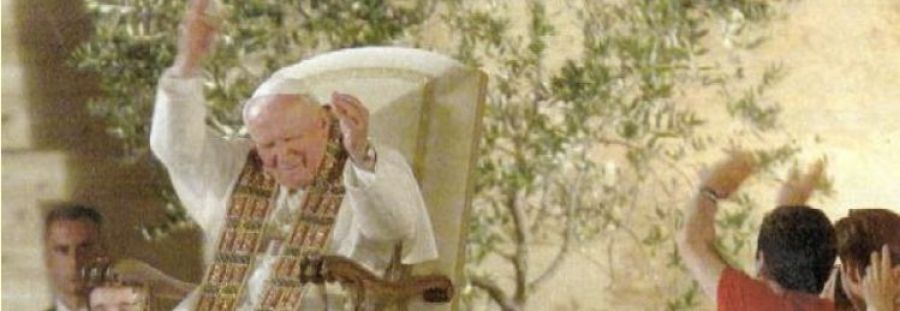
[Pope John Paul II, General Audience, 18 September 1991]

26 Last modified on Saturday, 03 October 2026 03:59
don Giuseppe Nespeca

Giuseppe Nespeca è architetto e sacerdote. Cultore della Sacra scrittura è autore della raccolta "Due Fuochi due Vie - Religione e Fede, Vangeli e Tao"; coautore del libro "Dialogo e Solstizio".

Email This email address is being protected from spambots. You need JavaScript enabled to view it.
However, the king was not discouraged and sent his servants out to seek other guests to fill his banquet hall. Thus the aspect of the refusal of those initially invited caused the invitation to be extended to all [Pope Benedict]
Il re però non si scoraggia e invia i suoi servi a cercare altri commensali per riempire la sala del suo banchetto. Così il rifiuto dei primi ha come effetto l’estensione dell’invito a tutti [Papa Benedetto]
Faith in God opens before us the horizon of a sure hope, one which does not disappoint; it indicates a solid foundation on which to base one’s life without fear; it demands a faith-filled surrender into the hands of the Love which sustains the world (Pope Benedict)
La fede in Dio apre all’uomo l’orizzonte di una speranza certa che non delude; indica un solido fondamento sul quale poggiare, senza paura, la propria vita; richiede l’abbandono, pieno di fiducia, nelle mani dell’Amore che sostiene il mondo (Papa Benedetto)
The "new evangelization" faces this challenge. It must work to ensure that people recover the awareness that in Christ evil can be conquered with good (Pope John Paul II)
La “nuova evangelizzazione” affronta questa sfida. Essa deve impegnarsi perché tutti gli uomini recuperino la consapevolezza che in Cristo è possibile vincere il male con il bene (Papa Giovanni Paolo II)
Many saints experienced the night of faith and God’s silence — when we knock and God does not respond — and these saints were persevering (Pope Francis)
Tanti santi e sante hanno sperimentato la notte della fede e il silenzio di Dio – quando noi bussiamo e Dio non risponde – e questi santi sono stati perseveranti (Papa Francesco)
In some passages of Scripture it seems to be first and foremost Jesus’ prayer, his intimacy with the Father, that governs everything (Pope Francis)
In qualche pagina della Scrittura sembra essere anzitutto la preghiera di Gesù, la sua intimità con il Padre, a governare tutto (Papa Francesco)
It is necessary to know how to be silent, to create spaces of solitude or, better still, of meeting reserved for intimacy with the Lord. It is necessary to know how to contemplate. Today's man feels a great need not to limit himself to pure material concerns, and instead to supplement his technical culture with superior and detoxifying inputs from the world of the spirit [John Paul II]
Occorre saper fare silenzio, creare spazi di solitudine o, meglio, di incontro riservato ad un’intimità col Signore. Occorre saper contemplare. L’uomo d’oggi sente molto il bisogno di non limitarsi alle pure preoccupazioni materiali, e di integrare invece la propria cultura tecnica con superiori e disintossicanti apporti provenienti dal mondo dello spirito [Giovanni Paolo II]
This can only take place on the basis of an intimate encounter with God, an encounter which has become a communion of will, even affecting my feelings (Pope Benedict)
Questo può realizzarsi solo a partire dall'intimo incontro con Dio, un incontro che è diventato comunione di volontà arrivando fino a toccare il sentimento (Papa Benedetto)
He is “the very stone which the builders rejected” (cf. Mt 21:42), because they judged him to be hostile to the law and a danger to public order [Pope Benedict]
Egli è “la pietra che i costruttori hanno scartato” (cfr Mt 21,42), perché l’hanno giudicato nemico della legge e pericoloso per l’ordine pubblico [Papa Benedetto]

Due Fuochi due Vie - Vol. 1 Due Fuochi due Vie - Vol. 2 Due Fuochi due Vie - Vol. 3 Due Fuochi due Vie - Vol. 4 Due Fuochi due Vie - Vol. 5 Dialogo e Solstizio I fiammiferi di Maria

duevie.art

don Giuseppe Nespeca

Tel. 333-1329741


Disclaimer

Questo blog non rappresenta una testata giornalistica in quanto viene aggiornato senza alcuna periodicità. Non può pertanto considerarsi un prodotto editoriale ai sensi della legge N°62 del 07/03/2001.
Le immagini sono tratte da internet, ma se il loro uso violasse diritti d'autore, lo si comunichi all'autore del blog che provvederà alla loro pronta rimozione.
L'autore dichiara di non essere responsabile dei commenti lasciati nei post. Eventuali commenti dei lettori, lesivi dell'immagine o dell'onorabilità di persone terze, il cui contenuto fosse ritenuto non idoneo alla pubblicazione verranno insindacabilmente rimossi.







