


don Giuseppe Nespeca
Giuseppe Nespeca è architetto e sacerdote. Cultore della Sacra scrittura è autore della raccolta "Due Fuochi due Vie - Religione e Fede, Vangeli e Tao"; coautore del libro "Dialogo e Solstizio".
Women: The Action of the Risen One
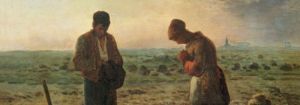
(Lk 7:36-8:3)
Intruder Love, in the respectable House of Simon
And the Feet of Jesus, kissed by the unexpected and censured guest
(Lk 7,36-50)
"Simon, a Pharisee and rich "notable" of the city, held a banquet in his house in honour of Jesus. Unexpectedly from the back of the room enters a guest neither invited nor expected: a notorious prostitute. The unease of those present is understandable, but the woman does not seem to mind. She advances and, rather furtively, stops at the feet of Jesus. His words of forgiveness and hope for all, including prostitutes, have reached her ear; she is moved and stands there silently. She bathes Jesus' feet with her tears, dries them with her hair, kisses them and anoints them with a sweet perfume. In doing so, the sinner wants to express her affection and gratitude towards the Lord with gestures familiar to her, even if socially censured.
Faced with general embarrassment, it is Jesus himself who addresses the situation: 'Simon, I have something to tell you'. "Go ahead, Master," the landlord replies to him. We are all familiar with Jesus' response in a parable that could be summed up in the following words that the Lord basically says to Simon: 'See? This woman knows she is a sinner and, moved by love, she asks for understanding and forgiveness. You, on the other hand, presume to be righteous and are perhaps convinced that you have nothing serious to be forgiven'.
The message from the Gospel passage is eloquent: to those who love much, God forgives all things. He who trusts in himself and his own merits is as if blinded by his ego and his heart hardens in sin. On the other hand, he who recognises himself as weak and a sinner entrusts himself to God and from Him obtains grace and forgiveness".
[Pope Benedict, Audience to the participants in the course of the Apostolic Penitentiary, 7 March 2008].
It is Love that path of perfection desired by God to make us grow, and to our benefit - not the sterilised formalism and coercive power set up in Simon's House (in the Church, by Peter and other strict censors).
What unites seriously in conviction comes from within, from our Core; it does not depend on the outside.
Love does not programme itself at a desk or on the basis of sacred models, nor does it endure cerebral and moralistic binaries. It expresses the heart with sincerity.
It is not a reality that is subject to social distances, class - or circle more or less disciplined by the profession (dependent on the 'behind the scenes') that resists the obligation to unite with the different, deemed inadequate impure meddlers.
So empathy and loving-kindness do not appear or disappear on command, by design and according to code, discipline, season.
They belong to the deep side of being women and men of all times.
It is not façade respectability, nor ritual landscape, that can lead one's existence in the Spirit in a worthy manner, but passion.
Here is the link between tears and forgiveness.
Hetero-directed formalisms - with their unfestive formulas that do not belong to us - annihilate our essence and our most powerful emotions.
The social pact demanded by the gerontocracy is a reference always outside of us: and it will be the usual good of tradition, of opinion, of surroundings, of calculation in situation, of manners and of 'spin'; in any case, of others.
Are we really empty losers, or destined only to have to support the veterans, with no room for critical witness and active language?
And underneath imitating 'fathers', models, codes already designed (even down to the tiniest detail) for the use of the traditional sentiments of increasingly aged assemblies?
Love with all our hearts is triggered when we need to make the decisive encounter: that opportunity we feel will open the door to resources, capacities, talents, energies, otherwise unexpressed or stifled.
By letting her hair down in public, the 'sinner' almost seems to be a figure of the lesser 'boat', which offers itself and offers no resistance but only support to the protagonist (Lk 5.2.7.11).
It is a spurious and second community, compared to the official church of the apostles who are always 'close' - and of mixed cultural extraction, unlike the first community that was still Judaizing.
It proposes itself to the You-for-you with a gesture of independence: it needs a more spontaneous and personal relationship with the Lord, the only one who looks at it in a non-superficial way.
A relationship impeded precisely by those who crowd around Him, but to gag Him, and to lie down.
The regulars - all predictable - do not appreciate the favour they receive, although they have been partaking of the (Eucharistic) banquet for a long time, but now only as practitioners of the most reiterated litanies.
The 'security' of mechanisms and ideas laced with prejudice prevents them from experiencing the Gratis.
Instead of welcoming, the old guides pushed away; they lived only with their followers - servants and courtiers - in the world of archaic incantations.
They did not bring forth any new inner strength. They feared any jolt that might crack their pedestal.
They blocked any emancipation or discovery. They were not worshippers of people who needed to free themselves from the straits of life.
They were not worshippers of the Master's great Path (cf. the constant reference to his 'feet') but slavish merchants of abstract signs - already established or smuggled in - and of a Jesus reduced to a motionless sphinx (or devout, ritual and 'cultural' icon).
Total intimate adherence comes before anything we can fulfil or think. It does not combine with positional opportunism for Christ.
All-human transport without curtains is what would not make us overburdened with arrogance and unable to recognise his Gifts.
He who is convinced that he gives God something, certainly does not love him. He cares only for himself: the predatory, deceitful appearance.
Even today, the choice that concerns us is between negligible details or entering into the heart of authentic Relationship.
On this level, the Master of the House suffered dizziness right from the start.
Simon is frightened by the mere idea of the Master attempting to make him enter into a new logic: "I suppose..." (v.43).
He fears the looming of any alternative jolt that might crack his habitual, congealed world.
While the real world follows its cycles, the entrenched ones demand stability - but in doing so they stunt growth.
Instead, by accepting the unforeseen, we discover unexplored sides, juxtaposing inherent potentials that we had not allowed space for.
Continuous change is simply the spice of life. And the very end of a religious-cultural paradigm is inevitable.
Therefore, it becomes essential to take a genuine attitude, and get involved.
Salvation is the fruit of moved personal immediacy, and even already obtained without works of law: not labour relations and hypocrisy [overtime against compensation] in aseptic environments, with aged, addicted and mouldy hearts.
In short, the Gospel passage is meant to make us reflect on who is more willing to love: those who can set up screens behind which they can allow themselves even that which they blatantly deny... or the little souls who spontaneously approach their 'source' - devoid of social masks?
To internalise and live the message:
Looking at our behaviour, would the outcasts from the respectable circle be certain to be spontaneously and freely welcomed by us today?
Women
(Lk 8:1-3)
The rabbis did not accept women in their schools because they were considered not up to the task.
But Jesus does not come to teach laws or philosophies, but to gather around himself the despised and the non-people of all times.
In Christ, everyone is opened to hope. Those considered worthless proclaim and witness God's love for the little ones and the least.
All with delicacy, and here are the female figures: the narcissism of the masquerade is replaced by fidelity.
In women, piety arises spontaneously (it is not conceived as it is for us males: immediately at the goal and a source of gain).
With them also vanishes the performance anxiety that accompanies men, who also on the good must immediately appear by setting up platforms and défilés; be noticed, cultivate public and private relations that count, and make a career out of it. A syndrome still well established.
Jesus conquers women's hearts because he understands their generosity, their depth of feeling, their capacity for dedication and personal relationships, for extreme self-giving; sensitivity, faith-love, patience, meekness, generosity, the capacity for effort and suffering.
Each of us can testify to the importance of these notes that are often unknown to the scrounging world of the entitled, who go straight to cutting and separating, organising instead of welcoming, judging instead of dialoguing, believing themselves to be someone at all costs - often setting up childish lies.
Or for those who prefer to wallow in tavern life, to waste time frittering it away or just for themselves, rather than use it well and treasure it: instead of 'killing it', women fill it to the brim.
Jesus does not want a humanity inclined to be appreciated more than to concealment, inclined to talk more than to perceive; inclined to organise-planning more than to meditate - and to sense the depth of our Roots.
The prevalence or balance of the feminine aspect is an opportune counterbalance to a Christian world... in the West unbalanced on the masculine: prone to dirigisme and the exercise of the will rather than the cultivation of childlike feeling.Happy is that vocation that is accompanied by intensity, depth, delicacy, the ability to wait and at the same time coherence to principles (never sold out to the highest bidder) and participation in destiny - typical aspects of feminine sensitivity and the world of consecrated women.
Having received personal grace from an aunt and cousins who were nuns (as well as the gift of spectacular female memories similar to Mary of Nazareth in the family), I suspect that the brushstroke of Lk is testimony to the fundamental weight of women even as managers, coordinators, supporters and sensitive animators of the first fraternal realities and assemblies of followers.
Perhaps that of Mary, Joan, Susanna, Peter's mother-in-law and many others in the early days was a role comparable to that of Martha in the family of Bethany.
Unfortunately, later ecclesiastical convention did not give weight to the unquestionable fact of women's discipleship, flattening out to male discipleship - a disvalue that we are beginning to pay for in an obvious way (but it is a grace: nothing would move, otherwise).
In Lk, the women's story expresses the action of the Risen One. He accepts them as followers and disciples. In the female figures we read in watermark the story of humanity that in Christ rises up and assumes dignity - instead of being further harassed.
It becomes fraternal in pain (instead of only in victory), it prepares nourishment (instead of taking it away), it persists without mannerism.
It is a church of authentic struggle, from within, and in such acting with frankness it even becomes an icon of prayer (instead of keeping to the minimum and doing a lot of diplomacy, then manipulating the naive, and only showing off).
She is a model of dedication and self-giving, instead of calculation and cunning (ways of subterfuge; contrived, deliberate).
Women ready for life - type of the Annunciation: Treasure unleashing the Spirit, which conversely males cunningly want to keep for themselves (to master it, making it one-sided).
The Jesus on the road with the Twelve (v.1) still has a long way to go, precisely in our realities consolidated by traditions that are considered unquestionable, but narrow, stubborn, stifling, puerile and deaf.
They remain on the surface, thus blocking the expressions of life. The magic of the feminine, on the other hand, knows how to welcome the individual and listen to events, always being in the field to realise what characterises us.
Women learn from their essence, so they know how to attract, they know what is needed, they understand where and how to proceed, they are present in the present - and without superintending they solve problems.
To internalise and live the message:
Would you rather be spiritually accompanied by a woman or a man? Why?
Doesn't pastoral work that is languishing have to do with unilateral chains of command, in which you fear losing 'position'?
Do you also feel called to a spiritual synthesis of personalities, with all the virtue and completeness that comes from a varied nature?
Banquet in Honour of Jesus

Simon, a Pharisee and rich 'notable' of the city, holds a banquet in his house in honour of Jesus. Unexpectedly from the back of the room enters a guest who was neither invited nor expected: a notorious prostitute. The unease of those present is understandable, but the woman does not seem to mind. She advances and, rather furtively, stops at the feet of Jesus. His words of forgiveness and hope for all, even the prostitutes, have reached her ear; she is moved and stands there silently. She bathes Jesus' feet with her tears, dries them with her hair, kisses them and anoints them with a sweet perfume. In doing so, the sinner wants to express her affection and gratitude towards the Lord with gestures that are familiar to her, even if socially censured.
Faced with general embarrassment, it is Jesus himself who addresses the situation: 'Simon, I have something to tell you'. "Go ahead, Master," the landlord replies to him. We are all familiar with Jesus' response in a parable that could be summed up in the following words that the Lord basically says to Simon: 'See? This woman knows she is a sinner and, moved by love, she asks for understanding and forgiveness. You, on the other hand, presume to be righteous and are perhaps convinced that you have nothing serious to be forgiven'.
The message from the Gospel passage is eloquent: to those who love much, God forgives all things. He who trusts in himself and his own merits is as if blinded by his ego and his heart hardens in sin. Instead, he who recognises himself as weak and a sinner entrusts himself to God and from Him obtains grace and forgiveness.
[Pope Benedict, Audience to the participants in the course of the Apostolic Penitentiary, 7 March 2008]
It is not for me
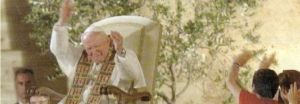
2. In the light of Revelation, however, we know with consoling certainty that God understands human weakness and is ready to forgive. He is a Father rich in love and mercy. This is eloquently demonstrated to us in the account of the "sinful woman" who, repentant and confiding, honours Jesus in the house of Simon the Pharisee.
To Simon Jesus says, referring to the sinful woman: "Her many sins are forgiven, because she has loved much!"; and to the woman: "Your faith has saved you; go in peace!". Jesus affirms with divine authority the forgiveness of sins. He simultaneously demands repentance and a change of life.
3. Dear Brothers and Sisters! Let us always keep alive in us a sense of trust in God's goodness and mercy. There is no sin that God does not want to forgive, when one is repentant and resolved never to sin again. The repentance of the Magdalene and the parable told by Jesus to Simon are in this respect very rich in meaning. Decisive, of course, must be the condemnation of evil, but understanding and patience is needed towards the one who sins. The liturgy thus invites us to be messengers of truth and mercy, of forgiveness and joy.
We find ourselves at the Grotto of the Virgin, which recalls that of Lourdes. We recall the definition that St Bernadette gave of sin: "Sinner is he who loves sin!". Invited to go to the Grotto of Massabielle, to ask and possibly obtain from Our Lady a cure for her illness, Bernadette replied: "Lourdes is not for me! Lourdes is for poor sinners!".
Let us invoke Mary Most Holy for the salvation of sinners; let us pray that faith in the Lord, who awaits his children with infinite love and mercy, may never fail in believers.
"Blessed is the man whose guilt is forgiven and whose sin is forgiven!" (Ps 32)
[Pope John Paul II, homily 18 June 1995]
He does not want to compromise
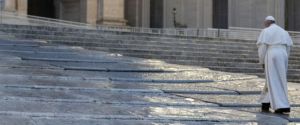
Today we would like to stop and wonder at an aspect of mercy which is well presented in the passage we heard from the Gospel of Luke. It deals with something that happened to Jesus while he was the guest of a Pharisee called Simon. He wanted to invite Jesus to his home because he had heard others speak well of him as a great prophet. And while they were seated at a meal, there entered a woman, known throughout the city to be a sinner. This woman, without saying a word, threw herself at Jesus’ feet and burst into tears; her tears bathed the feet of Jesus and she dried them with her hair, then kissed them and anointed them with the perfumed oil she had brought with her.
Two figures stand out: Simon, the zealous servant of the law, and the anonymous sinful woman. While the former judges others based on appearances, the latter, through her actions, expresses the sincerity of her heart. Simon, though having invited Jesus, does not want to compromise himself or entangle his life with the Master; the woman, on the contrary, entrusts herself completely to him with love and veneration.
The Pharisee cannot fathom why Jesus would let himself be “contaminated” by sinners. He thinks that were Jesus a real prophet he would recognize them and keep his distance in order to keep from being sullied, as if they were lepers. This attitude is typical of a certain way of understanding religion, and it is based on the fact that God and sin are radically opposed. The Word of God, however, teaches us to distinguish sin from the sinner: one should not have to compromise with sin, but sinners — that is, all of us! — are like the sick, who need to be treated. And in order to heal them the doctor needs to get close, examine them, touch them. Naturally, the sick person, in order to be healed, must recognize that he needs the doctor!
Between the Pharisee and the sinful woman, Jesus sides with the latter. Jesus, free of the prejudices that hinder the expression of mercy, lets her do it. He, the Holy One of God, lets her touch him without fear of contamination. Jesus is free, because he is close to God who is the merciful Father. And this closeness to God, the merciful Father, gives Jesus freedom. Furthermore, by entering into a relationship with the sinner, Jesus puts an end to that state of isolation to which the ruthless judgment of the Pharisee and of her fellow citizens — the same who exploited her — had condemned her: “Your sins are forgiven” (Lk 7:48). The woman can now go “in peace”. The Lord sees the sincerity of her faith and conversion; thus before everyone he proclaims: “Your faith has saved you” (v. 50). On one side there is the lawyer’s hypocrisy, on the other, the sincerity, humility and faith of the woman. We are all sinners, but too often we fall into the temptation of hypocrisy, of believing ourselves to be better than others and we say: “Just look at your sin...”. We all need, however, to look to our own sins, our own shortcomings, our own mistakes, and to look to the Lord. This is the lifeline of salvation: the relation between the “I” of the sinner and the Lord. If I feel I am righteous, there is no saving relationship.
At this point, an even greater wonder assails all those at the table: “Who is this, who even forgives sins?” (v. 49). Jesus does not answer explicitly, but the conversion of the sinner is before the eyes of all and it shows that from him there emanates the power of the mercy of God, which is able to transform hearts.
The sinful woman teaches us the connection between faith, love, and recognition. “Many sins” have been forgiven her and therefore she has loved much; “but he who is forgiven little, loves little” (v. 47). Even Simon himself has to admit that the one who is guiltiest loves more. God has wrapped each and every one of us in the same mystery of mercy; and from his love, which always comes to us first, we learn how to love. As St Paul recalls: “in him we have redemption through his blood, the forgiveness of our trespasses, according to his grace which he lavished on us” (Eph 1:7-8). In this passage, “grace” is virtually synonymous with mercy, and we are told that God has “lavished” it upon us, meaning that it far exceeds our expectations, since it brings to fulfillment God’s saving plan for each one of us.
Dear brothers and sisters, let us recognize the gift of faith, let us give thanks to the Lord for his love which is so great and unmerited! Let us allow the love of Christ be poured into us: the disciple draws from this love and founds himself on it; from this love each one of us can be nourished and fed. Thus, in the grateful love that we in turn pour out upon our brothers and sisters, in our homes, in our families and in our societies, the mercy of the Lord may be communicated to everyone.
[Pope Francis, General Audience 20 April 2016]
One 'character', or the Son of Man

Stubbornness
(Lk 7:31-35)
The Gospels break through, advance and liberate, making us realize the enormous difference between common religious belief, and Faith.
They emancipate us by overturning positions: those who used to feel defended and secure - or on the crest of the wave [fashionable] - now seem to understand nothing of God's action in us.
As the ‘providence of the new’ makes its way in, those who are tied to stagnant or fanciful forms stubbornly try to cling to them in order to curb the authenticities - which are nonetheless rampant.
The new leaders of the people and the veterans feel lost, as they begin to measure the hollowness of their arrogance, the futility of their prestige, the childish incoherence of their pathetic pretexts.
Capricious children always complain when they do not get a prominent place in the games, or when others do not act as they themselves say.
The Baptist was an eminent herald, called to the realization of God's plan [known because of his peculiar figure, perhaps more prone to renunciation].
But the preconception of mortification did not fit: therefore, a nuisance to be rejected.
The ‘Son of man’ was more sympathetic, expressive and welcoming; he did not make an issue of purity [so he too was an exaggerator]: to be insulted and condemned.
The austere and penitent was judged the equal of a demoniac; the young Rabbi who invited joy, a laxer.
For the gravediggers of the holy city, John was too demanding, Jesus too broad in ideas and behaviour.
Spoilt kids do not even agree in the game, and stubbornly stand their ground.
The incontentatible children reject every proposal: they always have to retort.
The austere way of the desert seemed unreasonable.
The Lord, on the other hand, lived among people, accepted invitations and did not try to appear different from others - but his affable and simple style was considered too ordinary and accessible [for one sent by God].
«Yet Wisdom has been justified by all sons» (v.35 Greek text); i.e. the little ones read the sign of the times.
The 'sons' recognise divine Wisdom, they see his plan.
They grasp the plan of Salvation in the preaching of the Baptist and the Christ.
They do not have too much ‘control’ over things; they are spontaneous friends with them.
They are aware of limitations and strengths; they even learn from subordinate positions, and from dark sides; they learn from fears.
They overcome the spiritual immobility of the great experts, critical of every breeze of change, or too abstract and sophisticated.
Both of which settle themselves and rule - generating a radically impoverished humanity.
They are like puerile and uncontactable figures, who neither get up nor move: «sitting» (v.32).
They trample, violate, jam everything.
Everywhere, the ‘chosen ones’ remain indifferent or annoyed, because they are, grasp and understand “one thing only”.
They never close their ‘character’ to open another, or to explore different sides of themselves and the world. Their souls are starched.
Instead, he who does not have a closed heart is anticipating the Coming of a new Kingdom, is grasping his own eternal face.
[Wednesday 24th wk. in O.T. September 16, 2026]
Stubbornness
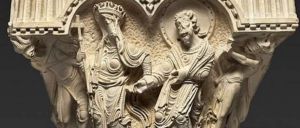
One 'character', or the Son of Man
(Lk 7:31-35)
The Gospels break through, advance and liberate, making us realise the enormous difference between any belief and Faith.
They emancipate us by overturning positions: those who used to feel defended and secure now look like little dolls who understand nothing of God's action in us.
On the other hand, the 'great' reformers with no history and no backbone elaborate extraordinary disembodied projections, and wallow in them.
While they seek the joy of life, they always put themselves at a safe distance from any crude involvement - which (with Pope Francis) we might call 'artisanal'.
As the providence of new arrangements makes its way, those who are tied to stagnant or overly imaginative forms stubbornly try to cling to them.
Both positions seem to be made to neither bear fruit nor grow together. They stem the authenticities, which here and there flourish and spread.
The leaders of the people and the veterans feel lost, as they begin to measure the hollowness of their arrogance, the futility of their prestige, the childish incoherence of their pathetic pretexts.
In the epigraph to his commentary on the Tao Tê Ching (i), Master Ho-shang Kung writes: 'The eternal Name wants to be like the infant that has not yet spoken, like the chick that has not yet hatched.
Whimsical children, on the other hand, always complain when they do not get a prominent place in the games, or when others do not do as they are told.
The Baptist was an eminent herald, called to the realisation of God's plan [known because of his peculiar figure, perhaps more prone to renunciation].
But the preconception of mortification did not fit: therefore, a nuisance to be rejected.
Christ was more sympathetic, expressive and welcoming; he made no bones about purity [so he too must have been an exaggerator]: to be insulted and condemned.
The austere and penitent was judged the equal of a demoniac; the young Rabbi who invited joy, a laxer.
For the gravediggers of the holy city, John was too demanding; Jesus seemed overly broad in ideas and behaviour.
Spoilt children do not even agree in play, and stubbornly stand firm on their positions.
The incontentatible children reject every proposal: they always have something to say.
But Revelation itself goes beyond all expectation [cf. Tertio Millennio Adveniente, n.6].
Certainly, the austere way of the desert seemed unreasonable.
Instead, the Lord lived among people, accepted invitations and did not try to appear different from others - but his affable and simple style was considered too ordinary and accessible for one sent by God.
"Yet Wisdom has been justified by all her children" (v.35 Greek text) i.e. the little ones read the sign of the times.
The children recognise divine Wisdom, they see her plan.
They grasp the plan of Salvation in the preaching of the Baptist and Christ.
They do not have too much "control" over things; they are friends of them.
They are aware of limitations and strengths; they learn even from subordinate positions and dark sides; they learn from fears.
They overcome the spiritual immobility of the great experts, critical of every breeze of change, or too abstract and sophisticated.
Both of which settle and rule - generating a radically impoverished humanity.
They are like puerile and uncontactable figures who neither stand up nor move: 'sitting' (v.32).
They trample, violate, jam everything.
Everywhere, the 'chosen ones' remain indifferent or annoyed, because they are, they grasp and understand 'one thing'.
They never close their 'character' to open another, or to explore different sides of themselves and the world.
In a homily at St Martha's [on the rejection of the prophet Jonah] Pope Francis suggested to "look at how the Lord acts", as opposed to the "sick of rigidity" who have "starched souls".
The stubborn childish ones only know how to disturb frank women and men, who spontaneously express themselves in multifaceted ways because they do not have a 'small, closed heart', but 'know how to enlarge it'.
It is precisely the bold ones who are themselves completely - unpolished and glamorous - instead of reiterating hysterical platitudes and sentences, who caress their different brothers and sisters and expand life.
In doing so, they are grasping their own eternal face.
Authentic women and men of Faith anticipate the Coming of a new Kingdom.
To internalise and live the message:
Who has helped you and who has held you back in understanding your deepest desire? Simples, or well-connected scholars?
Friends who shake and care, or qualified leaders and specialists who don't even get along in their 'games' - stubborn people, who set up, lord it over, restrain, jam others?
Son of Man
"Son of man" (v.34) already designates from the OT the character of a holiness that surpasses the ancient fiction of the rulers, who piled on top of each other reciting the same script.
The masses remained dry-mouthed: whatever ruler seized power, the petty crowd remained subdued and suffocated.
The same rule was in force in religions, whose leaders lavished the people with a strong horde impulse and the contentment of the gregarious.
In contrast, in the Kingdom of Jesus there must be a lack of ranks - which is why his proposal does not match the ambitions of the religious authorities, and the Apostles' own expectations.
They too wanted to 'count'. But precisely 'Son of Man' is the person according to a criterion of humanisation, not a beast that prevails because it is stronger than the others [cf. Dan 7].
Every man with a heart of flesh - not of beast, nor of stone - is an understanding person, capable of listening, always attentive to the needs of the other, who makes himself available.
It alludes to the broad dimension of holiness; transmissible to anyone, but creative like love, therefore all to be discovered! But this is a problem, especially (it seems absurd) in devout circles.
In the Gospels, the 'Son of Man' - the true and full development of the divine plan on humanity - is not hindered by the habitués of the sacred precincts, but by the habitués of the holy precincts.
The growth and humanisation of the people is not thwarted by sinners, but by those who would have the ministry of making the Face of God known to all!
In Mk 9:36-37 (cf. Mt 18:2-5; Lk 9:47-48) Jesus embraces an 8-12 year old boy who at that time counted for nothing - in fact, a house valet, a shop assistant ["paidìon"].
It is the only identification that Jesus loves and wishes to give us: that with the one who cannot afford not to recognise the needs of others.
It is a dimension of holiness without distinctive haloes: shareable, because it is linked to empathy, to spontaneous friendship towards all - women and men of all times.
Obviously: this is not a proposal compromised with doctrinaire-and-discipline religion that drives back eccentricities: much more sympathetic and lovable.
That of the Son of Man is the kind of holiness that makes us unique, not always abhorring and exorcising the danger of the unusual.
Aristotle stated that - beyond artificial petitions of principle or apparent proclamations - one only really loves oneself. Are we then like wayward children? This is no small question.
Granted and ungranted, the growth, promotion and blossoming of our qualities lies within a wise Way, a path that knows how to allow itself to encounter new states of being.
Genuine and mature love expands the boundaries of the ego lover of primacy, visibility and gain, understanding the You in the I.
Itinerary and Vector that then expands capacities and life. Otherwise in all circumstances and unfortunately at any age we will remain in the puerile game of those who scramble on the steps, to prevail.
As Pope Francis said about the mafia phenomena: "There is a need for men and women of Love, not honour!"
We read in the Tao Tê Ching (XL): 'Weakness is what the Tao uses'. And Master Wang Pi comments: 'The high has for its foundation the low, the noble has for its foundation the vile'.
Without alienating efforts, the personal flows into the plural and global, spontaneously overcoming fragmentation and dispersion:
"This universalistic perspective emerges, among other things, from the presentation that Jesus made of himself not only as 'Son of David', but as 'son of man'. The title of "Son of Man", in the language of Jewish apocalyptic literature inspired by the vision of history in the Book of the Prophet Daniel (cf. 7:13-14), recalls the person who comes "with the clouds of heaven" (v. 13) and is an image that heralds an entirely new kingdom, a kingdom supported not by human powers, but by the true power that comes from God. Jesus uses this rich and complex expression and refers it to Himself to manifest the true character of His messianism, as a mission destined for the whole man and every man, overcoming all ethnic, national and religious particularism. And it is precisely in following Jesus, in allowing oneself to be drawn into his humanity and thus into communion with God, that one enters into this new kingdom, which the Church announces and anticipates, and which overcomes fragmentation and dispersion".
[Pope Benedict, Consistory 24 November 2012].
More on the Son of Man (Pope John Paul II):
1. Jesus Christ, Son of Man and of God: this is the culminating theme of our catechesis on the identity of the Messiah. It is the fundamental truth of Christian revelation and faith: the humanity and divinity of Christ, which we will have to reflect on more fully later. For now, we would like to complete our analysis of the messianic titles already present in some way in the Old Testament and see in what sense Jesus attributes them to himself.
As for the title "Son of Man", it is significant that Jesus used it frequently when speaking of himself, while it is the others who call him "Son of God", as we shall see in the next catechesis. Instead, he called himself "Son of Man", whereas no one else called him that, except the deacon Stephen before the stoning (Acts 7:56) and the author of the Apocalypse in two texts (Acts 1:13; 14:14).
2. The title "Son of Man" comes from the Old Testament from the Book of the Prophet Daniel. Here is the text describing a night vision of the prophet: "Looking again in the night visions, behold, there appeared in the clouds of heaven one like a son of man; he came and was presented to him, who gave him power and glory and a kingdom; all peoples, nations and languages served him; his power is an everlasting power, which never fades, and his kingdom is such that it will never be destroyed" (Dan 7:13-14).
And when the prophet asks for an explanation of this vision, he receives the following answer: "The saints of the Most High shall receive the kingdom and possess it for ever and ever . . . then the kingdom and the power and the greatness of all the kingdoms that are under heaven shall be given to the people of the saints of the Most High" (Dan 7:18, 27). The text of Daniel is about an individual person and the people. We note immediately that what refers to the person of the Son of Man is found in the words of the angel in the annunciation to Mary: "he will reign forever . . . and his kingdom will have no end" (Lk 1:33).
3. When Jesus calls himself 'Son of Man' he uses an expression from the canonical tradition of the Old Testament and also found in the Jewish apocrypha. It should be noted, however, that the expression "Son of Man" (ben-adam) had become in the Aramaic of Jesus' time an expression simply indicating "man" ("bar-enas"). Jesus, therefore, by calling himself "son of man", almost succeeded in hiding behind the veil of common meaning the messianic significance the word had in prophetic teaching. It is no coincidence, however, that if utterances about the "Son of Man" appear especially in the context of Christ's earthly life and passion, there is also no lack of them in reference to his eschatological elevation.
4. In the context of the earthly life of Jesus of Nazareth, we find texts such as: "The foxes have their dens and the birds of the air their nests, but the Son of Man has nowhere to lay his head" (Matthew 8: 20); or also: "The Son of Man has come, who eats and drinks, and they say, Behold, a glutton and a drunkard, a friend of publicans and sinners" (Matthew 11: 19). At other times the word of Jesus takes on a value more strongly indicative of his power. Thus when he says: "The Son of Man is lord even of the Sabbath" (Mk 2:28). On the occasion of the healing of the paralytic lowered through an opening in the roof he states in an almost defiant tone: 'Now, so that you may know that the Son of Man has power on earth to forgive sins, I command you,' he said to the paralytic, 'get up, take up your bed and go home' (Mk 2:10-11). Elsewhere Jesus declares: "For as Jonah was a sign to those in Nineveh, so also will the Son of Man be to this generation" (Lk 11:30). On another occasion it is a vision shrouded in mystery: "A time will come when you will long to see even one of the days of the Son of Man, but you will not see him" (Lk 17:22).
5. Some theologians note an interesting parallelism between the prophecy of Ezekiel and the utterances of Jesus. The prophet writes: "(God) said to me: 'Son of man, I am sending you to the Israelites . . . who have turned against me . . Thou shalt say to them, 'Says the Lord God'" (Ez 2:3-4). "Son of man, you dwell among a race of rebels, who have eyes to see and do not see, have ears to hear and do not hear . . ." (Ez 12:2) "You, son of man . . . keep your eyes fixed on it (Jerusalem) which will be besieged . . . and you will prophesy against it" (Ez 4:1-7). "Son of man, prophesy a riddle telling a parable to the Israelites" (Ez 17:2).
Echoing the words of the prophet, Jesus teaches: "For the Son of Man came to seek and to save that which was lost" (Lk 19:10). "For the Son of Man did not come to be served, but to serve and to give his life as a ransom for many" (Mk 10:45; cf. also Mt 20:28). The "Son of Man" . . . "when he comes in the glory of the Father", will be ashamed of those who were ashamed of him and his words before men (cf. Mk 8:38).
6. The identity of the Son of Man appears in the dual aspect of representative of God, herald of the kingdom of God, prophet calling to conversion. On the other hand, he is the "representative" of men, whose earthly condition and sufferings he shares in order to redeem and save them according to the Father's plan. As he himself says in his conversation with Nicodemus: "As Moses lifted up the serpent in the wilderness, so must the Son of man be lifted up that whoever believes in him may have eternal life" (Jn 3:14-15).
It is a clear proclamation of the passion, which Jesus repeats: "And he began to teach them that the Son of Man must suffer greatly, and be reproved by the elders, the chief priests, and the scribes, and then be killed, and after three days rise again" (Mk 8:31). Three times in Mark's Gospel (cf. Mk 9:31; 10:33-34) and in each of them Jesus speaks of himself as the "Son of Man".
7. By the same appellation Jesus defines himself before the tribunal of Caiaphas, when to the question: "Are you the Christ, the blessed Son of God?" he replies: "I am! And you will see the Son of Man seated at the right hand of Power and coming with the clouds of heaven" (Mk 14:62). In these few words echoes Daniel's prophecy about the "Son of Man coming on the clouds of heaven" (Dan 7:13) and Psalm 110 that sees the Lord seated at the right hand of God (cf. Ps 110:1).
8. Repeatedly Jesus speaks of the elevation of the "Son of Man", but he does not hide from his listeners that it includes the humiliation of the cross. To the objections and incredulity of the people and disciples, who well understood the magic of his allusions and yet asked him: "How then do you say that the Son of Man must be elevated? Who is this Son of Man?" (Jn 12:34), Jesus asserts: "When you have lifted up the Son of Man, then you will know that I am and do nothing of myself, but as the Father has taught me" (Jn 8:28). Jesus states that his "elevation" by the cross will constitute his glorification. Shortly afterwards he will add: "The hour has come for the Son of Man to be glorified" (John 12: 23). It is significant that at Judas' departure from the Upper Room, Jesus says "now the Son of Man has been glorified, and God also has been glorified in him" (Jn 13:31).
9. This constitutes the content of life, passion, death and glory of which the prophet Daniel had offered a pale sketch. Jesus does not hesitate to also apply to himself the character of an eternal and everlasting kingdom that Daniel had assigned to the work of the Son of Man, when he proclaims to the world: "Then they will see the Son of Man coming in the clouds with great power and glory" (Mk 13:26; cf. Mt 24:30). It is in this eschatological perspective that the Church's work of evangelisation must take place. He warns: "You will not have finished going through the city of Israel before the Son of Man comes" (Mt 10:23). And he asks: "But will the Son of Man, when he comes, find faith on earth?" (Lk 18:8).
10. If as the "Son of Man" Jesus realised by his life, passion, death and resurrection the messianic plan outlined in the Old Testament, at the same time he assumes by that same name his place among men as a true man, as the son of a woman, Mary of Nazareth. Through this woman, his Mother, he, the 'Son of God', is at the same time the 'Son of man', a true man, as the Letter to the Hebrews attests: 'He became truly one of us, in all things like us except sin' (Heb 4:5; cf. Gaudium et Spes, 22).
[Pope John Paul II, General Audience 29 April 1987]
Does not exclude: no prejudice

“The Son of Man came to seek and to save the lost”.
God excludes no one, neither the poor nor the rich. God does not let himself be conditioned by our human prejudices, but sees in everyone a soul to save and is especially attracted to those who are judged as lost and who think themselves so. Jesus Christ, the Incarnation of God, has demonstrated this immense mercy, which takes nothing away from the gravity of sin, but aims always at saving the sinner, at offering him the possibility of redemption, of starting again from the beginning, of converting [...]
Let us pray to the Virgin Mary, perfect model of communion with Jesus, to be renewed by his love, so that we too may experience the joy of being visited by the Son of God, of being renewed by his love and of transmitting his mercy to others.
[Pope Benedict, Angelus 31 October 2010]
Helping to open the way for God in this world
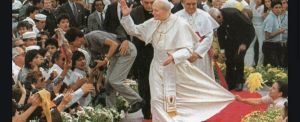
The particular circumstances of John's birth have been handed down to us by the evangelist Luke. According to an ancient tradition, it took place in Ain-Karim, before the gates of Jerusalem. The circumstances surrounding this birth were so unusual that even at that time people were asking: "What is this child to be?" (Lk 1:66). It was evident to his believing parents, neighbours and relatives that his birth was a sign from God. They clearly saw that the "hand of the Lord" was upon him. This was already demonstrated by the announcement of his birth to his father Zechariah, while he was providing priestly service in the temple in Jerusalem. His mother, Elisabeth, was already advanced in years and was thought to be barren. Even the name 'John' he was given was unusual for his environment. His father himself had to give orders that he be called "John" and not, as everyone else wanted, "Zechariah" (cf. Lk 1:59-63).
The name John means in the Hebrew language "God is merciful". Thus already in the name is expressed the fact that the newborn child would one day announce God's plan of salvation.
The future would fully confirm the predictions and events surrounding his birth: John, son of Zechariah and Elisabeth, became the "voice of one crying out in the wilderness" (Matt 3:3), who on the banks of the Jordan called people to penance and prepared the way for Christ.
Christ himself said of John the Baptist that "among those born of women no greater one has arisen" (cf. Mt 11:11). That is why the Church has also reserved a special veneration for this great messenger of God from the very beginning. An expression of this veneration is today's feast.
4. Dear brothers and sisters! This celebration, with its liturgical texts, invites us to reflect on the question of man's becoming, his origins and his destination. True, we already seem to know a great deal about this subject, both from mankind's long experience and from ever more in-depth biomedical research. But it is the word of God that always re-establishes the essential dimension of the truth about man: man is created by God and willed by God in his image and likeness. No purely human science can demonstrate this truth. At most it can come close to this truth or intuitively surmise the truth about this 'unknown being' that is man from the moment of his conception in the womb.
At the same time, however, we find ourselves witnessing how, in the name of a supposed science, man is 'reduced' in a dramatic trial and represented in a sad simplification; and so it happens that even those rights that are based on the dignity of his person, which distinguishes him from all the other creatures of the visible world, are overshadowed. Those words from the book of Genesis, which speak of man as the creature created in the image and likeness of God, highlight, in a concise yet profound way, the full truth about him.
5. We can also learn this truth about man from today's liturgy, in which the Church prays to God, the creator, in the words of the psalmist:
"Lord, you scrutinise me and know me . . . It is you who created my bowels and wove me in my mother's womb . . . you know me to the depths. When I was formed in secret . . . my bones were not hidden from thee . . . I praise thee, for thou hast made me like a wonder" (Ps 139 [138], 1. 13-15).
Man is therefore aware of what he is - of what he is from the beginning, from the womb. He knows that he is a creature that God wants to meet and with whom he wants to dialogue. More: in man, he wants to meet the whole of creation.
For God, man is a 'someone': unique and unrepeatable. He, as the Second Vatican Council says, "on earth is the only creature that God willed for itself" (cf. Gaudium et Spes, 24).
"The Lord from my mother's womb has called me; from my mother's womb he has pronounced my name" (Is 49:1); like the name of the child who was born in Ain-Karim: "John". Man is that being whom God calls by name. For God he is the created 'you', of all creatures he is that personal 'I', who can address God and call him by name. God wants that partner in man who addresses him as his own creator and Father: 'You, my Lord and my God'. To the divine "you".
7. God called John the Baptist already "in the womb" so that he might become "the voice of one crying out in the wilderness" and thus prepare the way for his Son. In a very similar way, God has also "laid his hand" on each one of us. For each of us he has a particular call, each of us is entrusted with a task designed by him for us.
In each call, which may come to us in the most diverse way, we hear that divine voice, which then spoke through John: "Prepare the way of the Lord!"(Mt 3:3).
Every man should ask himself in what way he can contribute within the scope of his work and position, to open the way for God in this world. Every time we open ourselves to God's call, we prepare, like John, the way of the Lord among men.
[Pope John Paul II, homily Eisenstaedt 24 June 1988]
Not the Preacher
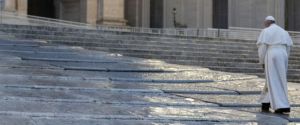
There are Christians who have "a certain allergy to preachers of the word": they accept "the truth of revelation" but not "the preacher", preferring "a caged life". It happened in Jesus' time and unfortunately continues to happen today in those who live closed in on themselves, because they are afraid of the freedom that comes from the Holy Spirit.
For Pope Francis, this is the teaching that comes from the readings of the liturgy celebrated on Friday morning, 13 December, in the chapel of Santa Marta. The Pontiff dwelt above all on the passage from the Gospel of Matthew (11, 16-19) in which Jesus compares the generation of his contemporaries "to those children sitting in the squares who turn to their companions and say: we played the flute and you did not dance, we sang a lament and you did not weep".
In this regard, the Bishop of Rome recalled that Christ in the Gospels "always speaks well of children", offering them as a "model of Christian life" and inviting them to "be like them to enter the kingdom of heaven". Instead, he noted, in the passage in question "it is the only time he does not speak so well of them". For the Pope, it is an image of children who are "a bit special: rude, discontented, even scornful"; children who do not know how to be happy while playing and who "always refuse the invitation of others: nothing goes well for them". In particular, Jesus uses this image to describe "the leaders of his people", defined by the Pontiff as "people who were not open to the word of God".
For the Holy Father there is an interesting aspect in this attitude: their rejection, precisely, "is not for the message, it is for the messenger". It is enough to read the Gospel passage to confirm this. "John came, who neither eats nor drinks," the Pope noted, "and they said: he has a devil. The Son of Man came, who eats and drinks, and they said: here is a glutton and a drunkard, a friend of publicans and sinners'. In practice, people have always found reasons to delegitimise the preacher. Just think of the people of that time, who preferred 'to take refuge in a somewhat elaborate religion: in moral precepts, like the Pharisees; in political compromise, like the Sadducees; in social revolution, like the Zealots; in Gnostic spirituality, like the Essenes'. All of them, he added, "with their own neat, well-made system", but which does not accept "the preacher". That is why Jesus refreshes their memory by reminding them of the prophets, who were persecuted and killed.
Accepting "the truth of revelation" and not "the preacher" reveals for the Pontiff a mentality that is the result of "a life caged in precepts, in compromises, in revolutionary plans, in spirituality without flesh". Pope Francis referred in particular to those Christians "who allow themselves not to dance when the preacher gives you good news of joy, and allow themselves not to cry when the preacher gives you sad news". To those Christians, that is, 'who are closed, caged, who are not free'. And the reason is the "fear of the Holy Spirit's freedom, which comes through preaching".
Moreover, "this is the scandal of preaching of which St Paul spoke; the scandal of preaching that ends in the scandal of the cross". In fact, 'it scandalises us that God speaks to us through men with limitations, sinful men; and it scandalises us even more that God speaks to us and saves us through a man who says he is the son of God, but ends up as a criminal'. So for Pope Francis we end up covering up 'the freedom that comes from the Holy Spirit', because ultimately 'these sad Christians do not believe in the Holy Spirit; they do not believe in that freedom that comes from preaching, which admonishes you, teaches you, even slaps you, but it is precisely freedom that makes the Church grow'.
So the image of the Gospel, with "children who are afraid to dance, to cry", who are "afraid of everything, who ask for security in everything", makes one think of "these sad Christians, who always criticise the preachers of truth, because they are afraid to open the door to the Holy Spirit". Hence the Pontiff's exhortation to pray for them and also to pray for ourselves, so that "we do not become sad Christians", those who take away "the Holy Spirit's freedom to come to us through the scandal of preaching."
[Pope Francis, St. Martha, in L'Osservatore Romano 14/12/2013]
24th Sunday in O.T.
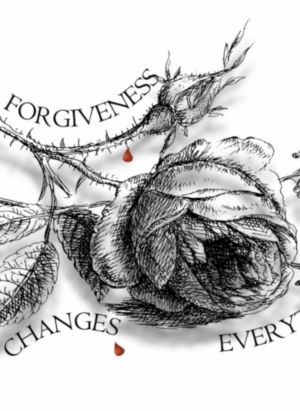
24th Sunday in Ordinary Time (year A) [13 September 2026]
First Reading from the Book of Sirach (27:30–28:7)
In the teachings of the wise Ben Sira, who lived around 180 BC, shortly before the birth of Jesus, one can sense the gradual discovery of forgiveness in the Old Testament. Indeed, the Bible can be seen as God’s patient endeavour, through the prophets, to root out vengeance from our hearts. Cain was avenged seven times, and after him the spiral of violence had become so widespread that Lamech boasted of taking vengeance seventy times seven. It took a patient effort, through the laws and the preaching of the prophets, to reverse this trend. Ben Sira stands at the end of this chain of vengeance and highlights Israel’s realisation of how to bring it to an end. In today’s text, Ben Sira draws on three useful considerations to preach forgiveness. First of all, we must not forget God’s constant faithfulness towards his people, who have, on the other hand, often been unfaithful to him. Furthermore, if you wish to observe God’s commandments, you cannot harbour a grudge against your neighbour, for the commandment to love your neighbour as yourself implies the ability to forgive. And finally, if we were to reflect on our own death, we would readily renounce all forms of hatred and vengeance. Ben Sira says: ‘This is why the Lord is patient with them and pours out his mercy upon them; he sees and knows that their lot is a painful one, for he abounds in forgiveness. Human mercy concerns one’s neighbour, whilst the Lord’s mercy concerns every living being (Sir 18:11–13). The wise man urges us to move beyond offences. Moreover, in the phrase ‘the man who takes revenge will experience God’s vengeance’, there is a concrete truth that touches us deeply. It is these small steps in the spirit of mercy that prepare us to receive God’s mercy; and indeed, how can we imagine that God would be merciful towards us if we refuse even the smallest gesture of forgiveness towards others? Finally, the last verse: ‘Remember the commandments and do not hate your neighbour’ leads us to reflect on the words of Jesus on the cross: ‘Father, forgive them, for they know not what they do’. It makes us realise that sometimes we do wrong without considering all the consequences, and divine forgiveness even goes so far as to suggest that we do wrong out of ignorance. The Ecumenical Translation of the Bible offers this rendering of the verse (28:7): ‘Remember God’s covenant and look beyond the offence’ – a beautiful definition of forgiveness. Of course, one cannot erase an offence, but one must know how to move beyond it. After a wound, the skin retains a scar, and it is the same for emotional wounds, for nothing can erase slander, a gesture of contempt or infidelity. Words and behaviour bear poisonous fruit, and one cannot simply turn back as if nothing had happened. As Ben Sira says, moving beyond does not mean ignoring the past, but trying to mend a relationship torn apart by an offence, whilst accepting the possibility of a new future. The word ‘forgiveness’ – ‘for’ and ‘gift’ – tells us that forgiveness which goes beyond the offence is possible, and that perfect forgiveness is, ultimately, the work of the Holy Spirit.
Responsorial Psalm (102/103)
Psalm 102/103 contains 22 verses, as many as there are letters in the Hebrew alphabet. For this reason, it is called an alphabetic psalm and belongs to the tradition of psalms of thanksgiving for the Covenant. It is a great hymn of gratitude to God for all his gifts and blessings. Another feature of the psalm is its parallelism: each verse consists of two phrases that echo and complement one another, almost like a dialogue between two choirs. This style of expression is very common in the Bible and served both to aid memorisation and to deepen the meaning of the words. In the first verse, ‘Bless the Lord, O my soul; bless his holy Name, O my whole being’, the parallelism helps us to understand two important things. Firstly, in the Bible, the Name refers to the person himself: to bless the Name of the Lord therefore means to bless God in his entirety. Secondly, the word ‘soul’ does not simply refer to a spiritual part of a person as opposed to the body. In the biblical mindset, a person is seen as a unified being: ‘soul’ therefore means the whole person, one’s entire being. The psalm then emphasises God’s mercy: ‘He does not hold a grudge for ever, nor does he harbour his anger for ever. He does not treat us according to our sins, nor repay us according to our iniquities’. God does not follow the logic of ‘quid pro quo’, nor that of punishment proportionate to the offence. His logic is one of gratuitousness and mercy. The Bible shows how Israel gradually discovered the true face of God: not a God who keeps a record of our sins, but a God who is ‘gracious and merciful, slow to anger and abounding in love’ (Ex 34:6). This is the great biblical revelation: God is completely different from our human notions of justice and judgement. For this reason, even the expression ‘fear of God’ must be understood correctly. It does not mean being afraid of God. When we discover that God is a merciful Father, full of tenderness, fear can be transformed into a filial attitude. The fear of God, in the biblical sense, is therefore a profound respect combined with trust, gratitude and the desire to follow his will. It is like a child who listens to his father when he tells him not to go near the fire: he obeys not because he is afraid of his father, but because he knows that his father loves him and wants to protect him. The Psalm itself expresses this with a beautiful image: ‘As a father has compassion on his children, so the Lord has compassion on those who fear him.’ The spiritual journey therefore consists in transforming fear into trust, to the point of living before God as beloved children. God does not ask us for flawless perfection: when we fall, his mercy allows us to start again. His tenderness ‘passes over’ our sins and lifts us up again. It is the same tenderness that Jesus will show in the parable of the Merciful Father and the Prodigal Son. In summary: Psalm 102/103 invites us to bless God with our whole being and to recognise that his love is far greater than our faults. True ‘fear of God’ is not terror, but trust, respect and filial love. With God, we can always start afresh, because his mercy never fails.
A reading from the Letter of Saint Paul the Apostle to the Romans (14:7–9)
The central phrase of the text is ‘We belong to the Lord. None of us lives for ourselves, and none of us dies for ourselves’ (Rom 14:7). Saint Paul reminds us that we are not isolated individuals, independent of one another. Across time and space, we are deeply united. God’s plan is for humanity to be so united as to become one in Christ, a unity founded on the death and resurrection of Jesus, who has become ‘Lord of the dead and the living’. The problem is that divisions can arise even amongst Christians. In Paul’s time, the disputes centred mainly on dietary rules: some Christians, coming from a Jewish background, were very strict; others, coming from the pagan world, were more relaxed. Paul urges everyone not to judge one another: ‘Who are you to judge another’s servant?’ (Romans 14:4). The essential thing is not that we all have the same customs in living out our faith. What matters is that we all belong to Christ. Even today, divisions can arise from liturgical issues or from differing social and political views, because those who share the same faith and the same Baptism may make different choices. For Paul, no one should feel entitled to judge another: rather, each person should sincerely seek to serve the Lord according to their own conscience: ‘Whoever eats, eats for the Lord, for they give thanks to God; and whoever does not eat, does so for the Lord and gives thanks to God.’ This means that there is no single way to give thanks to God, and the same faith can be expressed in different ways. The true ‘spiritual sacrifice’ consists in offering one’s whole self to God, with sincerity and love, each person doing so according to what they consider right, in different and even opposing ways; but what matters is the sincere desire to serve God. Paul points out what must remain at the heart of the Christian life: ‘The kingdom of God is not a matter of eating and drinking, but of righteousness, peace and joy in the Holy Spirit’ (Romans 14:17). We must seek what builds up the community, fosters peace and strengthens relationships; and the fundamental rule is mutual love: ‘Hold one another in high esteem’. This is the central message: Baptism makes us all belong to Christ, and for this reason our differences — in religious practices, sensibilities, and social or political choices — must not become a cause for judgement and division. What unites us is far more important than what divides us, and Christian maturity consists in respecting those who live their faith differently from us, refraining from judging them, knowing that we are all called to build peace, unity, respect and love, since ‘none of us lives for ourselves’: indeed, we all belong to the Lord.
From the Gospel according to Matthew (18:21–35)
The Gospel presents the parable of the unforgiving servant in three stages. 1. The king forgives the debt: a parable about God’s gratuitous love, which surpasses all our calculations. A servant had incurred an enormous debt to the king, one that was impossible to repay; according to the laws of the time, he and his family should have been imprisoned. The man, however, begged the king for patience and, moved to compassion, the king not only granted him more time but also forgave the debt entirely: ‘You owe me nothing more’. 2. The servant who cannot forgive. The same servant, as soon as he left, met a man who owed him a very small sum compared to what had been forgiven him; yet, instead of showing mercy, he immediately demanded payment and had him thrown into prison. He had received an immense gift, but was incapable of granting others even a small fraction of what he had received. For this reason, the king rebukes him: ‘Shouldn’t you too have shown mercy to your fellow servant, just as I showed mercy to you?’ 3. Forgiving without keeping score. Peter asks Jesus: ‘Lord, how many times must I forgive my brother? Up to seven times?’ Jesus replies: ‘Not seven times, but seventy times seven’, that is, without limit. Forgiveness must not become a matter of keeping score: we must not count how many times we have already forgiven or determine the limits of our obligation to do so. Jesus overturns the logic of the story of Cain and Lamech, where vengeance begets further vengeance and violence multiplies without end. Jesus sets Lamech’s boundless vengeance against boundless forgiveness; and so, in the Bible, God progressively leads humanity out of the spiral of violence: from the law of retaliation (an eye for an eye and a tooth for a tooth), which at least limits vengeance, we arrive at the discovery of forgiveness—a revelation that reaches its full fulfilment in the sacrifice of the Cross. But why does the servant in the parable forfeit the benefit of what he had received? Not because God ceases to give, but because our hearts can become incapable of receiving and passing on what they receive. It is like soil that has become dry and impermeable, where even a heavy downpour cannot penetrate it because it must first be tilled. In the same way, learning to forgive opens our hearts and makes us ready to receive once more what God offers us. A heart closed off by resentment becomes incapable of allowing itself to be transformed. The servant should have been so deeply grateful for the debt that had been forgiven him that he would not have refused his fellow servant’s request. The central point of the parable is that those who recognise what they have received become capable of giving it on in turn. We see this too in the episode of the woman caught in adultery (John 8). The accusers arrive with stones in their hands, ready to stone her; Jesus invites them first to look within themselves, and one by one they leave, starting with the elders, no longer feeling authorised to judge the adulteress because they are aware of their own frailty. The scene thus completes the message of this Sunday’s parable: before condemning another, remember that you too live thanks to God’s patience and goodness. A Christian is not someone who never makes mistakes, but someone who, having experienced the possibility of a fresh start, offers that same opportunity to others. We are truly converted when what we receive from God transforms the way we treat others.
+Giovanni D’Ercole
And «each of us can say: "for love to me"» (Pope Francis)
E «ognuno di noi può dire: “per amore a me”» (Papa Francesco)
We too, to reach a more conscious confession of Jesus Christ must follow, like Peter, a path made of attentive, caring listening (Pope John Paul II)
Anche noi per giungere a una più consapevole confessione di Gesù Cristo dobbiamo percorrere, come Pietro, un cammino fatto di ascolto attento, premuroso (Papa Giovanni Paolo II)
It is a word that must be witnessed to and proclaimed explicitly, because without a consistent witness it proves to be less comprehensible and credible [Pope Benedict]
E’ una Parola che deve essere testimoniata e proclamata esplicitamente, perché senza una testimonianza coerente essa risulta meno comprensibile e credibile [Papa Benedetto]
The “reading and meditation of the word of God root us more deeply in Christ and guide our ministry as servants of reconciliation, justice and peace” (second Synod for Africa, Propositio 46)
La lettura e la meditazione della Parola di Dio ci radicano più profondamente in Cristo e orientano il nostro ministero di servitori della riconciliazione, della giustizia e della pace (Secondo Sinodo per l’Africa, Propositio 46)
The Gospel of Matthew written in Hebrew or Aramaic is no longer extant, but in the Greek Gospel that we possess we still continue to hear, in a certain way, the persuasive voice of the publican Matthew, who, having become an Apostle, continues to proclaim God's saving mercy to us. And let us listen to St Matthew's message, meditating upon it ever anew also to learn to stand up and follow Jesus with determination (Pope Benedict)
Non abbiamo più il Vangelo scritto da Matteo in ebraico o in aramaico, ma nel Vangelo greco che abbiamo continuiamo a udire ancora, in qualche modo, la voce persuasiva del pubblicano Matteo che, diventato Apostolo, séguita ad annunciarci la salvatrice misericordia di Dio e ascoltiamo questo messaggio di san Matteo, meditiamolo sempre di nuovo per imparare anche noi ad alzarci e a seguire Gesù con decisione (Papa Benedetto)
That denarius clearly represents eternal life, a gift that God reserves for all. Indeed those who are considered the "last", if they accept, become the "first", whereas the "first" can risk becoming the "last" [Pope Benedict]
Quel denaro rappresenta la vita eterna, dono che Dio riserva a tutti. Anzi, proprio quelli che sono considerati "ultimi", se lo accettano, diventano "primi", mentre i "primi" possono rischiare di finire "ultimi" [Papa Benedetto]
The sower is Jesus. With this image, we can see that he presents himself as one who does not impose himself, but rather offers himself. He does not attract us by conquering us, but by donating himself: he casts seeds. With patience and generosity, he spreads his Word, which is not a cage or a trap, but a seed which can bear fruit (Pope Francis)
Il seminatore è Gesù. Notiamo che, con questa immagine, Egli si presenta come uno che non si impone, ma si propone; non ci attira conquistandoci, ma donandosi: butta il seme. Egli sparge con pazienza e generosità la sua Parola, che non è una gabbia o una trappola, ma un seme che può portare frutto (Papa Francesco)
The Church desires to give thanks to the Most Holy Trinity for the "mystery of woman" and for every woman - for that which constitutes the eternal measure of her feminine dignity, for the "great works of God", which throughout human history have been accomplished in and through her (Mulieris Dignitatem n.31)








duevie.art
don Giuseppe Nespeca
Tel. 333-1329741
Disclaimer
Questo blog non rappresenta una testata giornalistica in quanto viene aggiornato senza alcuna periodicità. Non può pertanto considerarsi un prodotto editoriale ai sensi della legge N°62 del 07/03/2001.
Le immagini sono tratte da internet, ma se il loro uso violasse diritti d'autore, lo si comunichi all'autore del blog che provvederà alla loro pronta rimozione.
L'autore dichiara di non essere responsabile dei commenti lasciati nei post. Eventuali commenti dei lettori, lesivi dell'immagine o dell'onorabilità di persone terze, il cui contenuto fosse ritenuto non idoneo alla pubblicazione verranno insindacabilmente rimossi.