


don Giuseppe Nespeca
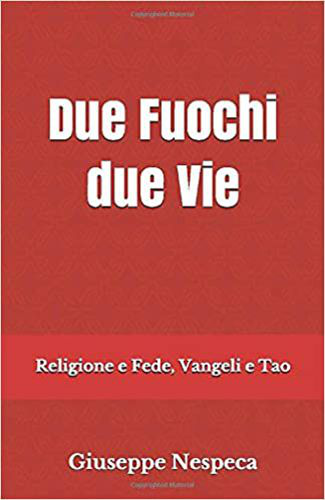
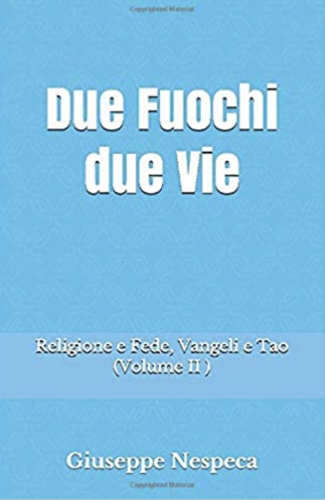
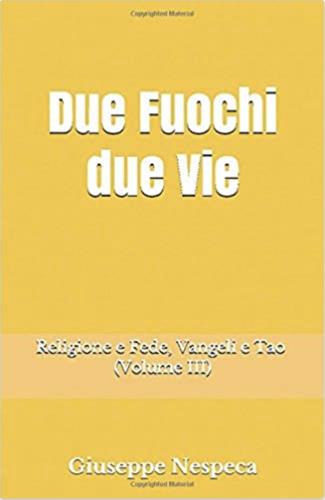
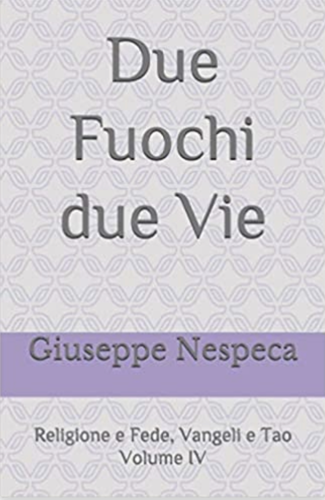
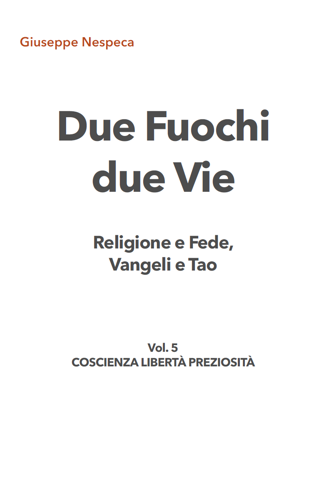
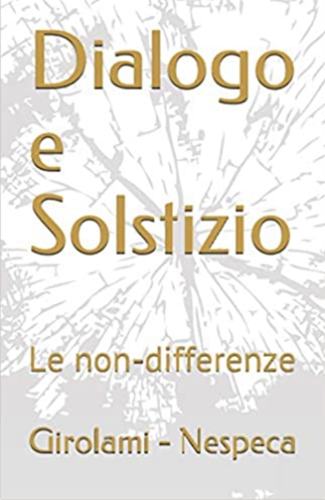
Giuseppe Nespeca è architetto e sacerdote. Cultore della Sacra scrittura è autore della raccolta "Due Fuochi due Vie - Religione e Fede, Vangeli e Tao"; coautore del libro "Dialogo e Solstizio".
Does not exclude: no prejudice

“The Son of Man came to seek and to save the lost”.
God excludes no one, neither the poor nor the rich. God does not let himself be conditioned by our human prejudices, but sees in everyone a soul to save and is especially attracted to those who are judged as lost and who think themselves so. Jesus Christ, the Incarnation of God, has demonstrated this immense mercy, which takes nothing away from the gravity of sin, but aims always at saving the sinner, at offering him the possibility of redemption, of starting again from the beginning, of converting [...]
Let us pray to the Virgin Mary, perfect model of communion with Jesus, to be renewed by his love, so that we too may experience the joy of being visited by the Son of God, of being renewed by his love and of transmitting his mercy to others.
[Pope Benedict, Angelus 31 October 2010]
Helping to open the way for God in this world
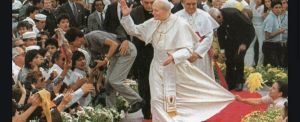
The particular circumstances of John's birth have been handed down to us by the evangelist Luke. According to an ancient tradition, it took place in Ain-Karim, before the gates of Jerusalem. The circumstances surrounding this birth were so unusual that even at that time people were asking: "What is this child to be?" (Lk 1:66). It was evident to his believing parents, neighbours and relatives that his birth was a sign from God. They clearly saw that the "hand of the Lord" was upon him. This was already demonstrated by the announcement of his birth to his father Zechariah, while he was providing priestly service in the temple in Jerusalem. His mother, Elisabeth, was already advanced in years and was thought to be barren. Even the name 'John' he was given was unusual for his environment. His father himself had to give orders that he be called "John" and not, as everyone else wanted, "Zechariah" (cf. Lk 1:59-63).
The name John means in the Hebrew language "God is merciful". Thus already in the name is expressed the fact that the newborn child would one day announce God's plan of salvation.
The future would fully confirm the predictions and events surrounding his birth: John, son of Zechariah and Elisabeth, became the "voice of one crying out in the wilderness" (Matt 3:3), who on the banks of the Jordan called people to penance and prepared the way for Christ.
Christ himself said of John the Baptist that "among those born of women no greater one has arisen" (cf. Mt 11:11). That is why the Church has also reserved a special veneration for this great messenger of God from the very beginning. An expression of this veneration is today's feast.
4. Dear brothers and sisters! This celebration, with its liturgical texts, invites us to reflect on the question of man's becoming, his origins and his destination. True, we already seem to know a great deal about this subject, both from mankind's long experience and from ever more in-depth biomedical research. But it is the word of God that always re-establishes the essential dimension of the truth about man: man is created by God and willed by God in his image and likeness. No purely human science can demonstrate this truth. At most it can come close to this truth or intuitively surmise the truth about this 'unknown being' that is man from the moment of his conception in the womb.
At the same time, however, we find ourselves witnessing how, in the name of a supposed science, man is 'reduced' in a dramatic trial and represented in a sad simplification; and so it happens that even those rights that are based on the dignity of his person, which distinguishes him from all the other creatures of the visible world, are overshadowed. Those words from the book of Genesis, which speak of man as the creature created in the image and likeness of God, highlight, in a concise yet profound way, the full truth about him.
5. We can also learn this truth about man from today's liturgy, in which the Church prays to God, the creator, in the words of the psalmist:
"Lord, you scrutinise me and know me . . . It is you who created my bowels and wove me in my mother's womb . . . you know me to the depths. When I was formed in secret . . . my bones were not hidden from thee . . . I praise thee, for thou hast made me like a wonder" (Ps 139 [138], 1. 13-15).
Man is therefore aware of what he is - of what he is from the beginning, from the womb. He knows that he is a creature that God wants to meet and with whom he wants to dialogue. More: in man, he wants to meet the whole of creation.
For God, man is a 'someone': unique and unrepeatable. He, as the Second Vatican Council says, "on earth is the only creature that God willed for itself" (cf. Gaudium et Spes, 24).
"The Lord from my mother's womb has called me; from my mother's womb he has pronounced my name" (Is 49:1); like the name of the child who was born in Ain-Karim: "John". Man is that being whom God calls by name. For God he is the created 'you', of all creatures he is that personal 'I', who can address God and call him by name. God wants that partner in man who addresses him as his own creator and Father: 'You, my Lord and my God'. To the divine "you".
7. God called John the Baptist already "in the womb" so that he might become "the voice of one crying out in the wilderness" and thus prepare the way for his Son. In a very similar way, God has also "laid his hand" on each one of us. For each of us he has a particular call, each of us is entrusted with a task designed by him for us.
In each call, which may come to us in the most diverse way, we hear that divine voice, which then spoke through John: "Prepare the way of the Lord!"(Mt 3:3).
Every man should ask himself in what way he can contribute within the scope of his work and position, to open the way for God in this world. Every time we open ourselves to God's call, we prepare, like John, the way of the Lord among men.
[Pope John Paul II, homily Eisenstaedt 24 June 1988]
Not the Preacher
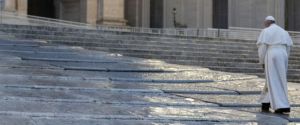
There are Christians who have "a certain allergy to preachers of the word": they accept "the truth of revelation" but not "the preacher", preferring "a caged life". It happened in Jesus' time and unfortunately continues to happen today in those who live closed in on themselves, because they are afraid of the freedom that comes from the Holy Spirit.
For Pope Francis, this is the teaching that comes from the readings of the liturgy celebrated on Friday morning, 13 December, in the chapel of Santa Marta. The Pontiff dwelt above all on the passage from the Gospel of Matthew (11, 16-19) in which Jesus compares the generation of his contemporaries "to those children sitting in the squares who turn to their companions and say: we played the flute and you did not dance, we sang a lament and you did not weep".
In this regard, the Bishop of Rome recalled that Christ in the Gospels "always speaks well of children", offering them as a "model of Christian life" and inviting them to "be like them to enter the kingdom of heaven". Instead, he noted, in the passage in question "it is the only time he does not speak so well of them". For the Pope, it is an image of children who are "a bit special: rude, discontented, even scornful"; children who do not know how to be happy while playing and who "always refuse the invitation of others: nothing goes well for them". In particular, Jesus uses this image to describe "the leaders of his people", defined by the Pontiff as "people who were not open to the word of God".
For the Holy Father there is an interesting aspect in this attitude: their rejection, precisely, "is not for the message, it is for the messenger". It is enough to read the Gospel passage to confirm this. "John came, who neither eats nor drinks," the Pope noted, "and they said: he has a devil. The Son of Man came, who eats and drinks, and they said: here is a glutton and a drunkard, a friend of publicans and sinners'. In practice, people have always found reasons to delegitimise the preacher. Just think of the people of that time, who preferred 'to take refuge in a somewhat elaborate religion: in moral precepts, like the Pharisees; in political compromise, like the Sadducees; in social revolution, like the Zealots; in Gnostic spirituality, like the Essenes'. All of them, he added, "with their own neat, well-made system", but which does not accept "the preacher". That is why Jesus refreshes their memory by reminding them of the prophets, who were persecuted and killed.
Accepting "the truth of revelation" and not "the preacher" reveals for the Pontiff a mentality that is the result of "a life caged in precepts, in compromises, in revolutionary plans, in spirituality without flesh". Pope Francis referred in particular to those Christians "who allow themselves not to dance when the preacher gives you good news of joy, and allow themselves not to cry when the preacher gives you sad news". To those Christians, that is, 'who are closed, caged, who are not free'. And the reason is the "fear of the Holy Spirit's freedom, which comes through preaching".
Moreover, "this is the scandal of preaching of which St Paul spoke; the scandal of preaching that ends in the scandal of the cross". In fact, 'it scandalises us that God speaks to us through men with limitations, sinful men; and it scandalises us even more that God speaks to us and saves us through a man who says he is the son of God, but ends up as a criminal'. So for Pope Francis we end up covering up 'the freedom that comes from the Holy Spirit', because ultimately 'these sad Christians do not believe in the Holy Spirit; they do not believe in that freedom that comes from preaching, which admonishes you, teaches you, even slaps you, but it is precisely freedom that makes the Church grow'.
So the image of the Gospel, with "children who are afraid to dance, to cry", who are "afraid of everything, who ask for security in everything", makes one think of "these sad Christians, who always criticise the preachers of truth, because they are afraid to open the door to the Holy Spirit". Hence the Pontiff's exhortation to pray for them and also to pray for ourselves, so that "we do not become sad Christians", those who take away "the Holy Spirit's freedom to come to us through the scandal of preaching."
[Pope Francis, St. Martha, in L'Osservatore Romano 14/12/2013]
24th Sunday in O.T.
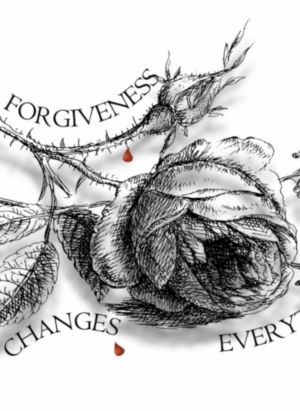
24th Sunday in Ordinary Time (year A) [13 September 2026]
First Reading from the Book of Sirach (27:30–28:7)
In the teachings of the wise Ben Sira, who lived around 180 BC, shortly before the birth of Jesus, one can sense the gradual discovery of forgiveness in the Old Testament. Indeed, the Bible can be seen as God’s patient endeavour, through the prophets, to root out vengeance from our hearts. Cain was avenged seven times, and after him the spiral of violence had become so widespread that Lamech boasted of taking vengeance seventy times seven. It took a patient effort, through the laws and the preaching of the prophets, to reverse this trend. Ben Sira stands at the end of this chain of vengeance and highlights Israel’s realisation of how to bring it to an end. In today’s text, Ben Sira draws on three useful considerations to preach forgiveness. First of all, we must not forget God’s constant faithfulness towards his people, who have, on the other hand, often been unfaithful to him. Furthermore, if you wish to observe God’s commandments, you cannot harbour a grudge against your neighbour, for the commandment to love your neighbour as yourself implies the ability to forgive. And finally, if we were to reflect on our own death, we would readily renounce all forms of hatred and vengeance. Ben Sira says: ‘This is why the Lord is patient with them and pours out his mercy upon them; he sees and knows that their lot is a painful one, for he abounds in forgiveness. Human mercy concerns one’s neighbour, whilst the Lord’s mercy concerns every living being (Sir 18:11–13). The wise man urges us to move beyond offences. Moreover, in the phrase ‘the man who takes revenge will experience God’s vengeance’, there is a concrete truth that touches us deeply. It is these small steps in the spirit of mercy that prepare us to receive God’s mercy; and indeed, how can we imagine that God would be merciful towards us if we refuse even the smallest gesture of forgiveness towards others? Finally, the last verse: ‘Remember the commandments and do not hate your neighbour’ leads us to reflect on the words of Jesus on the cross: ‘Father, forgive them, for they know not what they do’. It makes us realise that sometimes we do wrong without considering all the consequences, and divine forgiveness even goes so far as to suggest that we do wrong out of ignorance. The Ecumenical Translation of the Bible offers this rendering of the verse (28:7): ‘Remember God’s covenant and look beyond the offence’ – a beautiful definition of forgiveness. Of course, one cannot erase an offence, but one must know how to move beyond it. After a wound, the skin retains a scar, and it is the same for emotional wounds, for nothing can erase slander, a gesture of contempt or infidelity. Words and behaviour bear poisonous fruit, and one cannot simply turn back as if nothing had happened. As Ben Sira says, moving beyond does not mean ignoring the past, but trying to mend a relationship torn apart by an offence, whilst accepting the possibility of a new future. The word ‘forgiveness’ – ‘for’ and ‘gift’ – tells us that forgiveness which goes beyond the offence is possible, and that perfect forgiveness is, ultimately, the work of the Holy Spirit.
Responsorial Psalm (102/103)
Psalm 102/103 contains 22 verses, as many as there are letters in the Hebrew alphabet. For this reason, it is called an alphabetic psalm and belongs to the tradition of psalms of thanksgiving for the Covenant. It is a great hymn of gratitude to God for all his gifts and blessings. Another feature of the psalm is its parallelism: each verse consists of two phrases that echo and complement one another, almost like a dialogue between two choirs. This style of expression is very common in the Bible and served both to aid memorisation and to deepen the meaning of the words. In the first verse, ‘Bless the Lord, O my soul; bless his holy Name, O my whole being’, the parallelism helps us to understand two important things. Firstly, in the Bible, the Name refers to the person himself: to bless the Name of the Lord therefore means to bless God in his entirety. Secondly, the word ‘soul’ does not simply refer to a spiritual part of a person as opposed to the body. In the biblical mindset, a person is seen as a unified being: ‘soul’ therefore means the whole person, one’s entire being. The psalm then emphasises God’s mercy: ‘He does not hold a grudge for ever, nor does he harbour his anger for ever. He does not treat us according to our sins, nor repay us according to our iniquities’. God does not follow the logic of ‘quid pro quo’, nor that of punishment proportionate to the offence. His logic is one of gratuitousness and mercy. The Bible shows how Israel gradually discovered the true face of God: not a God who keeps a record of our sins, but a God who is ‘gracious and merciful, slow to anger and abounding in love’ (Ex 34:6). This is the great biblical revelation: God is completely different from our human notions of justice and judgement. For this reason, even the expression ‘fear of God’ must be understood correctly. It does not mean being afraid of God. When we discover that God is a merciful Father, full of tenderness, fear can be transformed into a filial attitude. The fear of God, in the biblical sense, is therefore a profound respect combined with trust, gratitude and the desire to follow his will. It is like a child who listens to his father when he tells him not to go near the fire: he obeys not because he is afraid of his father, but because he knows that his father loves him and wants to protect him. The Psalm itself expresses this with a beautiful image: ‘As a father has compassion on his children, so the Lord has compassion on those who fear him.’ The spiritual journey therefore consists in transforming fear into trust, to the point of living before God as beloved children. God does not ask us for flawless perfection: when we fall, his mercy allows us to start again. His tenderness ‘passes over’ our sins and lifts us up again. It is the same tenderness that Jesus will show in the parable of the Merciful Father and the Prodigal Son. In summary: Psalm 102/103 invites us to bless God with our whole being and to recognise that his love is far greater than our faults. True ‘fear of God’ is not terror, but trust, respect and filial love. With God, we can always start afresh, because his mercy never fails.
A reading from the Letter of Saint Paul the Apostle to the Romans (14:7–9)
The central phrase of the text is ‘We belong to the Lord. None of us lives for ourselves, and none of us dies for ourselves’ (Rom 14:7). Saint Paul reminds us that we are not isolated individuals, independent of one another. Across time and space, we are deeply united. God’s plan is for humanity to be so united as to become one in Christ, a unity founded on the death and resurrection of Jesus, who has become ‘Lord of the dead and the living’. The problem is that divisions can arise even amongst Christians. In Paul’s time, the disputes centred mainly on dietary rules: some Christians, coming from a Jewish background, were very strict; others, coming from the pagan world, were more relaxed. Paul urges everyone not to judge one another: ‘Who are you to judge another’s servant?’ (Romans 14:4). The essential thing is not that we all have the same customs in living out our faith. What matters is that we all belong to Christ. Even today, divisions can arise from liturgical issues or from differing social and political views, because those who share the same faith and the same Baptism may make different choices. For Paul, no one should feel entitled to judge another: rather, each person should sincerely seek to serve the Lord according to their own conscience: ‘Whoever eats, eats for the Lord, for they give thanks to God; and whoever does not eat, does so for the Lord and gives thanks to God.’ This means that there is no single way to give thanks to God, and the same faith can be expressed in different ways. The true ‘spiritual sacrifice’ consists in offering one’s whole self to God, with sincerity and love, each person doing so according to what they consider right, in different and even opposing ways; but what matters is the sincere desire to serve God. Paul points out what must remain at the heart of the Christian life: ‘The kingdom of God is not a matter of eating and drinking, but of righteousness, peace and joy in the Holy Spirit’ (Romans 14:17). We must seek what builds up the community, fosters peace and strengthens relationships; and the fundamental rule is mutual love: ‘Hold one another in high esteem’. This is the central message: Baptism makes us all belong to Christ, and for this reason our differences — in religious practices, sensibilities, and social or political choices — must not become a cause for judgement and division. What unites us is far more important than what divides us, and Christian maturity consists in respecting those who live their faith differently from us, refraining from judging them, knowing that we are all called to build peace, unity, respect and love, since ‘none of us lives for ourselves’: indeed, we all belong to the Lord.
From the Gospel according to Matthew (18:21–35)
The Gospel presents the parable of the unforgiving servant in three stages. 1. The king forgives the debt: a parable about God’s gratuitous love, which surpasses all our calculations. A servant had incurred an enormous debt to the king, one that was impossible to repay; according to the laws of the time, he and his family should have been imprisoned. The man, however, begged the king for patience and, moved to compassion, the king not only granted him more time but also forgave the debt entirely: ‘You owe me nothing more’. 2. The servant who cannot forgive. The same servant, as soon as he left, met a man who owed him a very small sum compared to what had been forgiven him; yet, instead of showing mercy, he immediately demanded payment and had him thrown into prison. He had received an immense gift, but was incapable of granting others even a small fraction of what he had received. For this reason, the king rebukes him: ‘Shouldn’t you too have shown mercy to your fellow servant, just as I showed mercy to you?’ 3. Forgiving without keeping score. Peter asks Jesus: ‘Lord, how many times must I forgive my brother? Up to seven times?’ Jesus replies: ‘Not seven times, but seventy times seven’, that is, without limit. Forgiveness must not become a matter of keeping score: we must not count how many times we have already forgiven or determine the limits of our obligation to do so. Jesus overturns the logic of the story of Cain and Lamech, where vengeance begets further vengeance and violence multiplies without end. Jesus sets Lamech’s boundless vengeance against boundless forgiveness; and so, in the Bible, God progressively leads humanity out of the spiral of violence: from the law of retaliation (an eye for an eye and a tooth for a tooth), which at least limits vengeance, we arrive at the discovery of forgiveness—a revelation that reaches its full fulfilment in the sacrifice of the Cross. But why does the servant in the parable forfeit the benefit of what he had received? Not because God ceases to give, but because our hearts can become incapable of receiving and passing on what they receive. It is like soil that has become dry and impermeable, where even a heavy downpour cannot penetrate it because it must first be tilled. In the same way, learning to forgive opens our hearts and makes us ready to receive once more what God offers us. A heart closed off by resentment becomes incapable of allowing itself to be transformed. The servant should have been so deeply grateful for the debt that had been forgiven him that he would not have refused his fellow servant’s request. The central point of the parable is that those who recognise what they have received become capable of giving it on in turn. We see this too in the episode of the woman caught in adultery (John 8). The accusers arrive with stones in their hands, ready to stone her; Jesus invites them first to look within themselves, and one by one they leave, starting with the elders, no longer feeling authorised to judge the adulteress because they are aware of their own frailty. The scene thus completes the message of this Sunday’s parable: before condemning another, remember that you too live thanks to God’s patience and goodness. A Christian is not someone who never makes mistakes, but someone who, having experienced the possibility of a fresh start, offers that same opportunity to others. We are truly converted when what we receive from God transforms the way we treat others.
+Giovanni D’Ercole
Tradition and the alternative Kingdom: Religion and Faith as Allies
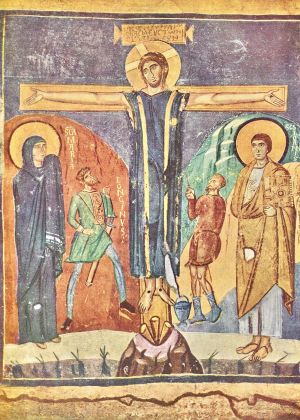
Mary in the Church, begetting sons
(Jn 19:25-27)
The short Gospel passage in vv.25-27 is perhaps the artistic apex of the Passion narrative.
In the fourth Gospel the Mother appears twice, at the wedding feast of Cana and at the foot of the Cross - both episodes present only in Jn.
Both at Cana and at the foot of the Cross, the Mother is a figure of the genuinely sensitive and faithful remnant of Israel.
The people-bride of the First Testament is as if waiting for the real Revelation: they perceive all the limitation of the ancient idea of God, which has reduced and extinguished the joy of the wedding feast between the Father and his sons.
Authentically worshipping Israel prompted the shift from religiosity to working Faith, from the old law to the New Testament.
An alternative Kingdom is generated at the foot of the Cross.
Mothers and fathers of a different humanity are being formed, proclaiming the Good News of God - this time for the exclusive benefit of every man, in whatever condition he may find himself.
In the theological intent of John, the Words of Jesus «Woman, behold your son» and «Behold, the Mother of yours» were intended to help settle and harmonise the strong tensions that at the end of the first century were already pitting different currents of thought about Christ against each other.
Among them: Judaizers; advocates of the primacy of faith over works; Laxists, who now considered Jesus anathema, intending to supplant Him with a generic freedom of spirit without history.
At the beginning of second century, Marcion rejected the entire First Testament and appreciated only a part of the New.
To those who now wanted to disregard the teaching of the 'fathers', Jesus proposed to make the past and novelty walk together.
The beloved disciple, icon of the authentic son of God [widespread Word-event (of New Testament)] must receive the Mother, the culture of the Covenant people, at Home - that is, in the nascent Church.
Yet, even if it is in the Christian community that the full meaning of the whole of Scripture is discovered… the Person, the story and the Word of Christ Himself cannot be understood nor will it bear concrete fruit without the ancient root that generated Him.
Projections alone are not enough, even if they shake the mental prisons, often edifices of false certainties: the Seed is not an enemy to be fought, but a virtue that comes from deep within.
The Alliance is precious, it gives the real jolt to life. Thus new family relationships flourish: then the Church is born.
And the Church raised up by its Lord will reveal something portentous: fruitfulness from nullity, life from the outpouring of it, birth from apparent sterility.
In Mary and the faithful icons generated from the breast of Christ - inseparable in the Mission - the intimate cooperation is intensified by moments of humble and silent community existence.
In perfect worshipping the identity-character of the Crucified One and in the movement of self-giving, the freedom of abasing oneself gaits and arises.
If anyone gets down, the new will advance.
And the old can also re-emerge, this time for good. For there are other Heights. For what makes one intimate with God is nothing external.
A river of unimagined attunements will reconnect the human spirit of believers to the motherly work of the Spirit without barriers.
Thus, in silence we will not oppose discomfort. The offended body will speak, manifesting the soul and filling the life, in a crescendo.
To internalize and live the message:
How do you get into the rhythm of this Gospel passage? In which character do you recognise yourself, or why do you see yourself in all of them? What is in each one your measure, which you give to the world?
[Blessed Virgin Mary of Sorrows, September 15]
Tradition and Alternative Kingdom: Religion and Faith as Allies
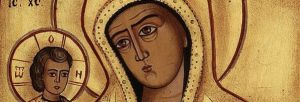
Mary in the Church, who gives birth to sons
(Jn 19:25-27)
The brief passage of the Gospel in verses 25-27 is perhaps the artistic climax of the Passion narrative.
In the fourth Gospel, the Mother appears twice, at the wedding at Cana and at the foot of the Cross - both episodes found only in John.
Both at Cana and at the foot of the Cross, the Mother is a figure of the rest of Israel, authentically sensitive and faithful.
The people-bride of the First Testament are as if waiting for the real Revelation: they perceive all the limitations of the ancient idea of God, which has reduced and extinguished the joy of the wedding feast between the Father and his children.
The authentically adoring Israel brought about the transition from religiosity to active Faith, from the ancient law to the New Testament.
At the foot of the Cross, an alternative Kingdom is generated.
Fathers and mothers of a different humanity are formed, proclaiming the Good News of God - this time exclusively in favour of every person, whatever their condition.
In the theological intent of John, Jesus' words 'Woman, behold your son' and 'Behold, your Mother' were intended to help resolve and harmonise the strong tensions that already existed at the end of the first century between the different currents of thought on Christ.
Among them were the Judaizers, who believed in the primacy of faith over works, and the Laxists, who considered Jesus anathema and wanted to replace him with a generic freedom of spirit without history.
At the beginning of the second century, Marcion rejected the entire First Testament and seems to have appreciated only part of the New Testament.
To those who now wanted to disregard the teaching of the 'fathers', Jesus proposed to bring together the past and the new.
The beloved disciple, icon of the authentic son of God [Word-event spread throughout the New Testament], must receive the Mother, the culture of the people of the Covenant, into his home - that is, into the nascent Church.
Yet, even if it is in the Christian community that the full meaning of all Scripture is discovered, the Person, the story and the Word of Christ himself cannot be understood nor will they bear concrete fruit with the many dreams ahead, without the ancient root that generated them.
Projections alone are not enough, even if they shake mental prisons, often built on false certainties: the Seed is not an enemy to be fought, but a virtue that comes from deep within.
The Covenant is precious; it gives life a genuine jolt. Thus, new family relationships flourish: then the Church is born.
And the Church raised up by her Lord will reveal something portentous: fruitfulness from nothingness, life from the outpouring of it, birth from apparent sterility.
In Mary and in the faithful icons generated from the breast of Christ - inseparable in the Mission - the intimate cooperation intensifies the moments of a humble and silent community life.
In the perfect adoration of the identity-character of the Crucified One and in the movement of self-giving, the freedom to let go advances.
If someone lays down, the new will advance.
And even the old may re-emerge, this time everlasting. Because there are other Heights. Because what makes us intimate with God is nothing external.
A river of unimagined harmonies will reconnect the human spirit of believers to the maternal work of the Spirit without barriers.
The Tao Te Ching (xxii) says: 'If you bend, you preserve yourself; if you bow, you straighten yourself; if you hollow yourself, you fill yourself; if you wear yourself out, you renew yourself; if you aim for little, you obtain; if you aim for much, you remain disappointed. For this reason, the saint preserves the One [the maximum of the little], and becomes a model [sets the standard] for the world. He does not see by himself, therefore he is enlightened; he does not approve by himself, therefore he shines; he does not glory by himself, therefore he has merit; he does not exalt himself, therefore he lasts long. Precisely because he does not contend, no one in the world can contend with him. What the ancients said: if you bend, you preserve yourself, were these perhaps empty words? In truth, they were whole'.
In this way, in silence, we will not oppose hardship. The offended body will speak, manifesting the soul and filling life, in a crescendo.
To internalise and live the message:
How do you enter into the rhythm of this passage from the Gospel? Which character do you identify with, or why do you see yourself in all of them? What is your measure in each of them, what do you give to the world?
Blood Water: Body still torn apart
Blood and Water: life given and life transmitted
(Jn 19:31-37)
The Lord's cruel departure is not an end: it inaugurates new life, albeit amid gruesome signs and true death.
The Crucified One saves: he communicates a life of salvation. He takes us from one world to another: only in this sense does the ancient Passover coincide with the new one.
His is a Liberation and Redemption that goes far beyond the ritual promises of propitiatory sacrifices and the religion of purification.
The Blood of Christ is here a figure of the ultimate Gift of Love. The Water from the same pierced side is that which is assimilated and makes us grow.This supreme Friendship, given and received, conquers every form of death, because it offers a double principle of indestructible life: the acceptance of an ever-new proposal, and growth wave upon wave.
Thus, the Jewish feast of liberation is replaced by Christian Easter - and by the signs of the essential Sacraments.
In the body of Jesus and in those of the men crucified alongside him, John sees the brotherhood of the Son with the human race, which is also made a divine sanctuary.
With Jesus dead, we too can follow him [criminals whose legs are broken] because no one can take the life of the Risen One, even if they try to do so to the unfortunate ones with him.
In fact, the 'piercing' of Christ's Body continues even after his death on the Cross (v. 34): hostility towards him will not subside; on the contrary, it wants to destroy him forever.
But from his pierced Body [the authentic Church] will continue to flow dizzying love and finally the joy of a festive banquet, as promised since the wedding at Cana.
The evangelist's testimony becomes the solemn foundation of the faith of future disciples. And faith will replace the yoke of religion already written down.
Thus, the author invites each of us to write our own Gospel (Jn 20:30-31) in the experience of the paradoxes and salvation of God, who has reached us precisely from our sins or uncertain situations.
Future disciples are proclaimed blessed (Jn 20:29) precisely because they 'have not seen' that spectacle with their eyes.
However, they recognised it in themselves and in their own journey, repeatedly experiencing the place of Mercy in their own weaknesses.
Maternal sense, not a Church of bachelors
On 21 May, at Santa Marta, Pope Francis celebrated Mass for the first time in memory of the Blessed Virgin Mary, Mother of the Church: from this year, in fact, the feast day in the general Roman calendar is celebrated on the Monday after Pentecost, as decreed by the Pontiff in the decree Ecclesia mater of the Congregation for Divine Worship and the Discipline of the Sacraments (11 February 2018), precisely to "foster the growth of the maternal sense of the Church in pastors, religious and the faithful, as well as genuine Marian piety".
"In the Gospels, whenever Mary is mentioned, she is referred to as 'the mother of Jesus'," Francis immediately pointed out in his homily, referring to the Gospel passage from John (19:25-34). And even if "the word 'mother' is not used in the Annunciation, the context is one of motherhood: the mother of Jesus," said the Pope, emphasising that "this maternal attitude accompanies her work throughout the life of Jesus: she is a mother." So much so, he continued, "that in the end Jesus gives her as a mother to his own, in the person of John: 'I am leaving, but this is your mother'." Here, then, is "Mary's motherhood."
"The words of Our Lady are the words of a mother," explained the Pope. And so are "all of them: after those at the beginning, of willingness to God's will and praise to God in the Magnificat, all the words of Our Lady are the words of a mother." She is always "with her Son, even in her attitudes: she accompanies her Son, she follows her Son." And again, "before, in Nazareth, she raises him, nurtures him, educates him, but then she follows him: 'Your mother is there.'" Mary "is a mother from the beginning, from the moment she appears in the Gospels, from that moment of the Annunciation until the end, she is a mother." She is not referred to as "the lady" or "the widow of Joseph" — and in reality "they could have said so" — but Mary is always "a mother".
"The Fathers of the Church understood this well," said the Pontiff, "and they also understood that Mary's motherhood does not end with her; it goes beyond." The Fathers always "say that Mary is mother, the Church is mother, and your soul is mother: there is something feminine in the Church, which is maternal." Therefore, Francis explained, "the Church is feminine because she is 'church', 'bride': she is feminine and she is mother, she gives birth." She is, therefore, "bride and mother," but "the Fathers go further and say: 'Your soul is also bride of Christ and mother.'"
"In this attitude that comes from Mary, who is the mother of the Church," the Pope pointed out, "we can understand this feminine dimension of the Church: when it is not there, the Church loses its true identity and becomes a charitable association or a football team or anything else, but not the Church."
"The Church is 'woman'," Francis reiterated, "and when we think about the role of women in the Church, we must go back to this source: Mary, mother." And "the Church is 'woman' because she is mother, because she is capable of 'giving birth to children': her soul is feminine because she is mother, she is capable of giving birth to attitudes of fruitfulness."
"Mary's motherhood is a great thing," insisted the Pontiff. In fact, God "wanted to be born of a woman to teach us this way." Moreover, "God fell in love with his people as a husband with his wife: this is said in the Old Testament. And it is "a great mystery." As a consequence, Francis continued, "we can think" that "if the Church is a mother, women must have roles in the Church: yes, it is true, they must have roles, many roles, and thank God there are more roles for women in the Church."
But "this is not the most significant thing," the Pope warned, because "the important thing is that the Church is woman, that she has this attitude of bride and mother." With the awareness that "when we forget this, it is a masculine Church without this dimension, and sadly it becomes a Church of bachelors, who live in this isolation, incapable of love, incapable of fruitfulness." Therefore, the Pontiff affirmed, "without women, the Church does not move forward, because she is a woman, and this attitude of a woman comes from Mary, because Jesus wanted it that way."
In this regard, Francis also wanted to point out "the gesture, I would say the attitude, that most distinguishes the Church as a woman, the virtue that most distinguishes her as a woman." And he suggested recognising it in "Mary's gesture at the birth of Jesus: 'She gave birth to her firstborn son, wrapped him in swaddling clothes and laid him in a manger.'" An image in which we find "the tenderness of every mother towards her child: caring for him with tenderness, so that he does not hurt himself, so that he is well covered." And "tenderness" is therefore also "the attitude of the Church, which feels like a woman and feels like a mother."
"St Paul — we heard him yesterday, we also prayed to him in the breviary — reminds us of the virtues of the Spirit and speaks to us of meekness, humility, these so-called 'passive' virtues," said the Pope, pointing out that instead "they are the strong virtues, the virtues of mothers." Thus, he added, "a Church that is a mother walks the path of tenderness; she knows the language of the great wisdom of caresses, of silence, of a gaze that speaks of compassion, that speaks of silence." And "even a soul, a person who lives this belonging to the Church, knowing that she too is a mother, must walk the same path: a meek, tender, smiling person, full of love."
"Mary, mother; the Church, mother; our soul, mother," Francis repeated, inviting us to think "about this great richness of the Church and ours; and let the Holy Spirit fertilise us, us and the Church, so that we too may become mothers to others, with attitudes of tenderness, meekness, humility. We are certain that this is Mary's way." And, in conclusion, the Pope also pointed out how "curious Mary's language is in the Gospels: when she speaks to her Son, it is to tell him things that others need; and when she speaks to others, it is to tell them: 'do whatever he tells you'."
[Pope Francis, homily at St. Martha's, in L'Osservatore Romano, 22 May 2018]
Mary's smile and the Seven Swords. Entering into the Passion through Compassion

Yesterday we celebrated the Cross of Christ, the instrument of our salvation, which reveals the mercy of our God in all its fullness. The Cross is truly the place where God’s compassion for our world is perfectly manifested. Today, as we celebrate the memorial of Our Lady of Sorrows, we contemplate Mary sharing her Son’s compassion for sinners. As Saint Bernard declares, the Mother of Christ entered into the Passion of her Son through her compassion (cf. Homily for Sunday in the Octave of the Assumption). At the foot of the Cross, the prophecy of Simeon is fulfilled: her mother’s heart is pierced through (cf. Lk 2:35) by the torment inflicted on the Innocent One born of her flesh. Just as Jesus cried (cf. Jn 11:35), so too Mary certainly cried over the tortured body of her Son. Her self-restraint, however, prevents us from plumbing the depths of her grief; the full extent of her suffering is merely suggested by the traditional symbol of the seven swords. As in the case of her Son Jesus, one might say that she too was led to perfection through this suffering (cf. Heb 2:10), so as to make her capable of receiving the new spiritual mission that her Son entrusts to her immediately before “giving up his spirit” (cf. Jn 19:30): that of becoming the mother of Christ in his members. In that hour, through the figure of the beloved disciple, Jesus presents each of his disciples to his Mother when he says to her: Behold your Son (cf. Jn 19:26-27).
Today Mary dwells in the joy and the glory of the Resurrection. The tears shed at the foot of the Cross have been transformed into a smile which nothing can wipe away, even as her maternal compassion towards us remains unchanged. The intervention of the Virgin Mary in offering succour throughout history testifies to this, and does not cease to call forth, in the people of God, an unshakable confidence in her: the Memorare prayer expresses this sentiment very well. Mary loves each of her children, giving particular attention to those who, like her Son at the hour of his Passion, are prey to suffering; she loves them quite simply because they are her children, according to the will of Christ on the Cross.
The psalmist, seeing from afar this maternal bond which unites the Mother of Christ with the people of faith, prophesies regarding the Virgin Mary that “the richest of the people … will seek your smile” (Ps 44:13). In this way, prompted by the inspired word of Scripture, Christians have always sought the smile of Our Lady, this smile which medieval artists were able to represent with such marvellous skill and to show to advantage. This smile of Mary is for all; but it is directed quite particularly to those who suffer, so that they can find comfort and solace therein. To seek Mary’s smile is not an act of devotional or outmoded sentimentality, but rather the proper expression of the living and profoundly human relationship which binds us to her whom Christ gave us as our Mother.
To wish to contemplate this smile of the Virgin, does not mean letting oneself be led by an uncontrolled imagination. Scripture itself discloses it to us through the lips of Mary when she sings the Magnificat: “My soul glorifies the Lord, my spirit exults in God my Saviour” (Lk 1:46-47). When the Virgin Mary gives thanks to the Lord, she calls us to witness. Mary shares, as if by anticipation, with us, her future children, the joy that dwells in her heart, so that it can become ours. Every time we recite the Magnificat, we become witnesses of her smile.
[Pope Benedict, homily at Lourdes, 15 September 2008]
Stabat Mater, with silent eloquence
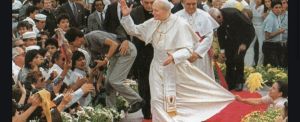
1. "Stabat Mater dolorosa . . .".
"The sorrowful Mother stood weeping at the Cross, from which her Son hung."
Today, 15 September, the liturgical calendar commemorates the sorrows of the Blessed Virgin Mary. It is preceded by the feast of the Exaltation of the Holy Cross, which we celebrated yesterday.
What a shocking mystery the Cross is! After meditating on it at length, St. Paul wrote to the Christians of Galatia: "As for me, there is no other boast than the cross of our Lord Jesus Christ, through which the world has been crucified to me, as I to the world" (Gal 6:14).
The Blessed Virgin could also have repeated these same words, and with even greater truth! Contemplating her dying Son on Calvary, she understood that the "boast" of her divine motherhood reached its peak at that moment by participating directly in the work of Redemption. She also understood that human suffering, taken on by her crucified Son, now acquired an inestimable value.
2. Today, therefore, the Sorrowful Virgin, standing beside the Cross, speaks to us with the silent eloquence of her example about the meaning of suffering in the divine plan of Redemption.
She was the first to know and desire to participate in the mystery of salvation, "associating herself with a maternal heart with the sacrifice of Christ, lovingly consenting to the immolation of the victim she had brought forth" (Lumen Gentium, 58). Deeply enriched by this ineffable experience, she approaches those who suffer, takes them by the hand, and invites them to climb Calvary with her and to pause before the Crucified One.
In that tortured body is the only convincing answer to the questions that rise imperiously from the heart. And with the answer comes the strength necessary to take one's place in that struggle which, as I wrote in the Apostolic Letter Salvifici doloris, pits the forces of good against those of evil (cf. Ioannis Pauli PP. II, Salvifici doloris, n. 27). And I added: "Those who share in the sufferings of Christ preserve in their own sufferings a very special particle of the infinite treasure of the Redemption of the world, and they can share this treasure with others" (Ibid.).
3. Let us ask Our Lady of Sorrows to nourish in us the firmness of faith and the ardour of charity, so that we may courageously carry our daily cross (cf. Lk 9:23) and thus participate effectively in the work of Redemption.
"Fac ut ardeat cor meum . . .", "Make my heart burn with love for Christ God, so that I may be pleasing to him!". Amen!
[Pope John Paul II, Angelus, 15 September 1991]
Russian mystics and childbirth, in a world of orphans and prisoners
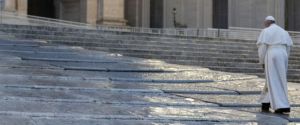
In a world of orphans, Mary is the mother who understands us completely and defends us, not least because she experienced first-hand the same humiliations that, for example, the mothers of prisoners suffer today. Celebrating Mass in the chapel of Casa Santa Marta on Thursday morning, 15 September, the day of remembrance of the Blessed Virgin Mary of Sorrows, Pope Francis suggested that in difficult times we should always take refuge 'under the mantle' of the Mother of God, thus reviving 'the spiritual advice of the Russian mystics' that the West has relaunched with the antiphon Sub tuum preasidium.
For his meditation on "the mystery of Mary's motherhood," the Pontiff took his cue from the Last Supper: "Jesus, at the table, bids farewell to his disciples: there is an air of sadness, everyone knew that something was going to end badly and they asked questions, they were sad." But "Jesus, in that farewell, to give them a little courage and also to prepare them in hope, says to them: 'Do not be sad, do not let your hearts be sad, I will not leave you alone! I will ask the Father to send another Paraclete, who will accompany you. And he will teach you everything and remind you of all that I have said'." The Lord, therefore, "promises to send the Holy Spirit to accompany the disciples, the Church, on the path of history."
But Jesus "also speaks of the Father." In fact, Francis recalled, "in that long, long discourse with the disciples, he speaks of the Father," assuring them "that the Father loves them and that whatever they ask of the Father, the Father will give them. That they should trust in the Father." And so, the Pope explained, he takes "one more step: he not only says 'I will not leave you alone', but also 'I will not leave you orphans, I give you the Father, the Father is with you, my Father is your Father'." Then, Francis continued, "everything we know happens after the supper: the humiliation, the prison, the betrayal of the disciples; Peter denies Jesus, the others flee."
So much so that, said the Pontiff, referring to the liturgical passage from the Gospel of John (19:25-27), under the cross there was "only one disciple, with the mother of Jesus, with Mary Magdalene and the other Mary, a relative." And there, at the cross, "there is Mary, the mother of Jesus: everyone was looking at her," perhaps whispering, "That is the mother of this criminal! That is the mother of this subversive!" And Mary, added the Pope, "heard these things, suffered terrible humiliation and also heard the elders, some priests whom she respected because they were priests," say to Jesus: "But you who are so good, come down, come down!". Mary, Francis said, standing next to "her Son, naked, there, suffered greatly, but she did not leave, she did not deny her Son, he was her flesh."
With personal confidence, the Pope recalled: "It happened many times when I went to the prisons in the diocese of Buenos Aires to visit the prisoners, to see the queue, the line of women waiting to enter: they were mothers, but they were not ashamed, their flesh was in there." And those "women suffered not only the shame of being there," hearing people say: "Look at her, what must her son have done?" Those mothers "also suffered the worst humiliations in the searches that were carried out on them before they entered, but they were mothers and they were going to visit their own flesh." And so it was for Mary, who "was there, with her Son, with that great suffering."
Precisely "at that moment," the Pope pointed out, "Jesus, who had spoken of not leaving us orphans, who had spoken of the Father, looks at his mother and gives her to us as our mother: 'Behold, your mother!'" The Lord "does not leave us orphans: we Christians have a mother, the same as Jesus; we have a Father, the same as Jesus. We are not orphans." And Mary "gives birth to us at that moment with so much pain, it is truly a martyrdom: with her heart pierced, she accepts to give birth to all of us in that moment of pain. And from that moment she becomes our mother, from that moment she is our mother, the one who takes care of us and is not ashamed of us: she defends us."
"The Russian mystics of the early centuries of the Church," Francis recalled in this regard, "gave advice to their disciples, the young monks: in times of spiritual turmoil, take refuge under the mantle of the holy mother of God. The devil cannot enter there because she is a mother and as a mother she defends." Then "the West took this advice and composed the first Marian antiphon, Sub tuum praesidium: under your mantle, under your protection, O Mother, there we are safe."
"Today is the memory of the moment when Our Lady gave birth to us," the Pope continued, "and she has been faithful to this birth until today and will continue to be faithful." And "in a world that we can call 'orphaned', in this world that suffers from a crisis of great orphanhood, perhaps our help is to say: 'Look to your mother!'" Because we have a mother "who defends us, teaches us, accompanies us, who is not ashamed of our sins" and "is not ashamed, because she is a mother."
In conclusion, the Pontiff prayed "that the Holy Spirit, this friend, this companion on the journey, this Paraclete advocate whom the Lord has sent us, may help us understand this great mystery of Mary's motherhood."
[Pope Francis, St. Martha, in L'Osservatore Romano, 16/09/2016]
Lifting up the Cross: far beyond resilience – Exaltation of the Cross
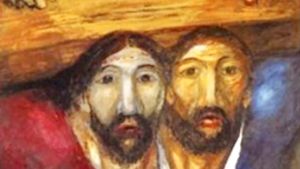
We too, to reach a more conscious confession of Jesus Christ must follow, like Peter, a path made of attentive, caring listening (Pope John Paul II)
Anche noi per giungere a una più consapevole confessione di Gesù Cristo dobbiamo percorrere, come Pietro, un cammino fatto di ascolto attento, premuroso (Papa Giovanni Paolo II)
It is a word that must be witnessed to and proclaimed explicitly, because without a consistent witness it proves to be less comprehensible and credible [Pope Benedict]
E’ una Parola che deve essere testimoniata e proclamata esplicitamente, perché senza una testimonianza coerente essa risulta meno comprensibile e credibile [Papa Benedetto]
The “reading and meditation of the word of God root us more deeply in Christ and guide our ministry as servants of reconciliation, justice and peace” (second Synod for Africa, Propositio 46)
La lettura e la meditazione della Parola di Dio ci radicano più profondamente in Cristo e orientano il nostro ministero di servitori della riconciliazione, della giustizia e della pace (Secondo Sinodo per l’Africa, Propositio 46)
The Gospel of Matthew written in Hebrew or Aramaic is no longer extant, but in the Greek Gospel that we possess we still continue to hear, in a certain way, the persuasive voice of the publican Matthew, who, having become an Apostle, continues to proclaim God's saving mercy to us. And let us listen to St Matthew's message, meditating upon it ever anew also to learn to stand up and follow Jesus with determination (Pope Benedict)
Non abbiamo più il Vangelo scritto da Matteo in ebraico o in aramaico, ma nel Vangelo greco che abbiamo continuiamo a udire ancora, in qualche modo, la voce persuasiva del pubblicano Matteo che, diventato Apostolo, séguita ad annunciarci la salvatrice misericordia di Dio e ascoltiamo questo messaggio di san Matteo, meditiamolo sempre di nuovo per imparare anche noi ad alzarci e a seguire Gesù con decisione (Papa Benedetto)
That denarius clearly represents eternal life, a gift that God reserves for all. Indeed those who are considered the "last", if they accept, become the "first", whereas the "first" can risk becoming the "last" [Pope Benedict]
Quel denaro rappresenta la vita eterna, dono che Dio riserva a tutti. Anzi, proprio quelli che sono considerati "ultimi", se lo accettano, diventano "primi", mentre i "primi" possono rischiare di finire "ultimi" [Papa Benedetto]
The sower is Jesus. With this image, we can see that he presents himself as one who does not impose himself, but rather offers himself. He does not attract us by conquering us, but by donating himself: he casts seeds. With patience and generosity, he spreads his Word, which is not a cage or a trap, but a seed which can bear fruit (Pope Francis)
Il seminatore è Gesù. Notiamo che, con questa immagine, Egli si presenta come uno che non si impone, ma si propone; non ci attira conquistandoci, ma donandosi: butta il seme. Egli sparge con pazienza e generosità la sua Parola, che non è una gabbia o una trappola, ma un seme che può portare frutto (Papa Francesco)
The Church desires to give thanks to the Most Holy Trinity for the "mystery of woman" and for every woman - for that which constitutes the eternal measure of her feminine dignity, for the "great works of God", which throughout human history have been accomplished in and through her (Mulieris Dignitatem n.31)
duevie.art
don Giuseppe Nespeca
Tel. 333-1329741
Disclaimer
Questo blog non rappresenta una testata giornalistica in quanto viene aggiornato senza alcuna periodicità. Non può pertanto considerarsi un prodotto editoriale ai sensi della legge N°62 del 07/03/2001.
Le immagini sono tratte da internet, ma se il loro uso violasse diritti d'autore, lo si comunichi all'autore del blog che provvederà alla loro pronta rimozione.
L'autore dichiara di non essere responsabile dei commenti lasciati nei post. Eventuali commenti dei lettori, lesivi dell'immagine o dell'onorabilità di persone terze, il cui contenuto fosse ritenuto non idoneo alla pubblicazione verranno insindacabilmente rimossi.