Mar 16, 2026 Written by 

Faith, Cross, common mind

From above and from below

(Jn 8:21-30)


At the end of the first century, the Jews raised questions concerning the prayerful reading that the disciples of Christ made of the events and the Words of the Master.

The inglorious end of Jesus and His destination posed several questions. The text reiterates that the crucial point was the prejudice of the ever victorious Face of God.

Tare that prevented from recognizing the Father in the Son humiliated by the authorities, and in the sons who had followed Him, equally defeated... but who considered themselves victors - even of the «sin» (v.21)!

Only the sense of the story of Lord sweeps away the void of intimate energy aroused by the perception of the creatural condition - from which the inability to correspond to one's own intimate vocation derives.

Lacerating and bizarre inefficiency, because it is induced and sustained precisely by paradoxically 'worldly' official structures - and by the mentality they themselves spread; a conviction secured over time.


The same term used in the plural [«sins», in a moral sense] underlined and reiterated in verse 24 alludes to the torment inoculated in the soul and life of people, precisely by the "normal" cloak of beliefs.

They enclose the journey of individual exceptional personalities within a useless spasmodic search for imperfections, which are by nature inevitable - with the torment of comparisons to external models.

Result: women and men whose lives stagnate in the strident attempt to overcome the genuine contradictions of their own faces that complete us, with extreme and vacuous expenditure of virtues.


In this sense, the veterans, experienced and well-known leaders, found it difficult to understand the meaning of the elevation of Christ.

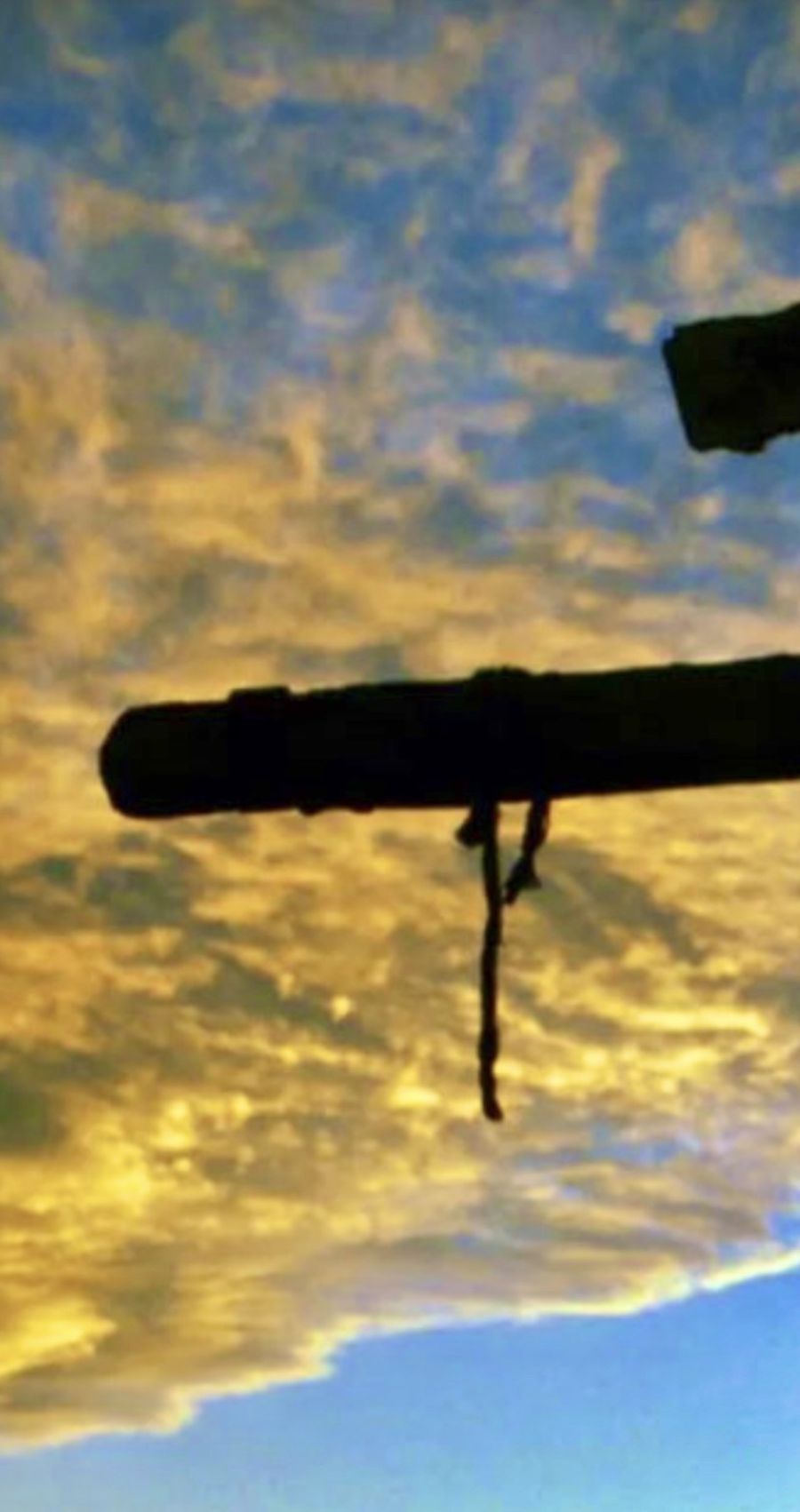
The authentic Messiah was raised to the "right" of the Eternal and on the Cross - highest Revelation of the «I Am»: Emmanuel in his Personality, Wisdom, Uniqueness, Future and already Presence.

The Crucifix that in Jn 19:30 and 20:22 hands over the Spirit without delay, radiates the image of the divine "position".  And through the bond of Faith he makes us live in his Contact; which is of debasement and descent, but of humanizing weight and relief-promotion (vv. 28-29).

What we also experience in the «Son of man» within this founding relationship with the Father becomes explicit precisely in a Confluence, Core, Active Bridge, and Hinge.

Liberation and Salvation that allows to treasure pitfalls, paradoxes, and upheavals.

The Messiah works in a reversal of ​​«glory», of climbing, and dominance.

He acts in the contrast of principle [which seems devoutly incomprehensible] between two «worlds» - the self-styled ‘best’ of which seeks redemption in “above”.

But creates dismay. It still does not know how bringing life from death.


«Dying in sin» means closing oneself in the criteria that exclude true honor: that of the total gift of oneself - for a further and widespread outcome.

To the question «Who are you?» Christ responds by giving a full Life appointment, on Calvary.


[Tuesday 5th wk. in Lent, March 24, 2026]

65 Last modified on Monday, 16 March 2026 05:26
don Giuseppe Nespeca

Giuseppe Nespeca è architetto e sacerdote. Cultore della Sacra scrittura è autore della raccolta "Due Fuochi due Vie - Religione e Fede, Vangeli e Tao"; coautore del libro "Dialogo e Solstizio".

Jesus seems to say to the accusers: Is not this woman, for all her sin, above all a confirmation of your own transgressions, of your "male" injustice, your misdeeds? (John Paul II, Mulieris Dignitatem n.14)
Gesù sembra dire agli accusatori: questa donna con tutto il suo peccato non è forse anche, e prima di tutto, una conferma delle vostre trasgressioni, della vostra ingiustizia «maschile», dei vostri abusi? (Giovanni Paolo II, Mulieris Dignitatem n.14)
Here we can experience first hand that God is life and gives life, yet takes on the tragedy of death (Pope Francis)
Qui tocchiamo con mano che Dio è vita e dona vita, ma si fa carico del dramma della morte (Papa Francesco)
The people thought that Jesus was a prophet. This was not wrong, but it does not suffice; it is inadequate. In fact, it was a matter of delving deep, of recognizing the uniqueness of the person of Jesus of Nazareth and his newness. This is how it still is today: many people draw near to Jesus, as it were, from the outside (Pope Benedict)
La gente pensa che Gesù sia un profeta. Questo non è falso, ma non basta; è inadeguato. Si tratta, in effetti, di andare in profondità, di riconoscere la singolarità della persona di Gesù di Nazaret, la sua novità. Anche oggi è così: molti accostano Gesù, per così dire, dall’esterno (Papa Benedetto)
Because of this unique understanding, Jesus can present himself as the One who revealsr the Father with a knowledge that is the fruit of an intimate and mysterious reciprocity (John Paul II)
In forza di questa singolare intesa, Gesù può presentarsi come il rivelatore del Padre, con una conoscenza che è frutto di un'intima e misteriosa reciprocità (Giovanni Paolo II)
Yes, all the "miracles, wonders and signs" of Christ are in function of the revelation of him as Messiah, of him as the Son of God: of him who alone has the power to free man from sin and death. Of him who is truly the Savior of the world (John Paul II)
Sì, tutti i “miracoli, prodigi e segni” di Cristo sono in funzione della rivelazione di lui come Messia, di lui come Figlio di Dio: di lui che, solo, ha il potere di liberare l’uomo dal peccato e dalla morte. Di lui che veramente è il Salvatore del mondo (Giovanni Paolo II)
It is known that faith is man's response to the word of divine revelation. The miracle takes place in organic connection with this revealing word of God. It is a "sign" of his presence and of his work, a particularly intense sign (John Paul II)
È noto che la fede è una risposta dell’uomo alla parola della rivelazione divina. Il miracolo avviene in legame organico con questa parola di Dio rivelante. È un “segno” della sua presenza e del suo operare, un segno, si può dire, particolarmente intenso (Giovanni Paolo II)
In the rite of Baptism, the presentation of the candle lit from the large Paschal candle, a symbol of the Risen Christ, is a sign that helps us to understand what happens in the Sacrament. When our lives are enlightened by the mystery of Christ, we experience the joy of being liberated from all that threatens the full realization (Pope Benedict)
God approached man in love, even to the total gift, crossing the threshold of our ultimate solitude, throwing himself into the abyss of our extreme abandonment, going beyond the door of death (Pope Benedict)
Dio si è avvicinato all’uomo nell’amore, fino al dono totale, a varcare la soglia della nostra ultima solitudine, calandosi nell’abisso del nostro estremo abbandono, oltrepassando la porta della morte (Papa Benedetto)

Due Fuochi due Vie - Vol. 1 Due Fuochi due Vie - Vol. 2 Due Fuochi due Vie - Vol. 3 Due Fuochi due Vie - Vol. 4 Due Fuochi due Vie - Vol. 5 Dialogo e Solstizio I fiammiferi di Maria

duevie.art

don Giuseppe Nespeca

Tel. 333-1329741


Disclaimer

Questo blog non rappresenta una testata giornalistica in quanto viene aggiornato senza alcuna periodicità. Non può pertanto considerarsi un prodotto editoriale ai sensi della legge N°62 del 07/03/2001.
Le immagini sono tratte da internet, ma se il loro uso violasse diritti d'autore, lo si comunichi all'autore del blog che provvederà alla loro pronta rimozione.
L'autore dichiara di non essere responsabile dei commenti lasciati nei post. Eventuali commenti dei lettori, lesivi dell'immagine o dell'onorabilità di persone terze, il cui contenuto fosse ritenuto non idoneo alla pubblicazione verranno insindacabilmente rimossi.







