Jun 24, 2026 Written by 

Paralysis and punishment: different Tenderness

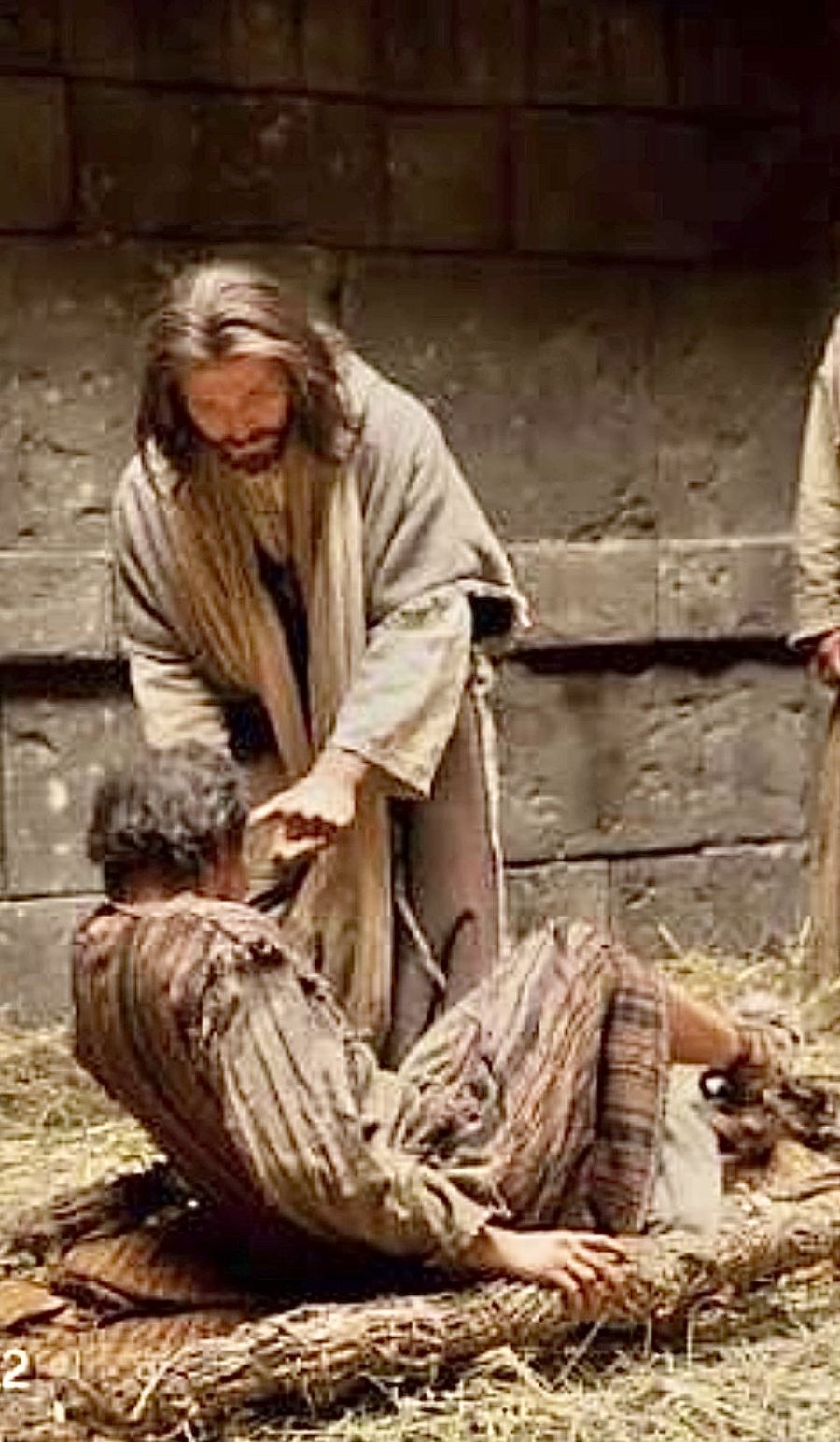
(Mt 9:1-8)


The episode testifies to the hard clash between synagogue and the first fraternities of Faith, where without prior conditions of ritual or legal purity everyone was invited to share canteen and the breaking of Bread.

On the ideal proxy of the Lord, in the churches of Galilee and Syria there was already a fraternal practice [unknown to others] of mutual forgiveness and even cancellation of debts incurred, up to the communion of goods.

Reality able to get back on its feet and make any person proceed, even the miserable - starting from their conscience (v.2), suffocated by a religion that emphaized the sense of unworthiness.

According to popular belief, the conditions of scarcity or misfortune were a punishment.

Conversely, Jesus is the One who restores a horizon of authenticity to believing, new awareness and hope to the person suffering from paralysis - that is, unable to go towards God and towards men.

«Having risen, take your bed and go to your house» (v.6; cf. Mk 2:11; Lk 5:24).

Starting from what we are - already full of resources, beyond all appearances - we live by faith the state of the «Son of man»: that of the ‘risen’ sons, those who manifest person in fullness [in the divine condition].

In Christ we can free ourselves from the constraints that made us live horizontal and ankylosed.

Recovering dignity, we can now stand upright and promote life; then return to the House that is truly ours (vv.6-7; cf. Mk 2:10-12; Lk 9:24-25).


The whole story of the people was conditioned by obsessions with impurity and sin.

Instead, the Master reveals that the divine propensity is only to forgive in order to value - and the attitude of the man of Faith, be reborn again and help to do so.

In fact, the gratuitousness of the Father can be seen from the action of expectation and understanding exercised by the men of God: those able to chisel healthy environments.

Not only by their own’s virtue, but because tolerance introduces new forces, unknown; different powers, which overturn situations.

They allow other creative energies to pass and regenerate the malfunctioning - vice versa deadly, unfortunately, where we do not promote each other.

Only Jesus is the One who makes visible and evident the healing that seemed impossible mission. And before physics, making us flourish again from the fears of false devotion, which imposes absurd embankments on autonomy.

His proposal does not sink us under a heap of impersonal arrogances. The Lord heals the blocked, puts them back in the race.

Imperfection is not an expression of guilt, but a condition - and in any case sin is not an absolute force (v.3).

On the contrary, the impediment becomes a paradoxical reason to seek 'therapy', and vis-à-vis. Unthinkable, perhaps offensive, for the outline.

Eccentric configurations - thought to be miserable - do indeed contain secret doors, immense virtues, and the cure itself.

Indeed, they lead to a new existence. They urge, and “oblige” us to an immediate relationship with our Lord. Almost as if seeking His ‘likeness’.


Unusual crossroads of Tenderness and Faith.


[Thursday 13th wk. in O.T.  July 2, 2026]

116 Last modified on Wednesday, 24 June 2026 04:09
don Giuseppe Nespeca

Giuseppe Nespeca è architetto e sacerdote. Cultore della Sacra scrittura è autore della raccolta "Due Fuochi due Vie - Religione e Fede, Vangeli e Tao"; coautore del libro "Dialogo e Solstizio".

For the prodigious and instantaneous healing of the paralytic, the apostle St. Matthew is more sober than the other synoptics, St. Mark and St. Luke. These add broader details, including that of the opening of the roof in the environment where Jesus was, to lower the sick man with his lettuce, given the huge crowd that crowded at the entrance. Evident is the hope of the pitiful companions: they almost want to force Jesus to take care of the unexpected guest and to begin a dialogue with him (Pope Paul VI)
Per la prodigiosa ed istantanea guarigione del paralitico, l’apostolo San Matteo è più sobrio degli altri sinottici, San Marco e San Luca. Questi aggiungono più ampi particolari, tra cui quello dell’avvenuta apertura del tetto nell’ambiente ove si trovava Gesù, per calarvi l’infermo col suo lettuccio, data l’enorme folla che faceva ressa all’entrata. Evidente è la speranza dei pietosi accompagnatori: essi vogliono quasi obbligare Gesù ad occuparsi dell’inatteso ospite e ad iniziare un dialogo con lui (Papa Paolo VI)
A life without love and without truth would not be life. The Kingdom of God is precisely the presence of truth and love and thus is healing in the depths of our being. One therefore understands why his preaching and the cures he works always go together: in fact, they form one message of hope and salvation (Pope Benedict)
Una vita senza amore e senza verità non sarebbe vita. Il Regno di Dio è proprio la presenza della verità e dell’amore e così è guarigione nella profondità del nostro essere. Si comprende, pertanto, perché la sua predicazione e le guarigioni che opera siano sempre unite: formano infatti un unico messaggio di speranza e di salvezza (Papa Benedetto)
His slumber causes us to wake up. Because to be disciples of Jesus, it is not enough to believe God is there, that he exists, but we must put ourselves out there with him; we must also raise our voice with him. Hear this: we must cry out to him. Prayer is often a cry: “Lord, save me!” (Pope Francis)
Il suo sonno provoca noi a svegliarci. Perché, per essere discepoli di Gesù, non basta credere che Dio c’è, che esiste, ma bisogna mettersi in gioco con Lui, bisogna anche alzare la voce con Lui. Sentite questo: bisogna gridare a Lui. La preghiera, tante volte, è un grido: “Signore, salvami!” (Papa Francesco)
May we obtain this gift [the full unity of all believers in Christ] through the Apostles Peter and Paul, who are remembered by the Church of Rome on this day that commemorates their martyrdom and therefore their birth to life in God. For the sake of the Gospel they accepted suffering and death, and became sharers in the Lord's Resurrection […] Today the Church again proclaims their faith. It is our faith (Pope John Paul II)
Ci ottengano questo dono [la piena unità di tutti i credenti in Cristo] gli Apostoli Pietro e Paolo, che la Chiesa di Roma ricorda in questo giorno, nel quale si fa memoria del loro martirio, e perciò della loro nascita alla vita in Dio. Per il Vangelo essi hanno accettato di soffrire e di morire e sono diventati partecipi della risurrezione del Signore […] Oggi la Chiesa proclama nuovamente la loro fede. E' la nostra fede (Papa Giovanni Paolo II)
God's grace does not suppress or suffocate the freedom of those who face martyrdom; on the contrary it enriches and exalts them: the Martyr is an exceedingly free person, free as regards power, as regards the world; a free person [Pope Benedict]
La grazia di Dio non sopprime o soffoca la libertà di chi affronta il martirio, ma al contrario la arricchisce e la esalta: il martire è una persona sommamente libera, libera nei confronti del potere, del mondo; una persona libera [Papa Benedetto]

Due Fuochi due Vie - Vol. 1 Due Fuochi due Vie - Vol. 2 Due Fuochi due Vie - Vol. 3 Due Fuochi due Vie - Vol. 4 Due Fuochi due Vie - Vol. 5 Dialogo e Solstizio I fiammiferi di Maria

duevie.art

don Giuseppe Nespeca

Tel. 333-1329741


Disclaimer

Questo blog non rappresenta una testata giornalistica in quanto viene aggiornato senza alcuna periodicità. Non può pertanto considerarsi un prodotto editoriale ai sensi della legge N°62 del 07/03/2001.
Le immagini sono tratte da internet, ma se il loro uso violasse diritti d'autore, lo si comunichi all'autore del blog che provvederà alla loro pronta rimozione.
L'autore dichiara di non essere responsabile dei commenti lasciati nei post. Eventuali commenti dei lettori, lesivi dell'immagine o dell'onorabilità di persone terze, il cui contenuto fosse ritenuto non idoneo alla pubblicazione verranno insindacabilmente rimossi.







