Nov 12, 2025 Written by 

Drops of emotion, Prayer and vital Energy

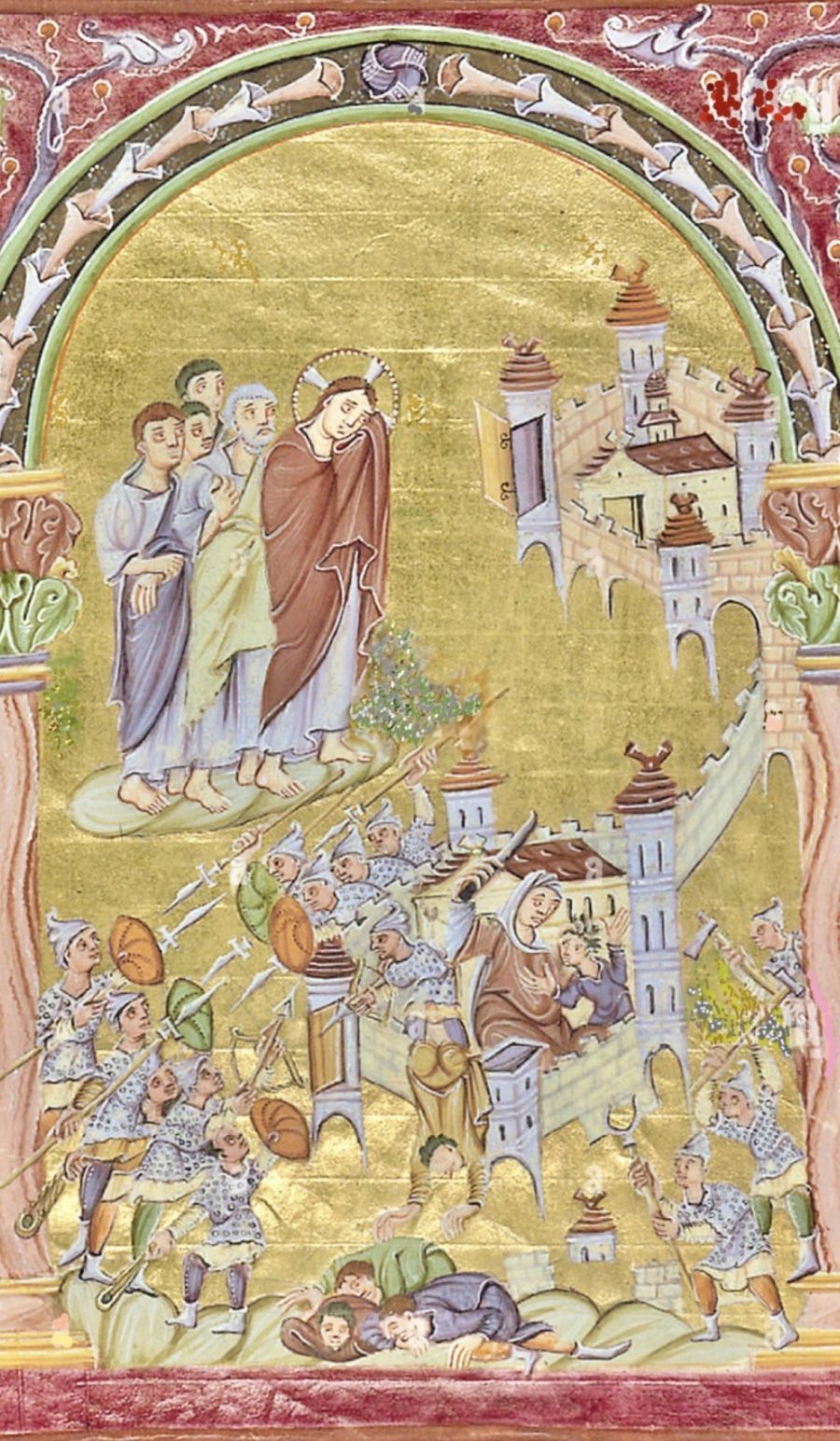
Weeping over the eternal city, with tears of a father, mother and son

(Lk 19:41-44)


We like to be in the wake of fashion or opportunism, but rejecting the Lord’s Call is a great responsibility.

We must recognize His Visit, in Presence, in the inspiration that emerges.

Scrutinizing the signs, seizing the moments of grace instead of closing stubbornly; and do not turn back.

All this changes life in root - guides to the heart of history [even in its breaking places].

Jesus wants to conquer the closed doors of every citadel; above all of the toughest bone: Jerusalem.

Sometimes the search for the divine and human tension are made vain, because of a world of the sacred that seems under the sign of a completely different ‘deity’.

In fact, the choice of an ideology of power feeds illusions - but leads to disaster the entire people.

By blurring the gaze, it doesn’t allow us to get rid of the most insidious idols, and distorts the path to the Shalôm.

Once, here are trenches, killings and destruction of the walls and houses by Nebuchadnezzar; then the Roman one of 70 which the text more directly alludes to.

But the gloomy prediction extends, and perhaps the image of the pile of ruins concerns us. Historical background, ecclesial and pastoral meditation.


Unfortunately we continue to condemn Jesus-Peace as a criminal to be expelled. Situation that drags problems.

Thus in filigree the Christ stands out in the position of King, who reluctantly pronounces a definitive sentence.

Where salvation is prepared, offered and re-proposed so intensely but in vain, rejection becomes certainly more painful - for us and for this passionate, moving Son.

Yet the class of the elect still chooses to fall and ruin, self-destructing their own people.

Rejecting the Messiah as a servant and ignoring even in time the work of Good of its authentic witnesses, the religious centre will continue to lose its special character of a saving sign.


Even today it’s time for the Master’s Visit, who knocks and asks for permission to enter, to open the seals of the great questions of history and life.

The warning is global, communitarian and personal; again with tears of father, mother and son.

The encyclical Brothers All [FT] denounces precisely the regression of an extravagant world that - with a sense of the “here and now” shrunken - seems to have learned little from the tragedies of the twentieth century, until rekindling anachronistic conflicts (nn.11.13).


To internalize and live the message:


What do you think is hidden from your eyes, but previously announced - and is crying bitterly?

With what orientation you are willing to live in the «craftsmanship of Peace», even family or social, putting aside the enmities and the ephemeral [cf. FT nn. 57. 100. 127. 176. 192. 197. 216-217. 225-236. 240-243. 254-262. 271-272. 278-285]?


[Thursday 33rd wk. in O.T.  November 20, 2025]

199 Last modified on Thursday, 20 November 2025 11:59
don Giuseppe Nespeca

Giuseppe Nespeca è architetto e sacerdote. Cultore della Sacra scrittura è autore della raccolta "Due Fuochi due Vie - Religione e Fede, Vangeli e Tao"; coautore del libro "Dialogo e Solstizio".

The ancient priest stagnates, and evaluates based on categories of possibilities; reluctant to the Spirit who moves situations
Il sacerdote antico ristagna, e valuta basando su categorie di possibilità; riluttante allo Spirito che smuove le situazioni
«Even through Joseph’s fears, God’s will, his history and his plan were at work. Joseph, then, teaches us that faith in God includes believing that he can work even through our fears, our frailties and our weaknesses. He also teaches us that amid the tempests of life, we must never be afraid to let the Lord steer our course. At times, we want to be in complete control, yet God always sees the bigger picture» (Patris Corde, n.2)
«Anche attraverso l’angustia di Giuseppe passa la volontà di Dio, la sua storia, il suo progetto. Giuseppe ci insegna così che avere fede in Dio comprende pure il credere che Egli può operare anche attraverso le nostre paure, le nostre fragilità, la nostra debolezza. E ci insegna che, in mezzo alle tempeste della vita, non dobbiamo temere di lasciare a Dio il timone della nostra barca. A volte noi vorremmo controllare tutto, ma Lui ha sempre uno sguardo più grande» (Patris Corde, n.2)
Man is the surname of God: the Lord in fact takes his name from each of us - whether we are saints or sinners - to make him our surname (Pope Francis). God's fidelity to the Promise is realized not only through men, but with them (Pope Benedict).
L’uomo è il cognome di Dio: il Signore infatti prende il nome da ognuno di noi — sia che siamo santi, sia che siamo peccatori — per farlo diventare il proprio cognome (Papa Francesco). La fedeltà di Dio alla Promessa si attua non soltanto mediante gli uomini, ma con loro (Papa Benedetto)
In the communities of Galilee and Syria the pagans quickly became a majority - elevated to the rank of sons. They did not submit to nerve-wracking processes, but spontaneously were recognizing the Lord
Nelle comunità di Galilea e Siria i pagani diventavano rapidamente maggioranza - elevati al rango di figli. Essi non si sottoponevano a trafile snervanti, ma spontaneamente riconoscevano il Signore
And thus we must see Christ again and ask Christ: “Is it you?” The Lord, in his own silent way, answers: “You see what I did, I did not start a bloody revolution, I did not change the world with force; but lit many I, which in the meantime form a pathway of light through the millenniums” (Pope Benedict)
E così dobbiamo di nuovo vedere Cristo e chiedere a Cristo: “Sei tu?”. Il Signore, nel modo silenzioso che gli è proprio, risponde: “Vedete cosa ho fatto io. Non ho fatto una rivoluzione cruenta, non ho cambiato con forza il mondo, ma ho acceso tante luci che formano, nel frattempo, una grande strada di luce nei millenni” (Papa Benedetto)
Experts in the Holy Scriptures believed that Elijah's return should anticipate and prepare for the advent of the Kingdom of God. Since the Lord was present, the first disciples wondered what the value of that teaching was. Among the people coming from Judaism the question arose about the value of ancient doctrines…
Gli esperti delle sacre Scritture ritenevano che il ritorno di Elia dovesse anticipare e preparare l’avvento del Regno di Dio. Poiché il Signore era presente, i primi discepoli si chiedevano quale fosse il valore di quell’insegnamento. Tra i provenienti dal giudaismo sorgeva il quesito circa il peso delle dottrine antiche...
Gospels make their way, advance and free, making us understand the enormous difference between any creed and the proposal of Jesus

Due Fuochi due Vie - Vol. 1 Due Fuochi due Vie - Vol. 2 Due Fuochi due Vie - Vol. 3 Due Fuochi due Vie - Vol. 4 Due Fuochi due Vie - Vol. 5 Dialogo e Solstizio I fiammiferi di Maria

duevie.art

don Giuseppe Nespeca

Tel. 333-1329741


Disclaimer

Questo blog non rappresenta una testata giornalistica in quanto viene aggiornato senza alcuna periodicità. Non può pertanto considerarsi un prodotto editoriale ai sensi della legge N°62 del 07/03/2001.
Le immagini sono tratte da internet, ma se il loro uso violasse diritti d'autore, lo si comunichi all'autore del blog che provvederà alla loro pronta rimozione.
L'autore dichiara di non essere responsabile dei commenti lasciati nei post. Eventuali commenti dei lettori, lesivi dell'immagine o dell'onorabilità di persone terze, il cui contenuto fosse ritenuto non idoneo alla pubblicazione verranno insindacabilmente rimossi.







