Dec 26, 2025 Written by 

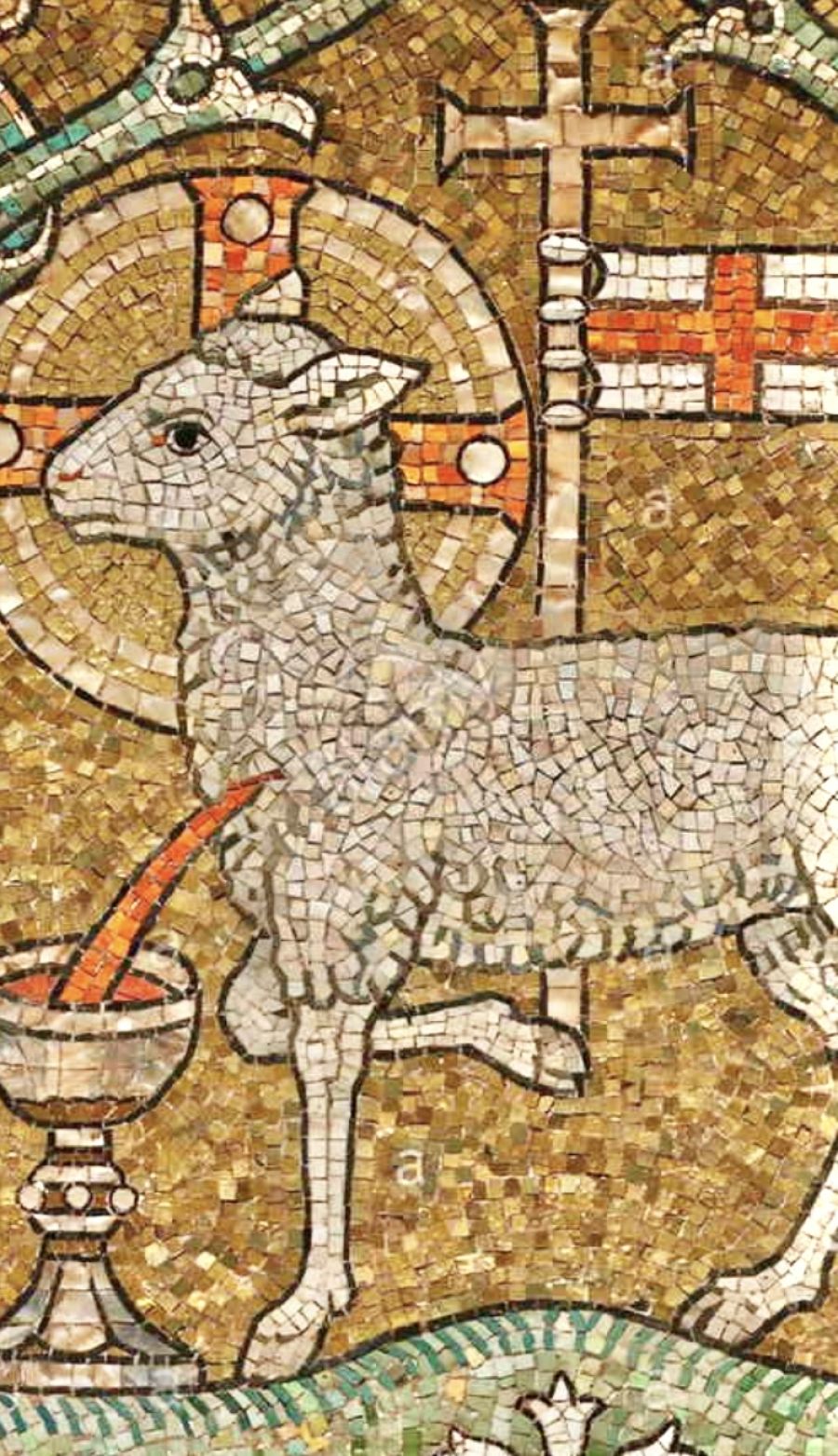
Here is the Lamb, in lambs. Healthy Tenderness Revolution

Brother, in the brethren all

(Jn 1:29-34)


In the fourth Gospel the Baptist is not «the forerunner», but a «witness» of the Lamb Light that raises basic questions.

Alarmed, the authorities put him under investigation.

But it’s not he who sweeps away «sin», that is, the humiliation of unbridgeable distances - and the inability to correspond to the personal Vocation, for Life without limit.

Hindrance even underlined by the logic of the «world»: by the false teaching, by the very structure of the ancient official institution, so linked to the interweaving between religion and power.

Condemned to «noon-day» [culmination and full light] on Easter eve, Jesus crosses his earthly end with the hour when the priests of the Temple began to immolate the lambs of propitiation [originally, an apotropaic sacrifice that preceded transhumance].

As for the Lamb of the fathers in foreign land, who had spared them from the slaughter - his Blood gives impetus to cross the land of arid slavery, devoid of warmth and intimate consonance.


As is known, the effigy of the Lamb belongs to the sacrificial theological strand, stemming from the famous text of Isaiah 53 and from all the sacral imagery of the ancient East [which had elaborated a literature and a widespread thought on the King Messiah].

According to the biblical conception, the sovereign was a figure of the whole people and represented them. The Anointed would have had the ideal task of dragging away and atoning for human iniquities.

But Jesus does not "expiate" rather «extirpates». Not even "propitiates": the Father does not reject the precarious condition of his creatures.

In Christ who «supports and removes» all our shame and weaknesses, the Father’s Action is made intimate - for this reason decisive.

He doesn’t annihilate transgressions with a sort of amnesty, even vicarious: it would not be authentic salvation to touch only the suburbs and not the Core, to reactivate us.

An outer dress does not belong to us and will never be ours; it is not assimilated, nor does it become real life. Deletions don’t educate, far from it.

It’s true that a lamb in a world of cunning wolves has no escape. By introducing it you see it perish, but not as a designated victim: it was the only way for the beastmen who believe they were people, to understand that they were still only beasts.

The Risen One introduces into the world a new force, a different dynamism, a way of teaching the soul that becomes a conscious process.

Only by educating us, does the Most High-neighbour annihilate and overcome the instinct of the fairs feeding each other, believing themselves to be authentic human beings - even spiritual.


A third allusion to the figure of the Lamb insists on the votive icon and archetypal category associated with the sacrifice of Abraham, where God himself provides for the victim (Gn 22).

Of course he provides: he did not create us angelic, but malformed, transient. Yet, every divine Gift passes through our shaky ‘condition’ - which is not sin, nor guilt, but a matter of fact; so nourishment, and resource.

We are Perfect in the multiplicity of our creative slopes, even in the limit: a blasphemy for the ancient religious man... a reality for the person of Faith.

The authentic Lamb is not just a [moral] reference: the meekness of those who are called to give everything of themselves, even their skin.

It is an image of the (blatant) ‘boundary’ of those who could never make it to genius in life, so they ‘let themselves be found’ and loaded on the shoulders.

In this way, no decision-making delirium.

It will be the Friend of our vocational nucleus who will transmit strength and devise the way to make us return to the House that is truly ours: the Tent that stitches together the scattered events.

Dwelling that rewires all the being we should - and maybe even could - have brought to fruit.


Incarnation here means that the Lamb is depiction of an accepted - unusual - globality of the divine Face in men.

Totality finally solid - paradoxical, conciliated - that recovers its opposite innocent, natural, spontaneous, incapable of miracle.

Difference between religiosity and Faith.


[Weekday Liturgy of January 3]

328 Last modified on Saturday, 03 January 2026 11:59
don Giuseppe Nespeca

Giuseppe Nespeca è architetto e sacerdote. Cultore della Sacra scrittura è autore della raccolta "Due Fuochi due Vie - Religione e Fede, Vangeli e Tao"; coautore del libro "Dialogo e Solstizio".

Anyone who welcomes the Lord into his life and loves him with all his heart is capable of a new beginning. He succeeds in doing God’s will: to bring about a new form of existence enlivened by love and destined for eternity (Pope Benedict)
Chi accoglie il Signore nella propria vita e lo ama con tutto il cuore è capace di un nuovo inizio. Riesce a compiere la volontà di Dio: realizzare una nuova forma di esistenza animata dall’amore e destinata all’eternità (Papa Benedetto)
You ought not, however, to be satisfied merely with knocking and seeking: to understand the things of God, what is absolutely necessary is oratio. For this reason, the Saviour told us not only: ‘Seek and you will find’, and ‘Knock and it shall be opened to you’, but also added, ‘Ask and you shall receive’ [Verbum Domini n.86; cit. Origen, Letter to Gregory]
Non ti devi però accontentare di bussare e di cercare: per comprendere le cose di Dio ti è assolutamente necessaria l’oratio. Proprio per esortarci ad essa il Salvatore ci ha detto non soltanto: “Cercate e troverete”, e “Bussate e vi sarà aperto”, ma ha aggiunto: “Chiedete e riceverete” [Verbum Domini n.86; cit. Origene, Lettera a Gregorio]
In the crucified Jesus, a kind of transformation and concentration of the signs occurs: he himself is the “sign of God” (John Paul II)
In Gesù crocifisso avviene come una trasformazione e concentrazione dei segni: è Lui stesso il "segno di Dio" (Giovanni Paolo II)
Only through Christ can we converse with God the Father as children, otherwise it is not possible, but in communion with the Son we can also say, as he did, “Abba”. In communion with Christ we can know God as our true Father. For this reason Christian prayer consists in looking constantly at Christ and in an ever new way, speaking to him, being with him in silence, listening to him, acting and suffering with him (Pope Benedict)
Solo in Cristo possiamo dialogare con Dio Padre come figli, altrimenti non è possibile, ma in comunione col Figlio possiamo anche dire noi come ha detto Lui: «Abbà». In comunione con Cristo possiamo conoscere Dio come Padre vero. Per questo la preghiera cristiana consiste nel guardare costantemente e in maniera sempre nuova a Cristo, parlare con Lui, stare in silenzio con Lui, ascoltarlo, agire e soffrire con Lui (Papa Benedetto)
In today’s Gospel passage, Jesus identifies himself not only with the king-shepherd, but also with the lost sheep, we can speak of a “double identity”: the king-shepherd, Jesus identifies also with the sheep: that is, with the least and most needy of his brothers and sisters […] And let us return home only with this phrase: “I was present there. Thank you!”. Or: “You forgot about me” (Pope Francis)
Nella pagina evangelica di oggi, Gesù si identifica non solo col re-pastore, ma anche con le pecore perdute. Potremmo parlare come di una “doppia identità”: il re-pastore, Gesù, si identifica anche con le pecore, cioè con i fratelli più piccoli e bisognosi […] E torniamo a casa soltanto con questa frase: “Io ero presente lì. Grazie!” oppure: “Ti sei scordato di me” (Papa Francesco)
Thus, in the figure of Matthew, the Gospels present to us a true and proper paradox: those who seem to be the farthest from holiness can even become a model of the acceptance of God's mercy and offer a glimpse of its marvellous effects in their own lives (Pope Benedict))
Nella figura di Matteo, dunque, i Vangeli ci propongono un vero e proprio paradosso: chi è apparentemente più lontano dalla santità può diventare persino un modello (Papa Benedetto)

Due Fuochi due Vie - Vol. 1 Due Fuochi due Vie - Vol. 2 Due Fuochi due Vie - Vol. 3 Due Fuochi due Vie - Vol. 4 Due Fuochi due Vie - Vol. 5 Dialogo e Solstizio I fiammiferi di Maria

duevie.art

don Giuseppe Nespeca

Tel. 333-1329741


Disclaimer

Questo blog non rappresenta una testata giornalistica in quanto viene aggiornato senza alcuna periodicità. Non può pertanto considerarsi un prodotto editoriale ai sensi della legge N°62 del 07/03/2001.
Le immagini sono tratte da internet, ma se il loro uso violasse diritti d'autore, lo si comunichi all'autore del blog che provvederà alla loro pronta rimozione.
L'autore dichiara di non essere responsabile dei commenti lasciati nei post. Eventuali commenti dei lettori, lesivi dell'immagine o dell'onorabilità di persone terze, il cui contenuto fosse ritenuto non idoneo alla pubblicazione verranno insindacabilmente rimossi.