Aug 5, 2026 Written by 

Forgiveness in the unlimited leap of Faith

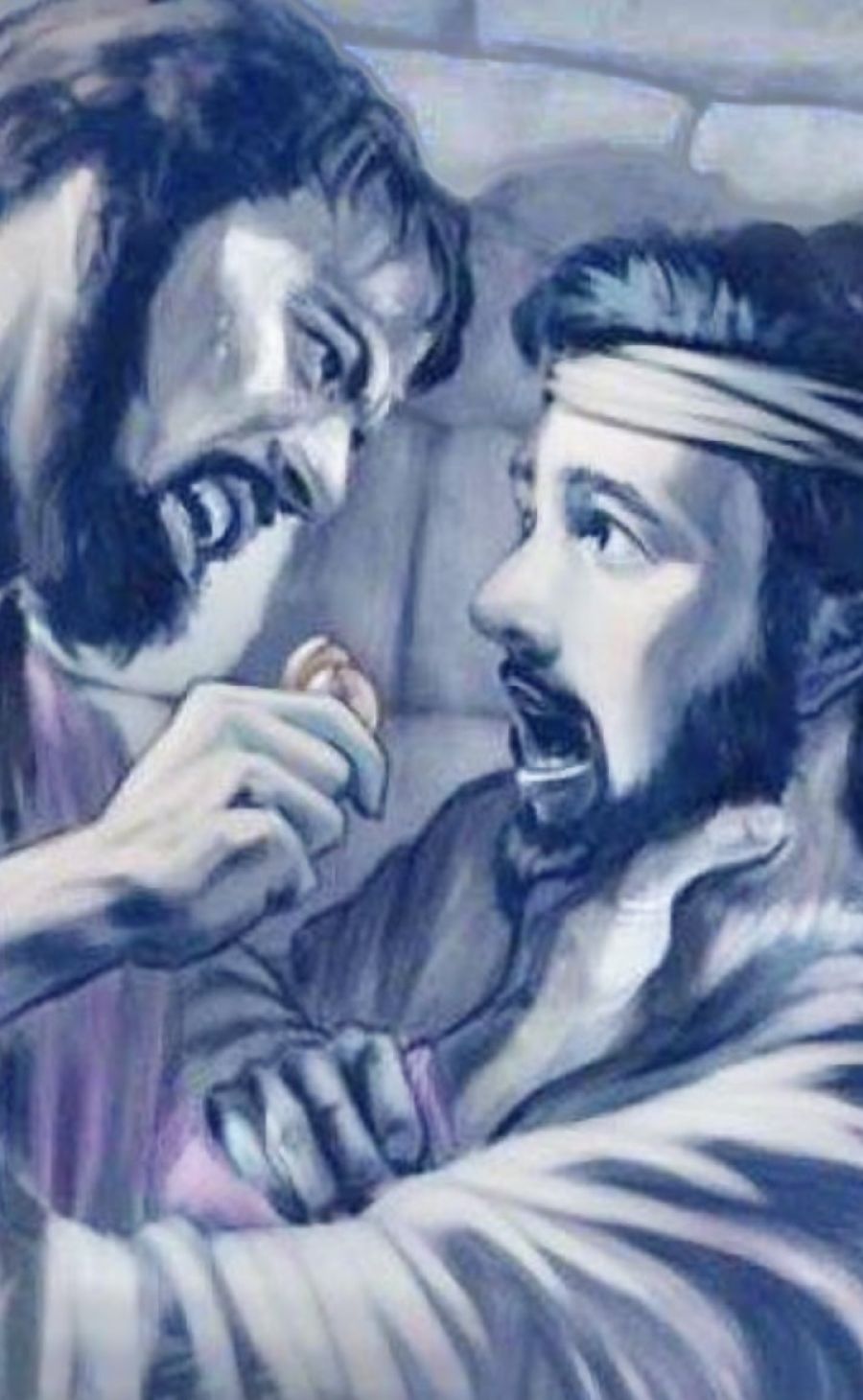
(Mt 18:21-19,1)


Throughout the ancient Middle East, non-disproportionate retaliation one to one [not cruel] was a sacred law.

Forgiveness was a humiliating and absurd attitude, an incomprehensible principle to anyone experiencing any injustice.

Conversely, in the dynamic of Faith, forgiveness becomes a power, which not only makes the air breathable, but activates our personal destiny.

Peter instead wants to know the limits of forgiveness (v.21).

Historically, at the end of the first century the picky, severe, style of the synagogue and of the Empire [«divide et impera»] reappear in believers. 

A question arises: will we have to stop welcoming?

In addition, in the same churches one begins to think that someone has sinned in lese majesty towards those who - now hard and heartless - are used to being revered.

Veterans who make trouble more than others and then dot on the minutiae of others (the weak brothers, considered subjected and destined to the fiscal rigour of moralisms, as well as penances).


While religious discipline exacerbates minute defects, the very experience of the disproportion between the forgiveness received from the Father and what we are able to offer to the brothers, makes us understand the need for tolerance.

Church should be this space of the experience of God who return life, an alternative place of fraternity.


Imperial society was harsh and uncompassionate, with no room for the small and shaky, who unassumingly sought any refuge for their hearts - but no religion gave them an answer.

Synagogues, too, identified material and spiritual blessings. Cloaked with requirements, purity rules and fulfilments, they did not offer the warmth of a welcoming place for the weak.

The issue was that in the early Christian communities themselves, some people insisted on the rigour of norms, customs and hierarchies, demanding coexistence based on the Judaizing model.

Furthermore, as the Letter of James testifies, towards the end of the first century the identical divisions of society, between miserables and wealthy, were already beginning to manifest themselves in the churches of Christ!

Welcoming space of the communities that in the Spirit had been given the task by the Lord to enlighten the world with their seed of life as a ‘shelter for all’ (and of alternative relationships) ran the risk of becoming again a place of conflict, judgement, punishment, condemnation.

«So also my heavenly Father will do to you, if you do not condone each one to his own brother from your heart» (v.35).


Divine forgiveness becomes effective and evident only in the testimony of the Church (v.35) where sisters and brothers - instead of showing themselves to be meticulous, let themselves be guided by a Vision of new heavens and new earth.

For this reason - without any effort, indeed blessing the needs of others as territories of preparatory energies - they live the communion of resources and remit even material debts, a misery.

Otherwise, we would always have to live in the incumbency of an indulgent God perhaps, but at times, and according to the cases retracting the doing of mercy.

It would be a life without surprising developments, all weighted down in a swamp of little pennies.

Instead, it is the active energy of the Faith that does not condemn us to trudge.


The magnanimity that comes out of the automatisms shifts our gaze and brings us an ineffable and growing wave, far ahead of what we can imagine.

Our surrenders are preparing new developments - the ones that count, without limitations.


The "win-or-lose" alternative is false: you have to get out of it.


[Thursday 19th wk. in O.T.  August 13, 2026]

295 Last modified on Thursday, 13 August 2026 12:00
don Giuseppe Nespeca

Giuseppe Nespeca è architetto e sacerdote. Cultore della Sacra scrittura è autore della raccolta "Due Fuochi due Vie - Religione e Fede, Vangeli e Tao"; coautore del libro "Dialogo e Solstizio".

At first they say “yes” to God’s will, but their piety becomes routine and God no longer matters to them [Pope Benedict]
Essi, prima, dicono “sì” alla volontà di Dio. Ma la loro religiosità diventa routine, e Dio non li inquieta più [Papa Benedetto]
And «each of us can say: "for love to me"» (Pope Francis)
E «ognuno di noi può dire: “per amore a me”» (Papa Francesco)
We too, to reach a more conscious confession of Jesus Christ must follow, like Peter, a path made of attentive, caring listening (Pope John Paul II)
Anche noi per giungere a una più consapevole confessione di Gesù Cristo dobbiamo percorrere, come Pietro, un cammino fatto di ascolto attento, premuroso (Papa Giovanni Paolo II)
It is a word that must be witnessed to and proclaimed explicitly, because without a consistent witness it proves to be less comprehensible and credible [Pope Benedict]
E’ una Parola che deve essere testimoniata e proclamata esplicitamente, perché senza una testimonianza coerente essa risulta meno comprensibile e credibile [Papa Benedetto]
The “reading and meditation of the word of God root us more deeply in Christ and guide our ministry as servants of reconciliation, justice and peace” (second Synod for Africa, Propositio 46)
La lettura e la meditazione della Parola di Dio ci radicano più profondamente in Cristo e orientano il nostro ministero di servitori della riconciliazione, della giustizia e della pace (Secondo Sinodo per l’Africa, Propositio 46)
The Gospel of Matthew written in Hebrew or Aramaic is no longer extant, but in the Greek Gospel that we possess we still continue to hear, in a certain way, the persuasive voice of the publican Matthew, who, having become an Apostle, continues to proclaim God's saving mercy to us. And let us listen to St Matthew's message, meditating upon it ever anew also to learn to stand up and follow Jesus with determination (Pope Benedict)
Non abbiamo più il Vangelo scritto da Matteo in ebraico o in aramaico, ma nel Vangelo greco che abbiamo continuiamo a udire ancora, in qualche modo, la voce persuasiva del pubblicano Matteo che, diventato Apostolo, séguita ad annunciarci la salvatrice misericordia di Dio e ascoltiamo questo messaggio di san Matteo, meditiamolo sempre di nuovo per imparare anche noi ad alzarci e a seguire Gesù con decisione (Papa Benedetto)
That denarius clearly represents eternal life, a gift that God reserves for all. Indeed those who are considered the "last", if they accept, become the "first", whereas the "first" can risk becoming the "last" [Pope Benedict]
Quel denaro rappresenta la vita eterna, dono che Dio riserva a tutti. Anzi, proprio quelli che sono considerati "ultimi", se lo accettano, diventano "primi", mentre i "primi" possono rischiare di finire "ultimi" [Papa Benedetto]
The Church with its permanent contradiction: between the ideal and reality, the more annoying contradiction, the more the ideal is affirmed sublime, evangelical, sacred, divine, and the reality is often petty, narrow, defective, sometimes even selfish (Pope Paul VI)
La Chiesa con la sua permanente contraddizione: tra l’ideale e la realtà, tanto più fastidiosa contraddizione, quanto più l’ideale è affermato sublime, evangelico, sacro, divino, e la realtà si presenta spesso meschina, angusta, difettosa, alcune volte perfino egoista (Papa Paolo VI)

Due Fuochi due Vie - Vol. 1 Due Fuochi due Vie - Vol. 2 Due Fuochi due Vie - Vol. 3 Due Fuochi due Vie - Vol. 4 Due Fuochi due Vie - Vol. 5 Dialogo e Solstizio I fiammiferi di Maria

duevie.art

don Giuseppe Nespeca

Tel. 333-1329741


Disclaimer

Questo blog non rappresenta una testata giornalistica in quanto viene aggiornato senza alcuna periodicità. Non può pertanto considerarsi un prodotto editoriale ai sensi della legge N°62 del 07/03/2001.
Le immagini sono tratte da internet, ma se il loro uso violasse diritti d'autore, lo si comunichi all'autore del blog che provvederà alla loro pronta rimozione.
L'autore dichiara di non essere responsabile dei commenti lasciati nei post. Eventuali commenti dei lettori, lesivi dell'immagine o dell'onorabilità di persone terze, il cui contenuto fosse ritenuto non idoneo alla pubblicazione verranno insindacabilmente rimossi.







