


Fourth Sunday in Ordinary Time (year A) [1 February 2026]
May God bless us and may the Virgin protect us. Rereading and meditating on the Beatitudes in Matthew's Gospel is always an invitation to rediscover the heart of the Gospel faith and to have the courage to live it faithfully.
*First Reading from the Book of the Prophet Zephaniah (2:3; 3:12-13)
The Book of Zephaniah is striking for its sharp contrasts: on the one hand, there are terrible threats against Jerusalem, with the prophet appearing very angry; on the other hand, there are encouragements and promises of a happy future, always directed at the city. The question is: to whom are the threats addressed and to whom the encouragement? Historically, we are in the 7th century BC, in the kingdom of Judah, the southern kingdom. The young king Josiah ascends the throne at the age of eight, after the assassination of his father, in very turbulent times. The Assyrian empire, with its capital at Nineveh, is expanding, and local kings often prefer to surrender to avoid destruction: Jerusalem becomes a vassal of Nineveh. The prophets, however, firmly support the freedom of the chosen people: asking for an alliance with an earthly king means not trusting in the King of heaven. Accepting Assyrian protection was not only a political act, but also entailed the cultural and religious influence of the ruler, with the risk of idolatry and the loss of Israel's mission. Zephaniah denounced all this and prophesied punishment: 'I will raise my hand against Judah and against all the inhabitants of Jerusalem... on the day of the Lord's wrath' (Zephaniah 1:4-6), a text reminiscent of the famous Dies Irae. Seek the Lord, all you humble of the land. Alongside the threats, Zephaniah addresses a message of comfort to the "humble of the land" (in Hebrew anawim, the bowed down), who are law-abiding and righteous, and therefore protected from the Day of the Lord's wrath: God himself is with them. It is the day when creation will be renewed and evil destroyed. The message is not for others, but for each one of us: we are all called to conversion, to become "the humble of the land," the "Remnant of Israel" that the previous prophets had announced. God, who is faithful, will always save at least a small group that has remained faithful. It will be this small remnant, poor and humble, that will carry on the mission of the chosen people: to reveal God's plan to the world. Being humble means recognising one's own limitations (humus) and trusting totally in God. Thus, God's judgement is not against people, but against the evil that corrupts. The small faithful remnant will be the leaven in the world, preserving the true identity of the people and the divine mission. God's wrath strikes only evil, never the innocent. Zephaniah also criticises the adoption of Assyrian customs, such as foreign clothing (Zeph 1:8): it was not just fashion, but a sign of imitation of the pagans, a risk of losing identity and faith.
*Responsorial Psalm (145/146)
Here we have three verses from the Psalm as an inventory of the beneficiaries of God's mercy: the oppressed, the hungry, the chained, the blind, the afflicted, the strangers, the widows and the orphans—all those whom men ignore or despise. The Israelites know these situations because they have experienced them: oppression in Egypt, then in Babylon. The Psalm was written after the return from the Babylonian exile, perhaps for the dedication of the rebuilt Temple. Liberation from evil and oppression is perceived as proof of God's faithfulness to the covenant: "The Lord brings justice to the oppressed, the Lord frees those in chains." God also provides for material needs: during the Exodus, he fed the people with manna and quails. Gradually, God reveals himself to the blind, lifts up the afflicted and guides the people towards justice: 'God loves the righteous'. The Psalm is therefore a song of gratitude: "The Lord brings justice to the oppressed / gives bread to the hungry / frees those in chains / opens the eyes of the blind / lifts up those who are afflicted / loves the righteous / protects the stranger / supports widows and orphans. The Lord is your God forever." The insistence on the name Lord (7 times) recalls the sacred Tetragrammaton YHVH, revealed to Moses at the burning bush, symbol of God's constant and liberating presence. "The Lord is your God forever," the final phrase recalls the Covenant: "You shall be my people, and I will be your God." The Psalm looks to the future, strengthening the hope of the people. The name of God Ehiè asher ehiè (I am who I am / I will be who I will be) emphasises his eternal presence. Repeating this Psalm serves to recognise God's work and to guide conduct: if God has acted in this way towards Israel, the people must behave in the same way towards others, especially the excluded. The Law of Israel provided rules to protect widows, orphans, and foreigners, so that the people would be free and respectful of the freedom of others. The prophets judged fidelity to the Covenant mainly on the basis of attitude towards the poor and oppressed: the fight against idolatry, the promotion of justice and mercy, as in Hos 6:6 (I desire mercy, not sacrifice) and Mic 6:8 (Act justly, love mercy, walk humbly with God). Sirach also reminds us: 'The tears of the widow flow down the face of God' (Si 35:18), emphasising that those who are close to God must feel compassion for those who suffer.
*Second Reading from the First Letter of Saint Paul the Apostle to the Corinthians (1:26-31).
It would seem to be the parable of the Pharisee and the tax collector: the world is 'turned upside down'. Those who appear wise in the eyes of men, as Paul points out, are not considered worthy before God. This does not mean that Paul despises wisdom: since the time of King Solomon, it has been a virtue sought after in prayer, and Isaiah presents it as a gift of the Spirit of God: 'The Spirit of the Lord shall rest upon him, the spirit of wisdom and discernment...' The Bible distinguishes between two types of wisdom: the wisdom of men and the wisdom of God. What seems reasonable in the eyes of men may be far from God's plan, and what is wise in the eyes of God may appear foolish to men. Our logic is human, God's is the logic of love: the folly of divine love, as Paul says, surpasses all human reasoning. This is why the life and death of Christ may seem scandalous. Isaiah says it clearly: "My thoughts are not your thoughts, and your ways are not my ways" (Is 55:8). This distance between human and divine thought is such that Jesus goes so far as to rebuke Peter: "Get behind me, Satan! You are not thinking according to God, but according to men" (Mt 16:23). God is the "All-Other": the hierarchy of human values is overturned before him. Often in the history of the Covenant, God chooses the least: think of David, the youngest of Jesse's sons, or the people of Israel, "the least of all" (Deut 7:7; Deut 9:6). God's choices are gratuitous, independent of human merit. True wisdom, divine wisdom, is a gift from We cannot understand God with our own strength: everything we know about Him is revealed to us by Him. Paul reminds the Corinthians that all knowledge of God is a gift: "In him you have received every spiritual blessing... you are not lacking in any spiritual gift" (1 Cor 1:4-7). The gift of knowledge of God is not a reason for pride, but for gratitude. As Jeremiah says: "Let not the wise man boast of his wisdom... but of having the intelligence to know me, the Lord" (Jer 9:22-23). Paul applies these principles to the Corinthians: in the eyes of the world, they were neither wise, nor powerful, nor noble. Yet God calls them, creating his Church out of their poverty and weakness. Their 'nobility' is Baptism. Corinth becomes an example of God's surprising initiative, recreating the world according to his logic, inviting men not to boast before God, but to give him glory for his love.
*From the Gospel according to Matthew (5:1-12a)
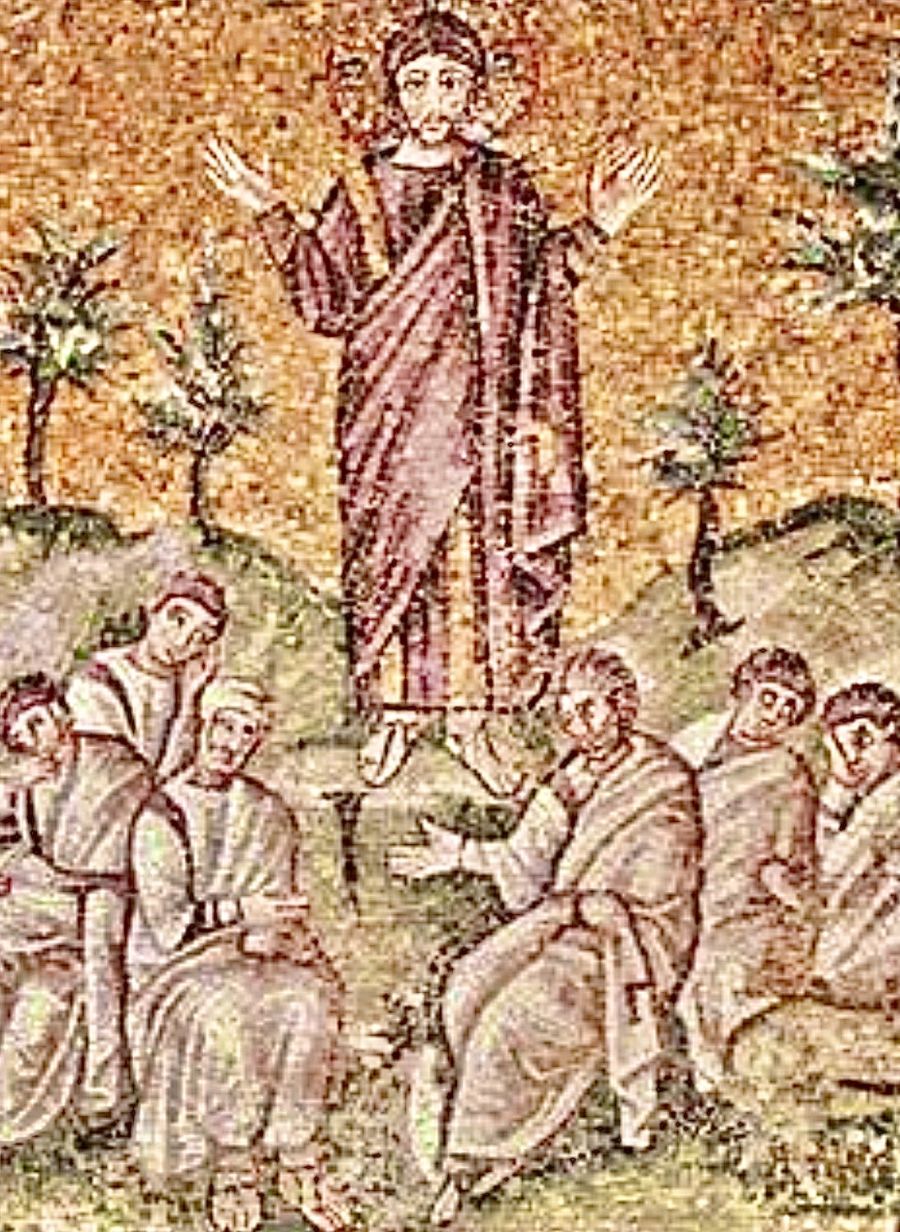
I pause to reflect on the beatitude that may seem most difficult: 'Blessed are those who mourn, for they will be comforted' (Mt 5:4). It is not a question of rejoicing in mourning itself, nor of considering suffering as good fortune. Jesus himself devoted much of his life to comforting, healing and encouraging people: Matthew reminds us that 'Jesus proclaimed the Good News of the Kingdom and healed every disease and infirmity among the people' (Mt 4:23). The tears Jesus speaks of are, rather, tears of repentance and tears of compassion. Think of St Peter, who wept bitterly after his denial, finding consolation in God's mercy. Or remember the vision of the prophet Ezekiel: on the last day, God "will mark with a cross on the forehead those who groan and lament over the abominations that are committed" (Ezekiel 9:4). These words of Jesus were addressed to his Jewish contemporaries, who were accustomed to the preaching of the prophets. For us, understanding them means rereading the Old Testament. As the prophet Zephaniah invites us: 'Seek the Lord, all you humble of the earth' (Zeph 2:3). And the psalm sings: “I have asked one thing of the Lord: to dwell in the house of the Lord all the days of my life” (Ps 145/146:5). These are the true “poor in spirit,” those who entrust themselves completely to God, like the tax collector in the parable: aware of their sins, they open themselves to the Lord’s salvation. Jesus assures us that those who seek God with all their heart will be heard: "Seek and you will find; knock and it will be opened to you" (Mt 7:7). And the prophets call those whose hearts are turned solely to God "pure". The Beatitudes, therefore, are Good News: it is not power, knowledge or wealth that leads us to the Kingdom, but gentleness, mercy and justice. As Jesus says to his disciples: " I am sending you out like lambs among wolves” (Lk 10:3). Each beatitude points to a path towards the Kingdom: each “Blessed” is an invitation, an encouragement: it is as if it were saying, “take courage, you are on the right path”. Our weaknesses become fertile ground for God’s presence: poverty of heart, tears, hunger for justice, persecution. Paul reminds us: “Let the one who boasts, boast in the Lord” (1 Cor 1:31). Finally, let us remember that Jesus is the perfect model: poor in heart, gentle, merciful, compassionate, just and persecuted, always grateful to the Father. His life teaches us to look at ourselves and others through the eyes of God, and to discover the Kingdom where we least expect it.
St Augustine writes in his commentary on this beatitude: "Blessed, says the Lord, are those who mourn, for they shall be comforted. He does not refer to bodily sadness, but to the sorrow of the heart for sins and the desire to convert to God" (Enarrationes in Psalmos, 30:5).
+Giovanni D'Ercole








