


don Giuseppe Nespeca
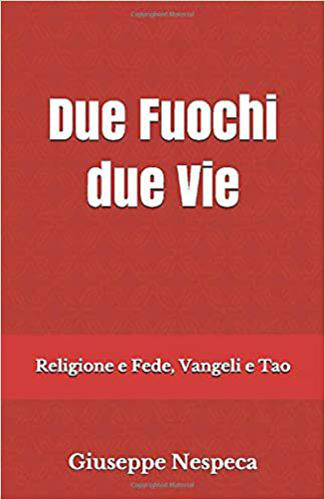
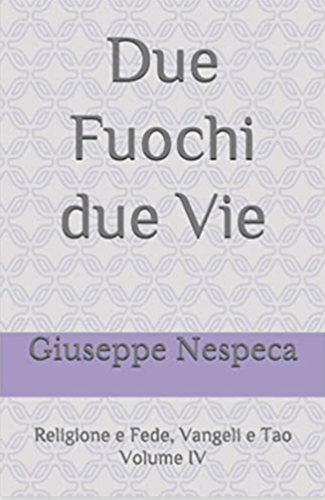
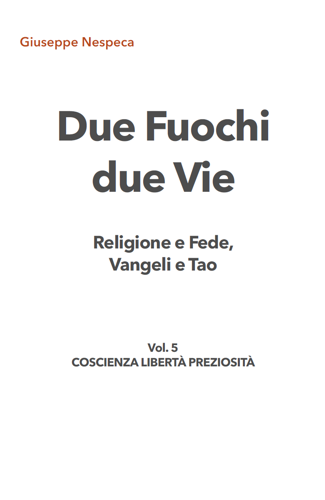
Giuseppe Nespeca è architetto e sacerdote. Cultore della Sacra scrittura è autore della raccolta "Due Fuochi due Vie - Religione e Fede, Vangeli e Tao"; coautore del libro "Dialogo e Solstizio".

The Word of the Lord, resounding a short while ago in the Gospel, reminded us that the whole divine law is summarized in love. The Evangelist Matthew narrates that after Jesus had answered the Sadducees, silencing them, the Pharisees met to put him to the test (cf. 22: 34-35). One of them, a doctor of law, asked him: "Teacher, which is the greatest commandment in the law?" (22: 36). The question makes apparent the concern, present in ancient Jewish tradition, over finding a unifying principle in the various formulations of God's will. This was not an easy question, considering that in the law of Moses, a good 613 precepts and prohibitions are contemplated. How does one discern, among all of these, which is the most important? But Jesus does not hesitate, and readily responds: "You shall love the Lord your God with your all your heart, and with all your soul, and with all your mind. This is the great and first commandment" (22: 37-38). Jesus quotes the Shemà in his answer, the prayer the pious Israelite recites several times a day, especially in the morning and in the evening (cf. Dt 6: 4-9; 11: 13-21; Nm 15: 37-41): the proclamation of the integral and total love due to God, as the only Lord. Emphasis is placed on the totality of this dedication to God, listing the three faculties that define man in his deep psychological structures: heart, soul and mind. The word mind, diánoia, contains the rational element. God is not only the object of love, commitment, will and sentiment, but also of the intellect, which should not be excluded from this milieu. Then, however, Jesus adds something which, in truth, had not been asked by the doctor of law: "And a second is like it, You must love your neighbour as yourself" (22: 39). The surprising aspect of Jesus' answer consists in the fact that he establishes a similarity between the first and the second commandments, defined this time too with a biblical formula drawn from the Levitical code of holiness (cf. Lv 19: 18). And thus by the end of the passage the two commandments become connected in the role of a fundamental union upon which all of biblical Revelation rests: "On these two commandments the whole law is based, and the prophets as well" (Mt 22: 40).
The Gospel passage on which we are focusing makes clear that being disciples of Christ means practicing his teachings, which can be summarized in the first and greatest commandment of the divine law, the commandment of love. Even the First Reading, taken from the Book of Exodus, insists on the duty of love; a love witnessed concretely in relationships between persons, which must be relationships of respect, collaboration, generous help. The neighbour to be loved is the stranger, the orphan, the widow and the needy, in other words, those citizens who have no "defender". The holy author goes into details, as in the case of the object pawned by one of these poor persons (cf. Ex 22: 25-26). In this case God himself is the one to vouch for the neighbour's position.
In the Second Reading, we can find a concrete application of the supreme commandment of love in one of the first Christian communities. St Paul writes to the Thessalonians, leading them to understand that, while having known them for such a short time, he appreciates them and holds them dear in his heart. Because of this, he pinpoints them as "a model for all the believers of Macedonia and Achaia" (1 Thes 1: 7). Weaknesses and difficulties are not lacking in this recently founded community, but it is love that surpasses all, renews all, conquers all: the love of those who, knowing their own limits, docilely follow the words of Christ, the divine Teacher, passed down through one of his faithful disciples. "You, in turn, became imitators of us and of the Lord, receiving the word despite great trials, with the joy that comes from the Holy Spirit", the Apostle wrote. He continued: "For not only has the word of the Lord sounded forth from you in Macedonia and Achaia, but your faith in God has gone forth everywhere" (1 Thes 1: 6, 8). The lesson that we can draw from the Thessalonians' experience, an experience that is truly common in every authentic Christian community, is that neighbourly love is born from docile listening to the divine Word. It is a love that will even withstand difficult trials for the truth of the divine Word, and in this way true love grows and truth shines in all its splendour. How important it is to listen to the Word and incarnate it in personal and community life!
[Pope Benedict, homily at the closing of the Ordinary Synod of Bishops, 26 October 2008]
Two Loves: the definitive meaning. Scale of inner possibilities
2. Christ says: ‘If anyone loves me, they will keep my word, and my Father will love them, and we will come to them…’ (Jn 14:23). At the very heart of Christ’s teaching lies the great commandment of love. This commandment was already enshrined in the tradition of the Old Testament, as today’s first reading, taken from the Book of Deuteronomy, bears witness.
When the Lord Jesus answers the question posed by one of the scribes, he refers to this version of the divine Law, revealed in the Old Covenant: ‘Which is the first of all the commandments?’. ‘The first is… you shall love… the Lord your God with all your heart, with all your mind and with all your strength.’ ‘And the second is this: you shall love your neighbour as yourself.’ ‘There is no other commandment greater than these’ (Mk 12:29–31).
3. That interlocutor, whom Saint Mark recalls, accepted Christ’s answer thoughtfully. He accepted it with profound approval. We too, today, need to reflect briefly on this ‘greatest commandment’, so that we may accept it anew with full approval and deep conviction. First and foremost, Christ emphasises the primacy of love in human life and vocation. Man’s greatest vocation is the call to love. Love also gives definitive meaning to human life. It is the essential condition of human dignity, the proof of the nobility of the human soul. St Paul will say that it is ‘the bond of perfection’ (Col 3:14). It is the greatest thing in human life, for true love embodies the dimension of eternity. It is immortal: ‘Love never fails’, as we read in the First Letter to the Corinthians (1 Cor 13:8). A person dies in the flesh, for such is the fate of everyone on earth; yet this death does not harm the love that has matured in their life. Certainly, it remains above all to bear witness to man before God, who is love. It designates man’s place in the Kingdom of God; within the order of the Communion of Saints. The Lord Jesus, speaking to his interlocutor in today’s Gospel – seeing that he understands the primacy of love amongst the commandments – says: “You are not far from the Kingdom of God” (Mk 12:34).
4. There are two commandments of love – as the Master expressly states in his reply – but there is only one love. One and the same love embraces both God and one’s neighbour. God: above all things, for He is above all. One’s neighbour: on a human scale, and therefore “as oneself”.
These ‘two loves’ are so closely linked that one cannot exist without the other. St John says as much elsewhere: ‘For whoever does not love their brother whom they have seen cannot love God whom they have not seen’ (1 John 4:20). One love cannot, therefore, be separated from the other. True love for one’s neighbour, precisely because it is true love, is, at the same time, love for God. This may surprise some people. It is certainly surprising. When the Lord Jesus presents to his listeners the vision of the Last Judgement, as recounted in the Gospel of Saint Matthew, he says: ‘I was hungry and you gave me food, I was thirsty and you gave me drink; I was a stranger and you welcomed me; I was naked and you clothed me; I was ill and you visited me; I was in prison and you came to see me’ (Mt 25:35–36).
Then those who hear these words are astonished, for we hear them ask: ‘Lord, when did we ever do any of these things for you?’. And the reply: ‘Truly I tell you: whenever you did these things for one of these least of my brothers and sisters – that is, for your neighbour: for one of your fellow human beings – you did it for me’ (cf. Mt 25:37, 40).
5. This truth is of great importance for our whole life and for our conduct. It is particularly important for those who seek to love their fellow human beings, but ‘do not know whether they love God’ or even declare that they do not ‘know’ how to love him.
This difficulty is easy to explain when one takes into account the whole nature of man, his entire psychology. It is, in a certain sense, easier for man to love what he sees than what he does not see (cf. 1 John 4:20).
6. Yet man is called—and called with great firmness, as the words of the Lord Jesus bear witness—to love God, to a love that surpasses all else. If we reflect on this commandment, on the meaning of the words already written in the Old Testament and repeated with such determination by Christ, we must recognise that they tell us a great deal about man himself. They reveal the deepest and, at the same time, definitive perspective on his being, on his humanity. If Christ assigns to man such love as a task—that is, the love of God which he, as a human being, cannot see—this means that the human heart harbours within itself the capacity for this love, that the human heart is created ‘tailored to such love’. Is this not, perhaps, the first truth about man, namely that he is the image and likeness of God himself? Does not Saint Augustine speak of the human heart which remains restless until it finds rest in God? Thus, then, the commandment to love God above all things reveals a scale of man’s inner possibilities. This is not an abstract scale. It has been reaffirmed and is constantly confirmed by all those who take their faith—the fact of being Christian—seriously. Yet there is no shortage of people who have heroically confirmed this scale of man’s inner possibilities.
[Pope John Paul II, homily, 4 November 1979]
Today’s Gospel Reading reminds us that the whole of Divine Law can be summed up in our love for God and neighbour. Matthew the Evangelist recounts that several Pharisees colluded to put Jesus to the test (cf. 22: 34-35). One of them, a doctor of the law, asked him this question: “Teacher, which is the greatest commandment in the law?” (v. 36). Jesus, quoting the Book of Deuteronomy, answered: “You shall love the Lord your God with all your heart, and with all your soul, and with all your mind. This is the greatest and first commandment” (vv. 37-38). And he could have stopped there. Yet, Jesus adds something that was not asked by the doctor of the law. He says, in fact: “And a second is like it, You shall love your neighbour as yourself” (v. 39). And in this case too, Jesus does not invent the second commandment, but takes it from the Book of Leviticus. The novelty is in his placing these two commandments together — love for God and love for neighbour — revealing that they are in fact inseparable and complementary, two sides of the same coin. You cannot love God without loving your neighbour and you cannot love your neighbour without loving God. Pope Benedict gave us a beautiful commentary on this topic in his first Encyclical Deus Caritas Est (nn. 16-18).
In effect, the visible sign a Christian can show in order to witness to his love for God to the world and to others, to his family, is the love he bears for his brothers. The Commandment to love God and neighbour is the first, not because it is at the top of the list of Commandments. Jesus does not place it at the pinnacle but at the centre, because it is from the heart that everything must go out and to which everything must return and refer.
In the Old Testament, the requirement to be holy, in the image of God who is holy, included the duty to care for the most vulnerable people, such as the stranger, the orphan and the widow (cf. Ex 22:20-26). Jesus brings this Covenant law to fulfilment; He who unites in himself, in his flesh, divinity and humanity, a single mystery of love.
Now, in the light of this Word of Jesus, love is the measure of faith, and faith is the soul of love. We can no longer separate a religious life, a pious life, from service to brothers and sisters, to the real brothers and sisters that we encounter. We can no longer divide prayer, the encounter with God in the Sacraments, from listening to the other, closeness to his life, especially to his wounds. Remember this: love is the measure of faith. How much do you love? Each one answer silently. How is your faith? My faith is as I love. And faith is the soul of love.
In the middle of the dense forest of rules and regulations — to the legalisms of past and present — Jesus makes an opening through which one can catch a glimpse of two faces: the face of the Father and the face of the brother. He does not give us two formulas or two precepts: there are no precepts nor formulas. He gives us two faces, actually only one real face, that of God reflected in many faces, because in the face of each brother, especially of the smallest, the most fragile, the defenseless and needy, there is God’s own image. And we must ask ourselves: when we meet one of these brothers, are we able to recognize the face of God in him? Are we able to do this?
In this way, Jesus offers to all the fundamental criteria on which to base one’s life. But, above all, He gave us the Holy Spirit, who allows us to love God and neighbour as He does, with a free and generous heart. With the intercession of Mary, our Mother, let us open ourselves to welcome this gift of love, to walk forever with this two-fold law, which really has only one facet: the law of love.
[Pope Francis, Angelus, 26 October 2014]
Conversion and Times
(Lk 13:1-9)
Conversion refers to a process that shakes the soul, due to an Encounter. A ‘meeting’ that opens to the knowledge of ourselves.
A dialogue that projects minds and actions onto reality and the Mystery, which ceaselessly refer to a new Exodus.
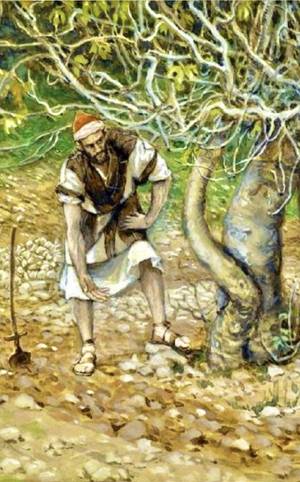
Even today, the swampy counterpart of the life of Faith wedges itself like a constant woodworm, and is symbolized by an arid confrontation, expressed in the absence of fruit on an unnecessarily leafy tree.
The ‘vineyard’ is an icon of the chosen people and the ‘fig tree’ of its central prosperity. Here evokes the Temple, in particular its liturgical nucleus: the Sanctuary.
The cult that took place in the sacred of the vast area of Mount Zion had to express the praise of a people who were constantly listening, called to a life of sharing and fraternity.
The delicious fruits that the Lord was waiting for should have been sweet and tender (like figs), but they were hard and inedible. The Call had been dropped on deaf ears.
The many and showy "leaves" of the most devout rite did not celebrate a life of welcome and understanding, rather tended to hide the bitter berries of a style in no way conforming to the divine plan.
We ask ourselves: how much time do we have available to amend and not regress, living fully the present?
Is the Father's governmental action punitive or only responsible and life-giving?
In the parable of the sterile fig tree we learn: the only condition that can change a history of infertility and squalor - as well as the danger of formalism - is the time still needed to assimilate the Word.
Forward process, linked to the unpredictable way in which the vital call of the Seed and the particular reaching out of its roots intertwine with the earth of the soul, then overflowing in relation to the events.
Appeal that never ceases, in the reverb of which is elaborated and strengthened the change of mentality that introduces into conviviality and into the plan of liberation for an alternative world: the Kingdom of God.
After the three years of the Son's public life, there is a ‘fourth year’ that extends to the history of the Church (vv. 7-9).
It does not want to conceal the luxuriance of life but to make it blossom, and without ceasing recalls a flourishing growth; for a feeling of Family with sweetest fruit, which is not satisfied with external practices.
As the encyclical Brothers All points out, the Lord still dreams of a «plan that would set great goals for the development of our entire human family» (n.16).
For this purpose «we need to think of ourselves more and more as a single family dwelling in a common home. Such care does not interest those economic powers that demand quick profits» (n.17).
The hasty logic - as well as the epidermal rush of the society of events - creates inequalities, not only in the commercial field.
In short, everything becomes an opportunity for the Eternal flowering and action ground, history that is truly ours: teaching of authentic theology and humanization - if the people story unfolds ‘on the way’.
The God of religion has his own claims and does not appear long-suffering. The Father of Jesus knows how to wait. He does not get angry, he does not give in to the frenzy of blow for blow. He is not disinterested, but not complain; nor take revenge.
He proposes solutions.
In doing so He will not cause irreparable trouble - indeed will astound us. For a new Spring, in which the fig tree gives its unrepeatable sugary, juicy and highly energetic Fruit - before the many leaves.
So that ‘fraternity’ does not «remain just another vague ideal» (n.109).
[Saturday 29th wk. in O.T. October 24, 2026]
Conversion and Times
(Luke 13:1-9)
Conversion refers to a process that shakes the soul, because of an Encounter. A rediscovery that opens to self-knowledge.
A dialogue that projects mind and actions onto reality and Mystery, which incessantly refer back to a new Exodus.
Even today, the swampy counterpart to the life of Faith wedges in like a constant woodworm, and is symbolized by a barren confrontation, expressed in the absence of fruit above an unnecessarily leafy tree.
The vineyard is iconic of the Chosen People and the fig tree of its central prosperity. Here it evokes the Temple, particularly its liturgical core: the Sanctuary.
According to religious prejudices - of class, purity conditions, ministry, progressive skimming - within strictly demarcated perimeters homage was paid to the God of Israel.
The worship that took place in the sacred zone of the vast Mount Zion area was to express the praise of a people in constant listening, called to a life of sharing and fraternity.
The delicious fruits that the Lord awaited should have been sweet and tender (like figs); conversely, they turned out to be hard and inedible. His Appeal had been let fall on deaf ears.
The many and conspicuous "leaves" of the devout rite did not celebrate a life of acceptance and understanding, but tended precisely to hide the bitter berries of a style in nothing in accordance with the divine plan.
We ask ourselves: how much time do we have to amend and not regress, living fully in the present? Is the Father's governing action punitive or only responsible and life-giving?
In the parable of the barren fig tree we learn: the only condition that can change a history of infertility and squalor - as well as the danger of formalism - is the time still needed to assimilate the Word.
Forward process, linked to the unpredictable manner in which the vital Call of the Seed and the particular outreach of its roots intertwines with the soil of the soul, then overflows in relation to happenings.
Call that does not cease; in whose reverberation is elaborated and strengthened the change of mentality that ushers in the mutual hospitable of convivialities and the design of liberation for an alternative world: the Kingdom of God.
Now in the hands of a useless and corrupt caste that had allowed the vital relationship to be extinguished, the threads of the ignored design of Salvation and Justice (in the sense first and foremost of authentic God-man positions and just relationships) are reknotted by the intensity of Father-Son relationship.
After the three years of public life, there is a "fourth year" that extends to the history of the Church (vv.7-9).
It is not meant to conceal the luxuriance of life but to make it blossom, and without ceasing it calls forth a flourishing growth; for a feeling of Family with the sweetest fruit, which is not satisfied with outward practices.
In order to overcome conditionings, suspicions, blockages, failures, there is a need for breath: it involves treading a long path of exploration.
There are no shortcuts, no useful U-conversions according to the code of official authorities, perpetually committed to mitigating and homologating charismatic peaks.
Indeed, Jesus had invited the crowds to have independent thinking and judgment (Luke 12:57: "Now why do you not judge for yourselves also what is right?").
Woe betide to be subjugated, accepting omertà out of calculation or fear. Our dignity and the missionary wealth to which God calls are at stake.
This is why the authorities considered Jesus to be like a Galilean: subversive and rebellious.
He suffers another intimidation by proxies of religious leaders (Lk 13:1). We seem to be witnessing a scene of prevarication with which we may be familiar.
As the encyclical Brothers All points out, the Lord still dreams of a project "with great goals, for the development of all humanity (No. 16)."
For this purpose "we need to constitute ourselves into a 'we' that inhabits the Common House. Such care does not interest the economic powers that need quick revenues" (n.17).
The rushed logic - as well as the epidermic haste of the society of events - creates inequalities, not only in the mercantile field.
In short, everything becomes opportunity for flourishing and ground for action of the Eternal, history truly ours: magisterium of authentic theology and humanization-if the story of the people unfolds on the way.
In the processes that trigger a history of redemption according to Gospel logic, the memory of the past does not alienate but interpellates: it does not trivially provide inert indefectible criteria for judging the present and obtaining repercussions or predictive capacities for the future.
The creed of philosophical-religious idealism may be a cocoon in which to lull oneself, but from the attentive and propulsive Faith flows a life of love that is also unpredictable, capable of inexplicable recoveries: it demands personal judgment and new grit in situation.
Harmful to dust off and readjust old things or one-sided dreams.It is necessary to have open eyes and at the same time to give time, so that we overcome the fatalisms of archaic monotheism, the sentiments that confuse intimist emotionalism with passion for the things of God, the reductionist and schematic fundamentalisms, the illusions that we are already well on the path of conversion.
The God of ancient religion has its demands and does not appear longsuffering. The Father of Jesus knows how to wait. He tolerates both stubbornness and careless acceleration.
He does not get irritated, does not give in to the frenzy of blow after blow. He is not disinterested, however, he does not complain; nor does he retaliate.
It proposes solutions.
She reiterates occasions that would melt the hard temper of our idols -- for an evolution toward a renewed masterpiece of heavenly Patience.
It has the style of the mother or at any rate of the parent - close relative - who by dint of caresses and kisses persuades the wayward child to be fed the food that will make him grow (calmly) and thus surpass himself.
In this way he does not cause irreparable trouble - in fact he will astound us.
For a new Spring, in which the fig gives its unrepeatable sugary fruit [never already dry or dried] juicy and highly energetic-before the many leaves.
So that fraternity does not remain "at best a romantic expression" (FT, 109).
To internalize and live the message:
How do you safeguard community living and your transpositions of Faith in Christ? What is the point of homologation in satisfactions, and where do you place your Preciousness?

""Repent', says the Lord, "for the Kingdom of Heaven is at hand'", we proclaimed before the Gospel […] that presents us with the fundamental theme of this "strong season" of the liturgical year: the invitation to change our lives and to do works worthy of penance.
Jesus, as we heard, recalls two items of news: a brutal repression in the Temple by the Roman police (cf. Lk 13: 1) and the tragic death of 18 people, killed when the tower in Siloam collapsed (v. 4). People interpret these events as divine punishment for those victims' sins, and thinking they are upright, believe they are safe from such accidents and that they have nothing in their own lives that they should change. Jesus, however, denounces this attitude as an illusion: "Do you think that these Galileans were worse sinners than all the other Galileans, because they suffered thus? I tell you, no; but unless you repent you will all likewise perish" (vv. 2-3). And he invites us to reflect on these events for a greater commitment on the journey of conversion, for it is precisely the closure of ourselves to the Lord and the failure to take the path of our own conversion that lead to death, to the death of the soul. In Lent, each one of us is asked by God to mark a turning point in our life, thinking and living in accordance with the Gospel, correcting some aspect of our way of praying, acting or working and of our relations with others. Jesus makes this appeal to us, not with a severity that is an end in itself but precisely because he is concerned for our good, our happiness and our salvation. On our part, we must respond to him with a sincere inner effort, asking him to make us understand which particular ways we should change.
The conclusion of the Gospel passage reverts to the prospect of mercy, showing the urgent need to return to God, to renew life in accordance with God. Referring to a custom of the time, Jesus presents the parable of a fig tree planted in the vineyard. However, this fig tree was barren, it produced no fruit (cf. Lk 13: 6-9). The dialogue that develops between the master and the vinedresser shows on the one hand the mercy of God who is patient and allows human beings, all of us, time in which to convert; and on the other, the need to start to change both our interior and exterior way of life straight away in order not to miss the opportunities that God's mercy affords us to overcome our spiritual laziness and respond to God's love with our own filial love.
[Pope Benedict, homily parish St. John of the Cross, March 7, 2010]
Bearing fruit simultaneously vs contemporary anti-vision
3. I spoke of fructification, and I am also helped in this by the Gospel, when it proposes - a reading we recently encountered in the sacred liturgy - the simile of the barren fig tree, which is threatened with uprooting (Lk 13:6-9). Man must bear fruit in time, that is, during his earthly life, and not only for himself, but also for others, for the society of which he is an integral part. However, this operation of his in time, precisely because he is "contained" in time, must neither make him forget nor neglect his other essential dimension, of being that is oriented toward eternity: man, therefore, must bear fruit simultaneously for eternity as well.
And if we take this perspective away from man, he will remain a barren fig tree.
On the one hand, he must "fill with himself" time creatively, because the otherworldly dimension certainly does not dispense him from the duty to work responsibly and originally, participating effectively and in collaboration with all other men in the building up of society according to the concrete needs of the historical moment, in which he finds himself living. It is, this, the Christian sense of the "historicity" of man. On the other hand, this commitment of faith immerses the young person in a contemporaneity, which carries within itself, in a certain sense, a vision contrary to Christianity.
This anti-view has these characteristics, which I recall in a manner, albeit briefly.
Man today often lacks a sense of the transcendent, of supernatural realities, of something that surpasses him. Man cannot live without some thing that goes further, that surpasses him. Man lives himself if he is aware of this, if he must always go beyond himself, transcend himself. This transcendence is deeply inscribed in the human constitution of the person.
Behold, in the anti-view, as I have said, contemporary, the meaning of man's existence therefore comes to be "determined" within the framework of a materialistic conception in order to the various problems, such as those of justice, work, etc.: hence arise those multiform contrasts between social categories or between national entities, in which the various collective egoisms manifest themselves. It is necessary, on the other hand, to overcome such a closed and, in the end, alienating conception, contrasting it with that broader horizon that right reason and even more so the Christian faith already let us glimpse. There, in fact, problems find a fuller solution; there justice takes on completeness and implementation in all its aspects; there human relationships, excluding all forms of selfishness, come to correspond to the dignity of man, as a person on whom the face of God shines.
[Pope John Paul II, to the young people of Turin, April 13, 1980]
Unfortunately, every day the press reports bad news: homicides, accidents, catastrophes.... In today’s Gospel passage, Jesus refers to two tragic events which had caused a stir: a cruel suppression carried out by Roman soldiers in the temple, and the collapse of the tower of Siloam in Jerusalem, which resulted in 18 deaths (cf. Lk 13:1-5).
Jesus is aware of the superstitious mentality of his listeners and he knows that they misinterpreted that type of event. In fact, they thought that, if those people died in such a cruel way it was a sign that God was punishing them for some grave sin they had committed, as if to say “they deserved it”. Instead, the fact that they were saved from such a disgrace made them feel “good about themselves”. They “deserved it”; “I’m fine”.
Jesus clearly rejects this outlook, because God does not allow tragedies in order to punish sins, and he affirms that those poor victims were no worse than others. Instead, he invites his listeners to draw from these sad events a lesson that applies to everyone, because we are all sinners; in fact, he said to those who questioned him, “Unless you repent you will all likewise perish” (v. 3).
Today too, seeing certain misfortunes and sorrowful events, we can be tempted to “unload” the responsibility onto the victims, or even onto God himself. But the Gospel invites us to reflect: What idea do we have of God? Are we truly convinced that God is like that, or isn’t that just our projection, a god made to “our image and likeness”?
Jesus, on the contrary, invites us to change our heart, to make a radical about-face on the path of our lives, to abandon compromises with evil — and this is something we all do, compromises with evil, hypocrisy.... I think that nearly all of us has a little hypocrisy — in order to decidedly take up the path of the Gospel. But again there is the temptation to justify ourselves. What should we convert from? Aren’t we basically good people? — How many times have we thought this: “But after all I am a good man, I’m a good woman”... isn’t that true? “Am I not a believer and even quite a churchgoer?” And we believe that this way we are justified.
Unfortunately, each of us strongly resembles the tree that, over many years, has repeatedly shown that it’s infertile. But, fortunately for us, Jesus is like a farmer who, with limitless patience, still obtains a concession for the fruitless vine. “Let it alone this year” — he said to the owner — “we shall see if it bears fruit next year” (cf. v. 9).
A “year” of grace: the period of Christ’s ministry, the time of the Church before his glorious return, an interval of our life, marked by a certain number of Lenten seasons, which are offered to us as occasions of repentance and salvation, the duration of a Jubilee Year of Mercy. The invincible patience of Jesus! Have you thought about the patience of God? Have you ever thought as well of his limitless concern for sinners? How it should lead us to impatience with ourselves! It’s never too late to convert, never. God’s patience awaits us until the last moment.
Remember that little story from St Thérèse of the Child Jesus, when she prayed for that man who was condemned to death, a criminal, who did not want to receive the comfort of the Church. He rejected the priest, he didn’t want [forgiveness], he wanted to die like that. And she prayed in the convent, and when, at the moment of being executed, the man turned to the priest, took the Crucifix and kissed it. The patience of God! He does the same with us, with all of us. How many times, we don’t know — we’ll know in heaven — but how many times we are there, there ... [about to fall off the edge] and the Lord saves us. He saves us because he has great patience with us. And this is his mercy. It’s never too late to convert, but it’s urgent. Now is the time! Let us begin today.
May the Virgin Mary sustain us, so that we can open our hearts to the grace of God, to his mercy; and may she help us to never judge others, but rather to allow ourselves to be struck by daily misfortunes and to make a serious examination of our consciences and to repent.
[Pope Francis, Angelus February 28, 2016]
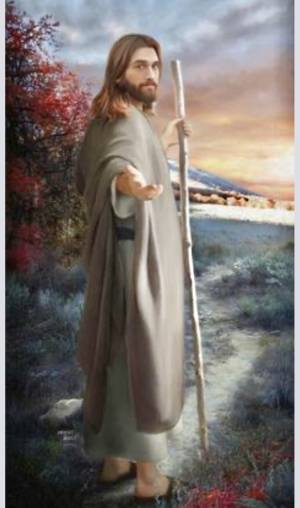
The room of Happiness, in the decisive horizon
(Lk 12:54-59)
«Now, why do not you judge also for yourselves what is right?» (v.57).
From nature and events we must know how to draw lessons - even for the horizon of Mystery.
In Christ we have the capacity for thought and everyone is made autonomous: from the externality of things we are brought back to the Origin of what happens.
Jesus' appeal on the Signs of Time was the inspirational text of Pope John for the convocation of the Second Vatican Council, so that the Church might question herself, paying greater attention to God’s Calls in history and to the hopes of humanity.
Predictability did not change spiritual pace; in each, its foreseeability did not allow the soul to see far.
In fact, Love is never according to chained, normal expectations or convictions, without new astonishing satisfactions.
Mass ideas are distracted, harnessed, by conformist thoughts. The never tested convictions wither the gaze, place the character impulses on dead tracks.
They generate paths that revolve around and suspend the realization, the ability to perceive the possibilities of the inner world; as well as opportunities for communion.
It is the heart that sees the slightest possibilities. It grasps them on perennial questions, in a relationship of reciprocity with the meaning of present life.
And Jesus wants our plant to throw new leaves again. Because what we believe belongs to us, is already lost.
Then the invitation to Conversion - instead of stranding the soul and thought on models - makes attentive to the polyhedron of Friendship with ourselves, with our brothers and sisters even distant, and all things, now.
World of relationship that nothing considers irrelevant - and can make us enrich [if unlocked] with adventurous, fresh, lively discrepancies, which appear from free energies that do not want standard life; together.
Radical change is... not just thinking about fast consent, about immediate (even banal) interests that you do not really want - and we know does not work: it would not upset anything.
The Moment to discover the contents and not leave us be dazed, the present chance, the spirit of the pilgrim, the recognition of cultures... have a decisive character for the evolution of life in the Spirit.
It does not rest on the coded, enlisted protagonism, which already knows where it is going - and so it runs aground, adapts, loses sight of us, makes us interdicted. It reaps victims of illusions, of external friction; poisoning the road with muscular approaches and too much thoughts.
Compliments outside do not bring the I and the you back to the Roots, nor do they explode for the true future, the one to be lived intensely, which will make us vibrate.
Here is the «Present Moment»: the door to be opened to enter the room of happy energy, which remains magmatic - unceasing gift, ‘anointing’ and Vision that we do not know.
Astonishment that invites and leads far beyond the homologising, conformist, one-sided aspect - of din, cliché, tacticism, or other people's age to be reproduced.
To internalize and live the message:
How do you live the tension between the vision of the genius of time and the present moment?
What relationship do you see between God’s Promise and our hopes?
[Friday 29th wk. in O.T. October 23, 2026]
The room of Happiness, in the decisive horizon
(Lk 12:54-59)
"Now why do you not also judge for yourselves what is right?" (v.57).
From nature and happenings we need to know how to draw lessons-even for the horizon of Mystery.
In Christ we have capacity for thought and are made autonomous: from the externality of things we are brought back to the Origin of what happens.
Jesus' call on the Signs of Time was Pope John's inspirational text for the convocation of the Second Vatican Council, so that the Church would finally be the one to question itself, paying more attention to God's Callings in history and the hopes of humanity.
Self-celebratory security and the pomp of grand forms had dampened the ardent feeling and liberating enthusiasm of the Risen One.
Predictability did not change spiritual pace; in each, its predictability did not allow the soul to see far ahead.
The certainties of the codes extinguished the charge and caused the faithful to be overwhelmed only by routine and problems.
Even today, the certainties of structure and circumstance-all established-weaken the blossoming into the present; they do not allow one to perceive and experience what is made Event.
Commonplaces are capable of displacing Vocation from the magical territory where it arises (and knocks within), turning it to a sacramental everydayness all predicted-approved by the established social or ecclesial contour on the ground.
Instead, our foundational Eros must be spent now and outgoing, for it lives on passions, not staleness; it rests on desire and complicity with the Spirit, who with his Fire renews the face of the earth.
But it is extinguished if we allow ourselves to be carried away by thoughtful assessments about the forces in the field: give-and-take calculations, opportunistic situationalism ... even other people's intentions, or purist, and circumstantial.
Convincing and personal momentum pales in the forcing, scheduling, control obsessions and verifications, without decisive breakthroughs-as if we were in kindergarten.
For Love is never according to concatenated, normal expectations or convictions, without new, jaw-dropping satisfactions - nor does it retrace mass ideas distracted by usual conformist, gaze-drying thoughts.
Beliefs never screened nor tested place character impulses on dead tracks.
Inculcated certainties generate ways that go around, suspend noticing, dim any ability to perceive possibilities of the inner world; as well as opportunities for communion.
It is the heart that sees the least possibilities. It grasps them on perennial questions in reciprocal relationship with the meaning of present life.
And Jesus wants our plant to sprout new leaves again, all green (unseasoned).
Not mold: what we think belongs to us is already lost.
Then the invitation to Conversion - instead of stranding the soul and thought on ancient models or abstract, one-sided utopias - makes us attentive to the polyhedron of Friendship with ourselves, with our brothers and sisters even far away, and all things, now.
World of relationship that nothing deems irrelevant - and can make us enriched (unblocked) with adventurous, fresh, lively dissimilarities, which emerge from free energies that do not want standard life, nor too much the binding of memories, but radical change, together.
As the encyclical Brothers All points out, "this implies the habitual capacity to recognize the other's right to be himself and to be different" (no. 218).
Radical change is ... not to think only of the quick consensus, of one's own near (even trivial) gain, which after all we do not really desire - and we know does not work: it would not change anything.
Such intimate and social Appeal must be grasped immediately, here and now, while the human time of grace lasts-God's moment on our behalf.
The Moment to discover the contents and not leave us dazed, the present chance, the spirit of the pilgrim, the recognition of cultures... have a decisive character for the evolution of life in the Spirit.
It does not rest on codified, enlisted protagonism, which already knows where to arrive -- and thus strands, adapts, loses sight of us, makes us interdicted; reaps victims of illusions, of external friction; intoxicating the road of muscular approaches and thoughts.
Fallacious things, e.g., the fixed and unglamorous idol that often stalks souls: the "what we've achieved"-with its conformist goals, ripped promotions, others watching us...
Compliments outside do not bring the "I" and the "you" back to the Roots, nor do they explode for the real future, the one to be lived intensely, that will vibrate.
The "Present Moment" is simply the door to open to usher in the room of happy energy, which lingers magmatically -- unceasing gift, "anointing" and Vision we do not know.Awe that invites and leads far beyond the homogenizing, one-sided, pigtailed aspect -- of phrasing, cliché, tacticism, or other people's age to reproduce.
"Theatricals! The appearance of earth and heaven you know how to discern, but this time how do you not know how to discern?" (Luke 12:56).
To internalize and live the message:
How do you live the tension between the vision of the genius of time and the present moment?
What relationship do you grasp between God's Promise and our hopes?
Faith and the sign of the times
Faith is not a kind of object nor an ideology (which one may or may not have), but a Relationship.
It proceeds from a God who reveals himself, challenges us and calls us by name.
His varied and rich Face does not collide with common thought, but intercepts our desire for fullness of life, and in this way corresponds and conquers us.
It is not a punctual affair, but one that gushes and proceeds from wave to wave in the course of existence -- with all the load of its surprises over time [they from time to time challenge, sabotage, or astound us].
In said relationship, the Faith that precisely arises from listening is kindled when the Father's initiative, which is manifested and revealed in a proposal that comes to us, is accepted and not rejected.
In evolution, such a dynamic establishes an invisible Presence in the concealed Self, unquenchable fire of our foundational Eros; Echo perceptible-even in the genius of time, in the furrows of personal history, in the folds of events and relationships, advice, opposing evaluations and even ruptures.
The Relationship of Faith has several approaches. A first stage is that of Faith Assent: the person recognizes himself in a world of knowledge that corresponds to him. This is a very dignified level, but common to all religions and philosophies.
Scrutinizing the Word, one understands that the specificity of biblical Faith is much more about concrete existence than about thought or discipline: it has a different character from the codes, it is Sponsal.
Faith already in the First Testament is typically that reliance of the Bride [in Hebrew Israèl is a feminine gender term] who has full confidence in the Bridegroom.
She knows that resting on the God-Con she will flourish authentically and enjoy fullness of life, even passing through unpleasant events.
Faith lived in the Spirit of the Risen One enjoys other facets, which are decisive in giving color to our going in the world and our full maturation and joy in life.
[Crucial in all is both listening to Sacred Scripture and moving from the jumble of thoughts that fragment our inner eye to perception, that is, to a contemplative gaze that knows how to rest on ourselves and things].
The third step of Christological faith is precisely a kind of Appropriation: the subject identifies himself and-sure of the friendly reciprocity experienced in the Gifts-takes possession of the Lord's meek and strong heart with a stroke of the hand and without any prescribed merit.
Quoting St. Bernard, Alphonsus Maria de' Liguori states, "That merit which I lack to enter Paradise, I usurp from the merits of Jesus Christ." No rigmarole or discipline of the arcane.
Mind you, these are not "trials" of vicarious substitution, as if Jesus had to make good a debt of sins because the Father needed blood and at least one to pay dearly for it.
The person becomes intimate with Christ not simply by communal belief, but by personal inner action.
God recovers us by educating us.
It is true that by sending a lamb among wolves its end is marked. But it is also the only way to teach men -- still in a prehuman condition -- that that of competition is not the life of people, but of ferocious beasts.
The lamb is the tame being that gives even wolves pause: only by fully appropriating it do the beasts realize that they are such.
Thus we can begin to say, "I" as men instead of beasts.
Of course, only people reconciled with their own affairs do good. But the authentic and full best is beyond our reach; not one's own production. We are not omnipotent.
A further stage in the journey of life in Christ and the Spirit is that of Faith-Calamite.
It too takes the form of an Action, for the soul-bride reads the sign of the times, interprets the surrounding reality and her own inclinations. And grasping the scope of the Future, she anticipates and actualizes it.
Thus we avoid wasting life in support of dead branches.
But the ultimate and perhaps even more perfect stage (I would say the pinnacle) of such Faith-Enchantment is that of Faith-Wonderfulness.
It is the specific belief of the Incarnation, for it recognizes precisely the Treasures that lie behind our dark sides.
Such Pearls will descend in the course of existence [they will do what they must when necessary] and it will be a wonder to discover them.
The pierced cocoon will generate our Butterfly, which is not construction approved to prototypes, but Astonishment.
The more we do for others, the more we understand and can appropriate the words of Christ: “We are useless servants” (Lk 17:10). We recognize that we are not acting on the basis of any superiority or greater personal efficiency, but because the Lord has graciously enabled us to do so [Pope Benedict, Deus Caritas est n.35]
Quanto più uno s'adopera per gli altri, tanto più capirà e farà sua la parola di Cristo: « Siamo servi inutili » (Lc 17, 10). Egli riconosce infatti di agire non in base ad una superiorità o maggior efficienza personale, ma perché il Signore gliene fa dono [Papa Benedetto, Deus Caritas est n.35]
Each time we celebrate the dedication of a church, an essential truth is recalled: the physical temple made of brick and mortar is a sign of the living Church serving in history (Pope Francis)
Ogni volta che celebriamo la dedicazione di una chiesa, ci viene richiamata una verità essenziale: il tempio materiale fatto di mattoni è segno della Chiesa viva e operante nella storia (Papa Francesco)
It is a happy image with which, however, Jesus teaches a truth that calls us into question […] If we remove God, we remove Christ and the world falls back into emptiness and darkness (Pope Benedict)
E’ un’immagine felice, con cui però Gesù insegna una verità che ci mette in discussione […] Se togliamo Dio, se togliamo Cristo, il mondo ripiomba nel vuoto e nel buio (Papa Benedetto)
We would also like to set an example ourself, even if the smallness of our means might prevent anyone from appreciating the practical and quantitative significance of it. We want to see our own charitable institutions undergo a new development in the struggle against hunger and toward meeting the main needs of the world. This is the way and the only way to build peace (Pope Paul VI)
Vorremmo anche Noi dare l'esempio, sebbene l'esiguità dei Nostri mezzi ci impedisca di farne apprezzare la rilevanza pratica e quantitativa: Noi vogliamo dare alle Nostre istituzioni caritative un nuovo sviluppo in favore della fame e dei bisogni del mondo: è in questo modo, e non altrimenti, che si costruisce la pace (Papa Paolo VI)
As St. Ambrose put it: You are not making a gift of what is yours to the poor man, but you are giving him back what is his (Pope Paul VI, Populorum Progressio n.23)
Non è del tuo avere, afferma sant’Ambrogio, che tu fai dono al povero; tu non fai che rendergli ciò che gli appartiene (Papa Paolo VI, Populorum Progressio n.23)
Here is the entire Gospel! Here! The whole Gospel, all of Christianity, is here! But make sure that it is not sentiment, it is not being a “do-gooder”! (Pope Francis)
Qui c’è tutto il Vangelo! Qui! Qui c’è tutto il Vangelo, c’è tutto il Cristianesimo! Ma guardate che non è sentimento, non è “buonismo”! (Papa Francesco)
Christianity cannot be, cannot be exempt from the cross; the Christian life cannot even suppose itself without the strong and great weight of duty [Pope Paul VI]
Il Cristianesimo non può essere, non può essere esonerato dalla croce; la vita cristiana non può nemmeno supporsi senza il peso forte e grande del dovere [Papa Paolo VI]
The horizon of friendship to which Jesus introduces us is the whole of humanity [Pope Benedict]
L’orizzonte dell’amicizia in cui Gesù ci introduce è l’umanità intera [Papa Benedetto]
The Church invites believers to regard the mystery of death not as the "last word" of human destiny but rather as a passage to eternal life (Pope John Paul II)





duevie.art
don Giuseppe Nespeca
Tel. 333-1329741
Disclaimer
Questo blog non rappresenta una testata giornalistica in quanto viene aggiornato senza alcuna periodicità. Non può pertanto considerarsi un prodotto editoriale ai sensi della legge N°62 del 07/03/2001.
Le immagini sono tratte da internet, ma se il loro uso violasse diritti d'autore, lo si comunichi all'autore del blog che provvederà alla loro pronta rimozione.
L'autore dichiara di non essere responsabile dei commenti lasciati nei post. Eventuali commenti dei lettori, lesivi dell'immagine o dell'onorabilità di persone terze, il cui contenuto fosse ritenuto non idoneo alla pubblicazione verranno insindacabilmente rimossi.