


don Giuseppe Nespeca
Giuseppe Nespeca è architetto e sacerdote. Cultore della Sacra scrittura è autore della raccolta "Due Fuochi due Vie - Religione e Fede, Vangeli e Tao"; coautore del libro "Dialogo e Solstizio".
26th Sunday in O.T.
26th Sunday in Ordinary Time (year A) [27 September 2026]
First Reading from the Book of the Prophet Ezekiel (18:25–28)
To understand Ezekiel’s prophecy, we must recall the dramatic context in which he speaks. In 597 BC, many inhabitants of Jerusalem were deported to Babylon by Nebuchadnezzar’s army. Jerusalem had been devastated, the Temple desecrated, and the population decimated. The exiles found themselves far from the Promised Land and from everything that had given meaning to their lives. Faced with such a tragedy, the question arose spontaneously: ‘What have we done to God to deserve all this?’. At that time, it was widely believed that there was a direct correlation between a person’s behaviour and what happened to them: the righteous are rewarded and the sinner punished. For this reason, the exiles repeated a proverb: ‘The fathers have eaten sour grapes, and the children’s teeth are set on edge’ (Ezekiel 18:2). In other words: we are paying for the sins of our fathers and of previous generations.
Ezekiel breaks with this mindset. God says through the prophet: ‘You shall no longer repeat this proverb in Israel.’ No one is condemned to live under the burden of others’ sins. Every person is called to answer for their own choices. And here a great new truth emerges: the past does not definitively determine the future. If the wicked turn away from their ways, practise righteousness and justice, repent and return to God, they may live. ‘If the wicked turn away from all the sins they have committed, […] they shall live’ (cf. Ezekiel 18:21). It is an extraordinarily relevant message: no one is a prisoner of their own past, but it is always possible to start afresh, and this frees people from the belief that they are condemned to pay for the sins of others and restores to them the possibility of hope. No past is so burdensome as to prevent a fresh start. Even in times of trial, God opens up a new path before us. Hope springs precisely from the certainty that God’s mercy always leaves open the possibility of a fresh start. Conversion, from a biblical perspective, is precisely a change of direction, a ‘returning’ to God. Ezekiel also reminds us that true conversion does not consist merely of words or religious practices: it is manifested concretely in the practice of law and justice, that is, in the way we treat others.
Responsorial Psalm (24/25)
The words ‘way’, ‘road’, ‘path’ and the verb ‘guide me’ recur several times in the Psalm: ‘Lord, make me know your ways; teach me your paths. Guide me in your truth and instruct me, for you are the God of my salvation… The Lord shows sinners the way; he guides the poor in righteousness and teaches the humble his way’. The theme of the journey is characteristic of penitential psalms. God’s Law—that is, his commandments—is like a sort of ‘highway code’. The speaker is a sinner who recognises that he has gone astray, that he has taken the wrong path, and asks God to bring him back onto the right path. It is no coincidence that, in the Bible, to ‘convert’ literally means ‘to turn back’, ‘to turn round’. And it is never too late to turn back. In the first reading, Ezekiel reminded us that a future is always possible: no one is definitively condemned by their past. That is why we can still pray: ‘Lord, teach me your ways’. What is asked of us? First and foremost, not perfection, but humility: ‘The Lord teaches the humble his way’. The Hebrew word anawim, translated as ‘the humble’ or ‘the poor’, refers to those who recognise that they are poor, fragile, without resources and in need of God. They are the ‘poor in spirit’, those who are able to pray simply: ‘Lord, have mercy on me’. Their plea is already a call for conversion: ‘Lord, teach me your way’. And the ‘I’ speaking in the Psalm is not merely an individual, but the entire people. Psalm 24/25 was probably used in penitential celebrations in the Temple in Jerusalem, which is why there is a constant interplay between ‘I’ and ‘we’ in biblical prayer. The Psalm speaks in the first person, but at the end it says: ‘Deliver Israel, O God, from all its troubles’. The ‘I’ therefore encompasses the ‘we’. The biblical person possesses a strong sense of solidarity across generations: the God of Abraham, Isaac and Jacob is the God of their descendants; the Covenant with Noah, Abraham and Moses concerns not only the individual, but the whole people. Today, however, our society often tends to place the individual, their freedom and their personal rights at the centre, sometimes at the expense of the communal dimension. The Bible has taken a different path: it has progressively discovered the importance of the individual without ever separating them from the community. This is one of the great riches of biblical revelation: the individual is not lost within the community, nor is the community forgotten in favour of the individual. We are personally responsible, yet at the same time we stand in deep solidarity with one another. For this reason, in the Psalm, that humble and trusting sinner is at once each one of us and the entire community of believers. Finally, there is a particularly beautiful detail: the Psalm continually plays on the theme of memory and forgetfulness: ‘Remember, Lord, your mercy… Do not remember the sins of my youth… Do not forget me’. It is almost a prayer that God might have a ‘selective memory’: that he might forget our sins and remember his mercy instead!
It is a bold prayer, yet also one of profound humility. Bold, because it springs from trust in the Covenant; humble, because it acknowledges one’s own sin and frailty. Man asks God: ‘Do not remember what I have been; remember instead who You are: merciful, faithful, slow to anger and great in love.’ After all, even in the Old Testament, Israel had discovered something surprising: God is not merely the Judge, but a Father full of tenderness and mercy. And so the prayer of the Psalm can also become our own: “Lord, when I have gone astray, teach me your way. When I have fallen, show me that I can return. When I recognise my own poverty and fragility, guide me. Do not remember my sins: remember your mercy. And grant that my ‘I’ may never forget the ‘we’ of the community of your children”.
Second Reading from the Letter of Saint Paul to the Philippians (2:1–11)
On Palm Sunday, every year we hear above all the second part of this text, the part that contemplates the mystery of Christ: ‘Though he was in the form of God, he did not regard equality with God as something to be grasped’. Today, however, let us focus on the first part, in which Paul explains to us how to live ‘in Christ’. Paul uses this expression at the beginning and end of the passage: ‘If, then, there is any consolation in Christ…’ and then: ‘Have in you the same mindset as Christ Jesus’. Between these two statements, he lists the attitudes that must characterise the Christian life: comfort, love, fellowship, tenderness, compassion. It is no coincidence that these are the very same attributes with which God is described in the Old Testament. Being ‘in Christ’ is therefore not merely a figure of speech. From the moment of Baptism, we belong to Christ; we are incorporated into Him and become members of His Body. This new identity transcends all our differences: cultural, social, economic and physical. We now have a common name: Christians. It is like what happens in a large family: when we meet, before any other differences, we recognise that we belong to the same family. It is this profound sense of belonging that should characterise the Christian community. Paul says: ‘Have the same mindset, the same love, one spirit and one purpose’. It is as if he were telling us: honour the family to which you belong; honour the name you bear. Then comes a surprising expression: ‘Consider others better than yourselves’. This does not mean belittling oneself or thinking one is inferior. The Gospel does not ask us to rank people as superior or inferior. The Kingdom of God does not operate according to the logic of competition and comparison. The point is quite another: to learn to look at others with a positive gaze, almost with an attitude of admiration, seeking to see not what they possess, but what they are. The differences we see – physical, cultural, social, economic – belong above all to the dimension of ‘having’. Paul, on the other hand, leads us into the dimension of ‘being’: ‘ ‘As many of you as were baptised into Christ have clothed yourselves with Christ’ (Gal 3:27). When I meet another baptised person, therefore, I must not stop at what is apparent. I must remember that they are a member of the Body of Christ, a temple of the Holy Spirit, and that they have a personal vocation, different from my own, yet necessary to God’s plan. Everyone possesses a gift that no one else can replace. Because of the mission God has entrusted to them, the other person may be ‘better’ than me, in the sense that they possess what I do not possess and can accomplish what I cannot. For this reason, they also need my esteem, my encouragement and my trust. The important thing is not to determine who is worth more, but to know what mission God entrusts to each individual and to the community as a whole. Every person is called to contribute to the building of the Kingdom according to the gift received from the Spirit. Finally, there is a great truth contained in this text: the Kingdom of God is already present, but it has yet to be fulfilled in our lives. In Christ, indeed, God’s plan to reunite humanity has already begun and, through Baptism, we have been incorporated into this reality. But what is already true in Christ must also gradually become true in our daily lives. Our being ‘in Christ’ cannot remain merely an inner reality or a simple religious formula: it must tangibly transform the way we view, welcome and treat others, both Christians and non-Christians. And here we understand the profound link between the two parts of the text. First, Paul tells us how those who are ‘in Christ’ should live; then he shows us how Christ himself lived: not seeking his own advantage, but humbling himself, becoming a servant and giving himself even to the point of death on the cross. For this reason, the Christological hymn is not merely a beautiful contemplation of Jesus: it is the concrete measure of our lives. ‘Let this mind be in you which was also in Christ Jesus’. To be Christian, therefore, means allowing the very movement of Christ to enter our lives: not asserting ourselves against others, but giving of ourselves; not seeking to be superior, but serving; not focusing on what the other possesses, but recognising who they are before God. It is in this way that what Christ has already accomplished becomes, day by day, a reality lived out in the Church and in the world.
From the Gospel according to Matthew (21:28–32)
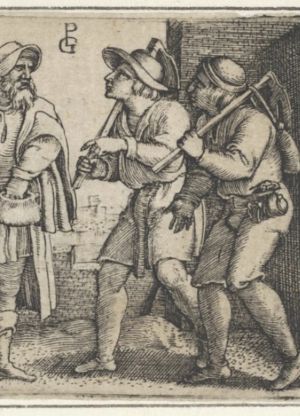
‘Which of the two did the will of his father?’ This question from Jesus seems simple, almost too simple. Once again we find ourselves in the vineyard, as we did last Sunday. A father asks his two sons to go and work in the vineyard. The first replies ‘no’, but then changes his mind and goes; the second replies straight away: ‘Yes, sir’, but then does not go. Jesus asks the chief priests and the elders: ‘Which of the two did the will of his father?’ Clearly, he does not wish to test them with a simple riddle: he wants to open their eyes. The answer is obvious: the first. And it is precisely then that Jesus applies the parable to his listeners: you are like the second son. You say ‘yes’ to God; you are religious people, you know the Law, you await the Messiah and pray for his coming; yet when God sends him to you, you do not recognise him and you do not accept his word. It was the Father’s will that his people—and above all his religious authorities—should welcome his Envoy, the Messiah, Jesus. Herein lies the tragedy that will lead to the Passion: precisely those who seemed best prepared to welcome the Messiah will be the ones who refuse to recognise him. Jesus then utters a very strong statement: ‘Tax collectors and prostitutes will enter the Kingdom of God before you.’ He is not praising them because they are sinners. Their sin is certainly no cause for merit. Rather, they are like the younger son: they began by saying ‘no’, but then changed their ways. What happened? They believed the preaching of John the Baptist. John had called everyone to repentance: ‘Bear fruit worthy of repentance.’ The tax collectors and prostitutes, precisely because they recognised their own poverty and sinfulness, were able to listen. The religious authorities, on the other hand, refused to believe John and later Jesus. Matthew probably links this parable to the events that had just taken place in Jerusalem. At the beginning of chapter 21, Jesus had entered the city and the crowd had welcomed him as the Messiah, shouting: ‘Hosanna to the Son of David! Blessed is he who comes in the name of the Lord!’ (Ps 117/118:26). But this enthusiasm was not shared by the chief priests and the elders. When Jesus was teaching in the Temple, they asked him: ‘By what authority are you doing these things? Who gave you this authority?’ In reality, the problem was precisely this: in their eyes, Jesus did not possess the necessary authority to speak in God’s name. Jesus, as is often the case, does not answer directly. He asks them: ‘Where did John’s baptism come from: from heaven or from men?’ They do not dare to reply, because any answer would have put them in a difficult position: to acknowledge John would have meant acknowledging his testimony about Jesus as well.
That is why Jesus tells the parable of the two sons. It is almost a final appeal for their conversion. Jesus does not wish to exclude anyone: he desires the salvation of all. If he speaks harshly, it is because time is now running out: we are on the eve of the Passion. But what had John the Baptist said? He had denounced precisely that religious self-assurance which prevents conversion: ‘Do not say amongst yourselves: “We have Abraham as our father.”’ It is not enough to belong to the chosen people, to know the Law or to hold a religious position. One must bear the fruits of conversion. Perhaps this was the real problem with the authorities: a certain certainty that they already possessed the truth about God, to the point where they were no longer capable of allowing themselves to be challenged by his word.
The tax collectors and the prostitutes, on the other hand, precisely because they recognised themselves as sinners and the poor before God, had more open ears and hearts. The problem, therefore, is not simply being a sinner or being religious. The problem is becoming so certain of one’s own convictions that one is no longer able to hear God when He speaks in a way that differs from what we expect. The parable thus presents us with a much deeper question. It is not enough to say ‘yes’ to God with our lips. Faith is recognised in our lives. It is not enough to know the Father’s will: we must carry it out. And the question that Jesus puts to the religious leaders becomes, today, a question for each of us: Have I truly entered the Father’s vineyard? Does my ‘yes’ to God find expression in my everyday life? Am I still capable of hearing a word that calls me to change? Or do I think I already know everything about God and leave no room for conversion?
The parable of the two sons goes even deeper than that of the labourers of the last hour. There, Jesus questioned the way we judge God’s mercy towards others; here, he questions our very piety. Ultimately, Jesus is not merely asking us: ‘Do you say “yes” to God?’, but: ‘Are you doing the Father’s will?’ Because in the Lord’s vineyard, it is not only what we say that counts, but the concrete response of our lives.
+Giovanni D’Ercole
Two Sons: «No» and «Me!». Reversed Moral, sidelined stars
Judging Question
Where and which Messiah? In the dilemma, the solution
(Lk 9:18-22)
People of God are no longer in the closed of a womb that protects and guarantees the believer, and sometimes we feel incapable of fielding the Risen One in our limits.
Indeed, the dream of a person who solves problems from the outside (like a shortcut) is still ingrained.
Chimaera fuelled by the bewilderment and anguish we feel in the face of a world marked by contradictions - today even by the bitter consequences of the global crisis.
The wish of a Messiah is kept alive by our trembling... in the waiting for intervention of Someone able to be [instead] inside ourselves and things.
That is why God does not turn to a valiant captain, not to a powerful ruler, not to a hero, but to those who offer love. And each of us could be, though our works seem sloppy in themselves, or far inferior to desires.
But Christ himself pours into them.
He is the humble Son, yet he does not play in defense: authentic Liberator.
Divine Glory has an unexpected figure. The Eternal is not a controller, nor a promoter of models that defend order, or [old or fashionable] beliefs, nor fine manners.
The secluded place (v.18) is paraphrases of our risk of misunderstanding.
Even at that time everyone was waiting for the coming of the Anointed of the Lord, but each sect or school of thought in its own way.
Some awaited a sovereign, others a priest, or warrior commander; a judge, a prophet...
All "masters", clinging to some social privilege. No servant, intimate to ourselves: full understanding escaped.
Jesus explicitly imposes messianic silence (v.21) because he does not follow expectations, hopes, intentions by the norm - all external.
In fact, he replaces the perspective of «”the” Messiah» ["that" awaited Messiah] with «the Son of Man» (vv.20-22): the true and full development of divine Plan for humanity.
«"The" Christ» according to the common mentality was a predictable figure, hard, too normal, fixed over time - who had no respect for personal processes - and overflowing with claims.
«Son of Man» is a Person without exaggeration: more intimate, true and profound; without too much method, nor typologies. Person who for this reason does not cease to grow.
In Lk all the important events of the story of Jesus are inserted in a moment of prayer.
It was not easy even for Him to be in tune with the idea that divine Glory could manifest itself in a totally unfavorable situation - only here and there pulsating of light.
And what do you say (cf. v.20)? To the great riddle, only God-man Crucified [the Different, and without reputation] is Judgment, and the Answer that frees from insecurity.
With our inner Friend who embraces, nourishes us and acts like a magnet, we will give everything to the Present - the better part. Closeness of Infinity and our eternal side.
[Friday 25th wk. in O.T. September 25, 2026]
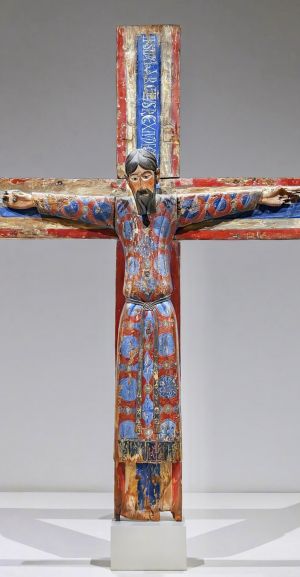
Where and which Messiah?
Lk 9:18-22 (18-25)
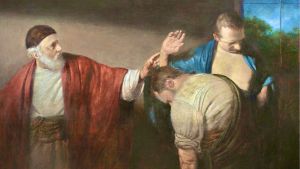
Judging question. In the dilemma, the solution
(Lk 9:18-22)
The people of God no longer find themselves in the enclosure of a womb that protects and guarantees the believer, and sometimes we feel as if we are incapable of bringing the Risen One into our limitation.
Indeed, the dream of a person who solves problems from outside (as a shortcut) is still rooted.
Chimera fuelled by the bewilderment and anguish we feel in the face of a world marked by contradictions - today even by the bitter consequences of the global crisis.
The wish for a Messiah is kept alive by our trepidation... waiting for the intervention of Someone capable of standing (instead) within ourselves and things.
We look for the One who can give life a shot in the arm, changing it immediately and radically. Only then can we give it substance - not from the outside.
We continue to wait for a Saviour even today, even though the conventionalist environment only offers less and less meaningful choices [even useless carousels] while impatience provokes resignation or insulting fanaticism.
That is why God turns not to a valiant captain, not to a powerful ruler, not to a hero, but to one who offers love. And each one of us could be one, although our works seem sloppy in themselves, or far inferior to our desires.
But it is Christ himself who pours himself into them.
He is the resigned Son, and yet He does not play defence: He is the authentic Deliverer.
Divine glory has an unexpected figure. The Eternal One is not a controller, nor a promoter of models defending order, or convictions [whether ancient or fashionable], nor fine manners.
The secluded place (v.18) is a paraphrase of our risk of equivocation.
At that time, too, all awaited the coming of the Lord's Anointed, but each sect or school of thought in its own way.
Some awaited a ruler, others a priest, or warrior commander; a judge, a vate....
All 'masters', grasping at some social privilege. No servant, intimate to ourselves: full understanding eluded us.
None had understood the Father's plan.
Not even the kings or prophets had understood it.
Each had set their own dreams of fame against God's plan. At best, they had justified intentions of purification, but also of the rectification of ancient practices; as well as greatness. For some, summary, provisional, unpleasantly exhibitionist.
From the Most High they only wanted a little help to reach their goals, not the Dream of God.
In this way Jesus explicitly imposes the messianic silence (v.21) precisely because it does not match (really nothing to match) the expectations, the hopes, the goals, the intentions in the norm - all external.
Indeed, it replaces the perspective of ""the" Messiah" ["that" expected Messiah] with "the Son of Man" (vv.20-22): the true and full development of the divine plan on humanity.
""The" Christ" according to common mentality was a predictable, harsh, too normal figure, fixed in time - who had no respect for personal processes - and overflowing with claims.
"The Son of Man" is Person without exaggeration: more intimate, true and profound; without too much method or typology. Person who for this reason does not cease to grow.
In Lk all the important events of Jesus' life are set in a moment of prayer.
It was not easy even for Him to be in tune with the idea that divine glory could be manifested in a totally unfavourable situation - only here and there pulsating light.
Well, the response to our shaky experience, so that it can leap from the ashes, is linked not to being recognised and liked by all, but to states of persecution, or disturbance and discomfort.
In fact, the soul speaks with wisdom: thus, it binds growth to a different mindset - not induced by others or conventional ways of being in the world.
They impose caesuras of purpose - if all formal, tame, socially condescending: real ruptures with goals that do not respect vocational instincts. Where we are ourselves, in the Calling by Name and in character.
For the Master and Lord, the only opportune mortifications concern painful cuts and separations from the conformism of roles: detachments that make us free and ready in the current moment.
They usher in an unpredictable and fruitful Vison, opposite to the conformistically dreamt of recovery. However archaic (even if à la page), because it would lose the activating nature proper to the development of life.
Problems are often like concrete figures, and contacts, that force us to other solutions, preventing us from re-entering the world of the habitual past or of even fashionable patterns - those that do not realise our innermost goals.
In short: it is not possible to 'believe' without speaking out in person, now.
And what do you say (cf. v.20)? To the great enigma, only God-man crucified [the different, and without reputation] is Judgement, and answer that frees from insecurities.
With our inner Friend who embraces, nourishes us and acts as a magnet, we give everything to the Present - best side - nearness of Infinity and our eternal side.
Reputation: crossroads of the Truth of Faith
(Lk 9:22-25)
Yesterday we pointed out how the worm of vanity in the pursuit of others' esteem drives one to hypocrisy and ostentation.
Today too, the Word - a solemn and pressing call to a decisive choice - invites to totality; to live Lent with uprightness, not exhibiting too much external ceremony.
We ask ourselves: What makes one intimate with the Father? Carrying the Cross (in the sense of being a devoted and obedient son)? Is it necessary to renounce living, accepting the various evils?
No, communion with God follows from a freely made commitment. That scaffold is not a requirement of the Father who would like to be at least compensated by someone.
And no fatalism: it is not a matter of enduring life's inevitable setbacks. It is not this that unites, it is not coping that binds the people of God who recognise themselves in the Crucified One.
There are not many paths to choose from, but only two: victory and revenge, or perception and gift - every moment is decision time. Models are no longer needed.
Man's authenticity is not his greatness, but fidelity in love that realises - and can place us on paths of persecution and mockery, instead of accommodating or blatant results (on the safe and immediate).
True humanity no longer needs to ascend to transcend the limits of matter (dualist mysticism).
Nor do we need to identify ourselves - almost sacramentally - with the forces of deep but depersonalising cosmic processes (mystery religions).
We are not called to perfect ourselves through the observance of a law or traditions down to the minutiae (Phariseeism).
Nor is our vocation to escape religiously from the abyss of the world's misery, in the hope of an approaching goal to solve everything (apocalypticism).
The Lord's Anointed was awaited as sovereign, priest, thaumaturge, warrior, judge, prophet... Jesus ascending Calvary is quite another paradigm: a different way of being and an entirely different Way.
To the title of Messiah, Luke prefers that of "Son of Man" (v.22): an expression with which the Master actually designated himself.
The Son of Man - the true and full development of the divine plan on humanity - is not hindered by the habitués of the sacred precincts.
In the Gospels, the growth and humanisation of the people is not thwarted by sinners, but by those who would have the ministry of making the Face of God known to all.
Therefore, the character of the apostle is not identified with celebrities and social figures, but with the life of Jesus of Nazareth - the public rebel against official authorities, and condemned.
Here, pushing down, we meet God.
That of the cross was in fact the torture imposed on marginalised criminals. In this lies the 'denial of self' (v.23), which unfortunately in the history of spirituality has suffered bad interpretations.
The believer is not recognised by heroic and magnificent deeds, or asceticism; nor by excellence and visibility of office, charisma and credit, weight and prestige - but by social choice, which brings discredit to one's reputation.
The missionary is not singled out because of extraordinary qualities, but because of smallness.
He who only appreciates great things - even astounding and blatant from a 'spiritual' point of view - loves strength and does not build the new kingdom.
A comparison of the parallel texts in the Greek language (e.g.) of Mk 8:34; Mt 10:38; Lk 9:23 and 14:27 (Jn 12:26) gives insight into the meaning of "taking up" or "lifting up the cross" for a disciple who relives Christ and expands Him in human history.
God does not give any cross, nor are children called to "bear" (or even "offer") it! The Cross is to be actively taken up, for the friend of Jesus stakes his honour on it.
The eminent and crystal-clear source of intimate life enables one to achieve total self-giving even in terms of public consideration.
After the court sentence, the condemned man had to carry the horizontal arm of the gallows on his shoulders.
It was the most harrowing moment, because it was one of utmost loneliness and perceived failure.
The wretched and already shamed man proceeded to the place of execution passing between two wings of the crowd who, out of religious duty, mocked and battered the wretch (deemed cursed by God).
Jesus does not propose the Cross in the corny sense of a necessary endurance of life's inevitable contrarieties, which then through asceticism chisels out souls more capable of being resilient.... (today we say: resilient).Compared to the usual tirades on healthy discipline - exterior and interior - the same for everyone (and useful only to keep the situation good, of privilege) Lk is on the contrary suggesting a much more radical behaviour.
The Lord proposes an asceticism totally different from that of the religions - even inverted.
The believer renounces reputation. This is the essential, diriment cue of the character of the Faith.
He who is tied to his good reputation, to the roles, to the character (to be played), to the task, to the level he has acquired, will never resemble the Lord - and neither will he who does not dilute the tribal dimension of the 'family' interest.
From the earliest times, the proclamation of the authentic Messiah created divisions: the sword of his Person separated each person's affair from the world of values of the clan to which he belonged or from the idea of respectability, even national respectability.
Today, the same thing happens where someone proclaims the Gospel as it is, and attempts to renew the jammed mechanisms of the habitual, outdated and faux-blue-blooded institution on the ground. Carrying the cross of consequent mockery.
A clean break and cut with the criteria of greatness and success, for the new unity: the unity that is the crossroads of Truth without duplicity. Try it to believe.
It sounds like a meaningless dream, but this is what unites the Church to its Lord: a crucifying path, where one gains what one loses - first and foremost in consideration.
To internalise and live the message:
What changes do you feel as your Calling? Does reputation and opinion in the community favour or block you? For what reason? Is your 'family' closed in on itself or does it facilitate the opening of horizons?
Different answers, Right and insufficient answer

On this Sunday when the Gospel asks us about the true identity of Jesus, we find ourselves transported with the disciples to the road leading to the villages around Caesarea Philippi. Jesus asks them: “Who do you say that I am?” (Mk 8:29). The moment he chose to ask this question is not insignificant. Jesus was facing a decisive turning-point in his life. He was going up to Jerusalem, to the place where the central events of our salvation would take place: his crucifixion and resurrection. In Jerusalem too, following these events, the Church would be born. And at this decisive moment, Jesus first asks his disciples: “Who do men say that I am?” (Mk 8:27). They give very different answers: John the Baptist, Elijah, one of the prophets! Today, as down the centuries, those who encounter Jesus along their own way give their own answers. These are approaches which can be helpful in finding the way to truth. But while not necessarily false, they remain insufficient, for they do not go to the heart of who Jesus is. Only those willing to follow him on his path, to live in fellowship with him in the community of his disciples, can truly know who he is. Finally, Peter, who had dwelt with Jesus for some time, gives his answer: “You are the Christ” (Mk 8:29). It is the right answer, of course, but it is still not enough, since Jesus feels the need to clarify it. He realizes that people could use this answer to advance agendas which are not his, to raise false temporal hopes in his regard. He does not let himself be confined to the attributes of the human saviour which many were expecting.
By telling his disciples that he must suffer and be put to death, and then rise again, Jesus wants to make them understand his true identity. He is a Messiah who suffers, a Messiah who serves, and not some triumphant political saviour. He is the Servant who obeys his Father’s will, even to giving up his life. This had already been foretold by the prophet Isaiah in today’s first reading. Jesus thus contradicts the expectations of many. What he says is shocking and disturbing. We can understand the reaction of Peter who rebukes him, refusing to accept that his Master should suffer and die! Jesus is stern with Peter; he makes him realize that anyone who would be his disciple must become a servant, just as he became Servant.
Following Jesus means taking up one’s cross and walking in his footsteps, along a difficult path which leads not to earthly power or glory but, if necessary, to self-abandonment, to losing one’s life for Christ and the Gospel in order to save it. We are assured that this is the way to the resurrection, to true and definitive life with God. Choosing to walk in the footsteps of Jesus Christ, who made himself the Servant of all, requires drawing ever closer to him, attentively listening to his word and drawing from it the inspiration for all that we do.
[Pope Benedict, homily in Beirut, 16 September 2012]
He does not trust in hasty answers
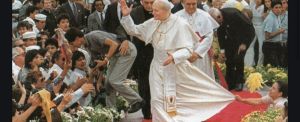
"And who do you say that I am?" (Mt 16:15).
1. As we begin the cycle of catechesis on Jesus Christ, of fundamental importance for Christian faith and life, we feel challenged by the same question that almost two thousand years ago the Master asked Peter and the disciples who were with him. At that decisive moment of his life, as Matthew, who witnessed it, recounts in his Gospel, "When Jesus had come to the region of Caesarea Philippi, he asked his disciples, 'People, who do they say that the Son of Man is?' They answered, 'Some say John the Baptist, others Elijah, others Jeremiah or any of the prophets.' He said to them, 'Who do you say that I am?'" (Mt 16:13-15).
We know Peter's blunt and impetuous reply: "You are the Christ, the Son of the living God" (Mt 16:16). In order for us too to formulate it, not so much in abstract terms, but as an expression of a vital experience, the fruit of the Father's gift (cf. Mt 16:17), each of us must allow ourselves to be personally touched by the question: "And you, who say, who am I? You who hear of me, answer: what am I really to you?". For Peter, divine illumination and the answer of faith came after a long period of being close to Jesus, listening to his word and observing his life and ministry (cf. Mt 16:21-24).
In order to come to a more conscious confession of Jesus Christ, we too must walk, like Peter, a path of attentive, caring listening. We must put ourselves in the school of the first disciples, who became his witnesses and our teachers, and at the same time absorb the experience and testimony of twenty centuries of history marked by the Master's question and enriched by the immense chorus of responses from the faithful of all times and places. Today, as the "Lord and Life-giving" Spirit pushes us towards the threshold of the third Christian millennium, we are called to give with renewed joy the response that God inspires and expects from us, almost as if for a new birth of Jesus Christ in our history.
2. Jesus' question about his identity shows the pedagogical subtlety of one who does not trust in hasty answers, but wants an answer matured through a time, sometimes a long time, of reflection and prayer, in attentive and intense listening to the truth of the Christian faith professed and preached by the Church.
Indeed, we recognise that in the face of Jesus we cannot be content with a merely human sympathy, however legitimate and precious, nor is it sufficient to consider him merely as a character worthy of historical, theological, spiritual or social interest, or as a source of artistic inspiration. Around Christ we often see hovering, even among Christians, the shadows of ignorance, or the even more distressing ones of misunderstanding or even infidelity. There is always the risk of appealing to the 'Gospel of Jesus', without really knowing its greatness and radicality, and without living out what is claimed in words. How many are those who reduce the Gospel to their own measure and make themselves a more comfortable Jesus, denying his transcendent divinity, or nullifying his real, historical humanity, or manipulating the integrity of his message, in particular by not taking into account the sacrifice of the cross that dominates his life and doctrine, nor the Church that he instituted as his 'sacrament' in history.
Even these shadows stimulate us to search for the full truth about Jesus, taking advantage of the many lights that, as once with Peter, the Father has lit up over the centuries around Jesus in the hearts of so many men with the power of the Holy Spirit: the lights of faithful witnesses even to martyrdom; the lights of so many passionate scholars, committed to fathoming the mystery of Jesus with the instrument of intelligence sustained by faith; the lights that above all the Magisterium of the Church, guided by the charisma of the Holy Spirit, has lit up in the dogmatic definitions of Jesus Christ.
We recognise that a stimulus to discover who Jesus really is is present in the uncertain and anxious search of many of our contemporaries so similar to Nicodemus who went "by night to find Jesus" (Jn 3:2) or Zacchaeus who climbed a tree to "see Jesus" (Lk 19:4). The desire to help every man to discover Jesus, who came as a doctor for the sick and as a saviour for sinners (cf. Mk 2:17), urges me to perform the demanding and exciting task of presenting the figure of Jesus to the children of the Church and to every man of good will.
You may remember that, at the beginning of my pontificate, I addressed an invitation to the people of today to "open wide the doors to Christ" (Insegnamenti di Giovanni Paolo II, I [1978] 38). Later, in the exhortation Catechesi Tradendae (Ioannis Pauli PP. II, Catechesi Tradendae, 5), dedicated to catechesis, making myself the spokesman for the thinking of the bishops gathered in the Fourth Synod, I affirmed that "the essential and primordial object of catechesis is . . the 'mystery of Christ'. To catechise is in a certain way to lead one to scrutinise this mystery in all its dimensions . . .; to unveil in the person of Christ the whole eternal plan of God, which is fulfilled in him . . . He alone can lead us to the love of the Father in the Holy Spirit and can make us participate in the life of the Holy Trinity' (Eiusdem, Catechesi Tradendae, 5).
We will follow this catechetical itinerary together, ordering our considerations around four focal points: 1) Jesus in his historical reality and in his transcendent messianic quality, son of Abraham, son of man and son of God; 2) Jesus in his identity as true God and true man, in profound communion with the Father and animated by the power of the Holy Spirit, as presented to us in the Gospel; 3) Jesus in the eyes of the Church, which with the assistance of the Holy Spirit has clarified and deepened the revealed data giving us, especially with the Ecumenical Councils, precise formulations of the Christological faith; 4) finally, Jesus in his life and works, Jesus in his redemptive passion and glorification, Jesus among us and in us, in history and in his Church until the end of the world (cf. Mt 28, 20).
3. It is true that in the Church there are many ways of catechising God's people about Jesus. Each one, however, to be authentic must draw its content from the perennial source of holy Tradition and sacred Scripture, interpreted in the light of the teachings of the Fathers and Doctors of the Church, the liturgy, popular faith and piety, in a word of the Tradition living and working in the Church under the action of the Holy Spirit, who - according to the Master's promise - "will lead you into all truth, for he will not speak of himself, but will say all that he has heard and will proclaim to you the things to come" (Jn 16:13). This Tradition we recognise expressed and synthesised particularly in the doctrine of the sacrosanct Councils, gathered in the symbols of faith and deepened by theological reflection faithful to Revelation and the Magisterium of the Church.
What would a catechesis on Jesus be worth if it did not have the genuineness and completeness of the gaze with which the Church contemplates, prays and proclaims his mystery? On the other hand, a pedagogical wisdom is required that, in addressing the recipients of catechesis, knows how to take into account their conditions and needs. As I wrote in the exhortation now cited, Catechesi Tradendae: 'The constant concern of every catechist - whatever the level of his or her responsibilities in the Church - must be to pass on the doctrine and life of Jesus through his or her teaching and behaviour' (John Paul II, Catechesi Tradendae, 6).
4. Let us conclude this introductory catechesis by recalling that Jesus, at a particularly difficult moment in the life of the first disciples, when the cross loomed close and many were abandoning him, addressed to those who had remained with him another of those questions of his that were so strong, so penetrating and inescapable: "Do you perhaps also wish to leave?" It was Peter again who, as the interpreter of his brothers, answered: "Lord, to whom shall we go? You alone have words of eternal life. We have believed and known that you are the Holy One of God" (Jn 6:66-69). May these catechetical appointments of ours make us ever more willing to allow ourselves to be questioned by Jesus, able to have the right answer to his questions, ready to share his life to the full.
[Pope John Paul II, General Audience 7 January 1987]
Face to face
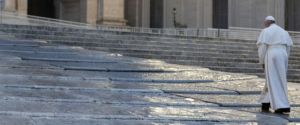
The Gospel passage this Sunday (Lk 9:18-24) calls us to once again confront Jesus “face to face”, so to speak. In one of the rare quiet moments when he is alone with his disciples, he asks them: “Who do the people say that I am?” (v. 18). They responded to him, saying: “John the Baptist; others say Elijah; others say one of the ancient prophets who has risen” (v. 19). Therefore, people esteemed Jesus and considered him to be a great prophet, but they were not yet aware of his true identity, that is, that He was the Messiah, the Son of God sent by the Father for the salvation of everyone.
Then Jesus directly addresses the Apostles — because this is what most interests him — asking: “But who do you say that I am?”. Immediately, on behalf of everyone, Peter responds, “The Christ of God” (v. 20), that is to say: You are the Messiah, the Anointed of God, sent by Him to save his people according to the Covenant and the promise. Therefore Jesus realizes that the Twelve, and Peter in particular, have received the gift of faith from the Father; and for this reason he begins to speak with them openly — this is how the Gospel puts it: “openly” — of what awaits him in Jerusalem. “The Son of Man must suffer many things”, he says, “and be rejected by the elders, the chief priests and the scribes, and be killed, and rise on the third day” (cf. v. 22).
These same questions are proposed to each of us today: “Who is Jesus for the people of our time?”, and more importantly: “Who is Jesus for each of us?”, for me, for you, for you, for you, and for you ...? Who is Jesus for each one of us? We are called to make Peter’s answer our own response, joyfully professing that Jesus is the Son of God, the Eternal Word of the Father, who became man to redeem mankind, pouring out the abundance of divine mercy upon it. The world needs Christ more than ever: his salvation, his merciful love. Many people feel an empty void around and within themselves — perhaps, at certain times, we do too —; others live in restlessness and insecurity due to uncertainty and conflict. We all need adequate answers to our questions, to our concrete questions. Only in Him, in Christ, is it possible to find true peace and the fulfillment of every human aspiration. Jesus knows the human heart better than anyone. This is why he can heal, giving life and consolation.
After concluding the dialogue with the Apostles, Jesus addressed everyone, saying: “If anyone wants to come after me, let him deny himself, take up his cross daily and follow me” (v. 23). This is not an ornamental cross or an ideological cross, but it is the cross of life, the cross of one’s duty, the cross of making sacrifices for others with love — for parents, for children, for the family, for friends, and even for enemies — the cross of being ready to be in solidarity with the poor, to strive for justice and peace. In assuming this attitude, these crosses, we always lose something. We must never forget that “whoever loses his life [for Christ] will save it” (v. 24). It is losing in order to win. Let us remember all of our brothers and sisters who still put these words of Jesus into practice today, offering their time, their work, their efforts and even their lives so as to never deny their faith in Christ. Jesus, through His Holy Spirit, gives us the strength to move forward along the path of faith and of witness: doing exactly what we believe; not saying one thing and doing another. On this path Our Lady is always near to us: let us allow her to hold our hand when we are going through the darkest and most difficult moments.
[Pope Francis, Angelus 19 June 2016]
25th Sunday in O.T.
25th Sunday in Ordinary Time (year A) [20 September 2026]
First Reading from the Book of the Prophet Isaiah (55:6–9)
‘Seek the Lord, for he is to be found.’ Isaiah’s message does not mean: ‘Hurry, for God might withdraw.’ On the contrary: God is always near and always allows himself to be found. It is we, in our freedom, who turn away from him, and sometimes we even lose the desire to seek him.
Isaiah speaks to a discouraged people, exiled to Babylon and convinced that God has abandoned them. The prophet urges them to reject this idea: God’s silence does not mean His absence, and God is not far away, inaccessible or incapable of forgiving. On the contrary, He is ‘abundant in forgiveness’. The fundamental theme is therefore that of return: when we think of God as a harsh, vengeful or indifferent judge, we turn away from Him. When, on the other hand, we turn back to Him, we discover His true face: a tender, merciful God, ready to forgive. This revelation runs throughout the Bible. Hosea presents God as the One who sets aside His anger because His heart is full of compassion. Jeremiah speaks of thoughts of peace, capable of bestowing a future and hope. In the Gospel, Jesus reminds us that God causes the sun to rise on the good and the bad and sends rain on the righteous and the unrighteous. Even Jonah rebukes God because his compassion towards Israel’s enemies is ‘tender and merciful’. God is the ‘Wholly Other’ and the ‘Wholly Near’. Isaiah declares: ‘My thoughts are not your thoughts, nor are my ways your ways.’ God is infinitely different from us, but it is precisely this difference that reveals something extraordinary: God loves and forgives without keeping score. We are often accustomed to the logic of give and take: we think that the good should be rewarded and the wicked punished; we tally up our merits and ask ourselves whether we are worthy of forgiveness. God, on the other hand, does not ask us to ‘earn’ his love. His forgiveness is grace; it is freely given. The real question, therefore, is not whether God is willing to forgive us, but whether we are willing to accept his forgiveness. As the text from Chronicles says: ‘If my people […] turn from their wicked ways, I will hear them, I will forgive their sin and heal them.’ It is not God who attaches a condition to his love: it is we who must open ourselves up in order to receive it. Finally, ‘my thoughts are not your thoughts’ also calls us to humility and tolerance. Since God infinitely transcends our understanding, no one can claim to possess the full truth about him. Speaking of God therefore requires humility and a willingness to listen. In short, God does not turn away from us: it is we who turn away from Him. And when we return, we do not find a stern God who holds us to account for our mistakes, but a Father who is ever near, tender, merciful and rich in forgiveness. His love cannot be bought or earned: it is received freely.
Responsorial Psalm (144/145)
‘The Lord is good to all.’ Psalm 144/145 harmonises perfectly with the message of the prophet Isaiah: God is full of mercy, rich in forgiveness, and continually invites humanity to return to Him. The psalm is the response of one who has rediscovered faith: ‘I will bless you every day; I will praise your name for ever.’ It is an ‘alphabetical’ psalm: from beginning to end, from A to Z, the whole of life is steeped in God’s covenant, His tenderness and His greatness. The psalm proclaims: ‘Great is the Lord and worthy of all praise; His greatness is without end.’ Isaiah expresses the same idea by saying that God’s thoughts and ways are infinitely superior to our own. But God’s greatness is not that of human power, wealth or success. God’s true greatness lies in his love and, above all, in his capacity to forgive. The same principle applies to human beings: true greatness does not lie in dominating others, but in knowing how to love. This is natural, for we are created in God’s image. A justice different from our own The psalm states: ‘The Lord is good to all; his compassion extends to all his creatures.’ God’s forgiveness is not reserved for a select few: it is offered to everyone, even to the sinner who returns to him. Our idea of justice leads us to think that those who have sinned greatly should receive a greater punishment. God, however, invites us to change our perspective: God’s justice is not that of the scales, but that of love. This is also shown in the parable of the labourers of the last hour: everyone receives the same wage, regardless of the number of hours worked. Jesus thus teaches us that God’s love does not operate according to our calculations of merit, seniority or reward. His generosity takes nothing away from anyone. God is close to everyone. The psalm concludes: ‘ The Lord is close to all who call upon him, to all who call upon him in sincerity’. God’s goodness is for everyone. His greatness is his love; his justice is mercy; and his forgiveness is not measured by our merits. And when we discover this logic, we are called not only to accept his forgiveness, but also to rejoice in the good he bestows upon others, without envy or judgement.
Second Reading from the Letter of Saint Paul the Apostle to the Philippians
‘For me, to live is Christ.’ The Letter to the Philippians is particularly moving because it combines Paul’s great passion for Christ and for his mission with his human and fraternal affection for the people he encountered. Paul writes whilst in prison and facing the threat of death. Yet he affirms with great serenity: ‘Christ will be glorified in my body, whether I live or die’, that is, in his person and in his life. If he is set free, he will be able to continue proclaiming the Gospel; if, on the other hand, he dies, even his martyrdom will become a testimony to faith in the Resurrection. For Paul, therefore, whatever happens can become an opportunity to make Christ known. Even his imprisonment has helped to encourage other Christians to proclaim the Word. ‘For me, to live is Christ’ When Paul says: ‘For me, to live is Christ and to die is gain’, he expresses the very heart of his existence: Christ is his reason for living. To live means to belong to Christ and to serve him; to die means to enter fully into communion with him. Paul does indeed long to depart so that he may be with Christ, yet he does not wish to shirk the mission entrusted to him. He is torn between two desires: on the one hand, he longs to be with Christ once and for all; on the other, he knows that his presence can be of service to others. Ultimately, what matters to him is not his own interest, but the good of the communities and the spread of the Gospel. The only thing that matters is the Gospel. Paul thus leaves us with a very important question: what do we live for? For him, the answer is clear: to live means to belong to Christ and to place one’s life at the service of the Gospel. He regards his own life as a gift to be spent on others. This is why he concludes by exhorting the Philippians: ‘Conduct yourselves, then, in a manner worthy of the Gospel of Christ’. It is not simply a matter of being morally upright people. It means taking the Gospel seriously and making it visible through one’s life, one’s words and one’s service. To live for Christ means transforming one’s whole life into a testimony to God’s love.
From the Gospel according to Matthew (20:1–16a)
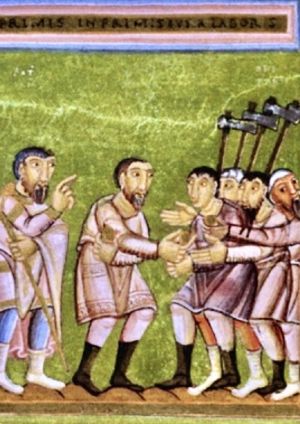
Let us set aside our bookkeeper’s logic. This is the logic presented to us in the parable of the labourers in the vineyard. By our standards, it seems unfair: those who have worked all day receive the same pay as those who arrived at the last hour, but Jesus makes it clear straight away that he is not speaking of a normal business, but of the ‘Kingdom of Heaven’. And in the Kingdom of God, different criteria apply from our own: ‘My thoughts are not your thoughts,’ says the Lord. The central point of the parable is what it reveals about God: ‘I am good’. God’s goodness does not keep score, does not measure merits, and does not determine how much love each person has ‘earned’. In the Kingdom of God, there is no tally of merits. We, on the other hand, are often tempted to keep track of everything: sacrifices, sufferings, prayers, good works. We think that all this gives us ‘rights’ before God. Jesus invites us to completely change this mindset.
‘Are you envious because I am good?’ The workers hired at the first hour protest: ‘You treat them just like us!’, whilst thinking: ‘We deserve more.’ But love does not operate according to the logic of merit. Love cannot be bought or earned: it is received as a gift. God’s justice does not consist in distributing according to our calculations, but in loving each of his children fully and without measure. The same logic runs through the whole of the Bible: God forgives the people of Nineveh even though they are pagans; Jesus welcomes tax collectors and sinners; the father in the parable joyfully welcomes the prodigal son. And on the cross, the good thief, at the very last moment, turns to Jesus and receives the promise of Paradise. Who can call themselves a ‘worker of the first hour’? In reality, the parable should console us. Who amongst us can truly consider themselves a worker of the first hour? We are all, in some way, workers of the last hour. We all live by God’s mercy and free grace. The problem arises when we look at others with envy and think that God is too good to them. That is when our eyes become evil. The lesson, therefore, is an invitation to abandon the mindset of comparison, merit and calculation, and to enter into the logic of grace. In short, God does not love us according to our merits: he loves us freely, fully and without measure. True conversion consists in abandoning our ‘accountant’s logic’ and learning to see through God’s eyes. We must not ask ourselves who deserves more, but rejoice because God is good to everyone. ‘My thoughts are not your thoughts, and my ways are not your ways’ (Isaiah). God’s justice is, ultimately, the justice of love and mercy.
+Giovanni D’Ercole
Who is Jesus: a question that judges
In the riddle, the solution
(Lk 9:7-9)
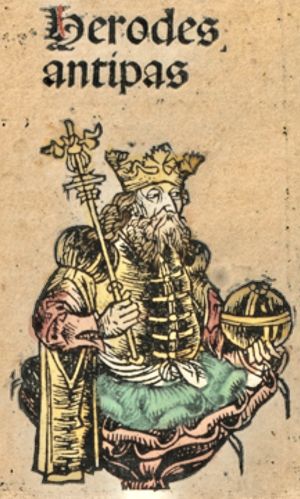
Jesus, who is he? You cannot give an answer except in the light of his story and his condemnation: nothing to do with one of the spiritualists or miracle-makers who arouses curiosity, as Herod expected.
The contrast between the extraordinary figure expected and the obtuseness of (elusive) judgment ends up leaving things as they are. Worse: it encloses the Mystery and loses its "where" today.
One does not understand the Person of Christ starting from the things we know.
He intends to wipe out all attractive but false idols; however, he does not like the axe of the Baptizer, nor the violent zeal of Elijah.
The new Rabbi wants to value the intuition of consciences, rather than the duties or the desire to analyze behaviors. This is the incredible.
Jesus is not some sort of ‘ghost’ that emerges from the past.
He turns history to completion according to innate and spontaneous impulses, which will let emerge the simple personal and the obvious unheard of.
Each religious group closed the Messiah in its interpretative model, consonant with an environment veined with ancient hopes: defense of goods and customs, "cultural" identity, well-being at the expense of others, expansion, wonders.
The sons’ revolution poses a theme that seeks the authentic Way, near and Elsewhere. The humanity of God.
In short, questioning the Person of Jesus already means beginning to overcome conformist codes and small habitual interpretations; to embrace the irruption of the Eternal.
It is the very question about the Person dimension that invites us to broaden the horizon and begin an Exodus. It will guide to authentic understanding, and measure; to the reason why we are in the world.
Christ reverses the destiny of the man’s kingdom, and his claims.
Any external combination with even eminent figures of the gallery of the greats of history remains static, partial, too predictable.
Not infrequently deviant, due to the inevitable brain limitations it provides, caging the soul [and immobilizing life].
On the Way, the growth of knowledge of his story, adherence to his depth, and Action of the Spirit, will not allow to persist in fixed thoughts, attachments, commonplaces.
Interpretations, preconceptions or showcases that then permeate all of life and dampen it, depriving it of intoxication.
Completely personal Presence, new Sense, innate Wisdom of ‘nature’; not a specific particularism that does not offer regenerated life - that winks only at itself.
Jesus: he is the Engine, the Way and the Reason for the Journey in the Spirit that is leading us.
His Person in us finds in us a “point” within from which he pours forth the courage to be ourselves, and to no longer seek external approval.
This frees the soul from common or prodigious expectations; from the regrets of conformity. To make us advance from primordial states and beliefs to new Dreams of the being that corresponds and tinkles, that emerges and wants to express itself - humanizing.
To internalize and live the message:
When did you realize that in the enigma about the Person of Christ there is already a cut with the obvious expectation, and a cue - the energy of the solution?
[Thursday 25th wk. in O.T. September 24, 2026]
In the enigma, the solution
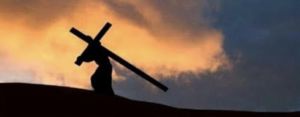
Who is Jesus: a question that judges
(Lk 9:7-9)
Jesus, who is he? No answer can be given except in the light of his story and his condemnation: nothing to do with one of the spirits or miracle-makers who arouses curiosity, as Herod expected.
The contrast between the extraordinary figure expected and misunderstood, and the obtuseness of the elusive judgement ends up leaving things as they are. Worse: it encloses the Mystery - the most normal one in the world, but one that remains forever [God's humanity] - and loses its 'whereabouts' today.
One does not understand the Person of Christ from the things we know or try to frame him in the customary criteria of the First Testament; with the common feeling, with the magical models of the time...
He is not one of the ancient prophets, come back to purify the filthiness of the opportunist strings of the Temple, and to mend the practices of ancient religion. He comes to supplant them.
By political exigencies, Herod Antipas is forced to be constantly on the alert for the security of his small kingdom [Galilee and Perea] so the success of the Baptist frightens him.
As Josephus Flavius reports, the king preferred to do away with him for fear of a popular uprising, for which he would have to account to Rome.
But - it is the stupidity of power - once a prophet is beheaded, someone more incisive takes his place.
While the blood of the Baptist was still fresh, news came of a young Rabbi who shocked the minds of the subjects of those lands.
The subversive nightmare returns, more subtle than before: the Son of God does not merely call for an improvement of the situation; he wants to replace it.
He proclaims the Truth of the Father and of authentic man, proposing a germ of an alternative world to the ruthless, pyramidal society of the time.
He intends to sweep away the attractive but false idols; however, he does not like the axe of the Baptizer, nor the violent zeal of Elijah - who had sent down a portentous and unstoppable fire from heaven on his enemies.
Jesus wants to value the intuition of consciences, rather than duties or the eagerness to analyse behaviour. This is the incredible.
The Lord is not some kind of 'ghost' who emerges from the past to make the 'ultimate', in an atmosphere [also of group] that oppresses and expects enhanced or even outsized results.
He turns history to fulfilment according to innate and spontaneous impulses, which will allow the simply personal and the blatantly unprecedented to emerge.
Each religious group enclosed the Messiah in its own interpretative model, consonant with an environment tinged with ancient hopes: defence of goods and customs, 'cultural' identity, well-being at the expense of others, expansion, prodigies.
The revolution of the sons poses a theme that seeks the authentic, proximate Way and Elsewhere - precisely, the humanity of God. In the background, around the corner, but not relegated inside a corner.
In short, to question the Person of Jesus is already to begin to move beyond conformist codes and petty habitual interpretations... to embrace the irruption of the Eternal.
It is the very question about the prominence of Person that invites us not to look at a single banal solution [that of everyone or of some lover of paroxysm].
Rather, to broaden the horizon and begin an Exodus, which will lead us to the authentic understanding and measure; to the reason why we are in the world.
Christ reverses the fate and destiny of the kingdom of man.
Any outward juxtaposition to even eminent figures in the gallery of history's greats remains static, partial, too predictable.
Not infrequently deviant, because of the inevitable cerebral limitations it causes, caging the soul [and immobilising life].
By Way, the growth of knowledge of its story, the adherence to its depth, the Action of the Spirit, will not allow fixed thoughts, attachments, commonplaces to persist in our minds.
Interpretations, preconceptions or window dressing that then impregnate the whole of life and dull it, depriving it of intoxication.
Entirely personal presence, new insight, innate Wisdom of 'nature'; not a specific particularism that does not offer regenerated life - that only winks at itself.
Jesus: he is the Engine, the Way and the Motive of the Way in the Spirit that is leading us.
His Person in us finds a "point" within from which He pours forth the courage to be ourselves, and to no longer seek external approval.
This frees the soul from common, or prodigious expectations; from the regrets of conformity. To advance from primordial states and beliefs to new Dreams of being that corresponds and tinkles, that emerges and wants to express itself - humanising.
To internalise and live the message:
In your opinion, what interpretations and preconceptions dampen the exercise of personal intuition in one's growth, and Evangelisation?When did you realise that in the enigma about the Person of Christ there is already a cut with the obvious of expectations, and a cue - the energy of the solution, even for revival from the global emergency?
As we follow him
To truly know Jesus we must talk to him, dialogue with him as we follow him on his path. Pope Francis focused his homily at the mass celebrated on 26 September 2013 in the chapel of Santa Marta precisely on getting to know Jesus.
The Pontiff took as his starting point the passage from Luke's Gospel (9:7-9) in which Herod wonders who the Jesus he hears so much about is. The person of Jesus, the Pontiff recalled, often provoked questions such as: "Who is this? Where does he come from? Let us think, for example, in the synagogue in Nazareth, when he left for the first time: but where did he learn these things? We know him well: he is the carpenter's son. We think of Peter and the apostles after that storm, that wind that Jesus silenced. But who is he to whom heaven and earth, the wind, the rain, the storm obey? But who is he?"
Questions, the Pope explained, that one can ask out of curiosity or to be sure of how to behave before him. The fact remains, however, that anyone who knows Jesus asks these questions. Indeed, "some", continued the Pope, returning to the Gospel episode, "begin to feel afraid of this man, because he can lead them into a political conflict with the Romans"; and so they think they do not take into greater consideration "this man who creates so many problems".
And why, the Pontiff asked, does Jesus create problems? "One cannot know Jesus," was his answer, "without having problems". Paradoxically, he added, 'if you want to have a problem, go down the road that leads you to know Jesus' and then many problems will arise. In any case, Jesus cannot be known 'in first class' or 'in tranquillity', let alone 'in the library'. Jesus can only be known in the daily journey of life.
And one can get to know him, said the Holy Father, "even in the catechism. It is true! The catechism,' he specified, 'teaches us many things about Jesus and we must study him, we must learn him. In this way we learn that the Son of God came to save us and we understand from the beauty of salvation history the love of the Father'. The fact remains, however, that even knowledge of Jesus through the catechism "is not enough": knowing him with the mind is already a step forward, but "Jesus must be known in dialogue with him. Speaking with him, in prayer, on your knees. If you do not pray, if you do not speak with Jesus,' he said, 'you do not know him'.
Finally, there is a third way to know Jesus: "It is following him, going with him, walking with him, walking his ways. And as you walk with him, you know "Jesus with the language of action. If you know Jesus with these three languages: of the mind, of the heart, of action, then you can say that you know Jesus". Making this kind of knowledge involves personal involvement. "One cannot know Jesus," the Pontiff reiterated, "without involving oneself with him, without staking one's life for him. Therefore, to really know him it is necessary to read "what the Church tells you about him, to speak with him in prayer and to walk the road with him". This is the way and "each one - he concluded - must make his own choice".
[Pope Francis, St. Martha, in L'Osservatore Romano 27/09/2013]
We too, to reach a more conscious confession of Jesus Christ must follow, like Peter, a path made of attentive, caring listening (Pope John Paul II)
Anche noi per giungere a una più consapevole confessione di Gesù Cristo dobbiamo percorrere, come Pietro, un cammino fatto di ascolto attento, premuroso (Papa Giovanni Paolo II)
It is a word that must be witnessed to and proclaimed explicitly, because without a consistent witness it proves to be less comprehensible and credible [Pope Benedict]
E’ una Parola che deve essere testimoniata e proclamata esplicitamente, perché senza una testimonianza coerente essa risulta meno comprensibile e credibile [Papa Benedetto]
The “reading and meditation of the word of God root us more deeply in Christ and guide our ministry as servants of reconciliation, justice and peace” (second Synod for Africa, Propositio 46)
La lettura e la meditazione della Parola di Dio ci radicano più profondamente in Cristo e orientano il nostro ministero di servitori della riconciliazione, della giustizia e della pace (Secondo Sinodo per l’Africa, Propositio 46)
The Gospel of Matthew written in Hebrew or Aramaic is no longer extant, but in the Greek Gospel that we possess we still continue to hear, in a certain way, the persuasive voice of the publican Matthew, who, having become an Apostle, continues to proclaim God's saving mercy to us. And let us listen to St Matthew's message, meditating upon it ever anew also to learn to stand up and follow Jesus with determination (Pope Benedict)
Non abbiamo più il Vangelo scritto da Matteo in ebraico o in aramaico, ma nel Vangelo greco che abbiamo continuiamo a udire ancora, in qualche modo, la voce persuasiva del pubblicano Matteo che, diventato Apostolo, séguita ad annunciarci la salvatrice misericordia di Dio e ascoltiamo questo messaggio di san Matteo, meditiamolo sempre di nuovo per imparare anche noi ad alzarci e a seguire Gesù con decisione (Papa Benedetto)
That denarius clearly represents eternal life, a gift that God reserves for all. Indeed those who are considered the "last", if they accept, become the "first", whereas the "first" can risk becoming the "last" [Pope Benedict]
Quel denaro rappresenta la vita eterna, dono che Dio riserva a tutti. Anzi, proprio quelli che sono considerati "ultimi", se lo accettano, diventano "primi", mentre i "primi" possono rischiare di finire "ultimi" [Papa Benedetto]
The sower is Jesus. With this image, we can see that he presents himself as one who does not impose himself, but rather offers himself. He does not attract us by conquering us, but by donating himself: he casts seeds. With patience and generosity, he spreads his Word, which is not a cage or a trap, but a seed which can bear fruit (Pope Francis)
Il seminatore è Gesù. Notiamo che, con questa immagine, Egli si presenta come uno che non si impone, ma si propone; non ci attira conquistandoci, ma donandosi: butta il seme. Egli sparge con pazienza e generosità la sua Parola, che non è una gabbia o una trappola, ma un seme che può portare frutto (Papa Francesco)
The Church desires to give thanks to the Most Holy Trinity for the "mystery of woman" and for every woman - for that which constitutes the eternal measure of her feminine dignity, for the "great works of God", which throughout human history have been accomplished in and through her (Mulieris Dignitatem n.31)








duevie.art
don Giuseppe Nespeca
Tel. 333-1329741
Disclaimer
Questo blog non rappresenta una testata giornalistica in quanto viene aggiornato senza alcuna periodicità. Non può pertanto considerarsi un prodotto editoriale ai sensi della legge N°62 del 07/03/2001.
Le immagini sono tratte da internet, ma se il loro uso violasse diritti d'autore, lo si comunichi all'autore del blog che provvederà alla loro pronta rimozione.
L'autore dichiara di non essere responsabile dei commenti lasciati nei post. Eventuali commenti dei lettori, lesivi dell'immagine o dell'onorabilità di persone terze, il cui contenuto fosse ritenuto non idoneo alla pubblicazione verranno insindacabilmente rimossi.