Mar 7, 2026 Written by 

Born Blind: the original sin

Sharp Personal experience, which starts to become more valid than judgements

(Jn 9:1-41)


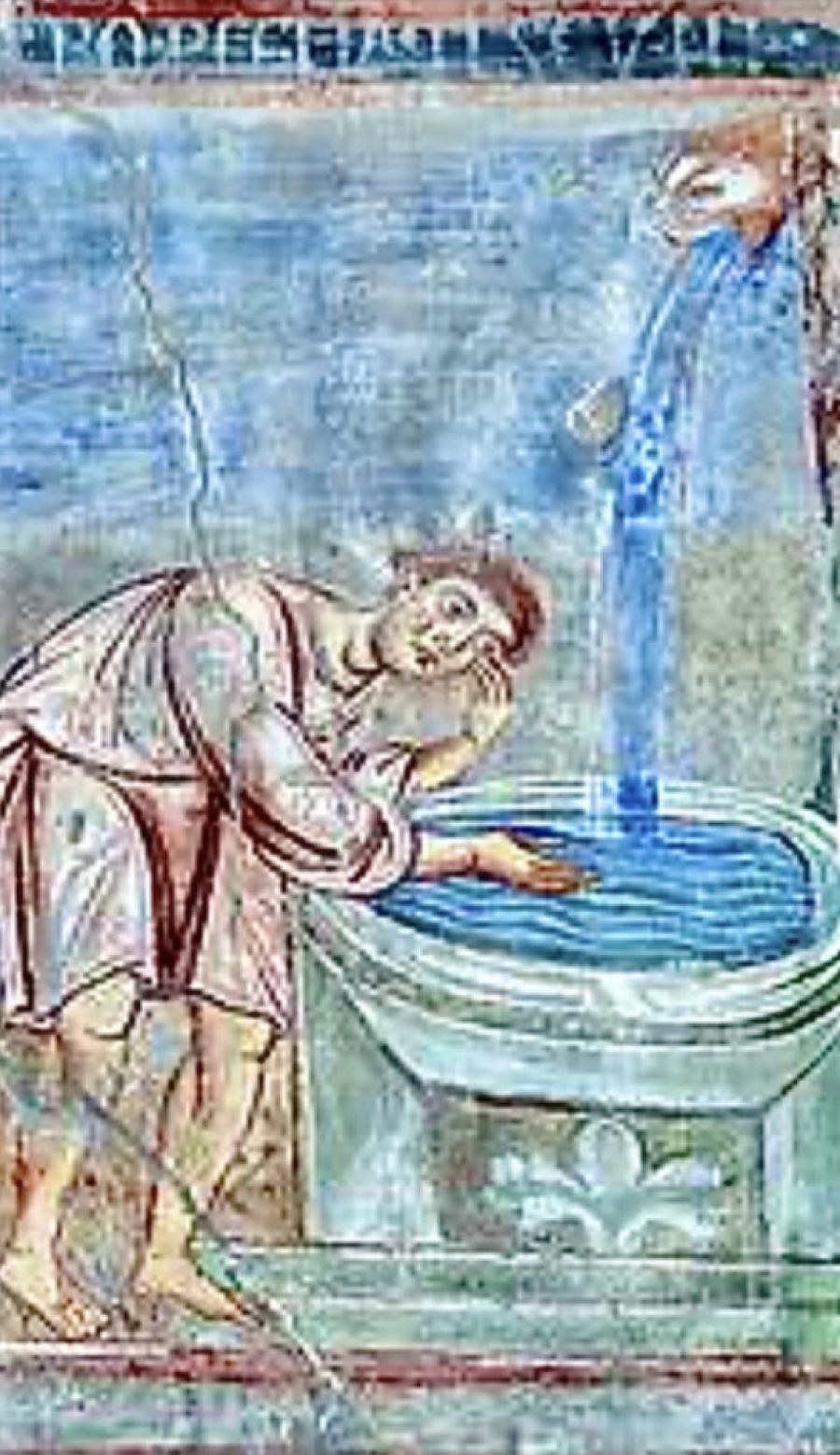
Having escaped from the Temple, Jesus encounters the excluded. He takes the opportunity to make us understand who the Eternal One is, and our own story of Faith, continuing the Father's creative work.

God's coming to us does not proceed from the decrees chiselled by the priestly class and chasing Moses (v.29), but from the attitude towards the needy.

In this way, the 'blindness' to which the passage alludes is constitutive of every woman and man: we do not always 'see' what the right choices to make are.

We realise that our journey of Faith is first and foremost a love story, but also an ever-clearer 'seeing', an 'opening of our eyes' to the whole of reality - to the point of acquiring a clear and personal judgement.

Being a figure of the human, creaturely situation, the protagonist of the Gospel passage has no name, because being born with a defect of vision and orientation brings us together; it is not a fault, but a condition.

Jesus proposes that we allow Him to open our eyes wide, so that our 'mud' and his Breath can trigger the creation of a new person.

In religious leaders there is no joy at the healing (vv.16ff). 

Jesus, on the other hand, increases the dose: once we have been sent to Life in the Spirit symbolised here by the Water, the Master goes off the scene.


To grow, you have to stand on your own two feet. God is not a paternalist who is always sticking his nose into everything: He wants us free [only then able to love].

And there remain many doors to be thrown open; many, the thresholds to be crossed.

The world of the élites defends itself by all means, attempting the usual intimidations. Don't worry: these are not signs of strength, but of imminent defeat.

Now the neighbours do not recognise the born blind. He looks like him, but he cannot be him... Those around him are puzzled.

The former blind man says: «I am» (v.9), i.e. in restored humanity he claims divine status.

When we encounter Christ, his dignity is passed on. Shyness is transformed into an ever renewed attitude to fullness.

In the Faith freed from conformity, to have an opinion of one's own is to start Exodus, aiming for the Land of Freedom - because woman and man have realised to what honour and Dream they are called.

He who has been given the Light does not stop, becoming more and more confident, mature, decisive. Now the man «sees», and is finally emancipated.


Excluded from the institution (v.34) just like the Lord (Jn 8:59), he is now truly a Person. For he begins to consider his experience more valid than the judgement of the official spiritual leaders.

It is the primacy of naturalness and personal awareness over standard or dominant thinking, roles, and codes - which are no longer able to communicate life. And that is what counts.

In fact, although put on the sidelines, it is now Christ who seeks him out and stands at his side (v.35). Without conditions.

Our instinctive and genuine common sense overrides both fixed beliefs and glamorous, current, à la page opinions.

Kicked out of the devout circle or power groups, the «born blind» - suffering from such insecurity, malformity, 'sin of origin' - will find virtue in its fullness.

By finally putting in the background the routine that makes everything banal, flat, automatic... he no longer flees.

He understands the importance of variation that disrupts plans. It makes them unique.

With new personal Energy he faces the unexpected: life of Love that realizes us, and knows how to turn over a new leaf.


4th Sunday in Lent (year A), Laetare  [March 15, 2026]

106 Last modified on Saturday, 07 March 2026 04:16
don Giuseppe Nespeca

Giuseppe Nespeca è architetto e sacerdote. Cultore della Sacra scrittura è autore della raccolta "Due Fuochi due Vie - Religione e Fede, Vangeli e Tao"; coautore del libro "Dialogo e Solstizio".

In the rite of Baptism, the presentation of the candle lit from the large Paschal candle, a symbol of the Risen Christ, is a sign that helps us to understand what happens in the Sacrament. When our lives are enlightened by the mystery of Christ, we experience the joy of being liberated from all that threatens the full realization (Pope Benedict)
Nel rito del Battesimo, la consegna della candela, accesa al grande cero pasquale simbolo di Cristo Risorto, è un segno che aiuta a cogliere ciò che avviene nel Sacramento. Quando la nostra vita si lascia illuminare dal mistero di Cristo, sperimenta la gioia di essere liberata da tutto ciò che ne minaccia la piena realizzazione (Papa Benedetto)
Doing a good deed almost instinctively gives rise to the desire to be esteemed and admired for the good action, in other words to gain a reward. And on the one hand this closes us in on ourselves and on the other, it brings us out of ourselves because we live oriented to what others think of us or admire in us (Pope Benedict)
Quando si compie qualcosa di buono, quasi istintivamente nasce il desiderio di essere stimati e ammirati per la buona azione, di avere cioè una soddisfazione. E questo, da una parte rinchiude in se stessi, dall’altra porta fuori da se stessi, perché si vive proiettati verso quello che gli altri pensano di noi e ammirano in noi (Papa Benedetto)
Since God has first loved us (cf. 1 Jn 4:10), love is now no longer a mere “command”; it is the response to the gift of love with which God draws near to us [Pope Benedict]
Siccome Dio ci ha amati per primo (cfr 1 Gv 4, 10), l'amore adesso non è più solo un « comandamento », ma è la risposta al dono dell'amore, col quale Dio ci viene incontro [Papa Benedetto]
Another aspect of Lenten spirituality is what we could describe as "combative" […] where the "weapons" of penance and the "battle" against evil are mentioned. Every day, but particularly in Lent, Christians must face a struggle […] (Pope Benedict)
Un altro aspetto della spiritualità quaresimale è quello che potremmo definire "agonistico" […] là dove si parla di "armi" della penitenza e di "combattimento" contro lo spirito del male. Ogni giorno, ma particolarmente in Quaresima, il cristiano deve affrontare una lotta […] (Papa Benedetto)
Jesus wants to help his listeners take the right approach to the prescriptions of the Commandments given to Moses, urging them to be open to God who teaches  us true freedom and responsibility through the Law. It is a matter of living it as an instrument of freedom (Pope Francis)
Gesù vuole aiutare i suoi ascoltatori ad avere un approccio giusto alle prescrizioni dei Comandamenti dati a Mosè, esortando ad essere disponibili a Dio che ci educa alla vera libertà e responsabilità mediante la Legge. Si tratta di viverla come uno strumento di libertà (Papa Francesco)
In the divine attitude justice is pervaded with mercy, whereas the human attitude is limited to justice. Jesus exhorts us to open ourselves with courage to the strength of forgiveness, because in life not everything can be resolved with justice. We know this (Pope Francis)
Nell’atteggiamento divino la giustizia è pervasa dalla misericordia, mentre l’atteggiamento umano si limita alla giustizia. Gesù ci esorta ad aprirci con coraggio alla forza del perdono, perché nella vita non tutto si risolve con la giustizia; lo sappiamo (Papa Francesco)
The true prophet does not obey others as he does God, and puts himself at the service of the truth, ready to pay in person. It is true that Jesus was a prophet of love, but love has a truth of its own. Indeed, love and truth are two names of the same reality, two names of God (Pope Benedict)

Due Fuochi due Vie - Vol. 1 Due Fuochi due Vie - Vol. 2 Due Fuochi due Vie - Vol. 3 Due Fuochi due Vie - Vol. 4 Due Fuochi due Vie - Vol. 5 Dialogo e Solstizio I fiammiferi di Maria

duevie.art

don Giuseppe Nespeca

Tel. 333-1329741


Disclaimer

Questo blog non rappresenta una testata giornalistica in quanto viene aggiornato senza alcuna periodicità. Non può pertanto considerarsi un prodotto editoriale ai sensi della legge N°62 del 07/03/2001.
Le immagini sono tratte da internet, ma se il loro uso violasse diritti d'autore, lo si comunichi all'autore del blog che provvederà alla loro pronta rimozione.
L'autore dichiara di non essere responsabile dei commenti lasciati nei post. Eventuali commenti dei lettori, lesivi dell'immagine o dell'onorabilità di persone terze, il cui contenuto fosse ritenuto non idoneo alla pubblicazione verranno insindacabilmente rimossi.







