Dec 22, 2025 Written by 

Without stopping in the middle, and without fashion. New Light

Church of the little ones: Challenge and recognised course

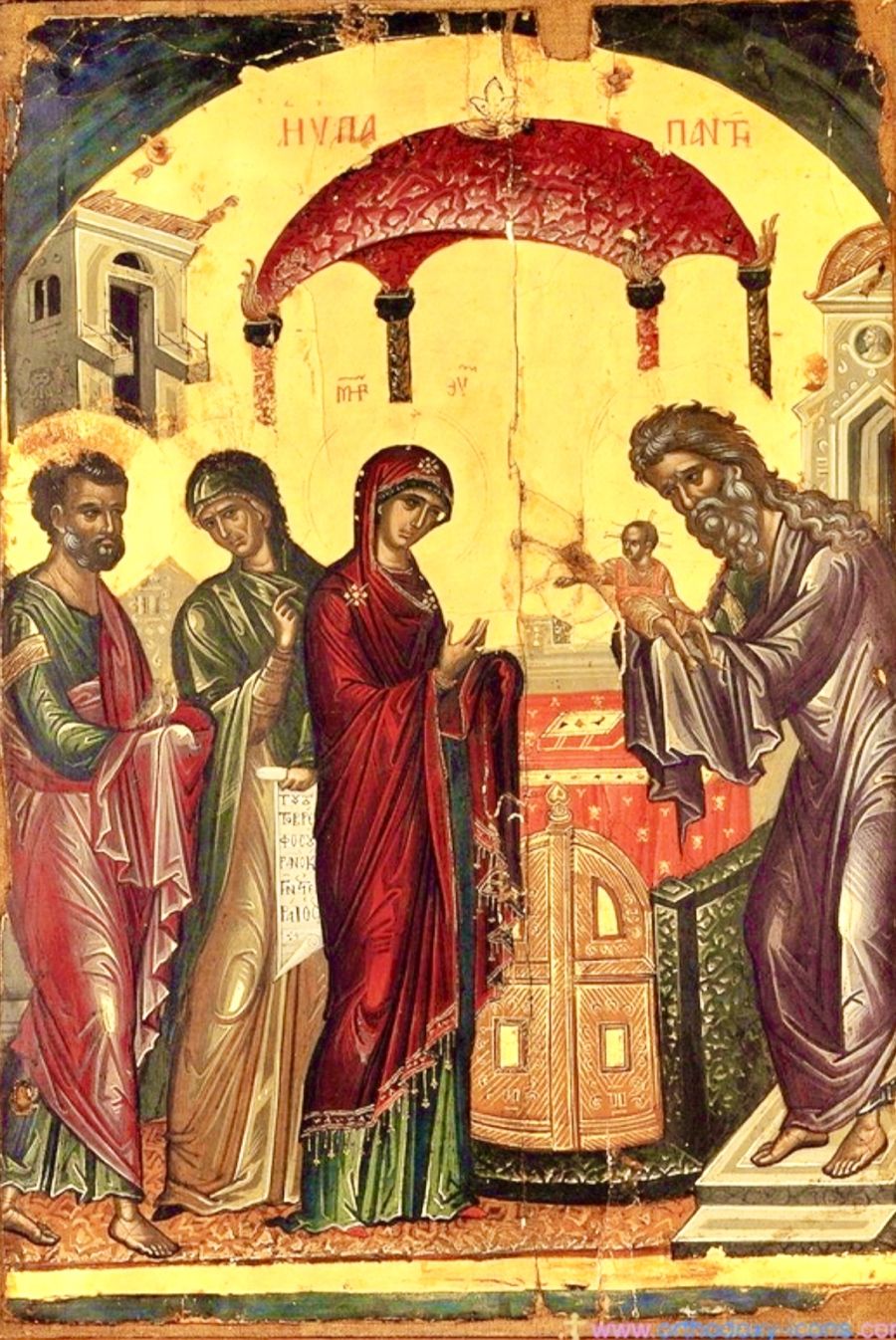
Lk 2:36-40 (22-40)


The Gospel passage from Lk recounts the Father's surprising response to the predictions of fulfilment regarding the messianic prophecies.

An eloquent and peremptory manifestation of the power of the God of Israel, and the submission of those who did not fulfil the Law was expected.

Everyone imagined witnessing the triumphal entry of a leader - surrounded by military leaders or angelic hosts (Mal 3:1) - who would subjugate the pagans by bringing their possessions into the holy city, grant the chosen people many slaves, and impose observance.

Jesus? There He is in the Temple, but helpless and accompanied by insignificant people.

Nobody notices Him, although at all hours the holy place was swarming with visitors.

Then arise here Simeon and Hanna (vv.25.36-38), men and women coryphaeans of the most sensitive authentic People.

They grasp a Clarity that produces conflict with habitual officialdom, a profound Splendour destined for all time.

And the «sword» (v.35) that in Mother Israel will bring about lacerations: between some who open up to the new Light, and others who conversely entrench.


Lk is evaluating community situations, where believers in Christ are discarded by friends and families from different cultural backgrounds (cf. Lk 12:51-53).

But the awaited and true Messiah must be delivered to the world - although those best prepared to recognize him are the members of tribe of Israel the smallest [Asher, in the figure of Hanna: vv.36-38].

These are the same prophets who vibrated in life for one great Love (vv.36-37), then experienced the absence of the Beloved - until they recognised him in Christ. By startling in surprise - catching very personal correspondences within themselves, in Spirit; rejoicing, praising the Gift of God (v.38).


The passage concludes with the return to Nazareth (vv.39-40) and the note concerning Jesus' own growth «in wisdom, stature and grace».


We, too, are not in the world to cling to shadows and blockages, the same old moods, the same prevailing thoughts, the same way of doing (even the little things).

Mechanisms and comparisons that close our days, our whole lives and the emotional space of passions - clipping the wings of testimonies that want to override the 'recognised course'.

Let us sweep away the layers of dust that still cover us with conformism and proven manners, which follow expectations of others, of contours, of external intrusive conditions!

This is precisely the great Challenge that activates the young rebirth of the Dream of God.

It can launch the soul in the transition from the common religious sense to a new Torch: personal, pro-active, liberating Faith.

Relationship of love that does not extinguish us.


[December 30, sixth day between the Octave of Christmas]

270 Last modified on Tuesday, 30 December 2025 12:00
don Giuseppe Nespeca

Giuseppe Nespeca è architetto e sacerdote. Cultore della Sacra scrittura è autore della raccolta "Due Fuochi due Vie - Religione e Fede, Vangeli e Tao"; coautore del libro "Dialogo e Solstizio".

Familiarity at the human level makes it difficult to go beyond this in order to be open to the divine dimension. That this son of a carpenter was the Son of God was hard for them to believe. Jesus actually takes as an example the experience of the prophets of Israel, who in their own homeland were an object of contempt, and identifies himself with them (Pope Benedict)
La familiarità sul piano umano rende difficile andare al di là e aprirsi alla dimensione divina. Che questo Figlio di un falegname sia Figlio di Dio è difficile crederlo per loro. Gesù stesso porta come esempio l’esperienza dei profeti d’Israele, che proprio nella loro patria erano stati oggetto di disprezzo, e si identifica con essi (Papa Benedetto)
These two episodes — a healing and a resurrection — share one core: faith. The message is clear, and it can be summed up in one question: do we believe that Jesus can heal us and can raise us from the dead? The entire Gospel is written in the light of this faith: Jesus is risen, He has conquered death, and by his victory we too will rise again. This faith, which for the first Christians was sure, can tarnish and become uncertain… (Pope Francis)
The ability to be amazed at things around us promotes religious experience and makes the encounter with the Lord more fruitful. On the contrary, the inability to marvel makes us indifferent and widens the gap between the journey of faith and daily life (Pope Francis)
La capacità di stupirsi delle cose che ci circondano favorisce l’esperienza religiosa e rende fecondo l’incontro con il Signore. Al contrario, l’incapacità di stupirci rende indifferenti e allarga le distanze tra il cammino di fede e la vita di ogni giorno (Papa Francesco)
An ancient hermit says: “The Beatitudes are gifts of God and we must say a great ‘thank you’ to him for them and for the rewards that derive from them, namely the Kingdom of God in the century to come and consolation here; the fullness of every good and mercy on God’s part … once we have become images of Christ on earth” (Peter of Damascus) [Pope Benedict]
Afferma un antico eremita: «Le Beatitudini sono doni di Dio, e dobbiamo rendergli grandi grazie per esse e per le ricompense che ne derivano, cioè il Regno dei Cieli nel secolo futuro, la consolazione qui, la pienezza di ogni bene e misericordia da parte di Dio … una volta che si sia divenuti immagine del Cristo sulla terra» (Pietro di Damasco) [Papa Benedetto]
And quite often we too, beaten by the trials of life, have cried out to the Lord: “Why do you remain silent and do nothing for me?”. Especially when it seems we are sinking, because love or the project in which we had laid great hopes disappears (Pope Francis)
E tante volte anche noi, assaliti dalle prove della vita, abbiamo gridato al Signore: “Perché resti in silenzio e non fai nulla per me?”. Soprattutto quando ci sembra di affondare, perché l’amore o il progetto nel quale avevamo riposto grandi speranze svanisce (Papa Francesco)
The Kingdom of God grows here on earth, in the history of humanity, by virtue of an initial sowing, that is, of a foundation, which comes from God, and of a mysterious work of God himself (John Paul II)

Due Fuochi due Vie - Vol. 1 Due Fuochi due Vie - Vol. 2 Due Fuochi due Vie - Vol. 3 Due Fuochi due Vie - Vol. 4 Due Fuochi due Vie - Vol. 5 Dialogo e Solstizio I fiammiferi di Maria

duevie.art

don Giuseppe Nespeca

Tel. 333-1329741


Disclaimer

Questo blog non rappresenta una testata giornalistica in quanto viene aggiornato senza alcuna periodicità. Non può pertanto considerarsi un prodotto editoriale ai sensi della legge N°62 del 07/03/2001.
Le immagini sono tratte da internet, ma se il loro uso violasse diritti d'autore, lo si comunichi all'autore del blog che provvederà alla loro pronta rimozione.
L'autore dichiara di non essere responsabile dei commenti lasciati nei post. Eventuali commenti dei lettori, lesivi dell'immagine o dell'onorabilità di persone terze, il cui contenuto fosse ritenuto non idoneo alla pubblicazione verranno insindacabilmente rimossi.







