Jan 12, 2026 Written by 

Conflicts of conscience: Law or hunger

Incarnation, or the spiritual module without humanity

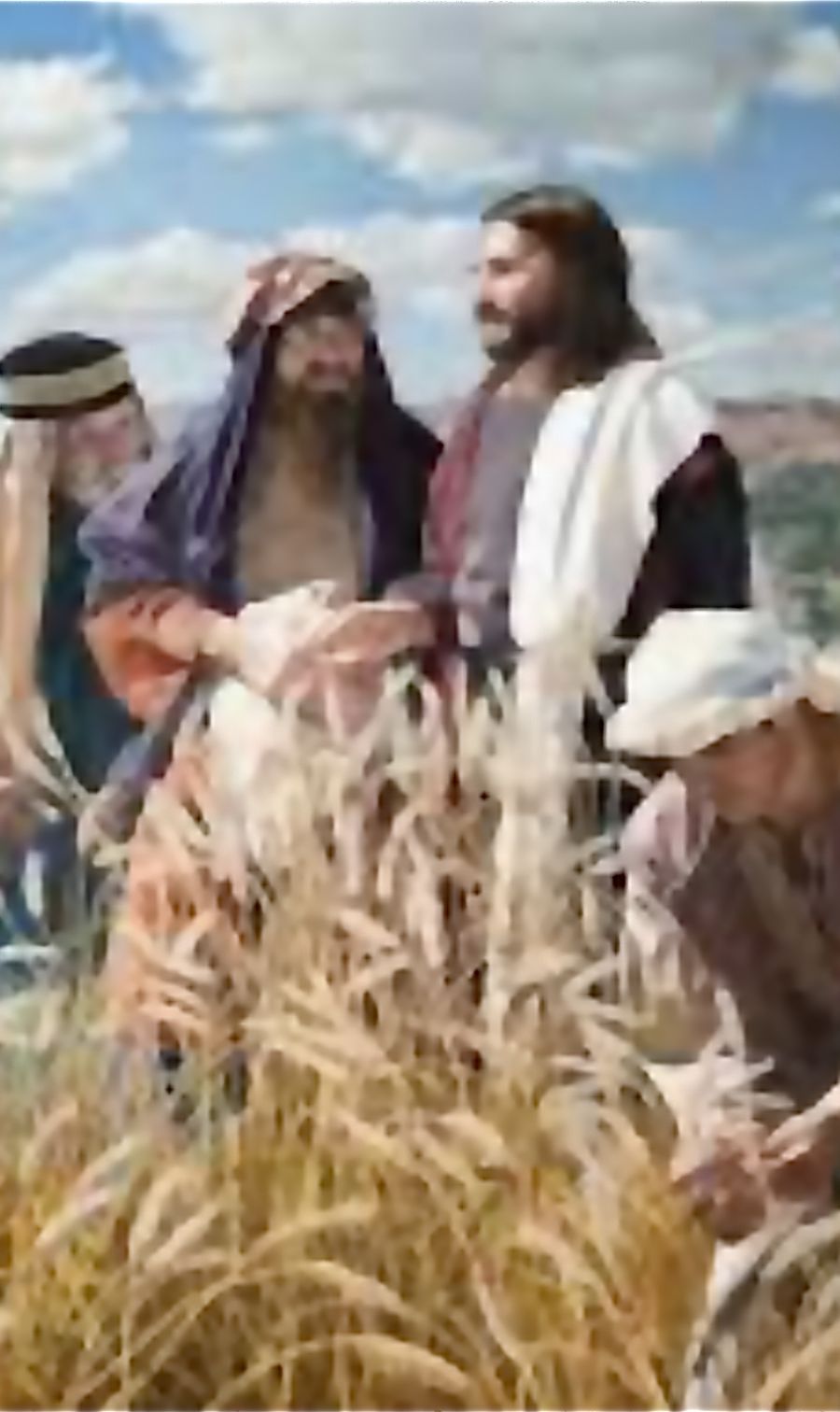
(Mk 2:23-28)


On the way of conversion, conflicts of conscience are not parentheses or accidents of the path, but crucial nodes.

The genuineness of believing then generates implicative force and new expressive abilities.

According to ordinary religious evaluations, the legislation was worth more than hunger...

To be honest, the observance of the Sabbath had become a central law not because of theological subtleties, but because in the period of the Exile the weekly rest had allowed to gather, share hopes, encourage each other, maintain the identity of the people.

But legalism ended up stifling the spirit of the day of worship, once a sign of a freedom at the service of faith and man, both of which cannot be enslaved.

Thus where Jesus arrives, every empty spiritual module of humanity crumbles, and the Incarnation takes hold: the place where God and man seriously ‘rest’ [other than the saturday!].

In the parallel passage of Mt (12:1-8), Jesus' response is more articulated and complete:

On Jewish Sabbath, priests had many more sacred and preparation engagements, slaughter and reordering of the Sanctuary, than the other days of the week, and the Torah obliged them... it happens to us too.

Again in Mt, the Lord quotes a famous phrase from the prophet Hosea - a man of raw experience, but who well defines the peak of intimacy with God: an authentic rite is to realize the hopes of our neighbour and to have the heart in the needs of others.


Christ emphasizes the poverty of every legalistic and hypocritical attachment in the mode of conceiving relations with the Father.

The sign of the Covenant with God, and Encounter (authentic sanctification) is adherence that continues in the plot of the days and in his active Person - not a ridiculous idolatry of observances or cultic parentheses.

Facts and rites celebrate love; and the sincere fulfilment does not follow the pedantic "as we should be", but expresses a Liberation of the person.

The biblical episode that Jesus quotes could perhaps appear not entirely pertinent to the theoretical question: his disciples did not seem to be kings or even priests.

Instead, in the new time that’s urgent, yes: ‘sovereigns’ of one’s life by Gift and Call, as well as ‘mediators’ [of divine blessings on humanity] - and also Prophets.

The lovable God establishes with us a dialogue and a friendship that invites, gives impetus, transmits taste for doing.

It’s the result of a messianic conscience as «Son of man» (v.28): transmissible to us, his brothers and friends - very united to him by Faith.

For this reason [after the call of the disciples and the first healings, then the vocation of Levi and the controversy about fasting] the Lord presents himself to the Pharisees in the royal stunt double of David, who is about to conquer the ‘kingdom’ even with a small handful of followers.

In the time of the global crisis that affects the future (and still tries to calculate it by directing it a priori, according to selective interests) the challenge is more open than ever.


To internalize and live the message:


How did you perceive that you were reliving Christ in the fluency of the norms?


[Tuesday 2nd wk. in O.T.  January 20, 2026]

230 Last modified on Tuesday, 20 January 2026 12:02
don Giuseppe Nespeca

Giuseppe Nespeca è architetto e sacerdote. Cultore della Sacra scrittura è autore della raccolta "Due Fuochi due Vie - Religione e Fede, Vangeli e Tao"; coautore del libro "Dialogo e Solstizio".

Familiarity at the human level makes it difficult to go beyond this in order to be open to the divine dimension. That this son of a carpenter was the Son of God was hard for them to believe. Jesus actually takes as an example the experience of the prophets of Israel, who in their own homeland were an object of contempt, and identifies himself with them (Pope Benedict)
La familiarità sul piano umano rende difficile andare al di là e aprirsi alla dimensione divina. Che questo Figlio di un falegname sia Figlio di Dio è difficile crederlo per loro. Gesù stesso porta come esempio l’esperienza dei profeti d’Israele, che proprio nella loro patria erano stati oggetto di disprezzo, e si identifica con essi (Papa Benedetto)
These two episodes — a healing and a resurrection — share one core: faith. The message is clear, and it can be summed up in one question: do we believe that Jesus can heal us and can raise us from the dead? The entire Gospel is written in the light of this faith: Jesus is risen, He has conquered death, and by his victory we too will rise again. This faith, which for the first Christians was sure, can tarnish and become uncertain… (Pope Francis)
The ability to be amazed at things around us promotes religious experience and makes the encounter with the Lord more fruitful. On the contrary, the inability to marvel makes us indifferent and widens the gap between the journey of faith and daily life (Pope Francis)
La capacità di stupirsi delle cose che ci circondano favorisce l’esperienza religiosa e rende fecondo l’incontro con il Signore. Al contrario, l’incapacità di stupirci rende indifferenti e allarga le distanze tra il cammino di fede e la vita di ogni giorno (Papa Francesco)
An ancient hermit says: “The Beatitudes are gifts of God and we must say a great ‘thank you’ to him for them and for the rewards that derive from them, namely the Kingdom of God in the century to come and consolation here; the fullness of every good and mercy on God’s part … once we have become images of Christ on earth” (Peter of Damascus) [Pope Benedict]
Afferma un antico eremita: «Le Beatitudini sono doni di Dio, e dobbiamo rendergli grandi grazie per esse e per le ricompense che ne derivano, cioè il Regno dei Cieli nel secolo futuro, la consolazione qui, la pienezza di ogni bene e misericordia da parte di Dio … una volta che si sia divenuti immagine del Cristo sulla terra» (Pietro di Damasco) [Papa Benedetto]
And quite often we too, beaten by the trials of life, have cried out to the Lord: “Why do you remain silent and do nothing for me?”. Especially when it seems we are sinking, because love or the project in which we had laid great hopes disappears (Pope Francis)
E tante volte anche noi, assaliti dalle prove della vita, abbiamo gridato al Signore: “Perché resti in silenzio e non fai nulla per me?”. Soprattutto quando ci sembra di affondare, perché l’amore o il progetto nel quale avevamo riposto grandi speranze svanisce (Papa Francesco)
The Kingdom of God grows here on earth, in the history of humanity, by virtue of an initial sowing, that is, of a foundation, which comes from God, and of a mysterious work of God himself (John Paul II)

Due Fuochi due Vie - Vol. 1 Due Fuochi due Vie - Vol. 2 Due Fuochi due Vie - Vol. 3 Due Fuochi due Vie - Vol. 4 Due Fuochi due Vie - Vol. 5 Dialogo e Solstizio I fiammiferi di Maria

duevie.art

don Giuseppe Nespeca

Tel. 333-1329741


Disclaimer

Questo blog non rappresenta una testata giornalistica in quanto viene aggiornato senza alcuna periodicità. Non può pertanto considerarsi un prodotto editoriale ai sensi della legge N°62 del 07/03/2001.
Le immagini sono tratte da internet, ma se il loro uso violasse diritti d'autore, lo si comunichi all'autore del blog che provvederà alla loro pronta rimozione.
L'autore dichiara di non essere responsabile dei commenti lasciati nei post. Eventuali commenti dei lettori, lesivi dell'immagine o dell'onorabilità di persone terze, il cui contenuto fosse ritenuto non idoneo alla pubblicazione verranno insindacabilmente rimossi.







