Jan 22, 2026 Written by 

Rhythm of Nature. The evolutionary factor

From below, not from a summit

(Mk 4: 26-34)


Here we are introduced to a different mentality, to a new Family, to another Kingdom, not very "elevated"; indeed, completely reversed. Different from that expected on a mighty mountain (Ez 17:22).

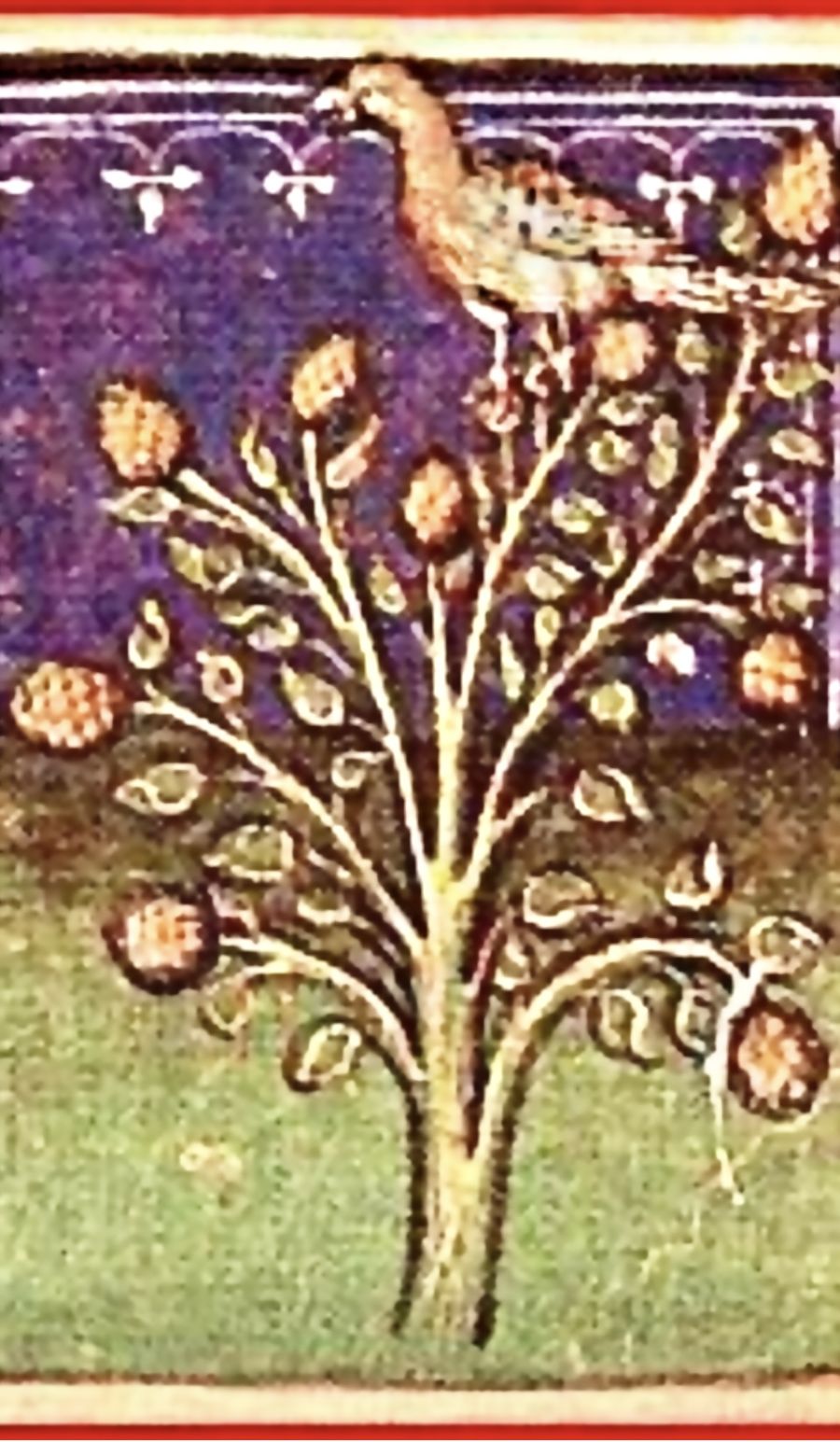
It will not be portrayed by the majesty of the cedar of Lebanon [which once covered the mountain slopes of the Near East] but by a simple shrub in the kitchen garden (Mk 4:32a). 

And the very origins of this new reality will not come from the top of a lofty stem, but from a small seed, simply planted on the ground.

Little grain like the others. Nothing remarkable in itself. Which develops horizontally, rather (v.32b).


How much gas must be given to accelerate the spread of the Kingdom?

According to Jesus, we must wait for everyone to meet himself, without neuroses.

A proposal that knows no borders: it’s aimed at everyone. It is enough to let the grain do its normal things - thus integrating the energies; giving space, even giving way.

The Seed grows on its own, intertwined with the soil and climate, yet according to a deep individual character.

He escapes cerebral explanations: «How, it itself does not know» (v.27).


After sowing, the author of the gesture resumes normal life.

Letting it go, the little hidden grain walks its way, to the end.

This is the evolutionary factor.

No farmer tramples on his field, nor investigates what happens (bothering the seedlings): development, growth and maturation are in themselves guaranteed.

Anyone who wants to enter would disturb the sprouts.

Whoever dug to control the evolution of little bud that is intertwining its roots with the ground, would ruin everything.


Our sacred identity is inextricably linked to personal singularity: it entangles with an unrepeatable sensitivity and vicissitude.

It’s the darkness, the silence, the waiting, that make tender shoots sprout, in their uniqueness and authenticity.

They would only be harmed by the one who wanted to interfere, modifying, overlapping other patterns and trends - never conforming to the realities in spontaneous singular development.

Beware of the hastiness of those who immediately want a result other than to be ourselves in relation to the innate essence and personal mission, which emanate from the hidden Source.

Time of love is not immediate: it takes place along a path, whose periods cannot be marked by any hasty plan - only irritating - if not by the Spirit, so that we can manifest the intrinsic unprecedented.

No one can bother such exceptional wealth, which arises and develops «automatically» (v.28), so that we are enabled to give birth to the inner world, the quintessence, the Jesus who hatches in heart; not others.


«Laying hold of the scythe» (v.29) means that at this point the soul is awakened for the Kingdom, ready to ‘give life’ to itself and to brethren, overflowing its wholeness to others, even distant or wandering like birds (v.32).

Together, a Church that - without thinking too much about "how it should be" - convinces all those in need of shelter from the "heat".

And Seed can be transmitted anywhere by the same «volatiles» that settle there even just enough for each one to take flight again.


‘Parables of the kingdom’ in Mt 13 and here in Mk 4 do not narrate a solemn, epochal, majestic reality that stubborns and imposes itself.

Rather, the new kingdom will be comparable to a common shrub, which grows modestly - silent, in the home garden (v.32).

As if to say: we evolve into tiny signs - nothing extraordinary - but we are people, not facsimiles.

Thus we announce Paradise.


[Friday 3rd wk. in O.T.  January 30, 2026]

284 Last modified on Friday, 30 January 2026 12:02
don Giuseppe Nespeca

Giuseppe Nespeca è architetto e sacerdote. Cultore della Sacra scrittura è autore della raccolta "Due Fuochi due Vie - Religione e Fede, Vangeli e Tao"; coautore del libro "Dialogo e Solstizio".

Here we can experience first hand that God is life and gives life, yet takes on the tragedy of death (Pope Francis)
Qui tocchiamo con mano che Dio è vita e dona vita, ma si fa carico del dramma della morte (Papa Francesco)
The people thought that Jesus was a prophet. This was not wrong, but it does not suffice; it is inadequate. In fact, it was a matter of delving deep, of recognizing the uniqueness of the person of Jesus of Nazareth and his newness. This is how it still is today: many people draw near to Jesus, as it were, from the outside (Pope Benedict)
La gente pensa che Gesù sia un profeta. Questo non è falso, ma non basta; è inadeguato. Si tratta, in effetti, di andare in profondità, di riconoscere la singolarità della persona di Gesù di Nazaret, la sua novità. Anche oggi è così: molti accostano Gesù, per così dire, dall’esterno (Papa Benedetto)
Because of this unique understanding, Jesus can present himself as the One who revealsr the Father with a knowledge that is the fruit of an intimate and mysterious reciprocity (John Paul II)
In forza di questa singolare intesa, Gesù può presentarsi come il rivelatore del Padre, con una conoscenza che è frutto di un'intima e misteriosa reciprocità (Giovanni Paolo II)
Yes, all the "miracles, wonders and signs" of Christ are in function of the revelation of him as Messiah, of him as the Son of God: of him who alone has the power to free man from sin and death. Of him who is truly the Savior of the world (John Paul II)
Sì, tutti i “miracoli, prodigi e segni” di Cristo sono in funzione della rivelazione di lui come Messia, di lui come Figlio di Dio: di lui che, solo, ha il potere di liberare l’uomo dal peccato e dalla morte. Di lui che veramente è il Salvatore del mondo (Giovanni Paolo II)
It is known that faith is man's response to the word of divine revelation. The miracle takes place in organic connection with this revealing word of God. It is a "sign" of his presence and of his work, a particularly intense sign (John Paul II)
È noto che la fede è una risposta dell’uomo alla parola della rivelazione divina. Il miracolo avviene in legame organico con questa parola di Dio rivelante. È un “segno” della sua presenza e del suo operare, un segno, si può dire, particolarmente intenso (Giovanni Paolo II)
In the rite of Baptism, the presentation of the candle lit from the large Paschal candle, a symbol of the Risen Christ, is a sign that helps us to understand what happens in the Sacrament. When our lives are enlightened by the mystery of Christ, we experience the joy of being liberated from all that threatens the full realization (Pope Benedict)
Nel rito del Battesimo, la consegna della candela, accesa al grande cero pasquale simbolo di Cristo Risorto, è un segno che aiuta a cogliere ciò che avviene nel Sacramento. Quando la nostra vita si lascia illuminare dal mistero di Cristo, sperimenta la gioia di essere liberata da tutto ciò che ne minaccia la piena realizzazione (Papa Benedetto)
Doing a good deed almost instinctively gives rise to the desire to be esteemed and admired for the good action, in other words to gain a reward. And on the one hand this closes us in on ourselves and on the other, it brings us out of ourselves because we live oriented to what others think of us or admire in us (Pope Benedict)
Quando si compie qualcosa di buono, quasi istintivamente nasce il desiderio di essere stimati e ammirati per la buona azione, di avere cioè una soddisfazione. E questo, da una parte rinchiude in se stessi, dall’altra porta fuori da se stessi, perché si vive proiettati verso quello che gli altri pensano di noi e ammirano in noi (Papa Benedetto)

Due Fuochi due Vie - Vol. 1 Due Fuochi due Vie - Vol. 2 Due Fuochi due Vie - Vol. 3 Due Fuochi due Vie - Vol. 4 Due Fuochi due Vie - Vol. 5 Dialogo e Solstizio I fiammiferi di Maria

duevie.art

don Giuseppe Nespeca

Tel. 333-1329741


Disclaimer

Questo blog non rappresenta una testata giornalistica in quanto viene aggiornato senza alcuna periodicità. Non può pertanto considerarsi un prodotto editoriale ai sensi della legge N°62 del 07/03/2001.
Le immagini sono tratte da internet, ma se il loro uso violasse diritti d'autore, lo si comunichi all'autore del blog che provvederà alla loro pronta rimozione.
L'autore dichiara di non essere responsabile dei commenti lasciati nei post. Eventuali commenti dei lettori, lesivi dell'immagine o dell'onorabilità di persone terze, il cui contenuto fosse ritenuto non idoneo alla pubblicazione verranno insindacabilmente rimossi.