


don Giuseppe Nespeca
Giuseppe Nespeca è architetto e sacerdote. Cultore della Sacra scrittura è autore della raccolta "Due Fuochi due Vie - Religione e Fede, Vangeli e Tao"; coautore del libro "Dialogo e Solstizio".
Guest, not of stone. In the family, not in a temporary shelter. Time to listen, root of peace
In today’s Gospel the Evangelist Luke writes about Jesus who, on the way to Jerusalem, enters a village and is welcomed into the home of two sisters: Martha and Mary (cf. Lk 10:38-42). Both welcome the Lord, but they do so in different ways. Mary sits at Jesus’ feet and listens to his words (cf. v. 39), whereas Martha is completely caught up in preparing things; at a certain point she says to Jesus: “Lord, do you not care that my sister has left me to serve alone? Tell her then to help me” (v. 40). Jesus responds to her: “Martha, Martha, you are anxious and troubled about many things; one thing is needful. Mary has chosen the good portion, which shall not be taken away from her” (vv. 41-42).
In bustling about and busying herself, Martha risks forgetting — and this is the problem — the most important thing, which is the presence of the guest, Jesus in this case. She forgets about the presence of the guest. A guest is not merely to be served, fed, looked after in every way. Most importantly he ought to be listened to. Remember this word: Listen! A guest should be welcomed as a person, with a story, his heart rich with feelings and thoughts, so that he may truly feel like he is among family. If you welcome a guest into your home but continue doing other things, letting him just sit there, both of you in silence, it is as if he were of stone: a guest of stone. No. A guest is to be listened to. Of course, Jesus’ response to Martha — when he tells her that there is only one thing that needs to be done — finds its full significance in reference to listening to the very word of Jesus, that word which illuminates and supports all that we are and what we do. If we go to pray, for example, before the Crucifix, and we talk, talk, talk, and then we leave, we do not listen to Jesus. We do not allow him to speak to our heart. Listen: this is the key word. Do not forget! And we must not forget that in the house of Martha and Mary, Jesus, before being Lord and Master, is a pilgrim and guest. Thus, his response has this significance first and foremost: “Martha, Martha why do you busy yourself doing so much for this guest even to the point of forgetting about his presence? — A guest of stone! — Not much is necessary to welcome him; indeed, only one thing is needed: listen to him — this is the word: listen to him — be brotherly to him, let him realize he is among family and not in a temporary shelter.
Understood in this light, hospitality, which is one of the works of mercy, is revealed as a truly human and Christian virtue, a virtue which in today’s world is at risk of being overlooked. In fact, nursing homes and hospices are multiplying, but true hospitality is not always practised in these environments. Various institutions are opened to care for many types of disease, of loneliness, of marginalization, but opportunities are decreasing for those who are foreign, marginalized, excluded, from finding someone ready to listen to them: because they are foreigners, refugees, migrants. Listen to that painful story. Even in one’s own home, among one’s own family members, it might be easier to find services and care of various kinds rather than listening and welcome. Today we are so taken, by excitement, by countless problems — some of which are not important — that we lack the capacity to listen. We are constantly busy and thus we have no time to listen. I would like to ask you, to pose a question to you, each one answer in your own heart: do you, husband, take time to listen to your wife? And do you, woman, take time to listen to your husband? Do you, parents, take time, time to “waste”, to listen to your children? or your grandparents, the elderly? — “But grandparents always say the same things, they are boring...” — But they need to be listened to! Listen. I ask that you learn to listen and to devote more of your time. The root of peace lies in the capacity to listen.
May the Virgin Mary, Mother of listening and of service and of attentive care, teach us to be welcoming and hospitable to our brothers and our sisters.
[Pope Francis, Angelus 17 July 2016]
Where is the center of gravity? Where does Love come from?
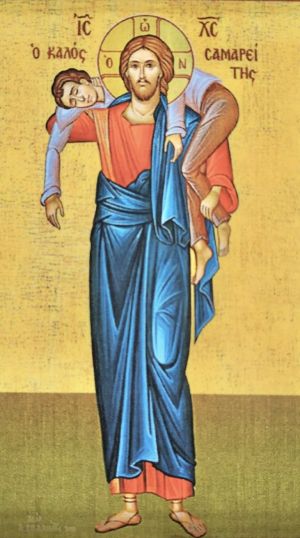
Not from the precept, but from the overthrow
(Lk 10:25-37)
«You are a fool and a samaritan!» - so the Jewish leaders (Jn 8:48). «No, I am not crazy...»: this is how the Stranger defended himself from the accusation that the fanatics moved to him, of being a possessed, obsessed and mentally ill.
Yet he quietly accepted the infamous title of «Samaritan»... epithet that designated one out of the loop, a vilified by decent people.
An excluded person from the sacred enclosure; practically alien, irritating, avulsive, heretic and impure: a «bastard» and deranged who allowed himself to preach love in all decisions [heart], at every moment [life], with any of the resources [forces], not excluding intelligence, nor the others’ legitimate desire for the full being (v.27).
Well, the non-careless perception and the very sensitive work of a "mestizo" seem to be those of God!
They answer the crucial, intimate question: «Who loves me first, so that feeling welcomed, adequate and appreciated, I too can love my neighbour?» (v.29).
We know the Gospel passage. Those obsessed with ritual purity [the ministers who had just officiated] become ruthless.
And here is a new Decalogue, with an accumulation of "verbs" of the «take charge»:
«He came near, and saw him, moved to piety, went down, poured out his first aid, wrapped the wounds, loaded the wretched on the mount, brought him in the abode that receives everyone, took care, pulled out money».
Finally He exposed himself, with special regard also for a thoughtful and further look: «I will return to pay, where necessary».
The Ten authentic new Decrees deify us without deception, in harmony with the plan and the feeling of the Father in our favor: neither He nor his intimates ‘pass beyond’ the victims.
Promise and concern that ramify on our future: when there should be something else to be put in addition, the Friend Rescuer will give it in more and always.
From here Love starts: from Someone who considers us, without conditions.
Therefore, despite the risk of becoming entangled in the situation, even the common sons of God ‘notice’ the wounds, and does not “neglect” the shaky persons.
They identifiy with, preferring to challenge the events - redeeming the beaten, cornered as refusals that now await only the coup de grâce.
He is a God of concrete experience; without patterns. And He tells us:
We are totally lovable in every condition, not "wrong" or marked for life.
From this awareness springs the desire and energy of altruistic love - even unknown and without reputation.
As the encyclical Fratelli Tutti emphasizes, so it will be possible to «start from below and, case by case, act at the most concrete and local levels, and then expand to the farthest reaches of our countries and our world, with the same care and concern that the Samaritan showed for each of the wounded man’s injuries» (n.78).
In the desert of Judah, on an engraved stone of a caravanserai that a tradition wanted to identify as the Everyone’s Home [image of the Church] to which Jesus referred in the parable - more or less halfway between Jerusalem and Jericho - an anonymous pilgrim wrote in medieval Latin:
«If even priests and the churchmen pass over your anguish, know that Christ is the good Samaritan, who will always have compassion on you, and in the hour of your death He will introduce you in the eternal Inn. Whoever you are, He will take you there».
[Monday 27th wk. in O.T. October 5, 2026]
Where is the center of gravity? Where does Love come from?

Not from the precept, but from the overthrow
(Lk 10:25-37)
"You are a fool and a Samaritan!" - accused the Jewish leaders (Jn 8:48). "No, I am not mad...": this is how the Stranger defended himself against the accusation that the fanatics made against him, that he was possessed, obsessed and mentally ill.
Yet he calmly accepted the infamous title of 'Samaritan'... an epithet designating one who was out of the loop, vilified by decent people.
One excluded from the sacred enclosure; practically an outsider, an irritant, an outsider, a heretic and impure: a 'bastard' and unbalanced, uninterested in his career, in the face of which one had to find strength in coalition.
The ancient religion seemed to have achieved tried and tested balances, sustained by the leadership of the interested alliance between throne and altar. Yet there was nervousness and dissatisfaction in the faithful.
The leaders quoted Scripture from memory, but to create restrictions - demonising those who did not immediately recognise them as 'authority'.
According to the Law - Leviticus and Numbers - the rules of purity prevented those who officiated in the Temple from touching a wounded person.
But the practitioners of the sacred do not understand that ancient procedures are worthless if they cause suffering to others.
By sacralising their own grievances, the legalists in the parable imagine that they do not have to learn anything, so they become perhaps worse than the insensitive and qualunquist: to us they appear rather, cruel and inhuman.
When there is a conflict between religious norms and the good of the brothers, they already have their excuses ready: they do not even notice the others. Painful events do not call them out, do not concern them.
In this way, even the traps of the vain against Jesus were never dialogue: always projections.
And the questions were only hurled to ridicule him, not to understand - question - or create freedom.
In short: what matters to some is the integrity of the doctrine-discipline and the prestige of the institution (which rules it).
Yet we ask ourselves: how much is the joy of humanity, and the good of the unfortunate, worth?
The man of 'titles' has no doubts whatsoever.
On the other hand, the careless perception and sensitive work of a 'half-breed' seem to be those of God himself!
The Lord gladly narrated his proposal of sharing, and of the new face of the believer.
Let us say it in words closer to us:
"Listen... no curtains: Love has no end point, and the believer is not one who obeys external provisions, but one who resembles God!".
After a brief reflexive gasp that he tried to disguise, the disposition expert retorted:
"Nice to say, of course; but how is it done in practice?".
And Jesus:
"In the same way as you think and equip yourself and desire fullness of life for yourself: in every decision [heart], in every moment of the way [life], with any of your resources [strength], not excluding intelligence" (cf. Mk 12:29-31), nor the legitimate desire for the life of others (v.27).
Already boiling over, the veteran squabbler played his last cards:
"I have to put a boundary on my neighbour, don't I?! And I justify myself again: who is 'my' neighbour?" (Lk 10:29).
"That is: who ever listens and loves me first, so that I can really do to others what I always desire for myself, even to those far away and enemies?"
"They do not feed us... and perhaps do not even respect us! So who is first 'to me' neighbour?"
Again the doctor of the law 'stood over', looming over the onlookers; but the different Rabbi did not flinch.
In conversations he was often forced (and accustomed) to lift his head, looking up at his interlocutor.
Everyone posed as an expert and chosen one, ready to scrutinise and judge; no one to be a disciple, subordinate and servant like him.
This is how he had behaved both with Zacchaeus (Lk 19:5) and with the adulteress - perhaps caught in the act by the group of peepers and watchers of public decency in Jerusalem (Jn 8, vv. 2.6-8.10; Greek text).
That carpenter's son proclaimed Father the One who related from below, without prior judgement; who made himself the Servant of man, putting himself on a par with the least.
In short, the crucial question was:
"Who loves me first, so that by feeling welcome, adequate and appreciated, I too may love my neighbour"?
The young Rabbi then told a story, to emphasise who is neighbour - He who is first Intimate and Close to us; so that we too are generated to proximity.
The ancient list of the Ten Commandments had over time become almost only an underlining of natural transience.
It was a code that imbued and exhausted the very souls most attentive to the ideal of perfection.
The last of the famous Words was summarising, but terrible: "Thou shalt not covet"!
It had spread dramatic lacerations and a sense of emptiness in the affairs of those closest to them who continued to attempt the impossible adventure.
Thus, the obsessives of ritual purity [priest and sacristan who had just officiated] became - by Law - ruthless.Instead, here proclaimed - by the stranger who had just arrived - a new Decalogue, with an accumulation of "verbs" of "taking charge":
"He came near, saw him, moved to pity, went down, poured out his first aid, bound up his wounds, loaded on his horse, carried to the dwelling that welcomes all, took care, brought out money".
Finally, he expounded, with special regard also for a caring and additional outlook: 'I will return to pay, where necessary'.
The authentic Ten New Decrees deify us without deception, in keeping with the Father's plan and feeling on our behalf: neither He nor His "pass over" victims.
In short, the Lord announced a different "Sacrifice".
In the custom of the time, through worship, the victim was supposed to be taken out of profane contact, in a bloody manner; on an altar.
With this sacral practice, the priests ideally introduced the victim into the world of the Most High, through the shedding of blood or a holocaust.
Instead, the Messiah did not want to distance the criteria of sanctification from the lives of ordinary people.
That which is made sacred [sacrifice: sacer-sacrum facere] must never depart from reality. It does not pass into the sphere of purity by means of a 'separation' from the weekday unclean.
For Jesus it is Communion - conviviality of differences - that transfigures the ordinary into the "Holy", because such a relationship makes the weak strong; and lifts all from misery.
Promise and concern that branch out into our future: when there is something else to be added, the Relief Friend will give it more and always.
This is where Love starts: from Someone who considers us, unconditionally.
Therefore, despite the risk of getting entangled in the situation, even the ordinary child of God notices and does not pass over the shaky person.
He identifies with it, preferring to defy the unknowns - and redeem the beaten, cornered like a reject who now only awaits the coup de grace.
He is a God of concrete experience; without schemes. And he tells us:
We are totally lovable in every condition, not 'wrong' or scarred for life.
From such awareness springs the desire and energy of selfless love - even unknown and without reputation.
As the encyclical Fratelli Tutti emphasises, so it will be "possible to start from the bottom and case by case, to fight for what is most concrete and local, to the last corner of the homeland and the world, with the same care that the wayfarer of Samaria had for every wounded man's wound" (No.78).
In the wilderness of Judah, on an engraved stone of a caravanserai that one tradition has identified as the Everyone’s House [image of the Church] to which Jesus referred in the parable - more or less halfway between Jerusalem and Jericho - an anonymous pilgrim wrote in medieval Latin
"If even priests and churchmen pass over your distress, know that Christ is the Good Samaritan, who will always have compassion on you, and at the hour of your death will bring you into the eternal inn. Whoever you are, He will take you there".
Is Love Possible?

18. Love of neighbour is thus shown to be possible in the way proclaimed by the Bible, by Jesus. It consists in the very fact that, in God and with God, I love even the person whom I do not like or even know. This can only take place on the basis of an intimate encounter with God, an encounter which has become a communion of will, even affecting my feelings. Then I learn to look on this other person not simply with my eyes and my feelings, but from the perspective of Jesus Christ. His friend is my friend. Going beyond exterior appearances, I perceive in others an interior desire for a sign of love, of concern. This I can offer them not only through the organizations intended for such purposes, accepting it perhaps as a political necessity. Seeing with the eyes of Christ, I can give to others much more than their outward necessities; I can give them the look of love which they crave. Here we see the necessary interplay between love of God and love of neighbour which the First Letter of John speaks of with such insistence. If I have no contact whatsoever with God in my life, then I cannot see in the other anything more than the other, and I am incapable of seeing in him the image of God. But if in my life I fail completely to heed others, solely out of a desire to be “devout” and to perform my “religious duties”, then my relationship with God will also grow arid. It becomes merely “proper”, but loveless. Only my readiness to encounter my neighbour and to show him love makes me sensitive to God as well. Only if I serve my neighbour can my eyes be opened to what God does for me and how much he loves me. The saints—consider the example of Blessed Teresa of Calcutta—constantly renewed their capacity for love of neighbour from their encounter with the Eucharistic Lord, and conversely this encounter acquired its real- ism and depth in their service to others. Love of God and love of neighbour are thus inseparable, they form a single commandment. But both live from the love of God who has loved us first. No longer is it a question, then, of a “commandment” imposed from without and calling for the impossible, but rather of a freely-bestowed experience of love from within, a love which by its very nature must then be shared with others. Love grows through love. Love is “divine” because it comes from God and unites us to God; through this unifying process it makes us a “we” which transcends our divisions and makes us one, until in the end God is “all in all” (1 Cor 15:28).
[Pope Benedict, Deus Caritas est]
Balances
The different commandments of the Decalogue are really only so many reflections of the one commandment about the good of the person, at the level of the many different goods which characterize his identity as a spiritual and bodily being in relationship with God, with his neighbour and with the material world. As we read in the Catechism of the Catholic Church, "the Ten Commandments are part of God's Revelation. At the same time, they teach us man's true humanity. They shed light on the essential duties, and so indirectly on the fundamental rights, inherent in the nature of the human person".22
The commandments of which Jesus reminds the young man are meant to safeguard the good of the person, the image of God, by protecting his goods. "You shall not murder; You shall not commit adultery; You shall not steal; You shall not bear false witness" are moral rules formulated in terms of prohibitions. These negative precepts express with particular force the ever urgent need to protect human life, the communion of persons in marriage, private property, truthfulness and people's good name.
The commandments thus represent the basic condition for love of neighbour; at the same time they are the proof of that love. They are the first necessary step on the journey towards freedom, its starting-point. "The beginning of freedom", Saint Augustine writes, "is to be free from crimes... such as murder, adultery, fornication, theft, fraud, sacrilege and so forth. When once one is without these crimes (and every Christian should be without them), one begins to lift up one's head towards freedom. But this is only the beginning of freedom, not perfect freedom...".23
14. This certainly does not mean that Christ wishes to put the love of neighbour higher than, or even to set it apart from, the love of God. This is evident from his conversation with the teacher of the Law, who asked him a question very much like the one asked by the young man. Jesus refers him to the two commandments of love of God and love of neighbour (cf. Lk 10:25-27), and reminds him that only by observing them will he have eternal life: "Do this, and you will live" (Lk 10:28). Nonetheless it is significant that it is precisely the second of these commandments which arouses the curiosity of the teacher of the Law, who asks him: "And who is my neighbour?" (Lk 10:29). The Teacher replies with the parable of the Good Samaritan, which is critical for fully understanding the commandment of love of neighbour (cf. Lk 10:30-37).
These two commandments, on which "depend all the Law and the Prophets" (Mt 22:40), are profoundly connected and mutually related. Their inseparable unity is attested to by Christ in his words and by his very life: his mission culminates in the Cross of our Redemption (cf. Jn 3:14-15), the sign of his indivisible love for the Father and for humanity (cf. Jn 13:1).
Both the Old and the New Testaments explicitly affirm that without love of neighbour, made concrete in keeping the commandments, genuine love for God is not possible. Saint John makes the point with extraordinary forcefulness: "If anyone says, 'I love God', and hates his brother, he is a liar; for he who does not love his brother whom he has seen, cannot love God whom he has not seen" (Jn 4:20). The Evangelist echoes the moral preaching of Christ, expressed in a wonderful and unambiguous way in the parable of the Good Samaritan (cf. Lk 10:30-37) and in his words about the final judgment (cf. Mt 25:31-46).
15. In the "Sermon on the Mount", the magna charta of Gospel morality,24 Jesus says: "Do not think that I have come to abolish the Law and the Prophets; I have come not to abolish them but to fulfil them" (Mt 5:17). Christ is the key to the Scriptures: "You search the Scriptures...; and it is they that bear witness to me" (Jn 5:39). Christ is the centre of the economy of salvation, the recapitulation of the Old and New Testaments, of the promises of the Law and of their fulfilment in the Gospel; he is the living and eternal link between the Old and the New Covenants. Commenting on Paul's statement that "Christ is the end of the law" (Rom 10:4), Saint Ambrose writes: "end not in the sense of a deficiency, but in the sense of the fullness of the Law: a fullness which is achieved in Christ (plenitudo legis in Christo est), since he came not to abolish the Law but to bring it to fulfilment. In the same way that there is an Old Testament, but all truth is in the New Testament, so it is for the Law: what was given through Moses is a figure of the true law. Therefore, the Mosaic Law is an image of the truth".25
Jesus brings God's commandments to fulfilment, particularly the commandment of love of neighbour, by interiorizing their demands and by bringing out their fullest meaning. Love of neighbour springs from a loving heart which, precisely because it loves, is ready to live out the loftiest challenges. Jesus shows that the commandments must not be understood as a minimum limit not to be gone beyond, but rather as a path involving a moral and spiritual journey towards perfection, at the heart of which is love (cf. Col 3:14). Thus the commandment "You shall not murder" becomes a call to an attentive love which protects and promotes the life of one's neighbour. The precept prohibiting adultery becomes an invitation to a pure way of looking at others, capable of respecting the spousal meaning of the body: "You have heard that it was said to the men of old, 'You shall not kill; and whoever kills shall be liable to judgment'. But I say to you that every one who is angry with his brother shall be liable to judgment... You have heard that it was said, 'You shall not commit adultery'. But I say to you that every one who looks at a woman lustfully has already committed adultery with her in his heart" (Mt 5:21-22, 27-28). Jesus himself is the living "fulfilment" of the Law inasmuch as he fulfils its authentic meaning by the total gift of himself: he himself becomes a living and personal Law, who invites people to follow him; through the Spirit, he gives the grace to share his own life and love and provides the strength to bear witness to that love in personal choices and actions (cf. Jn 13:34-35).
[Pope John Paul II, Veritatis Splendor nn.13-15]
Different interpretations of "neighbour"?
Today the Gospel presents the well-known parable of the “Good Samaritan” (cf. Lk 10:25-37). When questioned by a doctor of the law on what is necessary to inherit eternal life, Jesus invites him to find the answer in the Scriptures, and says: “You shall love your God with all your heart, and with all your soul, and with all your strength, and with all your mind; and your neighbour as yourself” (v. 27). There were, however, different interpretations of who was intended as “neighbour”. In fact, that man also asks: “And who is my neighbour?” (v. 29). At this point, Jesus responds with the parable, this beautiful parable — I invite all of you to take up the Gospel today, the Gospel of Luke, Chapter 10, verse 25. It is one of the most beautiful parables in the Gospel. And this parable has become the paradigm of Christian life. It has become the example of how a Christian should act. Thanks to the Gospel of Luke, we have this treasure.
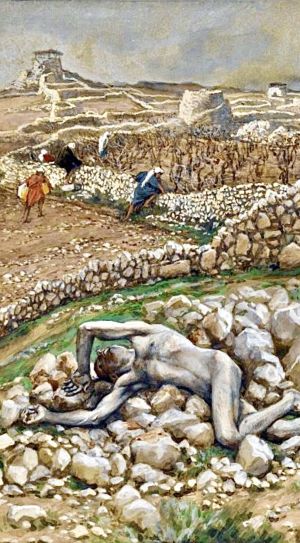
The protagonist of the brief narrative is a Samaritan who, along the road encounters a man stripped and beaten by robbers, and takes care of him. We know that the Jews treated Samaritans with contempt, considering them as outsiders to the chosen people. Thus, it is no coincidence that Jesus chooses precisely a Samaritan as the positive character in the parable. In this way he seeks to overcome prejudice, by showing that even a foreigner, even one who does not know the true God and does not attend his temple, is capable of acting according to His will, showing compassion for a needy brother and helping him with all the means at his disposal.
Along that same road, before the Samaritan, a priest and a Levite had already passed — that is, people dedicated to the worship of God. However, on seeing the poor man on the ground, they continued on without stopping, probably so as not to be contaminated with his blood. They had prioritized a human rule — not to be contaminated with blood — linked to worship, over the great commandment of God who wants mercy above all.
Jesus therefore, offers the Samaritan as an example — precisely one who did not have faith! Let us also consider the many people we know, perhaps agnostics, who do good. As a model, Jesus chooses one who was not a man of faith. And this man, by loving his brother as himself, shows that he loves God with all his heart and with all his strength — the God whom he does not know! — and at the same time expresses true religiosity and full humanity.
After recounting this very beautiful parable, Jesus again addresses the doctor of the law who had asked Him “Who is my neighbour?”, and Jesus asks him: “Which of these three, do you think, proved neighbour to the man who fell among the robbers?” (v. 36). In this way he throws the question back to his interlocutor, and also overturns the mindset of us all. He makes us understand that based on our criteria, it is not we who define who is neighbour and who is not, but it is the person in a situation of need who must be able to recognize who is his neighbour, that is, “the one who showed mercy on him” (v. 37). Being able to have compassion: this is the key. This is our key. If you do not feel compassion before a needy person, if your heart is not moved, it means that something is not right. Be careful; let us be careful.
Let us not allow ourselves to get carried away by egotistical insensitivity. The capacity for compassion has become the touchstone of Christians, indeed of the teachings of Jesus. Jesus himself is the Father’s compassion towards us. If you go along the street and see a homeless person lying there and pass him by without looking at him or you think: “well, it’s the effect of wine. He is a drunk”, do not ask yourself whether the man is drunk; ask yourself whether your heart has hardened, whether your heart has turned to ice. This conclusion indicates that mercy towards a human life in a state of need is the true face of love. This is how one becomes a true disciple of Jesus and the face of the Father is manifested: “Be merciful, even as your Father is merciful” (Lk 6:36). And God, our Father, is merciful because he is compassionate. He is able to have this compassion, to draw near to our suffering, our sin, our vices, our miseries.
May the Virgin Mary help us to understand and above all to experience ever more the unbreakable bond between God, our Father, and concrete and generous love for our brothers and sisters, and may she give us the grace to be compassionate and to grow in compassion.
[Pope Francis, Angelus 14 July 2019]
Homicidal vintners, and the true enemy of God
(Mt 21:33-43.45-46)
Christ introduces everyone to an adventurous, uncomfortable journey, not without pitfalls that throw the situation upside down and destabilize - but it is the Way for each of us to recognize himself.
Otherwise we would not get closer to the Source of perception, imagination, reality and creativity - virtues that are necessary for rebirth, even from global emergency.
Jesus uses the figure of the Vineyard to describe the work of God and the response of men - first and foremost spiritual leaders (v.23).
Religious leaders were like this: hostile to divine action; equipped to appear, nevertheless violent and sclerotic.
The directors to whom Jesus addresses, follow the entire metaphor step by step - and they seem to find themselves unguarded. They only remain speechless at the end.
Why does He ask them imperatively: «Listen you» [which is not a simple invitation]?
From the beginning speaks with a master tone. Why?
He is Lord of those to whom he actually addresses: the Christ so much invoked by new caste of "pharisees" back in the communities, where top of the class already claimed to manage the Vineyard in their own way.
In no uncertain terms, the parable denounces the abuse of authority perpetrated in third generation assemblies, especially by their chiefs.
Church elders who were already annoyed at taking care of the little people, who on the other hand came to the threshold of the communities with the hope of being welcomed.
Conversely, it was precisely these «last» the new prophets called by God to awaken the immobility situation (of bosses) - comparable to the same swampy reality of other religions of time.
Everywhere and even today some potentates discriminate and manipulate consciences in order to protect their world - by eliminating Jesus Present, who recurs in the small, innocent and transparent ones.
Veterans accustomed to directing do not notice that they are decreeing their own condemnation (v. 41).
Of course, Christ does not intend to ridicule anyone: He wanted to lead people to ‘tell the truth’ about themselves.
In Gospel the behavior of the titled people does not change. On the contrary, feeling unmasked gets worse it, and only the hesitation of losing face in public can restrain them (vv.45-46).
But now they know who they are - so much so that they are ashamed to openly plot.
Categories that are considered closer to Paradise - those who produce inedible grapes - excluded from the testimony of the Kingdom innervated by tinies’ crowd.
There will inevitably be a new beginning, and the replacement of inept settlers (v.43).
It is «good news»: the Eternal one achieves his purpose despite the repeated refusals of those who should serve Him, and instead use Him.
In short, for Jesus the great enemy of God is expediency.
Even amidst ungenerous brutality and accusations of being deluded dreamers, new and more faithful Heralds of the Spirit are ready for succession.
An unstoppable course, sprinkled by the stream of blood of the prophets (v.46).
Outcasts, shunned, expelled, and to be crushed - but not locked into mental patterns: capable of giving free rein to regenerative energies.
Consciousness of the world, divorced from compromise.
[27th Sunday in O.T. (year A), October 4, 2026]
Murderous vineyard-keepers, and God’s true enemy
(Mt 21:33–43, 45–46)
This is a continuous metaphor rather than a parable; it is therefore the fruit of post-Easter reflection – let us see why.
Christ leads us all on an adventurous, unsettling journey, not without pitfalls that turn the situation on its head and destabilise us – yet it is the Way by which each of us may come to know ourselves.
Otherwise, we would not be able to reconnect with the Source of perception, imagination, reality and creativity – virtues that are essential for rebirth, even in the face of the global crisis.
Jesus uses the image of the Vineyard to describe God’s work and humanity’s response – first and foremost that of the spiritual leaders (v. 23).
The religious leaders of old were just like that: hostile to divine action; skilled at putting on a show, yet violent and ossified.
The leaders to whom Jesus addresses himself follow the entire metaphor step by step – they seem to be caught off guard – and are left speechless only at the very end.
Why does he address them in such an imperious manner: ‘Listen’ [which is not a mere invitation]?
From the very beginning, he speaks in the tone of a master. Why?
He is the Lord of those to whom he is actually addressing himself: the Christ so fervently invoked by the new caste of ‘Pharisees’ returning to their assemblies, where already the top students were claiming the right to manage the Vineyard in their own way.
In no uncertain terms, the parable denounces the abuse of authority perpetrated within third-generation communities, particularly by their leaders.
Church elders who were already annoyed at having to deal with the ordinary folk who turned up at the threshold of the communities in the hope of being welcomed.
Conversely, it was precisely these ‘least’ who were the new prophets called by God to shake up the stagnant situation (of the veterans) – comparable to the very same stagnant reality found in other religions of that time.
In this way, let us proceed to a possible interpretation:
The hedge or low wall surrounding the Vineyard is the plan that God has revealed to protect us from other ways of life [paradigms not of Faith], which are senseless and self-destructive.
The winepress signifies that nothing was lacking [the Lord took the utmost care], nor was the anticipation of the time of joy, of the juice of love.
In short: excellent conditions and an abundant result; maximum production of ecstasy – one would expect. However…
The vineyard workers represent the established authorities. They have been entrusted with the task of placing us in the best position and under the right conditions for our growth and flourishing.
Indeed, under ideal conditions, everyone can produce the fruit of love that the ‘master of the vineyard’ expects.
The two groups of envoys were prophets sent by the Father before and after the Babylonian exile – in vain – to call for concrete adherence to, and fidelity to, the Covenant.
All met with a tragic end, because the point of reference for both the devout people and the irresponsible leaders remained the same: self-enrichment.
Here are the various groups in power at the time of Jesus:
Those in charge of Temple affairs [priests] managed the tithes, specific taxes and offerings.
The high priest was chosen from among the members of the aristocratic families who flaunted the greatest power and wealth.
The Sadducees were, in fact, the aristocratic elite; laymen themselves, and extremely wealthy. They readily involved themselves in trade, including that of the Temple, and in large-scale landownership.
The Pharisees were the leaders of popular piety, advocating strict adherence to the Law, particularly the purity laws. They also upheld the various traditions, including oral ones.
Their ethical authority was based on setting an example and a sense of sacred [and moralistic] separation. This exemplary conduct was felt and recognised in every village in Palestine.
The ‘Elders’ were leaders of the people (local authorities in villages or towns); descendants of the leaders of the ancient tribes.
Scribes [doctors of the Law] were those who, after a lifetime of studying the Word of God, were elevated to the rank of official theologians of the Sanhedrin.
Although divided into two factions – one favouring the Sadducees, the other the Pharisees – their prestige even managed to overshadow the letter of the Torah. Indeed, in the event of a conflict between the Law and their interpretation, it was the latter that was deemed superior.
Jesus, on the other hand, discredited the scholars, who readily distorted and twisted the meaning of the Holy Scriptures – always to their own advantage.
He knew full well that his act of denunciation would cost him his life, because he was exposing the entire system of profit, power balances and positions.
Yet he never backed down a single millimetre.
Everywhere, and even today, certain powerful figures discriminate against and manipulate people’s consciences to safeguard their commissions and their farcical world of public and private relations.
Despite all the hypocritical and conventional fire of condemnation, which often seeks to eliminate the ‘Present Jesus’ who reveals himself in the small, innocent and transparent.
Conversely, the supreme stewards of the House of God must adopt an attitude of service to the Vineyard; they must not draw up their own life plans, to which everyone – including the Father – must conform.
It is for this reason that the Son sought to dismantle that structure: indeed, to supplant the Temple with his own living Person.
A genuine mortal threat to a system that could no longer even tolerate the interference of God Himself.
But whilst it was considered irreverent to substitute the life of the people for the stone sanctuary, it also seemed sacrilegious to regard the Torah system as transitory.
The Pentateuch was the cornerstone of the ‘chosen people’s’ identity. This idea was interpreted with a rigid sense of permanence – even though its observance brought not happiness but dissatisfaction.
Yet the old guard, accustomed to hierarchical structures – and to being in charge – did not even realise that in doing so they were sealing their own doom (v. 41).
Of course, Christ does not intend to ridicule anyone: He wishes to lead people to question themselves and speak the truth about themselves.
In the Gospel, the behaviour of those holding official positions of piety does not change; on the contrary, feeling exposed, it worsens.
Only the fear of losing face in public can hold them back (vv. 45–46).
But now they know who they are, so much so that they are ashamed to plot openly.
The ‘inner circle’, who consider themselves closer to Heaven and therefore holders of power (which they claim for themselves), are invariably those who produce inedible grapes.
Circles excluded from the witness of the Kingdom.
The ageing forces know only how to oppose. The lifelong leaders – pretentious fools – always love command, and (all too much) their own interests, not those of the humble masses.
Unfortunately, this Gospel passage is a snapshot of the entire history of salvation, where disdain all too often prevails – and it is still relevant today.
There will inevitably be a new beginning, and the replacement of the inept tenants (v. 43).
It is ‘good news’: the Lord achieves his purpose despite the repeated refusals of those who ought to represent him, and who instead use him. Having no fruit of love to offer in return.
In short, it is our own story. The enigma of redemption, capable of embracing even violence and rebellion within itself.
For Jesus, there is no privileged ethnicity or civilisation – because God’s great enemy is not sin in the sense of imperfection, but self-interest.
Self-interest that goes hand in hand with indifference and (self-serving) contempt: a recurring problem – bringing history to a close.
And yet, when the days of fervour fade and the situation grinds to a halt because of those who see election as a privilege rather than a service, new and more faithful Heralds of the Spirit ceaselessly emerge. Ready to carry on the legacy of minds and hearts, even amidst ungenerous brutality and accusations of being deluded dreamers.
An unstoppable course, watered by the stream of the prophets’ blood (v.46).
Outcasts, struck off, expelled and destined to be crushed – yet not confined within outdated mental frameworks: capable of giving free rein to regenerating energies.
The world’s conscience, detached from compromise.
Deemed an enemy and a danger

Dear Brothers and Sisters,
This Sunday’s Gospel ends with a particularly severe warning from Jesus, addressed to the chief priests and the elders of the people: “The kingdom of God will be taken away from you and given to a nation producing the fruits of it” (Mt 21:43). These are words that call to mind the great responsibility of those in every epoch who are called to work in the Lord’s vineyard, especially in roles of authority, and they press for a renewal of full fidelity to Christ.
He is “the very stone which the builders rejected” (cf. Mt 21:42), because they judged him to be hostile to the law and a danger to public order; but he himself, rejected and crucified, is risen, to become the “corner stone” on which the foundations of every human life and of the whole world may rest in total safety.
The truth of this is the subject of the Parable of the Unfaithful Tenants to whom a man entrusted his vineyard so that they might cultivate and harvest the produce. The owner of the vineyard symbolizes God himself, while the vineyard symbolizes his people, as well as the life he gives, so that with his grace and our hard work, we may do good. St Augustine comments: “God does also cultivate us... as a field, that he may make us better” (cf. Sermo 87, 1, 2: PL 38, 531). God has a project for his friends, but unfortunately the human response is often oriented to infidelity which is expressed in rejection. Pride and selfishness prevent us from recognizing and welcoming even God’s most precious gift: his Only-Begotten Son.
When, in fact, “he sent his son to them”, the Evangelist Matthew wrote, “[the tenants] took him and cast him out of the vineyard, and killed him” (Mt 21:37, 39). God puts himself in our hands, agrees to make himself an unfathomable mystery of weakness and manifests his omnipotence in his faithfulness to a plan of love which, in the end, also provides for the proper punishment of the wicked (cf. Mt 21:41).
Firmly anchored in faith to the cornerstone which is Christ, let us abide in him, like the branch that can bear no fruit unless it remains attached to the vine. The Church, the People of the New Covenant, is built only in him, for him and with him. On this the Servant of God Paul VI wrote: “The first benefit which We trust the Church will reap from a deepened self-awareness, is a renewed discovery of its vital bond of union with Christ. This is something which is perfectly well known, but it is supremely important and absolutely essential. It can never be sufficiently understood, meditated upon and preached” (Encyclical Ecclesiam Suam, 6 August 1964: AAS 56 [1964], 622).
Dear friends, the Lord is ever close and active in humanity’s history and accompanies us with the unique presence of his Angels, whom today the Church venerates as “Guardian Angels”, that is, ministers of the divine care for every human being. From the beginning until the hour of death, human life is surrounded by their constant protection. And the Angels encircle the august Queen of Victories, the Blessed Virgin Mary of the Rosary, who, on the first Sunday of October, at this very moment, receives the fervent supplication from the Shrine of Pompeii and from the whole world that evil may be defeated and God’s goodness revealed in its fullness.
[Pope Benedict, Angelus, 2 October 2011]
The stone rejected by the builders
"The stone rejected ... has become cornerstone'
Psalm 117 [118], Lauds on Sunday of the Second Week
1. When a Christian, in unison with the voice of prayer in Israel, sings Psalm 117{118}, that we just heard, he feels within him a special thrill. In fact, he finds in this liturgical hymn two phrases that echo with a new meaning in the NT. The first is verse 22, "The stone rejected by the builders has become the corner-stone". The phrase is quoted by Jesus, who applies it to his mission of death and glory, after having told the parable of the murderous vinedressers (cf. Mt 21,42). The phrase is also recalled by Peter in the Acts of the Apostles: "This Jesus is the stone, rejected by you the builders, which has become the cornerstone. There is no salvation in anyone else nor is there any other name given to men under heaven by which we are to be saved" (Acts 4,11-12). St Cyril of Jerusalem comments: "We say the Lord Jesus Christ is only one because his sonship is one; only one we say so that you do not think that there is another ... In fact he called stone, not inanimate stone nor cut by human hands, but the cornerstone, because he who believes in him will not remain disappointed" (The Catecheses, English title of the Italian version of St Cyril's Catecheses, Le Catechesi, Rome, 1993, p. 312-313).
The second phrase that the NT takes from Psalm 117[118] is proclaimed by the crowd at the solemn Messianic entrance of Christ into Jersualem: "Blessed is he who comes in the name of the Lord!" (Mt 21,9; cf. Ps 117,26). The acclamation is framed by a Hosanna that takes up the Hebrew petition hoshiac na',"please, save us!"
2. The splendid Biblical hymn is placed at the heart of the small collection of psalms, 112[113] to 117[118], called the Passover Hallel, namely, the psalms of praise used in Hebrew worship for the Passover and the major solemnities of the liturgical year. The processional rite can be taken as the theme of Psalm 117[118] articulated with the chants by the soloist or choir, with the Holy City and its Temple as the background. A beautiful antiphon begins and ends the psalm: "Praise the Lord for he is good, his mercy endures forever" (verses 1 and 29).
The word "mercy" translates the Hebrew word hesed, that designates the generous fidelity of God towards the covenanted and friendly people. Three categories of people are told to praise this fidelity: all of Israel, the "house of Aaron", namely the priests, and those "who fear the Lord", a way of speaking that includes the faithful and the proselytes, namely, the members of other nations who desire to follow the law of the Lord (cf. verses 2-4).
3. The procession makes its way through the streets of Jerusalem, because the psalm speaks of the "tents of the righteous" (cf. v. 15). There is, however, a hymn of thanksgiving (cf. vv. 5-18) whose basic message is: Even when we are in anguish, we must keep high the torch of confidence, because the powerful hand of the Lord leads his faithful people to victory over evil and to salvation.
The sacred poet uses strong and vivid images; he compares the cruel adversaries to a swarm of bees or to a column of flames that advances turning everything to ashes (cf. v.12). There is the vehement reaction of the just person, sustained by the Lord. He repeats three times "In the name of the Lord I cut them off" where the Hebrew verb refers to an intervention that destroys evil (cf. vv.10.11.12). Behind all of it, indeed, there is the powerful right hand of God, namely, his effective intervention, and certainly not the weak and uncertain hand of man. For this reason the joy of the victory over evil leads to a vibrant profession of faith: "The Lord is my strength and my song, he has become my salvation" (v. 14).
4. The procession then arrives at the temple, at the "gates of justice" (v. 19), at the Holy Door of Zion. Here a second song of thanksgiving is sung, that begins with a dialogue between the congregation and the priests to be admitted to worship. "Open to me the gates of justice: I will enter to give thanks to the Lord", the soloist says in the name of the congregation in procession: "This is the gate of the Lord, the righteous shall enter through it" (v. 20), and others reply, probably the priests.
Once they enter, they begin the hymn of thanksgiving to the Lord, who in the Temple offers himself as the stable and secure "corner stone" on which to build the house of life (cf. Mt 7,24-25). A priestly blessing descends upon the faithful who have come into the temple to express their faith, to raise their prayer and to celebrate their worship.
5. The last scene that opens before our eyes is constituted by the joyful rite of sacred dances, accompanied by the festive waving of branches: "Bind the festal procession with branches, up to the horns of the altar" (v. 27). The liturgy is a joyful, festive celebration, expression of the entire life that praises the Lord. The rite of the branches brings to mind the Jewish Feast of Booths, observed in memory of the pilgrimage of Israel through the desert, a solemnity in which there was a procession with palm, myrtle and willow branches.
This rite evoked by the Psalm is proposed to the Christian in Jesus' entry into Jerusalem, celebrated in the liturgy of Palm Sunday. Christ is acclaimed as the "Son of David" (cf. Mt 21,9) by the crowd, who, "having come for the feast ... took branches of palms and went out to greet him shouting: Hosanna! Blessed is he who comes in the name of the Lord, the king of Israel" (Jn 12,12-13). At that festive celebration that is, however, the prelude to the hour of the Passion and Death of Jesus, the symbol of the cornerstone, proposed at the beginning, takes its full meaning, a glorious Easter meaning.
Psalm 117[118] encourages Christians to recognize in the Easter event of Jesus "the day that the Lord has made", on which "the stone rejected by the builders has become the cornerstone". With the psalm they can then sing with great thanksgiving: " The Lord is my strength and my song; he has become my salvation" (v. 14); "This is the day the Lord has made, let us rejoice and exult in it" (v. 24).
[Pope John Paul II, General Audience, 5 December 2001]
The great thinker Romano Guardini wrote that the Lord “is always close, being at the root of our being. Yet we must experience our relationship with God between the poles of distance and closeness. By closeness we are strengthened, by distance we are put to the test” (Pope Benedict)
Il grande pensatore Romano Guardini scrive che il Signore “è sempre vicino, essendo alla radice del nostro essere. Tuttavia, dobbiamo sperimentare il nostro rapporto con Dio tra i poli della lontananza e della vicinanza. Dalla vicinanza siamo fortificati, dalla lontananza messi alla prova” (Papa Benedetto)
The present-day mentality, more perhaps than that of people in the past, seems opposed to a God of mercy, and in fact tends to exclude from life and to remove from the human heart the very idea of mercy (Pope John Paul II)
La mentalità contemporanea, forse più di quella dell'uomo del passato, sembra opporsi al Dio di misericordia e tende altresì ad emarginare dalla vita e a distogliere dal cuore umano l'idea stessa della misericordia (Papa Giovanni Paolo II)
«Religion of appearance» or «road of humility»? (Pope Francis)
«Religione dell’apparire» o «strada dell’umiltà»? (Papa Francesco)
In the crucified Jesus a kind of transformation and concentration of the signs occurs: he himself is the “sign of God”, especially in the mystery of his Death and Resurrection (Pope John Paul II)
In Gesù crocifisso avviene come una trasformazione e concentrazione dei segni: è Lui stesso il "segno di Dio", soprattutto nel mistero della sua morte e resurrezione (Papa Giovanni Paolo II)
However, the king was not discouraged and sent his servants out to seek other guests to fill his banquet hall. Thus the aspect of the refusal of those initially invited caused the invitation to be extended to all [Pope Benedict]
Il re però non si scoraggia e invia i suoi servi a cercare altri commensali per riempire la sala del suo banchetto. Così il rifiuto dei primi ha come effetto l’estensione dell’invito a tutti [Papa Benedetto]
Faith in God opens before us the horizon of a sure hope, one which does not disappoint; it indicates a solid foundation on which to base one’s life without fear; it demands a faith-filled surrender into the hands of the Love which sustains the world (Pope Benedict)
La fede in Dio apre all’uomo l’orizzonte di una speranza certa che non delude; indica un solido fondamento sul quale poggiare, senza paura, la propria vita; richiede l’abbandono, pieno di fiducia, nelle mani dell’Amore che sostiene il mondo (Papa Benedetto)
The "new evangelization" faces this challenge. It must work to ensure that people recover the awareness that in Christ evil can be conquered with good (Pope John Paul II)
La “nuova evangelizzazione” affronta questa sfida. Essa deve impegnarsi perché tutti gli uomini recuperino la consapevolezza che in Cristo è possibile vincere il male con il bene (Papa Giovanni Paolo II)
Many saints experienced the night of faith and God’s silence — when we knock and God does not respond — and these saints were persevering (Pope Francis)
Tanti santi e sante hanno sperimentato la notte della fede e il silenzio di Dio – quando noi bussiamo e Dio non risponde – e questi santi sono stati perseveranti (Papa Francesco)
In some passages of Scripture it seems to be first and foremost Jesus’ prayer, his intimacy with the Father, that governs everything (Pope Francis)
In qualche pagina della Scrittura sembra essere anzitutto la preghiera di Gesù, la sua intimità con il Padre, a governare tutto (Papa Francesco)








duevie.art
don Giuseppe Nespeca
Tel. 333-1329741
Disclaimer
Questo blog non rappresenta una testata giornalistica in quanto viene aggiornato senza alcuna periodicità. Non può pertanto considerarsi un prodotto editoriale ai sensi della legge N°62 del 07/03/2001.
Le immagini sono tratte da internet, ma se il loro uso violasse diritti d'autore, lo si comunichi all'autore del blog che provvederà alla loro pronta rimozione.
L'autore dichiara di non essere responsabile dei commenti lasciati nei post. Eventuali commenti dei lettori, lesivi dell'immagine o dell'onorabilità di persone terze, il cui contenuto fosse ritenuto non idoneo alla pubblicazione verranno insindacabilmente rimossi.