


don Giuseppe Nespeca
Giuseppe Nespeca è architetto e sacerdote. Cultore della Sacra scrittura è autore della raccolta "Due Fuochi due Vie - Religione e Fede, Vangeli e Tao"; coautore del libro "Dialogo e Solstizio".
26th Sunday in O.T.
26th Sunday in Ordinary Time (year A) [27 September 2026]
First Reading from the Book of the Prophet Ezekiel (18:25–28)
To understand Ezekiel’s prophecy, we must recall the dramatic context in which he speaks. In 597 BC, many inhabitants of Jerusalem were deported to Babylon by Nebuchadnezzar’s army. Jerusalem had been devastated, the Temple desecrated, and the population decimated. The exiles found themselves far from the Promised Land and from everything that had given meaning to their lives. Faced with such a tragedy, the question arose spontaneously: ‘What have we done to God to deserve all this?’. At that time, it was widely believed that there was a direct correlation between a person’s behaviour and what happened to them: the righteous are rewarded and the sinner punished. For this reason, the exiles repeated a proverb: ‘The fathers have eaten sour grapes, and the children’s teeth are set on edge’ (Ezekiel 18:2). In other words: we are paying for the sins of our fathers and of previous generations.
Ezekiel breaks with this mindset. God says through the prophet: ‘You shall no longer repeat this proverb in Israel.’ No one is condemned to live under the burden of others’ sins. Every person is called to answer for their own choices. And here a great new truth emerges: the past does not definitively determine the future. If the wicked turn away from their ways, practise righteousness and justice, repent and return to God, they may live. ‘If the wicked turn away from all the sins they have committed, […] they shall live’ (cf. Ezekiel 18:21). It is an extraordinarily relevant message: no one is a prisoner of their own past, but it is always possible to start afresh, and this frees people from the belief that they are condemned to pay for the sins of others and restores to them the possibility of hope. No past is so burdensome as to prevent a fresh start. Even in times of trial, God opens up a new path before us. Hope springs precisely from the certainty that God’s mercy always leaves open the possibility of a fresh start. Conversion, from a biblical perspective, is precisely a change of direction, a ‘returning’ to God. Ezekiel also reminds us that true conversion does not consist merely of words or religious practices: it is manifested concretely in the practice of law and justice, that is, in the way we treat others.
Responsorial Psalm (24/25)
The words ‘way’, ‘road’, ‘path’ and the verb ‘guide me’ recur several times in the Psalm: ‘Lord, make me know your ways; teach me your paths. Guide me in your truth and instruct me, for you are the God of my salvation… The Lord shows sinners the way; he guides the poor in righteousness and teaches the humble his way’. The theme of the journey is characteristic of penitential psalms. God’s Law—that is, his commandments—is like a sort of ‘highway code’. The speaker is a sinner who recognises that he has gone astray, that he has taken the wrong path, and asks God to bring him back onto the right path. It is no coincidence that, in the Bible, to ‘convert’ literally means ‘to turn back’, ‘to turn round’. And it is never too late to turn back. In the first reading, Ezekiel reminded us that a future is always possible: no one is definitively condemned by their past. That is why we can still pray: ‘Lord, teach me your ways’. What is asked of us? First and foremost, not perfection, but humility: ‘The Lord teaches the humble his way’. The Hebrew word anawim, translated as ‘the humble’ or ‘the poor’, refers to those who recognise that they are poor, fragile, without resources and in need of God. They are the ‘poor in spirit’, those who are able to pray simply: ‘Lord, have mercy on me’. Their plea is already a call for conversion: ‘Lord, teach me your way’. And the ‘I’ speaking in the Psalm is not merely an individual, but the entire people. Psalm 24/25 was probably used in penitential celebrations in the Temple in Jerusalem, which is why there is a constant interplay between ‘I’ and ‘we’ in biblical prayer. The Psalm speaks in the first person, but at the end it says: ‘Deliver Israel, O God, from all its troubles’. The ‘I’ therefore encompasses the ‘we’. The biblical person possesses a strong sense of solidarity across generations: the God of Abraham, Isaac and Jacob is the God of their descendants; the Covenant with Noah, Abraham and Moses concerns not only the individual, but the whole people. Today, however, our society often tends to place the individual, their freedom and their personal rights at the centre, sometimes at the expense of the communal dimension. The Bible has taken a different path: it has progressively discovered the importance of the individual without ever separating them from the community. This is one of the great riches of biblical revelation: the individual is not lost within the community, nor is the community forgotten in favour of the individual. We are personally responsible, yet at the same time we stand in deep solidarity with one another. For this reason, in the Psalm, that humble and trusting sinner is at once each one of us and the entire community of believers. Finally, there is a particularly beautiful detail: the Psalm continually plays on the theme of memory and forgetfulness: ‘Remember, Lord, your mercy… Do not remember the sins of my youth… Do not forget me’. It is almost a prayer that God might have a ‘selective memory’: that he might forget our sins and remember his mercy instead!
It is a bold prayer, yet also one of profound humility. Bold, because it springs from trust in the Covenant; humble, because it acknowledges one’s own sin and frailty. Man asks God: ‘Do not remember what I have been; remember instead who You are: merciful, faithful, slow to anger and great in love.’ After all, even in the Old Testament, Israel had discovered something surprising: God is not merely the Judge, but a Father full of tenderness and mercy. And so the prayer of the Psalm can also become our own: “Lord, when I have gone astray, teach me your way. When I have fallen, show me that I can return. When I recognise my own poverty and fragility, guide me. Do not remember my sins: remember your mercy. And grant that my ‘I’ may never forget the ‘we’ of the community of your children”.
Second Reading from the Letter of Saint Paul to the Philippians (2:1–11)
On Palm Sunday, every year we hear above all the second part of this text, the part that contemplates the mystery of Christ: ‘Though he was in the form of God, he did not regard equality with God as something to be grasped’. Today, however, let us focus on the first part, in which Paul explains to us how to live ‘in Christ’. Paul uses this expression at the beginning and end of the passage: ‘If, then, there is any consolation in Christ…’ and then: ‘Have in you the same mindset as Christ Jesus’. Between these two statements, he lists the attitudes that must characterise the Christian life: comfort, love, fellowship, tenderness, compassion. It is no coincidence that these are the very same attributes with which God is described in the Old Testament. Being ‘in Christ’ is therefore not merely a figure of speech. From the moment of Baptism, we belong to Christ; we are incorporated into Him and become members of His Body. This new identity transcends all our differences: cultural, social, economic and physical. We now have a common name: Christians. It is like what happens in a large family: when we meet, before any other differences, we recognise that we belong to the same family. It is this profound sense of belonging that should characterise the Christian community. Paul says: ‘Have the same mindset, the same love, one spirit and one purpose’. It is as if he were telling us: honour the family to which you belong; honour the name you bear. Then comes a surprising expression: ‘Consider others better than yourselves’. This does not mean belittling oneself or thinking one is inferior. The Gospel does not ask us to rank people as superior or inferior. The Kingdom of God does not operate according to the logic of competition and comparison. The point is quite another: to learn to look at others with a positive gaze, almost with an attitude of admiration, seeking to see not what they possess, but what they are. The differences we see – physical, cultural, social, economic – belong above all to the dimension of ‘having’. Paul, on the other hand, leads us into the dimension of ‘being’: ‘ ‘As many of you as were baptised into Christ have clothed yourselves with Christ’ (Gal 3:27). When I meet another baptised person, therefore, I must not stop at what is apparent. I must remember that they are a member of the Body of Christ, a temple of the Holy Spirit, and that they have a personal vocation, different from my own, yet necessary to God’s plan. Everyone possesses a gift that no one else can replace. Because of the mission God has entrusted to them, the other person may be ‘better’ than me, in the sense that they possess what I do not possess and can accomplish what I cannot. For this reason, they also need my esteem, my encouragement and my trust. The important thing is not to determine who is worth more, but to know what mission God entrusts to each individual and to the community as a whole. Every person is called to contribute to the building of the Kingdom according to the gift received from the Spirit. Finally, there is a great truth contained in this text: the Kingdom of God is already present, but it has yet to be fulfilled in our lives. In Christ, indeed, God’s plan to reunite humanity has already begun and, through Baptism, we have been incorporated into this reality. But what is already true in Christ must also gradually become true in our daily lives. Our being ‘in Christ’ cannot remain merely an inner reality or a simple religious formula: it must tangibly transform the way we view, welcome and treat others, both Christians and non-Christians. And here we understand the profound link between the two parts of the text. First, Paul tells us how those who are ‘in Christ’ should live; then he shows us how Christ himself lived: not seeking his own advantage, but humbling himself, becoming a servant and giving himself even to the point of death on the cross. For this reason, the Christological hymn is not merely a beautiful contemplation of Jesus: it is the concrete measure of our lives. ‘Let this mind be in you which was also in Christ Jesus’. To be Christian, therefore, means allowing the very movement of Christ to enter our lives: not asserting ourselves against others, but giving of ourselves; not seeking to be superior, but serving; not focusing on what the other possesses, but recognising who they are before God. It is in this way that what Christ has already accomplished becomes, day by day, a reality lived out in the Church and in the world.
From the Gospel according to Matthew (21:28–32)
‘Which of the two did the will of his father?’ This question from Jesus seems simple, almost too simple. Once again we find ourselves in the vineyard, as we did last Sunday. A father asks his two sons to go and work in the vineyard. The first replies ‘no’, but then changes his mind and goes; the second replies straight away: ‘Yes, sir’, but then does not go. Jesus asks the chief priests and the elders: ‘Which of the two did the will of his father?’ Clearly, he does not wish to test them with a simple riddle: he wants to open their eyes. The answer is obvious: the first. And it is precisely then that Jesus applies the parable to his listeners: you are like the second son. You say ‘yes’ to God; you are religious people, you know the Law, you await the Messiah and pray for his coming; yet when God sends him to you, you do not recognise him and you do not accept his word. It was the Father’s will that his people—and above all his religious authorities—should welcome his Envoy, the Messiah, Jesus. Herein lies the tragedy that will lead to the Passion: precisely those who seemed best prepared to welcome the Messiah will be the ones who refuse to recognise him. Jesus then utters a very strong statement: ‘Tax collectors and prostitutes will enter the Kingdom of God before you.’ He is not praising them because they are sinners. Their sin is certainly no cause for merit. Rather, they are like the younger son: they began by saying ‘no’, but then changed their ways. What happened? They believed the preaching of John the Baptist. John had called everyone to repentance: ‘Bear fruit worthy of repentance.’ The tax collectors and prostitutes, precisely because they recognised their own poverty and sinfulness, were able to listen. The religious authorities, on the other hand, refused to believe John and later Jesus. Matthew probably links this parable to the events that had just taken place in Jerusalem. At the beginning of chapter 21, Jesus had entered the city and the crowd had welcomed him as the Messiah, shouting: ‘Hosanna to the Son of David! Blessed is he who comes in the name of the Lord!’ (Ps 117/118:26). But this enthusiasm was not shared by the chief priests and the elders. When Jesus was teaching in the Temple, they asked him: ‘By what authority are you doing these things? Who gave you this authority?’ In reality, the problem was precisely this: in their eyes, Jesus did not possess the necessary authority to speak in God’s name. Jesus, as is often the case, does not answer directly. He asks them: ‘Where did John’s baptism come from: from heaven or from men?’ They do not dare to reply, because any answer would have put them in a difficult position: to acknowledge John would have meant acknowledging his testimony about Jesus as well.
That is why Jesus tells the parable of the two sons. It is almost a final appeal for their conversion. Jesus does not wish to exclude anyone: he desires the salvation of all. If he speaks harshly, it is because time is now running out: we are on the eve of the Passion. But what had John the Baptist said? He had denounced precisely that religious self-assurance which prevents conversion: ‘Do not say amongst yourselves: “We have Abraham as our father.”’ It is not enough to belong to the chosen people, to know the Law or to hold a religious position. One must bear the fruits of conversion. Perhaps this was the real problem with the authorities: a certain certainty that they already possessed the truth about God, to the point where they were no longer capable of allowing themselves to be challenged by his word.
The tax collectors and the prostitutes, on the other hand, precisely because they recognised themselves as sinners and the poor before God, had more open ears and hearts. The problem, therefore, is not simply being a sinner or being religious. The problem is becoming so certain of one’s own convictions that one is no longer able to hear God when He speaks in a way that differs from what we expect. The parable thus presents us with a much deeper question. It is not enough to say ‘yes’ to God with our lips. Faith is recognised in our lives. It is not enough to know the Father’s will: we must carry it out. And the question that Jesus puts to the religious leaders becomes, today, a question for each of us: Have I truly entered the Father’s vineyard? Does my ‘yes’ to God find expression in my everyday life? Am I still capable of hearing a word that calls me to change? Or do I think I already know everything about God and leave no room for conversion?
The parable of the two sons goes even deeper than that of the labourers of the last hour. There, Jesus questioned the way we judge God’s mercy towards others; here, he questions our very piety. Ultimately, Jesus is not merely asking us: ‘Do you say “yes” to God?’, but: ‘Are you doing the Father’s will?’ Because in the Lord’s vineyard, it is not only what we say that counts, but the concrete response of our lives.
+Giovanni D’Ercole
Skepticism, Faith, Character
From the ancient dream to the embodied relationship
(Jn 1:47-51)
People are convinced by meeting, seeing and experiencing, not by imposing. However, the Eternal’s plan baffles us.
Witness and sharing lead persons to Christ, but they are not enough - because his plan is not as people imagine or propose, as they await and desires it to be.
To the enthusiastic announcement, Nathanael responds with a preconceived skepticism that represents us: what good can come out of the most insignificant suburbs (v.46)?
Why does not the solution to our expectations come from predictable places [Judaea]?
Personal encounter with Jesus and listening to his Word go beyond every obstacle, up to an explicit and convinced profession of Faith.
And like Nathanael, whoever consecrates his life to the study of the Scriptures finds in them Christ himself (vv.45.48-49).
At first perhaps we too approached the Son of God imagining that he had the attributes of King of a chosen people (v.49).
Then the custom with the Person and the vital experience [«Come and see»: sense of the basic Semitic expression of v.46] showed us a much broader Relationship with Heaven (vv.50-51).
In walking the Way that the unexpected Messiah proposes, we perceive the convergence of God’s movement towards men and our longing for him.
It is the realization (and overcoming) of Jacob’s ancient dream.
Those who pursue preconceptions remain to take the cool under a fig tree (cf.v.48), ie he remains linked to the ancient religion [the rabbis taught the ancient Scriptures sitting under the trees; the fig tree was symbol of Israel].
«Israelite without deceit» (v.47): each one is so when, after sifting, he knows how to get rid of common opinions and teachings; when he realizes that they do not coincide with the Father’s plan.
Salvation history aims at «greater things» (v.50) than those already wanted; normal, expected, invoked, calculated, longed for.
From religiosity we will move on to Faith: the best of God’s Dream in us must come. «Greater things» than clichés.
Jesus is Jacob’s authentic Dream, which heralded to a vast lineage; further unfolded (Gen 28:10-22) and become reality.
But no one would have expected that the Messiah could identify himself with the «Son of Man» (v.51), the One who creates abundance where it is not there, and that before did not seem licit it could expand.
The new bond between God and human beings is in the Brother who becomes ‘next of kin’: which creates an atmosphere of humanization with wide outlines - not at all discriminating.
‘True, successful Son’ is the one who, having reached the maximum of human fullness, comes to reflect the divine condition and radiates it in a widespread way - not selective as expected.
It is the flowering and humanization of the people: the peaceful, true and full development of the divine plan on humanity.
«Son of Man» is therefore not a stowed, cautious, controlled and reserved title, but an opportunity for all those who adhere to the Lord’s proposal, and reinterpret life in a creative personal way.
They go beyond the firm boundaries, making room for the Gift; welcoming from the Grace fullness of being, in its new unrepeatable tracks.
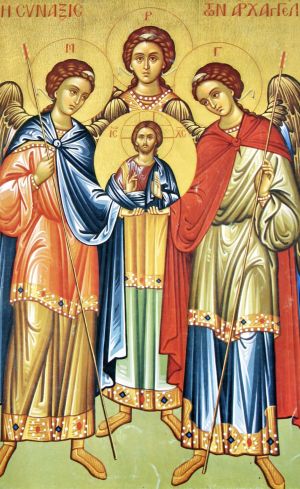
On this Way, every day we perceive the same impulse that brought Nathanael to Jesus: an instinct of incomparable Presence [Michael: Who as God?], a liberation of the shrunken consciousness [Raphael: God has healed - Rescuer], an astonishing unveiling [Gabriel: Strength of God].
In short, on the new adventures to be undertaken, the invisible world has a special relationship with humanity and creation.
In the soul and in things, we are as if guided on the right path (in an incessant, increasing, unexpected way) even through our anxieties, rebellions, crises and doubts.
[Saints Michael, Gabriel and Raphael, Archangels. September 29]
Scepticism, Faith, Character
From the ancient dream to the incarnate relationship
(Jn 1:47-51)
Today's liturgy presents Nathanael's first encounter with the Lord, whom some traditions identify as the apostle Bartholomew.
The purpose of the Call is to follow Jesus; let us see the chain of events. First of all: people are convinced by encounter, by seeing and experiencing, not by imposition.
But the Eternal One's plan takes us by surprise. Witness and sharing lead to Christ, but they are not enough - because his plan is not what people imagine or propose, what they expect and desire it to be.
To Philip's enthusiastic announcement [name of Greek origin], Nathanael [from the Hebrew Netan'El: 'God has given'] responds with a preconceived scepticism that represents us: what good can come from the most insignificant suburbs (v. 46)?
Why does the solution to our expectations not come from the palaces of power, from the exceptional magnificence of the Holy City, or from the proven and selective doctrinal prestige of the observant territory (Judea)?
Nazareth was an insignificant village of hotheads and Galilean troglodytes; Jesus was a carpenter, so he did not even own land.
The expectation of the Messiah was anchored to other manifestations of prestige, wealth, splendour and power (substituting for the authentic experience of relationship and fullness of being).
The personal encounter with Jesus and listening to his Word overcome every obstacle, leading to an explicit and convinced profession of faith.
And like Nathanael, those who devote their lives to the study of the Scriptures find Christ in them (vv. 45, 48-49).
At first, perhaps we too approached the Son of God imagining that he had the attributes of the King of a chosen people (v. 49).
Then familiarity with the Person and life experience ["Come and see": meaning of the Semitic expression in verse 46] showed us a much broader relationship with Heaven (vv. 50-51).
In following the Way proposed by the unexpected Messiah, we see the convergence of God's movement towards men and our yearning for Him. It is the realisation (and overcoming) of Jacob's ancient dream.
Those who cling to preconceptions remain under the fig tree (cf. v. 48), that is, they remain tied to the ancient religion [the rabbis taught the ancient Scriptures while sitting under trees; the fig tree was a symbol of Israel].
By remaining in expectation of magnificence and allowing ourselves to be carried away by standard notions of expected glory, we do not enter into the movement that binds our earth to Love: we will find ourselves increasingly old, bogged down and sterile - incapable of generating new creatures and being reborn.
'Israelite without deceit' (v. 47): everyone is this when - having examined - they know how to discard common opinions and teachings; when they realise that they do not agree with the Father's plan for us.
The history of salvation aims at 'greater things' (v. 50) than those already desired; normal, expected, invoked, calculated and longed for (transmitted by doctrines and 'teachers' as they are).
Even the Plan of Providence is not as people imagine or desire it to be. Situations await us that no one has ever seen before.
'God has given' [meaning of the proper name Nathanael], but everyone must be reborn.
From Nathanael, every believer makes an Exodus to transmigrate to the meaning of the name Bartholomew: 'Son of the well-ploughed field and the land of abundant furrows'.
From religiosity we will move on to Faith: the best of God's Dream in us must come. 'Greater things' than commonplaces.
Jesus is the authentic Dream of Jacob, which foreshadowed a vast descendants; further unfolded (Gen 28:10-22) and became reality.
But no one would have expected that the Messiah could be identified with the 'Son of Man' (v. 51), the One who creates abundance where there is none - and where it did not seem possible for it to expand before.
The new bond between God and human beings is in the Brother who becomes a 'close relative', who creates an atmosphere of humanisation with broad contours - not at all discriminatory.
The 'Son of Man' is the one who, having reached the height of human fulfilment, comes to reflect the divine condition and radiates it in a diffuse way - not selectively as expected.
'Successful Son': the Person with the definitive step, who in us aspires to the most expansive fullness in events and relationships, to an indestructible calibre within each one who approaches [and encounters divine signs].
It is the growth and humanisation of the people: the peaceful, true and full development of the divine plan for humanity.
'Son of Man' is therefore not a religious title, reserved, cautious, controlled and discreet, but an opportunity for all those who adhere to the Lord's proposal and reinterpret life in a creative and personal way.
They overcome their fixed and summary boundaries, making room for the Gift; welcoming from Grace the fullness of being and character, in its new and unrepeatable paths.Feeling totally and undeservedly loved, we discover other facets... we change the way we are with ourselves and read history.
In short, we can grow, fulfil ourselves, flourish, and radiate the completeness we have received - without any more closures.
On this Path, every day we feel the same impulse that led Nathanael to Jesus: an instinct of incomparable Presence [Michael: Who like God?], a liberation of shrivelled consciousness [Raphael: God has healed - Rescuer], a revelation of wonder [Gabriel: Strength of God].
In short, on the new adventures to be undertaken, the invisible world has a special relationship with humanity and creation.
In our souls and in things, we are guided along the right path (in an incessant, growing, unexpected way) even through our anxieties, rebellions, crises and doubts.
From Son of David to Son of Man
The Church is Catholic because Christ embraces all humanity in his mission of salvation. While Jesus' mission in his earthly life was limited to the Jewish people, 'the lost sheep of the house of Israel' (Mt 15:24), it was nevertheless oriented from the beginning to bring the light of the Gospel to all peoples and to bring all nations into the Kingdom of God. Faced with the faith of the Centurion in Capernaum, Jesus exclaims: "I tell you, many will come from the east and the west, and will take their places at the feast with Abraham, Isaac and Jacob in the kingdom of heaven" (Mt 8:11). This universalistic perspective emerges, among other things, from Jesus' presentation of himself not only as the "Son of David" but as the "Son of Man" (Mark 10:33), as we have also heard in the Gospel passage just proclaimed. The title "Son of Man," in the language of Jewish apocalyptic literature inspired by the vision of history in the Book of the Prophet Daniel (cf. 7:13-14), refers to the figure who comes "with the clouds of heaven" (v. 13) and is an image that heralds a completely new kingdom, a kingdom supported not by human powers, but by the true power that comes from God. Jesus uses this rich and complex expression and refers it to himself to manifest the true character of his messianism, as a mission destined for the whole of humanity and for every human being, overcoming all ethnic, national and religious particularism. And it is precisely in following Jesus, in allowing oneself to be drawn into his humanity and thus into communion with God, that one enters this new kingdom, which the Church proclaims and anticipates, and which overcomes fragmentation and dispersion.
[Pope Benedict, address to the Consistory, 24 November 2012]
God-centred and Messengers: what bishops should be like

We are celebrating this Episcopal Ordination on the Feast of the three Archangels who are mentioned by name in Scripture: Michael, Gabriel and Raphael. This reminds us that in the ancient Church - already in the Book of Revelation - Bishops were described as "angels" of their Church, thereby expressing a close connection between the Bishop's ministry and the Angel's mission. From the Angel's task it is possible to understand the Bishop's service. But what is an Angel? Sacred Scripture and the Church's tradition enable us to discern two aspects. On the one hand, the Angel is a creature who stands before God, oriented to God with his whole being. All three names of the Archangels end with the word "El", which means "God". God is inscribed in their names, in their nature. Their true nature is existing in his sight and for him. In this very way the second aspect that characterizes Angels is also explained: they are God's messengers. They bring God to men, they open heaven and thus open earth. Precisely because they are with God, they can also be very close to man. Indeed, God is closer to each one of us than we ourselves are. The Angels speak to man of what constitutes his true being, of what in his life is so often concealed and buried. They bring him back to himself, touching him on God's behalf. In this sense, we human beings must also always return to being angels to one another - angels who turn people away from erroneous ways and direct them always, ever anew, to God. If the ancient Church called Bishops "Angels" of their Church, she meant precisely this: Bishops themselves must be men of God, they must live oriented to God. "Multum orat pro populo" - "Let them say many prayers for the people", the Breviary of the Church says of holy Bishops. The Bishop must be a man of prayer, one who intercedes with God for human beings. The more he does so, the more he also understands the people who are entrusted to him and can become an angel for them - a messenger of God who helps them to find their true nature by themselves, and to live the idea that God has of them.
All this becomes even clearer if we now look at the figures of the three Archangels whose Feast the Church is celebrating today. First of all there is Michael. We find him in Sacred Scripture above all in the Book of Daniel, in the Letter of the Apostle St Jude Thaddeus and in the Book of Revelation.
Two of this Archangel's roles become obvious in these texts. He defends the cause of God's oneness against the presumption of the dragon, the "ancient serpent", as John calls it. The serpent's continuous effort is to make men believe that God must disappear so that they themselves may become important; that God impedes our freedom and, therefore, that we must rid ourselves of him.
However, the dragon does not only accuse God. The Book of Revelation also calls it "the accuser of our brethren..., who accuses them day and night before our God" (12: 10). Those who cast God aside do not make man great but divest him of his dignity. Man then becomes a failed product of evolution. Those who accuse God also accuse man. Faith in God defends man in all his frailty and short-comings: God's brightness shines on every individual. It is the duty of the Bishop, as a man of God, to make room in the world for God, to counter the denials of him and thus to defend man's greatness. And what more could one say and think about man than the fact that God himself was made man? Michael's other role, according to Scripture, is that of protector of the People of God (cf. Dn 10: 21; 12: 1). Dear friends, be true "guardian angels" of the Church which will be entrusted to you! Help the People of God whom you must lead in its pilgrimage to find the joy of faith and to learn to discern the spirits: to accept good and reject evil, to remain and increasingly to become, by virtue of the hope of faith, people who love in communion with God-Love.
We meet the Archangel Gabriel especially in the precious account of the annunciation to Mary of the Incarnation of God, as Luke tells it to us (1: 26-38). Gabriel is the messenger of God's Incarnation. He knocks at Mary's door and, through him, God himself asks Mary for her "yes" to the proposal to become the Mother of the Redeemer: of giving her human flesh to the eternal Word of God, to the Son of God. The Lord knocks again and again at the door of the human heart. In the Book of Revelation he says to the "angel" of the Church of Laodicea and, through him, to the people of all times: "Behold, I stand at the door and knock; if any one hears my voice and opens the door, I will come in to him and eat with him, and he with me" (3: 20). The Lord is at the door - at the door of the world and at the door of every individual heart. He knocks to be let in: the Incarnation of God, his taking flesh, must continue until the end of time. All must be reunited in Christ in one body: the great hymns on Christ in the Letters to the Ephesians and to the Colossians tell us this. Christ knocks. Today too he needs people who, so to speak, make their own flesh available to him, give him the matter of the world and of their lives, thus serving the unification between God and the world, until the reconciliation of the universe. Dear friends, it is your task to knock at people's hearts in Christ's Name. By entering into union with Christ yourselves, you will also be able to assume Gabriel's role: to bring Christ's call to men.
St Raphael is presented to us, above all in the Book of Tobit, as the Angel to whom is entrusted the task of healing. When Jesus sends his disciples out on a mission, the task of proclaiming the Gospel is always linked with that of healing. The Good Samaritan, in accepting and healing the injured person lying by the wayside, becomes without words a witness of God's love. We are all this injured man, in need of being healed. Proclaiming the Gospel itself already means healing in itself, because man is in need of truth and love above all things. The Book of Tobit refers to two of the Archangel Raphael's emblematic tasks of healing. He heals the disturbed communion between a man and a woman. He heals their love. He drives out the demons who over and over again exhaust and destroy their love. He purifies the atmosphere between the two and gives them the ability to accept each other for ever. In Tobit's account, this healing is recounted with legendary images. In the New Testament, the order of marriage established in creation and threatened in many ways by sin, is healed through Christ's acceptance of it in his redeeming love. He makes marriage a sacrament: his love, put on a cross for us, is the healing power which in all forms of chaos offers the capacity for reconciliation, purifies the atmosphere and mends the wounds. The priest is entrusted with the task of leading men and women ever anew to the reconciling power of Christ's love. He must be the healing "angel" who helps them to anchor their love to the sacrament and to live it with an ever renewed commitment based upon it. Secondly, the Book of Tobit speaks of the healing of sightless eyes. We all know how threatened we are today by blindness to God. How great is the danger that with all we know of material things and can do with them, we become blind to God's light. Healing this blindness through the message of faith and the witness of love is Raphael's service, entrusted day after day to the priest and in a special way to the Bishop. Thus, we are prompted spontaneously also to think of the Sacrament of Reconciliation, the Sacrament of Penance which in the deepest sense of the word is a sacrament of healing. The real wound in the soul, in fact, the reason for all our other injuries, is sin. And only if forgiveness exists, by virtue of God's power, by virtue of Christ's love, can we be healed, can we be redeemed.
[Pope Benedict, homily for the episcopal ordination, 29 September 2007]
Angels and Archangels
1. Our catechesis on God, creator of the world, cannot conclude without devoting adequate attention to a specific content of divine revelation: the creation of purely spiritual beings, which Sacred Scripture calls 'angels'. This creation appears clearly in the Symbols of Faith, particularly in the Nicene-Constantinopolitan Creed: "I believe in one God, the Father Almighty, Creator of heaven and earth, of all things visible and invisible." We know that man enjoys a unique position within creation: thanks to his body, he belongs to the visible world, while his spiritual soul, which gives life to his body, places him almost on the border between the visible and invisible creation. According to the Creed professed by the Church in the light of revelation, the latter includes other beings, purely spiritual, not belonging to the visible world, even though they are present and active in it. They constitute a specific world.
2. Today, as in times past, there is much discussion, with varying degrees of wisdom, about these spiritual beings. It must be acknowledged that there is sometimes great confusion, with the consequent risk of passing off as Church teaching on angels what does not belong to the faith, or, conversely, of omitting some important aspect of revealed truth. The existence of spiritual beings, whom Sacred Scripture usually calls 'angels', was already denied in Christ's time by the Sadducees (cf. Acts 23:8). Materialists and rationalists of all ages also deny it. Yet, as a modern theologian astutely observes, "if one wanted to get rid of angels, one would have to radically revise Sacred Scripture itself, and with it the whole history of salvation" (A. Winklhofer, Die Welt der Engel, Ettal 1961, p. 144, note 2; in Mysterium Salutis, II, 2, p. 726).. The whole Tradition is unanimous on this question. The Creed of the Church is basically an echo of what Paul writes to the Colossians: "For through him (Christ) all things were created, those in heaven and those on earth, the visible and the invisible: Thrones, Dominions, Principalities, Powers, all things were created through him and for him" (Col 1:16). That is, Christ, who as the eternal Son-Word and consubstantial with the Father is "begotten before all creatures" (Col 1:15), is at the centre of the universe, as the reason and cornerstone of all creation, as we have already seen in previous catechesis and as we will see again when we speak more directly about him.
3. The reference to the “primacy” of Christ helps us to understand that the truth about the existence and work of angels (good and evil) is not the central content of God’s word. In revelation, God speaks first of all "to men . . . and converses with them, inviting them and admitting them to communion with himself," as we read in the Second Vatican Council's constitution Dei Verbum (Dei Verbum, 2). Thus, 'the profound truth . . . both of God and of the salvation of men' is the central content of revelation, which 'shines forth' most fully in the person of Christ. The truth about angels is in a sense "collateral," yet inseparable from the central revelation, which is the existence, majesty, and glory of the Creator shining forth in all "visible" and "invisible" creation and in God's saving action in human history. Angels are therefore not creatures of primary importance in the reality of revelation, yet they belong fully to it, so much so that at certain moments we see them performing fundamental tasks on behalf of God himself.
4. According to revelation, everything that belongs to creation is part of the mystery of divine Providence. This is stated in an exemplary concise manner by Vatican I, which we have already quoted several times: "Everything that God has created, he preserves and directs with his providence, 'extending his power from one end of the universe to the other and governing all things with his goodness' (cf. Wis 8:1). 'Everything is naked and open to his eyes' (cf. Heb 4:13), 'even what will take place by the free initiative of creatures'" (DS 3003). Providence therefore also embraces the world of pure spirits, who are even more fully rational and free beings than human beings. In Sacred Scripture we find valuable insights concerning them. There is also the revelation of a mysterious yet real drama that affected these angelic creatures, without anything escaping the eternal Wisdom, which with strength ("fortiter") and at the same time with kindness ("suaviter") brings everything to fulfilment in the kingdom of the Father, the Son and the Holy Spirit.
5. We recognise first of all that Providence, as the loving Wisdom of God, manifested itself precisely in the creation of purely spiritual beings, so that the likeness of God might be better expressed in them, who far surpass all that is created in the visible world, together with man, who is also an indelible image of God. God, who is absolutely perfect Spirit, is reflected above all in spiritual beings who, by nature, that is, because of their spirituality, are much closer to him than material creatures, and who constitute almost the 'environment' closest to the Creator. Sacred Scripture offers a fairly explicit testimony to this maximum closeness to God of the angels, of whom it speaks, in figurative language, as God's 'throne', his 'hosts', his 'heaven'. It has inspired the poetry and art of the Christian centuries, which present angels to us as the 'court of God'.
(Pope John Paul II, General Audience, 9 July 1986)
8. Finally, it is worth noting that the Church honours three figures of angels with liturgical worship, who are called by name in Sacred Scripture. The first is Michael the Archangel (cf. Dan 10:13, 20; Rev 12:7; Jude 9). His name succinctly expresses the essential attitude of good spirits. "Mica-El" means "Who is like God?" This name expresses the salvific choice by which angels "see the face of the Father" who is in heaven. The second is Gabriel, a figure linked above all to the mystery of the Incarnation of the Son of God. (cf. Lk 1:19-26) His name means 'my power is God' or 'power of God', as if to say that, at the height of creation, the Incarnation is the supreme sign of the almighty Father. Finally, the third archangel is called Raphael. "Rafa-El" means "God heals". He is known to us from the story of Tobit in the Old Testament (cf. Tob 12:15 ff.), which is so significant in terms of entrusting God's little children, who are always in need of care, protection and guidance, to the angels.
On reflection, we see that each of these three figures - Mica-El, Gabri-El, Rafa-El - reflects in a particular way the truth contained in the question raised by the author of the Letter to the Hebrews: "Are they not all ministering spirits, sent forth to serve those who are to inherit salvation?" (Heb 1:14).
[Pope John Paul II, General Audience, 6 August 1986]
Same Vocation, Brethren in Vocation
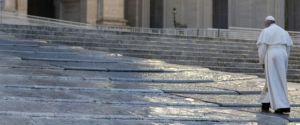
A true act of entrustment to the archangels Michael, Raphael and Gabriel, asking them to help us in the fight against the temptations of the devil, to bring us the good news of salvation and to take us by the hand so that we do not stray from the path of life, thus cooperating in 'God's plan of salvation'. This is the prayer recited by the Pope during Mass celebrated in the chapel of Casa Santa Marta on Friday, 29 September, the feast day of the holy archangels Michael, Gabriel and Raphael.
"In the opening prayer at the beginning of Mass," Francis immediately pointed out, "we prayed as follows: 'O God, who calls angels and men to cooperate in your plan of salvation, grant us pilgrims on earth the protection of the blessed spirits, who stand before you in heaven to serve you and contemplate the glory of your face.'"
"One thing that attracts attention from the outset," the Pope explained, "is that angels and we have the same vocation: to cooperate in God's plan of salvation; we are, so to speak, 'brothers' in vocation." Angels "stand before the Lord to serve him, to praise him and also to contemplate the glory of the Lord's face: angels are great contemplatives, they contemplate the Lord; they serve and contemplate. But the Lord also sends them to accompany us on the path of life."
"Today we celebrate three of these archangels," said the Pontiff, "because they played an important role in the history of salvation. And we celebrate these three because they also play an important role in our journey towards salvation."
Starting with "Michael — the great Michael — the one who wages war against the devil," explained the Pope, referring to the passage from Revelation (12:7-12) proposed by the liturgy and emphasising: "In the end, when the dragon fought against Michael, when he was defeated, the text says: 'The great dragon, the ancient serpent, the one called the devil and Satan, who deceives the whole inhabited earth, was thrown down.'" The devil is 'our enemy' and this, explained the Pontiff, is 'a vision of the end of the world, but in the meantime he causes trouble, he causes trouble in our lives: he always tries to seduce, as he seduced our mother Eve, with convincing arguments: "Eat the fruit, it will do you good, it will teach you many things"'. And so, "like the serpent, he begins to seduce, to seduce, and then, when we have fallen, he accuses us before God: 'He is a sinner, he is mine!'"
So, Francis reiterated, '"this is mine" is precisely the devil's word, he wins us over by seduction and then accuses us before God: "He is mine, I will take him with me". And "Michael wages war against him, the Lord asked him to wage war: for us who are on our way, in this life of ours, towards heaven, Michael helps us to wage war against him, not to let ourselves be seduced by this evil spirit who deceives us with seductions." Precisely "for this reason, today we thank St Michael for this work he does for the Church and for each one of us, and we ask him to continue to defend us.".
The second archangel, "Gabriel, is the one who brings good news, the one who brought the news to Mary, to Zechariah, to Joseph," Francis continued. Gabriel, therefore, brings "good news and the good news of salvation." He too "is with us and helps us on our journey." Especially when, as often happens, "with so much bad news or news that has no substance, we forget the good news, that of the Gospel of God, of salvation, that Jesus came to us and brought us God's salvation." And it is precisely "Gabriel who reminds us of this, and for this reason today we ask Gabriel to always announce the good news to us." Gabriel, Francis prayed, "remind us of God's good news, of what God has done."
"And then there is the third archangel, Raphael, who helps us on our journey, who walks with us," said the Pontiff. "Michael defends us, Gabriel gives us the good news, and Raphael takes us by the hand and walks with us, helping us with the many things that happen along the way." To Raphael, "we must ask: please, do not let us be seduced into taking the wrong step, into taking the wrong path; guide us on the right path, on the good path. You are our companion on the journey, as you were Tobias' companion on his journey."
The three archangels, Francis continued, "are before God, they are our companions because they have the same vocation in the mystery of salvation: to carry forward the mystery of salvation. They adore God, they glorify God, they serve God." And so, "today we simply pray to the three archangels Michael, Gabriel and Raphael," the Pope invited, suggesting the words of the prayer: "Michael, help us in our struggle; everyone knows what struggle they have in their lives today, each of us knows the main struggle, the one that puts our salvation at risk. Help us, Gabriel, bring us news, bring us the good news of salvation, that Jesus is with us, that Jesus has saved us and gives us hope. Raphael, take us by the hand and help us on our way so that we do not stray from the path, so that we do not remain stationary: always walking, but helped by you."
[Pope Francis, St. Marta, in L'Osservatore Romano, 30/09/2017]
Two Sons: «No» and «Me!». Reversed Moral, sidelined stars
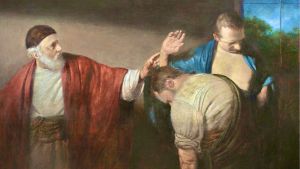
Greatness in the littleness
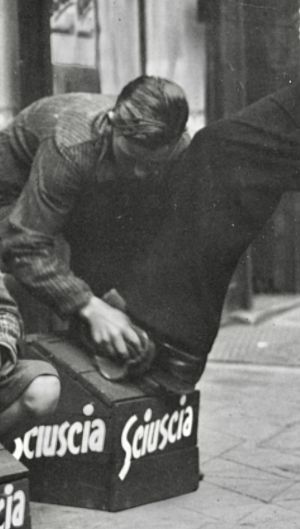
Initiates, circles, prejudices, or different paths
(Lk 9:46-50)
Redemption presents two essential aspects: the Gift of the Call and the aptitude to accept the Proposal.
From wave to wave this realizes a new Creation of the person, of fraternity, of the Church, and of the world.
Thus Faith: a relationship of welcome and incisiveness, wich reverberates; always young. Such is spiritual childhood.
It is for this reason that Greek text speaks of workshop boy, the servant of the house [«paidìon»: vv.47-48] as a model of disciple close to the Lord - ready to shoot in front of every life request.
Greatness in smallness.
But in this passage Lk joins that of the servant, with an idea of "first period" typical of those who present themselves at the threshold of communities: «mikròi» [v.48: incipients and shakies].
Often those who have less energy.
However, instead of an unconditional welcome, the latter feel the mistrust of veterans, who disdain dialogue and confrontation; always beware of novelties - and the danger of to be "overshadowed".
The unprecedented life that could arise is immediately suffocated or encapsulated by self-styled experts (v.49), neglecting and dampening the renewed God’s Gift to the assembly.
In short, the Community must return to its immediate and spontaneous Principle, without making the arrangements chronic.
The «following together with us» [instead of following Him personally, v.49] is contrasted with the simple richness of spiritual childhood and service, in the wider coexistence and sharing.
We also know in ourselves the cravings for domination; but those who become «minimum», «servant», «voiceless», leave ample room for the strength and tolerant - transmuting - work of life.
The New radiates the unforeseeable divine and human. And the boldness of modesty that listens and has respect for one’s own soul and brother as a gift-proposal, can make everyone find again, from within.
Pure freshness that evokes the joy of Grace; that keeps a clear eye on everything - even on the wiles of others, because they too can make us take different directions.
The place of honor is so coveted, but those who remain unpretentious can be much better available to an unparalleled condition, and to fraternity that respects the vocation of each one.
In this way, let us avoid punctuating the present in Christ with the models (vv.49-50) because in following the Lord not everyone walks in the same mode.
The Coming tide wants to drag us on the territory of growth without mortification: inside, there exists and it is eloquent a secret time and space, that inhabit us.
They resonate in harmony with the Gospels. There is no need to "get back in step" of all time always, nor just find a way out.
Let’s surrender to the young and creative instinct. It would be the journey of Joy: in the new reality and eminent Beauty, from discomfort.
To internalize and live the message:
What nourishes your desire for God, for youth, for brothers and sisters?
[Monday 26th wk. in O.T. September 28, 2026]
Greatness in smallness
Initiates, circles, prejudices, and different paths - from "emptiness"
(Lk 9:46-50)
According to the Tao Tê Ching (LXXXI) "The saint does not accumulate; the more he has done for others, the more he possesses; the more he has given to others, the more he abounds".
Redemption has two essential aspects: the Gift of the Call and the ability to accept the Proposal.
It brings about a new Creation of the person, of the fraternity, of the Church, and of the world.
Such is Faith: a relationship of acceptance and incisiveness that reverberates, always young. Such is spiritual infancy.
This is why the Greek text speaks of the shop boy, the house servant ["paidìon": vv.47-48] as a model of the disciple close to the Lord - ready to spring up in the face of every request for life.
Greatness in smallness.
But in this passage Lk also connects to that of the servant an idea of "first period" typical of those who present themselves at the threshold of the communities: "mikròi" [v.48: incipient and unsteady]. Often those with the least energy.
However, instead of an unconditional welcome, they feel the distrust of the veterans, who disdain dialogue and confrontation; always wary of new things - and the danger of being 'overshadowed'.
The unprecedented life that might arise is immediately stifled or pigeonholed by self-styled experts (v.49), neglecting and dampening the renewed Gift of God to the assembly.
In short, the Community must return to its immediate and spontaneous Principle: fraternal and universal love - re-actualised by the knocking at the door of the churches of the unimportant in society.
But we often go as if to war, because the top of the class only demand to be served and revered - by the new ones and those destined to efforts, obligations... and formulation of impersonal intentions.
So much for total acceptance: the little one is considered a usurper of private property - he who would indeed make the actors of holiness finally become 'great', resembling the Father.
On the other hand, those in charge on the ground continue to dry up things and situations, and stiffen everyone within immobile forms.
Even the missionary activity of outsiders to the official group is denigrated, suffers derision, and encounters contrived obstacles that attempt to chronicle the arrangements.
Thus evangelisation is weighed down: not service to the Lord and brothers, but territory of conquest to feel protagonists - and the many competitors seem dangerous... to self-assertion.
Such riches of 'following along with us' (v.49) instead of personally following Him, are contrasted with the simple riches of spiritual childhood and service in broader coexistence and sharing.
We also know in ourselves the delusions of dominance that transcend humility, the anxieties of memorable feats and important deeds that we deem more meaningful than understanding and fluency.
But those who make themselves 'minimal' leave ample space for the tolerant and transmuting power and work of life.
He perceives the inner self and takes note of new things, to truly exist and not feel orphaned - indeed, to shatter situations and bring attention to other dimensions.
The audacity of modesty that listens and has respect for one's own soul and for one's brother as a gift and a proposal, can make one rediscover within each the 'servant' and the 'voiceless' waiting to be called back to life.
Pure freshness that evokes the joy of Grace; that keeps a clear eye on everything, even on the decision-making wiles of others, because they too can take us in different directions.
The place of honour is much coveted, but those who remain unassuming can much better be themselves and make themselves available to a condition of the other kingdom - to the fraternity that respects the incomparable vocation of each one.
We must not dot the present in Christ with models, for in following the Lord not everyone walks in the same way. And the new radiates the unpredictable.
Simplicity and upheaval: Rebirth without mortification
It is not a matter of finding excuses to justify laziness in the spiritual quest and exodus: small, spontaneous and natural - but rich inside - one becomes, lowering oneself from one's character.
It is the art of making life dense and complex, multifaceted and vast, then simplifying, without dispersing.
Often all it takes is to observe in a singular and personal way, or to rest one's gaze in a different place, to find a thousand unexpected and self-regenerating outlets.
Indeed, the solution to the complications that stifle the soul and the experience of the fullness of being we seek is inherent in our own questioning.
Not infrequently, it belongs to preconceptions rather than reality or the tide that comes, which wants to drag us into the territory of growth - simply, with its own rhythm.
We are obnubilated by thoughts. But there is an innate knowledge that watches over our uniqueness and does not intoxicate the soul.It exists and is eloquent within, a secret time and space that inhabits us: they resonate in tune with the Gospels.
There is no need to 'catch up' with the past, or just find a way out.
If we surrender to such a young and creative instinct, wiser, comforted by the Word, the Core of Being will come forth with its primordial energies.
Virtues that recreate the earth like the mythical Child of the World: a little Jesus - inside and outside of us.
Thus we annihilate even the disaster of the global crisis, and rise again: each in his own way (which is not 'his' in the sense of arbitrariness).
And when we are able to accept the events as a Call to come out of our cages so that we perceive the Elsewhere, we will find an intimate result.
The thorn in the side will unravel and relaunch the special path; it will accentuate the possibilities of exchanging unseen gifts, not stereotypes - without even experiencing fatigue, and the subtle dissatisfactions we know.
Projected totally into external problems, we overload our mind and spirit with expectations induced by cultural paradigms in vogue [whether antiquated or disembodied] or to which we are accustomed.
Thus existence quickly becomes conformist again, stagnant in the usual means and goals, devoid of new peaks or authentic relationships and unimagined vitality.
The diktat of the objective induced by the roles we imagined acquired exhausts us, and the instituted idea of perfection sterilises the humus - it impoverishes within.
The reductionism in place puts actual needs in brackets.
The one-sidedness then lets ways of being prevail, the roles already expressed; it withers relationships, making environments (all impermeable and established) murky again.
Fixed ideas condition life and do not allow the inner organism - psychic and spiritual - to feed on transparent, unprejudiced truths; and sincere feelings, which would give us breath.
Freeing ourselves from the usual ways of going about things, from apodictic judgments and convictions, would conversely allow us to break the chains that hold back the luminous and rainbow faculties.
As well as the ability to correspond to the unheard-of Personal Calling, opening up other views.
The 'emptiness' advocated by the Tao only resembles in earshot the 'emptiness' of other, decidedly more depersonalising Eastern wisdom.
The Oriental teaching of the Way does not lose the sense of importance and exceptionality of the individual seed.
On the contrary, it fully respects its propulsive vocation. Remaining ourselves, not only in spite of - but because of - the obligatory abyss we have crossed.
By minimising the intentions of revisiting the old maquillage - and all non-epochal convictions, which do not call us, nor would we like to - we clear our souls of ballast.
In this way we will bring out its exceptional specific weight and unrepeatable character, in order to lighten it and fill it only with what is needed to activate the new paths that await us.
The slowing down and letting go that Lao Tse advocates does not lead to the insignificant flattening of differences, but to dilating the sacred and natural times of wise action, and appreciating its value.
Stages and goals that do not correspond to us will not bring fulfilment.
Indeed, artifices force us to amplify relationships - but only to cover up the problem with ourselves, or even with a couple, a group, a movement, a community, a work environment.
While we wish to clothe [and not depose] with a sense of permanence the character of before - a cliché that does not correspond to us - we go round in circles. We burden ourselves with outsized expectations, with useless stress that makes no room for love [friendship with which one encounters oneself, things, sisters and brothers, the many events].
Natural Wisdom, even bitter events, and the Bible, remind us that the face... each path, the name, and the rhythm, are ours alone.
So too is the synthesis: each one is called upon to write his own eccentric glad tidings for the benefit of the woman and man of all times (Jn 20:30-31).
Please note: Fraternity is not levelling:
"But there are many other things that Jesus did, which if they were written down one by one, I think that not even the world itself could contain the books that should be written" (Jn 21:25).
That would be the journey of Joy: into the new reality and eminent Beauty, out of discomfort.
To internalise and live the message:
What fuels your desire for God and brethren?
Little ones: Sign of God

God’s sign is simplicity. God’s sign is the baby. God’s sign is that he makes himself small for us. This is how he reigns. He does not come with power and outward splendour. He comes as a baby – defenceless and in need of our help. He does not want to overwhelm us with his strength. He takes away our fear of his greatness. He asks for our love: so he makes himself a child. He wants nothing other from us than our love, through which we spontaneously learn to enter into his feelings, his thoughts and his will – we learn to live with him and to practise with him that humility of renunciation that belongs to the very essence of love. God made himself small so that we could understand him, welcome him, and love him. The Fathers of the Church, in their Greek translation of the Old Testament, found a passage from the prophet Isaiah that Paul also quotes in order to show how God’s new ways had already been foretold in the Old Testament. There we read: "God made his Word short, he abbreviated it" (Is 10:23; Rom 9:28). The Fathers interpreted this in two ways. The Son himself is the Word, the Logos; the eternal Word became small – small enough to fit into a manger. He became a child, so that the Word could be grasped by us. In this way God teaches us to love the little ones. In this way he teaches us to love the weak. In this way he teaches us respect for children. The child of Bethlehem directs our gaze towards all children who suffer and are abused in the world, the born and the unborn. Towards children who are placed as soldiers in a violent world; towards children who have to beg; towards children who suffer deprivation and hunger; towards children who are unloved. In all of these it is the Child of Bethlehem who is crying out to us; it is the God who has become small who appeals to us. Let us pray this night that the brightness of God’s love may enfold all these children. Let us ask God to help us do our part so that the dignity of children may be respected. May they all experience the light of l ove, which mankind needs so much more than the material necessities of life.
[Pope Benedict, Christmas homily 24 December 2006]
The great thinker Romano Guardini wrote that the Lord “is always close, being at the root of our being. Yet we must experience our relationship with God between the poles of distance and closeness. By closeness we are strengthened, by distance we are put to the test” (Pope Benedict)
Il grande pensatore Romano Guardini scrive che il Signore “è sempre vicino, essendo alla radice del nostro essere. Tuttavia, dobbiamo sperimentare il nostro rapporto con Dio tra i poli della lontananza e della vicinanza. Dalla vicinanza siamo fortificati, dalla lontananza messi alla prova” (Papa Benedetto)
The present-day mentality, more perhaps than that of people in the past, seems opposed to a God of mercy, and in fact tends to exclude from life and to remove from the human heart the very idea of mercy (Pope John Paul II)
La mentalità contemporanea, forse più di quella dell'uomo del passato, sembra opporsi al Dio di misericordia e tende altresì ad emarginare dalla vita e a distogliere dal cuore umano l'idea stessa della misericordia (Papa Giovanni Paolo II)
«Religion of appearance» or «road of humility»? (Pope Francis)
«Religione dell’apparire» o «strada dell’umiltà»? (Papa Francesco)
In the crucified Jesus a kind of transformation and concentration of the signs occurs: he himself is the “sign of God”, especially in the mystery of his Death and Resurrection (Pope John Paul II)
In Gesù crocifisso avviene come una trasformazione e concentrazione dei segni: è Lui stesso il "segno di Dio", soprattutto nel mistero della sua morte e resurrezione (Papa Giovanni Paolo II)
However, the king was not discouraged and sent his servants out to seek other guests to fill his banquet hall. Thus the aspect of the refusal of those initially invited caused the invitation to be extended to all [Pope Benedict]
Il re però non si scoraggia e invia i suoi servi a cercare altri commensali per riempire la sala del suo banchetto. Così il rifiuto dei primi ha come effetto l’estensione dell’invito a tutti [Papa Benedetto]
Faith in God opens before us the horizon of a sure hope, one which does not disappoint; it indicates a solid foundation on which to base one’s life without fear; it demands a faith-filled surrender into the hands of the Love which sustains the world (Pope Benedict)
La fede in Dio apre all’uomo l’orizzonte di una speranza certa che non delude; indica un solido fondamento sul quale poggiare, senza paura, la propria vita; richiede l’abbandono, pieno di fiducia, nelle mani dell’Amore che sostiene il mondo (Papa Benedetto)
The "new evangelization" faces this challenge. It must work to ensure that people recover the awareness that in Christ evil can be conquered with good (Pope John Paul II)
La “nuova evangelizzazione” affronta questa sfida. Essa deve impegnarsi perché tutti gli uomini recuperino la consapevolezza che in Cristo è possibile vincere il male con il bene (Papa Giovanni Paolo II)
Many saints experienced the night of faith and God’s silence — when we knock and God does not respond — and these saints were persevering (Pope Francis)
Tanti santi e sante hanno sperimentato la notte della fede e il silenzio di Dio – quando noi bussiamo e Dio non risponde – e questi santi sono stati perseveranti (Papa Francesco)
In some passages of Scripture it seems to be first and foremost Jesus’ prayer, his intimacy with the Father, that governs everything (Pope Francis)
In qualche pagina della Scrittura sembra essere anzitutto la preghiera di Gesù, la sua intimità con il Padre, a governare tutto (Papa Francesco)








duevie.art
don Giuseppe Nespeca
Tel. 333-1329741
Disclaimer
Questo blog non rappresenta una testata giornalistica in quanto viene aggiornato senza alcuna periodicità. Non può pertanto considerarsi un prodotto editoriale ai sensi della legge N°62 del 07/03/2001.
Le immagini sono tratte da internet, ma se il loro uso violasse diritti d'autore, lo si comunichi all'autore del blog che provvederà alla loro pronta rimozione.
L'autore dichiara di non essere responsabile dei commenti lasciati nei post. Eventuali commenti dei lettori, lesivi dell'immagine o dell'onorabilità di persone terze, il cui contenuto fosse ritenuto non idoneo alla pubblicazione verranno insindacabilmente rimossi.