


don Giuseppe Nespeca
Giuseppe Nespeca è architetto e sacerdote. Cultore della Sacra scrittura è autore della raccolta "Due Fuochi due Vie - Religione e Fede, Vangeli e Tao"; coautore del libro "Dialogo e Solstizio".
Teach us to pray: the ‘Cross-inside’
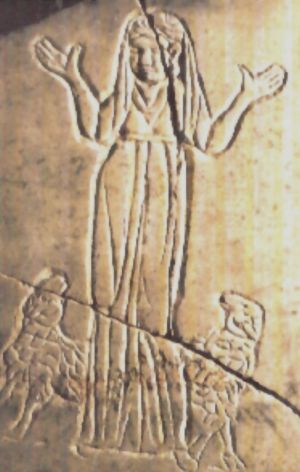
Gaze no longer positioned outside
Lk 11:1-13 (v.4c)
«When you pray, do not babble like the pagans, for they think they will be heard because of their wordiness» (Mt 6:7; cf. Lk 11:1).
The God of religions was named with an overabundance of high-sounding honorific epithets, as if he craved ever more numerous ranks of incensers.
The «Father» is not accompanied by prestigious titles. A child does not address the parent as a very high, eternal and omnipotent, but the a reliable family Person who transmits life to him.
And the son does not imagine that he has to offer external cries and acknowledgments: the Father looks at needs, not merits.
«Et ne nos inducas in tentationem»: ancient Prayer of the sons.
«Do not induce us [Lead us not into]» is (in the Latin and Greek sense: «until the end») an ancient Symbol of the ‘reborn in Christ’, in the experience of real life.
In religions there are clearly opposed demons and angels: disordered and dark powers, contrary to the bright and "right" ones.
But by dint of relegating the former, the worst continually resurface, until they win the game and spread.
In the lives of the saints we see these great women and men strangely always under temptation - because they disdain evil, therefore they do not know it.
Gradually, however, the little constant naggings becomes overwhelming crowds.
The persons of Faith do not act according to pre-established and superficial models, not even religious ones; they are aware that they are not heroes or paradigm phenomena.
That is why they rely on. They let intimate problems go by: understood its strength!
This is the meaning of the formula of the Our Father, in its original sense: «and lead us not into [the end of] temptation [trial] (because we know our weakness)».
If, on the other hand, our 'counterpart' becomes a protagonist, a one-sided pivot, a constant afterthought, and a block, we’re done for.
Pain, failures, sadness, frustrations, weaknesses, a thousand anxieties, too many falls, accustom us to experience transgressions as part of ourselves: Condition to be evaluated, not "guilt" to be cut horizontally.
In the process of true salvific transmutation, that signal speaks of us: within a deviation or the eccentricity there is a secret or a knowledge to be found, for a ‘new personal birth’.
Looking at the discomforts and oppositions, we realize that these critical sides of being become like a malleable magma, which approaches our healing more quickly. As if through a permanent, radical conversion… because it involves and belongs to us; not in peripheral mode, but basically, of Seed and Nature.
Absorbed patterns and beliefs do not allow us to understand that the passionate life is composed of opposing states, of competitive energies - which must not be disguised in order to be considered decent people.
Perceiving and integrating such depths, we lay down the idea and atmosphere of impending danger, devoid of further opportunity; only for death.
We become mature, without dissociation or hysterical states resulting from contrived identifications, nor disesteem for an important part of us.
In short, straits and "crosses" have something to tell us.
They shake the soul to the root, sweep away the absorbed masks, ignite the person, and save the life.
In this way, inconveniences and anxieties help us. They hide capabilities and possibilities that we do not yet see.
In the virtue of the shaky yet unique exceptionality for each person, here is the true journey opening up.
Path of the Father and of the heart, Way that wants to guide us to alternative trajectories, new dimensions of existence.
Difference between Faith and ancient religiosity [in the sense of the ‘Cross-within’]?
It lies in the realisation that only the sick, are healed; only the incomplete free from attachments, grow.
Only those who limp along and let go, become free; they find their voice again, and evolve.
So by falling, by losing themselves, by «feeling like nobody», they spring forward.
[Wednesday 27th wk. in O.T. October 7, 2026]
Teach us to pray: the Cross within
No longer looking outward
(Lk 11:1-4)
In the communities of Matthew and Luke, the "prayer" of the sons - the «Our Father» - does not arise as an oration, but as a formula of acceptance of the Beatitudes (in its sections: invocation to the Father, the human situation and the coming of the Kingdom, liberation).
In any case, the full difference between religious prayer and expression animated by Faith lies in the distinction between: Performance or Perception.
[As Pope Francis says: 'Praying is not talking to God like a parrot'. 'Our God does not need sacrifices to win his favour! He does not need anything'.
In religions, in fact, it is the praying subject who 'prays', expressing requests, exposing himself, praising, and so on.
Again in Thomism, the virtue of religion was considered an aspect of the cardinal virtue of Justice. In other words, the right position of man before God is that of one who recognises a duty of worship (worship that comes from him) towards the Creator; and man - the subject of prayer - fulfils this duty.
Conversely, the son of God in Christ is a 'listener' to the Logos: he is the one who listens, perceives, welcomes: in short, the authentic Subject who expresses himself is God himself.
He reveals himself through the Word, in the reality of events, in the folds of universal and personal history, in the particular Call he grants us, even in intimate images.
These become plastic expressions of Mystery (and personal Vocation) which, wave upon wave, even guide the soul.
"When you pray, do not babble like the pagans, for they think that they will be heard because of their many words" (Mt 6:7; cf. Lk 11:1).
In Faith, we participate in the authentic prayer of Jesus himself - Person in us - addressed to the Father, first of all in "listening" to His providential proposals: as if, united with our Friend and Brother, we were entering into this Dialogue - filled with even figurative suggestions.
But it is the Only Begotten Son who prays; we are not the great protagonists. Only in this sense can the act of prayer be defined as "of the children" or "Christian".
Our life of prayer is not an ascetic exercise - much less a duty or a shopping list - because God does not need to be informed about something He had not thought of before.
As the Master says, the Father knows what we need (Mt 6:8). Therefore, no effort is necessary to turn to Him [no agonising struggle to focus on ourselves and step outside ourselves...]. Nor does He oblige us to say too many (or the right) words.
Authentic prayer is not a repetition, nor a leap into the external darkness, but rather a searching and sifting, a gift. It is a plunge into our being, where the intimacy of the Agreement seeks to understand the Author's signature in the heart of events, even of emotions.
The prayer of the man of Faith does not aim to introduce God's will and the reality of situations into narrow horizons and already understandable judgements, as if pushing it into unnatural harmonies.
Prayer is a perceptive leap without repetitive identities, from one's own core - which eliminates mental toxins; and thus becomes an experience of fullness of being, in search of global and personal meaning.
The praying man is not even prey to some kind of excited (ridiculous or soporific) paroxysmal state: he is welcoming an Action - a Work of paradoxical suspension, on the path towards his own Beatitude.
Prayer is even an aesthetic gesture in Christ. Precisely because it tends to jolt our everyday imagination, so that it may be shaped according to the guiding vision that dwells within. It shifts and almost directs the eye of the soul, and the ecclesial experience.
A virtue-event that gradually chisels away at that very personal image that brings to awareness a goal or a communal reality of praise, or rather an innate narrative... A voice of unknown energies, for important changes.
Step by step, this perception and dialogue that emerges leads us to internalise hidden glimpses of the path that belongs to us: a missionary spirit that seeks harmony, the creation of a living environment, and so on. Even destabilising ones.
Only in this sense is prayer beneficial to us.
Nor can it be reduced to a group distinction, because while recognising themselves in certain knowledge, each person has their own language of the soul, a significant history and sensitivity, an unprecedented iconic world (also in terms of dreamed micro and macro relationships), as well as a unique task of salvation.
For this reason too – although in relation to the community of reference – the Symbol of those reborn in Christ who turn to the Father has come down to us in different versions: Matthew, Luke, Didache [‘Teaching’, perhaps contemporary with the last writings of the New Testament, a sort of early Catechism].
To introduce us to specific considerations, it is appropriate to ask ourselves: why does Jesus not frequent places of worship to recite traditional formulas, but rather to teach?And there is never any mention of the apostles praying with him: it seems that they only wanted a formula to distinguish themselves from other rabbinical schools (cf. Lk 11:1).
The Lord stands firm only on the mentality and lifestyle: he proceeds on fundamental options - and insists on a perception aimed at welcoming, rather than on our saying and organising (which are not deeply imbued with a well-founded eternity).
Father
The God of religions was named with an abundance of high-sounding honorific epithets, as if He craved ever larger crowds of flatterers.
The Father does not surround himself with prestigious titles. A child does not address his parent as someone who is very high, eternal or exalted, but as the one who gives him life.
And the son does not imagine that he must offer cries and external acknowledgements - otherwise the superior and master would be offended and might punish him: the Parent looks at needs, not merits.
The God of religions rules his subjects by issuing laws, as a sovereign does; the Father transmits his Spirit, his very Life, which elevates and perfects both the capacity for personal listening and awareness (e.g., of one's brothers and sisters).
The only request is to extend our missionary resources and to feed ourselves with the Bread-Person who remoulds us according to his own virtues, according to what we should be, and perhaps already could have been.
A reality within our reach is the cancellation of the material debts that our neighbour has incurred out of necessity.
There is no witness to God-Love that does not pass through a fraternal community, where the communion of goods is lived.
The assurance of being at peace with God lies in the joy of living together and sharing.
In religious belief, material blessings are often confused with divine blessings, which accentuates competition, artificial primacy and the hardships of real life.
Conversely, the spirit of the Beatitudes is evident in a people where distinctions between creditors and debtors are abolished.
«Lead us not»: ancient prayer of children, in real life
The essence of God is: Love that does not betray and does not abandon; it is useless, confusing and blasphemous to ask a Father: 'Do not abandon me' [cf. Greek text]. Even if it may be effective to the external ear.
The false mystics of the abandoned Jesus (even by the Father!) do not educate; they may fascinate, they certainly confuse - and they brainwash.
In prayer, only the Spirit is guaranteed: the clarity to understand the fruitfulness of the Cross, the gain in loss, life not in triumph but in death. And the strength to be faithful to one's calling, despite persecutions, even 'internal' ones.
The community and individual souls nevertheless ask not to be placed in extreme conditions of trial, knowing well their own limits, their personal invincible precariousness, even if redeemed.
This is the threshold that distinguishes religiosity from Faith: on the one hand, the 'safe' formula of the convinced and strong; on the other, a humble and expectant prayer: that of the unsteady, redeemed by love.
'Lead us not' is precisely (in the Latin and Greek sense: 'lead us to the end') an ancient symbol of those reborn in Christ, in the experience of real life.
In religions, there are clearly opposing demons and angels: disordered and dark powers, contrary to the luminous and 'right' ones.
But by dint of pushing back the former, the worst continually resurface, until they win the game and spread.
In the lives of the saints, we see these great men strangely always under temptation - because they despise evil, they do not know it. Gradually, however, the constant harassment becomes an uncontrollable crowd.
Women and men of faith do not act according to pre-established, superficial models, not even religious ones; they are aware that they are not heroes or paradigm phenomena.
That is why they entrust themselves. They let their intimate problems pass: they have understood their power!
This is the meaning of the Lord's Prayer in its original sense: 'do not bring us to trial, for we know our weakness'.
This attention arises so that sin itself - by dint of denying it, then masking it - does not paradoxically become the hidden protagonist of our journey. The focus of attention, which unfortunately clogs the mind, blocking the internal processes of spontaneous growth, perception of Grace and self-healing [in accordance with one's own unique Calling].
This would be the opposite of Redemption and Freedom, and therefore of Love: it is destroyed where there is a superior who dominates - even if it is God.
On the contrary, it is very beneficial to recover the energy that has brought us into contact with our deepest layers, opening up new horizons. We should take it on board and make it our own, in order to (only then) invest it in an unexpected and wise way.
If, on the other hand, our 'counterpart' becomes a constant afterthought and block, we are doomed.
Pain, failure, sadness, frustration, weakness, a thousand anxieties, too many falls, accustom us to experiencing evil as part of ourselves: a condition to be evaluated, not a 'fault' to be cut off horizontally.
In the process of true salvific transmutation, that signal speaks about us: within a deviation or eccentricity there is a secret or knowledge to be discovered, in order to be personally reborn.
By looking at discomfort and opposition, we realise that these critical aspects of being become like malleable magma, which more quickly brings about healing. It is like a permanent, radical conversion... because it involves us and belongs to us; it is not artificial or superficial, but fundamental, coming from our core, from our seed and nature.
Absorbed patterns and beliefs prevent us from understanding that a passionate life is made up of contrasting states, of competing energies - which we must not mask in order to be considered respectable people.
By perceiving and integrating these depths, we abandon the idea and atmosphere of impending danger, devoid of further opportunities, only for death.
We become mature, without dissociations or hysterical states resulting from artificial identifications, or contempt for an important part of ourselves.
In short, limitations and 'crosses' have something to tell us.
They shake the soul to its core, sweep away absorbed masks, ignite the person, and save lives.
In this way, inconveniences and anxieties help us. They hide abilities and possibilities that we cannot yet see.
In the virtue of the fragile yet unique exceptionality of each person, the true path opens up.
The path of the Father and of the heart, the Way that wants to guide us towards alternative trajectories, new dimensions of existence.
Difference between Faith and ancient religiosity [in the sense of the ‘Cross-within’]?
It lies in the realisation that only the sick, are healed; only the incomplete free from attachments, grow.
Only those who limp along and let go, become free; they find their voice again, and evolve.
So by falling, by losing themselves, by «feeling like nobody», they spring forward.
Cf. Jn 16:23-28: Prayer in the Name: daily commentary, Saturday of the 6th week of Easter
Cf. Mt 11:25-27: The only prayer Jesus ever taught Wednesday 15th
Teach us to pray

The prayerful person is never totally alone for God is the One who in every situation and in any trial is always able to listen to and help him/her. Through perseverance in prayer the Lord broadens our desires and expands our mind, rendering us better able to receive him within ourselves. The correct way to pray is, therefore, a process of inner purification. We must open ourselves to God's gaze, to God himself so that, in the light of God's Face, lies and hypocrisy fall away. This manner of exposing oneself in prayer to God's Face is really a purification that renews us, sets us free and opens us not only to God but also to our brothers and sisters. Hence, it is the opposite of escaping from our responsibilities toward our neighbour. On the contrary, it is through prayer that we learn to keep the world open to God and to become ministers of hope for others. It is in speaking with God that we see the whole community of the Church, a human community, as all our brethren, and thus we learn responsibility for others and also the hope that God will help us on our way. Teaching prayer, learning "the art of prayer" from the lips of the divine Teacher, like the first disciples who asked him, "Lord, teach us to pray" (Lk 11: 1), is thus an essential task. By learning to pray we learn to live and on our journey we must pray ever better with the Church and with the Lord in order to live in a better way.
[Pope Benedict, Diocese of Rome Conference 9 June 2008]
Mystery of the Fatherhood of God
1. In the previous catechesis, we went over, albeit briefly, the Old Testament testimonies that prepared us to welcome the full revelation, announced by Jesus Christ, of the truth of the mystery of the Fatherhood of God.
Indeed, Christ spoke many times of his Father, presenting his providence and merciful love in various ways.
But his teaching goes further. Let us listen again to the particularly solemn words, recorded by the evangelist Matthew (and paralleled by Luke): 'I bless you, O Father, Lord of heaven and earth, because you have kept these things hidden from the wise and the clever and revealed them to the simple . . ." and later: "Everything has been given to me by my Father, no one knows the Son except the Father, and no one knows the Father except the Son and he to whom the Son wishes to reveal him" (Mt 11:25. 27; cf. Lk 10:2. 11).
So for Jesus, God is not only "the Father of Israel, the Father of men", but "my Father"! "My": for this very reason the Jews wanted to kill Jesus, because "he called God his Father" (Jn 5:18). "His" in the most literal sense: He whom only the Son knows as Father, and by whom alone he is mutually known. We are now on the same ground from which the prologue of John's Gospel will later arise.
2. My Father' is the Father of Jesus Christ, he who is the origin of his being, of his messianic mission, of his teaching. The evangelist John has abundantly reported the messianic teaching that allows us to fathom in depth the mystery of God the Father and Jesus Christ, his only Son.
Jesus says: "Whoever believes in me does not believe in me, but in him who sent me" (John 12: 44). "I did not speak from me, but the Father who sent me, he himself commanded me what I should say and proclaim" (Jn 12:49). "Verily, verily, I say unto you, the Son of himself can do nothing except what he sees the Father do; what he does, the Son also does" (Jn 5:19). "For as the Father has life in himself, so he has granted the Son to have life in himself" (Jn 5:26). And finally: ". . the Father, who has life, has sent me, and I live for the Father" (Jn 6:57).
The Son lives for the Father first of all because he was begotten by him. There is a very close correlation between fatherhood and sonship precisely because of generation: "You are my Son; today I have begotten you" (Heb 1:5). When at Caesarea Philippi Simon Peter confesses: "You are the Christ, the Son of the living God", Jesus answers him: "Blessed are you . . . for neither flesh nor blood has revealed it to you, but my Father . . ." (Mt 16:16-17), for only "the Father knows the Son" just as only the "Son knows the Father" (Mt 11:27). Only the Son makes the Father known: the visible Son makes the invisible Father seen. "He who has seen me has seen the Father" (Jn 14:9).
3. A careful reading of the Gospels shows that Jesus lives and works in constant and fundamental reference to the Father. He often addresses him with the word full of filial love: "Abba"; even during the prayer in Gethsemane this same word returns to his lips (cf. Mk 14:36). When the disciples ask him to teach them to pray, he teaches them the "Our Father" (cf. Mt 6:9-13). After the resurrection, at the moment of leaving the earth he seems to refer once again to this prayer, when he says: "I ascend to my Father and your Father, my God and your God" (Jn 20, 17).
Thus through the Son (cf. Heb 1:2), God revealed Himself in the fullness of the mystery of His fatherhood. Only the Son could reveal this fullness of the mystery, because only "the Son knows the Father" (Mt 11:27). "God no one has ever seen him: it is the only Son, who is in the bosom of the Father, who has revealed him" (Jn 1:18).
4. Who is the Father? In the light of the definitive witness we have received through the Son, Jesus Christ, we have the full knowledge of faith that the Fatherhood of God belongs first of all to the fundamental mystery of God's intimate life, to the Trinitarian mystery. The Father is the one who eternally begets the Word, the Son consubstantial with him. In union with the Son, the Father eternally "breathes forth" the Holy Spirit, who is the love in which the Father and the Son mutually remain united (cf. Jn 14:10).
Thus the Father is in the Trinitarian mystery the "beginning-without-beginning". "The Father by none is made, nor created, nor begotten" (Quicumque symbol). He alone is the beginning of life, which God has in Himself. This life - that is, the very divinity - the Father possesses in absolute communion with the Son and the Holy Spirit, who are consubstantial with him.
Paul, an apostle of the mystery of Christ, falls in adoration and prayer "before the Father from whom all fatherhood in heaven and on earth takes its name" (Eph 3:15), the beginning and model.For there is "one God the Father of all, who is above all, who acts through all and is present in all" (Eph 4:6).
[Pope John Paul II, General Audience 23 October 1985]
Making room for God
The Gospel this Sunday (Lk 11:1-13) opens with the scene of Jesus who is praying alone, apart from the others; when he finishes, the disciples ask him: “Lord, teach us to pray” (v. 1); and He says in reply, “When you pray, say: ‘Father...’”(v. 2). This word is the “secret” of Jesus’ prayer, it is the key that he himself gives to us so that we too might enter into that relationship of confidential dialogue with the Father who accompanied and sustained his whole life.
With the name “Father” Jesus combines two requests: “hallowed be Thy name, Thy kingdom come” (v. 2). Jesus’ prayer, and the Christian prayer therefore, first and foremost, makes room for God, allowing him to show his holiness in us and to advance his kingdom, beginning with the possibility of exercising his Lordship of love in our lives.
Three other supplications complete this prayer that Jesus taught, the “Our Father”. There are three questions that express our basic needs: bread, forgiveness and help in temptation (cf. vv. 3-4). One cannot live without bread, one cannot live without forgiveness and one cannot live without God’s help in times of temptation. The bread that Jesus teaches us to ask for is what is necessary, not superfluous. It is the bread of pilgrims, the righteous, a bread that is neither accumulated nor wasted, and that does not weigh us down as we walk. Forgiveness is, above all, what we ourselves receive from God: only the awareness that we are sinners forgiven by God’s infinite mercy can enable us to carry out concrete gestures of fraternal reconciliation. If a person does not feel that he/she is a sinner who has been forgiven, that person will never be able to make a gesture of forgiveness or reconciliation. It begins in the heart where you feel that you are a forgiven sinner. The last supplication, “lead us not into temptation”, expresses the awareness of our condition, which is always exposed to the snares of evil and corruption. We all know what temptation is!
[Pope Francis, Angelus 24 July 2016]
Murderous Vineyarders, and God’s true enemy
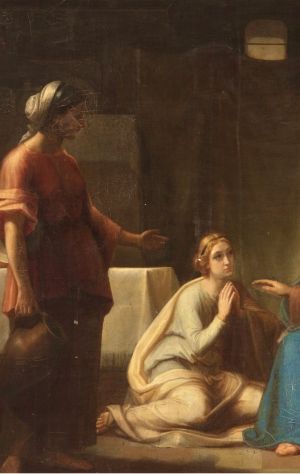
Martha and Mary... Empty minutes?
Understanding action in the contemplation’ spirit
(Lk 10:38-42)
Bethany is an ideal community, coordinated by a woman [Martha: ‘lady’].
The loveable Face of the Lord shines through in the contexts of (only) brothers and sisters, where difficult choices can be shared.
But even in the hearts where Jesus is understood, there are two different ways of welcoming the Son of God.
Some lack something, «absorbed for great service» (v.40); others make the choice «good».
«Good part» (v.42) is personal Freedom, which no intimidation or haste of others can take away and oppress.
In fact, Mary «even» (v.39) was sitting at Jesus' feet and listening.
The position is significant, because it was that of the disciple towards the teacher.
Mary does not have an abstruse intimist attitude, but surprising and gravely transgressive [appropriate with God].
In fact, the guest was welcomed by men alone; the women had to be relegated to the side and not appear.
At the time, no spiritual guide would have accept a woman among his disciples.
But here the Gospel speaks of receiving Jesus and his Word: of that accepting that qualifies the things “at the bottom of the list”, rather than “at the top”.
«Martha was distracted around for the much ‘service’...» (v.40).
‘Serving’ is not the same as doing Communion. This overwhelms her, and she becomes herself «above» Jesus (v.40 Greek text).
She remains in anxiety, in upset; divided in the heart (v.41), attracted between opposing choices.
Caught up in the tension, she does not understand that every authentic relationship is born from Listening.
She does not grasp the essential: the ‘little important’ that makes us feel good is not to be neglected - rather, it is the foundation of our being and of the joy of living.
Instead of the «many things» (v.41) we need «One only» (v.42): to be in one’s Centre and to host the Voice of dim character that becomes full Kingdom within.
By taking care first of the beginnings and not immediately of the terms, as overflowing with fullness poured out in simplicity; then each one has great capacities for growth and transformation.
Then comes a further, clinking Call to heart [«Martha, Martha...»: v.41].
Appeal of the profound being, who ceaselessly retrieve from the neglect of the essential.
Vocation in the Name allows us to stop; for meeting ourselves and others, our deep states and motivations; in order to understand and enjoy what has already been done or is being done, without dehumanizing ahead of time.
All this so that we can reappropriate the breath of the soul, of its character - and do not lose our minds, always setting a great confusion that takes our breath away, and makes everyone angry.
Even a better “performance” will come to surprise us, because a different Perception will transmit patience, firm nerves, lucidity to wait for ripe times; determination even in afflictions; possibility of rediscovering innate abilities.
Lord’s Message will communicate the Judgment of the Crucified One, and opportune rhythm.
His Teaching will give balance, good disposition, and faculty to overcome the oppositions of an ambiguous world that is agitated to perpetuate itself - and does not give up the grip.
The instinct of the Logos inside and the provident reality will build a binary of our own, even through losses and scars.
Indeed, when our busy minutes will become empty and the slow hours become enchanting, we will even improve tightness and efficiency.
Made wise and incisive according to our Seed, we will not accuse Jesus of having been [us] «left alone to serve» (v.40).
We won’t spin in vain anymore, and our gestures will become valuable: clear.
[Tuesday 27.th wk. in O.T. October 6, 2026]
Empty minutes? Understanding action in the spirit of contemplation
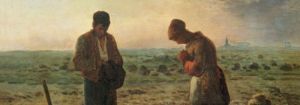
Two realities of the faithful: Listeners or distracted wanderers
(Lk 10:38-42)
Bethany is only a few kilometres from the holy city of Jerusalem: an ideal community of only brothers and sisters, coordinated by a woman [Martha: 'lady'].
Right in the midst of the hostile environment of the learned and pure, the Lord does not allow himself to be sequestered by sacred precincts.
Trait of a Father who does not sit enthroned - but stands at the door and knocks.
He does not take pleasure in scheming: His loving Face leaks out in contexts that may share difficult choices.
Surprisingly, the Son of God is the only one to enter the 'village', though surrounded by his own (v.38).
Intimate, yet unable to teach and discern, because dependent.
Unlike the Apostles, only He is able to liberate - and emancipate again - because free and enfranchised.
In that culture it was highly improper to accept the hospitality of women [only John speaks of Lazarus].
But where Jesus comes, the legacies that discriminate against people are glossed over.
However, even in the homes where the Messiah is understood, there are two different ways of welcoming the Lord.
Some lack something, "absorbed in great service" (v.40); others make the "good" choice.
The "good part" (v.42 Greek text) is personal Freedom, which no intimidation or haste of others will be able to take away and oppress.
In fact, Mary "even" (v.39 Greek text) sat at Jesus' feet and listened.
The position is significant because it was that of the disciple towards the master.
Mary does not have an intimate, abstruse and devout attitude, but a surprising and seriously transgressive one (appropriate with God).
In fact, the guest was only welcomed by men; women were to be secluded and not to appear.
No spiritual leader would ever accept a woman among his disciples.
But here we are talking about the reception of Jesus and his Word: that reception that qualifies things at the bottom of the list, instead of at the top.
"Martha was distracted about much service..." (v.40).
Serving is not the same as taking Communion.
She remains in distress, in turmoil; divided in heart (v.41 Greek text), drawn between opposing choices, almost thrown up in the air.
A profile that we also recognise today: of titled people with a busy schedule; who as soon as they wake up begin to fidget and prick.
It seems important to them not to make themselves and others feel already rich, 'perfect' for their mission; full of resources.
Always restless and scattered about material things - which then overwhelm them - they make themselves "over" Jesus (v.40 Greek text).
And they arrive at the end of the day without ever having found an ideal hinge that gives meaning, nourishes the spirit, soothes the soul, unites their efforts with personal dialogue with God - at least in terms of ideals.
Every day agitated and unsatisfied, these tormented doomsayers will not listen to the shaky and insignificant: never get distracted by the 'great' and procrastinate.
Thus unfortunately no wall or any of the labours will fade away.
Nor will they allow anyone to notice other ways of personal exodus, and opportunities that on the spur of the moment cannot be seen.
Caught up in the tension, like Martha, they do not understand that every authentic relationship is born of Listening.
They do not grasp the essential: the unimportant little that makes one feel good is not to be overlooked - indeed it is the foundation of our being and joy in life.
The ever restless and practising ones unfortunately remain on the outside, sometimes as opportunists. And they keep (everyone) trapped.
So one must submit to laboured goals or stay out of the way, to avoid getting in the way of agitated and indigestible agendas - which obviously overpower the Gospel, so meagre and inapparent.
Recall and attunement that conversely should precede and accompany the idea and the action.
What they do not know and what does not concern them becomes trivial.
Conversely, it is attention, prayer, desire (or place and time) that really could contribute to understanding, falling in love, balance, and the very effective incisiveness of the works.
Instead of the "many things" (v.41) we need "One only" (v.42 Greek text): to be in one's centre and to host the Voice of the resigned character that becomes the full Kingdom within.
Thus, as overflowing with fullness poured out in simplicity, then each has great capacity for growth and transformation.
Those at the top of their class never have the will, nor the head - and by now not even the time - to care for their beginnings and not immediately their terms.
So they do not listen to the Word in the Newness of the Spirit. (Who knows if the global crisis will be an eloquent reminder).
The all-inclusive leaders are precisely eager to establish as many appearances, ties, ropes and alliances as possible, too many of them: none of them really important - and perhaps only to impress.
The unease about formation, life and pastoral care is enormous, because attachment to roles cuts off the contribution of stupors. Happy moments, nestled in the possibilities of replacement, and - as we see - leaving a sense of emptiness everywhere.
Then comes a further, jangling Call ("Martha, Martha...": v.41).
Call of the deep being, which ceaselessly recovers from the neglect of the essential.
The Vocation in the Name allows us to pause to encounter ourselves and others, our deepest states and motivations; in order to understand and enjoy what has already been done or is being done, without dehumanising beforehand.
All this is so that we regain the breath of the soul, its character - and do not lose our heads, always putting up a big fuss that upsets everyone.
Even a better performance will come as a surprise:
"Two lumberjacks were working in the same forest felling trees. The logs were imposing, solid and tenacious. The two lumberjacks used their axes with identical skill, but with a different technique: the first one struck his tree with incredible constancy, one blow after another, without stopping except to catch his breath a few seconds. The second logger made a discreet stop every hour he worked. By sunset, the first woodcutter was halfway up his tree. He had sweated blood and tears and would not have lasted five minutes longer. The second was incredibly at the end of his trunk. They had started together and the two trees were the same! The first logger could not believe his eyes. 'I don't understand a thing! How did you manage to go so fast if you were stopping every hour?' The other smiled: 'You saw that I was stopping every hour. But what you did not see is that I was taking advantage of the stop to sharpen my axe'. Our spirit is like the axe, we must not let it rust: every day it must be sharpened a little'. (B. FERRERO, The Secret of the Goldfish, p.64).
Listening will supplant grievances, disaffection, opportunistic and external calculations; reasoning, regrets, and the opinion around - even about us - all enemies of Rebirth, the one that does not block intimate energies.
We recognise ourselves.
Things "our own", from the realm of man, settle in and are immediately recognised, because they are all foreign - and take our breath away.
Only a different Perception will convey patience, steady nerves, lucidity to wait for the ripe times, determination even in afflictions; the possibility of finding innate abilities.
The Message of the Lord will convey the Judgement of the Crucified One, and an appropriate rhythm.
His Teaching will bestow equilibrium, good disposition, the ability to overcome the oppositions of an ambiguous world that agitates to perpetuate itself (and does not let go of the bone of its mouth).
The instinct of the Word within and the providential reality will build a track of our own even through losses and scars.
Indeed, when our busy minutes become empty and the slow hours become enchantment, we will even improve our resilience and performance.
Made wise and incisive according to our Seed, we will not accuse Jesus of being "left alone to serve" (v.40).
We will no longer go in circles, and our gestures will become valuable: sharp.
Absorbed, or Surprised
"Also on this Sunday, the reading from the tenth chapter of the evangelist Luke continues. Today's passage is that of Martha and Mary. Who are these two women? Martha and Mary, sisters of Lazarus, are relatives and faithful disciples of the Lord, who lived in Bethany. St Luke describes them in this way: Mary, at Jesus' feet, "listened to his word", while Martha was engaged in many services (cf. Lk 10:39-40). Both offer welcome to the passing Lord, but do so in different ways. Mary is at Jesus' feet, listening, while Martha is absorbed in the things to be prepared, and is so busy that she turns to Jesus and says: "Lord, do you not care that my sister has left me alone to serve? So tell her to help me" (v. 40). And Jesus responds by gently rebuking her: "Martha, Martha, you fret and fret about many things, but only one ... is needed" (v. 41).
What does Jesus mean by this? What is this one thing we need? First of all, it is important to understand that it is not a matter of the opposition between two attitudes: listening to the word of the Lord, contemplation, and concrete service to one's neighbour. They are not two opposing attitudes, but, on the contrary, they are two aspects that are both essential to our Christian life; aspects that should never be separated, but lived in profound unity and harmony. But why then did Martha receive the rebuke, even if it was done gently? Because she considered only what she was doing to be essential, that is, she was too absorbed and preoccupied with things to 'do'. In a Christian, works of service and charity are never detached from the main source of all our action: that is, listening to the Word of the Lord, standing - like Mary - at the feet of Jesus, in the attitude of a disciple. And for this Martha is rebuked.In our Christian life too, let prayer and action always be profoundly united. A prayer that does not lead to concrete action towards the poor, sick, needy brother, the brother in difficulty, is a sterile and incomplete prayer. But in the same way, when in Church service one is only attentive to doing, one gives more weight to things, functions, structures, and forgets the centrality of Christ, one does not set aside time for dialogue with Him in prayer, one risks serving oneself and not God present in the brother in need. St Benedict summed up the lifestyle he indicated to his monks in two words: 'ora et labora', pray and work. It is from contemplation, from a strong relationship of friendship with the Lord that is born in us the capacity to live and bring God's love, his mercy, his tenderness towards others. And our work with our needy brother, our charity work in works of mercy, also leads us to the Lord, because we see the Lord in our needy brother and sister.
Let us ask the Virgin Mary, Mother of listening and service, to teach us to meditate in our hearts on the Word of her Son, to pray with fidelity, to be ever more concretely attentive to the needs of our brothers and sisters".
[Pope Francis, Angelus 21 July 2013].
"In this Sunday's passage, the evangelist Luke recounts Jesus' visit to the home of Martha and Mary, the sisters of Lazarus (cf. Lk 10:38-42). They welcome him, and Mary sits at his feet to listen to him; she leaves what she was doing to be close to Jesus: she does not want to miss any of his words. Everything must be put aside because, when He comes to visit us in our lives, His presence and His word come before everything else. The Lord always surprises us: when we truly listen to him, clouds vanish, doubts give way to truth, fears to serenity, and the different situations of life find their rightful place. The Lord always, when he comes, sets things right, even for us.
In this scene of Mary of Bethany at the feet of Jesus, St Luke shows the prayerful attitude of the believer, who knows how to stand in the presence of the Master to listen to him and to put himself in tune with him. It is a question of pausing during the day, of recollecting oneself in silence, a few minutes, to make room for the Lord who 'passes by' and to find the courage to remain a little 'aloof' with Him, to then return to everyday things with serenity and effectiveness. Praising the behaviour of Mary, who "chose the better part" (v. 42), Jesus seems to repeat to each one of us: "Do not let yourself be overwhelmed by the things to be done, but listen first to the voice of the Lord, in order to carry out well the tasks that life assigns you".
Then there is the other sister, Martha. St Luke says that it was she who sheltered Jesus (cf. v. 38). Perhaps Martha was the older of the two sisters, we do not know, but certainly this woman had the charisma of hospitality. In fact, while Mary is listening to Jesus, she is busy with her many services. That is why Jesus says to her: "Martha, Martha, you toil and fret over many things" (v. 41). With these words He certainly does not mean to condemn the attitude of service, but rather the busyness with which one sometimes lives it. We too share St Martha's concern and, following her example, we propose to ensure that, in our families and communities, we live the sense of welcome, of fraternity, so that everyone can feel "at home", especially the little ones and the poor when they knock on the door.
Therefore, today's Gospel reminds us that the wisdom of the heart lies precisely in knowing how to combine these two elements: contemplation and action. Martha and Mary show us the way. If we want to savour life with joy, we must combine these two attitudes: on the one hand, "standing at the feet" of Jesus, to listen to Him as He reveals to us the secret of everything; on the other, being considerate and ready in hospitality, when He passes by and knocks on our door, with the face of a friend in need of a moment of refreshment and fraternity. We need this hospitality.
May Mary Most Holy, Mother of the Church, give us the grace to love and serve God and our brothers and sisters with the hands of Martha and the heart of Mary, so that by always listening to Christ we may be artisans of peace and hope. And this is interesting: with these two attitudes we will be artisans of peace and hope".
[Pope Francis, Angelus 21 July 2019]
Vision of our situation in Heaven
In the life of the Church, the first steps she took, in a certain way, reflected what had happened in Jesus’ public life at Martha and Mary’s house in Bethany. Martha was completely taken up with the service of hospitality to offer to Jesus and his disciples; Mary, on the contrary, devoted herself to listening to the Lord’s word (cf. Lk 10:38-42). In neither case were the moments of prayer and of listening to God, and daily activity, the exercise of charity in opposition. Jesus’ reminder, “Martha, Martha, you are anxious and troubled about many things; one thing is needful. Mary has chosen the good portion, which shall not be taken away from her” (Lk 10:41-42) and, likewise, the Apostles’ reflection: “We will devote ourselves to prayer and to the ministry of the word” (Acts 6:4), show the priority we must give to God. I do not wish here to enter into the interpretation of this Martha-Mary passage. In any case activity undertaken to help one’s neighbor, “the other”, is not to be condemned, but it is essential to stress the need for it to be imbued also with the spirit of contemplation. Moreover, St Augustine says that this reality of Mary is a vision of our situation from heaven, so on earth we can never possess it completely but a little anticipation must be present in all our activities. Contemplation of God must also be present. We must not lose ourselves in pure activism but always let ourselves also be penetrated in our activities by the light of the word of God and thereby learn true charity, true service to others, which does not need many things — it certainly needs the necessary things — but needs above all our heartfelt affection and the light of God.
In commenting on the episode of Martha and Mary St Ambrose urges his faithful and us too: “Let us too seek to have what cannot be taken from us, dedicating diligent, not distracted attention to the Lord’s word. The seeds of the heavenly word are blown away, if they are sown along the roadside. May the wish to know be an incentive to you too, as it was to Mary, this is the greatest and most perfect act”. And he added that “attention to the ministry must not distract from knowledge of the heavenly word” through prayer (Expositio Evangelii secundunm Lucam, VII, 85 PL 15, 1720).
Saints have therefore experienced a profound unity of life between prayer and action, between total love for God and love for their brethren. St Bernard, who is a model of harmony between contemplation and hard work, in his book De consideratione, addressed to Pope Innocent II to offer him some reflections on his ministry, insists precisely on the importance of inner recollection, of prayer to defend oneself from the dangers of being hyper-active, whatever our condition and whatever the task to be carried out. St Bernard says that all too often too much work and a frenetic life-style end by hardening the heart and causing the spirit to suffer (cf.II, 3).
His words are a precious reminder to us today, used as we are to evaluating everything with the criterion of productivity and efficiency. The passage from the Acts of the Apostles reminds us of the importance — without a doubt a true and proper ministry is created — of devotion to daily activities which should be carried out with responsibility and dedication and also our need for God, for his guidance, for his light which gives us strength and hope. Without daily prayer lived with fidelity, our acts are empty, they lose their profound soul, and are reduced to being mere activism which in the end leaves us dissatisfied. There is a beautiful invocation of the Christian tradition to be recited before any other activity which says: “Actiones nostras, quæsumus, Domine, aspirando præveni et adiuvando prosequere, ut cuncta nostra oratio et operatio a te semper incipiat, et per te coepta finiatur”; that is, “Inspire our actions, Lord, and accompany them with your help, so that our every word and action may always begin and end in you”. Every step in our life, every action, of the Church too, must be taken before God, in the light of his word.
[Pope Benedict, General Audience 25 April 2012]
Don't limit yourself to pure material concerns, one-dimensional men
We have just read in the Gospel according to Luke the episode of the hospitality given to Jesus by Martha and Mary. These two sisters, in the history of Christian spirituality, have been understood as emblematic figures referring, respectively, to action and contemplation: Martha is busy with housework, while Mary is sitting at the feet of Jesus to listen to his word. We can glean two lessons from this Gospel text.
First, Jesus' final sentence should be noted: 'Mary has chosen the better part, which shall not be taken away from her'. He thus strongly emphasises the fundamental and irreplaceable value that listening to the Word of God has for our existence: it must be our constant point of reference, our light and our strength. But we must listen to it.
It is necessary to know how to be silent, to create spaces of solitude or, better, of meeting reserved for intimacy with the Lord. We must know how to contemplate. Man today feels a great need not to limit himself to pure material concerns, and instead to supplement his technical culture with superior and detoxifying inputs from the world of the spirit. Unfortunately, our daily life risks or even experiences cases, more or less widespread, of inner pollution. But the contact of faith with the word of the Lord purifies us, uplifts us and restores our energy.
Therefore, we must always keep before the eyes of our hearts the mystery of love, with which God has come to meet us in his Son, Jesus Christ: the object of our contemplation is all here, and from here comes our salvation, the redemption from every form of alienation and especially from that of sin. In essence, we are invited to do as the other Mary, the Mother of Jesus, who "kept all these things, pondering them in her heart" (Lk 2:19). It is on this condition that we will not be one-dimensional men, but rich in God's own greatness.
But there is a second lesson to learn; and that is that we must never see a contrast between action and contemplation. Indeed, we read in the Gospel that it was "Martha" (and not Mary) who welcomed Jesus "into her house". Moreover, today's First Reading suggests to us the harmony between the two: the episode of the hospitality granted by Abraham to the three mysterious characters sent by the Lord, who, according to an ancient interpretation, are even images of the Holy Trinity, teaches us that even with our most minute daily tasks we can serve the Lord and be in contact with him. And, as this year marks the 15th centenary of St Benedict's birth, let us recall his famous motto: 'Pray and work', Ora et labora! These words contain an entire programme: not of opposition but of synthesis, not of contrast but of fusion between two equally important elements.
The result is a very concrete lesson for us, which can be expressed in the form of a question: to what extent are we able to see in contemplation and prayer a moment of genuine charge for our daily tasks? And, on the other hand, to what extent are we able to innervate our work to the core with a leavening communion with the Lord? These questions can serve for an examination of conscience and become a stimulus for a resumption of our daily life, which is both more contemplative and more active.
[Pope John Paul II, homily 20 July 1980]
The great thinker Romano Guardini wrote that the Lord “is always close, being at the root of our being. Yet we must experience our relationship with God between the poles of distance and closeness. By closeness we are strengthened, by distance we are put to the test” (Pope Benedict)
Il grande pensatore Romano Guardini scrive che il Signore “è sempre vicino, essendo alla radice del nostro essere. Tuttavia, dobbiamo sperimentare il nostro rapporto con Dio tra i poli della lontananza e della vicinanza. Dalla vicinanza siamo fortificati, dalla lontananza messi alla prova” (Papa Benedetto)
The present-day mentality, more perhaps than that of people in the past, seems opposed to a God of mercy, and in fact tends to exclude from life and to remove from the human heart the very idea of mercy (Pope John Paul II)
La mentalità contemporanea, forse più di quella dell'uomo del passato, sembra opporsi al Dio di misericordia e tende altresì ad emarginare dalla vita e a distogliere dal cuore umano l'idea stessa della misericordia (Papa Giovanni Paolo II)
«Religion of appearance» or «road of humility»? (Pope Francis)
«Religione dell’apparire» o «strada dell’umiltà»? (Papa Francesco)
In the crucified Jesus a kind of transformation and concentration of the signs occurs: he himself is the “sign of God”, especially in the mystery of his Death and Resurrection (Pope John Paul II)
In Gesù crocifisso avviene come una trasformazione e concentrazione dei segni: è Lui stesso il "segno di Dio", soprattutto nel mistero della sua morte e resurrezione (Papa Giovanni Paolo II)
However, the king was not discouraged and sent his servants out to seek other guests to fill his banquet hall. Thus the aspect of the refusal of those initially invited caused the invitation to be extended to all [Pope Benedict]
Il re però non si scoraggia e invia i suoi servi a cercare altri commensali per riempire la sala del suo banchetto. Così il rifiuto dei primi ha come effetto l’estensione dell’invito a tutti [Papa Benedetto]
Faith in God opens before us the horizon of a sure hope, one which does not disappoint; it indicates a solid foundation on which to base one’s life without fear; it demands a faith-filled surrender into the hands of the Love which sustains the world (Pope Benedict)
La fede in Dio apre all’uomo l’orizzonte di una speranza certa che non delude; indica un solido fondamento sul quale poggiare, senza paura, la propria vita; richiede l’abbandono, pieno di fiducia, nelle mani dell’Amore che sostiene il mondo (Papa Benedetto)
The "new evangelization" faces this challenge. It must work to ensure that people recover the awareness that in Christ evil can be conquered with good (Pope John Paul II)
La “nuova evangelizzazione” affronta questa sfida. Essa deve impegnarsi perché tutti gli uomini recuperino la consapevolezza che in Cristo è possibile vincere il male con il bene (Papa Giovanni Paolo II)
Many saints experienced the night of faith and God’s silence — when we knock and God does not respond — and these saints were persevering (Pope Francis)
Tanti santi e sante hanno sperimentato la notte della fede e il silenzio di Dio – quando noi bussiamo e Dio non risponde – e questi santi sono stati perseveranti (Papa Francesco)
In some passages of Scripture it seems to be first and foremost Jesus’ prayer, his intimacy with the Father, that governs everything (Pope Francis)
In qualche pagina della Scrittura sembra essere anzitutto la preghiera di Gesù, la sua intimità con il Padre, a governare tutto (Papa Francesco)








duevie.art
don Giuseppe Nespeca
Tel. 333-1329741
Disclaimer
Questo blog non rappresenta una testata giornalistica in quanto viene aggiornato senza alcuna periodicità. Non può pertanto considerarsi un prodotto editoriale ai sensi della legge N°62 del 07/03/2001.
Le immagini sono tratte da internet, ma se il loro uso violasse diritti d'autore, lo si comunichi all'autore del blog che provvederà alla loro pronta rimozione.
L'autore dichiara di non essere responsabile dei commenti lasciati nei post. Eventuali commenti dei lettori, lesivi dell'immagine o dell'onorabilità di persone terze, il cui contenuto fosse ritenuto non idoneo alla pubblicazione verranno insindacabilmente rimossi.