


don Giuseppe Nespeca
Giuseppe Nespeca è architetto e sacerdote. Cultore della Sacra scrittura è autore della raccolta "Due Fuochi due Vie - Religione e Fede, Vangeli e Tao"; coautore del libro "Dialogo e Solstizio".
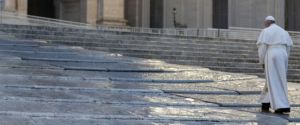
A man, John, and a road, which is that of Jesus, indicated by the Baptist, but is also ours, in which we are all called at the moment of trial.
It starts from the figure of John, "the great John: in the words of Jesus "the greatest man born of a woman"" the reflection of Pope Francis in the Mass celebrated at Santa Marta on Friday 6 February. The Gospel of Mark (6:14-29) recounts the imprisonment and martyrdom of this "man faithful to his mission; the man who suffered many temptations" and who "never, never betrayed his vocation". A man 'faithful' and 'of great authority, respected by all: the great of that time'.
Pope Francis paused to analyse his figure: 'What came out of his mouth was right. His heart was just'. He was so great that "Jesus will also say of him that 'it is Elijah who has returned, to clean the house, to prepare the way'". And John "was conscious that his duty was only to proclaim: to announce the proximity of the Messiah. He was conscious, as St Augustine makes us reflect, that he was the voice only, the Word was another'. Even when "he was tempted to "rob" this truth, he remained just: "I am not, behind me comes, but I am not: I am the servant; I am the servant; I am the one who opens the doors, so that he may come".
At this point the Pontiff introduced the concept of the way, because, he recalled, 'John is the forerunner: forerunner not only of the Lord's entry into public life, but of the Lord's entire life'. The Baptist 'goes forward in the Lord's way; he bears witness to the Lord not only by showing him - "This is it!" - but also by bringing life to the end as the Lord has brought it'. And by ending his life "with martyrdom" he was "a forerunner of the life and death of Jesus Christ".
The Pope went on to reflect on these parallel paths along which "the great" suffers "many trials and becomes small, small, small to the point of contempt". John, like Jesus, "annihilates himself, he knows the road of annihilation. John, with all that authority, thinking about his life, comparing it with that of Jesus, tells people who he is, what his life will be like: 'It is better for him to grow, I instead must diminish'". This, the Pope stressed, is "the life of John: to diminish before Christ, so that Christ may grow". It is "the life of the servant who makes room, makes way for the Lord to come".
John's life "was not easy": in fact, "when Jesus began his public life", he was "close to the Essenes, that is, to the observants of the law, but also of prayers, of penances". Thus, at a certain point, during the time he was in prison, 'he suffered the ordeal of darkness, of the night in his soul'. And that scene, Francis commented, 'moves one: the great, the greatest sends two disciples to Jesus to ask him: "But John asks you: is it you, or have I made a mistake and must we wait for another?" Along John's path therefore came 'the darkness of error, the darkness of a life burnt in error. And this was a cross for him".
To John's question "Jesus answers with the words of Isaiah": the Baptist "understands, but his heart remains in darkness". Nevertheless he lends himself to the demands of the king, 'who liked to hear him, who liked to lead an adulterous life', and 'almost became a court preacher, of this perplexed king'. But "he humbled himself" because "he thought he was converting this man".
Finally, the Pope said, 'after this purification, after this continual descent into annihilation, making way for the annihilation of Jesus, his life ends'. That king from being perplexed 'becomes capable of a decision, but not because his heart has been converted'; rather 'because the wine gives him courage'.
And so John ends his life 'under the authority of a mediocre, drunken and corrupt king, at the whim of a dancer and the vengeful hatred of an adulteress'. Thus 'ends the great, the greatest man born of woman', commented Francis, who confessed: 'When I read this passage, I am moved'. And he added a useful consideration for the spiritual life of every Christian: "I think of two things: first, I think of our martyrs, the martyrs of our days, those men, women, children who are persecuted, hated, driven from their homes, tortured, massacred". And this, he stressed, 'is not a thing of the past: this happens today. Our martyrs, who end their lives under the corrupt authority of people who hate Jesus Christ'. Therefore, "it is good for us to think about our martyrs. Today we think of Paul Miki, but that was in the 1600s. Let us think of those of today, of 2015".
The Pontiff went on to add that this passage also prompts him to reflect on himself: 'I too will end. All of us will end. No one's life is 'bought'. We too, willingly or unwillingly, go down the road of the existential annihilation of life'. And this, he said, prompts him "to pray that this annihilation resembles Jesus Christ, his annihilation, as much as possible".
This closes the circle of Francis' meditation: 'John, the great, who continually diminishes to nothingness; the martyrs, who diminish today, in our Church of today, to nothingness; and we, who are on this road and going towards the earth, where we will all end'. In this sense the Pope's final prayer: "May the Lord enlighten us, make us understand this road of John, the forerunner of the road of Jesus; and the road of Jesus, who teaches us how ours should be."
[Pope Francis, St. Martha, in L'Osservatore Romano 07.02.2015]
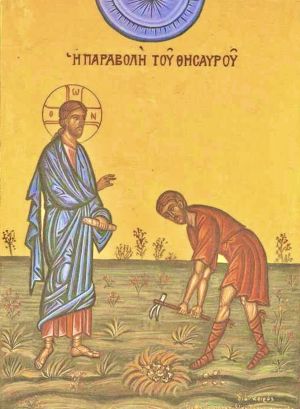
17th Sunday in Ordinary Time (year A) [26 July 2026]
First Reading from the First Book of Kings (3:5, 7–12)
This passage from the First Book of Kings recounts the first great celebration of the reign of Solomon, David’s successor on the throne of Jerusalem. After his coronation, Solomon went to the sanctuary at Gibeon to offer a great sacrifice and there uttered a prayer that would become a model for all Israel.
However, the historical context shows that Solomon was not a perfect man. His accession to the throne was marked by dynastic struggles, political intrigues and violence. Although he was one of David’s youngest sons, he managed to secure power thanks to the rivalries among his elder brothers and the decisive intervention of his mother, Bathsheba. After his coronation, he swiftly eliminated his opponents. Therefore, his renowned wisdom was not an innate quality, but a gift received from God. True wisdom thus emerges as the most precious of all goods. Once in power, Solomon realised the difficulty of governing. This realisation represents the first sign of his wisdom. He recognised that the most precious good is not wealth or power, but wisdom, and that it comes only from God. In his prayer, he presents himself with humility: ‘I am a young and inexperienced man; grant your servant a discerning heart to govern your people and to distinguish between good and evil.’ His request recalls the hidden treasure and the precious pearl of which Jesus will speak in the Gospel (Mt 13:44–46): wisdom is worth more than any other good. Here is a lesson for all those who govern. The second lesson concerns not only kings, but anyone who exercises authority. Solomon does not ask for personal advantages, a long life, riches or victory over his enemies. He asks only for what is necessary to serve the people entrusted to him. In this, he shows that he has understood the ideal of the monarchy of Israel: the ruler must not seek his own interests, but the good and safety of the people. The prophets, beginning with Nathan, constantly reminded the kings of Israel of this mission. God’s response is generous: He appreciates the selflessness of the request and responds by granting Solomon a wise and discerning heart, superior to that of all other kings; by giving him the ability to discern and govern justly; and, furthermore, by granting him what he had not asked for: wealth, glory and prestige. This reveals God’s generosity: those who seek His will above all else also receive other gifts in addition. The theme echoes Jesus’ teaching: ‘Seek first the Kingdom of God, and all these things will be given to you as well’ (Mt 6:33).
Responsorial Psalm (118/119)
In the First Reading, Solomon, at the beginning of his reign, had grasped the essential truth: true wisdom is the most precious treasure and can come only from God.
He continues in the psalm: ‘The law from your mouth is more precious to me than thousands of pieces of gold and silver.’ And the psalmist adds: ‘How wonderful are your commandments; that is why I keep them!’ For the believer, faithfulness to the commandments is a delight, not a burden. This psalm is a litany of love for the Law; today’s verses are just a short stanza from a very long psalm: 176 verses = 22 stanzas of 8 verses each. Why 22 stanzas? Because there are 22 letters in the Hebrew alphabet. Each stanza is an ‘acrostic’: all 8 verses begin with the same letter, and the stanzas follow the alphabetical order from Alef to Tav. This is not literary virtuosity. It is a true profession of faith: a poem in honour of the Law, a meditation on the gift of God that is the commandments. Rather than a ‘psalm’, it is a litany in honour of the Law. It may sound strange to us, but that is how it is. In the Bible, to love the Law is to love the Father’s gift; this is why the biblical believer truly loves the Law. The commandments are not endured as God’s dominion over us, but as advice—the only valid advice for living happily. When the biblical person says this, they mean it with all their heart. And the Law is not endured as dominion; it is received as a gift that God gives to his people to warn them against all false paths. It is said that God ‘gives’ his Law, and it is indeed regarded as a ‘gift’. God did not merely free Israel from slavery in Egypt. By giving his Law, God has, in a sense, provided the ‘user’s manual’ for freedom. The Torah is an expression of God’s love for his people. If God is Love, his Law leads to love. We did not have to wait for the New Testament to discover that God is Love and that the Law has but one purpose: to lead us along the path of love. The entire Bible is the story of the chosen people’s learning, in the school of brotherly love, from Deuteronomy (Dt 6:4) to Leviticus (Lv 19:18). The famous Rabbi Hillel, who lived from 70 BC to 10 AD, said: ‘Do not do to your neighbour what you would hate for yourself: this is the whole of the Torah; the rest is commentary. Go and study.’ He also said: ‘Do not judge your neighbour until you have been in his place.’ Jesus takes the same line: the two commandments of love for God and for one’s neighbour sum up the whole Law. And the Golden Rule echoes this as follows: ‘Do to others whatever you would have them do to you: for this is the Law and the Prophets’ (Mt 7:12). Finally, this psalm resembles a litany: after the first three verses, which affirm the happiness of those faithful to the Law, the remaining 173 verses address God directly, at times in a contemplative tone, at others in supplication: ‘Open my eyes, that I may see the wonders of your Law’ (v. 18), and the litany continues, almost always repeating the same phrases. In Hebrew, eight identical words recur throughout all the stanzas to describe the Law: Law, Word, Precepts, Statutes, Commandments, Judgements, Promises, Ways. Only lovers repeat themselves like this without ever tiring. Nor is the number 8 coincidental: in the Bible, it is the number of the new creation. God created the first Creation in seven days; therefore, the eighth day will be that of the renewed Creation, of the ‘new heavens and new earth’. This will finally come to pass when all humanity lives according to God’s Law—that is, in love—because they are one and the same.
Second Reading from the Letter of Saint Paul the Apostle to the Romans (8:28–30)
For weeks now we have been reading chapter eight of the Letter to the Romans: Paul contemplates the whole of human history as a long journey towards a magnificent future. One day we shall be like Jesus Christ, in his image, and we shall be one with him. This is God’s plan: ‘God calls those he loves according to his plan’ (Rom 8:28), with the best commentary: ‘God chose you from the very beginning for salvation, through the Holy Spirit who sanctifies and through faith in the truth. For this is what he has called you to through our Gospel, so that you may share in the glory of our Lord Jesus Christ’ (2 Thessalonians 2:13–14). This plan, which culminates in union with Christ, is the work of the Spirit, made possible by our free participation. Paul puts it even more simply: ‘God calls you to his Kingdom and to his glory’ (1 Thessalonians 2:12). We are on a journey towards the transformation of our whole being, a ‘shaping’ that will mould us in the image of Christ. Earlier, Paul had compared this transformation to a birth: ‘The whole creation groans and suffers the pains of childbirth’ (Rom 8:22). Here we see the image of entering into a great family: God has ‘predestined us to be conformed to the image of his Son, so that he might be the firstborn among many brothers’ (Rom 8:29). Shortly before, he had called us “children of God” and had continued: “If we are children, then we are also heirs: heirs of God and co-heirs with Christ” (Rom 8:17). To God’s invitation to take part in this great plan, we respond with faith and trust. It is often said: “Man proposes, God disposes”, but here Paul says the opposite: ‘God proposes, man disposes’. God does not impose his plan on us; he proposes it to us. From the very beginnings of Revelation, we hear God calling humankind and proposing his Covenant to us, as if God were tirelessly repeating: ‘Love me, trust me, for I love you’. And this plan of God depends on our freedom. In today’s passage, the freedom to accept or refuse is expressed as follows: ‘Moreover, we know that all things work together for good for those who love God, for those who are called according to his purpose’ (Rom 8:2). The verb ‘to love’ indicates man’s free response to God’s proposal. It is not a feeling, it is an impulse, it is the adherence of ‘faith’ . Yet we remain free not to love God. In Paul’s vocabulary, we are all ‘known, called, justified, and brought into his glory’, provided we accept him. And he describes the journey of those who wish to enter into this plan of salvation. First, God sent his Son (Col 1:18). Thus, those who respond to God’s love resemble that Son who fulfilled the Father’s will for salvation: predestined, called, justified, glorified—that is, brought into perfect harmony with God, made partakers of his divine nature, already welcomed into his glory. It is no surprise that Paul concludes immediately afterwards: ‘What more can be said?’ Rom 8:31.
From the Gospel according to Matthew (13:44–52)
In this passage from the Gospel of Matthew, Jesus presents four brief parables to explain the meaning of the Kingdom of Heaven: the hidden treasure, the pearl of great price, the net cast into the sea, and the householder who brings out of his treasure things both new and old. The treasure and the pearl: the absolute value of the Kingdom. The first two parables convey the same message: a man discovers a treasure hidden in a field; a merchant finds a pearl of exceptional value. In both cases, the protagonists sell everything they own to acquire that unique treasure. This act of renunciation is not experienced as a loss, but as a joy, because the value of the treasure infinitely surpasses that of everything else. Jesus teaches that the Kingdom of God is the greatest good that exists. Those who discover it realise that it is worth more than any earthly wealth, security or success. The net and the final judgement. The third parable describes a bountiful catch. Once the net has been hauled ashore, the fishermen separate the good fish from the bad. Jesus applies this image to the Last Judgement: at the end of time, there will be a definitive distinction between what belongs to the Kingdom and what opposes it. As in the parable of the wheat and the tares, however, it is not simply a matter of dividing people into two rigid categories. Good and evil coexist within every person’s heart. The parable highlights the gravity of human choices: one cannot serve both God and other ‘masters’ at the same time. This is why Jesus continually calls for conversion: ‘Repent, for the Kingdom of Heaven is near.’ The same teaching emerges in his encounter with the rich young man: called to leave everything to follow Christ and gain a treasure in heaven, he is unable to give up his securities and goes away sad. These parables show that following Christ requires concrete decisions. There are no half-measures: every choice must be assessed in the light of the Kingdom of God. To welcome the Kingdom means being willing to let go of whatever prevents one from fully adhering to God’s will, just as one who sells everything to acquire the treasure or the pearl—a treasure both ancient and new. After asking his disciples whether they had understood his teaching, Jesus adds a fourth parable: ‘Every scribe who has become a disciple of the Kingdom of Heaven is like a householder who brings out of his treasure things both new and old.’ The scribes had a profound knowledge of the Old Testament Scriptures. However, in order to welcome the Kingdom proclaimed by Jesus, they had to open themselves to the newness of his revelation without losing the heritage they had received. The true disciple cherishes both: the treasure of the Old Covenant and the newness brought by Jesus Christ. This is why Jesus affirms: ‘I have not come to abolish the Law and the Prophets, but to bring them to fulfilment.’ The Old and New Testaments are not opposed to one another: the former prepares and announces, the latter realises and brings to fulfilment. Knowing both constitutes the true treasure of the Christian faith. The life of Paul of Tarsus represents a living synthesis of these parables. Having enjoyed prestige as a Jew and a Pharisee, he regards all that as a loss compared with the knowledge of Christ. In his letter to the Philippians, he states that every human privilege pales in comparison with the gift of Christ, for which he was willing to lose everything. Ultimately, the four parables converge on a single teaching: the Kingdom of God is the supreme treasure; it is worth giving up everything to obtain it; our choices have decisive consequences; the disciple must embrace both the richness of the Old Covenant and the newness of Christ; true wisdom lies in recognising that nothing is of greater value than communion with God. The ‘treasure hunt’ of which Jesus speaks is not the pursuit of material goods, but the discovery of the Kingdom, a treasure so great that it renders everything else secondary.
+Giovanni D’Ercole
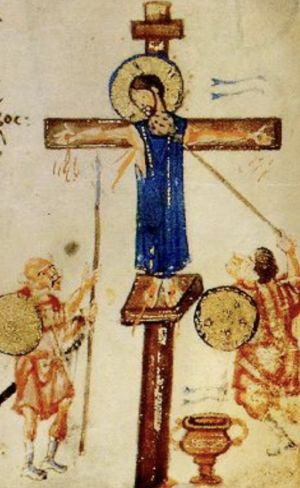
Divine in Human: strong, dignified and fraternal gestures, not repertoire
(Mt 13:54-58)
The Divine in the Human makes itself Present in the intense, welcoming relationships that open up inexplicable recoveries; then it leaks out in the strong, dignified and fraternal gestures - not repertoire.
In today's Gospel passage there is a significant difference with some earlier translations (vv.54.58).
The Lord helps us to grow with true «wonders», not with “miracles” [punctual events] but by working within, changing the shrunken heart and improving us with his Love.
The «prophetic» has nothing to do with the sensational.
Only in this way will one not grow weary of the good that is not brilliant; nor will one despise the existence of ordinary people because they lack prestige and titles.
Jesus' powerful works unfold over time - by educating, not impressing and subduing.
His 'signs', those inexplicable recoveries he performs, are the calibre and fruit of a growing Encounter-through-the-Way.
Work of Art (far better than accidental shortcuts) is for the profiteer to become righteous, the doubter to become more confident, the unhappy to resume hope.
It takes time, though astonishment can be immediate.
The Mystery of the power of the new God announced by Christ is hidden in 'Someone inside something'.
It is the web where the Signs of a great Reality nestle, to which despite the difficulties we have access and in which we participate.
The Person of Jesus tells of a Father who does not fear that his holiness is endangered by contact with the world.
The higher Mystery is already in the common man.
So the conflict is not with outsiders, but with the usual stubborn 'neighbours' full of prejudice - habitual and habituated, who already know how it ends... But they inaugurate nothing.
Instead, the Son is no longer a “local child”: a quiet programme of the «village», the product of normal archaic ideas or of already transmitted intentions, which no Encounter will be able to arouse and move.
In his homeland, the Master does not astound as elsewhere: He encounters a diffidence that wears down of days all counted that protrusion of the believing that would fill indigence.
Faith, on the other hand, encompasses what cuts through the impossible Dream of Novelty: our boasting is not from social status, nor from established gender.
It grasps its specific weight not in the folklore, but precisely in regenerating - through the incessant reactivation of intrinsic interest.
In this way, Faith is not rhetoric. It realizes that the state of doubt is more fruitful than conviction.
How does one become a non-people?
Certainties leave no breathing space for the inventiveness of unusual doing, nor for the feeling or growth of strong Life, not disfigured by the repertoire of expected accomplishments.
To internalize and live the message:
How does your ordinary existence redeem the vicissitudes of shaky people?
How do you live the more of the Faith over habits and commonplaces?
[Friday, 17th wk. in O.T. July 31, 2026]
Divine in Human: strong, dignified and fraternal gestures, not repertoire
(Mt 13:54-58)
"Christians are a priestly people for the world. Christians should make the living God visible to the world, bear witness to Him and lead it to Him. When we speak of this common commission of ours, as we are baptised, this is not a reason to boast about it. It is a question that both gives us joy and troubles us: are we truly God's sanctuary in the world and for the world? Do we open up access to God to men, or rather hide it? Have we not - God's people - largely become a people of unbelief and distance from God? Is it not true that the West, the core countries of Christianity, are tired of their faith and, bored with their own history and culture, no longer want to know faith in Jesus Christ? We have reason to cry out to God in this hour: "Do not let us become a non-people! Let us recognise you again! For you anointed us with your love, you placed your Holy Spirit upon us. Let the power of your Spirit become effective in us again, so that we may joyfully bear witness to your message!"
[Pope Benedict, homily 21 April 2011].
The Divine in the Human makes itself Present in the intense, welcoming relationships that open up inexplicable recoveries; then it leaks out in the strong, dignified and fraternal gestures - not in repertoire.
In today's Gospel passage there is a significant difference with the previous CEI translation ('74) (vv.54.58).
The Lord helps us to grow with true 'prodigies', not with 'miracles' [punctual events] but by working in our innermost being, changing our shrunken hearts and improving us with his Love.
The "prophetic" has nothing to do with the sensational.
Only in this way will we not grow weary of the good that is not brilliant; nor will we despise the existence of ordinary people because they lack prestige and titles.
The powerful works of Jesus unfold over time - educating, not impressing and subduing.
His 'signs', those inexplicable recoveries he performs, are the calibre and fruit of a growing Encounter-for-The-Way.
A work of art (far better than accidental shortcuts) is that the profiteer becomes righteous, the doubter more secure, the unhappy person regains hope.
It takes time, though astonishment can be immediate.
The Mystery of the power of the new God announced by Christ is hidden in 'Someone within something'.
It is the plot where the Signs of a great Reality nestle, to which despite the difficulties we have access and are sharers.
The Person of Jesus tells of a Father who does not fear that his holiness is endangered by contact with the world.
The sovereign Mystery is already in the common man.
So the conflict is not with outsiders, but with the usual stubborn 'neighbours' full of prejudice - habitual and habituated, who already know how it ends... But they inaugurate nothing.
Instead, the Son is no longer a local child: a quiet programme of the 'village', the product of normal archaic ideas or already transmitted intentions, which no encounter will be able to arouse and stir up.
At home, the Master does not astound as elsewhere: he encounters a diffidence that wears down with days all counted that protrusion of belief that would fill indigence.
Faith, on the other hand, understands what cuts through the impossible Dream of Novelty: our boast is not from social status, nor from established gender.
It grasps its own specific weight not in the folklore, but precisely in regenerating - by the incessant reactivation of intrinsic interest.
In this way, Faith is not rhetoric: it realises that the state of doubt is more fruitful than conviction.
How does one become a non-people?
Certainties leave no breathing space for the inventiveness of the unusual, nor for the feeling or growth of strong Life, not disfigured by the repertoire of expected fulfilments.
To internalise and live the message:
How does your ordinary existence redeem the affairs of shaky people?
How do you live the more of Faith over habits and commonplaces?
Expectations, misunderstandings - and the spirit of the valley
(Mk 6:1-6)
Domestic side, not domestication
Where Faith is lacking only small changes occur, not the astounding wonders of the alternative presence of the Kingdom of God:
"And he could do no mighty work there, except that having laid hands on a few sick ones, he healed" (v.5).
We do not realise that the Lord could come from humble, dishonourable beginnings, as ours might be - devoid of great dynastic ties, or violent class jumps.
Says the Tao Tê Ching (vi):
"The spirit of the valley does not die [...] it is used, but it does not tire". Master Wang Pi comments:
'The spirit of the valley is the non-valley at the centre of the valley. It has no form or shadow, nothing contrasts and nothing rejects, it remains at the bottom without moving, it keeps quiet without fading. The valley is completed by it, yet its form cannot be seen: this is the most perfect model'.
Like the Wisdom codes of nature, Faith in Christ bids farewell to the idea prevalent in institutional, representative and top-down cultures and religions.
All unwilling, in their great knowledge, to deal with the normality of life that flows.
Jesus avoids rigid or grandiose models. He gives himself with simplicity to his people and aims at the formation of authentic believers.
Their trust must be placed solely in the Kingdom of God - a dimension that truly breaks the balance, because it enters into day-to-day existence and ferments it from invisible roots.
As an envoy of the Father, he would like all the people to be builders and standard bearers of other dreams - but in his home village he feels as if blocked by those who are incapable of deciphering the dimension of the divine in the human.
He has to face the obtuse incomprehension of the centres of power, but also the very failures and hopes - quiet or divisive - of the popular reality that frequents the places of worship.
The villagers expected the usual blessings (by now addicted) or perhaps a charismatic leader to fight against the Romans - and here they would gladly use the flames of religious identity to inflame their spirits.
They would have accepted a warlike captain, reflecting archaic beliefs - instead they find themselves disappointed with the inapparent reality before their eyes.
They do not know how to discover God's plot in the history of the least.
Conversely, there are many divine signs inscribed in what is summarily manifested: warnings that can help us discover the not purely earthly dimension of things, relationships, presences, and so on.
Many misunderstand the spirit of strength that Faith transmits to us.
It breaks balances because it does not offer guarantees that have already been imagined - but it is at bottom domestic and all natural [each Seed has its own particular destiny and development].
How then is the boy they have known from birth so different?
Because there is no equation between what one thinks conformistically, and the Lord. Not even by emphasising intentions.
Both great expectations and proximity can be an obstacle to a daily knowledge of what is extraordinary behind the ordinary dimension of events and people.
Even many brothers or collaborators of Saints have failed to grasp the exceptionality of a common life lived in fidelity and dedication to their Calling by Name. All the more real as it is less conspicuous.
The incomprehension and village jealousy of those who live next door and chase after a god of their own - disfigured - is a source of bitterness; but it does not stop us.
The experience of rejection prompts a change of direction (v.6b).
The soul lives under the sign of Oneness that renounces preconception, the quiet life, simple approval, easy success.
And closed doors can be an added value! They open us to the soul's journey in the Spirit, to the eccentric Announcement, to the amazing Mission.
Unfortunately, we register another kind of spirit in the 'valley' - of a totally negative sign, which in the work of evangelisation and community animation is identified with the pastoral of consent [I will give you what you want].
The astute coordinator manages relations with the faithful, the masses and the institutions with extreme shrewdness, as well as expectations - concrete, immediate - of approval and individual or circle advantage.
At times, some leaders (even church leaders) seem to be nothing more than skilful storytellers: they do not fight the dehumanising structures, nor the powerful on the ground. On the contrary, they try to make allies of them, to win easily.
Even in the time of global crisis, the conviction persists that educational, cultural and 'religious' structures can only go on with the external support of power hierarchies, and the established order. Or with the search for more 'signs' and as many wonders.
Unfortunately, such a downward, outward-looking attitude - out of weariness, which is widespread - does not amount to the enhancement of the most varied and intimate Gifts of God in people, nor to the promotion of the Kingdom.
It is obvious then that those who frequent the palace do not like incendiaries: those who hold titles and a glorious role remain impervious to the work of the Spirit who makes all things new.
[Every opportunist unfortunately remains tied to the chains of command, to the old tactical balances that have guaranteed him career, position, lustre, visibility, easy security on the side].
Perhaps the worst aspect of this downward and normal common denominator game is the cheap identification between order guaranteed by the Gospel and current equilibrium.
An illusion of external harmony between the Beatitudes proclaimed by the Lord and opportunities for a quiet life, or gain, and social recognition.Thus the principles experienced first-hand by the Master are subverted by some followers, in an opaque strategy that ends up distorting the Glad Tidings in favour of every lost one.
And each shaky though unsatisfied person spontaneously tends to adapt to the small certainties they find, offered by the rhetoric of even great narratives.
Even today, on the other hand, the Word of God sparks off the easy appeal of such dynamics and structures of authentic 'sin': it threatens them in no uncertain terms.
Indeed, they seize souls, make them conformist, indifferent to injustice, fearful of freedom - and tend to take even the God of the Exodus hostage.
The Father, however, continues to raise up eccentric prophets: they make us all more capable of perceiving the genius of the age. As well as the personal talents deployed - even amidst the irritated threats of 'countrymen' caught up in levelling marketing.
Advertisers who risk being left without protection or lineage, of course.
But who refuse to affix ready-made seals to the spirit of mediocrity that annoys no one.
To internalise and live the Word, let us ask ourselves:
What has changed in your journey since you began to live more intensely in adherence to Christ? How has your environment reacted?
Dear Brothers and Sisters,
I would like to reflect briefly on this Sunday’s Gospel passage. It is taken from the text that has the famous saying “Nemo propheta in patria”. In other words no prophet is properly accepted among his own people who watched him grow up (cf. Mk 6:4). Indeed after Jesus, when he was about 30 years old, had left Nazareth and had already been travelling about preaching and working miracles of healing elsewhere, he once returned to his birthplace and started teaching in the synagogue. His fellow citizens “were astonished” by his wisdom, and knowing him as “the son of Mary”, as the carpenter who had lived in their midst, instead of welcoming him with faith were shocked and took offence (cf. Mk 6:2-3). This reaction is understandable because familiarity at the human level makes it difficult to go beyond this in order to be open to the divine dimension. That this son of a carpenter was the Son of God was hard for them to believe. Jesus actually takes as an example the experience of the prophets of Israel, who in their own homeland were an object of contempt, and identifies himself with them. Due to this spiritual closure Jesus “could do no mighty work there [Nazareth], except that he laid his hands upon a few sick people and healed them” (Mk 6:5). In fact Christ’s miracles are not a display of power but signs of the love of God that is brought into being wherever it encounters reciprocated human faith. Origen writes: “as in the case of material things there exists in some things a natural attraction towards some other thing, as in the magnet for iron... so there is an attraction in such faith towards the divine power” (Commentary on the Gospel of Matthew, 10, 19).
It would therefore seem that Jesus—as is said—is making sense of the negative welcome he received in Nazareth. Instead, at the end of the account, we find a remark that says precisely the opposite. The Evangelist writes that Jesus “marvelled because of their unbelief” (Mk 6:6). The astonishment of Jesus’ fellow townspeople is matched by his own surprise. In a certain sense he too is shocked! Although he knows that no prophet is well accepted in his homeland, the closed heart of his people was nevertheless obscure and impenetrable to him: how could they fail to recognize the light of the Truth? Why did they not open themselves to the goodness of God who deigned to share in our humanity? Effectively Jesus of Nazareth the man is the transparency of God, in him God dwells fully. And while we are constantly seeking other signs, other miracles, we do not realize that he is the true Sign, God made flesh, he is the greatest miracle in the world: the whole of God’s love contained in a human heart, in a man’s face.
The One who fully understood this reality was the Virgin Mary, who is blessed because she believed (cf. Lk 1:45). Mary was not shocked by her Son: her wonder for him was full of faith, full of love and joy, in seeing him so human and at the same time so divine. Let us therefore learn from her, our Mother in faith, to recognize in the humanity of Christ the perfect revelation of God.
[Pope Benedict, Angelus 8 July 2012]
The same link between the 'miracle-sign' and faith is confirmed by other negative facts. Let us recall some of them. In Mark's Gospel we read that Jesus in Nazareth "could perform no miracle, but only laid hands on a few sick people and healed them. And he marvelled at their unbelief" (Mk 6:5-6).
We know the gentle rebuke Jesus once addressed to Peter: "Man of little faith, why did you doubt?". This happened when Peter, who at first went boldly on the waves towards Jesus, then by the violence of the wind became afraid and began to sink" (cf. Mt 14:29-31).
5. Jesus emphasises more than once that the miracle he performed is linked to faith. "Your faith has healed you", he says to the woman who had been suffering from haemorrhaging for twelve years and who, when she came up behind him, touched the hem of his cloak and was healed (cf. Mt 9:20-22; Lk 8:48; Mk 5:34).
Similar words Jesus pronounced while healing blind Bartimaeus, who at the exit from Jericho insistently asked for his help, crying out: "Son of David, Jesus, have mercy on me!" (cf. Mk 10, 46-52). According to Mark: "Go, your faith has saved you", Jesus answers him. And Luke specifies the answer: "Have sight again! Your faith has saved you" (Lk 18:42).
He makes an identical statement to the Samaritan healed of leprosy (Lk 17:19). While to two other blind men pleading to regain their sight, Jesus asks: "Do you believe that I can do this?" "Yes, O Lord!" . "Let it be done to you according to your faith" (Mt 9:28-29).
6. Particularly touching is the episode of the Canaanite woman, who did not cease to ask Jesus' help for her daughter "cruelly tormented by a demon". When the Canaanite woman prostrated herself before Jesus to ask him for help, he replied: 'It is not good to take the bread of the children to throw it to the little dogs' (this was a reminder of the ethnic diversity between Israelites and Canaanites, which Jesus, son of David, could not ignore in his practical behaviour, but to which he alluded in a methodological function to provoke faith). And here the woman intuitively comes to an unusual act of faith and humility. She says: 'It is true, Lord . . . but even little dogs eat the crumbs that fall from their masters' table'. Faced with such a humble, gracious and confident word, Jesus replies: 'Woman, truly great is your faith! May it be done to you as you wish" (cf. Mt 15:21-28).
It is an event difficult to forget, especially when one thinks of the countless "Canaanites" of every time, country, colour and social condition, who reach out their hand to ask for understanding and help in their needs!
7. Note how in the Gospel narrative it is continually emphasised that Jesus, when he "sees faith", performs the miracle. This is clearly stated in the case of the paralytic lowered to his feet through the opening in the roof (cf. Mk 2:5; Mt 9:2; Lk 5:20). But the observation can be made in many other cases recorded by the evangelists. The factor of faith is indispensable; but as soon as it occurs, the heart of Jesus is outstretched to fulfil the requests of the needy who turn to him for help with his divine power.
8. Once again we see that, as we said at the beginning, the miracle is a "sign" of God's power and love that saves man in Christ. But because of this, it is at the same time a call to man to faith. It must lead both the one who is miraculously saved and the witnesses of the miracle to believe.
This applies to the apostles themselves, right from the first "sign" given by Jesus in Cana of Galilee: it was then that they "believed in him" (John 2: 11). Then, when the miraculous multiplication of the loaves took place near Capernaum, with which the heralding of the Eucharist is connected, the evangelist notes that "from then on, many of his disciples turned back and no longer went with him", not being able to accept a language that seemed too "harsh" to them. Jesus then asked the Twelve: "Perhaps you also want to leave?". Peter answered, "Lord, to whom shall we go? You have words to eternal life, we have believed and known that you are the Holy One of God" (cf. Jn 6:66-69). The principle of faith is thus fundamental in the relationship with Christ, both as a condition for obtaining the miracle and as the purpose for which it is performed. This is made very clear at the end of John's Gospel, where we read: "Many other signs did Jesus do in the presence of his disciples, but they were not written in this book. These have been written, so that you may believe that Jesus is the Christ, the Son of God, and so that, believing, you may have life in his name" (John 20: 30-31).
[Pope John Paul II, General Audience 16 December 1987]
Today’s Gospel account once again, like last Sunday, brings us to the synagogue of Nazareth, the village in Galilee where Jesus was brought up in a family and was known by everyone. He, who left not long before to begin his public life, now returns and for the first time presents himself to the community, gathered in the synagogue on the Sabbath. He reads the passage of the Prophet Isaiah, who speaks of the future Messiah, and he declares at the end: “Today this scripture has been fulfilled in your hearing” (Lk 4:21). Jesus’ compatriots, who were at first astonished and admired him, now begin to look sideways, to murmur among themselves and ask: why does he, who claims to be the Lord’s Consecrated, not repeat here in his homeland the wonders they say he worked in Capernaum and in nearby villages? Thus Jesus affirms: “no prophet is acceptable in his own country”, and he refers to the great prophets of the past, Elijah and Elisha, who had worked miracles in favour of the pagans in order to denounce the incredulity of their people. At this point those present are offended, rise up, indignant, and cast Jesus out and want to throw him down from the precipice. But he, with the strength of his peace, “passed through the midst of them and went away” (cf. v. 30). His time has not yet come.
This passage of Luke the Evangelist is not simply the account of an argument between compatriots, as sometimes happens even in our neighbourhoods, arising from envy and jealousy, but it highlights a temptation to which a religious man is always exposed — all of us are exposed — and from which it is important to keep his distance. What is this temptation? It is the temptation to consider religion as a human investment and, consequently, “negotiate” with God, seeking one’s own interest. Instead, true religion entails accepting the revelation of a God who is Father and who cares for each of his creatures, even the smallest and most insignificant in the eyes of man. Jesus’ prophetic ministry consists precisely in this: in declaring that no human condition can constitute a reason for exclusion — no human condition can constitute a reason for exclusion! — from the Father’s heart, and that the only privilege in the eyes of God is that of not having privileges, of not having godparents, of being abandoned in his hands.
“Today this scripture has been fulfilled in your hearing” (Lk 4:21). The ‘today’, proclaimed by Christ that day, applies to every age; it echoes for us too in this Square, reminding us of the relevance and necessity of the salvation Jesus brought to humanity. God comes to meet the men and women of all times and places, in their real life situations. He also comes to meet us. It is always he who takes the first step: he comes to visit us with his mercy, to lift us up from the dust of our sins; he comes to extend a hand to us in order to enable us to return from the abyss into which our pride made us fall, and he invites us to receive the comforting truth of the Gospel and to walk on the paths of good. He always comes to find us, to look for us.
Let us return to the synagogue. Surely that day, in the synagogue of Nazareth, Mary, his Mother, was also there. We can imagine her heart beating, a small foreboding of what she will suffer under the Cross, seeing Jesus, there in the synagogue, first admired, then challenged, then insulted, threatened with death. In her heart, filled with faith, she kept every thing. May she help us to convert from a god of miracles to the miracle of God, who is Jesus Christ.
[Pope Francis, Angelus 31 January 2016]
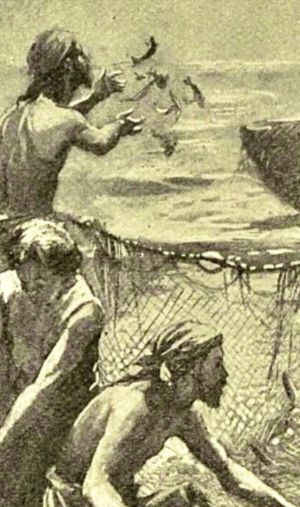
(Mt 13:47-53)
«Treasure» is the Gospel, the Word of God: a real bargain (v.44). «Pearl» Man is Jesus (vv.45-46).
«Kingdom» is the living assembly - people without merits, with an unexpected outcome; fruit of commitment to the search for the best.
The parable of the Net emphasizes the Result of the Kingdom of God, that is, the educational-operative Gift of the community, “area” in which God ‘reigns’.
The Church dreamed of by Christ is like a Net that pulls us up to the light, to the breath, to existence in fullness.
Conviviality of differences that makes each and everyone reborn, but without holding back the rotten and putrefied [nasty, corrupt, spoiled, dead: v.48], ie the one that has no life, nor does it longer offer it.
This is not a trivial moralistic or forensic judgment, between good and bad!
It is the distinction between what remains full and «beautiful» (in the Eastern sense) and what - putrid, rotten - corrupts and degrades, leaving irreparable filth, ordure, scum.
In short: it is in fraternal realities that God has a foot on earth.
In Communion, the Lord becomes Nest and real Presence. Ally who even in difficult moments lets us contact regenerative energies.
Friendship and eminent Self, Landing Place and vocational Instinct that although hidden fills the path, transforming it into Relationship; even in fleeting, brief moments.
Here he is Living in us, while He brings forth Joy of being, because He fills the mentality of everyone, and allows dialogue and the exchange of gifts that make joy come alive and shine.
In this way, we are precisely the divine intervention in the ordinary existence of people, when we correspond and cooperate with His creative-promoting action of being, abundant and total.
No exclusion or condemnation: only joy, in the sense of vital wave fullness.
On every son the Father returns with care. His work does not discard a priori the unsuccessful "piece", but only what is not needed for complete life.
Now the world is intermingled, and we should not be estranged from our time, yet this does not detract from the fact that it is good to be mindful of what is eternally human.
We welcome the things of our world, but we try to go beyond the contingent - for intensity, for love: all the beauty there is.
Believers are responsible for the transmission of the Faith (v.52). In doing so, they make clear the wisdom of the Kingdom, the difference between custom and personal Calling.
The Lord's intimates invite all to be patient, so that each one may have time for growth, and choices may be ‘useful’. And beautiful ones (v.48).
Everything we have already assimilated through family upbringing thus acquires an amiable, profound, intimate, engaging, creative dimension.
And at the same time a broader purpose, but enlightened from within.
To internalize and live the message:
Has the experience of community entered you and enriched the idea of God?
[Thursday 17th wk. in O.T. July 30, 2026]
The Lord has also given us, for our consolation, these parables of the net with good and bad fish, of the field where wheat grows but also darnel. He lets us know that he has come precisely to help us in our weakness, that he has not come, as he says, to call the righteous, those who claim to be already completely righteous, those who do not need grace, those who pray praising themselves, but that he has come to call those who know they are lacking, to provoke those who know they need the Lord's forgiveness, his grace, every day to move forward.
This seems very important to me: to recognise that we need permanent conversion, we have never simply arrived. St Augustine, at the moment of conversion, thought he had arrived on the heights now of life with God, of the beauty of the sun that is his Word. Then he had to understand that even the path after conversion remains a path of conversion, that it remains a path where there is no lack of great prospects, joys, the lights of the Lord, but where there is also no lack of dark valleys, where we must go forward with confidence leaning on the goodness of the Lord.
[Pope Benedict, on his visit to the Roman Major Seminary 17 February 2007]
Allow me, Reverend Bishop of the ancient, venerable Church of Cologne, Reverend Brother Cardinals and Bishops, allow me all, beloved brothers and sisters, that I try to clarify in this Eucharistic celebration the importance of our extraordinary meeting today with the help of this parable, with the help of the word of Christ, who repeatedly explained the kingdom of God by means of parables. Using them, he announced the presence of this kingdom to the world.
We too must encounter this dimension. This is, in a way, the essential premise of today's visit of the successor of the Apostle Peter in the episcopal see of Rome to your Church in Germany, to you here in Cologne, who represent the Church of God as it was formed over many centuries around the Roman 'Agrippine Colony'. The eminent symbol of this Church has hitherto been your splendid cathedral, whose spiritual importance has been renewed in you thanks to this year's Jubilee: it powerfully speaks to you of God's reign among us.
We, who now form the Church of Christ on earth, on this part of German territory must meet in the dimension of the unity of the kingdom of God: Christ came to proclaim this kingdom and to spread it on this earth, in every place on earth, in men and among men.
This kingdom of God is in our midst (cf. Lk 17:21), just as it was in all the generations of your fathers and ancestors. Like them, we still pray in the "Our Father" every day: "Thy kingdom come". These words testify that the kingdom of God is still before us, that we are going towards it and advancing towards it along the confused, and indeed sometimes even false, paths of our earthly existence. We testify with these words, that the kingdom of God is continually being realised and drawing nearer, even though we often lose sight of it and no longer perceive its outline determined by the Gospel. It often seems that the sole and exclusive dimension of our existence is 'this world': the 'kingdom of this world' with its visible profile, its fascinating progress in science and technology, culture and economics... fascinating and often also worrying! But if we, however, every day, or at least from time to time, kneel down to pray, we say amidst the circumstances of life always the same words: 'Thy kingdom come'.
Dear brothers and sisters! These hours, in which we meet here, the time, which thanks to your invitation and hospitality I am able to spend among you, is the time of the kingdom of God: of the kingdom "that is already here", and of that which is still "coming". That is why we must interpret all the essentials, which refer to this visit, with the help of the parable, which we hear in today's Gospel: "The kingdom of heaven is like...".
2. What is it like?
According to Jesus' words as handed down to us by the four evangelists, this kingdom is explained with various parables and comparisons. Today's comparison is one of many. It seems to us very closely related to that work, which Christ's apostles, including Peter, did, as did many of his listeners on the shore of the Lake of Genezaret. Christ says: the kingdom of heaven is like "a net cast into the sea, gathering every kind of fish" (Matthew 13:47). These simple words completely change the physiognomy of the world: the physiognomy of our human world as we make it through experience and science. Experience and science cannot cross those boundaries of the "world" and human existence in it, which are necessarily joined with the "sea of time": the boundaries of a world, in which man is born and dies, in correspondence with the words of Genesis: "You are dust and to dust you shall return" (Gen 3:19). Christ's comparison, on the contrary, speaks of the transposition of man into another "world", into another dimension of his existence. The kingdom of heaven is precisely this new dimension, which opens up above the "sea of time" and is at the same time the "net", which works in this sea for the destiny of man and of all men in God.
Today's parable invites us to recognise the kingdom of heaven as the definitive fulfilment of that righteousness, longed for by man with irrepressible longing, which the Lord placed in his heart, that righteousness which Jesus himself realised and proclaimed, that righteousness, finally, which Christ sealed with his own blood on the cross.
In the kingdom of heaven, in the kingdom 'of righteousness, love and peace' (prefatio in festo Christi Regis) man too will be found perfect. For man is the being that springs from the depths of God and hides within himself such a depth that only God can fill it. He, man, is in all his being a copy of God and is similar to him.
3. Jesus founded his Church on twelve apostles, several of whom were fishermen. Thus the image of the net was immediate. Jesus wanted to make them fishers of men. The Church too is a net, united by the Holy Spirit, connected by the apostolic mission, efficient for unity in faith, life and love.
I think at this moment of the widely spread net of the universal Church.
At the same time every single Church in your land is before my eyes, especially the large Church in Cologne and the neighbouring dioceses. And finally before my eyes is the smallest of these churches, the "ecclesiola", the domestic church, which the most recent Synod of Bishops in Rome recalled with such great attention in the theme above "the tasks of the Christian family".
The family: domestic church, the unmistakable and irreplaceable community of persons, of which St Paul speaks in today's second reading. In this he naturally has before his eyes the Christian family of his time, but what he says we must equally apply to the problems of families in our time: what he says to husbands, what he says to wives, children and parents. And finally, what he says to all of us: 'Put on, then, feelings of mercy, goodness, humility, meekness, patience, bearing with one another and forgiving one another... Above all, then, let there be charity, which is the bond of perfection. And let the peace of Christ reign in your hearts, for to it you have been called in one body. And be thankful!" (Col 3:12-15).
What a great lesson in marriage and family spirituality!
4. However, we cannot close our eyes to the other side either; the synod fathers in Rome also dealt with it very seriously: I mean the difficulties, to which the high ideal of Christian understanding of the family and family life is exposed today. Modern industrial society has fundamentally changed the conditions of life for marriage and the family.
Marriage and family used to be not only communities of life, but also communities of production and economy. They were rejected by many public functions. The public climate is not always favourable towards marriage and family. And yet, in our mass civilisation, they prove to be a place of refuge in the search for protection and happiness. Marriage and family are more important than ever: living cells for the renewal of society, sources of strength, whereby life is made more human. I can grasp the image: net, which gives support and unity and lifts from the currents of the deep.
Let us not allow this net to be broken. State and society start their own decay, if they do not support marriage and the family more effectively and put them on a par with other non-marital communities of life. All men of good will, particularly we Christians, are called to rediscover the dignity and value of marriage and the family and to live them out before men in a convincing manner. The Church, with the light of faith, offers its advice and spiritual service.
5. Marriage and family are very deeply connected with man's personal dignity. They do not derive from instinct and passion alone, nor from feeling alone; they derive first and foremost from a decision of the free will, from a personal love, whereby the spouses become not only one flesh, but also one heart and one soul. Physical and sexual communion is something great and beautiful. But it is only worthy of man if it is integrated into a personal union, recognised by the civil and ecclesiastical community. Full sexual communion between man and woman therefore has its legitimate place only within the exclusive and definitive personal bond of fidelity in marriage. The indissolubility of conjugal fidelity, which is no longer comprehensible to many today, is equally an expression of man's unconditional dignity. One cannot live only by trial, one cannot die only by trial. One cannot love only by trial, accept a man only by trial and time.
6. Thus marriage is oriented to duration, to the future. It looks beyond its boundaries. Marriage is the only suitable place for the generation and upbringing of children. Thus, married love is also oriented by its essence to fecundity. In this task of passing on life, spouses are collaborators with the love of God the Creator. I know that even here in today's society, the difficulties are great. They burden women in particular. Restricted housing, economic and health problems, often even a declared attitude not in favour of prolific families are obstacles to greater fertility. I appeal to all those responsible, to all the forces in society: do everything to help. I appeal first of all to your conscience and your personal responsibility, dear brothers and sisters. In your conscience you must, in the presence of God, make the decision on the number of your children.
As spouses, you are called to responsible fatherhood. This means family planning that respects ethical norms and criteria, as was also emphasised by the most recent Synod of Bishops. It is with great care that I would like to remind you today of just this one thing: the killing of unborn life is not a legitimate means of family planning. I repeat what I said on 31 May of this year to the workers in the Paris suburb of Saint-Denis: 'The first human right is the right to life. We must defend this right and this value. Otherwise the whole logic of faith in man, the whole programme of truly human progress would be shaken and everything would fall to the ground'. In reality this is what it is all about: serving life.
7. Dear brothers and sisters! On the indispensable platform and assumption of what has been said, we wish to turn to the deeper mystery of marriage and the family. Marriage from the perspective of our faith is a Sacrament of Jesus Christ. Marital love and fidelity are understood and transmitted by the love and fidelity of God in Jesus Christ. The power of his cross and resurrection carries and sanctifies Christian spouses.
As the recent Synod of Bishops noted in its message to Christian families in the world today, the Christian family is called in a special way to collaborate in God's salvific plan, as it helps its members "to become protagonists in the history of salvation and at the same time living signs of God's plan for the world" (Synodi Episcoporum Nuntius ad Christianas Familias, 8).
As a 'Church in a small way', sacramentally founded, i.e. a domestic Church, marriage and family must be a school of faith and a place of common prayer. I attach great significance precisely to prayer in the family. It gives strength to overcome many problems and difficulties. In marriage and the family, fundamental human and Christian attitudes must grow and mature, without which the Church and society cannot exist. Herein lies the first place for the Christian apostolate of the laity and the priesthood common to all the baptised. Such marriages and families imbued with the Christian spirit are also the true seminaries, that is, the nurseries for spiritual vocations for the priestly and religious state.
Dear spouses and parents, dear families! What could I wish you on the occasion of today's Eucharistic meeting with more cordiality than this: may you all and every single family be such a 'domestic church', a Church in a small way! May the parable of the kingdom of God be realised in you! May you experience the presence of the kingdom of God, in that you yourselves are the living "net", which unites and brings and gives shelter - for yourselves and for many around you.
This is my wish of blessing, which I express to you as your host and pilgrim and as a servant of your salvation.
8. And now let me also turn at the end of this fundamental reflection on the kingdom of God and the Christian family to St Albert the Great, whose seventh centenary celebration has brought me to your city. For here is the tomb of this celebrated son of your land, who was born in Lauingen and in his long life was at once a great scientist, a spiritual son of St Dominic and the teacher of St Thomas Aquinas. He was one of the greatest men of intelligence in the 13th century. He like no other joined the 'net' that unites faith and reason, the wisdom of God and the science of the world. At least in spirit I also visit his birthplace, Lauingen, while today, in Cologne, at his tomb, I pause to meditate with you on the words with which today's liturgy celebrates him: "If this is the will of the great Lord, / he shall be filled with the spirit of understanding, / like rain he shall pour forth words of wisdom, / in prayer he shall render praise to the Lord. / He will direct his counsel and his knowledge, he will meditate on the mysteries of God. / He will make the doctrine of his teaching shine, / he will boast of the law of the covenant of the Lord. / Many will praise his understanding, / he will never be forgotten, / his memory will not disappear, / his name will live from generation to generation. / The peoples will speak of his wisdom, / the assembly will proclaim his praise" (Sir 39:6-10).
Nothing needs to be added to these words of the wise Jesus Sirach. Nor should any be left out. For they perfectly describe the figure of that man, whose homeland your city rightly honours, and who is of joy to the whole Church. Albertus Magnus, universal doctor - Albertus Magnus, of very broad doctrine: a true 'disciple of the kingdom of God'! If we have reflected together today on the vocation of the Christian family to build the kingdom of God on earth, the words of Christ's parable must also give us the deeper meaning of this saint, whom we solemnly remember today. For Christ says: "Every scribe who has become a disciple of the kingdom of heaven is like a householder, who takes out of his treasure new things and old things" (Mt 13:52).
Saint Albert is also similar to such a householder! May his example and intercession accompany me as I try, on my pilgrimage through your country, as a fisherman of men, to tie the net more tightly and cast it further, so that the kingdom of God may come.
[Pope John Paul II, homily Cologne 15 November 1980]
For Jesus we are not a "mass", a "multitude"! We are individual "persons" with an eternal value, both as creatures and as re-deemed persons! He knows us! He knows me, and loves me and gave himself for me! (Gal 2:20) [John Paul II]
Non siamo “massa”, “moltitudine”, per Gesù! Siamo “persone” singole con un valore eterno, sia come creature sia come persone redente! lui ci conosce! lui mi conosce, e mi ama e ha dato se stesso per me! (Gal 2,20) [Giovanni Paolo II]
The grain of wheat that "falls to the ground and dies" becomes the promise of bread (Pope John Paul II)
Il chicco di grano che “cade in terra e muore” diventa la promessa del pane (Papa Giovanni Paolo II)
The power of faith can move mountains (cf. Mt 17:20): the Lord can illuminate even the deepest darkness [Pope Benedict]
La forza della fede può spostare le montagne (cfr Mt 17,20): il Signore può illuminare anche la tenebra più profonda [Papa Benedetto]
By willingly accepting death, Jesus carries the cross of all human beings and becomes a source of salvation for the whole of humanity. St Cyril of Jerusalem commented: “The glory of the Cross led those who were blind through ignorance into light, loosed all who were held fast by sin and brought redemption to the whole world of mankind” (Catechesis Illuminandorum XIII, 1: de Christo crucifixo et sepulto: PG 33, 772 B) [Pope Benedict]
Accettando volontariamente la morte, Gesù porta la croce di tutti gli uomini e diventa fonte di salvezza per tutta l’umanità. San Cirillo di Gerusalemme commenta: «La croce vittoriosa ha illuminato chi era accecato dall’ignoranza, ha liberato chi era prigioniero del peccato, ha portato la redenzione all’intera umanità» (Catechesis Illuminandorum XIII,1: de Christo crucifixo et sepulto: PG 33, 772 B) [Papa Benedetto]
In the New Testament, it is Christ who constitutes the full manifestation of God's light [Pope Benedict]
Nel Nuovo Testamento è Cristo a costituire la piena manifestazione della luce di Dio [Papa Benedetto]
Faith opens us to knowing and welcoming the real identity of Jesus, his newness and oneness, his word, as a source of life, in order to live a personal relationship with him. Knowledge of the faith grows, it grows with the desire to find the way and in the end it is a gift of God who does not reveal himself to us as an abstract thing without a face or a name, because faith responds to a Person who wants to enter into a relationship of deep love with us and to involve our whole life (Pope Benedict)
La fede ci apre a conoscere e ad accogliere la reale identità di Gesù, la sua novità e unicità, la sua Parola, come fonte di vita, per vivere una relazione personale con Lui. Il conoscere della fede cresce, cresce con il desiderio di trovare la strada, ed è finalmente un dono di Dio, che si rivela a noi non come una cosa astratta senza volto e senza nome, ma la fede risponde a una Persona, che vuole entrare in un rapporto di amore profondo con noi e coinvolgere tutta la nostra vita (Papa Benedetto)
Jesus Christ clearly indicates that even acts of devotion and penance (such as fasting, almsgiving, prayer), which by their religious purpose are primarily 'interior', can succumb to current 'externalism', and can therefore be falsified [John Paul II]
Gesù Cristo indica chiaramente che anche gli atti di devozione e di penitenza (come digiuno, elemosina, preghiera) che per la loro finalità religiosa sono principalmente “interiori”, possono cedere all’“esteriorismo” corrente, e quindi possono essere falsificati [Giovanni Paolo II]








duevie.art
don Giuseppe Nespeca
Tel. 333-1329741
Disclaimer
Questo blog non rappresenta una testata giornalistica in quanto viene aggiornato senza alcuna periodicità. Non può pertanto considerarsi un prodotto editoriale ai sensi della legge N°62 del 07/03/2001.
Le immagini sono tratte da internet, ma se il loro uso violasse diritti d'autore, lo si comunichi all'autore del blog che provvederà alla loro pronta rimozione.
L'autore dichiara di non essere responsabile dei commenti lasciati nei post. Eventuali commenti dei lettori, lesivi dell'immagine o dell'onorabilità di persone terze, il cui contenuto fosse ritenuto non idoneo alla pubblicazione verranno insindacabilmente rimossi.