


don Giuseppe Nespeca
Giuseppe Nespeca è architetto e sacerdote. Cultore della Sacra scrittura è autore della raccolta "Due Fuochi due Vie - Religione e Fede, Vangeli e Tao"; coautore del libro "Dialogo e Solstizio".
Being mortal and ultimate choices: not easy, but with Christ it is possible

The young man in the Gospel as we know asks Jesus: "What must I do to inherit eternal life?". Today it is not easy to speak about eternal life and eternal realities, because the mentality of our time tells us that nothing is definitive that everything changes, and changes very rapidly. "Change", in many cases, has become the password, the most exalting exercise of freedom, and that is why even you, young people, have often come to think that it is impossible to make definitive choices that would tie you down for the rest of your life. But is this the right way to use your freedom? Is it really true that in order to be happy we should content ourselves with small, transient joys that once they are over leave bitterness in the heart? Dear young people, this is not true freedom nor can true happiness be reached in this way. Not one of us is created to make provisional and revocable choices but rather definitive and irrevocable decisions that give full meaning to our existence. We see it in our lives: we should like every beautiful experience that fills us with happiness never to end. God created us with a view to the "forever", he has placed in the heart of each one of us the seed of a life that can achieve something beautiful and great. Have the courage to make definitive decisions and to live them faithfully! The Lord may call you to marriage, to the priesthood, to the consecrated life, to a special gift of yourselves: answer him generously!
In the dialogue with the young man who possessed many riches Jesus pointed out what was the most important, the greatest treasure in life: love. To love God and to love others with one's whole self. The word love we know it lends itself to many interpretations and has different meanings. We need a Teacher, Christ, to teach us its most authentic and profound meaning, to guide us to the source of love and life. Love is the name of God himself. The Apostle John reminds us: "God is love", and adds, "not that we loved God but that he loved us and sent his Son", and "if God so loved us, we also ought to love one another" (1 Jn 4: 8, 10-11) In the encounter with Christ and in reciprocal love we experience in ourselves the life of God, who abides in us with his perfect, total and eternal love (cf. 1 Jn 4: 12). Therefore there is nothing greater for man a mortal and limited being than to participate in the life of God's love. Today, we live in a cultural context that does not encourage profound and disinterested human relationships; on the contrary, it often induces us to withdraw into ourselves, into individualism, to let selfishness, that exists in people, prevail. But a young person's heart is by nature sensitive to true love. That is why I address each one of you with great confidence in order to say: it is not easy to make something beautiful and great of your life it is demanding, but with Christ, everything is possible!
[Pope Benedict, Meeting with Young People, Turin 2 May 2010]
Demand for fullness of meaning
6. The dialogue of Jesus with the rich young man, related in the nineteenth chapter of Saint Matthew's Gospel, can serve as a useful guide for listening once more in a lively and direct way to his moral teaching: "Then someone came to him and said, 'Teacher, what good must I do to have eternal life?' And he said to him, 'Why do you ask me about what is good? There is only one who is good. If you wish to enter into life, keep the commandments. 'He said to him, 'Which ones?' And Jesus said, 'You shall not murder; You shall not commit adultery; You shall not steal; You shall not bear false witness; Honour your father and mother; also, You shall love your neighbour as yourself.' The young man said to him, 'I have kept all these; what do I still lack?' Jesus said to him, 'If you wish to be perfect, go, sell your possessions and give the money to the poor, and you will have treasure in heaven; then come, follow me' " (Mt 19:16-21).
7. "Then someone came to him...". In the young man, whom Matthew's Gospel does not name, we can recognize every person who, consciously or not, approaches Christ the Redeemer of man and questions him about morality. For the young man, the question is not so much about rules to be followed, but about the full meaning of life. This is in fact the aspiration at the heart of every human decision and action, the quiet searching and interior prompting which sets freedom in motion. This question is ultimately an appeal to the absolute Good which attracts us and beckons us; it is the echo of a call from God who is the origin and goal of man's life. Precisely in this perspective the Second Vatican Council called for a renewal of moral theology, so that its teaching would display the lofty vocation which the faithful have received in Christ, the only response fully capable of satisfying the desire of the human heart.
In order to make this "encounter" with Christ possible, God willed his Church. Indeed, the Church "wishes to serve this single end: that each person may be able to find Christ, in order that Christ may walk with each person the path of life".
[Pope John Paul II, Veritatis Splendor nn.6-7 cf. ff.]
Opening oneself to the extraordinary
The Lord Jesus gives us the fulfilment; he came for this. That man had to come to the brink, where he had to take a decisive leap, where the possibility was presented to stop living for himself, for his own deeds, for his own goods and — precisely because he lacked a full life — to leave everything to follow the Lord. Clearly, in Jesus’ final — immense, wonderful — invitation, there is no proposal of poverty, but of wealth, of the true richness: “You lack one thing; go, sell what you have, and give to the poor, and you will have treasure in heaven; and come, follow me” (Mk 10:21).
Being able to choose between an original and a copy, who would choose the copy? Here is the challenge: finding life’s original, not the copy. Jesus does not offer surrogates, but true life, true love, true richness! How will young people be able to follow us in faith if they do not see us choose the original, if they see us adjusting to half measures? It is awful to find half-measure Christians, — allow me the word — ‘dwarf’ Christians; they grow to a certain height and no more; Christians with a miniaturized, closed heart. It is awful to find this. We need the example of someone who invites me to a ‘beyond’, a ‘plus’, to grow a little. Saint Ignatius called it the ‘magis’, “the fire, the fervour of action that rouses us from slumber”.
The path of what is lacking passes through what there is. Jesus did not come to abolish the Law nor the Prophets, but to fulfil. We must start from reality in order to take the leap into ‘what we lack’. We must scrutinize the ordinary in order to open ourselves to the extraordinary.
[Pope Francis, General Audience 13 June 2018]
19th Sunday in O.T.
19th Sunday in Ordinary Time (year A) [9 August 2026]
First Reading from the First Book of Kings (19:9a, 11–13a)
In the 9th century BC, in the Kingdom of Israel, Queen Jezebel, wife of King Ahab, introduced the worship of the god Baal in Samaria. Faced with the spread of idolatry, the prophet Elijah stands up with great zeal to defend the faith of his people. Convinced that God’s superiority must be demonstrated through signs of power, Elijah foretells a long drought and subsequently organises a contest on Mount Carmel between the priests of Baal and the God of Israel. Two altars are prepared, and it is decided that the true God will be the one who answers by sending fire from heaven. The priests of Baal pray in vain; when Elijah, however, calls upon the Lord, divine fire consumes the sacrifice. The people acknowledge the victory of the God of Israel. Nevertheless, Elijah, driven by his fervour, has the priests of Baal put to death – an act which God had not asked him to perform. When Jezebel learns of what has happened, she swears to take revenge and to kill Elijah. The prophet flees into the desert and, exhausted, comes to long for death. On his journey to Mount Horeb, he undergoes a profound inner crisis which becomes the starting point of his conversion. Elijah gradually realises that he had imagined God as a deity of strength and power, not unlike the very deities he had been fighting against. On Mount Horeb, where Moses too had once encountered God, the Lord reveals himself to him in an unexpected way. It is not in the storm, nor in the earthquake, nor in the fire, but in the ‘still small voice’ The Hebrew text uses the expression: קוֹל דְּמָמָה דַקָּה
Qôl demāmāh daqqāh. Literally, this means: qôl = voice, sound; demāmāh = silence, deep stillness, calm; daqqāh = subtle, delicate, faint. A very faithful translation might be: ‘a voice of subtle silence’, or ‘the sound of a delicate silence’.
Elijah thus discovers that true divine power is not expressed through violence, clamour or coercion, but through gentleness, patience, mercy and discretion. The account represents a fundamental stage in biblical revelation: God teaches his prophet to move from a form of religiosity based on force to a faith founded on trust and gentleness. Elijah’s great discovery is that God does not conquer through fear, but through love.
Responsorial Psalm (84/85) Psalm 84/85 was composed almost 50 years after the return of the people of Israel from the Babylonian exile (538 BC). When the exiles returned to their land full of enthusiasm and hope, they believed that a new life was beginning, that God had wiped the slate clean and that everything could start afresh. However, reality proved more difficult than expected. Breaches of the Covenant resurfaced; conversion was not automatic; and the returnees—often born in exile or having left as young people—encountered obstacles, misunderstandings and resistance, even in the reconstruction of the Temple. For this reason, the psalmist expresses conflicting feelings. On the one hand, he gives thanks to God for bringing his people back to the Promised Land and for forgiving their sins; on the other, seeing that the difficulties persist, he wonders whether divine wrath is not still present and pleads: ‘Show us your love, Lord, and grant us your salvation’. The central theme of the psalm is the dual meaning of the verb ‘to return’: the people have already physically returned to their land, but they must still make the most important return of all – that of the heart to God. True conversion is a gift from God, but it also requires human commitment, a willingness to listen to and follow his word. This is why the psalmist declares: ‘I will listen to what the Lord says’, recognising that peace springs from trusting obedience to God. The final part of the psalm is a magnificent hymn of hope. The poet looks forward to the day when God’s plan will be fully realised: ‘Love and truth shall meet; justice and peace shall kiss’. This is not a naïve dream, but the certainty that God is guiding history towards a future of reconciliation, brotherhood and peace amongst humankind.
Second Reading from the Letter of Saint Paul the Apostle to the Romans (9:1–5)
In chapters 9–11 of the Letter to the Romans, Saint Paul addresses an issue particularly close to his heart: if many Jews have not recognised Jesus Christ as the Messiah, does this perhaps mean that God has rejected his people? Paul is well aware of this problem because he himself, before his conversion on the road to Damascus, had been a strict Jew and even a persecutor of Christians. After his encounter with Christ, he realised that the Christian faith does not contradict the faith of Israel, but rather fulfils it. However, the majority of the Jewish people do not accept this conviction and, indeed, often oppose Paul’s preaching. This gives rise to his question: if Israel does not recognise the Messiah, is it perhaps excluded from the Covenant? And if God were to revoke his promises to Israel, how could Christians trust in his faithfulness? To answer this, Paul traces the entire course of sacred history. He recalls that Israel has received unique gifts: adoption as God’s children, the glory of his presence, the covenants, the Law, worship, the promises, the patriarchs and even the privilege that the Messiah should be born of his people. The whole of biblical history bears witness to God’s irrevocable commitment to Israel. Paul’s conclusion is clear: God has not abandoned the Jewish people. His promises are definitive, because God is faithful to himself. The Covenant has not been annulled. For Paul, the rejection of Jesus by many Jews remains a mystery, but it does not call into question the election of Israel. This final certainty is expressed in a decisive statement: ‘God remains faithful, for he cannot deny himself’ (2 Tim 2:13). The central message of the text is therefore that God’s faithfulness is stronger than human unfaithfulness.
From the Gospel according to Matthew (14:22–33)
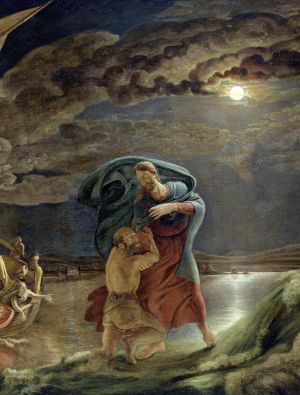
This Gospel episode takes place immediately after the feeding of the five thousand. After feeding the crowd, Jesus Christ instructs the disciples to leave and goes up the mountain alone to pray. On the one hand, his mission cannot stop at the success of the moment; on the other, Jesus wishes to avoid the risk of triumphalism and spectacle, a temptation he had already faced in the desert. Prayer enables him to remain in deep communion with the Father and to discern the path to follow. Meanwhile, the disciples’ boat is being tossed about by the waves of the Sea of Tiberias. During the night, they see a figure walking on the water and, terrified, think it is a ghost. But Jesus reassures them with words that run through the entire Gospel: ‘Take heart! It is I; do not be afraid.’ At that point, Peter, trusting in the Master’s voice, asks to be allowed to go to him by walking on the water. Jesus simply replies: ‘Come.’ Peter then accomplishes the impossible and walks on the water, but when he takes his eyes off Jesus and focuses on the force of the wind, he is overcome by fear and begins to sink. In this action, Peter represents every disciple: generous and sincere in his enthusiasm, yet fragile when put to the test. His fall does not stem from a lack of love, but from doubt and fear. Nevertheless, he makes the right choice: he cries out, ‘Lord, save me!’ Jesus reaches out his hand, seizes him and brings him to safety, asking him, ‘You of little faith, why did you doubt?’ The story teaches us that faith consists in keeping our gaze fixed on Christ even when difficulties seem to overwhelm us. Our frailties, doubts and even our failures are not the final word: what matters is that we continue to call upon his help. When Jesus steps into the boat, the wind dies down and the disciples come to understand more deeply who he is. They fall down before him and proclaim: ‘Truly, you are the Son of God.’ The central message of the passage is that the life of faith alternates between moments of strength and moments of weakness, as happened to Peter. But whenever a person is in danger of sinking, they can entrust themselves to Christ, and God’s hand is always ready to sustain them.
+Giovanni D’Ercole
Textbook expectations. Risk of drowning. Danger, growth
Transfiguration of the Lord
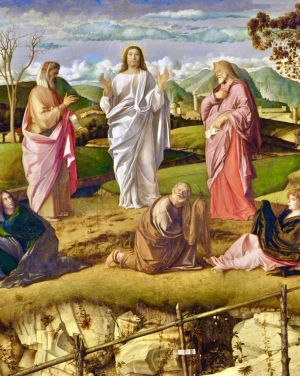
The Transfiguration of the Lord (year A) [6 August 2026]
First Reading from the Book of the Prophet Daniel (7:9–10, 13–14)
The text recounts a vision of the prophet Daniel, written during the persecution of the Jews by Antiochus IV Epiphanes in the 2nd century BC. Its purpose is to encourage and console the suffering people. Daniel first sees God, depicted as an ‘Ancient of Days’ seated on a throne of fire, surrounded by millions of servants. It is an image of justice and victory: God is about to judge the persecutors and bring justice to the faithful. Next, the ‘Son of Man’ appears; he is brought before God on the clouds of heaven and receives power, glory and an eternal kingdom. It resembles a scene of a messianic coronation.
Who is the Son of Man? The explanation given in the text of Daniel itself is surprising: the Son of Man does not initially represent a single person, but the ‘people of the saints of the Most High’, that is, Israel faithful to God, especially that small group which remains faithful during persecution. The message is therefore clear: today you are oppressed, but God will grant you victory and his Kingdom will be eternal. After their deliverance from persecution, many Jews continued to interpret this prophecy as referring to the future. Some began to await not an individual Messiah, but a collective Messiah: the faithful people of Israel, called precisely the ‘Son of Man’. And here is the new insight brought by Jesus. Jesus of Nazareth takes up the title ‘Son of Man’, but gives it a deeper meaning: it does not simply refer to ‘a man’, but to the whole of humanity; Jesus applies it to himself more than eighty times in the Gospels; he unites two aspects that were separate in Daniel: glory and suffering. For Jesus, the Son of Man is not merely the glorious King who receives the Kingdom, but also the one who suffers, is rejected and dies before entering into glory. After the Resurrection, the disciples realise that Jesus is both man and God. He is the head of a new humanity, and all those united to him form one body. Therefore, Daniel’s prophecy is fully fulfilled in Christ and in his people: believers are called to share in his kingship and his glory.
This, then, is the central message: God created humanity to share in his dignity and his Kingdom. Suffering and persecution do not have the final say: the ultimate destiny of the faithful is to share in God’s victory and his eternal kingdom.
Responsorial Psalm (96/97)
A constant struggle against idolatry: this could be the commentary on Psalm 96/97 (‘The Lord reigns’) to highlight a fundamental theme of the Bible: the constant struggle against idolatry and the affirmation that there is only one God.
When the psalm proclaims: ‘The Lord is King; let the earth rejoice’, it affirms that God is the one true sovereign of the universe. The expressions: ‘You reign above all gods; let all gods bow down before him’, do not mean that there are other inferior gods, but that all false deities and idols are nothing in the face of the one God of Israel.
In the Jewish faith, the fundamental principle is: ‘Hear, O Israel: the Lord our God is the one and only Lord.’ Israel always lived in close contact with polytheistic peoples and was often tempted to adopt their cults. For this reason, the prophets denounced the people’s unfaithfulness, comparing it to that of a wife who betrays her husband. However, alongside their rebuke, they always proclaimed God’s forgiveness and mercy. The text recalls that the first chapter of the Book of Genesis was written in contrast to the religious beliefs of Babylon. Whilst Babylonian myths spoke of many gods fighting amongst themselves and of humanity created to be slaves, the Bible affirms that: there is only one God; creation is good; man and woman are created in the image of God; human beings are called to rule over creation and not to be its slaves. Even the sun and the moon are not named, to prevent them from being worshipped as deities: they are simply ‘luminaries’ in the service of life. God, Lord of the universe, and the psalm describes God’s manifestation with majestic imagery: fire, lightning, clouds, earthquakes, mountains melting like wax. These images recall Moses’ theophany on Mount Sinai and serve to demonstrate divine power and majesty. A universal message of joy emerges, and the expression ‘The Lord is King; let the earth rejoice’
means that God’s kingdom concerns not only Israel, but all humanity.
Indeed, the Bible always combines two ideas: the election of Israel and the salvation intended for all peoples. God’s plan is universal and oriented towards joy, justice and peace. Finally, the psalm invites us to believe that God guides history towards a future of peace and happiness for all. Even when the world seems dominated by wars, violence and injustice, the believer is called to maintain hope and to work together so that God’s plan may be realised. The commentary’s final observation is very practical: peace and joy are possible, but we must truly desire them. In other words, it is not enough simply to wait for God to intervene: we must also commit ourselves personally to building a more just and fraternal world.
Second Reading from the Second Letter of Saint Peter the Apostle (1:16–19)
The central theme of this passage could be summarised as follows: ‘Remain steadfast in the faith and beware of false prophets’, which may be regarded as Peter’s spiritual testament. The Second Letter of Peter resembles a farewell address: as he is about to depart, the one who is leaving recalls the fundamental truths that have inspired him and offers guidance for the future to those who have gathered around his testimony. The verses presented here serve as an introduction to the entire letter and summarise its main themes: 1) remain steadfast in your faith in Jesus Christ, the Son of God; 2) beware of false prophets. All this without losing sight of the horizon of faith: the hope of Christ’s return. Above all: remain steadfast in your faith in Jesus, the Son of God. At the time of Jesus’ birth, it would never have occurred to anyone that God could have a Son; the one God was solitary. When John the Baptist heard the voice from heaven designating Jesus as the Son, he certainly interpreted it as ‘Messiah’; for, traditionally, the king of Israel received the title ‘Son of God’ on the day of his coronation, with the words ‘You are my Son; today I have begotten you’ (Ps 2:7). For Jewish believers, to call oneself the Son of God was a lie, a claim to authority, or even blasphemy. It was one of the reasons for Jesus’ condemnation (Mark 14:64). Gradually, much later, as they meditated on the mystery of Christ in the light of the Resurrection, the apostles discovered this unexpected truth: Jesus is truly the Son of God; he is God. The event of the Transfiguration now appears in full light: Christ ‘received honour and glory from God the Father; a voice came to him from the majestic glory: “This is my beloved Son, in whom I am well pleased.”’
Now, throughout the Old Testament, glory is the prerogative of God: for example, ‘Give to the Lord the glory due to his name’ (Ps 28/29:2) . Yet, according to Matthew and Mark, the voice from heaven at the Transfiguration said nothing different from what it said at the Baptism; what changes is precisely the glory that envelops Jesus at the Transfiguration: he is alone on the mountain, surrounded only by the two greatest figures of the Old Testament; at the Baptism he was immersed in the crowd, mingled with the people of sinners. It is the same Jesus whom the disciples have come to know little by little—the Son of Man, certainly, but also the Son of God. Moreover, this faith does not betray their previous faith. For the disciples, this renewed faith is not a betrayal of their past faith: none of them thinks they have changed religion by recognising in Jesus the Messiah so long awaited by his people. On the contrary, by re-reading the Scriptures, they discover that Jesus is precisely the one whom they foretold.
Hence Peter’s words: ‘Thus we have confirmation of the prophetic word’, and his advice to the readers: ‘You would do well to pay close attention to it, as to a lamp shining in a dark place.’ A beautiful image: in the darkness of humanity awaiting its Saviour, the light of the prophets is already shining. From now on, Christians must always remember this Word that foretold Jesus. Another important point: beware of false prophets. If Peter speaks in this way, it is because his fear was not unfounded, and many passages in the New Testament express the same concern. For example,
we read in the Gospel of Matthew: ‘Beware of false prophets, who come to you in sheep’s clothing, but inwardly are ravenous wolves. ‘You will recognise them by their fruits’ (7:15–16). The same issue recurs in John’s letters: ‘Beloved, do not believe every spirit, but test the spirits to see whether they are from God, for many false prophets have gone out into the world’ (1 John 4:1). And Paul also speaks of this: “The Spirit plainly states that in the last days some will fall away from the faith, following deceiving spirits and the teachings of demons” (1 Tim 4:1); “The time will come when people will no longer endure sound teaching, but, having an itch to hear something, they will gather around themselves a multitude of teachers… and turn to myths” (2 Tim 4:3–4). Faced with these false prophets stand the authentic witnesses, those who have known Jesus of Nazareth and who alone have the right to speak. This concern for the authenticity of witness is a constant theme among the first apostles, and in Peter in particular. Hence the conditions for choosing Judas’s replacement (cf. Acts 1:21–22). Hence, too, Peter’s insistence on his presence at the Transfiguration: “We were eyewitnesses of his majesty… We ourselves heard this voice coming from heaven whilst we were with him on the holy mountain”. It is because they were witnesses to the coming of the Son of God amongst men that his apostles can now, with full confidence, await his coming at the end of time ‘until the day dawns and the morning star rises in your hearts’ (2 Peter 1:19).
From the Gospel according to Matthew (17:1–9)
Two essential points emerge from this text: the choice of witnesses and the Mount of the Transfiguration: Jesus took Peter, James and his brother John with him: once again we are faced with the mystery of God’s choices. Shortly before, at Caesarea, Jesus had said to Peter: ‘You are Peter, and on this rock I will build my Church; and the gates of hell shall not prevail against it’ (Mt 16:18). But Peter, entrusted with this crucial mission, is not alone with Jesus: he is accompanied by the two brothers, James and John, the sons of Zebedee. ‘And he led them aside to a high mountain’: on a high mountain, Moses had received the revelation of the God of the Covenant and had been given the tablets of the Law—that law which was to gradually teach the people of the Covenant to live in the love of God and of their brothers and sisters. On that same mountain, Elijah had received the revelation of the God of tenderness in the gentle breeze… Moses and Elijah, the two pillars of the Old Testament. On the high mountain of the Transfiguration, Peter, James and John—the pillars of the Church—receive the revelation of the God of tenderness incarnate in Jesus: ‘This is my beloved Son, in whom I am well pleased.’ And this revelation is given to strengthen their faith before the storm of the Passion. Peter would later write: ‘We did not follow cleverly devised myths when we made known to you the power and coming of our Lord Jesus Christ, but we were eyewitnesses of his majesty’ (2 Peter 1:16–18). ‘Let us make three tents’: this remark by Peter suggests that the episode of the Transfiguration took place during the Feast of Tabernacles, or at least within the atmosphere of the feast celebrated in remembrance of the journey through the desert during the Exodus and of the Covenant made with God. During the feast, many psalms celebrated the messianic promises and implored God to hasten his coming. On the Mount of the Transfiguration, the three apostles suddenly find themselves faced with this revelation of the mystery of Jesus: it is hardly surprising that they are seized by the fear that grips every person in the presence of the holy God. Nor is it surprising that Jesus lifts their spirits and reassures them: the Old Testament had already revealed to the people of the Covenant that the Most Holy God is the God who is very close to humankind, and that there is no cause for fear. But this revelation of the mystery of the Messiah, in all its aspects, is not yet within everyone’s grasp; Jesus commands them not to tell anyone for the time being, until the Son of Man has risen from the dead. By uttering these words, Jesus confirms the revelation the three disciples have just received: he is truly the Messiah whom the prophet Daniel saw in the likeness of a man, coming on the clouds of heaven (cf. Dan 7:13–14). It should be remembered that Daniel himself presents the Son of Man not as a solitary individual, but as a people, whom he calls the people of the saints of the Most High. The fulfilment is even more beautiful than the promise: in Jesus, the God-Man, it is the whole of humanity that will receive this eternal kingship and be eternally transfigured. But Jesus was right to say: ‘Tell no one anything before the Resurrection…’ Only after Jesus’ resurrection will the apostles be able to bear witness to it.
Note: The Greek text begins with ‘Six days later’: this is understood to mean ‘six days after Yom Kippur’, the Day of Atonement. It invites us to imagine a connection with the Feast of Tabernacles, hence Peter’s suggestion: ‘Let us make three tents here.’ Furthermore, why are Moses and Elijah present? The very same two who received the revelation of the Father on Mount Sinai now receive the revelation of the Son here. The mosaic in the Basilica of the Transfiguration at St Catherine’s Monastery in Sinai confirms this interpretation: Moses is depicted barefoot, his sandals untied beside him, as he was before the burning bush (cf. Ex 3).
+Giovanni D’Ercole
Multiplying by sharing 5 loaves and 2 fish. Fellowship and itinerancy: another vision of Tenderness and development
18th Sunday in O.T.
18th Sunday in Ordinary Time (Year A) [2 August 2016]
First Reading from the Book of the Prophet Isaiah (55:1–3)
We have reached the end of the second book of Isaiah, which is entirely focused on the end of the Exile and the return to the Promised Land, and is therefore called ‘the book of the consolation of Israel’. Chapter 54 heralds the long-awaited return, and this chapter specifies the spirit in which we are to return. Four major themes are evoked. The first theme is the gratuitous nature of God’s gifts: ‘Come, buy without paying’. Sometimes, it is precisely this gratuitousness that is the hardest to accept. We tend to think of merits and dignity that must be regained in order to stand before God, whilst mercy bends down to repentant sinners. Isaiah declares: ‘For my thoughts are not your thoughts, nor are your ways my ways. As the heavens are higher than the earth, so are my ways higher than your ways’ (55:8–9). Voltaire used to say: “God made man in his own image, and man has done him a fine job of it.” He was right, because we sometimes imagine a God with the same feelings as our own – one who takes revenge and punishes – whereas in the Bible, God always shows such an abundance that is entirely free and generous that we might say that in God’s supermarket, everything is always free. But if everything is free, can we do as we please? Certainly not, because if we are touched by God’s love, our hearts change and we begin to resemble him. In a society founded more on commerce than on service, Christians must nurture the kingdom of gratuitousness, for if we stray from the path of gratuitousness, we are far from God’s ways. The second theme is the struggle against idolatry, a temptation that constantly resurfaces. Only God holds the keys to our happiness and freedom, and with Him, everything is given. We simply need to trust. The third theme is listening and trust – ‘Give ear and you shall live’ ‘Give ear and come to me; listen and you shall live’ (55:3). We lend an ear to so much commercial advertising; why, then, does this message from Isaiah – spoken in God’s name and marked by gratuitousness – fail to convince us? The way of gratuitousness stands above our ways of calculation and ‘quid pro quo’. Fourth theme: God’s faithfulness to the Covenant, another key theme in the sermons of Second Isaiah: the exiles feared they would be abandoned by God forever, yet His love is entirely gratuitous and unconditional, and He never calls His Covenant into question; indeed, He renews it at every moment.
Responsorial Psalm (144/145)
Psalm 144/145 is an alphabetic psalm of praise for the Covenant. This Sunday’s first reading speaks of the gratuitousness and abundance of God’s gifts; this psalm says nothing other than this! It is an alphabetic, acrostic psalm: it has as many verses as there are letters in the Hebrew alphabet, with each verse beginning with a different letter of the alphabet. This style of composition has a specific, consistent purpose: to express to God the believers’ gratitude for the gift of the Covenant. It is therefore no surprise to find in this psalm a reference to all aspects of the Covenant: the extraordinary discovery of a God who is both almighty and close to humankind. The Book of Wisdom made this clear: ‘You, Lord, who possess power, judge with gentleness; you rule us with great forbearance, for when you wish, you can use your power’ (12:16–18). Even before the Book of Wisdom, other Old Testament texts had powerfully proclaimed God’s greatness and goodness. At the outset, verse 8 of the psalm echoes God’s revelation to Moses on Mount Sinai: ‘The Lord, a God merciful and gracious, slow to anger and abounding in love and faithfulness’ (Ex 34:6); the burning bush: Exodus 3:1–6 presents a twofold revelation: God reveals himself to Moses in the burning bush whilst he was tending the flock of Jethro, his father-in-law, the priest of Midian (cf. Exodus 3:7). He always reveals himself to be compassionate and merciful = literally ‘a heart open to our miseries’, who takes the side of those in distress. Moses, who had previously veiled his face, realises that he need not be afraid. ‘My people’ is a reference to the Covenant with the people dating back to Abraham. Just as God had seen the misery of Abraham, an elderly man without children, so He has seen the misery of His people. In conclusion, this psalm, like the account of the Exodus, is important for the faith of Israel and therefore for our own: it reveals the dual nature of God as both the Wholly Other and the Wholly Near. He is the Wholly Other, to whom one approaches only with awe and reverence, and at the same time the Wholly Near, who sees the misery of his people and raises up a liberator. In the verses chosen from Psalm 144/145 for this Sunday, the emphasis is placed on this tenderness of God, a conviction that forever nourishes the faith of the Jewish people and our own, just as it filled the heart of Jesus of Nazareth.
Second Reading from the Letter of Saint Paul the Apostle to the Romans (8:35, 37–39)
Nothing can ever separate us from the love of God: this statement brings to a close Chapter 8, which we have been reading for several weeks, in which Paul marvels at God’s love. In Chapter 5 he had said: ‘The love of God has been poured into our hearts through the Holy Spirit’ (Rom 5:5). Here he gives free rein to the exultation that fills the hearts of believers when they realise God’s work on their behalf: ‘God, who did not spare his own Son, but handed him over for us all’ (Rom 8:32). From now on, no one can break the covenant so closely bound between God and us. As the first Eucharistic Prayer of Reconciliation states, ‘with your arms outstretched on the cross, you have drawn between heaven and earth the indelible sign of the covenant’. From now on, every attempt at separation is doomed to failure. Paul takes up one of the major themes of Scripture: the very stake of the lives of the children of Adam is to remain attached to God, without allowing themselves to be separated from him by the Tempter. In the wilderness, Jesus faced the onslaught of the Tempter, who tempted him with power, ease and honours. Peter himself tempted Jesus to flee from the inevitable persecution. But nothing—neither hunger nor the mirages of success—could separate the Son from the Father. In turn, Paul and the other apostles draw from the Spirit of Christ the strength to remain grafted onto him. Paul offers us here a great profession of faith: ‘For I am convinced that neither death nor life… nor anything else will ever be able to separate us from the love of God, which is in Christ Jesus our Lord’ (Rom 8:38–39). This is not pride, but the certainty of faith: Paul does not for a moment consider that the credit for this faithfulness lies with him. When he states, ‘In all these things we are more than conquerors through him who loved us’, the key word is ‘through’ him. His declaration resembles that of the prophet Isaiah concerning the Servant of God: ‘The Lord God helps me; therefore I shall not be disgraced’ (Isaiah 50:7).
From the Gospel according to Matthew (14:13–21)
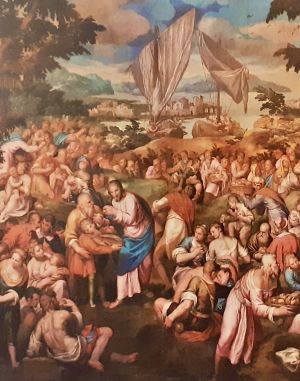
The episode of the multiplication of the loaves follows immediately after the announcement of John the Baptist’s execution. Matthew recounts John’s death and concludes: ‘His disciples went and took his body, buried it, and went to tell Jesus’ (14:12). Jesus’s first reaction, which appears to be prudence, is to withdraw: “On hearing this, Jesus got into a boat and withdrew to a deserted place by himself” (14:13). But he is immediately overtaken by the crowd’s pleas and “he had compassion on them” – literally, “he was moved to the depths of his being”, as Matthew puts it. Humanly speaking, Jesus commits an act of reckless folly. It was politically imprudent because the wise course of action at that moment would have been to keep a low profile, since his popularity would attract the hatred of the Pharisee leaders; it was folly because it was senseless to believe that five loaves and two fish would be enough to feed such a crowd. The disciples, being realists, pointed this out to him, but Jesus replied, unperturbed: ‘You yourselves give them something to eat’ (14:16). This episode brings to mind the prophet Elisha, in the Northern Kingdom, 800 years earlier, whose story was known to all. In the midst of a famine, a faithful follower had brought an offering of the first fruits of the harvest: twenty barley loaves that would normally have been Elisha’s due, but he, given the circumstances, decided to share them with everyone. Twenty loaves were too many for a single prophet, but they were a pittance for the hungry people around him: the text says there were a hundred people. Elisha had told his servant, ‘Give it to the people to eat’, but the servant could see that the numbers didn’t add up: ‘How can I set this before a hundred people?’. And the prophet insisted: ‘Give it to the people to eat. For thus says the Lord: “They shall eat and there will be some left over.”’ And the servant distributed it: ‘They ate and there was some left over, according to the word of the Lord’ (2 Kings 4:42–44). In this miracle, too, we note the disparity between the number of diners, the few loaves and fish available, and the amount of leftovers collected. Matthew is keen to point out: ‘They all ate and were satisfied; and they carried away twelve baskets full of the fragments’ (14:20). What do Jesus and Elisha have in common? What is their secret? First of all, both believe that sharing is possible, whatever the number of diners, because both place their trust in God. They also share the mention of the leftovers and the precise statement that ‘everyone ate their fill’. This miracle brings to mind the gift of manna in the Book of Exodus: ‘I will satisfy you with bread, and you shall know that I am the Lord your God’ (Ex 16:12). Jesus, as the evangelist writes, had gone off to a deserted place on the outskirts in search of some peace and quiet, but he agrees to let himself be found, to draw near to the people, and this leads him to commit the ‘foolish recklessness’ I mentioned at the beginning. Disciples of all ages are in turn invited to nurture this reckless folly: in other words, it is enough to have faith to remember that sharing works miracles. And we must learn to rejoice in our own poverty, for it is the privileged place where God acts. When we recognise our powerlessness, we call upon God for help, and this is always the first thing to do. Whilst the first reading, taken from Isaiah, proclaims the abundance and gratuitousness of God’s gifts, Jesus’ multiplication of the loaves is a magnificent illustration of this.
+Giovanni D’Ercole
17th Sunday in O.T.
17th Sunday in Ordinary Time (year A) [26 July 2026]
First Reading from the First Book of Kings (3:5, 7–12)
This passage from the First Book of Kings recounts the first great celebration of the reign of Solomon, David’s successor on the throne of Jerusalem. After his coronation, Solomon went to the sanctuary at Gibeon to offer a great sacrifice and there uttered a prayer that would become a model for all Israel.
However, the historical context shows that Solomon was not a perfect man. His accession to the throne was marked by dynastic struggles, political intrigues and violence. Although he was one of David’s youngest sons, he managed to secure power thanks to the rivalries among his elder brothers and the decisive intervention of his mother, Bathsheba. After his coronation, he swiftly eliminated his opponents. Therefore, his renowned wisdom was not an innate quality, but a gift received from God. True wisdom thus emerges as the most precious of all goods. Once in power, Solomon realised the difficulty of governing. This realisation represents the first sign of his wisdom. He recognised that the most precious good is not wealth or power, but wisdom, and that it comes only from God. In his prayer, he presents himself with humility: ‘I am a young and inexperienced man; grant your servant a discerning heart to govern your people and to distinguish between good and evil.’ His request recalls the hidden treasure and the precious pearl of which Jesus will speak in the Gospel (Mt 13:44–46): wisdom is worth more than any other good. Here is a lesson for all those who govern. The second lesson concerns not only kings, but anyone who exercises authority. Solomon does not ask for personal advantages, a long life, riches or victory over his enemies. He asks only for what is necessary to serve the people entrusted to him. In this, he shows that he has understood the ideal of the monarchy of Israel: the ruler must not seek his own interests, but the good and safety of the people. The prophets, beginning with Nathan, constantly reminded the kings of Israel of this mission. God’s response is generous: He appreciates the selflessness of the request and responds by granting Solomon a wise and discerning heart, superior to that of all other kings; by giving him the ability to discern and govern justly; and, furthermore, by granting him what he had not asked for: wealth, glory and prestige. This reveals God’s generosity: those who seek His will above all else also receive other gifts in addition. The theme echoes Jesus’ teaching: ‘Seek first the Kingdom of God, and all these things will be given to you as well’ (Mt 6:33).
Responsorial Psalm (118/119)
In the First Reading, Solomon, at the beginning of his reign, had grasped the essential truth: true wisdom is the most precious treasure and can come only from God.
He continues in the psalm: ‘The law from your mouth is more precious to me than thousands of pieces of gold and silver.’ And the psalmist adds: ‘How wonderful are your commandments; that is why I keep them!’ For the believer, faithfulness to the commandments is a delight, not a burden. This psalm is a litany of love for the Law; today’s verses are just a short stanza from a very long psalm: 176 verses = 22 stanzas of 8 verses each. Why 22 stanzas? Because there are 22 letters in the Hebrew alphabet. Each stanza is an ‘acrostic’: all 8 verses begin with the same letter, and the stanzas follow the alphabetical order from Alef to Tav. This is not literary virtuosity. It is a true profession of faith: a poem in honour of the Law, a meditation on the gift of God that is the commandments. Rather than a ‘psalm’, it is a litany in honour of the Law. It may sound strange to us, but that is how it is. In the Bible, to love the Law is to love the Father’s gift; this is why the biblical believer truly loves the Law. The commandments are not endured as God’s dominion over us, but as advice—the only valid advice for living happily. When the biblical person says this, they mean it with all their heart. And the Law is not endured as dominion; it is received as a gift that God gives to his people to warn them against all false paths. It is said that God ‘gives’ his Law, and it is indeed regarded as a ‘gift’. God did not merely free Israel from slavery in Egypt. By giving his Law, God has, in a sense, provided the ‘user’s manual’ for freedom. The Torah is an expression of God’s love for his people. If God is Love, his Law leads to love. We did not have to wait for the New Testament to discover that God is Love and that the Law has but one purpose: to lead us along the path of love. The entire Bible is the story of the chosen people’s learning, in the school of brotherly love, from Deuteronomy (Dt 6:4) to Leviticus (Lv 19:18). The famous Rabbi Hillel, who lived from 70 BC to 10 AD, said: ‘Do not do to your neighbour what you would hate for yourself: this is the whole of the Torah; the rest is commentary. Go and study.’ He also said: ‘Do not judge your neighbour until you have been in his place.’ Jesus takes the same line: the two commandments of love for God and for one’s neighbour sum up the whole Law. And the Golden Rule echoes this as follows: ‘Do to others whatever you would have them do to you: for this is the Law and the Prophets’ (Mt 7:12). Finally, this psalm resembles a litany: after the first three verses, which affirm the happiness of those faithful to the Law, the remaining 173 verses address God directly, at times in a contemplative tone, at others in supplication: ‘Open my eyes, that I may see the wonders of your Law’ (v. 18), and the litany continues, almost always repeating the same phrases. In Hebrew, eight identical words recur throughout all the stanzas to describe the Law: Law, Word, Precepts, Statutes, Commandments, Judgements, Promises, Ways. Only lovers repeat themselves like this without ever tiring. Nor is the number 8 coincidental: in the Bible, it is the number of the new creation. God created the first Creation in seven days; therefore, the eighth day will be that of the renewed Creation, of the ‘new heavens and new earth’. This will finally come to pass when all humanity lives according to God’s Law—that is, in love—because they are one and the same.
Second Reading from the Letter of Saint Paul the Apostle to the Romans (8:28–30)
For weeks now we have been reading chapter eight of the Letter to the Romans: Paul contemplates the whole of human history as a long journey towards a magnificent future. One day we shall be like Jesus Christ, in his image, and we shall be one with him. This is God’s plan: ‘God calls those he loves according to his plan’ (Rom 8:28), with the best commentary: ‘God chose you from the very beginning for salvation, through the Holy Spirit who sanctifies and through faith in the truth. For this is what he has called you to through our Gospel, so that you may share in the glory of our Lord Jesus Christ’ (2 Thessalonians 2:13–14). This plan, which culminates in union with Christ, is the work of the Spirit, made possible by our free participation. Paul puts it even more simply: ‘God calls you to his Kingdom and to his glory’ (1 Thessalonians 2:12). We are on a journey towards the transformation of our whole being, a ‘shaping’ that will mould us in the image of Christ. Earlier, Paul had compared this transformation to a birth: ‘The whole creation groans and suffers the pains of childbirth’ (Rom 8:22). Here we see the image of entering into a great family: God has ‘predestined us to be conformed to the image of his Son, so that he might be the firstborn among many brothers’ (Rom 8:29). Shortly before, he had called us “children of God” and had continued: “If we are children, then we are also heirs: heirs of God and co-heirs with Christ” (Rom 8:17). To God’s invitation to take part in this great plan, we respond with faith and trust. It is often said: “Man proposes, God disposes”, but here Paul says the opposite: ‘God proposes, man disposes’. God does not impose his plan on us; he proposes it to us. From the very beginnings of Revelation, we hear God calling humankind and proposing his Covenant to us, as if God were tirelessly repeating: ‘Love me, trust me, for I love you’. And this plan of God depends on our freedom. In today’s passage, the freedom to accept or refuse is expressed as follows: ‘Moreover, we know that all things work together for good for those who love God, for those who are called according to his purpose’ (Rom 8:2). The verb ‘to love’ indicates man’s free response to God’s proposal. It is not a feeling, it is an impulse, it is the adherence of ‘faith’ . Yet we remain free not to love God. In Paul’s vocabulary, we are all ‘known, called, justified, and brought into his glory’, provided we accept him. And he describes the journey of those who wish to enter into this plan of salvation. First, God sent his Son (Col 1:18). Thus, those who respond to God’s love resemble that Son who fulfilled the Father’s will for salvation: predestined, called, justified, glorified—that is, brought into perfect harmony with God, made partakers of his divine nature, already welcomed into his glory. It is no surprise that Paul concludes immediately afterwards: ‘What more can be said?’ Rom 8:31.
From the Gospel according to Matthew (13:44–52)
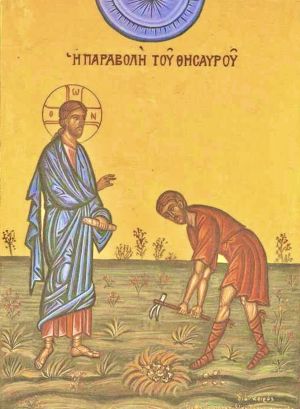
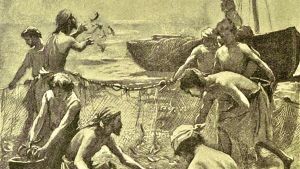
In this passage from the Gospel of Matthew, Jesus presents four brief parables to explain the meaning of the Kingdom of Heaven: the hidden treasure, the pearl of great price, the net cast into the sea, and the householder who brings out of his treasure things both new and old. The treasure and the pearl: the absolute value of the Kingdom. The first two parables convey the same message: a man discovers a treasure hidden in a field; a merchant finds a pearl of exceptional value. In both cases, the protagonists sell everything they own to acquire that unique treasure. This act of renunciation is not experienced as a loss, but as a joy, because the value of the treasure infinitely surpasses that of everything else. Jesus teaches that the Kingdom of God is the greatest good that exists. Those who discover it realise that it is worth more than any earthly wealth, security or success. The net and the final judgement. The third parable describes a bountiful catch. Once the net has been hauled ashore, the fishermen separate the good fish from the bad. Jesus applies this image to the Last Judgement: at the end of time, there will be a definitive distinction between what belongs to the Kingdom and what opposes it. As in the parable of the wheat and the tares, however, it is not simply a matter of dividing people into two rigid categories. Good and evil coexist within every person’s heart. The parable highlights the gravity of human choices: one cannot serve both God and other ‘masters’ at the same time. This is why Jesus continually calls for conversion: ‘Repent, for the Kingdom of Heaven is near.’ The same teaching emerges in his encounter with the rich young man: called to leave everything to follow Christ and gain a treasure in heaven, he is unable to give up his securities and goes away sad. These parables show that following Christ requires concrete decisions. There are no half-measures: every choice must be assessed in the light of the Kingdom of God. To welcome the Kingdom means being willing to let go of whatever prevents one from fully adhering to God’s will, just as one who sells everything to acquire the treasure or the pearl—a treasure both ancient and new. After asking his disciples whether they had understood his teaching, Jesus adds a fourth parable: ‘Every scribe who has become a disciple of the Kingdom of Heaven is like a householder who brings out of his treasure things both new and old.’ The scribes had a profound knowledge of the Old Testament Scriptures. However, in order to welcome the Kingdom proclaimed by Jesus, they had to open themselves to the newness of his revelation without losing the heritage they had received. The true disciple cherishes both: the treasure of the Old Covenant and the newness brought by Jesus Christ. This is why Jesus affirms: ‘I have not come to abolish the Law and the Prophets, but to bring them to fulfilment.’ The Old and New Testaments are not opposed to one another: the former prepares and announces, the latter realises and brings to fulfilment. Knowing both constitutes the true treasure of the Christian faith. The life of Paul of Tarsus represents a living synthesis of these parables. Having enjoyed prestige as a Jew and a Pharisee, he regards all that as a loss compared with the knowledge of Christ. In his letter to the Philippians, he states that every human privilege pales in comparison with the gift of Christ, for which he was willing to lose everything. Ultimately, the four parables converge on a single teaching: the Kingdom of God is the supreme treasure; it is worth giving up everything to obtain it; our choices have decisive consequences; the disciple must embrace both the richness of the Old Covenant and the newness of Christ; true wisdom lies in recognising that nothing is of greater value than communion with God. The ‘treasure hunt’ of which Jesus speaks is not the pursuit of material goods, but the discovery of the Kingdom, a treasure so great that it renders everything else secondary.
+Giovanni D’Ercole
Treasure and Pearl, rituals and Net. Beautiful and rotten
The great thinker Romano Guardini wrote that the Lord “is always close, being at the root of our being. Yet we must experience our relationship with God between the poles of distance and closeness. By closeness we are strengthened, by distance we are put to the test” (Pope Benedict)
Il grande pensatore Romano Guardini scrive che il Signore “è sempre vicino, essendo alla radice del nostro essere. Tuttavia, dobbiamo sperimentare il nostro rapporto con Dio tra i poli della lontananza e della vicinanza. Dalla vicinanza siamo fortificati, dalla lontananza messi alla prova” (Papa Benedetto)
The present-day mentality, more perhaps than that of people in the past, seems opposed to a God of mercy, and in fact tends to exclude from life and to remove from the human heart the very idea of mercy (Pope John Paul II)
La mentalità contemporanea, forse più di quella dell'uomo del passato, sembra opporsi al Dio di misericordia e tende altresì ad emarginare dalla vita e a distogliere dal cuore umano l'idea stessa della misericordia (Papa Giovanni Paolo II)
«Religion of appearance» or «road of humility»? (Pope Francis)
«Religione dell’apparire» o «strada dell’umiltà»? (Papa Francesco)
In the crucified Jesus a kind of transformation and concentration of the signs occurs: he himself is the “sign of God”, especially in the mystery of his Death and Resurrection (Pope John Paul II)
In Gesù crocifisso avviene come una trasformazione e concentrazione dei segni: è Lui stesso il "segno di Dio", soprattutto nel mistero della sua morte e resurrezione (Papa Giovanni Paolo II)
However, the king was not discouraged and sent his servants out to seek other guests to fill his banquet hall. Thus the aspect of the refusal of those initially invited caused the invitation to be extended to all [Pope Benedict]
Il re però non si scoraggia e invia i suoi servi a cercare altri commensali per riempire la sala del suo banchetto. Così il rifiuto dei primi ha come effetto l’estensione dell’invito a tutti [Papa Benedetto]
Faith in God opens before us the horizon of a sure hope, one which does not disappoint; it indicates a solid foundation on which to base one’s life without fear; it demands a faith-filled surrender into the hands of the Love which sustains the world (Pope Benedict)
La fede in Dio apre all’uomo l’orizzonte di una speranza certa che non delude; indica un solido fondamento sul quale poggiare, senza paura, la propria vita; richiede l’abbandono, pieno di fiducia, nelle mani dell’Amore che sostiene il mondo (Papa Benedetto)
The "new evangelization" faces this challenge. It must work to ensure that people recover the awareness that in Christ evil can be conquered with good (Pope John Paul II)
La “nuova evangelizzazione” affronta questa sfida. Essa deve impegnarsi perché tutti gli uomini recuperino la consapevolezza che in Cristo è possibile vincere il male con il bene (Papa Giovanni Paolo II)
Many saints experienced the night of faith and God’s silence — when we knock and God does not respond — and these saints were persevering (Pope Francis)
Tanti santi e sante hanno sperimentato la notte della fede e il silenzio di Dio – quando noi bussiamo e Dio non risponde – e questi santi sono stati perseveranti (Papa Francesco)
In some passages of Scripture it seems to be first and foremost Jesus’ prayer, his intimacy with the Father, that governs everything (Pope Francis)
In qualche pagina della Scrittura sembra essere anzitutto la preghiera di Gesù, la sua intimità con il Padre, a governare tutto (Papa Francesco)








duevie.art
don Giuseppe Nespeca
Tel. 333-1329741
Disclaimer
Questo blog non rappresenta una testata giornalistica in quanto viene aggiornato senza alcuna periodicità. Non può pertanto considerarsi un prodotto editoriale ai sensi della legge N°62 del 07/03/2001.
Le immagini sono tratte da internet, ma se il loro uso violasse diritti d'autore, lo si comunichi all'autore del blog che provvederà alla loro pronta rimozione.
L'autore dichiara di non essere responsabile dei commenti lasciati nei post. Eventuali commenti dei lettori, lesivi dell'immagine o dell'onorabilità di persone terze, il cui contenuto fosse ritenuto non idoneo alla pubblicazione verranno insindacabilmente rimossi.