


don Giuseppe Nespeca
Giuseppe Nespeca è architetto e sacerdote. Cultore della Sacra scrittura è autore della raccolta "Due Fuochi due Vie - Religione e Fede, Vangeli e Tao"; coautore del libro "Dialogo e Solstizio".
The greatest and truest Sowing
5. “Behold, the sower went forth to sow” (Mt 13:3).
The Incarnation of the Word is the greatest and truest “sowing” of the Father. At the end of time, the harvest will take place: man will then be subjected to God’s judgement. Having received much, much will be asked of him.
Man is responsible not only for himself, but also for other creatures. He is responsible in a global sense: in fact, their fate in time and beyond time is linked to him. If he obeys the Creator's plan and conforms to it, he leads the whole of creation into the kingdom of freedom, just as he dragged it with him into the kingdom of corruption because of his original disobedience. This is what St Paul meant to tell us today in the second reading.
His discourse is mysterious, but fascinating. By welcoming Christ, humanity is able to bring a flow of new life into creation. Without Christ, the cosmos itself pays the consequences of humanity's refusal to freely adhere to the plan of divine salvation. For our hope and that of all creatures, Christ has sown in the human heart a seed of new and immortal life. A seed of salvation that gives creation a new direction: the glory of the Kingdom of God.
[Pope John Paul II, homily at S. Stefano di Cadore, 11 July 1993]
It is not a cage or a trap
When Jesus spoke, he used simple words and he also used images which were examples taken from daily life, in order to be easily understood by all. This is why they listened to him willingly and appreciated his message which directly touched their heart. And it was not that complicated language which was difficult to understand, as that used by the Doctors of the Law of that time, which was not easily understood, was very rigid and distanced people. And with this language Jesus made the mystery of the Kingdom of God understood; it was not complicated theology. And one example is that of today’s Gospel passage: the parable of the sower (cf. Mt 13:1-23).
The sower is Jesus. With this image, we can see that he presents himself as one who does not impose himself, but rather offers himself. He does not attract us by conquering us, but by donating himself: he casts seeds. With patience and generosity, he spreads his Word, which is not a cage or a trap, but a seed which can bear fruit. And how can it bear fruit? If we welcome it.
Therefore, the parable concerns us especially. In fact, it speaks more of the soil than of the sower. Jesus carries out, so to speak, a “spiritual X-ray” of our heart, which is the soil on which the seed of the Word falls. Our heart, like the soil, may be good and then the Word bears fruit — and a great deal — but it can also be hard and impermeable. This happens when we hear the Word but it bounces off of us, just as on a street: it does not enter.
Between the good soil and the street; the asphalt — if we throw a seed on the “sanpietrini” (cobblestones), nothing grows — there are however, two intermediate types of soil which, in different amounts, we can have within us. The first, Jesus says, isrocky. Let us try to imagine it: rocky ground is a terrain that “does not have much soil” (cf. Mt 13:5), so the seed sprouts but is unable to put down deep roots. This is how the superficial heart is: it welcomes the Lord, wants to pray, love and bear witness, but does not persevere; it becomes tired and never “takes off”. It is a heart without depth, where the rocks of laziness prevail over the good soil, where love is fickle and fleeting. But whoever welcomes the Lord only when they want to does not bear fruit.
Then, there is the last ground, the thorny one, filled with briars which choke the good plants. What do these thorns represent? “The cares of the world and the delight in riches” (v. 22), as Jesus says explicitly. The thorns are the vices which come to blows with God, which choke his presence: above all these are the idols of worldly wealth, living avidly, for oneself, for possessions and for power. If we cultivate these thorns, we choke God’s growth within us. Each of us can recognize his or her big or small thorns, the vices that inhabit the heart, those more or less deeply rooted briars that God does not like and that prevent us from having a clean heart. It is necessary to tear them out, otherwise the Word cannot bear fruit, the seed will not grow.
Dear brothers and sisters, Jesus invites us today to look inside ourselves: to give thanks for our good soil and to tend the soil that is not yet good. Let us ask ourselves if our heart is open to welcome the seed of the Word of God with faith. Let us ask ourselves if our rocks of laziness are still numerous and large; let us identify our thorns of vice and call them by name. Let us find the courage to reclaim the soil, to effect a nice conversion of our heart, bringing to the Lord in Confession and in prayer our rocks and our thorns. In doing this, Jesus, the Good Sower will be glad to carry out an additional task: purify our hearts by removing the rocks and the thorns which choke his Word.
[Pope Francis, Angelus, 16 July 2017]
Women
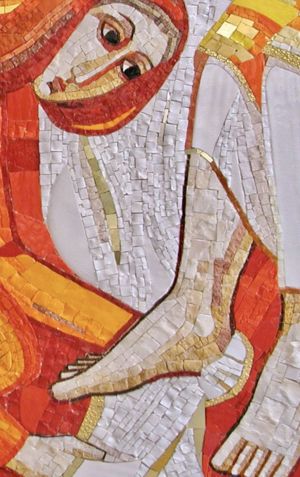
Action of the Risen One
(Lk 8:1-3)
The rabbis did not accept women into their schools, because they were considered not up to the task.
But Jesus does not come to teach laws or philosophies, vice versa to gather around Him the despised and non-persons of all times.
In Christ each one opens himself to hope. Who was considered as worthless proclaims and bears witness to God’s love for the little ones and the least.
All with delicacy, and here are the female figures: fidelity takes over.
In women, piety arises spontaneously [it is not conceived as for us males: immediately to the goal and source of gain].
With them also vanishes the anxiety of performance that accompanies men, who also on the ‘good’ must immediately appear setting up platforms and défilé; be all noticed, cultivate public and private relations that matter, and make career over it.
Jesus conquers the hearts of women because He understands their generosity, the depth of feelings, the capacity for dedication and personal relationship, the extreme gift of self; sensitivity, Faith-love, patience, meekness, generosity, capacity for fatigue and suffering.
Instead of "killing" time, women fill it thoroughly.
Jesus does not want a humanity aimed at being appreciated more than “hiding”, inclined to speak more than to ‘perceive’; willingly inclined to organize-plan more than to meditate - and to sense the depth of our Roots.
The prevalence or balance of the female aspect is an appropriate counterweight to a world prone to dirigisme and the exercise of the will, rather than to the cultivation of sons’ feelings.
Happy is that vocation accompanied by the intensity, depth, delicacy, ability to wait and at the same time consistency to the principles - and participation in destiny - typical aspects of female sensitivity and the world of consecrated women.
[Perhaps that of Mary, Joan, Susannah and many others of the early days was a role comparable to that of Martha in the family of Bethany, coordinator of the community of only sisters and brothers].
In Lk, the story of women expresses the action of the Risen One. He accepts them as followers and disciples.
In the female figures we read in filigree the story of humanity that in Christ rises and assumes dignity.
Nation that becomes fraternal in pain, prepares nourishment (instead of taking it away), persists, struggles and in this action becomes even an icon of prayer.
It is a model of dedication and self-giving [instead of calculation and cunning] - ready for life, and type of the Announcement; treasure that unleashes the Spirit.
Jesus on his way with the Twelve (v.1) still has a long journey to go today in the magic of the feminine - who knows how to welcome the person and listen to events, always being on the field.
Women learn from their essence, so they know how to attract, they know the indispensable things, they understand where and how to proceed, they are present in the present - and without dominating, they solve problems.
They are not afraid of losing “position”.
To internalize and live the message:
Do you feel called to a spiritual synthesis of personalities, with all the virtue and completeness that springs from a more complete character?
[Friday 24th wk. in O.T. September 18, 2026]
Women, Action of the Risen One

(Lk 8:1-3)
The rabbis did not accept women in their schools, because they were considered not up to the task.
But Jesus does not come to teach laws or philosophies, but to gather around himself the despised and the non-people of all times.
In Christ, everyone is opened to hope. Those considered worthless proclaim and witness God's love for the little ones and the least.
All with delicacy, and here are the female figures: the narcissism of the masquerade is replaced by fidelity.
In women, piety arises spontaneously (it is not conceived as it is for us males: immediately at the goal and a source of gain).
With them also vanishes the performance anxiety that accompanies men, who also on the good must immediately appear by setting up platforms and défilés; be noticed, cultivate public and private relations that count, and make a career out of it. A syndrome still well established.
Jesus conquers women's hearts because he understands their generosity, their depth of feeling, their capacity for dedication and personal relationships, for extreme self-giving; sensitivity, faith-love, patience, meekness, generosity, the capacity for effort and suffering.
Each of us can testify to the importance of these notes that are often unknown to the scrounging world of the entitled, who go straight to cutting and separating, organising instead of welcoming, judging instead of dialoguing, believing themselves to be someone at all costs - often setting up childish lies.
Or for those who prefer to wallow in tavern life, to waste time frittering it away or just for themselves, rather than use it well and treasure it: instead of 'killing it', women fill it to the brim.
Jesus does not want a humanity inclined to be appreciated more than to concealment, inclined to talk more than to perceive; inclined to organise-planning more than to meditate - and to sense the depth of our Roots.
The prevalence or balance of the feminine aspect is an opportune counterbalance to a 'Christian' world... in the West unbalanced on the masculine: prone to dirigisme and the exercise of the will rather than the cultivation of childlike feeling.
Happy that vocation that is accompanied by intensity, depth, delicacy, the ability to wait and at the same time coherence to principles (never sold out to the highest bidder) and participation in destiny - typical aspects of feminine sensitivity and the world of consecrated women.
Having received personal grace from an aunt and cousins who were nuns [as well as the gift of spectacular female memories similar to Mary of Nazareth in the family], I suspect that Lk's brushstroke bears witness to the fundamental weight of women even as managers, coordinators, supporters and sensitive animators of the first fraternal realities and assemblies of followers.
Perhaps that of Mary, Joan, Susanna, Peter's mother-in-law and many others in the early days was a role comparable to that of Martha in the family of Bethany.
Unfortunately, later ecclesiastical convention failed to give weight to the unquestionable fact of women's discipleship, flattening out to male discipleship - a disvalue that we are beginning to pay for in an obvious way (but it is a grace: nothing would move otherwise).
In Lk, the women's story expresses the action of the Risen One.
He accepts them as followers and disciples. In the female figures we read in watermark the story of humanity that in Christ rises up and assumes dignity - instead of being further harassed.
It becomes fraternal in pain (instead of only in victory), it prepares nourishment (instead of taking it away), it persists without mannerism.
It is the Church of authentic struggle, from within, and in such acting with frankness it even becomes an icon of prayer - instead of keeping to the minimum and doing a lot of diplomacy, then manipulating the naive, and only showing off.
It is fraternity, i.e. concrete solidarity; a model of dedication and self-giving, instead of calculation and cunning (ways of subterfuge; contrived, deliberate).
Women ready for life. Type of the Announcement: Treasure unleashing the Spirit that conversely males want to cunningly keep for themselves - to master it, making it one-sided.
The Jesus on the road with the Twelve (v.1) still has a long way to go, precisely in our realities consolidated by traditions that are considered unquestionable, but narrow, stubborn, stifling, puerile and deaf.
They remain on the surface, thus blocking the expressions of life.
The magic of the feminine, on the other hand, knows how to welcome the individual and listen to events, always being in the field to realise what characterises us.
Women learn from their essence, so they know how to attract, they know what is needed, they understand where and how to proceed, they are present in the present - and without overseeing, they solve problems.
They do not fear losing 'position'.
To internalise and live the message:
Would you rather be spiritually accompanied by a woman or a man? Why?Does pastoral work that is languishing, in your opinion, have anything to do with unilateral chains of command, in which you fear losing 'position'?
Do you also feel called to a spiritual synthesis of personalities, with all the virtue and completeness that comes from a varied nature?
Women at the service of the Gospel

Dear Brothers and Sisters,
Today, we have come to the end of our journey among the witnesses of early Christianity mentioned in the New Testament writings. And we use the last step of this first journey to dedicate our attention to the many female figures who played an effective and precious role in spreading the Gospel.
In conformity with what Jesus himself said of the woman who anointed his head shortly before the Passion: "Truly, I say to you, wherever this Gospel is preached in the whole world, what she has done will be told in memory of her" (Mt 26: 13; Mk 14: 9), their testimony cannot be forgotten.
The Lord wants these Gospel witnesses, these figures who have made a contribution so that faith in him would grow, to be known, and their memory kept alive in the Church. We can historically distinguish the role of the first women in early Christianity, during Jesus' earthly life and in the events of the first Christian generation.
Jesus, as we know, certainly chose from among his disciples 12 men as Fathers of the new Israel and appointed them "to be with him, and to be sent out to preach" (Mk 3: 14-15).
This fact is obvious; but, in addition to the Twelve, pillars of the Church and fathers of the new People of God, many women were also chosen to number among the disciples. I can only mention very briefly those who followed Jesus himself, beginning with the Prophetess Anna (cf. Lk 2: 36-38), to the Samaritan woman (cf. Jn 4: 1-39), the Syro-Phoenician woman (cf. Mk 7: 24-30), the woman with the haemorrhage (cf. Mt 9: 20-22) and the sinful woman whose sins were forgiven (cf. Lk 7: 36-50).
I will not even refer to the protagonists of some of his effective parables, for example, the housewife who made bread (cf. Mt 13: 33), the woman who lost the drachma (cf. Lk 15: 8-10), the widow who pestered the judge (cf. Lk 18: 1-8). More important for our topic are the women who played an active role in the context of Jesus' mission.
In the first place, we think spontaneously of the Virgin Mary, who with her faith and maternal labours collaborated in a unique way in our Redemption to the point that Elizabeth proclaimed her "Blessed... among women" (Lk 1: 42), adding: "Blessed is she who believed..." (Lk 1: 45).
Having become a disciple of her Son, Mary manifested total trust in him at Cana (cf. Jn 2: 5), and followed him to the foot of the Cross where she received from him a maternal mission for all his disciples of all times, represented by John (cf. Jn 19: 25-27).
Then there are various women with roles of responsibility who gravitated in their different capacities around the figure of Jesus. The women who followed Jesus to assist him with their own means, some of whose names Luke has passed down to us, are an eloquent example: Mary of Magdala, Joanna, Susanna and "many others" (cf. Lk 8: 2-3).
The Gospels then tell us that the women, unlike the Twelve, did not abandon Jesus in the hour of his Passion (cf. Mt 27: 56, 61; Mk 15: 40). Among them, Mary Magdalene stands out in particular. Not only was she present at the Passion, but she was also the first witness and herald of the Risen One (cf. Jn 20: 1, 11-18).
It was precisely to Mary Magdalene that St Thomas Aquinas reserved the special title, "Apostle of the Apostles" (apostolorum apostola), dedicating to her this beautiful comment: "Just as a woman had announced the words of death to the first man, so also a woman was the first to announce to the Apostles the words of life" (Super Ioannem, ed. Cai, 2519).
Nor was the female presence in the sphere of the primitive Church in any way secondary. We will not insist on the four unnamed daughters of Philip the "Deacon" who lived at Caesarea; they were all endowed with the "gift of prophecy", as St Luke tells us, that is, the faculty of intervening publicly under the action of the Holy Spirit (cf. Acts 21: 9). The brevity of information does not permit more precise deductions.
It is rather to St Paul that we are indebted for a more ample documentation on the dignity and ecclesial role of women. He begins with the fundamental principle according to which for the baptized: "There is neither Jew nor Greek, there is neither slave nor free, there is neither male nor female; for you are all one in Christ Jesus" (Gal 3: 28), that is, all are united in the same basic dignity, although each with specific functions (cf. I Cor 12: 27: 30).
The Apostle accepts as normal the fact that a woman can "prophesy" in the Christian community (I Cor 11: 5), that is, speak openly under the influence of the Spirit, as long as it is for the edification of the community and done in a dignified manner.
Thus, the following well-known exhortation: "Women should keep silence in the Churches" (I Cor 14: 34) is instead to be considered relative. Let us leave to the exegetes the consequent, much discussed problem of the relationship between the first phrase - women can prophesy in Churches - and the other - they are not permitted to speak; that is, the relationship between these two apparently contradictory instructions. This is not for discussion here.
Last Wednesday we already came across the figure of Prisca or Priscilla, Aquila's wife, who surprisingly is mentioned before her husband in two cases (cf. Acts 18: 18; Rom 16: 3): In any case, both are explicitly described by Paul as his sun-ergoús, "collaborators" (Rom 16: 3).
There are several other important points that cannot be ignored. It should be noted, for example, that Paul's short Letter to Philemon is actually also addressed to a woman called "Apphia" (cf. Phlm 2). The Latin and Syriac translations of the Greek text add to this name "Apphia", the appellative "soror carissima" (ibid.), and it must be said that she must have held an important position in the community at Colossae. In any case, she is the only woman mentioned by Paul among those to whom he addressed a Letter.
Elsewhere, the Apostle mentions a certain "Phoebe", described as "a deaconess of the Church at Cenchreae", the port town east of Corinth (Rom 16: 1-2). Although at that time the title had not yet acquired a specific ministerial value of a hierarchical kind, it expresses a true and proper exercise of responsibility on the part of this woman for this Christian community. Paul recommends that she be received cordially and assisted "in whatever she may require". Then he adds: "for she has been a helper of many and of myself as well".
In the same epistolary context the Apostle outlines with delicate touches the names of other women: a certain Mary, then Tryphaena, Tryphosa and "the beloved" Persis, as well as Julia, of whom he writes openly that they have "worked hard among you" or "worked hard in the Lord" (Rom 16: 6, 12a, 12b, 15), thereby emphasizing their strong ecclesial commitment.
Furthermore, in the Church at Philippi two women were to distinguish themselves, Euodia and Syntyche (cf. Phil 4: 2). Paul's entreaty to mutual agreement suggests that these two women played an important role in that community.
In short, without the generous contribution of many women, the history of Christianity would have developed very differently.
This is why, as my venerable and dear Predecessor John Paul II wrote in his Apostolic Letter Mulieris Dignitatem: "The Church gives thanks for each and every woman.... The Church gives thanks for all the manifestations of the feminine "genius' which have appeared in the course of history, in the midst of all peoples and nations; she gives thanks for all the charisms which the Holy Spirit distributes to women in the history of the People of God, for all the victories which she owes to their faith, hope and charity: she gives thanks for all the fruits of feminine holiness" (n. 31).
As we can see, the praise refers to women in the course of the Church's history and was expressed on behalf of the entire Ecclesial Community. Let us also join in this appreciation, thanking the Lord because he leads his Church, generation after generation, availing himself equally of men and women who are able to make their faith and Baptism fruitful for the good of the entire Ecclesial Body and for the greater glory of God.
[Pope Benedict, General Audience 14 February 2007]
Women of the Gospel and their vocation
13. As we scan the pages of the Gospel, many women, of different ages and conditions, pass before our eyes. We meet women with illnesses or physical sufferings, such as the one who had "a spirit of infirmity for eighteen years; she was bent over and could not fully straighten herself" (Lk 13:11); or Simon's mother-in-law, who "lay sick with a fever" (Mk 1:30); or the woman "who had a flow of blood" (cf. Mk 5:25-34), who could not touch anyone because it was believed that her touch would make a person "impure". Each of them was healed, and the last-mentioned - the one with a flow of blood, who touched Jesus' garment "in the crowd" (Mk 5:27) - was praised by him for her great faith: "Your faith has made you well" (Mk 5:34). Then there is the daughter of Jairus, whom Jesus brings back to life, saying to her tenderly: "Little girl, I say to you, arise" (Mk 5:41). There also is the widow of Nain, whose only son Jesus brings back to life, accompanying his action by an expression of affectionate mercy: "He had compassion on her and said to her, 'Do not weep!'"(Lk 7:13). And finally there is the Canaanite woman, whom Christ extols for her faith, her humility and for that greatness of spirit of which only a mother's heart is capable. "O woman, great is your faith! Be it done for you as you desire" (Mt 15:28). The Canaanite woman was asking for the healing of her daughter.
Sometimes the women whom Jesus met and who received so many graces from him, also accompanied him as he journeyed with the Apostles through the towns and villages, proclaiming the Good News of the Kingdom of God; and they "provided for them out of their means". The Gospel names Joanna, who was the wife of Herod's steward, Susanna and "many others" (cf. Lk 8:1-3).
Sometimes women appear in the parables which Jesus of Nazareth used to illustrate for his listeners the truth about the Kingdom of God. This is the case in the parables of the lost coin (cf. Lk 15: 8-10), the leaven (cf. Mt 13:33), and the wise and foolish virgins (cf. Mt 25:1-13). Particularly eloquent is the story of the widow's mite. While "the rich were putting their gifts into the treasury... a poor widow put in two copper coins". Then Jesus said: "This poor widow has put in more than all of them... she out of her poverty put in all the living that she had" (Lk 21:1-4). In this way Jesus presents her as a model for everyone and defends her, for in the socio-juridical system of the time widows were totally defenceless people (cf. also Lk 18:1-7).
In all of Jesus' teaching, as well as in his behaviour, one can find nothing which reflects the discrimination against women prevalent in his day. On the contrary, his words and works always express the respect and honour due to women. The woman with a stoop is called a "daughter of Abraham" (Lk 13:16), while in the whole Bible the title "son of Abraham" is used only of men. Walking the Via Dolorosa to Golgotha, Jesus will say to the women: "Daughters of Jerusalem, do not weep for me" (Lk 23:28). This way of speaking to and about women, as well as his manner of treating them, clearly constitutes an "innovation" with respect to the prevailing custom at that time.
This becomes even more explicit in regard to women whom popular opinion contemptuously labelled sinners, public sinners and adulteresses. There is the Samaritan woman, to whom Jesus himself says: "For you have had five husbands, and he whom you now have is not your husband". And she, realizing that he knows the secrets of her life, recognizes him as the Messiah and runs to tell her neighbours. The conversation leading up to this realization is one of the most beautiful in the Gospel (cf. Jn 4:7-27).
Then there is the public sinner who, in spite of her condemnation by common opinion, enters into the house of the Pharisee to anoint the feet of Jesus with perfumed oil. To his host, who is scandalized by this, he will say: "Her sins, which are many, are forgiven, for she loved much" (cf. Lk 7:37-47).
Finally, there is a situation which is perhaps the most eloquent: a woman caught in adulterv is brought to Jesus. To the leading question "In the law Moses commanded us to stone such. What do you say about her?", Jesus replies: "Let him who is without sin among you be the first to throw a stone at her". The power of truth contained in this answer is so great that "they went away, one by one, beginning with the eldest". Only Jesus and the woman remain. "Woman, where are they? Has no one condemned you?". "No one, Lord". "Neither do I condemn you; go, and do not sin again" (cf. Jn 8:3-11).
These episodes provide a very clear picture. Christ is the one who "knows what is in man" (cf. Jn 2:25) - in man and woman. He knows the dignity of man, his worth in God's eyes. He himself, the Christ, is the definitive confirmation of this worth. Everything he says and does is definitively fulfilled in the Paschal Mystery of the Redemption. Jesus' attitude to the women whom he meets in the course of his Messianic service reflects the eternal plan of God, who, in creating each one of them, chooses her and loves her in Christ (cf. Eph 1:1-5). Each woman therefore is "the only creature on earth which God willed for its own sake". Each of them from the "beginning" inherits as a woman the dignity of personhood. Jesus of Nazareth confirms this dignity, recalls it, renews it, and makes it a part of the Gospel and of the Redemption for which he is sent into the world. Every word and gesture of Christ about women must therefore be brought into the dimension of the Paschal Mystery. In this way everything is completely explained.
[Pope John Paul II, Mulieris Dignitatem]
She makes the world beautiful
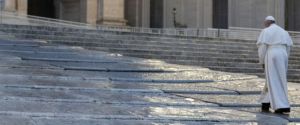
Today […] I would also like to say a few words about the irreplaceable contribution of women in building a world that can be a home for all. Women make the world beautiful, they protect it and keep it alive. They bring the grace of renewal, the embrace of inclusion, and the courage to give of oneself. Peace, then, is born of women, it arises and is rekindled by the tenderness of mothers. Thus the dream of peace becomes a reality when we look towards women. It is not by chance that in the account of Genesis the woman comes from the side of the man while he is sleeping (cf Gen 2:21). Women, that is, have their origins close to a heart and a dream. They therefore bring the dream of love into the world. If we take to heart the importance of the future, if we dream of a future peace, we need to give space to women.
[Pope Francis, speech of 8 March 2019]
Intruder Love, in Simon's respectable House

And the Feet of Jesus, kissed by the unexpected and censored guest
(Lk 7:36-50)
It is Love that path of perfection desired by God to make us grow, and to our benefit - not a formalism sterilised by strict censors.
What unites us seriously in beliefs comes from within, from our Core; it does not depend on the outside.
Love is not planned at a desk or on the basis of models. It expresses the heart with sincerity.
It is not a reality that is subject to distances that deem others to be nosy.
So empathy and loving-kindness do not appear or disappear on command, according to code or season.
They belong to the deep side of being women and men of all times.
It is passion that can lead one's existence in the Spirit in a valuable way, not a ritual landscape.
Love with all our heart is triggered when we need to make the decisive Encounter: that opportunity we feel will open the door to resources, skills, talents, energies, otherwise unexpressed or stifled.
Dissolving her hair in public, the 'sinner woman' almost seems to be a figure of the 'lesser boat' that offers no resistance but only support to the protagonist one (Lk 5.2.7.11).
It is a spurious and second community, compared to the official church of the apostles who are always “close” - and of mixed cultural extraction, unlike the first community which was still Judaizing.
She comes to the You-for-you with a gesture of independence: she needs a more spontaneous and personal relationship with the Lord, the only one who looks at her in a non-superficial way.
Relationship impeded precisely by those who crowd around Him, but do not appreciate the favour received, although they have been partaking of the [Eucharistic] banquet for a long time.
The ‘safety’ of mechanisms and ideas laced with prejudice prevents one from experiencing the Gratis. Here is the link between tears and Forgiveness.
He who pushes away the unpredictable does not unleash any new inner strength. He fears any jolt that might shatter his habitual, plastered world.
Habituals block any emancipation or discovery. They dislike people who need to free themselves from the straits of life.
They are not worshippers of the great Master's Way [cf. the constant reference to his «Feet»].
Total intimate adherence comes before anything we can fulfil or think.
The all-human transport without curtains is that which would not make us overburdened with arrogance and unable to recognise his Gifts.
He who is convinced that he gives something to God, certainly does not love him.
And the choice that concerns us is between negligible details or getting to the heart of the authentic Relationship.
On this floor, the Home master is immediately dizzy.
Simon is frightened by the very idea of the Master attempting to bring him into a new logic: «I suppose...» (v.43).
The Gospel passage is meant to make us reflect on who is most willing to grow and love.
Let us ask ourselves: are they the ones who [like Simon] can set up respectable screens, or the small souls who spontaneously approach their 'source' - devoid of social masks?
In short, Redemption is the fruit of moved personal immediacy, even already achieved without works of law.
[Thursday 24th wk. in O.T. September 17, 2026]
Women: The Action of the Risen One
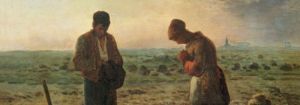
(Lk 7:36-8:3)
Intruder Love, in the respectable House of Simon
And the Feet of Jesus, kissed by the unexpected and censured guest
(Lk 7,36-50)
"Simon, a Pharisee and rich "notable" of the city, held a banquet in his house in honour of Jesus. Unexpectedly from the back of the room enters a guest neither invited nor expected: a notorious prostitute. The unease of those present is understandable, but the woman does not seem to mind. She advances and, rather furtively, stops at the feet of Jesus. His words of forgiveness and hope for all, including prostitutes, have reached her ear; she is moved and stands there silently. She bathes Jesus' feet with her tears, dries them with her hair, kisses them and anoints them with a sweet perfume. In doing so, the sinner wants to express her affection and gratitude towards the Lord with gestures familiar to her, even if socially censured.
Faced with general embarrassment, it is Jesus himself who addresses the situation: 'Simon, I have something to tell you'. "Go ahead, Master," the landlord replies to him. We are all familiar with Jesus' response in a parable that could be summed up in the following words that the Lord basically says to Simon: 'See? This woman knows she is a sinner and, moved by love, she asks for understanding and forgiveness. You, on the other hand, presume to be righteous and are perhaps convinced that you have nothing serious to be forgiven'.
The message from the Gospel passage is eloquent: to those who love much, God forgives all things. He who trusts in himself and his own merits is as if blinded by his ego and his heart hardens in sin. On the other hand, he who recognises himself as weak and a sinner entrusts himself to God and from Him obtains grace and forgiveness".
[Pope Benedict, Audience to the participants in the course of the Apostolic Penitentiary, 7 March 2008].
It is Love that path of perfection desired by God to make us grow, and to our benefit - not the sterilised formalism and coercive power set up in Simon's House (in the Church, by Peter and other strict censors).
What unites seriously in conviction comes from within, from our Core; it does not depend on the outside.
Love does not programme itself at a desk or on the basis of sacred models, nor does it endure cerebral and moralistic binaries. It expresses the heart with sincerity.
It is not a reality that is subject to social distances, class - or circle more or less disciplined by the profession (dependent on the 'behind the scenes') that resists the obligation to unite with the different, deemed inadequate impure meddlers.
So empathy and loving-kindness do not appear or disappear on command, by design and according to code, discipline, season.
They belong to the deep side of being women and men of all times.
It is not façade respectability, nor ritual landscape, that can lead one's existence in the Spirit in a worthy manner, but passion.
Here is the link between tears and forgiveness.
Hetero-directed formalisms - with their unfestive formulas that do not belong to us - annihilate our essence and our most powerful emotions.
The social pact demanded by the gerontocracy is a reference always outside of us: and it will be the usual good of tradition, of opinion, of surroundings, of calculation in situation, of manners and of 'spin'; in any case, of others.
Are we really empty losers, or destined only to have to support the veterans, with no room for critical witness and active language?
And underneath imitating 'fathers', models, codes already designed (even down to the tiniest detail) for the use of the traditional sentiments of increasingly aged assemblies?
Love with all our hearts is triggered when we need to make the decisive encounter: that opportunity we feel will open the door to resources, capacities, talents, energies, otherwise unexpressed or stifled.
By letting her hair down in public, the 'sinner' almost seems to be a figure of the lesser 'boat', which offers itself and offers no resistance but only support to the protagonist (Lk 5.2.7.11).
It is a spurious and second community, compared to the official church of the apostles who are always 'close' - and of mixed cultural extraction, unlike the first community that was still Judaizing.
It proposes itself to the You-for-you with a gesture of independence: it needs a more spontaneous and personal relationship with the Lord, the only one who looks at it in a non-superficial way.
A relationship impeded precisely by those who crowd around Him, but to gag Him, and to lie down.
The regulars - all predictable - do not appreciate the favour they receive, although they have been partaking of the (Eucharistic) banquet for a long time, but now only as practitioners of the most reiterated litanies.
The 'security' of mechanisms and ideas laced with prejudice prevents them from experiencing the Gratis.
Instead of welcoming, the old guides pushed away; they lived only with their followers - servants and courtiers - in the world of archaic incantations.
They did not bring forth any new inner strength. They feared any jolt that might crack their pedestal.
They blocked any emancipation or discovery. They were not worshippers of people who needed to free themselves from the straits of life.
They were not worshippers of the Master's great Path (cf. the constant reference to his 'feet') but slavish merchants of abstract signs - already established or smuggled in - and of a Jesus reduced to a motionless sphinx (or devout, ritual and 'cultural' icon).
Total intimate adherence comes before anything we can fulfil or think. It does not combine with positional opportunism for Christ.
All-human transport without curtains is what would not make us overburdened with arrogance and unable to recognise his Gifts.
He who is convinced that he gives God something, certainly does not love him. He cares only for himself: the predatory, deceitful appearance.
Even today, the choice that concerns us is between negligible details or entering into the heart of authentic Relationship.
On this level, the Master of the House suffered dizziness right from the start.
Simon is frightened by the mere idea of the Master attempting to make him enter into a new logic: "I suppose..." (v.43).
He fears the looming of any alternative jolt that might crack his habitual, congealed world.
While the real world follows its cycles, the entrenched ones demand stability - but in doing so they stunt growth.
Instead, by accepting the unforeseen, we discover unexplored sides, juxtaposing inherent potentials that we had not allowed space for.
Continuous change is simply the spice of life. And the very end of a religious-cultural paradigm is inevitable.
Therefore, it becomes essential to take a genuine attitude, and get involved.
Salvation is the fruit of moved personal immediacy, and even already obtained without works of law: not labour relations and hypocrisy [overtime against compensation] in aseptic environments, with aged, addicted and mouldy hearts.
In short, the Gospel passage is meant to make us reflect on who is more willing to love: those who can set up screens behind which they can allow themselves even that which they blatantly deny... or the little souls who spontaneously approach their 'source' - devoid of social masks?
To internalise and live the message:
Looking at our behaviour, would the outcasts from the respectable circle be certain to be spontaneously and freely welcomed by us today?
Women
(Lk 8:1-3)
The rabbis did not accept women in their schools because they were considered not up to the task.
But Jesus does not come to teach laws or philosophies, but to gather around himself the despised and the non-people of all times.
In Christ, everyone is opened to hope. Those considered worthless proclaim and witness God's love for the little ones and the least.
All with delicacy, and here are the female figures: the narcissism of the masquerade is replaced by fidelity.
In women, piety arises spontaneously (it is not conceived as it is for us males: immediately at the goal and a source of gain).
With them also vanishes the performance anxiety that accompanies men, who also on the good must immediately appear by setting up platforms and défilés; be noticed, cultivate public and private relations that count, and make a career out of it. A syndrome still well established.
Jesus conquers women's hearts because he understands their generosity, their depth of feeling, their capacity for dedication and personal relationships, for extreme self-giving; sensitivity, faith-love, patience, meekness, generosity, the capacity for effort and suffering.
Each of us can testify to the importance of these notes that are often unknown to the scrounging world of the entitled, who go straight to cutting and separating, organising instead of welcoming, judging instead of dialoguing, believing themselves to be someone at all costs - often setting up childish lies.
Or for those who prefer to wallow in tavern life, to waste time frittering it away or just for themselves, rather than use it well and treasure it: instead of 'killing it', women fill it to the brim.
Jesus does not want a humanity inclined to be appreciated more than to concealment, inclined to talk more than to perceive; inclined to organise-planning more than to meditate - and to sense the depth of our Roots.
The prevalence or balance of the feminine aspect is an opportune counterbalance to a Christian world... in the West unbalanced on the masculine: prone to dirigisme and the exercise of the will rather than the cultivation of childlike feeling.Happy is that vocation that is accompanied by intensity, depth, delicacy, the ability to wait and at the same time coherence to principles (never sold out to the highest bidder) and participation in destiny - typical aspects of feminine sensitivity and the world of consecrated women.
Having received personal grace from an aunt and cousins who were nuns (as well as the gift of spectacular female memories similar to Mary of Nazareth in the family), I suspect that the brushstroke of Lk is testimony to the fundamental weight of women even as managers, coordinators, supporters and sensitive animators of the first fraternal realities and assemblies of followers.
Perhaps that of Mary, Joan, Susanna, Peter's mother-in-law and many others in the early days was a role comparable to that of Martha in the family of Bethany.
Unfortunately, later ecclesiastical convention did not give weight to the unquestionable fact of women's discipleship, flattening out to male discipleship - a disvalue that we are beginning to pay for in an obvious way (but it is a grace: nothing would move, otherwise).
In Lk, the women's story expresses the action of the Risen One. He accepts them as followers and disciples. In the female figures we read in watermark the story of humanity that in Christ rises up and assumes dignity - instead of being further harassed.
It becomes fraternal in pain (instead of only in victory), it prepares nourishment (instead of taking it away), it persists without mannerism.
It is a church of authentic struggle, from within, and in such acting with frankness it even becomes an icon of prayer (instead of keeping to the minimum and doing a lot of diplomacy, then manipulating the naive, and only showing off).
She is a model of dedication and self-giving, instead of calculation and cunning (ways of subterfuge; contrived, deliberate).
Women ready for life - type of the Annunciation: Treasure unleashing the Spirit, which conversely males cunningly want to keep for themselves (to master it, making it one-sided).
The Jesus on the road with the Twelve (v.1) still has a long way to go, precisely in our realities consolidated by traditions that are considered unquestionable, but narrow, stubborn, stifling, puerile and deaf.
They remain on the surface, thus blocking the expressions of life. The magic of the feminine, on the other hand, knows how to welcome the individual and listen to events, always being in the field to realise what characterises us.
Women learn from their essence, so they know how to attract, they know what is needed, they understand where and how to proceed, they are present in the present - and without superintending they solve problems.
To internalise and live the message:
Would you rather be spiritually accompanied by a woman or a man? Why?
Doesn't pastoral work that is languishing have to do with unilateral chains of command, in which you fear losing 'position'?
Do you also feel called to a spiritual synthesis of personalities, with all the virtue and completeness that comes from a varied nature?
Banquet in Honour of Jesus

Simon, a Pharisee and rich 'notable' of the city, holds a banquet in his house in honour of Jesus. Unexpectedly from the back of the room enters a guest who was neither invited nor expected: a notorious prostitute. The unease of those present is understandable, but the woman does not seem to mind. She advances and, rather furtively, stops at the feet of Jesus. His words of forgiveness and hope for all, even the prostitutes, have reached her ear; she is moved and stands there silently. She bathes Jesus' feet with her tears, dries them with her hair, kisses them and anoints them with a sweet perfume. In doing so, the sinner wants to express her affection and gratitude towards the Lord with gestures that are familiar to her, even if socially censured.
Faced with general embarrassment, it is Jesus himself who addresses the situation: 'Simon, I have something to tell you'. "Go ahead, Master," the landlord replies to him. We are all familiar with Jesus' response in a parable that could be summed up in the following words that the Lord basically says to Simon: 'See? This woman knows she is a sinner and, moved by love, she asks for understanding and forgiveness. You, on the other hand, presume to be righteous and are perhaps convinced that you have nothing serious to be forgiven'.
The message from the Gospel passage is eloquent: to those who love much, God forgives all things. He who trusts in himself and his own merits is as if blinded by his ego and his heart hardens in sin. Instead, he who recognises himself as weak and a sinner entrusts himself to God and from Him obtains grace and forgiveness.
[Pope Benedict, Audience to the participants in the course of the Apostolic Penitentiary, 7 March 2008]
The fool in the Bible, the one who does not want to learn from the experience of visible things, that nothing lasts for ever but that all things pass away, youth and physical strength, amenities and important roles. Making one's life depend on such an ephemeral reality is therefore foolishness (Pope Benedict)
L’uomo stolto nella Bibbia è colui che non vuole rendersi conto, dall’esperienza delle cose visibili, che nulla dura per sempre, ma tutto passa: la giovinezza come la forza fisica, le comodità come i ruoli di potere. Far dipendere la propria vita da realtà così passeggere è, dunque, stoltezza (Papa Benedetto)
As sometimes happens in the Gospel, faced with the trap set by his enemies, Jesus, with his response, rises above the contingent controversy and goes far beyond the particular and mutually divergent positions (Pope John Paul II)
Come talora accade nel Vangelo, di fronte al tranello mossogli dai suoi nemici, Gesù, con la sua risposta, s’innalza al di sopra della polemica contingente e va ben oltre le posizioni particolari e tra loro divergenti (Papa Giovanni Paolo II)
And blasphemy, the sin against the Holy Spirit, is the one unforgivable sin — as Jesus said — because it comes from closing the heart to God’s mercy which acts in Jesus (Pope Francis)
E la bestemmia, il peccato contro lo Spirito Santo, è l’unico peccato imperdonabile – così dice Gesù –, perché parte da una chiusura del cuore alla misericordia di Dio che agisce in Gesù (Papa Francesco)
The great thinker Romano Guardini wrote that the Lord “is always close, being at the root of our being. Yet we must experience our relationship with God between the poles of distance and closeness. By closeness we are strengthened, by distance we are put to the test” (Pope Benedict)
Il grande pensatore Romano Guardini scrive che il Signore “è sempre vicino, essendo alla radice del nostro essere. Tuttavia, dobbiamo sperimentare il nostro rapporto con Dio tra i poli della lontananza e della vicinanza. Dalla vicinanza siamo fortificati, dalla lontananza messi alla prova” (Papa Benedetto)
The present-day mentality, more perhaps than that of people in the past, seems opposed to a God of mercy, and in fact tends to exclude from life and to remove from the human heart the very idea of mercy (Pope John Paul II)
La mentalità contemporanea, forse più di quella dell'uomo del passato, sembra opporsi al Dio di misericordia e tende altresì ad emarginare dalla vita e a distogliere dal cuore umano l'idea stessa della misericordia (Papa Giovanni Paolo II)
«Religion of appearance» or «road of humility»? (Pope Francis)
«Religione dell’apparire» o «strada dell’umiltà»? (Papa Francesco)
In the crucified Jesus a kind of transformation and concentration of the signs occurs: he himself is the “sign of God”, especially in the mystery of his Death and Resurrection (Pope John Paul II)
In Gesù crocifisso avviene come una trasformazione e concentrazione dei segni: è Lui stesso il "segno di Dio", soprattutto nel mistero della sua morte e resurrezione (Papa Giovanni Paolo II)
However, the king was not discouraged and sent his servants out to seek other guests to fill his banquet hall. Thus the aspect of the refusal of those initially invited caused the invitation to be extended to all [Pope Benedict]
Il re però non si scoraggia e invia i suoi servi a cercare altri commensali per riempire la sala del suo banchetto. Così il rifiuto dei primi ha come effetto l’estensione dell’invito a tutti [Papa Benedetto]







duevie.art
don Giuseppe Nespeca
Tel. 333-1329741
Disclaimer
Questo blog non rappresenta una testata giornalistica in quanto viene aggiornato senza alcuna periodicità. Non può pertanto considerarsi un prodotto editoriale ai sensi della legge N°62 del 07/03/2001.
Le immagini sono tratte da internet, ma se il loro uso violasse diritti d'autore, lo si comunichi all'autore del blog che provvederà alla loro pronta rimozione.
L'autore dichiara di non essere responsabile dei commenti lasciati nei post. Eventuali commenti dei lettori, lesivi dell'immagine o dell'onorabilità di persone terze, il cui contenuto fosse ritenuto non idoneo alla pubblicazione verranno insindacabilmente rimossi.