


don Giuseppe Nespeca
Giuseppe Nespeca è architetto e sacerdote. Cultore della Sacra scrittura è autore della raccolta "Due Fuochi due Vie - Religione e Fede, Vangeli e Tao"; coautore del libro "Dialogo e Solstizio".
The greatest Commandment: Love. Only Quality is binding (Mt 22:34-40)

29th Sunday in O.T.
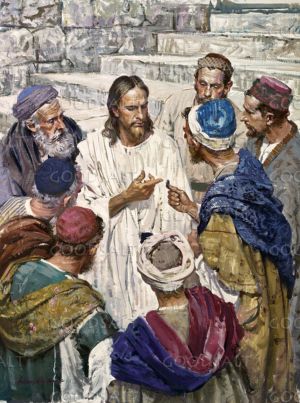
29th Sunday in Ordinary Time (year A) [18 October 2026]
First Reading from the Book of the Prophet Isaiah 45:1–6
When Isaiah wrote this text, the Jews had been in exile in Babylon for almost fifty years. In 587 BC, Nebuchadnezzar’s armies had conquered Jerusalem, destroyed and plundered the Temple, and deported the survivors. Now, however, news is arriving of the conquests of Cyrus, King of Persia, the new ruler of the world. For the Jews, this news offers a glimmer of hope, for Cyrus is rapidly conquering the entire region. Cyrus stands out from other rulers because he adopts a more humanitarian policy: he does not kill the vanquished, nor does he destroy or plunder their cities, nor does he deport the populations. On the contrary, in the conquered territories he allows the exiles to return to their homeland, restores to them the property taken by previous conquerors, and even provides the means to rebuild the country. He probably realises that it is in an emperor’s interest to rule over happy peoples. In this context, Isaiah utters a prophecy that is above all a profession of faith and hope. He says: ‘Thus says the Lord to his anointed one, to Cyrus’. The message is probably not addressed directly to Cyrus—who would not have listened to a Jewish prophet—but to the exiled Jews, to restore their hope. This hope is based on two fundamental convictions. Firstly, God is faithful to his Covenant.
God has not abandoned his people: Israel remains his servant and his chosen people. Even though they have lost their freedom, their land, the Temple, their king and their political independence, God continues to be faithful to the Covenant with Jacob and Israel. This certainty is particularly important precisely at a time when the Jews might think that God has abandoned them. Secondly,
God is the Lord of history. God declares: ‘I am the Lord; there is no other.’ Even the mighty Cyrus is in his hands. The expressions relating to bestowing a title, taking by the hand and opening the gates recall the rites of the coronation of kings: the king received the title of Son of God, was anointed with oil and placed in God’s hands; the open gates also symbolised the conquest of enemy cities. Isaiah therefore applies to Cyrus imagery typical of the coronation of the kings of Israel, presenting him as a king chosen and consecrated by God, even though he is a pagan. This proves that it is always God who retains the initiative and control over events.
Responsorial Psalm (95/96)
There is a thrill, indeed an exultation, running through these few verses. One senses the faith that stirs this people; indeed, even better, the hope that is the joy of faith. It is hope that enables us to affirm with certainty what we do not yet possess, as the Letter to the Hebrews states (1:1). If we pause to read the final verses, we realise that this psalm already transports us to the end of the world, to that blessed day when all peoples, without exception, will recognise God as the one and only God. Joy in heaven! Let the earth rejoice! Let the depths of the sea roar; let the whole countryside be in celebration. Let the trees of the forests dance for joy before the Lord, for he is coming to judge the earth. He will judge the world with justice and the peoples according to his truth! Here, the blessed day we await is already being sung of. Let us imagine the scene: we are in Jerusalem; all peoples, nations and races are thronging around the Temple. The esplanade is teeming; the steps of the courtyard are black with people; crowds are pouring in from every corner of the world; the number of pilgrims stretches as far as the eye can see, and Jerusalem is not big enough to contain them all. Everyone is singing at the top of their voices, like a true symphony: ‘God reigns!’ It is an immense and colossal clamour, like the ovation given to every new king on the day of his coronation. This time, however, it is not the people of Israel acclaiming an earthly king; it is the whole of humanity acclaiming the King of the world: ‘Great is the Lord, highly praised, awesome’. And it is not just humanity; the earth itself trembles, and even the seas join in the symphony, whilst the countryside rejoices and the trees dance, for they recognise their Creator. Amidst so many idols and false gods, there is no room for error, and even the trees are not deceived. People, on the other hand, have long allowed themselves to be deceived, and it is incredible that it has taken them so long to recognise their Creator, their Father. This time, however, it has happened, and everyone is coming to Jerusalem to acclaim God because at last the good news resounds: ‘Day by day Israel has proclaimed its salvation… the ceaseless work of liberation… day by day Israel has borne witness that God first delivered it from Egypt, then from every kind of slavery; and the most terrible form of slavery is to place one’s trust in false values, false gods that can only disappoint. Israel is immensely fortunate to know and to be charged with proclaiming that our God is the one and only God, as declared in the Shema Israel: ‘Hear, O Israel: the Lord our God is one’ (Deut 6:4). This is the mystery of Israel’s vocation, as we read in Deuteronomy: ‘You have been granted to see all this, so that you may know that the Lord is God; there is no other’ (Deut 4:32). But the chosen people have never forgotten that if they have been granted to see, it is so that they may make it known; and whilst awaiting the fulfilment of this dream, Israel sings this psalm to renew its faith and hope.
Second Reading from the Letter of Saint Paul the Apostle to the Thessalonians (1:1–5)
This is the earliest Christian writing, even though we are accustomed to seeing the Gospels at the beginning of the New Testament, thus running the risk of forgetting that they were written after Paul’s letters. The First Letter to the Thessalonians dates back to just twenty years or so after the Resurrection of Christ, and so here we have the earliest statements of Christian preaching. It is the first time that an attempt has been made to set down in writing the mystery of Jesus Christ. It is around the year 50, and the Gospel has already been proclaimed far from Jerusalem, for Thessalonica is in Europe, in northern Greece, in the region known as Macedonia. Before reaching that far, Paul had already had time to establish communities throughout the south, the centre and even the west coast of Turkey. It is from the Acts of the Apostles that we know how events unfolded: Paul was on a mission on the west coast of Turkey when, one night, he had a vision of a Macedonian man imploring him: ‘Come over to Macedonia and help us’. And Luke, who was part of the journey, recounts: “Following this vision of Paul’s, we immediately set out for Macedonia, for we realised that God was calling us to bring the Good News there” (Acts 16:9–10). Paul, Luke and Silas arrived on the Greek coast in the city of Philippi, where they were initially well received, but were soon accused of disturbing the peace; they were beaten and thrown into prison. Thanks to a providential earthquake, they were set free and, having left the city, went on to Thessalonica. According to the Acts of the Apostles, Paul’s preaching was always the same: “For three Sabbaths he reasoned with them from the Scriptures, explaining and proving that the Christ had to suffer and rise from the dead, and he added: ‘This Jesus whom I am proclaiming to you is the Christ’”. The text adds: “Some of them (that is, the Jews he met in the synagogue) were persuaded and joined Paul and Silas, along with a large crowd of Greeks who worshipped God and a good number of prominent women” (Acts 17:2–4). But, as usual, Paul did not arouse only enthusiasm because, as we read in the Acts of the Apostles: “The Jews, driven by jealousy, gathered some troublemakers in the public square; having stirred up crowds, they were causing unrest in the city” (Acts 17:5), so much so that it seemed very prudent for Paul and Silas to leave the area. Paul therefore left this new community too hastily and remained somewhat troubled about it for a while. When he wrote this letter, which we begin to read today, he had just been reassured by Silas and Timothy, who had remained in Macedonia and were bringing him excellent news. This explains the particularly joyful tone at the beginning of the letter: “Paul, Silvanus (another name for Silas) and Timothy to the Church of the Thessalonians, which is in God the Father and in the Lord Jesus Christ. Grace and peace to you. At all times we give thanks to God for all of you.” Right from this first sentence, one is struck by the solemnity of the greeting: this community is very small, and he grandly calls it “the Church of Thessalonica which is in God the Father and in the Lord Jesus Christ”. This immense respect that Paul has for Christian communities, even modest ones, is characteristic of all his letters.
From the Gospel according to Saint Matthew (22:15–21)
‘Is it lawful to pay the tribute to the emperor?’ Jesus replies by calling the questioners ‘hypocrites’! Why ‘hypocrites’? Because this is not a genuine question, and they are hypocrites for two reasons: first of all, because they have long since resolved this issue. Paying the tax to the Emperor – ‘Render unto Caesar the things that are Caesar’s’ – is something they do, and Jesus does not say they are wrong. Now they are setting a trap and trying to catch Jesus out… And the falsely respectful tone that precedes the question further emphasises this: ‘Teacher, we know that you are always truthful and teach the way of God in accordance with the truth’. All this politeness is nothing more than a preamble to a trick question designed to put Jesus in a difficult position. If Jesus urges his compatriots to refuse to pay the tax levied for the benefit of the Roman occupiers, it will be easy to denounce him to the authorities as a resistance fighter or even a revolutionary, and he will be condemned. If, on the other hand, he advises paying the tax, he could be discredited in the eyes of the people as a collaborator, losing any chance of being recognised as the Messiah; for the expected Messiah must be an independent and sovereign king on the throne of Jerusalem, which necessarily involves a revolt against the Roman occupiers. The trap is well laid, and in any case, whatever his answer, Jesus is doomed. In fact, they are seeking the first suitable opportunity to put him to death, for the Passion is already looming on the horizon, given that we are in the very final moments in Jerusalem. In his reply, Jesus clearly shows that he has understood: ‘Hypocrites! Why are you trying to test me?’ He is not naive in the face of the trap being set for him… Yet he does not seek to embarrass his interlocutors, for Jesus never did so and never sought to set a trap for anyone: this would be unworthy of the God whose light shines upon both the good and the wicked.
Jesus therefore does not respond to the trap with another trap, but takes the question seriously and answers it properly, setting out his argument in three points: ‘Give to Caesar what is Caesar’s… and give to God what is God’s. Firstly, ‘Render unto Caesar what is Caesar’s’, including by paying tax. By this he invites us to recognise that Caesar is the holder of power, and this has nothing to do with servile collaboration; on the contrary, it is accepting a de facto situation and, furthermore, from the Old Testament perspective, it was considered that all power comes from God. Jesus himself, during his Passion, will say to Pilate: ‘You would have no power over me unless it had been given to you from above’ (Jn 19:11). Moreover, Isaiah also recalled this in the first reading when speaking of King Cyrus: God can turn every human kingship to the good of his people. The Pharisees know the passage from Isaiah about Cyrus better than we do; they therefore know that all power, even pagan power, is in God’s hands. Let us note, however, in passing that the Caesar of the time was actually called ‘Tiberius’ and that the name ‘Caesar’ had become a title of the Roman emperor. Secondly, ‘Render unto Caesar only what is Caesar’s’: when Caesar – that is, the Roman emperor – demands tax, he is within his rights, but when he demands to be called ‘Lord’ and to be worshipped, he exposes you to idolatry, and here there must be no compromise. At the time when Matthew was writing his Gospel, this scenario was a reality. Many martyrs paid with their lives for this refusal to worship the Roman emperor. The invitation is therefore important: ‘Render unto God what is God’s’. That is the real issue: are you sure you are rendering unto God what is God’s? Why do you not recognise in Jesus the one who ‘is of God’? Without wishing to derive a theory of political power from this text – which Jesus certainly did not intend to do here – we can nevertheless draw from this Gospel passage, once again, a surprising lesson in freedom. Caesar is but Caesar, and the kings of the earth are but petty kings whose kingship is fleeting, whilst the kingdom of God is of an entirely different order: it is within the very heart of the kingdoms of the earth that every act of love and brotherhood causes the one true kingdom—the Kingdom of God—to grow.
+Giovanni D’Ercole
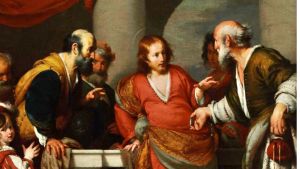
Returning to God the image of true humanity. What Acronym characterises it?
Happiness and deposits: a matter of life or death
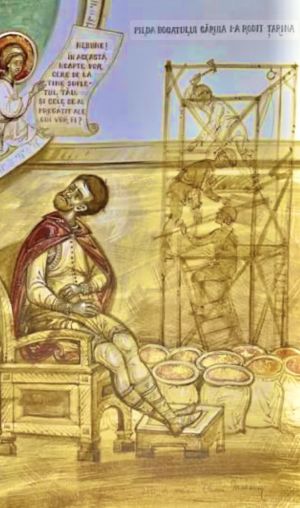
Opening armoured gates
(Lk 12:13-21)
«Some parts of our human family, it appears, can be readily sacrificed for the sake of others considered worthy of a carefree existence» [Fratelli Tutti n.18].
Basil the Great commented: «Here we do not condemn those who rob, but those who do not share his».
Senselessness of hoarding.
God’s Gift is complete, but everyone is in need. Why? To accentuate the «fruitful interchange».
And we are experiencing it: only the desire to be ‘born in reciprocity’ can combat the «impoverishment of all» and the same «cultural sclerosis» [cf. FT 133-138].
Each gesture of generosity conceals the blossoming of an innate life-giving energy, which makes the soul and capital flow outside the tight walls and beyond the edges of one’s storage.
A spur that does not make people fall back on convenience. An impulse that will instead shift our imagination towards entirely different horizons, beliefs and desires.
In short, taking communion is a matter of life and death, because rich and poor live or decline together.
Growth is therefore in giving and receiving.
In the unsurpassed Homily 6, the first of the Cappadocian Fathers emphasized that even those who abound in goods are tormented on what to do, asking themselves: «What will I do?».
«He complains like the poor. Are not these the words of who is oppressed by misery? What am I going to do? [...] What will I do? The answer was simple: I will satiate the hungry, open the barns and call all the poor' [...] Do not raise the prices. Do not wait for the famine to open the barns [...] Do not wait for the people to be reduced to hunger to increase your gold, nor the general misery for your enrichment. Do not trade on human misfortunes [...] Do not exacerbate the wounds inflicted by the scourge of adversity. You turn your eyes to your gold and you turn it away from your brother, you recognize every coin and you know how to distinguish the false one from the true one, but you completely ignore the brother who is in need».
The rich man in the parable seems to have no labourers or relatives, no wife, or children and friends: he had them, but in his reality there are - really - only him and possessions.
«Fool!» - God says to him (v.20).
The solution was very simple: opening the gates, so that the piled food could overflow for the needs of the less fortunate - instead of wasting time scrapping and rebuilding warehouses.
Maybe he died of a heart attack, but he was already dead in his soul.
The entrepreneur who scrutinizes the needs of others for profit, immediately perishes inside and outside; he suffers agitation, insomnia, torment, due to the stress of managing those external mirages.
It is these bizarre dreams that take breath away and become endless nightmares, dissipating our best energies.
On the contrary, it is in a climate of coexistence and conviviality of differences that the best stimuli and advice can be found, including for discovering what suits us best.
It would be enough to overcome greed, vanity and the common mindset, to feel better.
By abandoning the spirit of hoarding, we will move away from the obsession with calculation and immediate [fleeting] interests.
Within this dynamic, we find the experience of enriching relationships, opening ourselves up to the many facets of reality and people, by living through Friendship.
Here, the intensity of our bonds fuels personal motivation, challenges, and the blossoming of love that drives our Vision forward.
Here is the threshold of the new Pearls that vice versa can emerge: to trust in life, in the new roads, in the actions that do not block the development of everyone, nor threaten the sense of Fraternity.
Leaving aside the stockpiling, we can yield to the liberating Exodus.
First step along the Way of our full Happiness: investing the many goods we still have to create Encounter and Relationship.
A matter of life or death (v.20).
[Monday 29th wk. in O.T. October 19, 2026]
Wisdom and foolishness

In the Gospel [...] Jesus' teaching concerns, precisely, true wisdom and is introduced by one of the crowd: "Teacher, bid my brother divide the inheritance with me" (Lk 12: 13). In answering, Jesus puts him on guard against those who are influenced by the desire for earthly goods with the Parable of the Rich Fool who having put away for himself an abundant harvest stops working, uses up all he possesses, enjoying himself and even deceives himself into thinking he can keep death at an arm's length. However God says to him "Fool! This night your soul is required of you; and the things you have prepared, whose will they be?" (Lk 12: 20). The fool in the Bible, the one who does not want to learn from the experience of visible things, that nothing lasts for ever but that all things pass away, youth and physical strength, amenities and important roles. Making one's life depend on such an ephemeral reality is therefore foolishness. The person who trusts in the Lord, on the other hand, does not fear the adversities of life, nor the inevitable reality of death: he is the person who has acquired a wise heart, like the Saints.
[Pope Benedict, Angelus 1 August 2010]
Vanity of riches
1. Our meditation on Psalm 49[48] will be divided into two parts, just as it is proposed on two separate occasions by the Liturgy of Vespers. We will now comment in detail on the first part in which it is hardship that inspires reflection, as in Psalm 72[71]. The just man must face "evil days" since he is surrounded by "the malice of [his] foes", who "boast of the vastness of their riches" (cf. Ps 49[48]: 6-7).
The conclusion that the just man reaches is formulated as a sort of proverb, a refrain that recurs in the finale to the whole Psalm. It sums up clearly the predominant message of this poetic composition: "In his riches, man lacks wisdom: he is like the beasts that are destroyed" (v. 13). In other words, untold wealth is not an advantage, far from it! It is better to be poor and to be one with God.
2. The austere voice of an ancient biblical sage, Ecclesiastes or Qoheleth, seems to ring out in this proverb when it describes the apparently identical destiny of every living creature, that of death, which makes frantic clinging to earthly things completely pointless: "As he came from his mother's womb he shall go again, naked as he came, and shall take nothing for his toil.... For the fate of the sons of men and the fate of beasts is the same; as one dies, so dies the other.... All go to one place" (Eccl 5: 14; 3: 19, 20).
3. A profound blindness takes hold of man if he deludes himself that by striving to accumulate material goods he can avoid death. Not for nothing does the Psalmist speak of an almost animal-like "lack of understanding".
The topic, however, was to be explored by all cultures and forms of spirituality and its essence was expressed once and for all by Jesus, who said: "Take heed, and beware of all covetousness; for a man's life does not consist in the abundance of his possessions" (Lk 12: 15). He then recounts the famous Parable of the Rich Fool who accumulated possessions out of all proportion without a thought of the snare that death was setting for him (cf. Lk 12: 16-21).
4. The first part of the Psalm is wholly centred on this illusion that has the rich man's heart in its grip. He is convinced that he will also even succeed in "buying off" death, attempting as it were to corrupt it, much as he had to gain possession of everything else, such as success, triumph over others in social and political spheres, dishonest dealings, impunity, his satisfaction, comforts and pleasures.
But the Psalmist does not hesitate to brand this excess as foolish. He uses a word that also has financial overtones: "ransom": "No man can buy his own ransom, or pay a price to God for his life. The ransom of his soul is beyond him. He cannot buy life without end, nor avoid coming to the grave" (Ps 49[48]: 8-10).
5. The rich man, clinging to his immense fortune, is convinced that he will succeed in overcoming death, just as with money he had lorded it over everything and everyone. But however vast a sum he is prepared to offer, he cannot escape his ultimate destiny. Indeed, like all other men and women, rich and poor, wise and foolish alike, he is doomed to end in the grave, as happens likewise to the powerful, and he will have to leave behind on earth that gold so dear to him and those material possessions he so idolized (cf. vv. 11-12).
Jesus asked those listening to him this disturbing question: "What shall a man give in return for his life?" (Mt 16: 26). No exchange is possible, for life is a gift of God, and "in his hand is the life of every living thing and the breath of all mankind" (Jb 12: 10).
6. Among the Fathers who commented on Psalm 49[48], St Ambrose deserves special attention. He extends its meaning to a broader vision, starting precisely with the Psalmist's initial invitation: "Hear this, all you peoples, give heed, all who dwell in the world".
The Bishop of Milan commented in ancient times: "Let us recognize here, from the outset, the voice of the Lord our Saviour who calls the peoples to the Church in order to renounce sin, to become followers of the truth and to recognize the advantage of faith". Moreover, "all the hearts of the various human generations were polluted by the venom of the serpent, and the human conscience, enslaved by sin, was unable to detach itself from it". This is why the Lord, "of his own initiative, in the generosity of his mercy promised forgiveness, so that the guilty would be afraid no longer and with full awareness rejoice to be able to offer their offices as servants to the good Lord who has forgiven sins and rewarded virtues" (Commento a Dodici Salmi, n. 1: SAEMO, VIII, Milan-Rome, 1980, p. 253).
7. In these words of our Psalm we can hear echoes of the Gospel invitation: "Come to me, all who labour and are heavy laden, and I will give you rest. Take my yoke upon you" (Mt 11: 28). Ambrose continues, "Like someone who will come to visit the sick, like a doctor who will come to treat our painful wounds, so [the Lord] points out the cure to us, so that men may hear him clearly and hasten with trust and promptness to receive the healing remedy.... He calls all the peoples to the source of wisdom and knowledge and promises redemption to them all, so that no one will live in anguish or desperation" (n. 2: ibid., pp. 253, 255).
[Pope John Paul II, General Audience 20 October 2004]
Certainties that pass away
Today’s Gospel passage (cf. Lk 12:13-21) begins with the narrative of a man who stands up among the multitude and asks Jesus to settle a legal matter concerning a family inheritance. However, Jesus does not address the matter in his reply, but rather urges the people to eschew covetousness, that is, the greed of possession. In order to divert his listeners from this exhausting search for wealth, Jesus tells the parable of the foolish rich man who believes he is happy because he has had the good fortune to reap an exceptional harvest and he feels secure thanks to the goods he has accumulated. It would do you good to read it today; it is in the 12th Chapter of Saint Luke, verse 13. It is a beautiful parable that teaches us a great deal. The narrative comes to the fore in the contrast between what the rich man plans for himself and what God plans for him instead.
The rich man puts three considerations before his soul, that is, himself: the accumulated goods, the many years that these goods appear to ensure him, and thirdly tranquility and unrestrained enjoyment (cf v. 19). But the word that God addresses to him nullifies his plans. Instead of “many years”, God points to the immediacy of “this night; tonight you will die”. Instead of the “enjoyment of life”, He presents him with “surrendering his life; you will render your life to God” with the ensuing judgment. Regarding the reality of the ample goods accumulated on which the rich man had based everything, it becomes shrouded in sarcasm by the question: “and the things you have prepared, whose will they be?” (v. 20). Let us think about quarrels over inheritance, many family quarrels. And how many people; we all know some stories about many people, who turn up at the time of death: nephews, grandchildren come around to see: “what is my share?”, and they cart everything away. It is within this contrast that the term “fool” — because he thinks about things that he believes to be concrete but that are fantasy — with which God addresses this man, is justified. He is foolish because in practice he has denied God, he has not taken Him into account.
The end of the parable as recounted by the Evangelist is uniquely effective: “So is he who lays up treasure for himself, and is not rich toward God” (v. 21). It is a warning which reveals the horizon towards which we are called to look. Material goods are necessary — they are goods! —, but they are a means to live honestly and in sharing with the neediest. Today, Jesus invites us to consider that wealth can enslave the heart and distract it from the true treasure which is in heaven. Saint Paul also reminds us of this in today’s second reading. It says “seek the things that are above.... Set your minds on things that are above, not on things that are on earth” (Col 3:1-2).
It is understood that this does not mean estranging oneself from reality, but rather seeking the things that have true value: justice, solidarity, welcome, fraternity, peace, all things that make up the true dignity of mankind. It is a case of leading a life that is fulfilled not according to a worldly manner, but rather according to the style of the Gospel: to love God with all one’s being, and love one’s neighbour as Jesus loved him, that is, in service and in giving oneself. Covetousness of goods, the desire to have goods, does not satisfy the heart, but rather causes more hunger! Covetousness is like those tasty candies: you take one and say: “Ah! It is so good”, and then you take another; and one follows the other. Such is covetousness: it never satisfies. Be careful! Love that is understood and lived in [the style of the Gospel] is the source of true happiness, whereas the exaggerated search for material goods and wealth is often a source of anxiety, adversity, abuse of power, war. Many wars begin from covetousness.
May the Virgin Mary help us not to be attracted by forms of security that fade, but rather to be credible witnesses of the eternal values of the Gospel, each day.
[Pope Francis, Angelus 4 August 2019]
Returning the image of the most authentic humanity to God
What Uniqueness characterizes it?
(Mt 22,15-21)
After the expulsion of the sellers from the Temple, the objection on authority and the parables of the two sons, the murderous vinedressers, the rejected banquet [all referred to the élite], here is another clash between Jesus and the political chiefs and religious leaders - the latter ones placed behind the scenes.
Jesus [present in his intimates] systematically dismantles the traps set up by the authorities and the experts.
With tested double-dealing, they approach Him trying to stroke his self-love [v.16: situations that also often occur to critical witnesses].
The interest of the clever clashes, however, with the focus of Christ on the real good of people and respect for the intelligence of things - not to eagerness for approval or opportunism.
Right in the Temple (Mt 21:23) - the eminent Abode of the one Lord God - these gendarmes provoke the new Rabbi about paying taxes to the Romans (22:17).
We know what was at stake: the accusation of not being a prophet according to divine right, or [vice versa] that of collaborationism with the occupiers.
The Master does not allow himself to be fooled by the ostentation of closeness to the God of Israel - which is false because it is externally sought - and He plays them all off easily.
In the Temple of Jerusalem, it was forbidden to carry Roman coins, which depicted imperial profiles and insignia contrary to the Commandment 'Thou shalt not make unto thee any image'.
He asked for them, however, because He did not actually have any.
But the paladin saints themselves hand Him one.... The scene borders on the ridiculous.
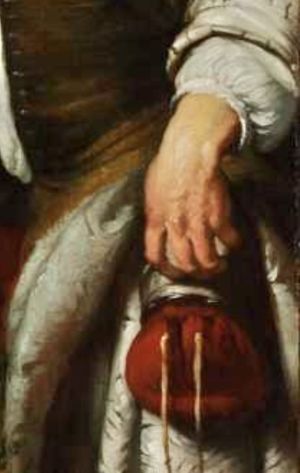
Drawing the forbidden coin from the pouch concealed under the cloak, the very chiefs reveal their true God: self-interest [well concealed under devout and ostentatious manners, which only act as a smokescreen].
Christ invites us not to allow ourselves to be flattered by the exhibitionist duplicity of the “signs”: what is important is not to deceive people by using pious forms as theatrical masquerades [v.18 Greek text].
The à la page or purity fanatics live only the epidermic angle; and they rely on it: they not infrequently hide well the very material passions they disdain.
It does not work with Christ.
It is a primary element of the testimony of authentic Faith - not the flaunted one.
Not parading dissimulation and material intrigue is crucial. It is also so in difficult, unstable, or seductive situations.
Each one is called to «return» to his true Lord the indelible «image and likeness» engraved on him.
So let the coin be «given back» to its 'master'. This remains essential for anyone to be fully realized, and to flourish.
Woman and man - creatures in whom the «image and likeness» of God is imprinted - have to «render» themselves to the Creator (v.21) who dwells in their essence as persons.
So where, in short, has the dominant man left his mark? On money.
Money perfectly reflects his icon.
Therefore, if you wish to know who the emperor is and what the exercise of power entails, look at the coin.
If, on the other hand, you wish to know God, His glory, and His humanising and genuine prestige, look at authentic women and men.
Humanity is sealed by far more intimate and natural affiliations than those of convenience.
[29th Sunday in O.T. (year A), October 18, 2026]
Rich in anthropological content

Let us now come to the biblical Readings in which the Lord speaks to us today. The first, taken from the Second Book of Isaiah, tells us that God is one, there is no other; there are no gods other than the Lord and even the powerful Cyrus, Emperor of the Persians, was part of a larger plan that God alone knew and carried ahead. This Reading gives us the theological meaning of history: the epochal upheavals and the succession of great powers are under the supreme domination of God; no earthly power can stand in his stead. The theology of history is an important and essential aspect of the New Evangelization because the people of our time, after the inauspicious season of the totalitarian empires in the 20th century, need to rediscover an overall look at the world and at time, a truly free, peaceful look, that look which the second Vatican Council communicated in its documents and which my predecessors, the Servant of God Paul VI and Bl. John Paul II, illustrated with their Magisterium.
The Second Reading is the beginning of the First Letter to the Thessalonians and this is already very evocative because it is the oldest letter that has come down to us of the greatest evangelizer of all time, the Apostle Paul. He tells us first of all that one does not evangelize by oneself: in fact he too had collaborators, Silvanus and Timothy (cf. 1 Thes 1:1) and many others. And he immediately adds something else that is very important: that proclamation must always be preceded, accompanied and followed by prayer. Indeed, he writes: “We give thanks to God always for you all, constantly mentioning you in our prayers” (v. 2). The Apostle then says he is well aware of the fact that he did not choose the members of the community, but that [God]: “has chosen you”, he says (v. 4).
Every Gospel missionary must always bear in mind this truth: it is the Lord who touches hearts with his word and with his Spirit, calling people to faith and to communion in the Church. Lastly, Paul leaves us a very valuable teaching, taken from his experience. He writes: “our gospel came to you not only in word, but also in power and in the Holy Spirit and with full conviction” (v. 5). Evangelization, to be effective, needs the power of the Spirit, who gives life to proclamation and imbues those who convey it with the “full conviction” of which the Apostle speaks. This term “conviction” or “full conviction” in the original Greek is pleroforia: a word that does not so much express the subjective, psychological aspect, rather the fullness, fidelity, completeness, in this case of the proclamation of Christ. It is a proclamation which, to be complete and faithful, asks to be accompanied by signs and gestures, like the preaching of Jesus. Word, Spirit and certainty — understood in this way — are therefore inseparable and compete to ensure that the Gospel message is spread effectively.
Let us now reflect on the Gospel passage. It is the text about the legitimacy of the tribute to be paid to Caesar which contains Jesus’ famous answer: “render therefore to Caesar the things that are Caesar’s, and to God the things that are God’s” (Mt 22:21). But, before reaching this point there is a passage that can be applied to those who have the mission of evangelizing. Indeed, those who are speaking with Jesus — disciples of the Pharisees and the Herodians — compliment him, saying “we know that you are true, and teach the way of God truthfully, and care for no man” (v. 16). It is this affirmation itself, although it is prompted by hypocrisy, that must attract our attention. The disciples of the Pharisees and Herodians do not believe in what they say. They are only affirming it as a captatio benevolentiae to make people listen to them, but their heart is far from that truth; indeed, they want to lure Jesus into a trap to be able to accuse him. For us, instead, those words are precious: indeed, Jesus is true and teaches the way of God according to the truth, and stands in awe of none. He himself is that “way of God”, which we are called to take. Here we may recall the words of Jesus himself in John’s Gospel: “I am the way, the truth, and the life” (14:6).
In this regard St Augustine’s comment is illuminating: “It was necessary for Jesus to say ‘I am the way, the truth, and the life’, when knowing the way by which he went they had to learn where he was going. The way led to truth, it led to life.... And where are we going, but to him, and by what way do we go, but by him? (In Evangelium Johannis tractatus69, 2). The new evangelizers are called to walk first on this Way that is Christ, to make others know the beauty of the Gospel that gives life. And on this Way one never walks alone but in company, an experience of communion and brotherhood that is offered to all those we meet, to share with them our experience of Christ and of his Church. Thus testimony combined with proclamation can open the hearts of those who are seeking the truth so that they are able to arrive at the meaning of their own life.
A brief reflection also on the central question of the tribute to Caesar. Jesus replies with a surprising political realism, linked to the theocentrism of the prophetic tradition. The tribute to Caesar must be paid because his image is on the coin; but the human being, every person, carries in him- or herself another image, that of God, and therefore it is to him and to him alone that each one owes his or her existence. The Fathers of the Church, drawing inspiration from the fact that Jesus was referring to the image of the Emperor impressed on the coin of the tribute, interpreted this passage in the light of the fundamental concept of the human being as an image of God, contained in the first chapter of the Book of Genesis.
An anonymous author wrote: “The image of God is not impressed on gold, but on the human race. Caesar’s coin is gold, God’s coin is humanity…. Therefore give your riches to Caesar but keep for God the unique innocence of your conscience, where God is contemplated…. Caesar, in fact, asked that his image be on every coin, but God chose man, whom he created to reflect his glory” (Anonymous, Incomplete Work on Matthew, Homily 42). And St Augustine used this reference several times in his homilies: “If Caesar reclaims his own image impressed on the coin”, he says, “will not God demand from man the divine image sculpted within him?” (En. Ps., Psalm 94:2). And further, “as the tribute money is rendered to him [Caesar], so should the soul be rendered to God, illumined and stamped with the light of his countenance” (ibid., Ps 4:8).
This word of Jesus is rich in anthropological content and it cannot be reduced only to the political context. The Church, therefore, is not limited to reminding human beings of the right distinction between the sphere of Caesar’s authority and that of God, between the political and religious contexts. The mission of the Church, like that of Christ, is essentially to speak of God, to remember his sovereignty, to remind all, especially Christians who have lost their own identity, of the right of God to what belongs to him, that is, our life.
Precisely in order to give a fresh impetus to the mission of the whole Church to lead human beings out of the wilderness in which they often find themselves to the place of life, friendship with Christ that gives us life in fullness, I have decided to proclaim a “Year of Faith”, which I shall have the opportunity to illustrate with a special Apostolic Letter. It will begin on 11 October 2012 on the 50th anniversary of the opening of the Second Vatican Council and will end on 24 November 2013, the Solemnity of Christ the King. It will be a moment of grace and commitment for an ever fuller conversion to God, to strengthen our faith in him and to proclaim him with joy to the people of our time.
Dear brothers and sisters, you are among the protagonists of the New Evangelization that the Church has undertaken and carries forth, not without difficulties but with the same enthusiasm as the first Christians. To conclude, I make my own the words of the Apostle Paul that we have heard: I give thanks to God always for you all, constantly mentioning you in my prayers, remembering before our God and Father your work of faith and labour of love and steadfastness of hope in our Lord Jesus Christ.
May the Virgin Mary, who was not afraid to answer “yes” to the Word of the Lord and, after conceiving in her womb, set out full of joy and hope, always be your model and your guide. Learn from the Mother of the Lord and our Mother to be humble and at the same time courageous, simple and prudent; meek and strong, not with the strength of the world but with the strength of the truth. Amen.
[Pope Benedict, homily at the Holy Mass for the New Evangelisation, 16 October 2011]
Imbued with the spirit of the Gospel
1. Jesus’s incisive statement: ‘Render unto Caesar the things that are Caesar’s, and unto God the things that are God’s’ (Mt 22:21), addresses an issue that was much debated in his day and remains deeply felt today. What attitude should believers adopt towards civil authority and the laws of the state? What commitment should they undertake as citizens with regard to their social and political duties?
The occasion was presented to Jesus by a question that was much debated at the time concerning whether or not it was lawful to pay taxes to the Roman emperor. Opinions, in fact, were divided, and the reasons put forward to support the lawfulness or unlawfulness of the taxes imposed by the Romans were also varied.
In this context, the question put to Jesus by the Pharisees: ‘Is it lawful or not to pay tribute to Caesar?’ was a trap set for the Master, regarded by all as the One who taught the way of God in truth.
As sometimes happens in the Gospel, faced with the trap set for him by his enemies, Jesus, through his reply, rises above the immediate controversy and goes far beyond the particular and divergent positions.
On the one hand, by commanding that what belongs to Caesar be given to him, he declares that paying tax is not an act of idolatry, but a duty of honest citizens; on the other hand, by recalling God’s primacy in human life and in history, he asks that we give to him what is due to him as the one and true ‘Lord’.
2. With this statement, Jesus draws a clear distinction between the duties required of believers, both as citizens and as children of God. Yet he does not set them in opposition to one another. Thus, from a specific issue—such as the tax to be paid to Caesar—new horizons emerge for the mission of Christians in society.
By virtue of your faith, each one of you is called to transform history, to imbue the whole of human and social reality with the spirit of the Gospel. No one can or should withdraw from the duties required of them to work towards ensuring a more just and fraternal civil society. This task must, however, be carried out in full fidelity to the Gospel message, in docile submission to the Spirit, without ever shirking what is required by the laws of the State that serve this purpose. It must be carried out, above all, by giving primacy to what comes first: God, his plan of salvation, his law, and spiritual and transcendent values.
The profession of faith in Christ, membership of the Kingdom of God and the way of life that flows from it must be lived not ‘outside’ but ‘within’ history as a ‘service’ to be rendered to the human community and, therefore, to the common good and the integral promotion of every person.
Faith, lived out in its entirety, impels you to take on strong and specific responsibilities in that immense human endeavour aimed at promoting and safeguarding the fundamental human rights necessary for peaceful and supportive coexistence amongst all.
3. It is therefore a commitment linked to an authentic and active faith, which requires adequate formation, deep convictions and consistent witness. And so it also takes on the characteristics of a true service of charity towards all people.
[Pope John Paul II, homily, 21 October 1990]
The fool in the Bible, the one who does not want to learn from the experience of visible things, that nothing lasts for ever but that all things pass away, youth and physical strength, amenities and important roles. Making one's life depend on such an ephemeral reality is therefore foolishness (Pope Benedict)
L’uomo stolto nella Bibbia è colui che non vuole rendersi conto, dall’esperienza delle cose visibili, che nulla dura per sempre, ma tutto passa: la giovinezza come la forza fisica, le comodità come i ruoli di potere. Far dipendere la propria vita da realtà così passeggere è, dunque, stoltezza (Papa Benedetto)
As sometimes happens in the Gospel, faced with the trap set by his enemies, Jesus, with his response, rises above the contingent controversy and goes far beyond the particular and mutually divergent positions (Pope John Paul II)
Come talora accade nel Vangelo, di fronte al tranello mossogli dai suoi nemici, Gesù, con la sua risposta, s’innalza al di sopra della polemica contingente e va ben oltre le posizioni particolari e tra loro divergenti (Papa Giovanni Paolo II)
And blasphemy, the sin against the Holy Spirit, is the one unforgivable sin — as Jesus said — because it comes from closing the heart to God’s mercy which acts in Jesus (Pope Francis)
E la bestemmia, il peccato contro lo Spirito Santo, è l’unico peccato imperdonabile – così dice Gesù –, perché parte da una chiusura del cuore alla misericordia di Dio che agisce in Gesù (Papa Francesco)
The great thinker Romano Guardini wrote that the Lord “is always close, being at the root of our being. Yet we must experience our relationship with God between the poles of distance and closeness. By closeness we are strengthened, by distance we are put to the test” (Pope Benedict)
Il grande pensatore Romano Guardini scrive che il Signore “è sempre vicino, essendo alla radice del nostro essere. Tuttavia, dobbiamo sperimentare il nostro rapporto con Dio tra i poli della lontananza e della vicinanza. Dalla vicinanza siamo fortificati, dalla lontananza messi alla prova” (Papa Benedetto)
The present-day mentality, more perhaps than that of people in the past, seems opposed to a God of mercy, and in fact tends to exclude from life and to remove from the human heart the very idea of mercy (Pope John Paul II)
La mentalità contemporanea, forse più di quella dell'uomo del passato, sembra opporsi al Dio di misericordia e tende altresì ad emarginare dalla vita e a distogliere dal cuore umano l'idea stessa della misericordia (Papa Giovanni Paolo II)
«Religion of appearance» or «road of humility»? (Pope Francis)
«Religione dell’apparire» o «strada dell’umiltà»? (Papa Francesco)
In the crucified Jesus a kind of transformation and concentration of the signs occurs: he himself is the “sign of God”, especially in the mystery of his Death and Resurrection (Pope John Paul II)
In Gesù crocifisso avviene come una trasformazione e concentrazione dei segni: è Lui stesso il "segno di Dio", soprattutto nel mistero della sua morte e resurrezione (Papa Giovanni Paolo II)
However, the king was not discouraged and sent his servants out to seek other guests to fill his banquet hall. Thus the aspect of the refusal of those initially invited caused the invitation to be extended to all [Pope Benedict]
Il re però non si scoraggia e invia i suoi servi a cercare altri commensali per riempire la sala del suo banchetto. Così il rifiuto dei primi ha come effetto l’estensione dell’invito a tutti [Papa Benedetto]








duevie.art
don Giuseppe Nespeca
Tel. 333-1329741
Disclaimer
Questo blog non rappresenta una testata giornalistica in quanto viene aggiornato senza alcuna periodicità. Non può pertanto considerarsi un prodotto editoriale ai sensi della legge N°62 del 07/03/2001.
Le immagini sono tratte da internet, ma se il loro uso violasse diritti d'autore, lo si comunichi all'autore del blog che provvederà alla loro pronta rimozione.
L'autore dichiara di non essere responsabile dei commenti lasciati nei post. Eventuali commenti dei lettori, lesivi dell'immagine o dell'onorabilità di persone terze, il cui contenuto fosse ritenuto non idoneo alla pubblicazione verranno insindacabilmente rimossi.