


don Giuseppe Nespeca
Giuseppe Nespeca è architetto e sacerdote. Cultore della Sacra scrittura è autore della raccolta "Due Fuochi due Vie - Religione e Fede, Vangeli e Tao"; coautore del libro "Dialogo e Solstizio".
Do not be afraid! Open, open wide the doors for Christ!
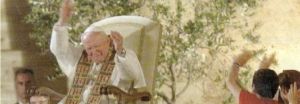
5. Brothers and sisters, do not be afraid to welcome Christ and accept his power. Help the Pope and all those who wish to serve Christ and with Christ's power to serve the human person and the whole of mankind. Do not be afraid. Open wide the doors for Christ. To his saving power open the boundaries of States, economic and political systems, the vast fields of culture, civilization and development. Do not be afraid. Christ knows "what is in man". He alone knows it.
So often today man does not know what is within him, in the depths of his mind and heart. So often he is uncertain about the meaning of his life on this earth. He is assailed by doubt, a doubt which turns into despair. We ask you therefore, we beg you with humility and trust, let Christ speak to man. He alone has words of life, yes, of eternal life.
[Pope John Paul II, homily at the beginning of his pontificate 22 October 1978]
Does Jesus not have the common sense to choose?
With his mercy Jesus also chooses apostles 'from the worst', from among sinners and the corrupt. But it is up to them to preserve "the memory of this mercy", remembering "from where one has been chosen", without getting head over heels or thinking of making a career as officials, pastoral planners and businessmen. It is the concrete testimony of Matthew's conversion that Pope Francis re-proposed while celebrating Mass at Santa Marta on Friday 21 September, on the feast day of the apostle and evangelist.
"In the Collect Prayer we prayed to the Lord and said that in his plan of mercy he chose Matthew, the publican, to constitute him an apostle," the Pontiff immediately recalled, who indicated as a key to reading "three words: plan of mercy, choose-choose, constitute".
"As he was leaving," Francis explained, referring precisely to the Gospel passage from Matthew (9:9-13), "Jesus saw a man called Matthew sitting at the tax booth, and he said to him, 'Follow me. And he got up and followed him. He was a publican, that is, a corrupt man, because for money he betrayed his country. A traitor to his people: the worst".
In fact, the Pope pointed out, some might object that 'Jesus has no common sense in choosing people': 'why did he choose out of so many others' this person 'from the worst, from nothing, from the most despised place'? Moreover, the Pontiff explained, in the same way the Lord "chose the Samaritan woman to go and announce that he was the messiah: a woman rejected by the people because she was not really a saint; and he chose many other sinners and made them apostles". And then, he added, 'in the life of the Church, so many Christians, so many saints who were chosen from the lowest'.
Francis recalled that 'this consciousness that we Christians should have - from where I was chosen, from where I was chosen to be a Christian - must remain throughout life, remain there and have the memory of our sins, the memory that the Lord had mercy on my sins and chose me to be a Christian, to be an apostle'.
So 'the Lord chooses'. The Collect prayer is clear: 'Lord, you chose the publican Matthew and made him an apostle': that is, he insisted, 'from the worst to the highest place'. In response to this call, the Pope noted, 'what did Matthew do? Did he dress up? Did he begin to say 'I am the prince of the apostles, with you', with the apostles? Am I in charge here? No! He worked all his life for the Gospel, how patiently he wrote the Gospel in Aramaic'. Matthew, the Pontiff explained, 'always had in mind where he was chosen from: from the lowest'.
The fact is, the Pope reiterated, that "when the apostle forgets his origins and begins to make a career, he distances himself from the Lord and becomes an official; who does a lot of good, perhaps, but is not an apostle". And so "he will be incapable of transmitting Jesus; he will be a fixer of pastoral plans, of many things; but in the end, a businessman, a businessman of the kingdom of God, because he has forgotten from where he was chosen".
For this reason, Francis said, it is important to have 'the memory, always, of our origins, of the place where the Lord has looked at me; that fascination of the Lord's gaze that called me to be a Christian, to be an apostle. This memory must accompany the life of the apostle and of every Christian".
"In fact, we are always used to looking at the sins of others: look at this, look at that, look at that other," the Pope continued. Instead, "Jesus told us: 'please do not look at the mote in other people's eyes; look at what you have in your heart'". But, the Pontiff insisted, "it is more fun to speak ill of others: it is a beautiful thing, it seems". So much so that "to speak ill of others" seems a bit "like honey candy, which is very good: you take one, it's good; you take two, it's good; three... you take half a kilo and your stomach hurts and you're sick".
Instead, Francis suggested, 'speak ill of yourself, accuse yourself, remembering your sins, remembering where the Lord has chosen you from. You were chosen, you were chosen. He took you by the hand and brought you here. When the Lord chose you, he did not do things by halves: he chose you for something great, always'.
'Being a Christian,' he said, 'is a great, beautiful thing. We are the ones who stray and want to stay in the middle, because that is very difficult; and to negotiate with the Lord' saying: 'Lord, no, only up to here'. But "the Lord is patient, the Lord can tolerate things: he is patient, he waits for us. But we lack generosity: he does not. He always takes you from the lowest to the highest. So he did with Matthew and he did with all of us and will continue to do".Referring to the apostle, the Pontiff explained how he had "felt something strong, so strong, to the point of leaving the love of his life on the table: money". Matthew "left the corruption of his heart to follow Jesus. Jesus' gaze, strong: "Follow me!". And he left", despite being "so attached" to money. "And surely - there was no telephone at that time - he must have sent someone to say to his friends, to those of the clique, of the group of publicans: 'come and have lunch with me, for I will make feast for the master'".
So, as the Gospel passage tells us, 'they were all at table, these: the worst of the worst in the society of that time. And Jesus with them. Jesus did not go to lunch with the righteous, with those who felt righteous, with the doctors of the law, at that time. Once, twice he also went with the latter, but at that moment he went with them, with that syndicate of publicans'.
And, Francis continued, 'the doctors of the law were scandalised. They called the disciples and said, 'how is it that your master does this, with these people? He becomes impure!": eating with an impure person infects you, you are no longer pure". Hearing this, it is Jesus himself who "says this third word: 'Go and learn what it means: 'mercy I want and not sacrifices'". For "God's mercy seeks all, forgives all. Only, he asks you to say: 'Yes, help me'. Only that".
"When the apostles went among sinners, think of Paul, in the community of Corinth, some were scandalised," the Pope explained. They said, "But why do you go to those people who are pagan people, they are sinful people, why do you go there?" Jesus' answer is clear: "Because it is not the healthy who need the doctor, but the sick: 'Mercy I want and not sacrifices'".
"Matthew chose! He always chooses Jesus," the Pontiff relaunched. The Lord chooses "through people, through situations or directly". Matthew is "constituted apostle: he who constitutes in the Church and gives the mission is Jesus. The Apostle Matthew and many others recalled their origins: sinners, corrupt. Why? Because of mercy. For the design of mercy".
Francis recognised that 'understanding the Lord's mercy is a mystery; but the greatest, most beautiful mystery is the heart of God. If you want to get right to the heart of God, take the path of mercy and allow yourself to be treated with mercy'. This is exactly the story of "Matthew, chosen from the money-changer's desk where taxes were paid. Chosen from below. Established in the highest place. Why? For mercy'. In this perspective, the Pope concluded, "let us learn what 'mercy I want, and not sacrifice' means".
[Pope Francis, at St. Martha's, Osservatore Romano, 22.09.2018]
Carrying the weight of the day? It is never too late
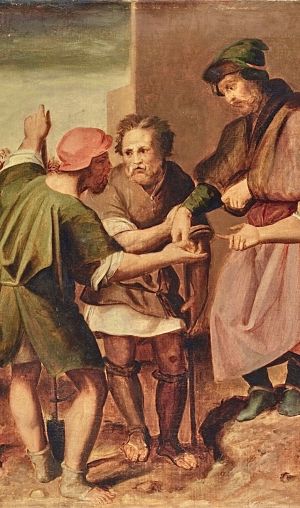
(Unique Coin and smart working: Love)
(Mt 20:1-16)
In the atrium of the Temple in Jerusalem, the climbing vine of the portal was a symbol of the gifts that people were called to present to God: mutual acceptance, understanding, sharing... for the happiness of all.
Obviously, entering at the beginning of the day (that is, of our existence) into this logic of love is better, than entering at the last hour.
Being in communion with God, being in his Vineyard and having had the grace not to lose even a moment of life without his Presence, is a «bearing the burden» or vice versa a pleasure?
Believers of the first hour feel deeply offended, because they identify the "advantage" with what they have always denied themselves.
They think the "enjoy life" in the same way as the pagans! The work is indeed... «endured» [v.12: notice the verb!].
Well, God has no wage workers: only sons; no subordinate. And none of us is negligible for "inefficiency".
That of the Models is a blocking effect; tied to insignificant comparisons.
Not in deep synchrony with oneself [vv.6-7].
The Gospel according to Mt originated from Syro-Palestinian communities, which were beginning to experience pagans and sinners flocking in large numbers and becoming a numerical majority.
The attitude of the newcomers who turned up at the gates of the communities was far more relaxed than the (stiff) demeanour of the embarrassed veterans.
The new mentality, dissolved from constraints, provoked jealousy among those who were accustomed to scrutinizing the lives of others - almost out of religious duty.
After all, the story of the beginners and ‘half-breeds’ who wished to embark on a journey of love was nothing more than reflection of that sublime, overflowing fluidity, of those magnanimous divine blessings.
‘Gratis’: given without conditions or exclusions; not on the basis of past merits.
A Gift free from any requirement for reciprocity – and based solely on need.
Therefore, today’s passage remains a strong Call.
The importance of work induces the Master not to send his factor (!) whom he unfortunately knows he cannot fully trust.
He himself goes out repeatedly and does not want dirigistic interference, in personally calling the workers.
Because He is the Unique who understands: it is never too late!
This teaching is precisely for community leaders, who often do not take on the burden of bothering themselves from home in the continuous search for everyone, and adapting themselves to people and events.
The Father wants a Family (Vineyard) that presents to the world the sweet and sugary fruit of the Feast - the only really important thing, non-negotiable principle.
Thus, to the always morbids top of the class the Lord continues to do a very educational "spite".
From now on they must discover that He does not discriminate on the basis of external profitable percentages, nor other negative mental states.
He “pays” everyone unreservedly and with a unique single «currency»: his Person. No automatic pilot is enabled to disturb our breathing.
The soul counts, not the curriculum [CV] or performance.
[25th Sunday in O.T. (year A) September 20, 2026]
Carrying the weight of the day?
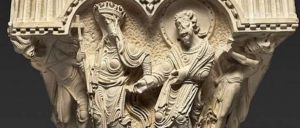
It's never too late (unique Coin and smart working: Love)
(Mt 20:1-16)
In the atrium of the temple in Jerusalem, the portal creeper was a symbol of the gifts that the people were called upon to present to God: mutual acceptance, understanding, sharing... for the happiness of all.
Obviously, entering at the beginning of the day (that is, of our existence) into this logic of love is better than entering at the last hour.
Instead: "Is your eye bad because I am good?" [v.19 Greek text].
But is being in communion with God, being in his Vineyard and having had the grace not to lose a single moment of life without his Presence a 'burden-bearing' or vice versa a pleasure?
But what a naive question... of course, the issues at stake are these and they are profound, but also others. So let us ask ourselves: in what we do, how much does external theatre count? So much?
The believers of the 'first hour' feel deeply offended, because underneath they identify 'pleasure' or 'advantage' with what they have always forcibly denied themselves. Perhaps out of a matter of social respectability, or out of a misunderstood sense of God; either way, artificially.
They think of 'enjoying life' in the same way as pagans! Work is indeed ... 'endured' [v.12: note the verb!].
Their unspoken sentiments are equally ungodly... but the first of the class remain more adept than others at exploiting the screen of long-certified membership to mask themselves behind the zeal of renunciations, works, sweats, procedures, prescriptions, performances, and better performances.
Well, God has no wage labourers: only children; no underlings.
None of us are negligible for 'inefficiency' - based on the old idea of proven belonging: the inhuman pace, the production volumes, the effort, the performance... the extra overtime...
That of patterns is a blocking effect; linked to meaningless comparisons, stressful, rushed (and overworked) life - all under external influence.
Not in deep synchrony with oneself [vv.6-7: ""Why do you stand here all day idle?" They say to him, "Because no one has taken us for a day. He says to them, 'You also go into the Vineyard'"].
The Father is only interested in personal Happiness and the Joy of Love: the only tasty Fruit; not the heap of external works, not the great volume of the many and many 'fruits' - often unfortunately inedible.
It is the outcome of the new, inverted world.
We are all equally protagonists and leaders, even if to some 'internal' regulars our contribution appears fragmentary, inefficient - and assesses us as not very 'involved' (perhaps in 'customs'); not at all 'regular' - with a grim and presumptuous eye.
The recent experience of smart working during the health crisis has brought out the specific weight of the 'late-comers': people who are less tied to production, less extroverted and less able to lead, but perhaps more thoughtful and profound, more respectful of the preciousness of their own work; less outward-looking or exhibitionist, more collaborative.
The unfavourable has become favourable!
The Gospel of Mt originated from Syro-Palestinian communities, which were beginning to experience pagans and sinners flocking in large numbers and becoming a numerical majority.
All this, to the great scandal of both Pharisaic and Judeo-Christian circles - who were now showing themselves to be opponents of the newcomers.
In short, the veterans were beginning to behave as if they were returning 'Pharisees', bound to the works of the law and the old ethnic-cultural baggage.
This is how the Master treats them - because they stubbornly refused to listen to the tide of people once far away, who were now bringing new things. And [they, without much practice of pious works] opened up to the veterans a path of Exodus, of Liberation from the convictions of the fathers.
The attitude of the outsiders and "intermarriers" who presented themselves at the fraternities' doors was much freer and fiercer than that of the community elders, Judaizers.
Their unencumbered mentality began to provoke jealousy among those who - almost out of religious duty - were used to scrutinising the lives of others with suspicion.
After all, that of the beginners and 'half-breeds' who wanted to begin a journey of love was but a reflection of the superabundant fluidity of the divine Gifts.
'Free' communicated without mistrust or exclusion: not on the basis of previous merits, but freely and by virtue of need alone.
We can experience live today the identical dynamics of confrontation, between new blood relatives on the basis of Faith and the customary ones [more concerned with their fixed places and 'laboriously' won positions of supremacy].
But thanks to the Word (v.15b) we now recognise the latter: by their judgement and manners. Nor do they ever want to let go of a finished past, or their 'new' sophisticated world of fashionable brain hypotheses.When the 'good' God unmasks them, exposing their prejudice, they remain with the slanted, evil eye of false paternalism.
But it is a malicious gaze only for intimidation purposes - for envy and 'lese majesty', not to educate us.
Thus they delude themselves not to be understood and continue to sterilise or pilot, ridiculing Love [also to get us out of the way - to avoid the danger of being overshadowed] by ineptitude, and by the very normal unfolding of life.
Therefore, today's passage remains, after so many centuries, a powerful reminder.
The importance of the work induces the Master not to send his factor (!) whom he unfortunately knows he cannot fully trust.
He himself repeatedly goes out and does not want dirigiste interference in calling the workers personally.
He is the only one who understands: it is never too late!
The teaching is precisely for community leaders, who often do not take on the burden of constantly searching for everyone from home, and adapting themselves to people and events.
Instead, the Father wants a Family (Vineyard) that presents the world with the sweet, sugary fruit of the Feast - the only truly important, non-negotiable principle.
Thus, to the ever morbid top of the class, the Lord continues to do a very educational 'spite'.
Already in life, they must discover that He does not discriminate on the basis of external profitable percentages, or others' negative mental states.
He "pays" everyone without reservation and with a single "currency": His Person. No autopilot is enabled to disturb our breathing.
The soul counts, not the CV or performance.
To internalise and live the message:
In what do you find God's Will incomprehensible, or rather the commercial, gloomy and square mentality (covered with duties, sadness, fatigue and pain) of his investigators?
Where to Find Happiness
Dear Brothers and Sisters,
You may remember that when I addressed the crowd in St Peter's Square on the day of my election it came naturally to me to introduce myself as a labourer in the vineyard of the Lord. Well, in today's Gospel (cf. Mt 20: 1-16), Jesus recounted the very same parable of the owner of the vineyard who at different hours of the day hires labourers to work in it. And in the evening he gives them all the same wages, one denarius, provoking protests from those who began work early. That denarius clearly represents eternal life, a gift that God reserves for all. Indeed those who are considered the "last", if they accept, become the "first", whereas the "first" can risk becoming the "last". The first message of this parable is inherent in the very fact that the landowner does not tolerate, as it were, unemployment: he wants everyone to be employed in his vineyard. Actually, being called is already the first reward: to be able to work in the Lord's vineyard, to put oneself at his service, to collaborate in his work, is in itself a priceless recompense that repays every effort. Yet only those who love the Lord and his Kingdom understand this: those who instead work only for the pay will never realize the value of this inestimable treasure.
[…] I like to emphasize that Matthew lived this experience in the first person (cf. Mt 9: 9). Indeed, before Jesus called him he worked as a tax collector and was therefore seen as a public sinner, excluded from "the Lord's vineyard". But everything changed when Jesus passed by his table, looked at him and said to him: "Follow me". Matthew rose and followed him. From a publican he immediately became a disciple of Christ. From being "last" he found himself "first", thanks to God's logic, which - for our good fortune! - is different from the logic of the world. "My thoughts are not your thoughts", the Lord says, speaking through the mouth of Isaiah, "neither are your ways my ways" (Is 55: 8). St Paul, for whom we are celebrating a special Jubilee Year, also experienced the joy of feeling called by the Lord to work in his vineyard. And what a lot of work he accomplished! Yet, as he himself confessed, it was God's grace which worked in him, that grace which from persecutor of the Church transformed him into an Apostle to the Gentiles, to the point of saying: "For to me to live is Christ, and to die is gain" However he immediately added: "If it is to be life in the flesh, that means fruitful labour for me. Yet which I shall choose I cannot tell" (Phil 1: 21-22). Paul clearly understood that working for the Lord is already a reward on this earth.
The Virgin Mary […] is the perfect branch of the Lord's vine. In her germinated the blessed fruit of divine love: Jesus, our Saviour. May she help us to respond constantly and joyously to the Lord's call and to find our happiness in toiling for the Kingdom of Heaven.
[Pope Benedict, Angelus, 21 September 2008]
Beyond the bounds of strict justice
6. Another parable helps us to understand that it is never too late to join the Church. God’s invitation can be extended to a person right up until the very last moment of their life. It is the well-known parable of the labourers in the vineyard: “The kingdom of heaven is like a landowner who went out at daybreak to hire labourers for his vineyard” (Mt 20:1). He then went out several more times at various hours of the day, right up to the last hour. And all were given a wage in which, going beyond the bounds of strict justice, the landowner wished to show all his generous love.
In this regard, one is reminded of the moving episode, recounted by the evangelist Luke, concerning the ‘good thief’ crucified alongside Jesus on Golgotha. To him, the invitation appeared as a merciful act on God’s part, as he said, almost with his last breath: ‘Jesus, remember me when you come into your kingdom’. He heard from the lips of the Redeemer-Bridegroom, condemned to death on the cross: ‘Truly, I say to you, today you will be with me in paradise’ (Lk 23:42–43).
[Pope John Paul II, General Audience, 18 September 1991]
A Leap Forward
In today’s Gospel reading (cf Mt 20:1-16) there is the parable of the day labourers in the vineyard, which Jesus recounts in order to explain two aspects of the Kingdom of God: the first is that God wants to call everyone to work for his Kingdom; the second is that, in the end, he wants to give everyone the same reward, that is, salvation, eternal life.
The owner of the vineyard who represents God, goes out at dawn and hires a group of workers, agreeing with them on the day’s wages. It was a fair wage. Then he goes out again [several times] later in the day — he goes out five times on that day — until the late afternoon to hire other unemployed labourers whom he sees. At the end of the day, the landowner orders that a denarius be paid to everyone, even to those who had only worked for a few hours. Naturally, the labourers who were hired first complain because they see that they are paid as much as those who worked for fewer hours. The landowner however, reminds them about what had been agreed; if he then wants to be generous with the others, they should not be envious.
In reality, this “injustice” of the owner serves to provoke in those listening to the parable a qualitative leap because here Jesus does not want to speak about the issue of work or of a fair wage, but about the Kingdom of God! And this is the message: there are no unemployed people in the Kingdom of God. Everyone is called to do their part; and there will be a reward from divine justice for everyone in the end — not from human [justice], luckily! —, but the salvation that Jesus Christ acquired for us with his death and Resurrection, a salvation which is not deserved, but donated — salvation is free — thus, “the last will be the first and the first last” (Mt 20:16).
With this parable, Jesus wants to open our hearts to the logic of the Father’s love which is free and generous. It is about allowing oneself to be astonished and fascinated by the “thoughts” and the “ways” of God which, as the Prophet Isaiah recalls, are not our thoughts and not our ways (cf Is 55:8). Human thoughts are often marked by selfishness and personal advantages, and our narrow and contorted paths are not comparable to the wide and straight streets of the Lord. He uses mercy — do not forget this: He uses mercy —, he forgives broadly, is filled with generosity and kindness which he pours forth on each of us. He opens for everyone the boundless territory of his love and his grace, which alone can give the human heart the fullness of joy.
Jesus wants to make us contemplate the gaze of that landowner: the gaze with which he looks upon each of the labourers searching for work and calls them to go to his vineyard. It is a gaze which is filled with attention, kindness. It is a gaze which calls, invites one to get up and begin a journey because he wants life for each of us; he wants a full, committed life, safe from emptiness and inertia. God excludes no one and wants each of us to achieve his or her fullness. This is the love of our God, of our God who is Father.
May Mary Most Holy help us welcome into our lives the logic of love which frees us from the presumption of deserving God’s reward and from the critical judgement of others.
[Pope Francis, Angelus, 24 September 2017]
A new God, without planning: perhaps a deluded one?
In the difference between common religiosity and Faith
(Lk 8:4-15)
The parables compare the lived reality and the world of the Spirit:
«And another part fell on the earth the beautiful one, and sprouted it bore fruit a hundredfold» (v.8).
Palestine’ stony terrain and scorching climate did not make it easy for the workers who lived on agriculture.
The lack of rain and the intrusion into the fields of those who wanted to shorten the path, destroyed the plants.
Tiring action and few tangible results.
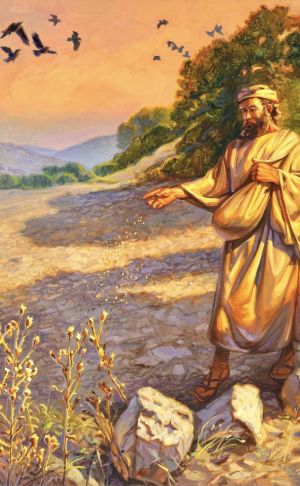
Despite the enormous difficulties, every year the peasant threw grains with a wide hand, generously - and ploughed, animated by confidence in the inner life force of the seed and in the bounty of nature.
Ploughing was after sowing, to avoid that the soils turned over dried immediately under the powerful heat, and did not allow the grains to take root thanks to a minimum of moisture.
So the sower did not select the different types of ground prematurely.
The Seed already works: the new ‘Kingdom that Comes’ is not glorious, but here and there it takes root and produces - even where you do not expect.
According to the ancient religious mentality it seems a madness, but the divine Farmer does not choose the type of "land", nor discriminates on the basis of the percentage of production - although it would seem easy to predict.
The Sower even accepts that his ‘grain’ fallen on the ground «beautiful», fruits in differently: one hundred, sixty, thirty for one [Mt 13:8.23; Mk 4:8.20; the text of Lk does not speak of percentages].
The term «beautiful» (in the Eastern sense) means the full and fruitful land [the soul and work of the most intimate, even anonymous ones].
The Lord means that a wise commitment to evangelization cannot be measured with fussiness.
His Word remains as a Beginning thrown into the human heart by the One who is neither stingy nor exclusive - but magnanimous.
In this way, the Church, his new People, is a small alternative world to both the Empire and selective religions.
The new Rabbi did not intend to carve out better disciples than others - isolated from the reality of the human family.
He was proposing a new lifestyle, cohabiting.
In short, God does not force the growth of the ‘seed’ in each of us, in an abstract way; He waits patiently.
Even accepts that it is born badly or that it does not arise at all. He knows where to go.
Since overflowingly spreads on all kinds of hearts (even on asphalt), He foresees already that will be accused of being unwise.
But He does not worry about the quantity, nor about the immediate outward fruits of His ‘grain’.
He does not care that the work is "effective in departure"!
Such is the amiable, humanizing and divine (parental) Tolerance that saves. Loveableness that does not kidnap us every moment, to plan.
Rather, all this is to make us understand that He is not a calculating and miserly God, external, tight and biased; but a munificent and conciliatory Father.
Lord of the Kingdom who does not wait first for our little ‘perfections’.
The metaphor that follows the initial parable is intended to emphasize that any lack of result is not to be attributed to the lack of vitality of the Seed, nor to the divine Work, but to man’s freedom; to his condition of limit or incoherence.
Unfortunately, from the earliest generations of believers, the positive Call of Jesus has been reinterpreted somewhat backwards: with moralistic and individualistic overtones (vv.11-15) that have undermined its genuineness.
In this way, the initial proposal of personal Faith became contaminated with the customary purist and fall-back [guilt-ridden] outlook typical of the surrounding philosophies and religions, as well as common thought.
Certain configurations of ecclesial order subsequently normalized the same exceptional power of the Message; so unprecedented. In particular, the new sense of adequacy, confidence and self-esteem that the Son of God intended to communicate to His friends, and to the world of the least.
[Saturday 24th wk. in O.T. September 19, 2026]
A new God, without planning: perhaps a deluded one?
The difference between common religiosity and personal Faith
(Lk 8:4-15)
The stony soil and scorching climate of Palestine did not make life easy for farmers. The scarcity of rain and the intrusion into the fields of those who wanted to shorten their journey destroyed the plants. It was hard work with few tangible results.
Despite the enormous difficulties, every year the farmer sowed his seed generously and ploughed, animated by his faith in the seed's inner vitality and in the munificence of nature.
Ploughing followed sowing, to prevent the turned soil from drying out immediately under the intense heat and preventing the seed from taking root thanks to a minimum of moisture. Therefore, the sower did not select the different types of soil in advance.
The parable (vv. 5-8) that precedes the allegory (vv. 11-15) compares lived reality with the world of the Spirit. The seed is already at work: the new 'Kingdom to Come' is not glorious, but here and there it takes root and produces - even where you least expect it.
According to conventional thinking, this seems crazy, but the divine 'farmer' does not choose the type of 'soil', nor does he discriminate on the basis of its productive potential - which would seem easy to predict.
The Sower even accepts that his 'grain' fallen on 'good' soil (v. 8) will bear fruit in time 'with perseverance' (v. 15). Unlike Mark and Matthew, Luke speaks only of 'fruit a hundredfold' (v. 8).
Jesus means that the work of evangelisation cannot be measured with pedantry. His Word remains as a Seed sown in the human heart by the One who is neither stingy nor exclusive - but magnanimous.
His Church is a small world alternative to both the Empire and immediately selective religions: the Lord has no intention of carving out disciples who are immediately better than others and isolated from the reality of the human family. A new way of life.
God does not force the growth of the 'seed' in each of us, but waits patiently. He also accepts that it may grow badly or not sprout at all.
Since he scatters abundantly on all kinds of hearts [even on the asphalt], he knows that he will be accused of being unwise: he is not concerned with the immediate external fruits (!) of his 'seed' - he does not care whether the work is 'effective from the outset' (!).
But he is interested in making us understand that he is a Father, not the calculating God of ancient beliefs: miserly, superficial, stingy, aloof, prejudiced.
The metaphor that follows the initial parable emphasises that any lack of results is not attributable to the seed's lack of vitality, nor to God's work, but to human freedom; to our limited or inconsistent nature.
God is generous, especially in the age of rebirth from crisis: it is also a time of generous sowing by the Father, the 'farmer' of his seedlings - more adventurous and less respectable than traditionalists.
Obviously, the Word of the Master and Lord warns against anything that could prevent a new genesis - above all because we often wait to mechanically return to old roles and the old system of things, which is habitual, external and dirigiste.
Are we perhaps still too attached to previous desires and economic levels that have now been overwhelmed by events... not accepting the emergence of opposites that we had never experienced or planned for?
We still think we can return to 'everything as it was before'; to the superficiality of a society based on appearances, not rooted in conviction, immediately enthusiastic and unable to look beyond.
Instead, the changing tide is coming so that we can learn to look within, elsewhere and beyond - to focus on our own and others' unique figures, in the conviviality of differences.
It is likely that the knowledge or lifestyle we would like to reaffirm is still linked to old models that are welcome but now inadequate to provide new answers to new questions. And perhaps all this has led us to imitate too much the disqualified having-appearing, instead of the precious being at the centre of our Calling by Name.
It is not impossible that we have allowed ourselves to become accustomed to decision-making nomenclatures or to hastiness due to performance anxiety, which do not take into account the beautiful terrain of character and vocational gift [which would lead to better contact with the unfulfilled energies of our true inclination - nestled among inconsistencies].
Here we are, caught up in concerns about restoring 'business as usual' or 'how we should be'... Despite the fact that the current traumas are clear signs to broaden our awareness, which has been stifled until now (as if by brambles). These contemporary appeals are eloquent calls to launch every side towards the Exodus, to conquer renewed freedoms and territories of the soul, in essence.
All the influence of an empty and formal spirituality that we carry with us still inhibits a good perception of today, and unnerves us, taking away our inner strength. It does not allow us to follow our own impulse in harmony with the inner world - or the same tendencies in listening to the incessant Call of the Gospels, which is still disseminated by non-conformist prophets, to announce the truth and the creation of a new world.
Well, something - or our whole life - could end up confused; more than ever, we may not be going in the right and clear direction: we may not be making ourselves special as the Sower would like - precisely because of the clichés or emotional voids that steal the Seed, or suffocate the plant, or because of the usual presumption that wants to rise to the top immediately and thus prevents us from putting down deep roots.
We will then have to put aside our mental turmoil and unilateral volitional turmoil; leave space and give in to the new current of quality that is carrying us. And surrender to the proposals of the tide of grains that come to guide us beyond the old disputes: to the natural, original energy of Providence, which knows more than we do.
To the Wind of the Spirit that unfolds beyond the 'grains' - where you least expect it - it does not even matter how immediate the results are - but our 'good' harmony (v.8) - which helps to bring us up to speed with the reality of far-sighted combinations. They will reorder everything in a different way: beyond habitual mental systems - and every result will be more prudent, in favour of the peripheries.
Without too much disposition and calculation in the choice of terrain - once pretentiously removed and sanitised upstream - we will realise that the Sower will finally have crumbled many worldly pedestals, not to humiliate anyone, but to give surprises of astonishing fruitfulness, even for the growth of every creed [all denominations].
His is always and everywhere a generous and uniquely creative Action, put in place to regenerate and empower convictions - not to make us repeat the usual actions or liturgies from the manual [or more glamorous ones]. Then resume playing with the performance or narrow confines of approved patterns.
If we want to synchronise ourselves with the movement of the Sower, we must move with Him and like Him towards the poverty of the various soils [existential situations].
A special narrowness - even more acute in times of global emergency - that forces us to 'move', to become itinerant, to scatter everywhere... and not just to reap a hundredfold (vv. 8.15) in the usual protected centre.
Parables and the mystery of blindness: Narration and transmutation
Getting lost, for transformation
(Lk 8:9-10, 18; cf. Mt 13:10-17; Mk 4:10-12, 25)
St Paul expresses the meaning of the 'mystery of blindness' that contrasts with his journey with the famous expression 'thorn in the side': wherever he went, enemies were already waiting for him, as well as unexpected disagreements.
So it is for us too: disastrous events, catastrophes, emergencies, the disintegration of old reassuring certainties - all external and murky; until recently considered permanent.
Perhaps in the course of our existence, we have already realised that misunderstandings have been the best ways to reactivate ourselves and introduce the energies of renewed Life.
These are resources or situations that we might never have imagined would be allies in our own and others' fulfilment.
Erich Fromm says:
'To live means to be born at every moment. Death occurs when we cease to be born. Birth is therefore not an act; it is an uninterrupted process. The purpose of life is to be born fully, but the tragedy is that most of us die before we are truly born'.
Indeed, in a climate of unrest or absurd differences [that force us to regenerate], the most neglected inner virtues sometimes come to the fore.
New energies - seeking space - and external powers. Both malleable; unusual, unimaginable, unorthodox.
But they find solutions, the real way out of our problems; the path to a future that is not simply a reorganisation of the previous situation, or of how we imagined 'things should have been and done'.
Once a cycle is over, we start a new phase; perhaps with greater righteousness and frankness - brighter and more natural, humanising, closer to the 'divine'.
Authentic and engaging contact with our deepest states of being is generated acutely by detachments.
They lead us to a dynamic dialogue with the eternal reserves of transmuting forces that inhabit us and belong to us.
A primordial experience that goes straight to the heart.
Within us, this path 'fishes' for the creative, fluctuating, unprecedented option.
In this way, the Lord transmits and opens his proposal using 'images'.
An arrow of Mystery that goes beyond the fragments of consciousness, culture, procedures, and what is common.
For a knowledge of oneself and of the world that goes beyond that of history and current events; for the active awareness of other contents.Until the turmoil and chaos itself guides the soul and compels it to a new beginning, to a different perspective (completely shifted), to a new understanding of ourselves and the world.
Well, the transformation of the universe cannot be the result of cerebral or dirigiste teaching; rather, it is the result of a narrative exploration - one that does not distance people from themselves.
And Jesus knows this.
New interpretation of the different Soils
Evolution of the Covenant in times of crisis: the same flaws, different harmonisations
(Mt 13:18-23)
God is generous, especially in the age of rebirth from crisis: it is also a time of generous sowing on the part of the Father.
He remains the Farmer of his seedlings - more adventurous and less respectable than traditionalists or fashionable people.
Obviously, the Word of the Master and Lord warns against anything that could prevent a new Genesis - above all because we often wait to mechanically return to old roles and the old system of things; to the habitual, external, dirigiste model.
Are we perhaps still too attached to desires and previous economic levels (v. 22) now overwhelmed by things... not accepting the emergence of opposites that we had never experienced or planned for (v. 19)?
We still think we can return to 'everything as before'; to the superficiality of a society based on appearances rather than convictions; to an immediately enthusiastic exterior (vv. 20-21) that does not shift our gaze.
Instead, the different tide comes so that we learn to fix our gaze within, elsewhere, and beyond - to focus on our own and others' 'unique figure' in the conviviality of differences.
It is likely that the knowledge or lifestyle we would like to reaffirm is still linked to standards, whether welcome, old-fashioned or à la page - now inadequate to provide new answers to new questions.
And perhaps all this has led us too much to follow and imitate the disqualified 'having-appearing', instead of being, and that precious character at the centre of our Calling by Name.
It is not impossible that we have allowed ourselves to become accustomed to decision-making nomenclatures or to rushing due to performance anxiety.
These do not take into account the 'beautiful terrain' of uniqueness, of the unprecedented gift of vocation [which would lead to better contact with the unfulfilled energies of our genuine inclination - nestled among inconsistencies].
Instead, we are all preoccupied with concerns about restoring things 'as they were' or 'as they should be'...
This is despite the fact that the current traumas are explicit signals to broaden the awareness that has been stifled until now (as if by 'brambles': v.22).
Eloquent appeals - even contemporary ones - to launch every side towards the Exodus, for the conquest of renewed freedoms; territories of the soul, though hidden, at the core of our essence.
All the influence of an empty and formal spirituality that we carry with us still inhibits a good perception of today, and unnerves us, taking away our inner strength.
It does not allow us to follow our own impulse in harmony with the inner world - or the same tendencies in listening to the incessant Call of the Gospels [which is still disseminated by non-approved prophets, to proclaim the truth and the creation of an alternative world].
Well, something or our whole life could be confused; more than ever, we are not going in the right and clear direction: we are not making ourselves special as the Sower would like - precisely because of the stereotypes or emotional voids that steal the Seed, or suffocate the plant, or because of the usual presumption that wants to return to towering immediately and thus prevents us from putting down deep 'roots'.
We will then have to put aside our mental turmoil and unilateral volitional turmoil; make room and give in to the new current of quality that is carrying us.
And surrender to the proposals of the tide of 'grains that come' to guide us beyond the old disputes: to the natural, original energy of Providence, which knows more than we do.
To the Wind of the Spirit that unfolds beyond, the grains - where you least expect them - it does not matter what percentage is productive (v.23b) but our 'beautiful' harmony (v.23a Greek text) that helps to bring us back to the reality of far-sighted mixtures.
They will reorder everything in a different way: beyond habitual mental systems - and every result will be more prudent, in favour of the Peripheries.
Without too much disposition and calculation in the choice of terrain [once pretentiously removed and sanitised upstream], we will realise that the Sower will have finally crumbled many worldly pedestals; not to humiliate anyone, but to give surprises of astonishing fertility, even for the growth of every creed (all denominations).
His is always and everywhere a generous and exceptionally creative Action, put in place to regenerate and empower convictions.
Not to make us repeat the usual actions or clichés from the manual [and start playing with performance again, or with the narrow confines of widely approved patterns].If we want to synchronise ourselves with the movement of the Sower, we must move with Him and like Him towards the poverty of the various soils (existential situations).
A special narrowness - even more acute in times of global emergency - that forces us to 'move', to become itinerant, to scatter everywhere.
And not just to gather the 'hundred' (v. 23) in the usual protected 'centre'.
With abundance and generosity
The Lord scatters the seed of the word of God freely and with abundance but knowing that it may fall on poor soil, which will not allow a seed to mature because of dryness, or that its vital force may be extinguished, choked by thorn bushes. Yet the sower does not lose heart, for he knows that part of this seed is destined to find "good soil", namely, ardent hearts capable of receiving the word with willingness to help it mature through perseverance and yield fruit generously for the benefit of many.
The image of the soil can evoke the reality of the family, on the whole good; the sometimes arid and harsh environment of work; the days of suffering and tears. The earth is above all the heart of every person, especially of youth, to whom you address your service of listening and guidance: a heart that is often confused and disoriented, yet capable of containing unimaginable powers of generosity. It is like a bud ready to open to a life spent for the love of Jesus, able to follow him with the totality and the certainty that comes from having found the greatest treasure that exists. It is always and only the Lord who sows in human hearts. Only after the abundant and generous sowing of the word of God can one progress further along the paths of companionship and education, of formation and discernment. All this is linked to that tiny seed, the mysterious gift of divine Providence which releases from within an extraordinary force. In fact, it is the Word of God who brings about in himself what he says and desires.
[Pope Benedict, to participants at the European conference on vocational pastoral care, 4 July 2009]
The fool in the Bible, the one who does not want to learn from the experience of visible things, that nothing lasts for ever but that all things pass away, youth and physical strength, amenities and important roles. Making one's life depend on such an ephemeral reality is therefore foolishness (Pope Benedict)
L’uomo stolto nella Bibbia è colui che non vuole rendersi conto, dall’esperienza delle cose visibili, che nulla dura per sempre, ma tutto passa: la giovinezza come la forza fisica, le comodità come i ruoli di potere. Far dipendere la propria vita da realtà così passeggere è, dunque, stoltezza (Papa Benedetto)
As sometimes happens in the Gospel, faced with the trap set by his enemies, Jesus, with his response, rises above the contingent controversy and goes far beyond the particular and mutually divergent positions (Pope John Paul II)
Come talora accade nel Vangelo, di fronte al tranello mossogli dai suoi nemici, Gesù, con la sua risposta, s’innalza al di sopra della polemica contingente e va ben oltre le posizioni particolari e tra loro divergenti (Papa Giovanni Paolo II)
And blasphemy, the sin against the Holy Spirit, is the one unforgivable sin — as Jesus said — because it comes from closing the heart to God’s mercy which acts in Jesus (Pope Francis)
E la bestemmia, il peccato contro lo Spirito Santo, è l’unico peccato imperdonabile – così dice Gesù –, perché parte da una chiusura del cuore alla misericordia di Dio che agisce in Gesù (Papa Francesco)
The great thinker Romano Guardini wrote that the Lord “is always close, being at the root of our being. Yet we must experience our relationship with God between the poles of distance and closeness. By closeness we are strengthened, by distance we are put to the test” (Pope Benedict)
Il grande pensatore Romano Guardini scrive che il Signore “è sempre vicino, essendo alla radice del nostro essere. Tuttavia, dobbiamo sperimentare il nostro rapporto con Dio tra i poli della lontananza e della vicinanza. Dalla vicinanza siamo fortificati, dalla lontananza messi alla prova” (Papa Benedetto)
The present-day mentality, more perhaps than that of people in the past, seems opposed to a God of mercy, and in fact tends to exclude from life and to remove from the human heart the very idea of mercy (Pope John Paul II)
La mentalità contemporanea, forse più di quella dell'uomo del passato, sembra opporsi al Dio di misericordia e tende altresì ad emarginare dalla vita e a distogliere dal cuore umano l'idea stessa della misericordia (Papa Giovanni Paolo II)
«Religion of appearance» or «road of humility»? (Pope Francis)
«Religione dell’apparire» o «strada dell’umiltà»? (Papa Francesco)
In the crucified Jesus a kind of transformation and concentration of the signs occurs: he himself is the “sign of God”, especially in the mystery of his Death and Resurrection (Pope John Paul II)
In Gesù crocifisso avviene come una trasformazione e concentrazione dei segni: è Lui stesso il "segno di Dio", soprattutto nel mistero della sua morte e resurrezione (Papa Giovanni Paolo II)
However, the king was not discouraged and sent his servants out to seek other guests to fill his banquet hall. Thus the aspect of the refusal of those initially invited caused the invitation to be extended to all [Pope Benedict]
Il re però non si scoraggia e invia i suoi servi a cercare altri commensali per riempire la sala del suo banchetto. Così il rifiuto dei primi ha come effetto l’estensione dell’invito a tutti [Papa Benedetto]








duevie.art
don Giuseppe Nespeca
Tel. 333-1329741
Disclaimer
Questo blog non rappresenta una testata giornalistica in quanto viene aggiornato senza alcuna periodicità. Non può pertanto considerarsi un prodotto editoriale ai sensi della legge N°62 del 07/03/2001.
Le immagini sono tratte da internet, ma se il loro uso violasse diritti d'autore, lo si comunichi all'autore del blog che provvederà alla loro pronta rimozione.
L'autore dichiara di non essere responsabile dei commenti lasciati nei post. Eventuali commenti dei lettori, lesivi dell'immagine o dell'onorabilità di persone terze, il cui contenuto fosse ritenuto non idoneo alla pubblicazione verranno insindacabilmente rimossi.