


don Giuseppe Nespeca
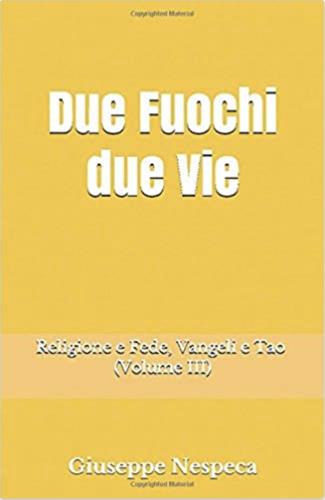
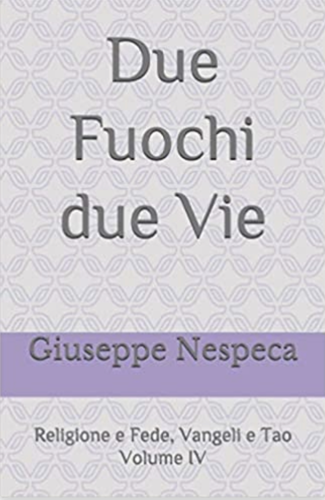
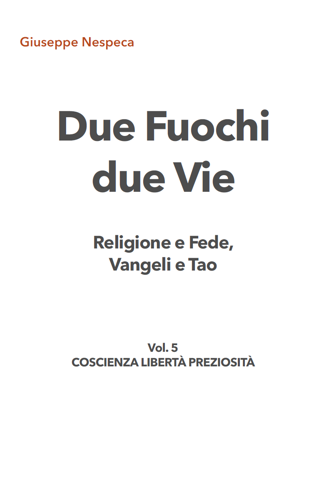
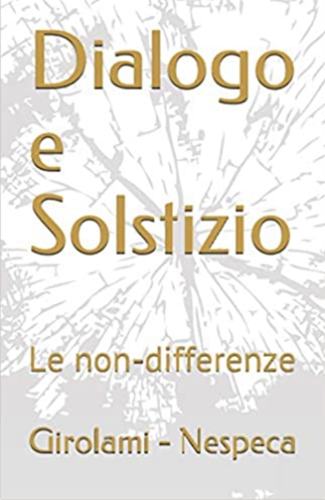
Giuseppe Nespeca è architetto e sacerdote. Cultore della Sacra scrittura è autore della raccolta "Due Fuochi due Vie - Religione e Fede, Vangeli e Tao"; coautore del libro "Dialogo e Solstizio".
Mary's smile and the Seven Swords. Entering into the Passion through Compassion
Yesterday we celebrated the Cross of Christ, the instrument of our salvation, which reveals the mercy of our God in all its fullness. The Cross is truly the place where God’s compassion for our world is perfectly manifested. Today, as we celebrate the memorial of Our Lady of Sorrows, we contemplate Mary sharing her Son’s compassion for sinners. As Saint Bernard declares, the Mother of Christ entered into the Passion of her Son through her compassion (cf. Homily for Sunday in the Octave of the Assumption). At the foot of the Cross, the prophecy of Simeon is fulfilled: her mother’s heart is pierced through (cf. Lk 2:35) by the torment inflicted on the Innocent One born of her flesh. Just as Jesus cried (cf. Jn 11:35), so too Mary certainly cried over the tortured body of her Son. Her self-restraint, however, prevents us from plumbing the depths of her grief; the full extent of her suffering is merely suggested by the traditional symbol of the seven swords. As in the case of her Son Jesus, one might say that she too was led to perfection through this suffering (cf. Heb 2:10), so as to make her capable of receiving the new spiritual mission that her Son entrusts to her immediately before “giving up his spirit” (cf. Jn 19:30): that of becoming the mother of Christ in his members. In that hour, through the figure of the beloved disciple, Jesus presents each of his disciples to his Mother when he says to her: Behold your Son (cf. Jn 19:26-27).
Today Mary dwells in the joy and the glory of the Resurrection. The tears shed at the foot of the Cross have been transformed into a smile which nothing can wipe away, even as her maternal compassion towards us remains unchanged. The intervention of the Virgin Mary in offering succour throughout history testifies to this, and does not cease to call forth, in the people of God, an unshakable confidence in her: the Memorare prayer expresses this sentiment very well. Mary loves each of her children, giving particular attention to those who, like her Son at the hour of his Passion, are prey to suffering; she loves them quite simply because they are her children, according to the will of Christ on the Cross.
The psalmist, seeing from afar this maternal bond which unites the Mother of Christ with the people of faith, prophesies regarding the Virgin Mary that “the richest of the people … will seek your smile” (Ps 44:13). In this way, prompted by the inspired word of Scripture, Christians have always sought the smile of Our Lady, this smile which medieval artists were able to represent with such marvellous skill and to show to advantage. This smile of Mary is for all; but it is directed quite particularly to those who suffer, so that they can find comfort and solace therein. To seek Mary’s smile is not an act of devotional or outmoded sentimentality, but rather the proper expression of the living and profoundly human relationship which binds us to her whom Christ gave us as our Mother.
To wish to contemplate this smile of the Virgin, does not mean letting oneself be led by an uncontrolled imagination. Scripture itself discloses it to us through the lips of Mary when she sings the Magnificat: “My soul glorifies the Lord, my spirit exults in God my Saviour” (Lk 1:46-47). When the Virgin Mary gives thanks to the Lord, she calls us to witness. Mary shares, as if by anticipation, with us, her future children, the joy that dwells in her heart, so that it can become ours. Every time we recite the Magnificat, we become witnesses of her smile.
[Pope Benedict, homily at Lourdes, 15 September 2008]
Stabat Mater, with silent eloquence
1. "Stabat Mater dolorosa . . .".
"The sorrowful Mother stood weeping at the Cross, from which her Son hung."
Today, 15 September, the liturgical calendar commemorates the sorrows of the Blessed Virgin Mary. It is preceded by the feast of the Exaltation of the Holy Cross, which we celebrated yesterday.
What a shocking mystery the Cross is! After meditating on it at length, St. Paul wrote to the Christians of Galatia: "As for me, there is no other boast than the cross of our Lord Jesus Christ, through which the world has been crucified to me, as I to the world" (Gal 6:14).
The Blessed Virgin could also have repeated these same words, and with even greater truth! Contemplating her dying Son on Calvary, she understood that the "boast" of her divine motherhood reached its peak at that moment by participating directly in the work of Redemption. She also understood that human suffering, taken on by her crucified Son, now acquired an inestimable value.
2. Today, therefore, the Sorrowful Virgin, standing beside the Cross, speaks to us with the silent eloquence of her example about the meaning of suffering in the divine plan of Redemption.
She was the first to know and desire to participate in the mystery of salvation, "associating herself with a maternal heart with the sacrifice of Christ, lovingly consenting to the immolation of the victim she had brought forth" (Lumen Gentium, 58). Deeply enriched by this ineffable experience, she approaches those who suffer, takes them by the hand, and invites them to climb Calvary with her and to pause before the Crucified One.
In that tortured body is the only convincing answer to the questions that rise imperiously from the heart. And with the answer comes the strength necessary to take one's place in that struggle which, as I wrote in the Apostolic Letter Salvifici doloris, pits the forces of good against those of evil (cf. Ioannis Pauli PP. II, Salvifici doloris, n. 27). And I added: "Those who share in the sufferings of Christ preserve in their own sufferings a very special particle of the infinite treasure of the Redemption of the world, and they can share this treasure with others" (Ibid.).
3. Let us ask Our Lady of Sorrows to nourish in us the firmness of faith and the ardour of charity, so that we may courageously carry our daily cross (cf. Lk 9:23) and thus participate effectively in the work of Redemption.
"Fac ut ardeat cor meum . . .", "Make my heart burn with love for Christ God, so that I may be pleasing to him!". Amen!
[Pope John Paul II, Angelus, 15 September 1991]
Russian mystics and childbirth, in a world of orphans and prisoners
In a world of orphans, Mary is the mother who understands us completely and defends us, not least because she experienced first-hand the same humiliations that, for example, the mothers of prisoners suffer today. Celebrating Mass in the chapel of Casa Santa Marta on Thursday morning, 15 September, the day of remembrance of the Blessed Virgin Mary of Sorrows, Pope Francis suggested that in difficult times we should always take refuge 'under the mantle' of the Mother of God, thus reviving 'the spiritual advice of the Russian mystics' that the West has relaunched with the antiphon Sub tuum preasidium.
For his meditation on "the mystery of Mary's motherhood," the Pontiff took his cue from the Last Supper: "Jesus, at the table, bids farewell to his disciples: there is an air of sadness, everyone knew that something was going to end badly and they asked questions, they were sad." But "Jesus, in that farewell, to give them a little courage and also to prepare them in hope, says to them: 'Do not be sad, do not let your hearts be sad, I will not leave you alone! I will ask the Father to send another Paraclete, who will accompany you. And he will teach you everything and remind you of all that I have said'." The Lord, therefore, "promises to send the Holy Spirit to accompany the disciples, the Church, on the path of history."
But Jesus "also speaks of the Father." In fact, Francis recalled, "in that long, long discourse with the disciples, he speaks of the Father," assuring them "that the Father loves them and that whatever they ask of the Father, the Father will give them. That they should trust in the Father." And so, the Pope explained, he takes "one more step: he not only says 'I will not leave you alone', but also 'I will not leave you orphans, I give you the Father, the Father is with you, my Father is your Father'." Then, Francis continued, "everything we know happens after the supper: the humiliation, the prison, the betrayal of the disciples; Peter denies Jesus, the others flee."
So much so that, said the Pontiff, referring to the liturgical passage from the Gospel of John (19:25-27), under the cross there was "only one disciple, with the mother of Jesus, with Mary Magdalene and the other Mary, a relative." And there, at the cross, "there is Mary, the mother of Jesus: everyone was looking at her," perhaps whispering, "That is the mother of this criminal! That is the mother of this subversive!" And Mary, added the Pope, "heard these things, suffered terrible humiliation and also heard the elders, some priests whom she respected because they were priests," say to Jesus: "But you who are so good, come down, come down!". Mary, Francis said, standing next to "her Son, naked, there, suffered greatly, but she did not leave, she did not deny her Son, he was her flesh."
With personal confidence, the Pope recalled: "It happened many times when I went to the prisons in the diocese of Buenos Aires to visit the prisoners, to see the queue, the line of women waiting to enter: they were mothers, but they were not ashamed, their flesh was in there." And those "women suffered not only the shame of being there," hearing people say: "Look at her, what must her son have done?" Those mothers "also suffered the worst humiliations in the searches that were carried out on them before they entered, but they were mothers and they were going to visit their own flesh." And so it was for Mary, who "was there, with her Son, with that great suffering."
Precisely "at that moment," the Pope pointed out, "Jesus, who had spoken of not leaving us orphans, who had spoken of the Father, looks at his mother and gives her to us as our mother: 'Behold, your mother!'" The Lord "does not leave us orphans: we Christians have a mother, the same as Jesus; we have a Father, the same as Jesus. We are not orphans." And Mary "gives birth to us at that moment with so much pain, it is truly a martyrdom: with her heart pierced, she accepts to give birth to all of us in that moment of pain. And from that moment she becomes our mother, from that moment she is our mother, the one who takes care of us and is not ashamed of us: she defends us."
"The Russian mystics of the early centuries of the Church," Francis recalled in this regard, "gave advice to their disciples, the young monks: in times of spiritual turmoil, take refuge under the mantle of the holy mother of God. The devil cannot enter there because she is a mother and as a mother she defends." Then "the West took this advice and composed the first Marian antiphon, Sub tuum praesidium: under your mantle, under your protection, O Mother, there we are safe."
"Today is the memory of the moment when Our Lady gave birth to us," the Pope continued, "and she has been faithful to this birth until today and will continue to be faithful." And "in a world that we can call 'orphaned', in this world that suffers from a crisis of great orphanhood, perhaps our help is to say: 'Look to your mother!'" Because we have a mother "who defends us, teaches us, accompanies us, who is not ashamed of our sins" and "is not ashamed, because she is a mother."
In conclusion, the Pontiff prayed "that the Holy Spirit, this friend, this companion on the journey, this Paraclete advocate whom the Lord has sent us, may help us understand this great mystery of Mary's motherhood."
[Pope Francis, St. Martha, in L'Osservatore Romano, 16/09/2016]
Lifting up the Cross: far beyond resilience – Exaltation of the Cross
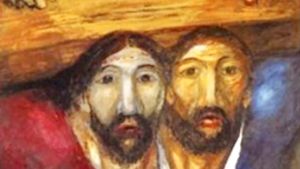
Raising the Cross goes far beyond resilience capacity
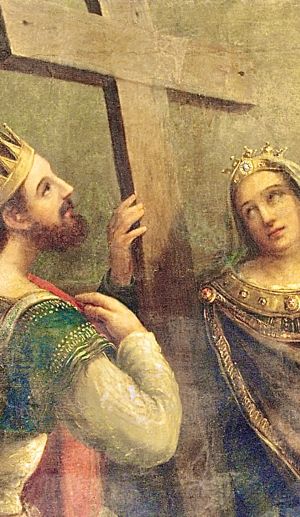
Going up and down, to go further or back
(Jn 3:13-17)
One of st Francis' first companions - friar Egidio - said: «The way to go up is to go down». We ask ourselves: what is the meaning of this paradox?
Today’s feast has the title of Exaltation. The Gospel speaks instead of «Elevation».
Of course, synonymous with being seen and noticed, but under a «contrary species». So, how to elevate life by staring at Jesus crucified?
Nicodemus’ passage suggests an answer.
The doctor of the Law, a Pharisee and member of the Sanhedrin is «in the night»because he is disinducated to the normal idea of a ‘successful’ man, according to the attributes of possession, power and glory.
However, the moment comes when even the costume is shaken by doubt, by the alternative of Christ.
The Cross no longer takes anything for granted. It is a new Judgment, from which other possibilities emerge, precisely in the ons of unregulated vacillations.
Misadventures, upheavals, the adversities of life, the context of chaos... bring out a better relationship with actions and our destiny.
Uncertainty guide us closer to our essence - it invokes resources, pure air, relationships.
In short, scaffold situations can get creative.
Compromising «reputation» reshapes our soul, our point of view; it calls into question the idea we made of ourselves.
It opens up stunning new paths, sudden - otherwise suffocated achievements at the start.
Of course, for those who choose to be themselves, the fate of persecution, misunderstanding, mockery and slander, lack of credit and laurels, is marked - as if we were failures.
But in the Judgment of the Crucified One, this is the «right position» to become ‘sons’ who find human completeness, and give birth to corresponding fruits: often the best time in their story.
The Cross is a free Gift, for a Life as Saved persons. The Cross redeems from the attractions that extinguish our growth.
The Cross is the best opportunity for development.
In fact, realization and completion emerge from sides of ourselves [and situations] that we do not want. Even from deep wounds, which invest a whole way of being, doing and appearing.
‘Trial’ is not the end of the world. It annihilates our powerful appearance, yet it lets out the virtue of the fragile side, first overshadowed for social catwalk needs.
Here is the Crucified One, who bleeds not only to heal, soften and remove ballasts, but to overthrow, replace horizons and supplant the entire system of addicted conformisms. And even (self-styled) alternative aspects, ways of thinking that seemed like who knows what.
Thus the embraced Cross saves us.
It seems like a sabotage to our "infallible" side, instead it is the Antidote to the city dormant on the same paths as before - in the usual ways of being and taking the field [now without a future].
Raising the Cross goes far beyond resilience capacity.
[Exaltation of the Holy Cross, September 14]
Lifting the Cross goes far beyond resilience
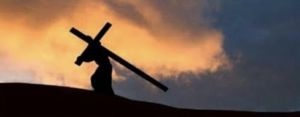
To go up and to go down, to go further or to go backwards
(Jn 3:13-17)
Nothing doing, despite two millennia of Christian symbols, formulas and rituals, especially in Italy we remain at the usual pole: Guelphs versus Ghibellines; even as a shaky destiny looms.
Why such a folded-up faith, incapable of freeing us from occasional stings? Why is it that - even when we are on our way to a mountain of debt - we continue to behave like those who do not stop pawing each other?
We need a good Conversion, with the inverted pyramids of 'supremacy' and glory: arrogant, aggressive, intransigent and haughty becoming humble, meek, benevolent and weak.
Never need? Have great need! All the more reason to cling to the Crucifix.
After all, one of Francis' first companions - Brother Aegidius - used to say: "The way to go up is to go down". We ask ourselves: what is the meaning of such a paradox?
Today's feast has the title of Exaltation (or Invention - derived from the Latin: finding). The Gospel, on the other hand, speaks of "Elevation".
Of course, synonymous with being seen and noticed, but under an 'opposite species'. So, how can one elevate one's life by staring at the crucified Jesus? The Nicodemus passage suggests an answer.
The doctor of the Law, Pharisee and member of the Sanhedrin is "in the night" because he is uneducated to the normal idea of a successful man: if God is "somebody", the follower too... must resemble him in the attributes of possession, power and glory.
However, there comes a time when even popular or theological custom and the antiquated way of seeing things is shaken by doubt, by the alternative of Christ.
Is the person who evolves really the one who imposes himself? Is the successful man really the one who rises above others - treated as a stool - or is he not the one who has the freedom to come down and let us breathe?
Everything with spontaneity and fluidity, not effort: imposing climbs of renunciation and pain is not therapeutic and does not extract the best from us. On the contrary, it separates us from that plasticity and simplicity that produce the best things in the world.
The Cross is not a discipline of standard purifications, such as wanting to change one's life, sorting out relationships by suffocating the inconsistencies that belong to us, setting oneself up to hit targets and succeed (even spiritually) at all costs...
These are the usual clichéd improvement programmes that often do not make us natural, but full of artifice - and do not allow us to be open with ourselves, and therefore not even with others.
In Christ, the Cross opens up unbroken horizons, because it no longer takes anything for granted. It is a new Judgement, global and of merit.
Other possibilities emerge, which make us encounter the change that solves the real problems - precisely in the midst of unbridled vacillation.
When lived in Faith, the wavering mixture is a profoundly energetic, malleable and evolutionary reality.
It brings us into a situation of chaos, disorder in which, however, a better relationship with actions and our destiny emerges, even recovering all that we thought unattainable.
This happens in the indeterminacy that brings us closer to our essence - in the days when events become serious, and we call for resources, fresh air, more solid relationships.
We then need to take a leap, not retreat [to stand there and retreat (self-centred) in order to identify problems and faults, then hastily and unnaturally correct them].
It would be an absurd waste of virtues and opportunities for growth in the search for our territory.
Even on the spiritual path, in fact, we do everything to achieve complete life, total fulfilment, strong freedom. Not to be seen to be perfect.
The passage into the climate of social contempt will be inevitable.
The Crucified One does not say 'how we should be and yet are not' (in a conventional way): for we only approach our Vocation if we surprise ourselves and others - just when common, conformist opinion judges us inconsistent.
It does not mean that we are rejecting the gallows.
Convicting situations can become creative, so the gallows that belongs to us in that situation - although it compromises reputation - need not torment the soul beyond measure.
Mishaps, upheavals, contrarieties, bitter contexts... they reshape the soul and the point of view, questioning the idea (that we have already made) of ourselves.
Indeed, they open up astounding new paths - realisations otherwise stifled at the start, due to external convictions.
This is why there is something paradoxical and absurd in Jesus' proposal: to grow, reach fullness and complete oneself, one must lose; not be an opportunist, not be quick-witted, not take advantage. All insulting and puerile attitudes that do not regenerate, that bring us back to friction, to unreliable conformisms, and accentuate them.The logic of the Cross is puzzling: on the spur of the moment it seems to humiliate us. Conversely, it shields us from the poison of a vain religiosity, of fine manners and bad habits.
Empty, consolatory or merely theatrical spirituality, which produces conflictual but inert environments [they make the arms fall off: useless and haunting].
Everyone knows that one must learn to accept the inevitable contrarieties of existence. But this is not the meaning of the Cross.
God does not redeem through pain, but with Love - that which does not fold and crumple, but expands life and unexpressed capacities.
The providential Cross is not given by God, but actively taken up and accepted by the disciple. In the Gospels it signifies the acceptance of the inevitable shame involved in following Jesus - even in a comically vain, albeit papier-mache scenario.
For those who choose to be themselves in the world of 'seeming' and name-calling, the (outward) fate of persecution, misunderstanding, mockery and slander, lack of credit and laurels - as if we were failures - is sealed.
But in the Judgement of the Crucified One, this is the right position to become children who find human completeness, stand firm in their choices of specific weight - and bear corresponding fruit: often the best time in their history.
A free gift, for a Saved Life, the Cross redeems us from the lure of appreciation in society that willingly on the side of the banal and extrinsic bestows ample credits, which however extinguish our complete personal growth.
It saves us from the dangers of crumbling pedestals, on which it is not worthwhile to keep climbing in order to be noticed and unnecessarily - cunningly - pleasured. As would any manipulator who loves mightiness; even a pious one, full of attributes of vigour, but inexorably old and doomed to death - bogged down and sterile - incapable of generating new creatures and reviving himself.
The best opportunities for development, fulfilment and completion emerge from sides of ourselves and situations we do not want. Exactly; even from deep wounds, which affect a whole way of being, doing and appearing.
It is not the end of the world. Today, the global crisis has already annihilated our powerful side, yet it is bringing out the virtue of the fragile side; previously overshadowed for the sake of social catwalks.
Here is the Crucified One, who bleeds not only to heal, soften and remove ballasts, but to overthrow, replace horizons and supplant the entire system of addicted conformisms; and 'stitches' even self-styled alternatives, ways of thinking that seemed like who knows what.
All this, by Faith. Not with identified tension and design, but by baptismal attitude to the new integrity that comes: given, welcomed, recognised.
Thus the embraced Cross saves us.
It appears to be a sabotage to our 'infallible' side, instead it is the Antidote to the city slumbering on the same paths as before - in the usual ways of being and taking the field (now without a future).
Lifting up the Cross goes far beyond resilience.
[Exaltation of the Holy Cross, 14 September]
Admirable thing: He made himself vulnerable
“What a great thing it is to possess the Cross! He who possesses it possesses a treasure” (Saint Andrew of Crete, Homily X on the Exaltation of the Cross, PG 97, 1020). On this day when the Church’s liturgy celebrates the feast of the Exaltation of the Holy Cross, the Gospel you have just heard reminds us of the meaning of this great mystery: God so loved the world that he gave his only Son, so that men might be saved (cf. Jn 3:16). The Son of God became vulnerable, assuming the condition of a slave, obedient even to death, death on a cross (cf. Phil 2:8). By his Cross we are saved. The instrument of torture which, on Good Friday, manifested God’s judgement on the world, has become a source of life, pardon, mercy, a sign of reconciliation and peace. “In order to be healed from sin, gaze upon Christ crucified!” said Saint Augustine (Treatise on Saint John, XII, 11). By raising our eyes towards the Crucified one, we adore him who came to take upon himself the sin of the world and to give us eternal life. And the Church invites us proudly to lift up this glorious Cross so that the world can see the full extent of the love of the Crucified one for mankind, for every man and woman. She invites us to give thanks to God because from a tree which brought death, life has burst out anew. On this wood Jesus reveals to us his sovereign majesty, he reveals to us that he is exalted in glory. Yes, “Come, let us adore him!” In our midst is he who loved us even to giving his life for us, he who invites every human being to draw near to him with trust.
This is the great mystery that Mary also entrusts to us this morning, inviting us to turn towards her Son. In fact, it is significant that, during the first apparition to Bernadette, Mary begins the encounter with the sign of the Cross. More than a simple sign, it is an initiation into the mysteries of the faith that Bernadette receives from Mary. The sign of the Cross is a kind of synthesis of our faith, for it tells how much God loves us; it tells us that there is a love in this world that is stronger than death, stronger than our weaknesses and sins. The power of love is stronger than the evil which threatens us. It is this mystery of the universality of God’s love for men that Mary came to reveal here, in Lourdes. She invites all people of good will, all those who suffer in heart or body, to raise their eyes towards the Cross of Jesus, so as to discover there the source of life, the source of salvation.
The Church has received the mission of showing all people this loving face of God, manifested in Jesus Christ. Are we able to understand that in the Crucified One of Golgotha, our dignity as children of God, tarnished by sin, is restored to us? Let us turn our gaze towards Christ. It is he who will make us free to love as he loves us, and to build a reconciled world. For on this Cross, Jesus took upon himself the weight of all the sufferings and injustices of our humanity. He bore the humiliation and the discrimination, the torture suffered in many parts of the world by so many of our brothers and sisters for love of Christ. We entrust all this to Mary, mother of Jesus and our mother, present at the foot of the Cross.
[Pope Benedict, homily 150th anniversary Lourdes, 14 September 2008]
Crowned and adorned with His Cross, of bare stone
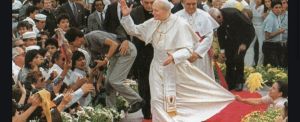
1. "Rejoice, Holy Church, for today Christ, King of heaven, has crowned you with his Cross and adorned your walls with the splendour of his glory".
Your liturgy sings these words on many occasions, dear brothers and sisters of the Armenian people who have come here to celebrate your Jubilee. The Bishop of Rome extends his cordial greeting to you all and gives you a fatherly embrace.
I exchange a holy kiss of brotherhood with His Beatitude Nerses Bedros XIX, Patriarch of Cilicia for Armenian Catholics, and the Bishops who accompany him. On this happy occasion, I express my best wishes for the Synod which in a few days will begin in this city of Rome. I greet the priests, the religious and all the lay people who have come for this meeting and for today's celebration.
"Today Christ has crowned you with his Cross". Supreme shame, ignoble torture, the cross of the condemned has become a crown of glory. We exalt and venerate what was the despicable sign of abandonment and shame for everyone. How is this paradox possible? The hymn you will sing in this evening's Office explains it to us: "You were hung on this holy Cross, O God, and you spilled your precious blood upon it". Our salvation originates in Christ's total humiliation.
"I, when I am lifted up from the earth", he said, "I will draw all men to myself" (Jn 12: 32).
The power that triumphs over death is born of the inexpressible pain of love, and the Spirit, sent into the world by the crucified One, restores the rich foliage of the earthly paradise to the withered tree of humanity.
Humanity is astounded by this mystery; it can only kneel and adore the divine plan of our liberation.
2. Brothers and sisters, a few months ago the celebrations of the 1,700th anniversary of the Baptism of the Armenian people began. With this act, accomplished by your ancestors, the holy waters of redemption have brought forth new seeds of life and prosperity among the thorns and thistles that the earth had produced as a consequence of our first parents' sin. This Jubilee of the universal Church opens your Jubilee, in a wonderful continuity of spirit and theological content: from the Cross, from the side of the crucified Lord, flowed the water of your Baptism. May this anniversary be the opportunity for a precious renewal, for rediscovered hope, and for deep communion among all believers in Christ.
The Armenian people know the Cross well: they bear it engraved upon their hearts. It is the symbol of their identity, of the tragedies of their history and of the glory of their recovery after every adverse event. In all epochs, the blood of your martyrs has mingled with that of the crucified One.
Whole generations of Armenians have not hesitated to give their lives in order not to deny the faith which, as one of your historians says, belongs to you as the colour belongs to your skin.
The crosses with which your land is strewn are of bare stone, just as human pain is bare; at the same time they are carved with elegant volutes, to show that the whole world is sanctified by the Cross, that pain is redeemed. This evening you will bless the four cardinal points with the Cross, to recall that this poor instrument of torture has become the measure of the world's judgement, a cosmic symbol of the blessing of God, which sanctifies all things and makes all things fruitful.
3. May this blessing reach your regions and bring them serenity and trust! I pray to the crucified One first of all for your communities in Armenia: there, new and serious forms of poverty are putting your brothers and sisters to the test, giving rise to the temptation of new exoduses to seek elsewhere the means to live and assure safety to their families. Your people are asking for bread and justice, asking politics to be what they should be by their profound vocation: the honest and disinterested service of the common good, the struggle to enable the poorest and the most forsaken, always clothed in spite of all in the indelible dignity of every child of God, to live a dignified and human life. Do not abandon your suffering brethren: today, more than ever, may Armenians across the world who, through their hard work, have achieved financial and social security, take charge of their compatriots in a common effort for rebirth!
Today the Pope wants to carry with you the cross of those who suffer. He reminds you that in privations and daily suffering your gaze must be raised to the Cross, from which salvation continues to come. The Gospel is not only a comfort, it is also an incitement to live to the full the values which restore dignity to civil life, uprooting from the depths of the human heart the temptation of violence and injustice, of the exploitation of the lowly and the poor by the powerful and the rich. It is only by putting Christ the Lord at the centre of life that society will be just and that the selfishness of the few will give way to the good of all.
In addition to the Catholics, my remembrance and my greeting are extended to the children of the Armenian Apostolic Church: may they rest assured that the Pope of Rome is following with concern their efforts to be "the salt of the earth and the light of the world", so that the world will believe and find the strength to hope and to fight. The Catholic Church intends to uphold this effort as though it were her own, in the love which unites us all in Christ.
4. Dear friends, I invoke the blessings of the Lord upon you here, upon all your loved ones, upon the entire Armenian people and particularly upon the sick, the elderly and all who are suffering in body and in soul.
Today I will be with you in spirit during your pilgrimage of faith which is a fundamental dimension of the Jubilee. The pilgrimage reminds us that our being is on the way towards the fullness of the kingdom, which will be given to us when, with grateful wonder, we will see the Lord of the ages come again in glory, still bearing on his Body the marks of the Passion: "per Crucem ad gloriam".
Do not forget to pray for me too, so that the Lord will guide my steps on the path of peace!
I cordially impart my Blessing to everyone!
[Pope John Paul II, Audience Armenian Patriarchate 14 September 2000]
Why exalt the Cross, a sign of failure?
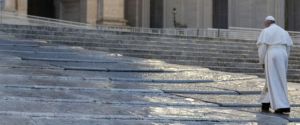
On 14 September the Church celebrates the Feast of the Exaltation of the Holy Cross. Some non-Christian person might ask: why “exalt” the Cross? We can respond that we do not exalt any cross whatsoever or all crosses: we exalt the Cross of Jesus, because in it God’s love for humanity was fully revealed. That’s what the Gospel of John reminds us of in today’s liturgy: “God so loved the world that He gave his only Son” (3:16). The Father “gave” the Son to save us, and this resulted in the death of Jesus, and his death on the Cross. Why? Why was the Cross necessary? Because of the gravity of the evil which enslaved us. The Cross of Jesus expresses both things: all the negative forces of evil, and all of the gentle omnipotence of God’s mercy. The Cross would seem to decree Christ’s failure, but in reality it signals His victory. On Calvary, those who mocked him said to him, “If you are the Son of God, come down from the cross” (cf. Mt 27:40). But the opposite was true: it was precisely because Jesus was the Son of God, that He was there, on the Cross, faithful to the end to the loving plan of the Father. And for this very reason God “exalted” Jesus (Phil 2:9), conferring universal kingship on Him.
When we look to the Cross where Jesus was nailed, we contemplate the sign of love, of the infinite love of God for each of us and the source of our salvation. The mercy of God, which embraces the whole world, springs from the Cross. Through the Cross of Christ the Evil One is overcome, death is defeated, life is given to us, hope is restored. This is important: through the Cross of Christ hope is restored to us. The Cross of Jesus is our one true hope! That is why the Church “exalts” the Holy Cross, and why we Christians bless ourselves with the sign of the cross. That is, we don’t exalt crosses, but the glorious Cross of Christ, the sign of God’s immense love, the sign of our salvation and path toward the Resurrection. This is our hope.
While we contemplate and celebrate the Holy Cross, we think with emotion of so many of our brothers and sisters who are being persecuted and killed because of their faith in Christ. This happens especially wherever religious freedom is still not guaranteed or fully realized. It happens, however, even in countries and areas which, in principle, protect freedom and human rights but where, in practice, believers, and especially Christians, encounter restrictions and discrimination. So today we remember them and pray for them in a special way.
On Calvary, there at the foot of the Cross, was the Virgin Mary (cf. Jn 19:25-27). She is Our Lady of Sorrows, whom we shall celebrate tomorrow in the liturgy. To her I entrust the present and the future of the Church, so that we may all always be able to discover and welcome the message of love and salvation of the Cross of Christ.
[Pope Francis, Angelus 14 September 2014]
Forgiveness in the unlimited leap of Faith
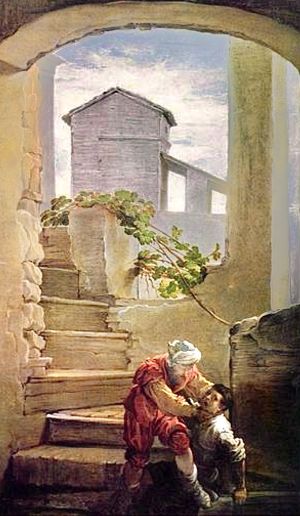
(Mt 18:21-35)
Throughout the ancient Middle East, non-disproportionate retaliation one to one [not cruel] was a sacred law.
Forgiveness was a humiliating and absurd attitude, an incomprehensible principle to anyone experiencing any injustice.
Conversely, in the dynamic of Faith, forgiveness becomes a power, which not only makes the air breathable, but activates our personal destiny.
Peter instead wants to know the limits of forgiveness (v.21).
Historically, at the end of the first century the picky, severe, style of the synagogue and of the Empire [«divide et impera»] reappear in believers.
A question arises: will we have to stop welcoming?
In addition, in the same churches one begins to think that someone has sinned in lese majesty towards those who - now hard and heartless - are used to being revered.
Veterans who make trouble more than others and then dot on the minutiae of others (the weak brothers, considered subjected and destined to the fiscal rigour of moralisms, as well as penances).
While religious discipline exacerbates minute defects, the very experience of the disproportion between the forgiveness received from the Father and what we are able to offer to the brothers, makes us understand the need for tolerance.
Church should be this space of the experience of God who return life, an alternative place of fraternity.
Imperial society was harsh and uncompassionate, with no room for the small and shaky, who unassumingly sought any refuge for their hearts - but no religion gave them an answer.
Synagogues, too, identified material and spiritual blessings. Cloaked with requirements, purity rules and fulfilments, they did not offer the warmth of a welcoming place for the weak.
The issue was that in the early Christian communities themselves, some people insisted on the rigour of norms, customs and hierarchies, demanding coexistence based on the Judaizing model.
Furthermore, as the Letter of James testifies, towards the end of the first century the identical divisions of society, between miserables and wealthy, were already beginning to manifest themselves in the churches of Christ!
Welcoming space of the communities that in the Spirit had been given the task by the Lord to enlighten the world with their seed of life as a ‘shelter for all’ (and of alternative relationships) ran the risk of becoming again a place of conflict, judgement, punishment, condemnation.
«So also my heavenly Father will do to you, if you do not condone each one to his own brother from your heart» (v.35).
Divine forgiveness becomes effective and evident only in the testimony of the Church (v.35) where sisters and brothers - instead of showing themselves to be meticulous, let themselves be guided by a Vision of new heavens and new earth.
For this reason - without any effort, indeed blessing the needs of others as territories of preparatory energies - they live the communion of resources and remit even material debts, a misery.
Otherwise, we would always have to live in the incumbency of an indulgent God perhaps, but at times, and according to the cases retracting the doing of mercy.
It would be a life without surprising developments, all weighted down in a swamp of little pennies.
Instead, it is the active energy of the Faith that does not condemn us to trudge.
The magnanimity that comes out of the automatisms shifts our gaze and brings us an ineffable and growing wave, far ahead of what we can imagine.
Our surrenders are preparing new developments - the ones that count, without limitations.
The "win-or-lose" alternative is false: you have to get out of it.
[24th Sunday in O.T. (year A), September 13, 2026]
The fool in the Bible, the one who does not want to learn from the experience of visible things, that nothing lasts for ever but that all things pass away, youth and physical strength, amenities and important roles. Making one's life depend on such an ephemeral reality is therefore foolishness (Pope Benedict)
L’uomo stolto nella Bibbia è colui che non vuole rendersi conto, dall’esperienza delle cose visibili, che nulla dura per sempre, ma tutto passa: la giovinezza come la forza fisica, le comodità come i ruoli di potere. Far dipendere la propria vita da realtà così passeggere è, dunque, stoltezza (Papa Benedetto)
As sometimes happens in the Gospel, faced with the trap set by his enemies, Jesus, with his response, rises above the contingent controversy and goes far beyond the particular and mutually divergent positions (Pope John Paul II)
Come talora accade nel Vangelo, di fronte al tranello mossogli dai suoi nemici, Gesù, con la sua risposta, s’innalza al di sopra della polemica contingente e va ben oltre le posizioni particolari e tra loro divergenti (Papa Giovanni Paolo II)
And blasphemy, the sin against the Holy Spirit, is the one unforgivable sin — as Jesus said — because it comes from closing the heart to God’s mercy which acts in Jesus (Pope Francis)
E la bestemmia, il peccato contro lo Spirito Santo, è l’unico peccato imperdonabile – così dice Gesù –, perché parte da una chiusura del cuore alla misericordia di Dio che agisce in Gesù (Papa Francesco)
The great thinker Romano Guardini wrote that the Lord “is always close, being at the root of our being. Yet we must experience our relationship with God between the poles of distance and closeness. By closeness we are strengthened, by distance we are put to the test” (Pope Benedict)
Il grande pensatore Romano Guardini scrive che il Signore “è sempre vicino, essendo alla radice del nostro essere. Tuttavia, dobbiamo sperimentare il nostro rapporto con Dio tra i poli della lontananza e della vicinanza. Dalla vicinanza siamo fortificati, dalla lontananza messi alla prova” (Papa Benedetto)
The present-day mentality, more perhaps than that of people in the past, seems opposed to a God of mercy, and in fact tends to exclude from life and to remove from the human heart the very idea of mercy (Pope John Paul II)
La mentalità contemporanea, forse più di quella dell'uomo del passato, sembra opporsi al Dio di misericordia e tende altresì ad emarginare dalla vita e a distogliere dal cuore umano l'idea stessa della misericordia (Papa Giovanni Paolo II)
«Religion of appearance» or «road of humility»? (Pope Francis)
«Religione dell’apparire» o «strada dell’umiltà»? (Papa Francesco)
In the crucified Jesus a kind of transformation and concentration of the signs occurs: he himself is the “sign of God”, especially in the mystery of his Death and Resurrection (Pope John Paul II)
In Gesù crocifisso avviene come una trasformazione e concentrazione dei segni: è Lui stesso il "segno di Dio", soprattutto nel mistero della sua morte e resurrezione (Papa Giovanni Paolo II)
However, the king was not discouraged and sent his servants out to seek other guests to fill his banquet hall. Thus the aspect of the refusal of those initially invited caused the invitation to be extended to all [Pope Benedict]
Il re però non si scoraggia e invia i suoi servi a cercare altri commensali per riempire la sala del suo banchetto. Così il rifiuto dei primi ha come effetto l’estensione dell’invito a tutti [Papa Benedetto]
duevie.art
don Giuseppe Nespeca
Tel. 333-1329741
Disclaimer
Questo blog non rappresenta una testata giornalistica in quanto viene aggiornato senza alcuna periodicità. Non può pertanto considerarsi un prodotto editoriale ai sensi della legge N°62 del 07/03/2001.
Le immagini sono tratte da internet, ma se il loro uso violasse diritti d'autore, lo si comunichi all'autore del blog che provvederà alla loro pronta rimozione.
L'autore dichiara di non essere responsabile dei commenti lasciati nei post. Eventuali commenti dei lettori, lesivi dell'immagine o dell'onorabilità di persone terze, il cui contenuto fosse ritenuto non idoneo alla pubblicazione verranno insindacabilmente rimossi.