


don Giuseppe Nespeca
Giuseppe Nespeca è architetto e sacerdote. Cultore della Sacra scrittura è autore della raccolta "Due Fuochi due Vie - Religione e Fede, Vangeli e Tao"; coautore del libro "Dialogo e Solstizio".
Opposing the God of mercy
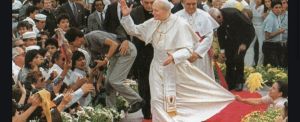
2. The present-day mentality, more perhaps than that of people in the past, seems opposed to a God of mercy, and in fact tends to exclude from life and to remove from the human heart the very idea of mercy.
15. Let us offer up our petitions, directed by the faith, by the hope, and by the charity which Christ has planted in our hearts. This attitude is likewise love of God, whom modern man has sometimes separated far from himself, made extraneous to himself, proclaiming in various ways that God is "superfluous." This is, therefore, love of God, the insulting rejection of whom by modern man we feel profoundly, and we are ready to cry out with Christ on the cross: "Father, forgive them; for they know not what they do."137 At the same time it is love of people, of all men and women without any exception or division: without difference of race, culture, language, or world outlook, without distinction between friends and enemies. This is love for people-it desires every true good for each individual and for every human community, every family, every nation, every social group, for young people, adults, parents, the elderly-a love for everyone, without exception. This is love, or rather an anxious solicitude to ensure for each individual every true good and to remove and drive away every sort of evil.
[Pope John Paul II, Dives in Misericordia]
Double life, ability to be moved, being close
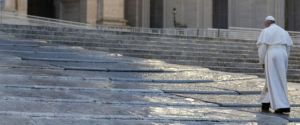
When it is said of someone that they are a person with a double life, it is not to pay them a compliment. On the contrary. It is those people who irritate, cause outrage, or often even cause disgust with behaviour that contradicts the things that they are paying lip service to. Whether it is a politician or a neighbour makes little difference: discovering, so to speak, a 'double life', is something that always hurts. And let us not mention the disillusionment it can generate, especially in young people.
But if preaching well and braying badly is always an irritating thing, when it is a priest doing it, it is even more intolerable. Because there is something more at stake. Pope Francis said it very clearly, and as always in a very direct and effective style, a few days ago. When, in the homily of the morning Mass at Santa Marta, he stressed how "it is ugly to see pastors of double life", indeed it is a real "wound in the Church". For the Pope, they are "sick pastors, who have lost their authority and go on in this double life"; and, he added, "there are many ways of carrying on the double life: but it is double ... And Jesus is very strong with them. Not only does he tell people not to listen to them but not to do what they do, but what does he say to them? "You are whited sepulchres": beautiful in doctrine, from the outside. But inside, rottenness. This is the end of the pastor who has no closeness with God in prayer and with people in compassion'.
For it is this that makes the difference. Francis reiterates it firmly: 'What gives a pastor authority, or awakens the authority that is given by the Father, is closeness: closeness to God in prayer and closeness to people. The pastor detached from the people does not reach the people with the message. Closeness, this double closeness. This is the anointing of the pastor who is moved by God's gift in prayer, and can be moved by people's sins, problems, illnesses: let the pastor be moved. The scribes ... had lost the 'ability' to be moved precisely because 'they were not close either to the people or to God'". And without this closeness, or when for whatever reason it is lost, 'the shepherd ends up in inconsistency of life'.
It seems like re-reading the words that John Paul II, in his Holy Thursday letter addressed to priests around the world in 1986, dedicated to the Holy Curate of Ars, pointing to him, on the second centenary of his birth, as an example for all priests. 'It is certainly not a matter of forgetting,' wrote Benedict XVI, again on St John Mary Vianney, in his letter of indiction for the 2009 Year for Priests, 'that the substantial effectiveness of the ministry remains independent of the holiness of the minister; but neither can we overlook the extraordinary fruitfulness generated by the encounter between the objective holiness of the ministry and the subjective holiness of the minister. The Curé d'Ars immediately began this humble and patient work of harmonisation between his life as a minister and the holiness of the ministry entrusted to him, deciding even to 'inhabit' his parish church materially: 'As soon as he arrived, he chose the church as his dwelling... He would enter the church before dawn and only leave it after the evening Angelus. There one had to look for him when one needed him,' reads the first biography'. Consistency, then. Not duplicity. Because God's people need everything except whitewashed sepulchres.
[Pope Francis, St. Martha; Salvatore Mazza in Avvenire 13 January 2018]
The “interior” and the society of the outside
Faith and religious sense
(Lk 11:37-41)
Ablutions before the meal (v.38) were an imposed religious obligation.
But the Eucharistic banquet [read in filigree] does not celebrate detachments, nor is it affected by purist idolatry.
The severe spirit - "dry cleaning" type - still today gives a white lime hand to the reality of the Father.
Indeed, impurity does not proceed from lack of form (as in the façade religiosity), but from the behaviour that reveals a substantial void.
What stains is all inside, and hatches despite the beautiful petitions of principle, or good manners - which cover bad habits.
In short, what is offered is pure; what is kept, impure (v.41).
From a spiritual point of view, only those who give themselves are without blemish; impure those who think only of themselves in a trivial way, or turn to their neighbour to manipulate him.
Thus, often the external norms or ideas of men do not go to the root: they fossilize us.
They do not tear or integrate from within the malicious contents, the unfair desires - the real goals.
Observances themselves often create spiritual competition.
In this way they annihilate the spirit of charity and hospitality - compendium of the Law - from which those same ancient signs were born, in the first assemblies of faith.
Of course, Justice plays a decisive role, but it is an existential commitment. The ’right position’ is for life, not to putting things “right” [things that are sometimes lifeless, however sophisticated or abstract they may be].
According to the Gospels, God must not be confused with the precepts, nor ideologies of the future, if schematic and disembodied.
The Lord wants to enter our concrete existence - and the excess of minutiae or fantasies can make us lose the fundamental orientation of his Call, corrupting sensitivity to the signals in which He reveals himself.
Legalism, habits, or abstruse and imported fashions, can make us incapable of corresponding to the missionary vocation.
They become hoods that prevent us from serving the individual freedoms of the shaky.
They make us awkward in accompanying people so that they increase their capacity for life and character.
Here Jesus invites the “Pharisees” [those in his Church] to understand the freedom of God and not to transform the Faith into any devout, cunning, or abstract (no backbone) creed.
It is not the supposed uncontaminatedness or ‘right-just thinking’ that enables us in His Presence and makes us proceed along endless paths.
We experience this in the global crisis.
It is meeting Him that consecrates and makes adequate, pure, realized, already complete.
‘Perfect ones’ - for the type of Seed we are called to plant in the world.
Enough worries on top of that, wich leave everyone in the lurch, in torment, and with no way out.
As if even in the People of Sons it was permissible to impose and see cages, lanes, forced worldviews, and padlocks everywhere.
To internalize and live the message:
What was the key moment when you felt forgiven and pure? Were you copying someone in the old-fashioned way or the trendy way?
[Tuesday 28th wk. in O.T. October 13, 2026]
Faith and religious sense
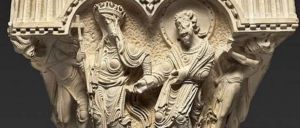
The interior and the society of the exterior
(Lk 11:37-41)
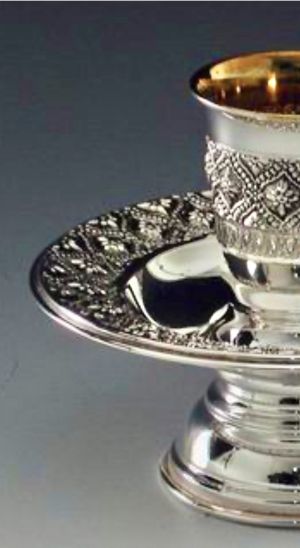
"Now you Pharisees clean the outside of the cup and tray, but your inside is full of robbery and wickedness" (Lk 11:39).
The ablutions before the meal (v.38) were an imposed religious obligation.
But the Eucharistic banquet [which we read in the watermark] does not celebrate detachment, nor does it suffer from purist idolatries.
The stern, 'dyeing' spirit - as Pope Francis would say - still gives a coat of whitewash to the Father's reality [at that time, it also served to protect the spirit of robbery of the veterans: v.39].
Indeed, the impurity does not proceed from shortcomings of form (as in façade religiosity), but from behaviour that denounces a substantial void.
That which stains is all within, and broods despite fine petitions of principle, or good manners - which cover up bad habits.
In short, what is offered is pure; what is withheld is impure (v.41).
From a spiritual point of view, only those who give themselves are without blemish; impure are those who think only of themselves in a trivial way, or who turn to their neighbour to manipulate him.
Thus, often the external norms or ideas of men do not go to the root: they fossilise.
They do not tear out or integrate from within the malign contents, the unrighteous desires - the true goals.
Dispositions devoid of inner conviction build at best seemingly impeccable people and a ritualistic world that (as it happens) turns to the most degrading corruption.
It is denoted in all the centres of power - again - all well covered by fatuous theatrical forms, and exaggerated catwalks.
In short, in order not to interrupt our thread of life, we can no longer stand there on studied and well-thought-out rules, believing that we have solved it.
Make-up does not capture the core.
In fact, even impeccable jurisdiction, or reason and intelligence, do not preserve from disheartenment, humiliation, loneliness - from what is authentic and continually surfacing.
Those forms of contract - so devious or conspicuous - do not restore a healthy balance, nor do they reach the lives of ordinary people.
It seemed to be pedagogy, but it is not: we see it.
Common religion itself sometimes lives by outward signs - often almost indecipherable or meaningless in themselves, when they flaunt, masking pyramids, and now increasingly blatant hypocrisies.
Not infrequently, the observances themselves create spiritual competition.
In doing so, they annihilate the spirit of charity and hospitality - the compendium of the Law - from which those same ancient signs were born, in the first assemblies of faith.
Certainly, Justice plays a decisive role, but it is an existential commitment, not a cultic or scenographic one.
The 'righteous position' is for life, not for setting things right [dead things, or sophisticated and abstract things that are].
For the Gospels, one must not confuse God with precepts or ideologies of the future, if schematic and disembodied.
The Lord wants to enter into our concrete existence - and the excess of minutiae or fantasies can make us lose the fundamental orientation of his Calling, corrupting our sensitivity to the signs in which he reveals himself.
Legalism, habit, or abstruse and imported fashions can make us unable to correspond to the missionary Vocation.
They become shrouds that prevent us from serving the individual freedoms of the sick.
They make us clumsy in accompanying people so that they increase their capacity for life and character.
Why is Christ's victory His people?
Only the spirit of hospitality of the Sons in a relationship of mutual care, sensitive, able to perceive, creates the living environment that enables us to better connect our souls with the Mystery of the Hidden King, the great Meaning of our desires and His "intentions".
Here Jesus invites the Pharisees back to His Church to understand God's freedom and not to turn the Faith into just any pious, cunning, or abstract (spineless) creed.
It is not the supposed untaintedness or 'right' thinking that empowers us in his presence and makes us proceed on endless paths.
We experience Him, in the global crisis.
It is meeting Him that consecrates and makes us adequate, pure, fulfilled, already complete.
"Perfect" - for the kind of Seed we are called to plant in the world.
No more added worries that leave everyone in the worm, in torment, and with no way out.
As if even in the People of the Sons it is permissible to impose and see cages, lanes, obligatory worldviews, and padlocks everywhere.
To internalise and live the message:
What was the key moment when you felt forgiven and pure? Copying someone?
On an occasion when you experienced total gratuitousness, or deserved it?
On an occasion when you were true to yourself, or all outwardly projected?Misrepresented holiness: there is no sacred and profane in itself
Hypocritical traditions and ideal order: purity of advantage
(Mk 7:1-8.14-15.21-23)
Under the Herod dynasty, the sense of clan and community was crumbling.
Because of survival problems, families were forced to close in on themselves, loosen their bonds, think of their own needs.
This closure was reinforced by the religion of the time in every respect. In vv.10-12 we see an incredible example of this: those who dedicated their inheritance to the Temple could leave their parents without help!
Offence and offering: injustice and normative behaviour - a strange connection, in the apparent form of an exemplary accent.
The observance of purity norms was a factor of ordinary marginalisation for many people.
The wretched, in particular, were considered ignorant and cursed, because they were unable to comply; consequently, they lacked the consoling blessing promised to Abraham.
A daily drip that undermined the profound meaning of existing together.
In particular, ablutions were a kind of ritual during which a satisfying divarication between the sacred and the profane was celebrated - in the detachment from people and situations considered impure.
By staying away from the supposed filthiness, never could any of the unwashed be uplifted.
So the rules were not a source of peace, but of bondage. To extend a charitable hand would even have been sacrilegious.
In short, inhuman trifles were placed before the Law itself, thwarting its inclusive spirit (fraternity would have benefited the enthusiasm to exist).
Jesus could not tolerate the closed world of conformist religiosity being bent and used to ascertain the existence of others with judgement, to divide and discriminate - to annihilate relationships.
This is why the control of the Pharisees is opposed by the freedom of the disciples (v.2), who refuse to obey that which does not make sense for concrete life - where visible love feeds ideal love.
In ancient cultures, the religious and mythical view of the world led people to appreciate any reality from the category of holiness as detachment and separateness, even inaccessibility.
Purity laws indicated the conditions necessary to stand before God.
At the time of Mk some Jewish converts believed they could abandon their ancient customs and approach the pagans; others were of the opposite opinion: indeed, it would be like rejecting substantial parts of the Torah (e.g. Lev 11-16 and 17ff).
In fact, the Gospel emphasises that the problem is "in the house" (v.17 Greek text: "within the house") i.e. in the Church and among its members.
Christ must insist on teaching, now not addressed to strangers, but precisely to the habitués, incapable - unlike the crowds - of "understanding" (v.14) the abc of spiritual things.
There is no sacred and profane in itself.
In order to educate the stubborn ones still "devoid of intellect" (v.18) who consider themselves masters, the Lord does not go to just any dwelling place - but to the place where, unfortunately, expectations far removed from the people are cultivated (vv.14.17).
In short, only Jesus in Person frees the crowd of the voiceless and lost from the obsession of torments and fears, from always being on the defensive.
And even if some leaders accuse, let us learn not to feel dismay that we are not religiously 'successful' - but Firstfruits!
That which dictates the laws of existence

4. In inviting us to consider almsgiving with a more profound gaze that transcends the purely material dimension, Scripture teaches us that there is more joy in giving than in receiving (cf. Acts 20,35). When we do things out of love, we express the truth of our being; indeed, we have been created not for ourselves but for God and our brothers and sisters (cf. 2 Cor 5,15). Every time when, for love of God, we share our goods with our neighbor in need, we discover that the fullness of life comes from love and all is returned to us as a blessing in the form of peace, inner satisfaction and joy. Our Father in heaven rewards our almsgiving with His joy. What is more: Saint Peter includes among the spiritual fruits of almsgiving the forgiveness of sins: “Charity,” he writes, “covers a multitude of sins” (1 Pt 4,8). As the Lenten liturgy frequently repeats, God offers to us sinners the possibility of being forgiven. The fact of sharing with the poor what we possess disposes us to receive such a gift. In this moment, my thought turns to those who realize the weight of the evil they have committed and, precisely for this reason, feel far from God, fearful and almost incapable of turning to Him. By drawing close to others through almsgiving, we draw close to God; it can become an instrument for authentic conversion and reconciliation with Him and our brothers.
5. Almsgiving teaches us the generosity of love. Saint Joseph Benedict Cottolengo forthrightly recommends: “Never keep an account of the coins you give, since this is what I always say: if, in giving alms, the left hand is not to know what the right hand is doing, then the right hand, too, should not know what it does itself” (Detti e pensieri, Edilibri, n. 201). In this regard, all the more significant is the Gospel story of the widow who, out of her poverty, cast into the Temple treasury “all she had to live on” (Mk 12,44). Her tiny and insignificant coin becomes an eloquent symbol: this widow gives to God not out of her abundance, not so much what she has, but what she is. Her entire self.
We find this moving passage inserted in the description of the days that immediately precede Jesus’ passion and death, who, as Saint Paul writes, made Himself poor to enrich us out of His poverty (cf. 2 Cor 8,9); He gave His entire self for us. Lent, also through the practice of almsgiving, inspires us to follow His example. In His school, we can learn to make of our lives a total gift; imitating Him, we are able to make ourselves available, not so much in giving a part of what we possess, but our very selves. Cannot the entire Gospel be summarized perhaps in the one commandment of love? The Lenten practice of almsgiving thus becomes a means to deepen our Christian vocation. In gratuitously offering himself, the Christian bears witness that it is love and not material richness that determines the laws of his existence. Love, then, gives almsgiving its value; it inspires various forms of giving, according to the possibilities and conditions of each person.
[Pope Benedict, Message for Lent 2008]
Almsgiving
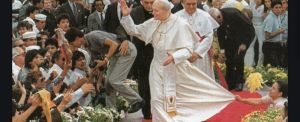
Hearing the word "alms", your sensibility as young lovers of justice, eager for an equal distribution of riches, might feel wounded and offended. It seems to me I can feel it. On the other hand, do not think you are alone in having such an interior reaction; it is in harmony with the innate hunger and thirst for justice that everyone brings with him. Also the prophets of the Old Testament, when they call the People of Israel to conversion and to the true religion, indicate the redress of injustices, suffered by the weak and defenceless, as the main way for the restoration of a genuine relationship with God (cf. Is 58:6-7).
Yet the practice of almsdeeds is recommended in the whole sacred Text, both in the Old and in the New Testament: from the Pentateuch to the Sapiential Books, from the book of Acts to the Apostolic Letters. Well, through a study of the semantic evolution of the word, on which less genuine incrustations have been formed, we must find again the real meaning of alms and, above all, the determination and the joy of almsdeeds.
A Greek word, alms etymologically means compassion and mercy. Various circumstances and influences of a reductive mentality have distorted and deconsecrated its original meaning sometimes reducing it to that of a spiritless and loveless act.
But alms, in itself, must be understood essentially as the attitude of a man who perceives the need of others, who wishes to share his own property with others. Who will say that there will not always be another, in need of help—spiritual in the first place—support, comfort, brotherhood and love? The world is always too poor in love.
Thus defined, to give alms is an act of very high positive value, the goodness of which must not bei doubted, and which must find in us a fundamental readiness of heart and spirit, without which there is no real conversion to God.
Even if we do not have at our disposal riches and concrete capacities to meet the needs of our neighbour, we cannot feel dispensed from opening our heart to his necessities and relieving them as far as possible. Remember the widow's mite; she threw into the treasury of the temple only two small coins but with them all her great love: "for she out of her poverty had put in all the living that she had" (Lk 21:4).
[Pope John Paul II, Address to the young people 28 March 1979]
Badass faces, religion of make-up
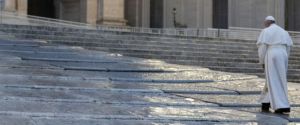
"Religion of make-up" or "path of humility"? In the homily of the Mass celebrated at Santa Marta on Tuesday 11 October, Pope Francis pointed out a decisive choice for the life of every Christian: even in "doing good", in fact, one can run into a dangerous misunderstanding, which is that of putting ourselves forward and not "the redemption that Jesus gave us". The objective is to affirm "our inner freedom" by showing the world how we really are in our hearts, without easy or cunning operations of external "make-up".
The Pontiff's reflection started precisely from the concept of freedom. The starting point came from the first reading of the day (Galatians, 5, 1-6), in which the Apostle Paul invites us to "stand firm and not allow the yoke of slavery to be imposed on us again, that is, to be free: free in religion, free in the worship of God". Here is the first teaching: "never lose your freedom". But what freedom? "Christian freedom," the Pope explained, "only comes from the grace of Jesus Christ, not from our works, not from our so-called 'righteousness', but from the righteousness that the Lord Jesus Christ has given us and with which he has recreated us". A righteousness, he added, "that comes precisely from the Cross".
The Gospel passage proposed by the liturgy (Luke, 11, 37-41) also insists on this subject. Here we read of Jesus rebuking a Pharisee, a doctor of the law. He rebukes him because, the Pope recalled, "this Pharisee invites Jesus to lunch and Jesus does not do ablutions, that is, he does not wash his hands": he therefore does not perform those practices "that were customary in the ancient law". Faced with certain remonstrances, the Lord says: "You Pharisees clean the outside of the glass and the plate but your inside is full of greed and wickedness". A concept, Francis noted, that Jesus "repeats many times in the Gospel" warning certain people with clear words: "Your inside is wicked, it is not right, it is not free. You are slaves because you have not accepted the justice that comes from God". Which is then 'the righteousness that Jesus gave us'.
In another passage we read that Jesus, after exhorting prayer, also teaches how it should be done: "In your room, let no one see you, so only your Father sees you". The invitation, therefore, is "not to pray in order to appear", in order to be seen, as did that Pharisee who - the Gospel goes on to say - before the altar in the temple said: "God, thank you, Lord, for I am not a sinner". Those who acted in this way, the Pontiff commented, were really "stubborn faces" and "had no shame".
Against certain attitudes, there is the suggestion given by Jesus himself and which the Pope summarised as follows: 'When you do good and give alms, do not do it to be admired. Let your right hand not know what your left hand is doing. Do it secretly. And when you do penance, fast, please beware of melancholy, do not be melancholic so that the whole world knows you are doing penance'. In essence: what matters "is the freedom that gave us redemption, that gave us love, that gave us the re-creation of the Father. It is an inner freedom, which leads one to do 'good in secret, without blowing the trumpet': in fact, 'the path of true religion is the same as the path of Jesus: humility, humiliation'. So much so that Jesus - recalled the Pontiff quoting Paul's letter to the Philippians - "humbled himself, emptied himself". He added: "It is the only way to remove from us selfishness, greed, pride, vanity, worldliness".
Faced with this model we find instead the attitude of those whom Jesus rebukes: "people who follow the religion of make-up: appearance, appearing, pretending to appear, but inside...". For them, the Pope stressed, Jesus uses "a very strong image: 'You are whitened sepulchres, beautiful on the outside but inside full of dead bones and rot'". On the contrary, "Jesus calls us, invites us to do good with humility", because otherwise we fall into a dangerous misunderstanding: "You can do all the good that you want, but if you do not do it humbly, as Jesus teaches us, this good is of no use, because a good that comes from yourself, from your security, not from the redemption that Jesus has given us". A redemption that, Francis said, comes through "the path of humility and humiliations": in fact "one never arrives at humility without humiliations". So much so that "we see Jesus humiliated on the cross".
Here then is the exhortation that concluded the homily: "We ask the Lord not to make us tired of going down this road, not to make us tired of rejecting this religion of appearing, of seeming, of pretending to...". The commitment must instead be to proceed "silently, doing good, gratuitously as we gratuitously received our inner freedom."
[Pope Francis, s. Marta, in L'Osservatore Romano 12/10/2016]
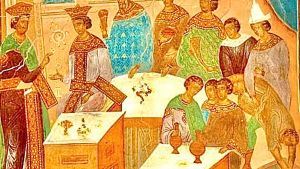
The Feast, the Garment. All are called, but what shall they wear?
The manifestations of God's power on earth: nothing external
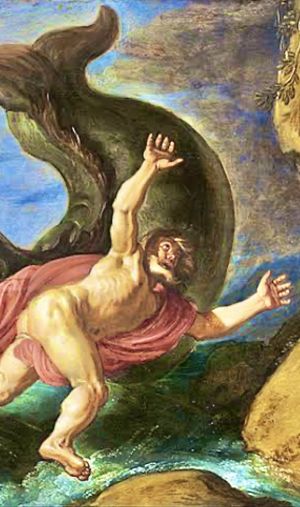
Which road leads to the Father?
(Lk 11:29-32)
Human correspondence does not grow with the multiplication of dizzying signals. God does not force the unconvinced, nor outclass with proofs; thus He earns a patrimony of love.
His authentic Church, without clamor or persuasive positions - apparently insignificant - is gathered entirely in intimate unity with her Lord.
The Queen of the South was looking for captivating solutions to enigmatic curiosities, but she could know them inside her soul and life.
Incarnation: there are no other valid signs than the events and new relationships with oneself and others - which offer the very and unheard-of Person of the Risen One, without wrappings.
The Eternal is no longer the pure transcendence of the Jews, nor the summit of the wisdom of the ancient world: the moving Sign of God is the story of Jesus alive in us.
We trust in Christ, so no more spiritual drugs that deceive us about happiness.
It is the meaning of the new Creation: abandonment to the Spirit, but all concrete (not in a manner) and which proceeds by dragging the alternative reality.
He is the Sign unique, who frees from the many substitutes of fears’ religion, of fetters, of consolidated roles that would like to imprison the Lord in an "ally" doer of seductive miracles, immediately resolving.
Some community members seemed to want to frame the Messiah into the pattern of normal sacred and scenic expectations.
They were already getting along with the world, starting to recede, and were proving fed up...
In these "veterans" of Lk there was no sign of conversion to the idea of the Son of God as a Servant, confident in dreams without prestige.
In them? No trace of a new idea - nor change of pace that could mark the end of the blatant, dehumanizing society they were used to.
There are always those who remain tied to an ideology of power. So they do not want to open their eyes except to have their senses captured in a trivial way.
For these, the Lord never reserves impressive confirmations - which would be the paradoxical validation of ancient convictions.
The only «sign» is his living Church and the Risen himself pulsating in all those who take him seriously; eg. in recoveries, healings, and impossible revaluations.
But no shortcut lightning.
Guided by the intimate Friend, we will be a single inventive humanity ‘in the Master’.
Our free and life-giving testimony will nourish an experience of regenerating Faith, singularly incisive.
Far more than miracles, the appeals of our essence and reality will make us recognize the call and action of God in men and in the web of history.
The Father wants his sons to produce far more astonishment and prodigies of divine-human goodness than visions and sentimentality, or magic.
The only «sign» of salvation is Christ in us, without hysterical seams; image and likeness of the new humanity.
For authentic ‘conversion’: native power - and nothing external.
[Monday 28th wk. in O.T. October 12, 2026]
The manifestations of God's power on earth
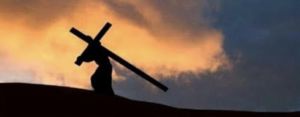
Nothing external
(Lk 11:29-32)
Jesus comes up against unbelief. It comes from various blinders and parties taken, or (especially in the disciples) arises from carelessness.
The Lord turns away from those who test him and those who reject what is God-given, claiming to fix how he should act.
The Son of Man respects each person who follows him, but makes it clear that decisions and even before that, lack of acute perception prevent the encounter and redemption of life.
From this perspective, believers do not live to "prove". Christ himself does not wait for us in subliminal and miraculous demonstrations, but on the shore of an earthly spirituality.
Value does not need applause (a double-edged sword) - the mask of the artificial proposal, and inauthentic life.
Humanising correspondence does not grow with the multiplication of dizzying signals.
God does not coerce the unconvinced, nor does He overpower them with trials; thus He gains a heritage of Love in growth.
His authentic Church, without clamour or persuasive stance - seemingly insignificant - is gathered in intimate unity with its Firstborn: native, portentous and regenerative power - solid and real.
The Queen of Noon sought captivating solutions to enigmatic curiosities, but she could know them within her soul and in life.
Incarnation: there are no other valid signs than the events and new relationships - with oneself and others - which bring forth the very and unprecedented Person of the Risen One [the one without wrappings].
The Eternal is no longer the pure transcendence of the Jews, nor the summit of wisdom of the ancient world.
The sign of the Most High is the story of Jesus alive in us. It opens up the exciting road that leads to the Father.
We trust in Christ, so no spiritual drugs that delude us of happiness.
This is the meaning of the new Creation: in the surrender to the Spirit - but all concrete (not mannered) and proceeding dragging the alternative reality.
His Person is a unique signal, which dissolves the many ersatz religion of fears, fetters, established roles.
Tares that would like to imprison him in 'ally' doer of seductive and immediately resolving miracles.
Some into a simple temple purifier or a white-mill character - and so are we, if we allow ourselves to be manipulated.
In fact, the religious leaders Jesus is addressing are those back in his communities!
These were Judaizers who wanted to frame the Messiah in the scheme of normal expectations to which they had always been accustomed.
Or they already had it and were fed up with it....
In these 'veterans' there was no sign of conversion to the idea of the Son of God as Servant, trusting in dreams without prestige.
In them? No trace of a new idea - no change of pace that would mark the demise of the blatant, dehumanising, and even sacred society - of the outside.
The popular leaders sometimes miss the meaning of the only living Sign: Jesus the Food of Life.
Because of them, not the distant ones, the Lord "groans in the spirit" [cf. Mk 8:12 Greek text] - even today, saddened by so much blindness.
Life is indeed precluded to those who cannot shift their gaze.
Immediately afterwards Lk (12,1) in fact refers to the danger of the dominant ideology that made the leaders themselves lose their objective perception of events.
A 'leaven' that was coarse but rooted in the painful experience of the people; that stimulated puffery even in the disciples, contaminating them.
To the first of the class it might have seemed that Jesus was a leader like Moses, for he had just fed the starving people in the desert [cf. Mt 15:32-39; Mk 8:1-9].
But the rejection is sharp: especially Mk (8:12) makes it sharp by emphasising the Master's sense of suffering.
Therefore, as also in Mt and Lk in the episode precisely of Jonah - his radical, peremptory denial.
To save the needy people there is no other way but to start from within.
Then proceeding towards a fullness of being that permeates, approves us, and allows us to break our lives in favour of our brothers.
There is no escape.
Only communion with the concealed source of one's eminent Self and respectful and active dialogue with others saves one from a closed group mentality.
In this way, no club is allowed - claiming monopolistic exclusivity over God and souls (Lk 9:49-50) with an explicit claim to discipline the multitudes.
The community of the Risen One abhors the competitive conception of religious life itself, if it is a sacred reflection of the imperial world and of a society that cramps and embitter the existence of the little ones.
It would be a sick life in the pursuit of even apparent prestige.
Conversely, in fraternal realities "the smallest of all, he is great" (Lk 9:48).
Therefore, it is imperative to prevent a pyramid mentality and a mentality of discard from creeping into the faithful.A spirit of competition that then inexorably ends up seeking refuge in hypocritical miraculism, a substitute for a life of Faith.
The Master does the same to educate Church members who remain [some still do] affected by a sense of superiority towards crowds and outsiders.
A feeling of chosen and privileged people (Lk 9:54-55) that was infiltrating even the primitive communities.
To those who do not want to open their eyes except to have their senses captured by phenomena all to be discerned - because in spite of the official creed they profess, they remain tied to an ideology of power - the Lord never reserves impressive confirmations coming "from heaven" (Lk 11:16) that would be the paradoxical validation.
The only sign is and will be his living Church: the "victory" of the Risen One, pulsating in all those who take him seriously.
Without fixed hierarchies - under the infallible guidance of the Calling and the Word - the children know how to reinterpret, even in an unprecedented way.
Such is the prodigy, embodied in the thousand events of history, of personal and community life; in the impossible recoveries, recoveries and revaluations.
The authentic Messiah bestows no cosmic display.
No festival that compels spectators to bow their heads in the presence of such shocking glory and dignity - as if he were a heavenly dictator.
And no shortcut lightning.
Over the centuries, the Churches have often fallen into this 'apologetic' temptation, all internal to devotions of arid impulse: to look for marvellous signs and flaunt them to silence opponents.
Stratagems for a banal attempt to shut the mouths of those who ask not for experiences of parapsychology, but rather for testimonies without trickery or contrivance: of concrete disalienation.
Not bad, this liberation activity of ours in favour of the last, and one that holds fast; not clinging to the idea of a ruffian with triumphalist or consolatory aspects.
We prefer the wave of Mystery.
We yearn to be guided by an unknown energy, which has a non-artificial goal in store - led by the eminent but intimate and hidden Friend. Exclusive in us.
We will be one humanity in the Master, on the Right Path and belonging to us. Even on broken and incomplete paths, even of bewilderment.
In commentary on the Tao Tê Ching (i) Master Ho-shang Kung writes:
"The eternal Name wants to be like the infant that has not yet spoken, like the chick that has not yet hatched.
The shining pearl is inside the oyster, the beautiful gem is in the midst of the rock: however resplendent it may be on the inside, on the outside it is foolish and insipid'.
All of this is perhaps rated 'unconsciousness' and 'inconclusiveness'... but it bears what we are - expressing another way of seeing the world.
Within ourselves and within the Call of the Gospels we have a fresh power, approving the path different from the immediately normal and the glaringly obvious.
A Call that is enchantment, delight and splendour, because it activates us by questioning.
A Word that does not reason according to patterns.
A heartfelt plea, which is not impressed by exceptional things, by plays that suffocate the soul in search of meaning and authenticity.
Genuine Wonder, an indomitable impulse nested in the dimension of human fullness, and that does not give up: it wants to express itself in its transparency and become reality.
A kind of intimate Infant: it moves in a manner deemed 'abstruse', but puts things right, inside and out.
The free and life-giving testimony, attentive and always personally ingenious, will be innate and unprecedented, biting, inventive without shrewdness, unpredictable and not at all conformist.
It will unleash and unceasingly re-energise a convinced, singular, incisive experience of Faith - despite the fact that it may appear losing and unsuccessful, unhonourable and senseless.
Far more than miracles, the pleas of our essence and reality will make us recognise the call and action of God in people and in the fabric of history.
Invitations that can germinate other astonishments and prodigies of divine-human goodness, than paroxysmal visions seasoned with neurosis and empty sentimentality or magic.
The only sign of salvation is Christ in us - without seams or grand hysterical gestures.
The image and likeness of the new humanity; the manifestation of God's power on earth.
For authentic conversion: nothing external.
To internalise and live the message:
What is the nature of your search for evidence?
How does your sign making believe differ from gimmicks, acts of force, or what others would have you spread?
The fool in the Bible, the one who does not want to learn from the experience of visible things, that nothing lasts for ever but that all things pass away, youth and physical strength, amenities and important roles. Making one's life depend on such an ephemeral reality is therefore foolishness (Pope Benedict)
L’uomo stolto nella Bibbia è colui che non vuole rendersi conto, dall’esperienza delle cose visibili, che nulla dura per sempre, ma tutto passa: la giovinezza come la forza fisica, le comodità come i ruoli di potere. Far dipendere la propria vita da realtà così passeggere è, dunque, stoltezza (Papa Benedetto)
As sometimes happens in the Gospel, faced with the trap set by his enemies, Jesus, with his response, rises above the contingent controversy and goes far beyond the particular and mutually divergent positions (Pope John Paul II)
Come talora accade nel Vangelo, di fronte al tranello mossogli dai suoi nemici, Gesù, con la sua risposta, s’innalza al di sopra della polemica contingente e va ben oltre le posizioni particolari e tra loro divergenti (Papa Giovanni Paolo II)
And blasphemy, the sin against the Holy Spirit, is the one unforgivable sin — as Jesus said — because it comes from closing the heart to God’s mercy which acts in Jesus (Pope Francis)
E la bestemmia, il peccato contro lo Spirito Santo, è l’unico peccato imperdonabile – così dice Gesù –, perché parte da una chiusura del cuore alla misericordia di Dio che agisce in Gesù (Papa Francesco)
The great thinker Romano Guardini wrote that the Lord “is always close, being at the root of our being. Yet we must experience our relationship with God between the poles of distance and closeness. By closeness we are strengthened, by distance we are put to the test” (Pope Benedict)
Il grande pensatore Romano Guardini scrive che il Signore “è sempre vicino, essendo alla radice del nostro essere. Tuttavia, dobbiamo sperimentare il nostro rapporto con Dio tra i poli della lontananza e della vicinanza. Dalla vicinanza siamo fortificati, dalla lontananza messi alla prova” (Papa Benedetto)
The present-day mentality, more perhaps than that of people in the past, seems opposed to a God of mercy, and in fact tends to exclude from life and to remove from the human heart the very idea of mercy (Pope John Paul II)
La mentalità contemporanea, forse più di quella dell'uomo del passato, sembra opporsi al Dio di misericordia e tende altresì ad emarginare dalla vita e a distogliere dal cuore umano l'idea stessa della misericordia (Papa Giovanni Paolo II)
«Religion of appearance» or «road of humility»? (Pope Francis)
«Religione dell’apparire» o «strada dell’umiltà»? (Papa Francesco)
In the crucified Jesus a kind of transformation and concentration of the signs occurs: he himself is the “sign of God”, especially in the mystery of his Death and Resurrection (Pope John Paul II)
In Gesù crocifisso avviene come una trasformazione e concentrazione dei segni: è Lui stesso il "segno di Dio", soprattutto nel mistero della sua morte e resurrezione (Papa Giovanni Paolo II)
However, the king was not discouraged and sent his servants out to seek other guests to fill his banquet hall. Thus the aspect of the refusal of those initially invited caused the invitation to be extended to all [Pope Benedict]
Il re però non si scoraggia e invia i suoi servi a cercare altri commensali per riempire la sala del suo banchetto. Così il rifiuto dei primi ha come effetto l’estensione dell’invito a tutti [Papa Benedetto]








duevie.art
don Giuseppe Nespeca
Tel. 333-1329741
Disclaimer
Questo blog non rappresenta una testata giornalistica in quanto viene aggiornato senza alcuna periodicità. Non può pertanto considerarsi un prodotto editoriale ai sensi della legge N°62 del 07/03/2001.
Le immagini sono tratte da internet, ma se il loro uso violasse diritti d'autore, lo si comunichi all'autore del blog che provvederà alla loro pronta rimozione.
L'autore dichiara di non essere responsabile dei commenti lasciati nei post. Eventuali commenti dei lettori, lesivi dell'immagine o dell'onorabilità di persone terze, il cui contenuto fosse ritenuto non idoneo alla pubblicazione verranno insindacabilmente rimossi.