


don Giuseppe Nespeca
Giuseppe Nespeca è architetto e sacerdote. Cultore della Sacra scrittura è autore della raccolta "Due Fuochi due Vie - Religione e Fede, Vangeli e Tao"; coautore del libro "Dialogo e Solstizio".
Jonah announces the coming of Jesus

2) The book of Jonah announces to us the event of Jesus Christ - Jonah is a foreshadowing of the coming of Jesus. The Lord himself tells us this in the Gospel quite clearly.
Asked by the Jews to give them a sign that would openly reveal him as the Messiah, he replies, according to Matthew: "No sign will be given to this generation except the sign of Jonah the prophet. For as Jonah remained three days and three nights in the belly of the fish, so shall the Son of Man remain three days and three nights in the heart of the earth" (Matthew 12:39f).
Luke's version of Jesus' words is simpler: "This generation [...] seeks a sign but no sign will be given to it except the sign of Jonah. For as Jonah was a sign to those of Nineveh, so also the Son of Man will be a sign to this generation' (Lk 11:29f). We see two elements in both texts: the Son of Man himself, Christ, God's envoy, is the sign. The paschal mystery points to Jesus as the Son of man, he is the sign in and through the paschal mystery.
In the Old Testament account this very mystery of Jesus shines through quite clearly.
The first chapter of the book of Jonah speaks of a threefold descent of the prophet: he goes down to the port of Jaffa; he goes down into the ship; and in the ship he puts himself in the innermost place. In his case, however, this threefold descent is an attempted escape before God. Jesus is the one who descends out of love, not in order to flee, but to reach the Nineveh of the world: he descends from his divinity into the poverty of the flesh, of being a creature with all its miseries and sufferings; he descends into the simplicity of the carpenter's son, and he descends into the night of the cross, and finally even into the night of the Sheòl, the world of the dead. In doing so, he precedes us on the way of descent, away from our false kingly glory; the way of penitence, which is the way to our own truth: the way of conversion, the way that leads us away from Adam's pride, from wanting to be God, towards the humility of Jesus who is God and for us strips himself of his glory (Phil 2:1-10). Like Jonah, Jesus sleeps in the boat while the storm rages. In a way, in the experience of the cross he allows himself to be thrown into the sea and thus calms the storm. The rabbis have interpreted Jonah's word "Throw me into the sea" as a self-offering of the prophet who wanted to save Israel with this: he was afraid of the conversion of the pagans and of Israel's rejection of the faith, and for this reason - so they say - he wanted to let himself be thrown into the sea. The prophet saves in that he puts himself in the place of others. The sacrifice saves. This rabbinic exegesis became truth in Jesus.
[Pope Benedict Card. Ratzinger, Lectio in st Maria in Traspontina, 24 January 2003; in "30Days" February 2003]
He Himself is the Sign
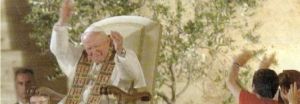
4. In fact, Jesus invites us to discern the words and deeds which bear witness to the imminent coming of the Father’s kingdom. Indeed, he indicates and concentrates all the signs in the enigmatic “sign of Jonah”. By doing so, he overturns the worldly logic aimed at seeking signs that would confirm the human desire for self-affirmation and power. As the Apostle Paul emphasizes: “Jews demand signs and Greeks seek wisdom, but we preach Christ crucified, a stumbling block to Jews and folly to Gentiles” (1 Cor 1:22-23).
As the first-born among many brethren (cf. Rom 8:29), Christ was the first to overcome in himself the diabolic “temptation” to use worldly means to achieve the coming of God’s kingdom. This happened from the time of the messianic testing in the desert to the sarcastic challenge flung at him as he hung upon the cross: “If you are the Son of God, come down from the cross” (Mt 27:40). In the crucified Jesus a kind of transformation and concentration of the signs occurs: he himself is the “sign of God”, especially in the mystery of his Death and Resurrection. To discern the signs of his presence in history, it is necessary to free oneself from every worldly pretense and to welcome the Spirit who “searches everything, even the depths of God” (1 Cor 2:10).
[Pope John Paul II, General Audience 23 September 1998]
Jonah: Sign or syndrome?
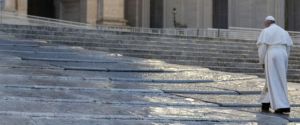
Here is the syndrome of Jonah, which "strikes those who do not have the zeal for the conversion of the people, they seek a holiness - allow me the word - a holiness of dyeing, that is, all beautiful, all well done but without the zeal that leads us to preach the Lord". The Pope recalled that the Lord "before this generation, sick with the Jonah syndrome, promises the sign of Jonah". He added: "In the other version, that of Matthew, it says: but Jonah was in the whale three nights and three days... The reference is to Jesus in the tomb, to his death and resurrection. And this is the sign that Jesus promises: against hypocrisy, against this attitude of perfect religiosity, against this attitude of a group of Pharisees'.
To make the concept clearer, the bishop of Rome referred to another parable from the Gospel "that represents well what Jesus wants to say. It is the parable of the Pharisee and the publican praying in the temple (Luke 14:10-14). The Pharisee is so sure before the altar that he says: I thank you God that I am not like all these people from Nineveh, nor like the one who is there! And the one who was there was the publican, who only said: Lord have mercy on me who am a sinner".
The sign that Jesus promises "is his forgiveness," Pope Francis pointed out, "through his death and resurrection. The sign that Jesus promises is his mercy, the one that God had already been asking for some time: mercy I want and not sacrifices". So "the true sign of Jonah is the one that gives us the confidence of being saved by the blood of Christ. There are many Christians who think they are saved only by what they do, by their works. Works are necessary, but they are a consequence, a response to that merciful love that saves us. Works alone, without this merciful love, are not enough.
So "the Jonah syndrome strikes those who trust only in their personal righteousness, in their works". And when Jesus says "this wicked generation", he is referring to "all those who have Jonah's syndrome in them". But there is more: "Jonah's syndrome," said the Pope, "leads us to hypocrisy, to that sufficiency that we believe we achieve because we are clean, perfect Christians, because we do these works we keep the commandments, everything. A big disease, the Jonah syndrome!". Whereas "the sign of Jonah" is "the mercy of God in Jesus Christ who died and rose again for us, for our salvation".
"There are two words in the first reading," he added, "that connect with this. Paul says of himself that he is an apostle, not because he has studied, but he is an apostle by calling. And to Christians he says: you are called by Jesus Christ. The sign of Jonah calls us'. Today's liturgy, the Pontiff concluded, helps us to understand and make a choice: "Do we want to follow the syndrome of Jonah or the sign of Jonah?"
[Pope Francis, St. Martha, in L'Osservatore Romano 15.10.13]
The Feast, the Garment
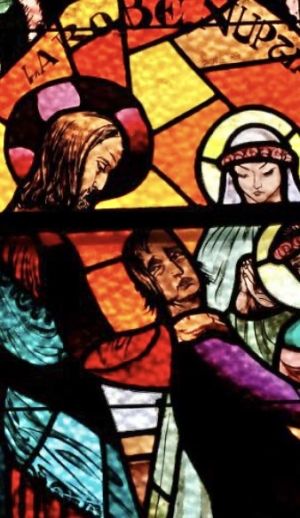
Everyone is called, but with which trousseau? Without artifices
(Mt 22:1-14)
The «wedding dress» (vv.11-12) is not here a figure of the our outside image, but of the essential - of what really matters.
The Kingdom of God announced by Jesus does not admit personal and civil disregard [cf. Mt 21]. And the Banquet preached by the Master is not a Garden of Eden for a future in the afterlife, but a direct thread.
His Meal Table is the new condition into which the person who trusts his proposal is introduced.
But there are those who feel satiated, because they feel they already have enough for a life without too many problems.
It was the situation of the authorities, satisfied with the superabundant religious structure, which seemed to offer just social security, and certainty even before God.
All are called (v.14) to the Banquet, yet someone did not keep the white robe of Baptism in Christ. He has totally changed his outfit, and presents himself with the rags of ancient life.
Jesus resumes speaking with the leaders and confronts them without half measures, because He does not compare the Kingdom of the Father to a solemn assembly, but to a wedding feast!
In the simple, popular, immediate and playful frankness of a marriage there is a human reality characterizing the divine condition: the spontaneous Joy of genuine relations, face to face.
The proposal for a cheering novelty, however, is rejected. Self-sufficient and experienced venerate another master: interest.
Opportunism cannot be an ingredient of the Sacred: profit turns people back on itself, closes their eyes, makes them unilateral, gloomy.
And despicable calculations lead the same people to destruction (v.7).
The background of the parable is the friction between Jews and converted pagans.
Considering themselves chosen - «elected» (v.14) - the former refused to break the Bread, share, catch up with the latter.
It is interesting however that the faithful servants, pushing pushing, stood out (backwards): in any circumstance they remained willing to enter "last" at the Banquet.
In short, the space opened by the self-exclusion of the nation called first would not have succeeded in putting an "end" to the efforts of those who have always fought for life and authenticity.
Fruiting trees do not like to prevaricate. They risk and occupy only the last place; being close to the uncertain, and encouraging them.
Therefore at v.9 Mt invites us to go to the «outlets of the streets» [Greek text] ie in the existential suburbs where life is not obvious, but pulsates always new. Where you cannot remain indifferent.
The Greek term indicates the end of urban (reassuring) roads and the beginning of the paths poorly cared for and risky.
In Semitic mentality, they were the boundary of the pure territory and the threshold of precarious, contaminated places.
Not only that: God’s offer of love gathers first the "bad guys" [«wicked»: v.10 Greek text] to emphasize that Heaven is not ‘at points’.
It is available to the needy, to those who recognise themselves as such.
But everyone can be misdressed outside, not inside: that is, vigilant to the brothers, and diligent. We are called to abandon neglect and carelessness.
By Faith that incorporates us without conditions to the Bridegroom, the clean and sumptuous dress is always made available by the Landlord.
But wearing it is the result of a conscious choice, made its own: wanting «to give birth to a new world, where all of us are brothers and sisters, where there is room for all those whom our societies discard» [Fratelli Tutti (Fratelli Tutti), n. 278].
God's people cannot live in a parallel, disconnected, double world - as if the only God they worship is 'marketing and convenience'.
[28th Sunday in O.T. October 11, 2026]
The Feast, the Garment
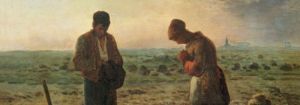
All are called, but with what attire? Without pretence
Mt 22:1–14 (1–21)
The ‘wedding garment’ (vv. 11–12) is a symbol of what is essential – that which is indispensable, even if precarious, without any trappings of refinement.
‘“Each one of you, therefore, who has faith in God within the Church has already taken part in the wedding feast, but cannot claim to have the wedding garment unless you preserve the grace of Charity” (Homily 38,9: PL 76,1287). And this garment is symbolically woven from two pieces of wood, one above and the other below: the love of God and the love of neighbour (cf. ibid., 10: PL 76, 1288)’ (Gregory the Great; Pope Benedict, 9 October 2011).
The Kingdom of God proclaimed by Jesus differs from that imagined by the rabbis, whose doctrine could condone personal and civil negligence [e.g. merchants in the temple, the barren fig tree, objections to authority, murderous vineyard workers, and so on: Mt 21].
The Banquet preached by the Master is not a Garden of Eden prepared for a future in the hereafter, which in the meantime – albeit in flashes – might tolerate inauthenticity. Rather, it is a direct link.
His table, laid out with food, is the new state into which the person who trusts in his proposal of sharing is brought.
There are those who feel sated, because they believe they already possess enough for a life without too many problems – and so they adapt to any occasion, however petty.
Such was the situation of the authorities, satisfied with the overabundant religious structure, which seemed to offer adequate social security, and certainty even before God.
Instead (how shall I put it?): it is not enough to have one’s name recorded in the parish registers, and then to turn up in the rags of one’s former life.
Today, the rebirth from the global crisis calls for fundamental choices, for a radical change in mindset and reality.
We truly need to renew our ‘wardrobe’, that is, to base our choices on new values.
It is time to become malleable once more, to reshape ourselves in the image of Christ, not to reject the changes that spur us on – to the point of building a shared life project and rebuilding the world around us.
Everyone is called (v. 14), yet some have not kept the little white robe of Baptism. They have, unfortunately, completely changed their attire – despite the fact that, in some cases, they preside over and defend the institution.
Jesus resumes speaking to the leaders and rebukes them without mincing his words, for he does not compare the Kingdom of the Father to one of their own liturgical assemblies—those well-organised gatherings of great authority, full of artifice… but rather to a wedding feast, without sacred banners!
In that festive simplicity, in the immediate and joyful candour of a wedding, there lies a human reality that characterises the divine condition: the spontaneous joy of frank, face-to-face relationships – now lost amidst the formalities of a religion that has become a habit.
This proposal for a joyful renewal is, however, rejected. The self-sufficient and the experts (who think they know it all) worship another master: self-interest.
Opportunism cannot be an ingredient of the Sacred: self-interest turns people in on themselves, blinds them, and makes them one-sided and gloomy.
It hands the Church over to the power brokers.
Jesus realises: everything that the shrewd and the theatre-loving were doing was for their own gain. In fact, they conceived of the Kingdom in an exclusive, pre-selected [and commercial, as usual] way.
As with the labourers of the last hour [Mt 20:1–16], the only currency for all is Christ himself. But the veterans, who consider themselves top of the class by right, have no interest in people’s happiness.
Thus, the fate of the Prophets was nothing more than the careless outcome of despicable calculations [in Luke 14:18–20, ‘perfectly ordinary’ daily duties] which, however, were leading the people to destruction (v. 7).
The backdrop to the parable is the friction between Jewish converts and Gentile converts.
Considering themselves the chosen ones – the ‘elect’ (v. 14) – the former refused to break bread, to share, and to place themselves on an equal footing with the latter.
It is interesting, however, that it was precisely the faithful servants who, when push came to shove, stood out in the opposite way: they were already recognised because, in any circumstance, they remained willing to enter the Banquet ‘last’.
In short, the space created by the self-exclusion of the people called first would not have succeeded in putting an ‘end’ to the efforts of those who have always fought for life and authenticity.
Fruit-bearing trees – as Jesus maintains, and as we see everywhere even today – do not like to dominate: they prefer to bear fruit, without opportunistic claims or envy.
They take risks and occupy only the last place; to be close to those who are uncertain, and to encourage them.
So in verse 9, Matthew does not speak of going to the crossroads [CEI translation] but rather to the junctions of the roads [Greek text].
Pope Francis would say: in the existential peripheries, where life is not taken for granted, but is always pulsating with new life. There, where one cannot remain indifferent.
The Greek term indicates the end of (reassuring) urban streets and the beginning of neglected and perilous paths.
In the Semitic mindset, these were the boundary of the pure territory and the threshold of precarious, contaminated places.
Not only that: God’s offer of love gathers first and foremost the ‘wicked’ [‘evil’: v.10, Greek text] to emphasise that Heaven is not ‘by merit’.
It is available to the needy, to those who recognise themselves as such.
Yet everyone may be poorly dressed on the outside, but not on the inside: that is, vigilant towards their brother and diligent.
We are called to abandon neglect and indifference.
To avoid creating confusion regarding the Face of God and to prevent ruining the lives of the most committed, a change of mindset is needed within the Church.
A decisive replacement of principles and conveniences, overturning every pyramid-like ideology based on self-interest and power.
Through Faith, which unites us unconditionally to the Bridegroom, the clean and splendid garment is always provided by the Master of the House.
But wearing it is the result of a conscious choice, one we make our own: the desire to ‘give birth to a new world, where we are all brothers and sisters, where there is a place for every outcast’ [Fratelli Tutti, no. 278].
In other words, we will continue to endure the journey through a parallel world – at times even within our own communities – where everything is disconnected and duplicitous: the result of terrible indoctrination, corrupt choices and diabolical motives.
As if the only God worshipped were ‘marketing and convenience’.
To internalise and live out the message:
What do you consider diabolical and imagine might lead you astray from the spiritual path? Do you think of God in a serious light, or do you associate him with the joy of a wedding feast?
Restoring to God the image of true humanity. Which acronym?
(Mt 22:15–21)
Following the expulsion of the money-changers from the Temple, the challenge to his authority and the parables of the two sons, the murderous vineyard tenants and the rejected banquet (all of which referred to the elite), here is another clash between Jesus and the political and religious leaders – the latter remaining behind the scenes.
Jesus (in his own way) systematically dismantles the traps set by the leaders and the usual experts.
With well-honed duplicity, they approach Him, seeking to flatter His pride (v. 16: situations that often befall even critical witnesses).
The interests of the crafty, however, clash with Christ’s focus, which is entirely directed towards the genuine good of people and respect for the intelligence of things – not towards a craving for approval or opportunism.
It was precisely in the Temple (Mt 21:23) – the pre-eminent Dwelling Place of the one Lord God – that these officials provoked the new Rabbi over the payment of taxes to the Romans (22:17).
We know what was at stake: the accusation of not being a prophet according to divine law, or (conversely) that of collaboration with the occupiers.
The Master is not taken in by their ostentatious display of closeness to the God of Israel – a false display because it was sought from without – and he easily outwits them.
In the Temple of Jerusalem, it was forbidden to carry Roman coins, which bore imperial portraits and insignia (contrary to the Commandment ‘You shall not make for yourself any graven image’).
He asks them for one, however, because he actually had none. But it is precisely these pompous figures who hand one to him… The scene borders on the ridiculous.
By drawing the forbidden coin from the pouch concealed beneath their cloaks, the leaders themselves reveal their true god: self-interest (well hidden beneath deeply devout and ostentatious manners, which serve only as a smokescreen).
Christ urges us not to be flattered by the ostentatious duplicity of outward signs: what matters is not to deceive people by using pious forms as a mask for theatrics (v. 18, Greek text).
Fanatics of purity live only for the superficial; and they rely on it: not infrequently, they skilfully conceal the very material passions they disdain. With Christ, this does not work.
Each person is called to restore to their true Lord the indelible image and likeness that has been engraved within them. Let the coin, therefore, be returned to its owner.
Women and men – creatures in whom the image and likeness of God is imprinted – should return themselves in authenticity to the Creator (v. 21) who dwells in their very essence as persons.
Humanity is marked by a far more intimate and natural sense of belonging than mere convenience.
The Eucharist, gratuitousness and strangers: unheard of or marketing
(Luke 14:15–24)
Jesus does not compare the Kingdom of the Father to a solemn assembly, but to a great Banquet!
Yet this proposal for joyful renewal is rejected. The self-sufficient and the self-important have other commitments and interests…
After the destruction of the Temple, the leadership of the synagogues was taken over by the Pharisees, who had survived the disaster because their traditionalism lacked explicit political-nationalist undertones.
Indeed, they believed that the expectation of the Messiah had nothing to do with the struggle against Rome; in this respect, they seemed to be in agreement with the Christians.
But they constantly demanded that their followers strictly observe the rules that defined traditional Jewish religion.
After the year 70, this insistence led them to an increasingly obsessive condemnation of Jews who had converted to the Lord Jesus – and, by the end of the century, to their expulsion from the synagogues.
The fundamentalist religious leaders thus ended up socially marginalising even those faithful to the younger Messiah, who were guilty of neglecting the distinctions between the customs of Israel and those of other peoples.
In the communities described in Luke’s Gospel, the situation was less divisive, but equally vivid.
Those who had converted to faith in Christ came largely from pagan backgrounds; despite differences in cultural background and social class, they lived out here and there [without those purist ideological biases] the ideal of sharing and communion, including the sharing of material goods.
The invitation to take part in the Feast was initially extended to the children of Israel, who still likened the messianic age to a great Banquet, characterised by gratitude and (internal) brotherhood.
But the difficulties in broadening the criteria for communion stemmed precisely from those who had converted from Judaism, who, through long-standing practice, retained the custom of not sharing food with outsiders; hence the breaking of the Eucharistic Bread.
Within the context of their customs and the sacred laws set out in the Torah (Deut 20:5–7), the behaviour of those who refused the invitation in the parable of the Banquet (vv. 18–20) was legitimate from the point of view of recognised law – though not from that of friendship.
It is to emphasise the significance of the gesture that the host of the feast instructs his servants to gather precisely those who were socially excluded from the ancient religion, because they were considered impure: the pagans. Open to hope.
Christ continues to draw a dividing line between those who advocate an order and ideals that are untouchable and above human reality, and those who, being on the periphery, are always willing to take part in the Feast.
They are not the sort who are ‘all preoccupied with ritual’, with manners, with appearances; but with the life they radiate.
The latter do not allow themselves to be influenced by privileges, their own possessions, or laws: they give without keeping a double-entry account, they accept with natural readiness; they rejoice in reality and not in the distinction between the sacred and the profane. They do not think they already have the answer, and they do not end up becoming slaves to it.
Jesus’ teaching invites us not to limit our affections and not to let our hearts become weighed down by customs, by a particular or prevailing mindset, by legalistic constraints – or by ‘all sorts of things’.
In the assembly of the children, it is not the well-off [serious people, full of commitments, who have no time to spare, with too many possessions and invitations to manage] but the lowly folk… who take centre stage… despite their limited abilities.
All this is because a characteristic of the Little Ones and the destitute is their willingness to cross boundaries: this is what makes them capable of heeding God’s call.
Those who are far away – though in dire straits – fill the Father’s house.
In society, the poor are just one among many, but the invitation to the table conveys to them a sense of values that do not stifle life with pettiness, and fosters bonds; indeed, the destitute often have a better understanding of divine and human matters.
This ever-increasing awareness of our likeness to the Son of God is accentuated by the lack of ‘adequate’ means: a scarcity that makes things true, that prompts others to reflect – whilst remaining unremarkable, incapable of causing a stir.
Such an intimate, luminous, transfiguring awareness pales and fades in the maelstrom of legalism and cultural conventions.
It seems to wane amidst the dizzying proliferation of activities – activities which do not reform: they render us detached and conditioned by the advantages of worldly-sacred security, which is, unfortunately, monopolistic.
A compulsory banquet would not be a Banquet… it is certainly not a Feast, a Gift to be cherished – confused with advantages or perfections [a dreadful misinterpretation by stubborn, observant circles].
For this reason, many prefer their own particular purgatory to the Heaven on earth that the Father offers.
Our solidarity is not a matter of sympathy, shared interests or a sense of camaraderie, but rather the result of a far-reaching Call, of a single, powerful Life that flows through us all, respecting our freedom and reality – as well as the stages of change.
To paraphrase the encyclical *Fratelli Tutti* (nos. 13–15, passim), in accordance with the passage from Luke, we must remain vigilant so as not to impoverish the life of Faith, transforming it into a detached commitment to ‘cultural colonisation’.
If this were the case, even the universal-Catholic horizon of a conviviality of differences would dissolve into an invitation that is overly standardised, utterly predictable, and ultimately barren.
A rigid or self-serving rejection of the Banquet would bring with it – as we see before our very eyes – the ‘further disintegration’ of ‘critical thinking’, of action ‘for justice’, and of its ‘paths to integration’.
Even ecclesial society, in fact, may run the risk of ‘distorting grand ideals’, ‘risking impoverishment’; and thus ‘sinking into the tyranny of the strongest’ and ‘mere ephemeral marketing formulas, which find their most effective resource in the destruction of the other’.
But the people of God cannot live in a parallel, disconnected and dual world – as if the one Eternal One they worship were merely a jumble of cunning, marketing and expediency.
To internalise and live out the message:
What does the Eucharist convey in your church community or group? What particular and special invitation does it convey?
Faithfulness and Response

If the First Reading exalts God's fidelity to his promise, the Gospel, with the parable of the marriage feast, makes us reflect on the human response. Several of those first invited refused the invitation because they were attracted by different interests; others even disdained the king's invitation, provoking a punishment that afflicted not only them but also the entire city. However, the king was not discouraged and sent his servants out to seek other guests to fill his banquet hall. Thus the aspect of the refusal of those initially invited caused the invitation to be extended to all, with a special predilection for the poor and the disadvantaged. This is what occurred in the Paschal Mystery: the force of evil is defeated by the omnipotence of God's love. The Risen Lord can now invite everyone to the banquet of Paschal joy and he himself can provide the guests with a wedding garment, symbol of the free gift of sanctifying grace.
However, the human being must reciprocate God's generosity by freely adhering to him. It is precisely this generous path that was taken by those who we are venerating today as Saints. In Baptism they received the wedding garment of divine grace, they kept it clean and purified it and made it radiant during their life through the Sacraments. They are now taking part in the wedding feast in Heaven. The banquet of the Eucharist is an anticipation of the final feast in Heaven, to which the Lord invites us every day and in which we must take part, clothed in the wedding garment of his grace. Should it happen that we soil or even tear this garment with sin, God's goodness does not reject or abandon us to our destiny but rather offers us, with the Sacrament of Reconciliation, the possibility of restoring the wedding garment to the pristine state required for the feast.
[Pope Benedict, homily for the canonisation of four Blessed, 12 October 2008]
Reference to the Eucharist
2. Jesus says: “The Kingdom of Heaven is like a king who gave a wedding feast for his son” (Mt 22:2). The parable of the wedding feast presents the Kingdom of God as a royal – and therefore sovereign – initiative of God himself. It also includes the theme of love, and specifically spousal love: the son for whom the father prepares the wedding feast is the bridegroom.
Although the bride is not named in this parable, the circumstances indicate her presence and make it clear who she is. This will become evident in other New Testament texts, which identify the Church with the Bride (Jn 3:29; Rev 21:9; 2 Cor 11:2; Eph 5:23–27, 29).
3. On the other hand, the parable clearly identifies the Bridegroom as Christ, who brings about the Father’s New Covenant with humanity. This is a covenant of love, and the very Kingdom of God appears as a communion (a community of love), which the Son brings about according to the Father’s will. The ‘banquet’ is the expression of this communion. Within the context of the economy of salvation described by the Gospel, it is not difficult to recognise in this wedding banquet a reference to the Eucharist: the sacrament of the new and eternal Covenant, the sacrament of Christ’s nuptial union with humanity in the Church.
4. Although the Church as Bride is not named in the parable, other elements are found within its context that echo what the Gospel tells us about the Church as the Kingdom of God. Such is the universality of the divine invitation: ‘The King said to his servants, “Invite everyone you find to the wedding feast”’ (Mt 22:9).
Among those invited to the Son’s wedding feast are missing those who were chosen first: those who were to be guests according to the tradition of the Old Covenant. They refuse to attend the feast of the New Covenant, giving various excuses. Then Jesus has the King, the host, say: ‘Many are called, but few are chosen’ (Mt 22:14). In their place, the invitation is extended to many others, who crowd into the banquet hall. This detail brings to mind that other warning Jesus had spoken: ‘I tell you that many will come from the east and the west and will take their places at the feast with Abraham, Isaac and Jacob in the kingdom of heaven, whilst the sons of the kingdom will be thrown out’ (Mt 8:11–12). Here we can clearly see how the invitation becomes universal: God intends to establish the New Covenant in his Son, no longer with the chosen people alone, but with the whole of humanity.
5. The rest of the parable indicates that definitive participation in the wedding feast is linked to certain essential conditions. It is not enough to have entered the Church to be assured of eternal salvation: ‘Friend, how did you get in here without a wedding garment?’ (Mt 22:12), the King asks one of the guests. The parable, which at this point seems to shift from the issue of the historical rejection of the election by the people of Israel to the individual behaviour of anyone who is called and to the judgement that will be passed on them, does not specify the meaning of that ‘garment’. But it can be said that the explanation is to be found in the entirety of Christ’s teaching. The Gospel, in particular the Sermon on the Mount, speaks of the commandment of love, which is the principle of divine life and of perfection in the image of the Father: “Be . . . perfect, just as your heavenly Father is perfect” (Mt 5:48). This is the ‘new commandment’ which, as Jesus teaches, consists in this: ‘As I have loved you, so you also must love one another’ (Jn 13:34). It therefore seems we may conclude that the ‘wedding garment’, as a condition for taking part in the banquet, is precisely this love.
This is confirmed by another great parable, concerning the Last Judgement, and therefore of an eschatological nature. Only those who put the commandment of love into practice through spiritual and corporal works of mercy towards their neighbour may take part in the banquet of the Kingdom of God: “Come, you who are blessed by my Father; take your inheritance, the kingdom prepared for you since the foundation of the world” (Matthew 25:34).
[Pope John Paul II, General Audience, 18 September 1991]
Freeness, Generosity, Universality: not our tiny little church
In this Sunday’s Gospel, Jesus speaks to us about the response given to the invitation from God — who is represented by a king — to participate in a wedding banquet (cf. Mt 22:1-14). The invitation has three characteristics: freely offered, breadth and universality. Many people were invited, but something surprising happened: none of the intended guests came to take part in the feast, saying they had other things to do; indeed, some were even indifferent, impertinent, even annoyed. God is good to us, he freely offers us his friendship, he freely offers us his joy, his salvation; but so often we do not accept his gifts, we place our practical concerns, our interests first. And when the Lord is calling to us, it so often seems to annoy us.
Some of the intended guests went so far as to abuse and kill the servants who delivered the invitation. But despite the lack of response from those called, God’s plan is never interrupted. In facing the rejection of the first invitees, He is not discouraged, He does not cancel the feast, but makes another invitation, expanding it beyond all reasonable limits, and sends his servants into the town squares and the byways to gather anyone they find. These, however, are ordinary, poor, neglected and marginalized people, good and bad alike — even bad people are invited — without distinction. And the hall is filled with “the excluded”. The Gospel, rejected by some, is unexpectedly welcomed in many other hearts.
The goodness of God has no bounds and does not discriminate against anyone. For this reason the banquet of the Lord’s gifts is universal, for everyone. Everyone is given the opportunity to respond to the invitation, to his call; no one has the right to feel privileged or to claim an exclusive right. All of this induces us to break the habit of conveniently placing ourselves at the centre, as did the High Priests and the Pharisees. One must not do this; we must open ourselves to the peripheries, also acknowledging that, at the margins too, even one who is cast aside and scorned by society is the object of God’s generosity. We are all called not to reduce the Kingdom of God to the confines of the “little church” — our “tiny little church” — but to enlarge the Church to the dimensions of the Kingdom of God. However, there is one condition: wedding attire must be worn, that is, charity toward God and neighbour must be shown.
[Pope Francis, Angelus, 12 October 2014]
«Blessed rather»: new devotion to Mary
Brethren all and ourselves
(Lk 11:27-28)
In ancient mentality, the joy of the mother was the full-blown greatness of the son.
Jesus contests that the authenticity of Bliss may be linked to relations of clans and physical kinship, or to social clamour.
The Lord dismantles every outward appearance. He rejects this crude way of conceiving the fortune of life.
Full Happiness depends on the perception of one’s essential roots, and the precious uniqueness that we are - it does not come to us by social tracing, or by the type of belonging that has always been.
It is precisely here that the Word of God introduces us into the understanding of the unrepeatable reason why we were born, and drags us in an integral energetic way; making us new every day.
The Word lives in our Eternal side; it is beyond time, and it seems to make us become strangers. Yet it is not a disharmonious rival.
As we travel to the Goal we do not know, we advance with it. Without definitions first.
Thus the brothers; each in the unfolded and original Word, for growth. Without judgments first.
Sacred Scripture is the key to reading the facts; an Event that crosses us, and at the same time a sort of genetic code.
Intuition and nose for things that allows everyone to relive Christ in a serene and trusting way, despite any worn-out sides of the personality.
Every joy of human relations in the home thus becomes a platform for our leap towards the wider human Family. A wonder.
In this Exodus, particular affections are gradually integrated by discoveries, by an unexpected mission, by the qualitative life of universal sharing.
«Blessed rather are those who listen to the Word of God and guard [it]» (v.28).
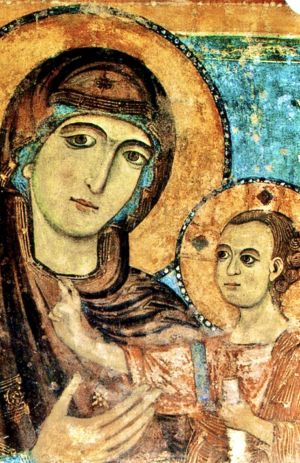
Mary generated the Messiah, but - even more - she made the Word uncommon Person.
His true title of glory - what matters about Her - is to have been able to accept the proposal of a path of growth that has rewritten all expectations and history.
In their processes, the secret life with God and the codes of the soul acquire breath and enjoy the loss of already recognized advantages.
In this way, even in devotion to the Mother of God, we want to recognize the value of a journey in progress.
The ability to field unusual sides, distinct characters; make room inside, then generate and feed them.
Often, in fact, costumes or fixed beliefs do not unlock difficult situations, nor allow to activate transformational turns.
They become slipknot laces.
Conversely, the Way of Exodus in the Lord gives an experience of discovery, and revival of virtues to which we have not yet given complete flowering.
Just like for the Mother: in integral Joy, not through quietisms - nor with rivalries that distance us away from brethren all and from ourselves.
[Saturday 27th wk. in O.T. October 10, 2026]
«Blessed rather»: new devotion to Mary
Brothers all and ourselves
(Lk 11:27-28)
"At first attachment may look like love, but as it develops it becomes more and more clearly the opposite, characterised by clinging, holding back, fear" (Jack Kornfield).
In the ancient mentality, the joy of the mother was the proclaimed greatness of the son.
Jesus disputes that the authenticity of the Beatitude can be linked to clan relationships and physical kinship, or to social impressions.
The Lord dismantles all externality. He rejects this crude way of conceiving the blessedness of life.
One is not happy because of an illustrious surname or blood. Even being the nephew of a cardinal or king would mean nothing.
Full Happiness depends on the perception of one's essential roots and the precious uniqueness that we are - it does not come to us from a tribe, from social recollection, or because we have always belonged.
It is here that the Word of God introduces us into an understanding of the unique reason why we were born, and draws us into integral energy; making us new every day.
The Word lives in our Eternal side; it is beyond time, and seems to make us foreign. Yet it is not a disharmonious rival.
Travelling towards the Goal we do not know, we advance with it. Without definitions first.
Thus the brothers; each in the unfolded and original Word, for growth. Without judgments first.
Sacred Scripture is a key to reading events; an event that passes through us and at the same time a kind of genetic code.
Sense that allows each one to relive Christ in a serene and confident manner, despite any frayed sides of the personality.
Every joy of human relationships in the home thus becomes a platform for our leap towards the larger human family. An astonishment.
In such an exodus, particular affections are gradually supplemented by discovery, by an unthinking mission, by the qualitative and blissful life of universal sharing.
Mary generated the Messiah, but even more she made the Word an uncommon Person.
Her true title to glory - what is worthy of her - is having been able to accept the proposal of a path of growth that rewrote expectations and history.
Those who cling to the more ordinary aspects of material existence, or of consortia - and to the all-too-poor assurances [to which we gladly cling, however] - risk entering into a terrible crisis when so many assurances crumble.
The personal and social difference between mediocre religiosity and the ideal trajectory of faith?
In their trials, the secret life with God and the codes of the soul gain breath and enjoy the loss of already recognised advantages!
"Blessed rather are those who hear the Word of God and [keep it]" (v.28).
Blessedness', fullness of being and humanisation, demands a detachment from habitual situations, even of small parental ties - to which we cling.
Sometimes even institutional 'charisma' (or 'kinship') prejudices come to naught.
Customary manners, routine domestications, so many imprisoned emotions, but also group codes... can be an obstacle to the development and flowering of the inner seed that belongs to us.
Thus, even in the devotion to Mary we want to recognise the value of a journey in progress.
We wish to grasp how to welcome the Vocation - be it individual, relationship, community, and the Logos of God itself.
And how to try to understand them in depth, letting them shape our destination.
Let us then seek how to make space within, respecting the distinct characters.
In addition, precisely by re-weaving the knots of being, we might guess how to re-weave the identity-personal character with creative input.
How then to give birth to the other as it proceeds. How to suckle it and nourish it with gradually more solid food, and accompany it, support it.
Finally, how to radiate it, so that it also overflows and unleashes around it the Spirit of Life that ennobles creaturely dignity - exalting its aspirations.
Ancient piety referred to a project of unilateral coexistence, which nevertheless nourished the individual soul in an intimate way.
But sometimes too much 'knowing how to be in the world' [around] did not bring out the unusual sides, which also demanded space.
This also applies to us; especially in times of global crisis.
Avoiding what is surprising does not build communion in the epochal Newness of the divine Spirit: that is, conviviality of differences.
Well, although situated in an era of emergency, the wide-ranging hazard of Faith instead proposes to us a 'fire' of life, of passion.
Here is an alternative intoxication, truly satisfying. A brio that overcomes tacit, suffocating convictions.
Faith's life wants precisely to break the conformist uniformity and its trance of blocks, languages and ties (a slipknot).Conformities or opinions that do not unblock difficult situations, nor enable transformational breakthroughs.
They become [it is worth repeating] slipknots.
Conversely, the Way of Exodus in the Lord gives an experience of discovery and revival of virtues to which we have not yet fully blossomed.
As with the Blessed Mother: in integral Joy, not through quietisms - nor with revenge that distances us from our 'brothers and sisters' and from ourselves.
To internalise and live the message:
Do you feel that your personal story still lies in death, and is not yet redeemed by an Easter victory?
For what reason?
To what full Hope or idea of fortune - to what and to Whom - are you attached?
Or do you allow yourself to be seduced by quietisms, manipulators, and winning mindsets?
The fool in the Bible, the one who does not want to learn from the experience of visible things, that nothing lasts for ever but that all things pass away, youth and physical strength, amenities and important roles. Making one's life depend on such an ephemeral reality is therefore foolishness (Pope Benedict)
L’uomo stolto nella Bibbia è colui che non vuole rendersi conto, dall’esperienza delle cose visibili, che nulla dura per sempre, ma tutto passa: la giovinezza come la forza fisica, le comodità come i ruoli di potere. Far dipendere la propria vita da realtà così passeggere è, dunque, stoltezza (Papa Benedetto)
As sometimes happens in the Gospel, faced with the trap set by his enemies, Jesus, with his response, rises above the contingent controversy and goes far beyond the particular and mutually divergent positions (Pope John Paul II)
Come talora accade nel Vangelo, di fronte al tranello mossogli dai suoi nemici, Gesù, con la sua risposta, s’innalza al di sopra della polemica contingente e va ben oltre le posizioni particolari e tra loro divergenti (Papa Giovanni Paolo II)
And blasphemy, the sin against the Holy Spirit, is the one unforgivable sin — as Jesus said — because it comes from closing the heart to God’s mercy which acts in Jesus (Pope Francis)
E la bestemmia, il peccato contro lo Spirito Santo, è l’unico peccato imperdonabile – così dice Gesù –, perché parte da una chiusura del cuore alla misericordia di Dio che agisce in Gesù (Papa Francesco)
The great thinker Romano Guardini wrote that the Lord “is always close, being at the root of our being. Yet we must experience our relationship with God between the poles of distance and closeness. By closeness we are strengthened, by distance we are put to the test” (Pope Benedict)
Il grande pensatore Romano Guardini scrive che il Signore “è sempre vicino, essendo alla radice del nostro essere. Tuttavia, dobbiamo sperimentare il nostro rapporto con Dio tra i poli della lontananza e della vicinanza. Dalla vicinanza siamo fortificati, dalla lontananza messi alla prova” (Papa Benedetto)
The present-day mentality, more perhaps than that of people in the past, seems opposed to a God of mercy, and in fact tends to exclude from life and to remove from the human heart the very idea of mercy (Pope John Paul II)
La mentalità contemporanea, forse più di quella dell'uomo del passato, sembra opporsi al Dio di misericordia e tende altresì ad emarginare dalla vita e a distogliere dal cuore umano l'idea stessa della misericordia (Papa Giovanni Paolo II)
«Religion of appearance» or «road of humility»? (Pope Francis)
«Religione dell’apparire» o «strada dell’umiltà»? (Papa Francesco)
In the crucified Jesus a kind of transformation and concentration of the signs occurs: he himself is the “sign of God”, especially in the mystery of his Death and Resurrection (Pope John Paul II)
In Gesù crocifisso avviene come una trasformazione e concentrazione dei segni: è Lui stesso il "segno di Dio", soprattutto nel mistero della sua morte e resurrezione (Papa Giovanni Paolo II)
However, the king was not discouraged and sent his servants out to seek other guests to fill his banquet hall. Thus the aspect of the refusal of those initially invited caused the invitation to be extended to all [Pope Benedict]
Il re però non si scoraggia e invia i suoi servi a cercare altri commensali per riempire la sala del suo banchetto. Così il rifiuto dei primi ha come effetto l’estensione dell’invito a tutti [Papa Benedetto]








duevie.art
don Giuseppe Nespeca
Tel. 333-1329741
Disclaimer
Questo blog non rappresenta una testata giornalistica in quanto viene aggiornato senza alcuna periodicità. Non può pertanto considerarsi un prodotto editoriale ai sensi della legge N°62 del 07/03/2001.
Le immagini sono tratte da internet, ma se il loro uso violasse diritti d'autore, lo si comunichi all'autore del blog che provvederà alla loro pronta rimozione.
L'autore dichiara di non essere responsabile dei commenti lasciati nei post. Eventuali commenti dei lettori, lesivi dell'immagine o dell'onorabilità di persone terze, il cui contenuto fosse ritenuto non idoneo alla pubblicazione verranno insindacabilmente rimossi.