


don Giuseppe Nespeca
Giuseppe Nespeca è architetto e sacerdote. Cultore della Sacra scrittura è autore della raccolta "Due Fuochi due Vie - Religione e Fede, Vangeli e Tao"; coautore del libro "Dialogo e Solstizio".
To whom do I belong?
This Sunday’s Gospel (Mt 22:15-21) presents to us a new face-to-face encounter between Jesus and his adversaries. The theme addressed is that of the tribute to Caesar: a “thorny” issue about whether or not it was lawful to pay taxes to the Roman Emperor, to whom Palestine was subject in Jesus’ time. There were various positions. Thus, the question that the Pharisees posed to him — “Is it lawful to pay taxes to Caesar, or not?” (v. 17) — was meant to ensnare the Teacher. In fact, depending on how he responded, he could have been accused of being either for or against Rome.
But in this case too, Jesus responds calmly and takes advantage of the malicious question in order to teach an important lesson, rising above the polemics and the alliance of his adversaries. He tells the Pharisees: “Show me the money for the tax”. They present him a coin, and, observing the coin, Jesus asks: “Whose likeness and inscription is this?”. The Pharisees can only answer: “Caesar’s”. Then Jesus concludes: “Render therefore to Caesar the things that are Caesar’s, and to God the things that are God’s” (cf. vv. 19-21). On the one hand, suggesting they return to the emperor what belongs to him, Jesus declares that paying tax is not an act of idolatry, but a legal obligation to the earthly authority; on the other — and it is here that Jesus presents the “thrust” of his response: recalling the primacy of God, he asks them to render to Him that which is His due as the Lord of the life and history of mankind.
The reference to Caesar’s image engraved on the coin says that it is right that they feel fully — with rights and duties — citizens of the State; but symbolically it makes them think about the other image that is imprinted on every man and woman: the image of God. He is the Lord of all, and we, who were created “in his image” belong to Him first and foremost. From the question posed to him by the Pharisees, Jesus draws a more radical and vital question for each of us, a question we can ask ourselves: to whom do I belong? To family, to the city, to friends, to work, to politics, to the State? Yes, of course. But first and foremost — Jesus reminds us — you belong to God. This is the fundamental belonging. It is He who has given you all that you are and have. And therefore, day by day, we can and must live our life in recognition of this fundamental belonging and in heartfelt gratitude toward our Father, who creates each one of us individually, unrepeatable, but always according to the image of his beloved Son, Jesus. It is a wondrous mystery.
Christians are called to commit themselves concretely in the human and social spheres without comparing “God” and “Caesar”; comparing God and Caesar would be a fundamentalist approach. Christians are called to commit themselves concretely in earthly realities, but illuminating them with the light that comes from God. The primary entrustment to God and hope in him do not imply an escape from reality, but rather the diligent rendering to God that which belongs to him. This is why a believer looks to the future reality, that of God, so as to live earthly life to the fullest, and to meet its challenges with courage.
May the Virgin Mary help us to always live in conformity with the image of God that we bear within us, inside, also offering our contribution to the building of the earthly city.
The only unforgivable sin
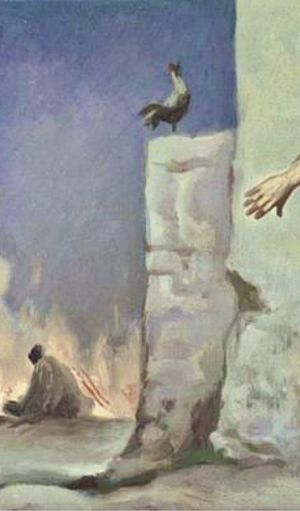
«Blaspheming the Holy Spirit»
(Lk 12:8-12)
Holy Spirit is a term that translates the Hebrew Ruah haQodesh: impetuous wind, not a stagnant air.
«Spirit»: energy that blows up the personal, community and ecclesial story ... in order to mature and renew it.
Not to confirm the standard, but to dilate the boundaries.
He does this by introducing a sort of sublime quality into reality, (above all) breaking through with an Action that discerns evolution and overturns it, making it a whole other.
«Holy» because it distinguishes the sphere of Life - Holiness - from the swampy one of deadly germs, which turn us to withdrawal and self-destruction.
Today's Gospel was born as an appeal to churches and faithful exposed to hostilities, so that they do not allow themselves to be discouraged by real and genuine witness.
Believers must not give up feeling attracted to the Word’s critical power.
Over time it has the strength to strip the intriguing people of their manias of vain grandeur or perversion, and bring out the Light that unites us, attracts spontaneously, without artifice.
In short, church members who live on Faith-love cannot identify with advantageous lifestyles, typical, non-crucial interpretations of reality.
Other than small transgressions! It is at the moment of the fundamental threats that we can read the significance of our choice for the Lord.
Lk especially alludes to circumstantial, particular excuses in the search for support: favors of "cultural" paradigms, or of guys who matter. Eg. facilitating their own affairs thanks to an ideological servility to the authorities, with adjoining guarantees of way out.
Here comes the danger of blasphemy against the Holy Spirit: moving away from the Gospel, believing that Jesus indicates paths of ruin and death, instead of authentic Life.
Today the impulses of the Spirit who renews the face of the earth upset the landscape, not to abandon humanity to pure limits and to an inexorable oblivion.
The path of the one who walks on the Way of Freedom must be fearless, because the Exodus makes us to ourselves; redeemed and sanctified.
Returned to our Core and by the power of the Faith that intertwines our story with the Christ, we will see the impossible Promise fulfilled; things that we not know, sovereignly effective.
We want to exist completely, because we are not gone bad people.
That is why there are crises, upheavals, and cuts: they lead back to our fragrance, which - this yes - we could lose.
Danger and agitated times come to remind us of our eternal side. It can only be expressed when the matrix of our being in the field deflects, to prepare us to welcome the unexpected solution.
This is the case even when it seems to others that our life is lost.
In reality, we are gambling it without externality of content, in order to trigger the integral Beauty of the new Youth that we do not know, but which is advancing.
[Saturday 28th wk. in O.T. October 17, 2026]
The only unforgivable sin
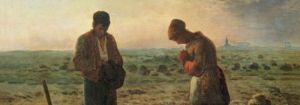
"Blaspheming against the Holy Spirit"
(Lk 12:8-12)
"And whosoever shall speak a word against the Son of man, it shall be forgiven him; but he that shall blaspheme against the Holy Spirit shall not be forgiven" (Lk 12:10).
Holy Spirit is a term that translates the Hebrew Ruah haQodesh: an impetuous Wind, not a stagnant air.
The latter would be an atmosphere without a vital wave, lacking a forge of relationships; which does not grow: it makes things flat.
"Spirit": energy that throws personal, community and ecclesial affairs into the air... in order to make them mature and renew them.
Not to confirm the standard, but to expand the boundaries.
It is enough to glance at the points dealt with in the recent encyclical on social friendship to realise: borders, the shadows of the closed world, shattered dreams, the end of historical consciousness, without a project for all, world waste, even food waste... etc.
The Spirit introduces a kind of sublime quality into reality, (above all) bursting in with an Action that discerns evolution and turns it upside down, makes it something Other than the stagnant spirit - only willing to reaffirm, celebrate and spread itself.
"Holy" because it distinguishes the sphere of Life - Holiness - from the swampy sphere of deadly germs, which turn us towards retreat and self-destruction.
There was a time when even Catholic 'missionary activity' [even the precious activity of human promotion, imagined as extraneous to 'evangelisation' - an ideal with a 'Protestant' flavour] was conceived in terms of internal proselytism.
Fratelli Tutti, on the other hand, denounces the reality and reminder of the overall scourges: the shortcomings of a common project, the persistence of a 'world gap' and the universal inadequacy of human rights; situations of conflict and fear, progress 'without a common course'... and so on.
Today's Gospel itself was born as an appeal to the churches and the faithful exposed to hostilities, so that they would neither deflect nor allow themselves to be discouraged in their real and genuine witness to Christ in the world.
An appeal that must not be ignored, despite the deep misery and boundaries that continue to lurk in hearts.
Believers must not give up that they are drawn to the critical power of the Word.
In time, it has the power to strip the intriguers of their delusions of vain grandeur or perversion, and bring out the Light that unites us, attracts us spontaneously, without artifice.
Church members who live by Faith-love cannot identify with advantageous lifestyles, outdated and uncritical interpretations of reality, although they are typical of 'doctrine-discipline religions' - or of the various historical denominations.
As Brothers All sadly points out about the encounter between different Christian denominations:
"We cannot forget the desire expressed by Jesus: that all may be One (Jn 17:21). Listening to his invitation, we acknowledge with sorrow that the process of globalisation still lacks the prophetic and spiritual contribution of unity among all Christians" (n.280).
This is an 'unforgivable sin' - in every sense - not a laughable one.
As John Paul II stated: "The 'blasphemy' [in question] does not really consist in offending the Holy Spirit with words; it consists, instead, in refusing to accept the salvation that God offers man through the Holy Spirit, and which works by virtue of the sacrifice of the cross [It] does not allow man to come out of his self-prison and to open himself up to the divine sources of purification" (General Audience 25 July 1990).
Only the work filled with hope meets the teachings of Jesus.
It is the Crucified One who reveals the intimacy of God and man, as well as the distortions of that pious hypocrisy that privileges the spirit of interest and frontier, power, the accumulation of any resources, and disvalues.
In symbiosis with the passage from Luke and the new Magisterium, we can reiterate that it is precisely in the moment of the threats in the situation - today unfortunately also global - that we read the extent of our choice for the Lord.
There are those who rely on transparent fraternity, on the spirit of the sons, on the love that "integrates and gathers" (FT 190-192)... conversely, there are those who seek self-confidence or try to fall back on the usual worldly calculations (vv.11-12), looking for results rather than the fruitfulness of initiating processes (cf. FT 193-197).
So much for petty transgressions!
It is in the moment of fundamental threats that we read the extent of our choice for the Lord.
Lk alludes in particular to circumstantial, particular excuses in the search for support: favours from 'cultural' paradigms, or from people who matter. E.g. by facilitating one's own affairs through ideological and cowardly servility to the authorities, with guarantees of a way out.
All this without ever 'thinking and generating an open universe' (cf. FT 87-127) who knows how to go beyond the 'world of associates' and cordatas - even ecclesial ones, as the current pontiff has reiterated on several occasions [alluding precisely to the prelates themselves].
Here we face the danger of blasphemy against the Holy Spirit: distancing oneself from the Gospel by believing that today Jesus is for exclusivism, or a stranger who points out paths of ruin and death, instead of authentic Life.
Of course, there are not a few who may outwardly deny Christ, but they do not reject the meaning of Jesus: they live by his very Spirit [love of neighbour, victory over evil, hope in a more authentic kingdom: v.10; FT 271ff].
The Master and the new magisterial commitment - sounding in unison - intend to shake consciences and make us understand the seriousness of choices contrary to God's plan.
Today, the impulses of the Spirit renewing the face of the earth are upsetting the landscape, but not to abandon humanity to pure limits and inexorable oblivion.
The Tao Tê Ching (xxxiv) writes about our reliance on the Perfect One:
"How universal is the great Tao! He can be on the left as well as the right'. And Master Wang Pi comments: "There is nothing that the universality and superabundance of the Tao does not reach: left and right, high and low. If everywhere it confers and strives, there is nothing it does not reach". Master Ho-shang Kung reiterates: "There is no place it does not reach.
The path of he who walks the Path of Freedom must be fearless, because the Exodus makes us to ourselves; redeemed and sanctified.
With a "heart open to the whole world" (FT 128-153): established in the "local flavour" with a "universal horizon".
Restored to our Core and by the power of Faith that intertwines our story with the personal and cosmic Christ, we will see the impossible Promise realised; things we do not know, sovereignly effective.
Only the Spirit does not go against our eminent nature, therefore it is impermeable, definitive - though it is not. Because it calls us to trust, it does not leave us clinging to shadows, memories, old certainties and commemorations that do not guide our gaze elsewhere.
To foment the museum of vintage details [or to abandon oneself to the wave of fashions, even of thought] is to strand one's mind on the past, on experiences that perhaps were never even put into being.
Simple ideals of another's time, models; archaic theologisations, or conversely hedonistic ones.
We want to exist completely, because we are not gone bad people.
That is why there are crises, upheavals, cuts: they lead back to our fragrance, which - this one - we could lose.
If, on the other hand, we were to remain identified, we would run the risk of not putting ourselves in a snapping position; of not changing our relationships, and letting the energies now present in the round (also within) fade away.
Let us not let them slip away - detracting from the unseen emergencies that call to us.
We have sides to our souls that would otherwise not express themselves, except in the dangers that bewilder, in the difficult and all-encompassing relationships, or in the most painful and finally overwhelming rejections that force us to shift our gaze.
But we must put aside the hasty and opportunistic mind, which immediately seeks to remedy and repair according to stereotypes.
Danger and the busy times come to remind us of our eternal side. It can only express itself when the matrix of our being in the field deflects, to prepare us to welcome the unexpected solution.
Unexpected punishment or defeat will not make us 'like it by force' in society, even ecclesial society, but will allow us to be what we are. And to become ourselves, to discover other views - according to Signature.
This even when it seems to others that our life is lost.
In reality, we are gambling it without externality of content, in order to trigger the integral Beauty of the new Youth that we do not know, but which is advancing.
To internalise and live the message:
How do you live persecution? Curse or Opportunity?
Under threat, insult, slander, trial, mockery, violence, emergency, have you ever thought that Jesus led you down paths of death?
And making the new Magisterium your own, what cut with the indecencies of the past, what youthful horizon, what beauty and differing relationships have you tasted?
Evil is not an anonymous force.
Limit of human liberation
We must be well aware that evil is not an anonymous force acting in the world in an impersonal or deterministic way. Evil, the devil, passes through human freedom, through the use of our freedom. It seeks an ally, man. Evil needs him to spread. Thus, having offended the first commandment, love of God, he comes to pervert the second, love of neighbour. With him, love of neighbour disappears in favour of lies and envy, hatred and death. But it is possible not to be overcome by evil and to overcome evil with good (cf. Rom 12:21). It is to this conversion of the heart that we are called. Without it, the much-desired human 'liberations' disappoint, because they move in the reduced space granted by man's narrowness of spirit, his harshness, his intolerances, his favouritism, his desires for revenge and his death drives. A deep transformation of spirit and heart is necessary to regain a certain clairvoyance and impartiality, a deep sense of justice and the common good. A new and freer gaze will make one capable of analysing and questioning human systems that lead to dead ends, in order to move forward with the past in mind, never to repeat it again with its devastating effects. This required conversion is exhilarating because it opens up possibilities by appealing to the innumerable resources that dwell in the hearts of so many men and women eager to live in peace and ready to commit themselves to peace. Now it is particularly demanding: it is about saying no to revenge, acknowledging one's wrongs, accepting apologies without seeking them, and finally forgiving. For only forgiveness given and received lays the lasting foundation for reconciliation and peace for all (cf. Rom 12:16b.18).
[Pope Benedict, Address to the Meeting in Baabda Lebanon 15 September 2012].
The Spirit puts us intimately in relationship with God

The Spirit gives us a deep relationship with God, who is the source of all authentic human good. All of you desire to love and to be loved! It is to God that you must turn, if you want to learn how to love, and to find the strength to love. The Spirit, who is Love, can open your hearts to accept the gift of genuine love. All of you are seeking the truth; and all of you want to live in truth! This truth is Christ. He is the only Way, the one Truth and the true Life. To follow Christ means truly to “put out to sea”, as is said several times in the Psalms. The way of Truth is simultaneously one and manifold according to the variety of charisms, just as Truth is one while at the same time possessing an inexhaustible richness. Surrender yourselves to the Holy Spirit in order to find Christ. The Spirit is our indispensable guide in prayer, he animates our hope and he is the source of true joy.
[Pope Benedict, Youth Prayer Vigil Paris 12 September 2008]
Blasphemy does not consist in offending the Holy Spirit with words
And when he foretells to his disciples that persecution awaits them, with imprisonment and interrogation, he adds: "Do not worry about what you will have to say, but say what will be given you at that hour: for it is not you who speak, but the Holy Spirit" (Mk 13:11). "The Holy Spirit will teach you at that time what you have to say" (Lk 12, 12).
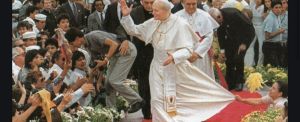
5. The synoptic Gospels record another statement by Jesus in his instructions to the disciples that cannot fail to impress. It concerns "blasphemy against the Holy Spirit". He says: "Whoever speaks against the Son of Man will be forgiven him, but whoever blasphemes the Holy Spirit will not be forgiven him" (Lk 12:10; cf. Mt 12:32; Mk 3:29). These words create a problem of greater theological and ethical magnitude than one might think, on the surface of the text. "Blasphemy" (of which we are speaking) does not really consist in offending the Holy Spirit with words; instead, it consists in refusing to accept the salvation that God offers to man through the Holy Spirit, and which works by virtue of the sacrifice of the cross. . If blasphemy against the Holy Spirit can be remitted neither in this life nor in the life to come, it is because this 'non-remission' is linked, as its cause, to 'non-penitence', that is, to the radical refusal to be converted . . . Now blasphemy against the Holy Spirit is the sin committed by man, who claims his supposed 'right' to persevere in evil - in any sin - and thus refuses redemption . . . (It) does not allow man to come out of his self-prison and open himself to the divine sources of purification of conscience and remission of sins' (Dominum et vivificantem, 46). This is the exact inversion of the condition of docility and communion with the Father, in which Jesus lives in prayer and action, and which he teaches and recommends to man as an inner attitude and as a principle of action.
6. In the whole of the preaching and action of Jesus Christ, which flows from his union with the Holy Spirit-Love, is contained an immense richness of heart: "Learn from me, who am meek and humble of heart," he exhorts, "and you will find rest for your souls" (Mt 11:29), but present at the same time is all the firmness of the truth about the kingdom of God, and therefore the insistent invitation to open one's heart, under the action of the Holy Spirit, to be admitted to it and not be excluded from it.
In all of this, the "power of the Holy Spirit" is revealed, and indeed the Holy Spirit Himself is manifested by His presence and action as the Paraclete, the comforter of man, the confirmer of divine truth, the eradicator of the "master of this world".
[Pope John Paul II, General Audience 25 July 1990]
Closure to mercy
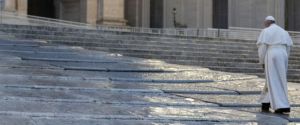
Jesus reacted with firm and clear words; he did not tolerate this, because those scribes, perhaps without realizing it, were falling into the gravest sin: denying and blaspheming against God’s Love which is present and active in Jesus. And blasphemy, the sin against the Holy Spirit, is the one unforgivable sin — as Jesus said — because it comes from closing the heart to God’s mercy which acts in Jesus.
[Pope Francis, Angelus 10 June 2018]
Distort oneself to gain consent? No, there is a great destiny of Uniqueness

The Afterlife is not inaccurate
(Lk 12:1-7)
Gospel according to Mk identifies the «leaven of the Pharisees» with the ideology of power.
Instead, Lk speaks of it to denounce the emphasis and inner duplicity of the authorities.
Jesus’ call against the hypocrisy or «theatricality» of the official religion that abandons people to themselves, is «first to his disciples» (v.1).
At all times Christ opposes those who play a role, lose their nature and become artificial, using God to be feared and respected.
Women and men of Faith are already enabled in Christ and at the center of their essence; they must not bend to chase artifacted voices of the world outside: they do not bring Eternity.
Rather, sons yearn to be transparent, clear, sincere.
Non-negotiable principle is not to hide the truth. This, starting from one’s own innate inclination-character that comes before the role.
And leaders must encourage everyone to find their way, each foretasting the value, the fate of the unrepeatability in person - not being great insiders, with a completely different purpose.
For this reason, in the risen churches in Christ all the masks that grips people that have little energy, out of the loop, those arrived last, marginalized, misunderstood, "inadequate", lonely, must fall.
No one has the right to destroy another person’s soul.
Nor can he subjugate its own heart - without losing the truly pure vocational seed, full of a priceless name; though in tiny appearance.
Also the scene of the spontaneous examples that Jesus draws from nature - an echo of the conciliatory life dreamed for us by the Father - introduces to Happiness that makes us aware of existing in all personal reality.
In fact, the Gospel passage shows the value of genuine, silent, inconspicuous things, which however live in us - they are not "shadows". And we perceive them without effort or brain commitment.
In the time of epochal choices, of emergencies that seem to put all in check but intend to make anyone less artificial - such awareness can overturn the judgment on the ‘small’ and the ‘great’.
In fact, for the love adventure there is neither accounting nor clamor.
It is in God and in the reality the ‘place’ for each of us without lacerations.
The afterlife is not inaccurate.
We must not distort ourselves, in order to have consent... let alone for the ‘Heaven’ that overcomes death.
The destiny of uniqueness does not fall into ruin: it is precious and dear, as it is in nature.
It is necessary to see its Beauty, future and already current.
With immediate gain marginalised [any social guarantee not pertaining to the value of smallness], there will be no more need to identify with the skeletons of established or fashionable thinking and manners.
Nor will it count to be (each!) placed above and in front: rather in the background, already rich and perfect, in the intimate sense of the fullness of being.
That way, we won’t have to trample over one another (v.1)... not even to meet Jesus.
[Friday 28th wk. in O.T. October 16, 2026]
The Hereafter is not an unspecified reality
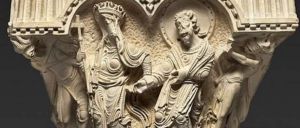
Snubbing for consent? No, there is a great destiny of Oneness
(Lk 12:1-7))
"Meanwhile, as the crowd had gathered in myriads, to trample on one another"... the Lord's criticism of the religious authorities who were putting on unbearable external theatrics appears profound, ruthless.
But Jesus' call against the hypocrisy or "theatricality" of official religion is "first to his disciples" (v.1).
Paraphrasing the encyclical Brothers All, the Master's call aims at immediately dropping "the trick of those stereotypes" with which we disguise our "ego, always concerned with image [so that there may emerge] that blessed common belonging from which we cannot shirk: belonging as brothers" [no.3].
In every age, Christ is opposed to those who play a role, lose their nature, and become artificial, using God to be feared and respected - imagining that he is grabbing the masses, the irresistible approval he craves.
Instead, the heart of the Most High is "boundless, capable of going beyond distances" [3] and any manipulation.
All humanity is devoted to the freedom of being; it proceeds with passion towards what it desires - spontaneously and simply. It does not move to chronicle external 'cultural' situations that do not make us find the Way.
Even in one's relationship with God, it is important not to stifle one's own inclinations: there is no dialogue of friendship or love, nor wonder and joy, without respect for one's own natural, multifaceted exceptionality.
Thus He does not like anyone copying (even today, e.g. the great saints or certain models of the ecclesial paradigm), losing his own essence and personality - and in them the call to his global, unrepeatable mission.
Conformism to the socially narcissistic, or devout and circumstantial paradigm, does not allow the soul and the world to be given the turning points that unlock and activate.
This is far beyond the options of conformist nomenclature - and would make us fly, even for rebirth from crisis.
In the gospel passage, people seem abandoned to themselves (v.1). The very attempt [out of fear] to queue up and imitate, attenuates and distorts us.
After all, the official leaders showed no interest in the realisation, the full joy of the little people: for them only a necessity of the audience, and everything else a nuisance.
Thus, in order to keep the masses on a leash, they gladly inoculated them with unnecessary turmoil of conscience.
Sometimes, in order to strike one and educate a hundred... here were violent restrictions and personal or social blackmail (v.4).
The Gospel of Mk identifies the "leaven of the Pharisees" with the ideology of power.
Lk, on the other hand, speaks of it to denounce the emphasis and inner duplicity of the captains of religious, community office; a combination that overturns both principles and appearances.
The evangelist fears the insidious attitude of incoherence, hidden by catwalks [albeit of a pious character] that enchant the simple. By trickery, they can in fact take root in the life and style of the leaders of the first communities of believers.
Women and men of Faith are in Christ already empowered and at the centre of their own essence; they must not bend to chase after artificial voices from the world outside: they do not bring Eternity.
Rather, they yearn to be transparent, clear, sincere.
A non-negotiable principle is not to hide the truth. This from one's own innate inclination - a character that comes before the secondary task assigned by others.
And the 'leaders' must encourage so that each one can find his or her way, giving a foretaste of the value, the destiny of the unrepeatable as a person - not being a great insider, with an entirely different purpose.
That is why, in churches resurrected in Christ, all the masks that cling to people with little energy, out of the loop, last in line, marginalised, misunderstood, 'inadequate', lonely, must fall.
No one has the power to kill another's soul.
Nor can one subjugate one's own - without losing the truly pure vocational seed, imbued with a priceless name; albeit in a pitiful, tiny guise.
The recovery of dignity, and the concern for the spiritual human advancement of the least, of everyone, flows into the ideal of the Kingdom with its doors wide open: the 'open fraternity' and frankness of which the aforementioned social encyclical speaks at length.
Conversely, "the 'every man for himself' will quickly turn into 'all against all', and this will be worse than a pandemic" (n.36).
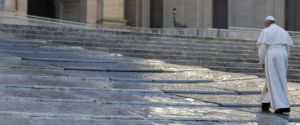
In short, it is necessary to remember that 'we are all in the same boat' [as Francis prayed in the deserted St. Peter's Square] including the distant, the weak and those considered inconvenient.
Even the scene of the spontaneous examples that Jesus draws from nature - an echo of the conciliatory life dreamt for us by the Father - introduces us to the Happiness that makes us aware of existing in all personal reality.Indeed, the Gospel passage shows the value of genuine, silent, unremarkable things, which nevertheless inhabit us - they are not 'shadows'. And we perceive them without effort or cerebral commitment.
In the time of epochal choices, of emergencies that seem to checkmate us but intend to make us less artificial - such awareness can overturn our judgement of substance, of the 'small' and the 'great'.
Indeed, for the adventure of love there is no accounting or clamour.
It is in God and in reality the 'place' for each of us without lacerations.
The hereafter is not imprecise.
One does not have to distort oneself for consent... least of all for the 'Heaven' that conquers death.
The destiny of oneness does not go to ruin: it is precious and dear, as it is in nature.
One must glimpse its Beauty, future and already present.
Once immediate gain [any social guarantee not pertaining to the value of littleness] is marginalised, there will no longer be any need to identify with the skeletons of established or fashionable thinking and manners.
Nor will it matter to place oneself above and in front: rather in the background, already rich and perfect, in the intimate sense of the fullness of being.
So we will not have to trample on each other (v.1)... even to meet Jesus.
Existing fully

All of us today are well aware that by the term "Heaven" we are not referring to somewhere in the universe, to a star or such like; no. We mean something far greater and far more difficult to define with our limited human conceptions. With this term "Heaven" we wish to say that God, the God who made himself close to us, does not abandon us in or after death but keeps a place for us and gives us eternity. We mean that in God there is room for us. To understand this reality a little better let us look at our own lives. We all experience that when people die they continue to exist, in a certain way, in the memory and heart of those who knew and loved them. We might say that a part of the person lives on in them but it resembles a "shadow" because this survival in the heart of their loved ones is destined to end. God, on the contrary, never passes away and we all exist by virtue of his love. We exist because he loves us, because he conceived of us and called us to life. We exist in God's thoughts and in God's love. We exist in the whole of our reality, not only in our "shadow". Our serenity, our hope and our peace are based precisely on this: in God, in his thoughts and in his love, it is not merely a "shadow" of ourselves that survives but rather we are preserved and ushered into eternity with the whole of our being in him, in his creator love. It is his Love that triumphs over death and gives us eternity and it is this love that we call "Heaven": God is so great that he also makes room for us. And Jesus the man, who at the same time is God, is the guarantee for us that the being-man and the being-God can exist and live, the one within the other, for eternity.
This means that not only a part of each one of us will continue to exist, as it were pulled to safety, while other parts fall into ruin; on the contrary it means that God knows and loves the whole of the human being, what we are. And God welcomes into his eternity what is developing and becoming now, in our life made up of suffering and love, of hope, joy and sorrow. The whole of man, the whole of his life, is taken by God and, purified in him, receives eternity. Dear Friends! I think this is a truth that should fill us with deep joy. Christianity does not proclaim merely some salvation of the soul in a vague afterlife in which all that is precious and dear to us in this world would be eliminated, but promises eternal life, "the life of the world to come". Nothing that is precious and dear to us will fall into ruin; rather, it will find fullness in God. Every hair of our head is counted, Jesus said one day (cf. Mt 10: 30). The definitive world will also be the fulfilment of this earth, as St Paul says: "Creation itself will be set free from its bondage to decay and obtain the glorious liberty of the children of God" (Rom 8: 21). Then we understand that Christianity imparts a strong hope in a bright future and paves the way to the realization of this future. We are called, precisely as Christians, to build this new world, to work so that, one day, it may become the "world of God", a world that will surpass all that we ourselves have been able to build.
[Pope Benedict, homily, 15 August 2010]
Personal unity and duality
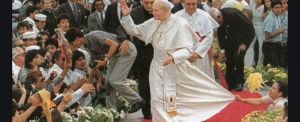
1. Man, created in the image of God, is both a physical and spiritual being, that is, a being who is connected to the external world in one respect and transcends it in another. As spirit as well as body, he is a person. This truth about man is the object of our faith, as is the biblical truth about his constitution in the 'image and likeness' of God; and it is a truth that has been constantly presented throughout the centuries by the Magisterium of the Church.
The truth about man has never ceased to be the subject of intellectual analysis throughout history, both in philosophy and in numerous other human sciences: in a word, the subject of anthropology.
2. That man is an incarnate spirit, if you will, a body informed by an immortal spirit, can already be gleaned in some way from the description of creation contained in the Book of Genesis and in particular from the "Yahwist" account, which makes use, so to speak, of "staging" and anthropomorphic images. We read that 'the Lord God formed man from the dust of the ground and breathed into his nostrils the breath of life, and man became a living being' (Gen 2:7). The rest of the biblical text allows us to understand clearly that man, created in this way, is distinct from the entire visible world, and in particular from the world of animals. The 'breath of life' enabled man to know these beings, to name them and to recognise himself as different from them (cf. Gen 2:18-20). Although the 'Yahwist' description does not mention the 'soul', it is easy to deduce that the life given to man in the act of creation is of such a nature as to transcend the simple bodily dimension (that of animals). It draws, beyond materiality, on the dimension of the spirit, in which lies the essential foundation of that 'image of God' that Genesis 1:27 sees in man.
3. Man is a unity: he is someone who is one with himself. But this unity contains a duality. Sacred Scripture presents both unity (the person) and duality (the soul and the body). Consider, for example, the Book of Sirach, which says: "The Lord created man from the earth and returns him to it again" and further on: "He gave them (men) discernment, tongue, eyes, ears and heart to reason. He filled them with doctrine and intelligence and also showed them good and evil" (Sir 17:1, 5-6).
Particularly significant from this point of view is Psalm 8 (Ps 8:5-7), which exalts the human masterpiece, addressing God with the following words: "What is man that you are mindful of him, the son of man that you care for him? Yet you have made him little less than the angels, you have crowned him with glory and honour; you have given him power over the works of your hands. You have put everything under his feet."
4. It is often emphasised that the biblical tradition highlights above all the personal unity of man, using the term "body" to designate the whole man (cf. Ps 145 (144):21; Jn 3:1; Is 66:23; Jn 1:14). This observation is correct. But this does not mean that the biblical tradition does not also present, sometimes very clearly, the duality of man. This tradition is reflected in the words of Christ: "Do not be afraid of those who kill the body but cannot kill the soul; rather, be afraid of the one who can destroy both soul and body in Gehenna" (Mt 10:28).
5. Biblical sources authorise us to see man as a personal unity and at the same time as a duality of soul and body: a concept that has found expression in the entire Tradition and teaching of the Church. This teaching has incorporated not only biblical sources, but also the theological interpretations that have been given to them, developing the analyses conducted by certain schools (Aristotle) of Greek philosophy.
It was a slow process of reflection, culminating mainly under the influence of St Thomas Aquinas - in the pronouncements of the Council of Vienne (1312), where the soul is called the 'form' of the body: 'forma corporis humani per se et essentialiter' (DS 902). The 'form', as the factor that determines the substance of being 'human', is spiritual in nature. And this spiritual 'form', the soul, is immortal. This is what the Fifth Lateran Council (1513) authoritatively recalled: the soul is immortal, unlike the body, which is subject to death (cf. DS 1440). At the same time, Thomistic theology emphasises that, by virtue of the substantial union of body and soul, the latter, even after death, does not cease to 'aspire' to be united with the body. This is confirmed by the revealed truth about the resurrection of the body.
6. Although the philosophical terminology used to express the unity and complexity (duality) of man is sometimes criticised, there is no doubt that the doctrine on the unity of the human person and, at the same time, on the spiritual-corporal duality of man is fully rooted in Sacred Scripture and Tradition. And although it is often expressed that man is 'the image of God' because of his soul, traditional doctrine does not exclude the belief that the body also participates, in its own way, in the dignity of the 'image of God', just as it participates in the dignity of the person.
7. In modern times, a particular difficulty against the revealed doctrine concerning the creation of man as a being composed of soul and body has been raised by the theory of evolution. Many scholars of the natural sciences who, using their own methods, study the problem of the beginning of human life on earth, maintain—against other colleagues—not only the existence of a link between man and the whole of nature, but also the derivation of the higher animal species. This problem, which has occupied scientists since the last century, involves broad sections of public opinion. The response of the Magisterium was offered in the encyclical Humani generis by Pius XII in 1950. In it we read: "The Magisterium of the Church has nothing against the doctrine of 'evolutionism', insofar as it investigates the origin of the human body from pre-existing and living matter - Catholic faith in fact obliges us to hold firmly that souls were created immediately by God - being the subject of investigation and discussion by experts . . ." (DS 3896).
It can therefore be said that, from the point of view of the doctrine of the faith, there is no difficulty in explaining the origin of man, as a body, through the hypothesis of evolutionism. However, it must be added that the hypothesis proposes only a probability, not a scientific certainty. The doctrine of the faith, on the other hand, invariably affirms that the spiritual soul of man is created directly by God. That is, according to the hypothesis mentioned above, it is possible that the human body, following the order imprinted by the Creator in the energies of life, was gradually prepared in the forms of earlier living beings. The human soul, however, on which the humanity of man ultimately depends, being spiritual, cannot have emerged from matter.
8. A beautiful synthesis of the above creation can be found in the Second Vatican Council: 'The unity of soul and body,' it says, 'man synthesises in himself, by his very bodily condition, the elements of the material world, so that through him they reach their summit' (Gaudium et Spes, 14). And further on: "Man, however, is not mistaken in recognising himself as superior to bodily things and considering himself more than just a particle of nature... In fact, in his interiority, he transcends the universe" (Gaudium et Spes, 14). Here, then, is how the same truth about the unity and duality (complexity) of human nature can be expressed in language closer to the contemporary mindset.
[Pope John Paul II, General Audience, 16 April 1986]
The fool in the Bible, the one who does not want to learn from the experience of visible things, that nothing lasts for ever but that all things pass away, youth and physical strength, amenities and important roles. Making one's life depend on such an ephemeral reality is therefore foolishness (Pope Benedict)
L’uomo stolto nella Bibbia è colui che non vuole rendersi conto, dall’esperienza delle cose visibili, che nulla dura per sempre, ma tutto passa: la giovinezza come la forza fisica, le comodità come i ruoli di potere. Far dipendere la propria vita da realtà così passeggere è, dunque, stoltezza (Papa Benedetto)
As sometimes happens in the Gospel, faced with the trap set by his enemies, Jesus, with his response, rises above the contingent controversy and goes far beyond the particular and mutually divergent positions (Pope John Paul II)
Come talora accade nel Vangelo, di fronte al tranello mossogli dai suoi nemici, Gesù, con la sua risposta, s’innalza al di sopra della polemica contingente e va ben oltre le posizioni particolari e tra loro divergenti (Papa Giovanni Paolo II)
And blasphemy, the sin against the Holy Spirit, is the one unforgivable sin — as Jesus said — because it comes from closing the heart to God’s mercy which acts in Jesus (Pope Francis)
E la bestemmia, il peccato contro lo Spirito Santo, è l’unico peccato imperdonabile – così dice Gesù –, perché parte da una chiusura del cuore alla misericordia di Dio che agisce in Gesù (Papa Francesco)
The great thinker Romano Guardini wrote that the Lord “is always close, being at the root of our being. Yet we must experience our relationship with God between the poles of distance and closeness. By closeness we are strengthened, by distance we are put to the test” (Pope Benedict)
Il grande pensatore Romano Guardini scrive che il Signore “è sempre vicino, essendo alla radice del nostro essere. Tuttavia, dobbiamo sperimentare il nostro rapporto con Dio tra i poli della lontananza e della vicinanza. Dalla vicinanza siamo fortificati, dalla lontananza messi alla prova” (Papa Benedetto)
The present-day mentality, more perhaps than that of people in the past, seems opposed to a God of mercy, and in fact tends to exclude from life and to remove from the human heart the very idea of mercy (Pope John Paul II)
La mentalità contemporanea, forse più di quella dell'uomo del passato, sembra opporsi al Dio di misericordia e tende altresì ad emarginare dalla vita e a distogliere dal cuore umano l'idea stessa della misericordia (Papa Giovanni Paolo II)
«Religion of appearance» or «road of humility»? (Pope Francis)
«Religione dell’apparire» o «strada dell’umiltà»? (Papa Francesco)
In the crucified Jesus a kind of transformation and concentration of the signs occurs: he himself is the “sign of God”, especially in the mystery of his Death and Resurrection (Pope John Paul II)
In Gesù crocifisso avviene come una trasformazione e concentrazione dei segni: è Lui stesso il "segno di Dio", soprattutto nel mistero della sua morte e resurrezione (Papa Giovanni Paolo II)
However, the king was not discouraged and sent his servants out to seek other guests to fill his banquet hall. Thus the aspect of the refusal of those initially invited caused the invitation to be extended to all [Pope Benedict]
Il re però non si scoraggia e invia i suoi servi a cercare altri commensali per riempire la sala del suo banchetto. Così il rifiuto dei primi ha come effetto l’estensione dell’invito a tutti [Papa Benedetto]








duevie.art
don Giuseppe Nespeca
Tel. 333-1329741
Disclaimer
Questo blog non rappresenta una testata giornalistica in quanto viene aggiornato senza alcuna periodicità. Non può pertanto considerarsi un prodotto editoriale ai sensi della legge N°62 del 07/03/2001.
Le immagini sono tratte da internet, ma se il loro uso violasse diritti d'autore, lo si comunichi all'autore del blog che provvederà alla loro pronta rimozione.
L'autore dichiara di non essere responsabile dei commenti lasciati nei post. Eventuali commenti dei lettori, lesivi dell'immagine o dell'onorabilità di persone terze, il cui contenuto fosse ritenuto non idoneo alla pubblicazione verranno insindacabilmente rimossi.