


don Giuseppe Nespeca
Giuseppe Nespeca è architetto e sacerdote. Cultore della Sacra scrittura è autore della raccolta "Due Fuochi due Vie - Religione e Fede, Vangeli e Tao"; coautore del libro "Dialogo e Solstizio".
Feeling that the Father may abandon them
Jesus indicates as the third type of test that the Apostles will have to face, the sensation, which some may feel, that God himself has abandoned them, remaining distant and silent. Here too, Jesus exhorts them not to fear, because even while experiencing these and other pitfalls, the life of disciples lies firmly in the hands of God who loves us and looks after us. They are like three temptations: to sugar-coat the Gospel, to water it down; second: persecution; and third: the feeling that God has left us alone. Even Jesus suffered this trial in the Garden of Olives and on the Cross: “Father, why have you forsaken me?”, Jesus asks. At times one feels this spiritual barrenness; we must not fear it. The Father takes care of us, because our value is great in His eyes. What matters is frankness, the courage of our witness, our witness of faith: “recognizing Jesus before men” and going forth doing good.
May Mary Most Holy, model of trust and abandonment in God in the hour of adversity and danger, help us never to surrender to despair, but rather always to entrust ourselves to Him and to his grace, because God’s grace is ever more powerful than evil.
[Pope Francis, Angelus, 21 June 2020]
Alas, for the blood of the Witnesses
The true upper dimension
(Lk 11:47-54)
«I will send them prophets and apostles, and they will kill and persecute» (v.49).
Living word in every age, Jesus regrets the confusing professionals of judgment and impediment, who unfortunately also relived in his first communities (v.52).
The “learned” in ancient religion closed the doors of the “realm” in which God reigns, considering it property - all identified with their perspectives [and lust for prestige].
Out of habit of feeling revered, the "experts" and "pure" really believed they had exclusive possession of the codes of the Kingdom, old and new. As a result, they felt entitled to have univocal influence on souls.
Everything almost as ancient times. Despite the Lord, "ductees" continued to proclaim themselves leaders of the people.
They willingly persecuted those who tried to sift through their message - manipulative, exclusive, based on the subjection of the most motivated sensitive hearts.
Instead of offering a deep understanding, the (few) first of the class did not bring any significant light to the many in need who were waiting for help.
Yet the “directors” did nothing but reassure: everything goes smoothly and the problem is the "differents" - who had not yet "understood".
Victims were collateral damage: foreseeable sufferings.
Useless travails?
The Lord, the great enemy of the leaders of conventional theology, questioned not only doctrine, but the entire house of cards and system of mutual positions, titles, connections, and privileges.
Therefore: Jesus either becomes our hostage or he must not get away with it (vv.53-54).
Fathers kill the prophets, godsons sweeten crime - as if nothing had happened [below, approving the misdeed]. Also because the deceased no longer speaks, nor does anyone bother.
A marked fate, that of critical witnesses - because they do not even know how to devise escape routes. They have no experience of it, they never did.
In this way, the list of martyrs «from the blood of Abel» remains open, unfortunately.
But - due to the perennial insipidity of power - their path leads sisters and brothers to life without limits, to the higher and exalting dimension of the Encounter that matters.
Our nature is to be ‘sons’, naive and innocent. We cannot bring ourselves to deny who we are, always calculating or adapting to the situation of the forces at play.
In every external condition, our task remains to make Christ the Lamb present, and to make people think.
The pyramids that supplant the authentic Messiah with that of unilateral banners feel threatened by the demands of the Gospel.
To such partnerships, closed in partial truths - defended with violence and subterfuge - will be asked account for the sacrifice of all the even minimal prophets and shaky who collected the Testament.
We will not lose motivation. We will continue to touch the flesh of Christ.
[Thursday 28th wk. in O.T. October 15, 2026]
Alas for the blood of the Witnesses
The true higher dimension
(Lk 11:47-54)
"I will send them prophets and apostles, and they will kill and persecute them" (v. 49).
A living word for all times, Jesus laments the confusing professionals of judgement and impediment, who unfortunately also live on in his communities:
"Woe to you, teachers of the law, who have taken away the key of knowledge! You yourselves have not entered, and you have hindered those who were entering" (v. 52).
The experts of the ancient religion closed the doors to the realm where God reigns.
First the chosen people, then the Church of the elect, who already made it opaque, considering it their property - identified entirely with their perspectives [and prestige, as well as revenues].
Accustomed to being revered, the 'experts' and 'pure' truly believed that they had exclusive possession of the codes of the Kingdom, old and new. As a result, they felt entitled to have sole influence over souls.
Everything was almost as it had been before the Lord. The learned continued to proclaim themselves guides of the people.
They willingly persecuted those who attempted to scrutinise their own message – manipulative, exclusive, based on the subjugation of the most motivated sensitive hearts.
Instead of offering deep understanding, the top of the class brought no meaningful light to the many needy people who, on the contrary, were waiting for them to help them and learn to face the Truth.
The astute expectations and consortial world of the directors began once again to be linked solely to the fear that someone might grow in awareness and overshadow the ridiculous prestige of ageing, deviant guides.
So they did nothing but reassure: everything is going smoothly and the problem is the 'different' ones - who still hadn't 'understood'. The victims were collateral damage: predictable suffering.
Useless troubles?
Frankly, the 'reflection' that false leaders still peddle today is so clouded and imperfect that it is child's play to understand its contradictions and remove all obstacles to effective proclamation, catechesis, animation and pastoral care, aimed at the interests of the people and not at the ideas and cunning of established congregations.
The Lord, the great enemy of the leaders of habitual theology, questioned not only doctrine, but the entire house of cards that was the religious system [mutual positions, titles, connections, and benefices].
So it was decided: Jesus must either become our hostage or he must not get away with it (vv. 53-54).
The accredited monopoly translated into imposition, which left no room for ideas and innovations that would qualify those destined for the rear.
Therefore, the leaders found themselves 'forced' to expand the false teachings drawn from religions: here again was an almighty Eternal One, lawgiver and judge.
Not the Creator, lover of the exuberance and variety of life; not the Liberator of intelligence and breath of the people.
In a thousand ways and festivals, those who considered themselves the only interpreters of the things of God - for their own gain - were already falsifying the image of the Church and hindering the possibility of recognising Jesus alive.
In doing so, they killed the desire of the most motivated to embark on a new and personal Exodus, in search of the divine-human fullness and lovability that emancipated everyone, not just the cliques.
Fathers kill prophets, godchildren sugarcoat the crime – as if nothing had happened [secretly approving of the misdeed].
This is also because the deceased no longer speaks, nor does he bother anyone, least of all his silent accomplices.
The fate of critical witnesses is sealed - because they cannot even devise escape routes. They have no experience of this, they have never done it before.
In this way, the list of martyrs 'from the blood of Abel' remains open, unfortunately. But - perennial ignorance of power - their path leads their brothers to a life without limits, to the higher and exhilarating dimension of the Encounter that matters.
Our nature is to be children, naive and innocent. We cannot bring ourselves to deny ourselves, making calculations or adapting to the situation of the forces at play.
In every external condition, our task remains to make Christ the Lamb present and to make people think.
Pope Francis emphasises and reiterates (Fratelli Tutti): as Christians, we cannot hide the fact that 'if the music of the Gospel ceases to resonate in our hearts, we will have lost the joy that comes from compassion, the tenderness that comes from trust, the capacity for reconciliation that finds its source in knowing that we are always forgiven and sent forth. If the music of the Gospel ceases to play in our homes, in our squares, in our workplaces, in politics and in the economy, we will have silenced the melody that inspired us to fight for the dignity of every man and woman" (n.277).The pyramids that supplant the authentic Messiah with that of unilateral banners feel threatened by the demands of the Gospel.
Such alliances, closed in partial truths - defended with violence and subterfuge - will be called to account for the sacrifice of all the prophets and lambs, however small, who have gathered the Testament.
We will not lose our motivation. We will continue to touch the flesh of Christ.
To internalise and live the message:
What help or difficulties have you encountered, even within the Church, in proclaiming and bearing witness to the profound Truth of the Gospels?
Values and emotional independence
Placing oneself in the events of persecution
(Lk 21:12-19)
The course of history is a time in which God composes the confluence of our freedom and circumstances.
In these folds there is often a vector of life, an essential aspect, a definitive fate, which escapes us.
But to the discerning eye of the person of Faith, even abuse and martyrdom are a gift.
To learn the important lessons of life, every day the believer ventures into what he or she is afraid to do, overcoming fears.
The gratuitous, spousal love received places us in a condition of reciprocity, of an active desire to unite our lives to Christ - albeit in the meagerness of our responses.
If, on the other hand, we continue to complain about failures, dangers and calamities, everyone will see us as ordinary women and men - and everything will end at this level.
We will not be on the other side.
At best, we will try to escape the harshness, or we will end up looking for allies of circumstance (vv. 14-15).
Luke intends to help his communities to challenge worldly logic and to place themselves fervently in the events of persecution.
Social oppression is not inevitable, but rather an opportunity for mission; a place of high Eucharistic witness (v. 13).
The persecuted do not need external crutches, nor should they live in the anguish of collapse.
They have the task of being signs of the Kingdom of God, which gradually brings those who are far away and even the usurpers themselves to a different awareness.
No one is the arbiter of reality, and all are twigs subject to upheaval, but in the humanising condition of the apostles, an emotional independence shines through.
This is due to the intimate, living sense of a Presence and the interpretation of external events as the exceptional action of the Father revealing himself.
In this malleable energetic magma, unique paths emerge, unprecedented opportunities for growth... even in adversity.
An attitude without excuses or rock-solid certainties: with the sole conviction that everything will be put back into play [not through effort: simply by shifting one's gaze].
Sacred and profane time coincide in a fervent Covenant, which nestles and nurtures fruit even in moments of travail and paradox.
Here, the only resource needed is the spiritual strength to go all the way... into the contradictions of the other side.
Thus, even the family or 'clan' to which one belongs must be led to a different world of beliefs, not without painful conflicts (v. 16).
The Torah itself required the denunciation of those unfaithful to the religion of their fathers - even close relatives - to the point of putting them to death (Deut. 13:7-12) [in fact, only to designate the seriousness of that type of transgression].
The Announcement could only cause extreme divisions, and on fundamental issues such as success or progress in this life - the vision of a new world, of the utopia of other people's needs.
Everything will seem to conspire and mock our ideal (v. 17).
The reference to the Name alludes to the historical story of Jesus of Nazareth, with his burden not only of ideal and explicit goodness, but also of denunciation against the official institution and the false guides who had seized the God of the Exodus.
Despite interference, being misunderstood, slandered, ridiculed, blackmailed and hated... anchored to Christ, we will experience that the stages of history and life proceed towards Hope.
God's 'protection' does not preserve us from dark times or from suffering harm, but it guarantees that nothing will be lost, not even a hair (v. 18).
This spontaneous example that Jesus draws from nature—an echo of the conciliatory life dreamed of for us by the Father—introduces us to the Happiness that makes us aware of our existence in all our personal reality.
The expression shows the value of things that are genuine, silent, unspectacular, but which inhabit us - they are not 'shadows'. And we perceive them without effort or mental exertion.
In a time of momentous choices, of emergencies that seem to put everything in check—but want to make us less artificial—such awareness can overturn our judgement of substance, of the small and the great.
In fact, for the adventure of love, there is no accounting or clamour.
It is in the Lord and in the insidious or summary reality that the 'place' for each of us lies. Not without lacerations.Yet we draw spiritual energy from the knowledge of Christ, from the sense of deep connection with Him and with reality, even when it is minute and varied, or fearsome - always personal (v.18).
And (precisely) the afterlife is not vague.
We must not distort ourselves to gain approval... least of all for the 'Heaven' that conquers death.
The destiny of uniqueness is not ruined: it is precious and dear, as it is in nature.
We must glimpse its Beauty, future and already present.
Nor will it matter to place oneself above and in front: rather, in the background, already rich and perfect, in the intimate sense of the fullness of being.
In this way, we will not have to trample on each other (Lk 12:1)... even to meet Jesus.
'We are utterly lost if we lack this particular individuality, the only thing we can truly call our own - and whose loss is also a loss for the whole world. It is also precious because it is not universal'.
(Rabindranath Tagore)
Jesus warns us: we cannot count on unassailable friendships, nor on human powers arrayed in defence of the earthly fabric.
Even those we believed to be close to us will scrutinise us with suspicion: the price of truth always lies in choosing the opposite of the world of lies [even sacred, outdated or ephemeral] that are all united against it.
Our story will not be like an easy novel with a happy ending.
But we will have the opportunity to bear witness in the present to the most genuine ancient roots: that at every moment God calls, manifests himself - and what seems like failure becomes Food and the source of Life.
Stubborn only in the change of proportions, between stripping away and elevation. In the contrast between the criteria and the very foundations of thinking.
To internalise and live the message:
What kind of reading do you do, and how do you place yourself in the events of persecution?
Are you aware that obstacles do not come from despair, but rather to free you from being trapped in stagnant cultural patterns (which are not your own)?
On the other side of the world
Christians must therefore always be found on the 'other side' of the world, the one chosen by God: not persecutors, but persecuted; not arrogant, but meek; not snake oil salesmen, but submissive to the truth; not impostors, but honest.
This fidelity to the style of Jesus – which is a style of hope – until death, will be called by the early Christians with a beautiful name: 'martyrdom', which means 'witness'. There were many other possibilities offered by the vocabulary: it could have been called heroism, self-denial, self-sacrifice. Instead, the early Christians called it by a name that smacks of discipleship. Martyrs do not live for themselves, they do not fight to assert their own ideas, and they accept that they must die only for fidelity to the Gospel. Martyrdom is not even the supreme ideal of Christian life, because above it there is charity, that is, love for God and neighbour. The Apostle Paul says this very well in his hymn to charity, understood as love for God and neighbour. The Apostle Paul says this very well in his hymn to charity: 'If I give away all my possessions, and if I deliver my body to be burned, but have not charity, I gain nothing' (1 Cor 13:3). Christians are repulsed by the idea that suicide bombers can be called "martyrs": there is nothing in their end that can be compared to the attitude of the children of God.
Sometimes, when we read the stories of so many martyrs of yesterday and today – who are more numerous than the martyrs of early times – we are amazed at the fortitude with which they faced their trials. This fortitude is a sign of the great hope that animated them: the certain hope that nothing and no one could separate them from the love of God given to us in Jesus Christ (cf. Rom 8:38-39).
May God always give us the strength to be his witnesses. May he grant us to live Christian hope, especially in the hidden martyrdom of doing our daily duties well and with love. Thank you.
(Pope Francis, General Audience, 28 June 2017)
The Blood Theme

The theme of blood, linked to that of the Paschal Lamb, is of primary importance in Sacred Scripture. In the Old Testament, aspersion with the blood of sacrificed animals represented and established the covenant between God and his People, as we read in the Book of Exodus: "and Moses took the blood and threw it upon the people, and said, "Behold the blood of the covenant which the Lord has made with you in accordance with all these words' " (Ex 24: 8).
Jesus refers explicitly to this formula during the Last Supper, when, offering the cup to the disciples, he says: "This is my blood of the covenant, which is poured out for many for the forgiveness of sins" (Mt 26: 28). And effectively, from the scourging to the piercing of his side after his death on the Cross, Christ poured out all his Blood as the true Lamb sacrificed for the redemption of all. The salvific value of his Blood is expressly stated in many passages of the New Testament. It suffices to mention, in this Year for Priests, the beautiful words of the Letter to the Hebrews: "Christ... entered once for all into the Holy Place, taking not the blood of goats and calves but his own Blood, thus securing an eternal redemption. For if the sprinkling of defiled persons with the blood of goats and bulls and with the ashes of a heifer sanctifies for the purification of the flesh, how much more shall the Blood of Christ, who through the eternal Spirit offered himself without blemish to God, purify your conscience from dead works to serve the living God" (9: 11-14).
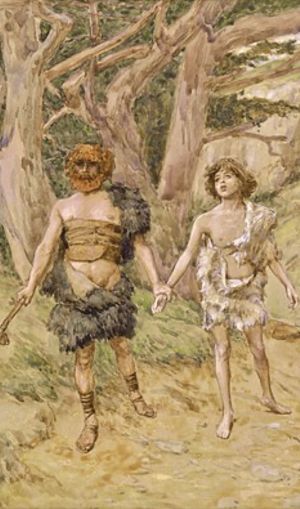
Dear Brothers, it is written in Genesis that the blood of Abel, killed by his brother Caine, cries to God from the earth (cf. 4: 10). And, unfortunately, today as in the past, this cry never ceases, as human blood continues to be shed because of violence, injustice and hatred. When will human beings learn that life is sacred and belongs to God alone? When will they understand that we are all brothers and sisters? To the cry which rises from so many parts of the earth for the blood that is spilled, God responds with the Blood of his Son, who gave his life for us. Christ did not respond to evil with evil but with goodness, with his infinite love. The Blood of Christ is the pledge of God's faithful love for humanity. Every human being, even in conditions of extreme moral wretchedness can say, fixing his eyes on the wounds of the Crucified One: "God has not abandoned me, he loves me, he has given his life for me", and thus rediscover hope. May the Virgin Mary, who at the foot of the Cross together with the Apostle John received the testament of Jesus' Blood, help us to rediscover the inestimable richness of this grace and to feel deep and everlasting gratitude for it.
[Pope Benedict, Angelus 5 July 2009]
Abel's blood and the culture of life
"Cain rose up against his brother Abel, and killed him" (Gen 4:8): the roots of violence against life
7. "God did not make death, and he does not delight in the death of the living. For he has created all things that they might exist ... God created man for incorruption, and made him in the image of his own eternity, but through the devil's envy death entered the world, and those who belong to his party experience it" (Wis 1:13-14; 2:23-24).
The Gospel of life, proclaimed in the beginning when man was created in the image of God for a destiny of full and perfect life (cf. Gen 2:7; Wis 9:2-3), is contradicted by the painful experience of death which enters the world and casts its shadow of meaninglessness over man's entire existence. Death came into the world as a result of the devil's envy (cf. Gen 3:1,4-5) and the sin of our first parents (cf. Gen 2:17, 3:17-19). And death entered it in a violent way, through the killing of Abel by his brother Cain: "And when they were in the field, Cain rose up against his brother Abel, and killed him" (Gen 4:8).
This first murder is presented with singular eloquence in a page of the Book of Genesis which has universal significance: it is a page rewritten daily, with inexorable and degrading frequency, in the book of human history.
Let us re-read together this biblical account which, despite its archaic structure and its extreme simplicity, has much to teach us.
"Now Abel was a keeper of sheep, and Cain a tiller of the ground. In the course of time Cain brought to the Lord an offering of the fruit of the ground, and Abel brought of the firstlings of his flock and of their fat portions. And the Lord had regard for Abel and his offering, but for Cain and his offering he had not regard. So Cain was very angry, and his countenance fell. The Lord said to Cain, ?Why are you angry and why has your countenance fallen? If you do well, will you not be accepted? And if you do not do well, sin is crouching at the door; its desire is for you, but you must master it'.
"Cain said to Abel his brother, ?Let us go out to the field'. And when they were in the field, Cain rose up against his brother Abel, and killed him. Then the Lord said to Cain, ?Where is Abel your brother?' He said, ?I do not know; am I my brother's keeper?' And the Lord said, ?What have you done? The voice of your brother's blood is crying to me from the ground. And now you are cursed from the ground, which has opened its mouth to receive your brother's blood from your hand. When you till the ground, it shall no longer yield to you its strength; you shall be a fugitive and a wanderer on the earth'. Cain said to the Lord, ?My punishment is greater than I can bear. Behold, you have driven me this day away from the ground; and from your face I shall be hidden; and I shall be a fugitive and a wanderer on the earth, and whoever finds me will slay me'. Then the Lord said to him, ?Not so! If any one slays Cain, vengeance shall be taken on him sevenfold'. And the Lord put a mark on Cain, lest any who came upon him should kill him. Then Cain went away from the presence of the Lord, and dwelt in the land of Nod, east of Eden" (Gen 4:2-16).
8. Cain was "very angry" and his countenance "fell" because "the Lord had regard for Abel and his offering" (Gen 4:4-5). The biblical text does not reveal the reason why God prefers Abel's sacrifice to Cain's. It clearly shows however that God, although preferring Abel's gift, does not interrupt his dialogue with Cain. He admonishes him, reminding him of his freedom in the face of evil: man is in no way predestined to evil. Certainly, like Adam, he is tempted by the malevolent force of sin which, like a wild beast, lies in wait at the door of his heart, ready to leap on its prey. But Cain remains free in the face of sin. He can and must overcome it: "Its desire is for you, but you must master it" (Gen 4:7).
Envy and anger have the upper hand over the Lord's warning, and so Cain attacks his own brother and kills him. As we read in the Catechism of the Catholic Church: "In the account of Abel's murder by his brother Cain, Scripture reveals the presence of anger and envy in man, consequences of original sin, from the beginning of human history. Man has become the enemy of his fellow man".10
Brother kills brother. Like the first fratricide, every murder is a violation of the "spiritual" kinship uniting mankind in one great family, 11 in which all share the same fundamental good: equal personal dignity. Not infrequently the kinship "of flesh and blood" is also violated; for example when threats to life arise within the relationship between parents and children, such as happens in abortion or when, in the wider context of family or kinship, euthanasia is encouraged or practised.
At the root of every act of violence against one's neighbour there is a concession to the "thinking" of the evil one, the one who "was a murderer from the beginning" (Jn 8:44). As the Apostle John reminds us: "For this is the message which you have heard from the beginning, that we should love one another, and not be like Cain who was of the evil one and murdered his brother" (1 Jn 3:11-12). Cain's killing of his brother at the very dawn of history is thus a sad witness of how evil spreads with amazing speed: man's revolt against God in the earthly paradise is followed by the deadly combat of man against man.
After the crime, God intervenes to avenge the one killed. Before God, who asks him about the fate of Abel, Cain, instead of showing remorse and apologizing, arrogantly eludes the question: "I do not know; am I my brother's keeper?" (Gen 4:9). "I do not know": Cain tries to cover up his crime with a lie. This was and still is the case, when all kinds of ideologies try to justify and disguise the most atrocious crimes against human beings. "Am I my brother's keeper?": Cain does not wish to think about his brother and refuses to accept the responsibility which every person has towards others. We cannot but think of today's tendency for people to refuse to accept responsibility for their brothers and sisters. Symptoms of this trend include the lack of solidarity towards society's weakest members-such as the elderly, the infirm, immigrants, children- and the indifference frequently found in relations between the world's peoples even when basic values such as survival, freedom and peace are involved.
9. But God cannot leave the crime unpunished: from the ground on which it has been spilt, the blood of the one murdered demands that God should render justice (cf. Gen 37:26; Is 26:21; Ez 24:7-8). From this text the Church has taken the name of the "sins which cry to God for justice", and, first among them, she has included wilful murder. 12 For the Jewish people, as for many peoples of antiquity, blood is the source of life. Indeed "the blood is the life" (Dt 12:23), and life, especially human life, belongs only to God: for this reason whoever attacks human life, in some way attacks God himself.
Cain is cursed by God and also by the earth, which will deny him its fruit (cf. Gen 4:11-12). He is punished: he will live in the wilderness and the desert. Murderous violence profoundly changes man's environment. From being the "garden of Eden" (Gen 2:15), a place of plenty, of harmonious interpersonal relationships and of friendship with God, the earth becomes "the land of Nod" (Gen 4:16), a place of scarcity, loneliness and separation from God. Cain will be "a fugitive and a wanderer on the earth" (Gen 4:14): uncertainty and restlessness will follow him forever.
And yet God, who is always merciful even when he punishes, "put a mark on Cain, lest any who came upon him should kill him" (Gen 4:15). He thus gave him a distinctive sign, not to condemn him to the hatred of others, but to protect and defend him from those wishing to kill him, even out of a desire to avenge Abel's death. Not even a murderer loses his personal dignity, and God himself pledges to guarantee this. And it is pre- cisely here that the paradoxical mystery of the merciful justice of God is shown forth. As Saint Ambrose writes: "Once the crime is admitted at the very inception of this sinful act of parricide, then the divine law of God's mercy should be immediately extended. If punishment is forthwith inflicted on the accused, then men in the exercise of justice would in no way observe patience and moderation, but would straightaway condemn the defendant to punishment. ... God drove Cain out of his presence and sent him into exile far away from his native land, so that he passed from a life of human kindness to one which was more akin to the rude existence of a wild beast. God, who preferred the correction rather than the death of a sinner, did not desire that a homicide be punished by the exaction of another act of homicide".13
"What have you done?" (Gen 4:10): the eclipse of the value of life
10. The Lord said to Cain: "What have you done? The voice of your brother's blood is crying to me from the ground" (Gen 4:10).The voice of the blood shed by men continues to cry out, from generation to generation, in ever new and different ways.
The Lord's question: "What have you done?", which Cain cannot escape, is addressed also to the people of today, to make them realize the extent and gravity of the attacks against life which continue to mark human history; to make them discover what causes these attacks and feeds them; and to make them ponder seriously the consequences which derive from these attacks for the existence of individuals and peoples.
Some threats come from nature itself, but they are made worse by the culpable indifference and negligence of those who could in some cases remedy them. Others are the result of situations of violence, hatred and conflicting interests, which lead people to attack others through murder, war, slaughter and genocide.
And how can we fail to consider the violence against life done to millions of human beings, especially children, who are forced into poverty, malnutrition and hunger because of an unjust distribution of resources between peoples and between social classes? And what of the violence inherent not only in wars as such but in the scandalous arms trade, which spawns the many armed conflicts which stain our world with blood? What of the spreading of death caused by reckless tampering with the world's ecological balance, by the criminal spread of drugs, or by the promotion of certain kinds of sexual activity which, besides being morally unacceptable, also involve grave risks to life? It is impossible to catalogue completely the vast array of threats to human life, so many are the forms, whether explicit or hidden, in which they appear today!
11. Here though we shall concentrate particular attention on another category of attacks, affecting life in its earliest and in its final stages, attacks which present new characteristics with respect to the past and which raise questions of extraordinary seriousness. It is not only that in generalized opinion these attacks tend no longer to be considered as "crimes"; paradoxically they assume the nature of "rights", to the point that the State is called upon to give them legal recognition and to make them available through the free services of health-care personnel. Such attacks strike human life at the time of its greatest frailty, when it lacks any means of self-defence. Even more serious is the fact that, most often, those attacks are carried out in the very heart of and with the complicity of the family-the family which by its nature is called to be the "sanctuary of life".
How did such a situation come about? Many different factors have to be taken into account. In the background there is the profound crisis of culture, which generates scepticism in relation to the very foundations of knowledge and ethics, and which makes it increasingly difficult to grasp clearly the meaning of what man is, the meaning of his rights and his duties. Then there are all kinds of existential and interpersonal difficulties, made worse by the complexity of a society in which individuals, couples and families are often left alone with their problems. There are situations of acute poverty, anxiety or frustration in which the struggle to make ends meet, the presence of unbearable pain, or instances of violence, especially against women, make the choice to defend and promote life so demanding as sometimes to reach the point of heroism.
All this explains, at least in part, how the value of life can today undergo a kind of "eclipse", even though conscience does not cease to point to it as a sacred and inviolable value, as is evident in the tendency to disguise certain crimes against life in its early or final stages by using innocuous medical terms which distract attention from the fact that what is involved is the right to life of an actual human person.
12. In fact, while the climate of widespread moral uncertainty can in some way be explained by the multiplicity and gravity of today's social problems, and these can sometimes mitigate the subjective responsibility of individuals, it is no less true that we are confronted by an even larger reality, which can be described as a veritable structure of sin. This reality is characterized by the emergence of a culture which denies solidarity and in many cases takes the form of a veritable "culture of death". This culture is actively fostered by powerful cultural, economic and political currents which encourage an idea of society excessively concerned with efficiency. Looking at the situation from this point of view, it is possible to speak in a certain sense of a war of the powerful against the weak: a life which would require greater acceptance, love and care is considered useless, or held to be an intolerable burden, and is therefore rejected in one way or another. A person who, because of illness, handicap or, more simply, just by existing, compromises the well-being or life-style of those who are more favoured tends to be looked upon as an enemy to be resisted or eliminated. In this way a kind of "conspiracy against life" is unleashed. This conspiracy involves not only individuals in their personal, family or group relationships, but goes far beyond, to the point of damaging and distorting, at the international level, relations between peoples and States.
13. In order to facilitate the spread of abortion, enormous sums of money have been invested and continue to be invested in the production of pharmaceutical products which make it possible to kill the fetus in the mother's womb without recourse to medical assistance. On this point, scientific research itself seems to be almost exclusively preoccupied with developing products which are ever more simple and effective in suppressing life and which at the same time are capable of removing abortion from any kind of control or social responsibility.
It is frequently asserted that contraception, if made safe and available to all, is the most effective remedy against abortion. The Catholic Church is then accused of actually promoting abortion, because she obstinately continues to teach the moral unlawfulness of contraception. When looked at carefully, this objection is clearly unfounded. It may be that many people use contraception with a view to excluding the subsequent temptation of abortion. But the negative values inherent in the "contraceptive mentality"-which is very different from responsible parenthood, lived in respect for the full truth of the conjugal act-are such that they in fact strengthen this temptation when an unwanted life is conceived. Indeed, the pro- abortion culture is especially strong precisely where the Church's teaching on contraception is rejected. Certainly, from the moral point of view contraception and abortion arespecifically different evils: the former contradicts the full truth of the sexual act as the proper expression of conjugal love, while the latter destroys the life of a human being; the former is opposed to the virtue of chastity in marriage, the latter is opposed to the virtue of justice and directly violates the divine commandment "You shall not kill".
But despite their differences of nature and moral gravity, contraception and abortion are often closely connected, as fruits of the same tree. It is true that in many cases contraception and even abortion are practised under the pressure of real- life difficulties, which nonetheless can never exonerate from striving to observe God's law fully. Still, in very many other instances such practices are rooted in a hedonistic mentality unwilling to accept responsibility in matters of sexuality, and they imply a self-centered concept of freedom, which regards procreation as an obstacle to personal fulfilment. The life which could result from a sexual encounter thus becomes an enemy to be avoided at all costs, and abortion becomes the only possible decisive response to failed contraception.
The close connection which exists, in mentality, between the practice of contraception and that of abortion is becoming increasingly obvious. It is being demonstrated in an alarming way by the development of chemical products, intrauterine devices and vaccines which, distributed with the same ease as contraceptives, really act as abortifacients in the very early stages of the development of the life of the new human being.
14. The various techniques of artificial reproduction, which would seem to be at the service of life and which are frequently used with this intention, actually open the door to new threats against life. Apart from the fact that they are morally unacceptable, since they separate procreation from the fully human context of the conjugal act, 14these techniques have a high rate of failure: not just failure in relation to fertilization but with regard to the subsequent development of the embryo, which is exposed to the risk of death, generally within a very short space of time. Furthermore, the number of embryos produced is often greater than that needed for implantation in the woman's womb, and these so-called "spare embryos" are then destroyed or used for research which, under the pretext of scientific or medical progress, in fact reduces human life to the level of simple "biological material" to be freely disposed of.
Prenatal diagnosis, which presents no moral objections if carried out in order to identify the medical treatment which may be needed by the child in the womb, all too often becomes an opportunity for proposing and procuring an abortion. This is eugenic abortion, justified in public opinion on the basis of a mentality-mistakenly held to be consistent with the demands of "therapeutic interventions"-which accepts life only under certain conditions and rejects it when it is affected by any limitation, handicap or illness.
Following this same logic, the point has been reached where the most basic care, even nourishment, is denied to babies born with serious handicaps or illnesses. The contemporary scene, moreover, is becoming even more alarming by reason of the proposals, advanced here and there, to justify even infanticide, following the same arguments used to justify the right to abortion. In this way, we revert to a state of barbarism which one hoped had been left behind forever.
15. Threats which are no less serious hang over the incurably ill and the dying. In a social and cultural context which makes it more difficult to face and accept suffering, the temptation becomes all the greater to resolve the problem of suffering by eliminating it at the root, by hastening death so that it occurs at the moment considered most suitable.
Various considerations usually contribute to such a decision, all of which converge in the same terrible outcome. In the sick person the sense of anguish, of severe discomfort, and even of desperation brought on by intense and prolonged suffering can be a decisive factor. Such a situation can threaten the already fragile equilibrium of an individual's personal and family life, with the result that, on the one hand, the sick person, despite the help of increasingly effective medical and social assistance, risks feeling overwhelmed by his or her own frailty; and on the other hand, those close to the sick person can be moved by an understandable even if misplaced compassion. All this is aggravated by a cultural climate which fails to perceive any meaning or value in suffering, but rather considers suffering the epitome of evil, to be eliminated at all costs. This is especially the case in the absence of a religious outlook which could help to provide a positive understanding of the mystery of suffering.
On a more general level, there exists in contemporary culture a certain Promethean attitude which leads people to think that they can control life and death by taking the decisions about them into their own hands. What really happens in this case is that the individual is overcome and crushed by a death deprived of any prospect of meaning or hope. We see a tragic expression of all this in the spread of euthanasia-disguised and surreptitious, or practised openly and even legally. As well as for reasons of a misguided pity at the sight of the patient's suffering, euthanasia is sometimes justified by the utilitarian motive of avoiding costs which bring no return and which weigh heavily on society. Thus it is proposed to eliminate malformed babies, the severely handicapped, the disabled, the elderly, especially when they are not self-sufficient, and the terminally ill. Nor can we remain silent in the face of other more furtive, but no less serious and real, forms of euthanasia. These could occur for example when, in order to increase the availability of organs for transplants, organs are removed without respecting objective and adequate criteria which verify the death of the donor.
16. Another present-day phenomenon, frequently used to justify threats and attacks against life, is the demographic question. This question arises in different ways in different parts of the world. In the rich and developed countries there is a disturbing decline or collapse of the birthrate. The poorer countries, on the other hand, generally have a high rate of population growth, difficult to sustain in the context of low economic and social development, and especially where there is extreme underdevelopment. In the face of over- population in the poorer countries, instead of forms of global intervention at the international level-serious family and social policies, programmes of cultural development and of fair production and distribution of resources-anti-birth policies continue to be enacted.
Contraception, sterilization and abortion are certainly part of the reason why in some cases there is a sharp decline in the birthrate. It is not difficult to be tempted to use the same methods and attacks against life also where there is a situation of "demographic explosion".
The Pharaoh of old, haunted by the presence and increase of the children of Israel, submitted them to every kind of oppression and ordered that every male child born of the Hebrew women was to be killed (cf. Ex 1:7-22). Today not a few of the powerful of the earth act in the same way. They too are haunted by the current demographic growth, and fear that the most prolific and poorest peoples represent a threat for the well-being and peace of their own countries. Consequently, rather than wishing to face and solve these serious problems with respect for the dignity of individuals and families and for every person's inviolable right to life, they prefer to promote and impose by whatever means a massive programme of birth control. Even the economic help which they would be ready to give is unjustly made conditional on the acceptance of an anti-birth policy.
17. Humanity today offers us a truly alarming spectacle, if we consider not only how extensively attacks on life are spreading but also their unheard-of numerical proportion, and the fact that they receive widespread and powerful support from a broad consensus on the part of society, from widespread legal approval and the involvement of certain sectors of health-care personnel.
As I emphatically stated at Denver, on the occasion of the Eighth World Youth Day, "with time the threats against life have not grown weaker. They are taking on vast proportions. They are not only threats coming from the outside, from the forces of nature or the ?Cains' who kill the ?Abels'; no, they are scientifically and systematically programmed threats. The twentieth century will have been an era of massive attacks on life, an endless series of wars and a continual taking of innocent human life. False prophets and false teachers have had the greatest success".15 Aside from intentions, which can be varied and perhaps can seem convincing at times, especially if presented in the name of solidarity, we are in fact faced by an objective "conspiracy against life", involving even international Institutions, engaged in encouraging and carrying out actual campaigns to make contraception, sterilization and abortion widely available. Nor can it be denied that the mass media are often implicated in this conspiracy, by lending credit to that culture which presents recourse to contraception, sterilization, abortion and even euthanasia as a mark of progress and a victory of freedom, while depicting as enemies of freedom and progress those positions which are unreservedly pro-life.
"Am I my brother's keeper?" (Gen 4:9): a perverse idea of freedom
18. The panorama described needs to be understood not only in terms of the phenomena of death which characterize it but also in the variety of causes which determine it. The Lord's question: "What have you done?" (Gen 4:10), seems almost like an invitation addressed to Cain to go beyond the material dimension of his murderous gesture, in order to recognize in it all the gravity of the motives which occasioned it and the consequences which result from it.
Decisions that go against life sometimes arise from difficult or even tragic situations of profound suffering, loneliness, a total lack of economic pros- pects, depression and anxiety about the future. Such circumstances can mitigate even to a notable degree subjective responsibility and the consequent culpability of those who make these choices which in themselves are evil. But today the prob- lem goes far beyond the necessary recognition of these personal situations. It is a problem which exists at the cultural, social and political level, where it reveals its more sinister and disturbing aspect in the tendency, ever more widely shared, to interpret the above crimes against life as legitimate expressions of individual freedom, to be acknowledged and protected as actual rights.
In this way, and with tragic consequences, a long historical process is reaching a turning-point. The process which once led to discovering the idea of "human rights"-rights inherent in every person and prior to any Constitution and State legislation-is today marked by a surprising contradiction. Precisely in an age when the inviolable rights of the person are solemnly proclaimed and the value of life is publicly affirmed, the very right to life is being denied or trampled upon, especially at the more significant moments of existence: the moment of birth and the moment of death.
On the one hand, the various declarations of human rights and the many initiatives inspired by these declarations show that at the global level there is a growing moral sensitivity, more alert to acknowledging the value and dignity of every individual as a human being, without any distinction of race, nationality, religion, political opinion or social class.
On the other hand, these noble proclamations are unfortunately contradicted by a tragic repudiation of them in practice. This denial is still more distressing, indeed more scandalous, precisely because it is occurring in a society which makes the affirmation and protection of human rights its primary objective and its boast. How can these repeated affirmations of principle be reconciled with the continual increase and widespread justification of attacks on human life? How can we reconcile these declarations with the refusal to accept those who are weak and needy, or elderly, or those who have just been conceived? These attacks go directly against respect for life and they represent a direct threat to the entire culture of human rights. It is a threat capable, in the end, of jeopardizing the very meaning of democratic coexistence: rather than societies of "people living together", our cities risk becoming societies of people who are rejected, marginalized, uprooted and oppressed. If we then look at the wider worldwide perspective, how can we fail to think that the very affirmation of the rights of individuals and peoples made in distinguished international assemblies is a merely futile exercise of rhetoric, if we fail to unmask the selfishness of the rich countries which exclude poorer countries from access to development or make such access dependent on arbitrary prohibitions against procreation, setting up an opposition between development and man himself? Should we not question the very economic models often adopted by States which, also as a result of international pressures and forms of conditioning, cause and aggravate situations of injustice and violence in which the life of whole peoples is degraded and trampled upon?
19. What are the roots of this remarkable contradiction?
We can find them in an overall assessment of a cultural and moral nature, beginning with the mentality which carries the concept of subjectivity to an extreme and even distorts it, and recognizes as a subject of rights only the person who enjoys full or at least incipient autonomy and who emerges from a state of total dependence on others. But how can we reconcile this approach with the exaltation of man as a being who is "not to be used"? The theory of human rights is based precisely on the affirmation that the human person, unlike animals and things, cannot be subjected to domination by others. We must also mention the mentality which tends to equate personal dignity with the capacity for verbal and explicit, or at least perceptible, communication. It is clear that on the basis of these presuppositions there is no place in the world for anyone who, like the unborn or the dying, is a weak element in the social structure, or for anyone who appears completely at the mercy of others and radically dependent on them, and can only communicate through the silent language of a profound sharing of affection. In this case it is force which becomes the criterion for choice and action in interpersonal relations and in social life. But this is the exact opposite of what a State ruled by law, as a community in which the "reasons of force" are replaced by the "force of reason", historically intended to affirm.
At another level, the roots of the contradiction between the solemn affirmation of human rights and their tragic denial in practice lies in a notion of freedom which exalts the isolated individual in an absolute way, and gives no place to solidarity, to openness to others and service of them. While it is true that the taking of life not yet born or in its final stages is sometimes marked by a mistaken sense of altruism and human compassion, it cannot be denied that such a culture of death, taken as a whole, betrays a completely individualistic concept of freedom, which ends up by becoming the freedom of "the strong" against the weak who have no choice but to submit.
It is precisely in this sense that Cain's answer to the Lord's question: "Where is Abel your brother?" can be interpreted: "I do not know; am I my brother's keeper?" (Gen 4:9). Yes, every man is his "brother's keeper", because God entrusts us to one another. And it is also in view of this entrusting that God gives everyone freedom, a freedom which possesses an inherently relational dimension. This is a great gift of the Creator, placed as it is at the service of the person and of his fulfilment through the gift of self and openness to others; but when freedom is made absolute in an individualistic way, it is emptied of its original content, and its very meaning and dignity are contradicted.
There is an even more profound aspect which needs to be emphasized: freedom negates and destroys itself, and becomes a factor leading to the destruction of others, when it no longer recognizes and respects its essential link with the truth. When freedom, out of a desire to emancipate itself from all forms of tradition and authority, shuts out even the most obvious evidence of an objective and universal truth, which is the foundation of personal and social life, then the person ends up by no longer taking as the sole and indisputable point of reference for his own choices the truth about good and evil, but only his subjective and changeable opinion or, indeed, his selfish interest and whim.
20. This view of freedom leads to a serious distortion of life in society. If the promotion of the self is understood in terms of absolute autonomy, people inevitably reach the point of rejecting one another. Everyone else is considered an enemy from whom one has to defend oneself. Thus soci- ety becomes a mass of individuals placed side by side, but without any mutual bonds. Each one wishes to assert himself independently of the other and in fact intends to make his own interests prevail. Still, in the face of other people's analogous interests, some kind of compromise must be found, if one wants a society in which the maximum possible freedom is guaranteed to each individual. In this way, any reference to common values and to a truth absolutely binding on everyone is lost, and social life ventures on to the shifting sands of complete relativism. At that point, everything is negotiable, everything is open to bargaining: even the first of the fundamental rights, the right to life.
This is what is happening also at the level of politics and government: the original and inalienable right to life is questioned or denied on the basis of a parliamentary vote or the will of one part of the people-even if it is the majority. This is the sinister result of a relativism which reigns unopposed: the "right" ceases to be such, because it is no longer firmly founded on the inviolable dignity of the person, but is made subject to the will of the stronger part. In this way democracy, contradicting its own principles, effectively moves towards a form of totalitarianism. The State is no longer the "common home" where all can live together on the basis of principles of fundamental equality, but is transformed into a tyrant State, which arrogates to itself the right to dispose of the life of the weakest and most defenceless members, from the unborn child to the elderly, in the name of a public interest which is really nothing but the interest of one part. The appearance of the strictest respect for legality is maintained, at least when the laws permitting abortion and euthanasia are the result of a ballot in accordance with what are generally seen as the rules of democracy. Really, what we have here is only the tragic caricature of legality; the democratic ideal, which is only truly such when it acknowledges and safeguards the dignity of every human person, is betrayed in its very foundations: "How is it still possible to speak of the dignity of every human person when the killing of the weakest and most innocent is permitted? In the name of what justice is the most unjust of discriminations practised: some individuals are held to be deserving of defence and others are denied that dignity?" 16 When this happens, the process leading to the breakdown of a genuinely human co-existence and the disintegration of the State itself has already begun.
To claim the right to abortion, infanticide and euthanasia, and to recognize that right in law, means to attribute to human freedom a perverse and evil significance: that of an absolute power over others and against others. This is the death of true freedom: "Truly, truly, I say to you, every one who commits sin is a slave to sin" (Jn 8:34).
"And from your face I shall be hidden" (Gen 4:14): the eclipse of the sense of God and of man
21. In seeking the deepest roots of the struggle between the "culture of life" and the "culture of death", we cannot restrict ourselves to the perverse idea of freedom mentioned above. We have to go to the heart of the tragedy being experienced by modern man: the eclipse of the sense of God and of man, typical of a social and cultural climate dominated by secularism, which, with its ubiquitous tentacles, succeeds at times in putting Christian communities themselves to the test. Those who allow themselves to be influenced by this climate easily fall into a sad vicious circle: when the sense of God is lost, there is also a tendency to lose the sense of man, of his dignity and his life; in turn, the systematic violation of the moral law, especially in the serious matter of respect for human life and its dignity, produces a kind of progressive darkening of the capacity to discern God's living and saving presence.
Once again we can gain insight from the story of Abel's murder by his brother. After the curse imposed on him by God, Cain thus addresses the Lord: "My punishment is greater than I can bear. Behold, you have driven me this day away from the ground; and from your face I shall be hidden; and I shall be a fugitive and wanderer on the earth, and whoever finds me will slay me" (Gen 4:13-14). Cain is convinced that his sin will not obtain pardon from the Lord and that his inescapable destiny will be to have to "hide his face" from him. If Cain is capable of confessing that his fault is "greater than he can bear", it is because he is conscious of being in the presence of God and before God's just judgment. It is really only before the Lord that man can admit his sin and recognize its full seriousness. Such was the experience of David who, after "having committed evil in the sight of the Lord", and being rebuked by the Prophet Nathan, exclaimed: "My offences truly I know them; my sin is always before me. Against you, you alone, have I sinned; what is evil in your sight I have done" (Ps 51:5-6).
22. Consequently, when the sense of God is lost, the sense of man is also threatened and poisoned, as the Second Vatican Council concisely states: "Without the Creator the creature would disappear ... But when God is forgotten the creature itself grows unintelligible".17 Man is no longer able to see himself as "mysteriously different" from other earthly creatures; he regards himself merely as one more living being, as an organism which, at most, has reached a very high stage of perfection. Enclosed in the narrow horizon of his physical nature, he is somehow reduced to being "a thing", and no longer grasps the "transcendent" character of his "existence as man". He no longer considers life as a splendid gift of God, something "sacred" entrusted to his responsibility and thus also to his loving care and "veneration". Life itself becomes a mere "thing", which man claims as his exclusive property, completely subject to his control and manipulation.
Thus, in relation to life at birth or at death, man is no longer capable of posing the question of the truest meaning of his own existence, nor can he assimilate with genuine freedom these crucial moments of his own history. He is concerned only with "doing", and, using all kinds of technology, he busies himself with programming, controlling and dominating birth and death. Birth and death, instead of being primary experiences demanding to be "lived", become things to be merely "possessed" or "rejected".
Moreover, once all reference to God has been removed, it is not surprising that the meaning of everything else becomes profoundly distorted. Nature itself, from being "mater" (mother), is now reduced to being "matter", and is subjected to every kind of manipulation. This is the direction in which a certain technical and scientific way of thinking, prevalent in present-day culture, appears to be leading when it rejects the very idea that there is a truth of creation which must be ac- knowledged, or a plan of God for life which must be respected. Something similar happens when concern about the consequences of such a "freedom without law" leads some people to the opposite position of a "law without freedom", as for example in ideologies which consider it unlawful to interfere in any way with nature, practically "divinizing" it. Again, this is a misunderstanding of nature's dependence on the plan of the Creator. Thus it is clear that the loss of contact with God's wise design is the deepest root of modern man's confusion, both when this loss leads to a freedom without rules and when it leaves man in "fear" of his freedom.
By living "as if God did not exist", man not only loses sight of the mystery of God, but also of the mystery of the world and the mystery of his own being.
23. The eclipse of the sense of God and of man inevitably leads to a practical materialism, which breeds individualism, utilitarianism and hedonism. Here too we see the permanent validity of the words of the Apostle: "And since they did not see fit to acknowledge God, God gave them up to a base mind and to improper conduct" (Rom 1:28). The values of being are replaced by those of having. The only goal which counts is the pursuit of one's own material well-being. The so-called "quality of life" is interpreted primarily or exclusively as economic efficiency, inordinate consumerism, physical beauty and pleasure, to the neglect of the more profound dimensions-interpersonal, spiritual and religious-of existence.
In such a context suffering, an inescapable burden of human existence but also a factor of possible personal growth, is "censored", rejected as useless, indeed opposed as an evil, always and in every way to be avoided. When it cannot be avoided and the prospect of even some future well-being vanishes, then life appears to have lost all meaning and the temptation grows in man to claim the right to suppress it.
Within this same cultural climate, the body is no longer perceived as a properly personal reality, a sign and place of relations with others, with God and with the world. It is reduced to pure materiality: it is simply a complex of organs, functions and energies to be used according to the sole criteria of pleasure and efficiency. Consequently, sexuality too is depersonalized and exploited: from being the sign, place and language of love, that is, of the gift of self and acceptance of another, in all the other's richness as a person, it increasingly becomes the occasion and instrument for self-assertion and the selfish satisfaction of personal desires and instincts. Thus the original import of human sexuality is distorted and falsified, and the two meanings, unitive and procreative, inherent in the very nature of the conjugal act, are artificially separated: in this way the marriage union is betrayed and its fruitfulness is subjected to the caprice of the couple. Procreation then becomes the "enemy" to be avoided in sexual activity: if it is welcomed, this is only because it expresses a desire, or indeed the intention, to have a child "at all costs", and not because it signifies the complete acceptance of the other and therefore an openness to the richness of life which the child represents.
In the materialistic perspective described so far, interpersonal relations are seriously impoverished. The first to be harmed are women, children, the sick or suffering, and the elderly. The criterion of personal dignity-which demands respect, generosity and service-is replaced by the criterion of efficiency, functionality and usefulness: others are considered not for what they "are", but for what they "have, do and produce". This is the supremacy of the strong over the weak.
24. It is at the heart of the moral conscience that the eclipse of the sense of God and of man, with all its various and deadly consequences for life, is taking place. It is a question, above all, of the individual conscience, as it stands before God in its singleness and uniqueness. 18 But it is also a question, in a certain sense, of the "moral conscience" of society: in a way it too is responsible, not only because it tolerates or fosters behaviour contrary to life, but also because it encourages the "culture of death", creating and consolidating actual "structures of sin" which go against life. The moral conscience, both individual and social, is today subjected, also as a result of the penetrating influence of the media, to an extremely serious and mortal danger: that of confusion between good and evil, precisely in relation to the fundamental right to life. A large part of contemporary society looks sadly like that humanity which Paul describes in his Letter to the Romans. It is composed "of men who by their wickedness suppress the truth" (1:18): having denied God and believing that they can build the earthly city without him, "they became futile in their thinking" so that "their senseless minds were darkened" (1:21); "claiming to be wise, they became fools" (1:22), carrying out works deserving of death, and "they not only do them but approve those who practise them" (1:32). When conscience, this bright lamp of the soul (cf. Mt 6:22-23), calls "evil good and good evil" (Is 5:20), it is already on the path to the most alarming corruption and the darkest moral blindness.
And yet all the conditioning and efforts to enforce silence fail to stifle the voice of the Lord echoing in the conscience of every individual: it is always from this intimate sanctuary of the conscience that a new journey of love, openness and service to human life can begin.
[Pope John Paul II, Evangelium Vitae]
Style that points to Woe
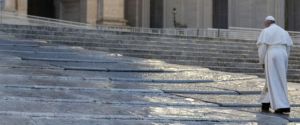
One can never close the door in the face of parents who ask for baptism for their child, even if they are not married in church: the Christian, and especially the pastor, should never forget the gratuitousness of salvation, the closeness of God and the concreteness of works of mercy, whether material or spiritual. This is the strong invitation to always open the door to others, and also to oneself, suggested by Pope Francis in the mass celebrated on Thursday morning, 19 October, at Santa Marta.
"This passage from the Gospel," the Pope immediately pointed out, referring to the passage from Luke (11:47-54), "enters into that style of the evangelist" that is proper to "both Luke and Matthew". It is "we could say" a "style" that indicates "trouble: Woe to you, teachers of the law: woe to you, Pharisees". In fact, Francis explained, 'the Lord is very strong, very strong: he strikes with such force'. In particular, "in today's passage there is an expression that makes one think: 'Woe to you teachers of the Law, who have taken away the key of knowledge; you did not enter, and those who wanted to enter you prevented'".
In reality, the Pontiff acknowledged, "this verse is a bit obscure: what does it mean to 'take away the key of knowledge', with the consequence of not entering the Kingdom and not even letting others in?" And so, said the Pope, "this taking away of the ability to understand God's revelation, to understand God's heart, to understand God's salvation - the key to knowledge - we can say that it is a serious forgetfulness". Because "one forgets the gratuitousness of salvation, one forgets God's closeness and one forgets God's mercy". And precisely 'those who forget the gratuitousness of salvation, God's closeness and God's mercy have taken away the key to knowledge'. So much so that, the Pope insisted, "one cannot understand the Gospel without these three things".
"They have forgotten gratuitousness," therefore. And "Paul speaks of this in the first reading," Francis said again, referring to the passage in the letter to the Romans (3:21-30): "You are justified freely by his grace." But, the Pontiff warned, "these people forget that everything is free, that it was God's initiative to save us, and they take the side of the law and try to cling to it, and the more detailed, the better: salvation is there for them". And "thus," he continued, "they are so clinging to the law that they do not receive the power of God's righteousness: there is a deception behind justifying oneself with the law: "I do this, this, this and I am happy, I am justified" - "But how am I to do this?" - "No, you have to do it like this, like this, like this" - "But this "like this" how should I do it?" - "Like this, like this, like this"'.
Here, said the Pope, they "arrive at a pile of prescriptions and for them this is salvation: they have lost the key to intelligence which, in this case, is the gratuitousness of salvation". In reality, "the law is a response to God's gratuitous love: it is He who has taken the initiative to save us, and because you have loved me so much, I try to go your way, the way you have shown me", in a word "I fulfil the law". But 'it is a response' because 'the law, always, is a response and when one forgets the gratuitousness of salvation one falls, one loses the key to the intelligence of salvation history'.
And, again, the Pontiff relaunched, those people "have lost the key to intelligence because they have lost the sense of God's closeness: for them God is the one who made the law" but "this is not the God of revelation". In reality "the God of revelation is God who began to walk with us from Abraham to Jesus Christ: God who walks with his people". Therefore "when we lose this close relationship with the Lord, we fall into this obtuse mentality that believes in the self-sufficiency of salvation through the fulfilment of the law".
Here, then, is "the closeness of God", remarked Francis, referring to "such a beautiful passage, almost at the end of Deuteronomy, in chapter 31; when Moses finishes writing the law, he hands it over to the Levites, those who guarded the ark, and tells them 'take this book of the law and put it beside the ark, close to God, because I know your rebellion - he is speaking to the people - and the hardness of your neck'".
"Instead, close to the Lord," the Pope pointed out, "the law is a revelation of the Lord, but it becomes detached, the law becomes autonomous and becomes dictatorial, when God's closeness is lacking". Moreover, he suggested, "we think in prayer: when prayer is lacking, one cannot teach doctrine, not even do theology or moral theology". Moreover, he relaunched, 'theology is done on one's knees, always close to God: these people had lost that sense of closeness, they had forgotten the closeness of God'.Moreover, the Pontiff explained, in doing so those people had also 'lost the memory of God's mercy'. In fact, "in the word of God, the Lord repeats much, much and much 'mercy I want, not sacrifices'". And "this closeness of God, of which we have spoken, reaches the highest point in Jesus Christ crucified". The same "Paul reminds us that we have been justified by the blood of Christ, the flesh of Christ, the blood of Christ". Instead, those people end up forgetting precisely "the flesh of Christ: they forget mercy and therefore end up not knowing the core of the law, which is mercy, always". So much so that, Francis explained, "the works of mercy are the touchstone of the fulfilment of the law, because" they allow us to "touch the flesh of Christ, to touch Christ suffering in a person, both corporally and spiritually".
In this regard, the Pope invited us to think of "the rich man Epulone who in hell asked Abraham to send one of the dead to his brothers to preach, so they could be saved". But "what does Abraham say: 'No, this will not do, for if they are not able to listen to Moses and the prophets, neither will they listen to one who rises from the dead'". In fact, "if they do not have mercy as he did - Epulon had none - nothing is worthwhile!" Francis therefore presented 'these three forgetfulnesses' that 'are the root: forgetfulness of the gratuitousness of salvation, forgetfulness of God's closeness, and forgetfulness of mercy'. And so the turning away from salvation is also at the root of "taking away the key to knowledge: one does not know salvation this way". Hence the Pontiff's exhortation to ask: "What are the consequences?".
Precisely "today's Gospel passage points to two," was the reply. "First of all the closure: 'You did not enter, and those who wanted to enter, you prevented'". Yes, 'these people closed the door to the faithful and the faithful did not understand: they, all their moral theology, made intellectual mannerism, but it did not reach the people and, with that, they drove people away. No, this is not the religion I wanted: this is not the truth of salvation in Jesus Christ'. And, the Pontiff pointed out, "here I think of the responsibility we pastors have: when we pastors lose or take away the key to intelligence, we close the door to ourselves and to others".
"I am reminded", he confided, "and I say this for our edification" of the fact that "in my country I have heard many times of pastors who did not baptise the children of single mothers, because they were not born in canonical marriage: they closed the door, they scandalised the people of God because the heart of these pastors had lost the key to knowledge". More: 'Without going so far back in time and space, three months ago, in a town, a mother wanted to baptise her newborn son, but she was civilly married to a divorced man. The parish priest said 'yes, yes, I will baptise the child but your husband is divorced, stay out, he cannot be present at the ceremony'". And 'this happens today', he said, because 'the Pharisees, the doctors of the law are not things of those times: even today there are many of them'.
For this reason, the Pope said, "it is necessary to pray for us pastors, so that we do not lose the key to knowledge and do not close the door to us and to the people who want to enter".
"And the second consequence," he continued, "is also what the Gospel says: 'When he had gone out from there, the scribes and Pharisees began to treat him in a hostile manner and to make him speak on many subjects, laying snares for him in order to surprise him with a few words that came out of his own mouth'". This is "a corrupt attitude" and "this is the second consequence: when one loses the key to knowledge, whether in the gratuitousness of salvation or in the nearness of God or in works of mercy, one arrives at corruption". And "how do the pastors of those times end up? By laying snares for the Lord to make him fall into the trap and then be able to accuse and condemn him, as they did". In conclusion, the Pontiff suggested asking "the Lord for the grace of the memory of our salvation, of the gratuitousness of salvation, of the closeness of God - and this let us pray - and for the concreteness of the works of mercy that the Lord wants from us, whether material or spiritual, but concrete". With the hope that the Lord "gives us this grace" so that "we can become people who help open the door and to ourselves and to others."
[Pope Francis, St. Martha, in L'Osservatore Romano 20/10/2017]
28th Sunday in O.T.
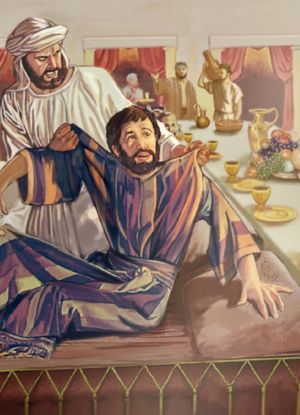
28th Sunday in Ordinary Time (year A) [11 October 2026]
First Reading from the Book of the Prophet Isaiah (25:6–10a)
To describe the fulfilment of God’s plan, the prophet Isaiah chose the image of a banquet. This plan is a humanity finally at peace: sitting at the same table, sharing the same meal, celebrating together – a true image of peace. ‘The Lord of hosts will prepare for all peoples, on his mountain, a feast of rich food and choice wines, a feast of succulent meat and refined wines.’ It is a poetic and symbolic evocation: Isaiah is not seeking to give a realistic description of what will actually happen. He means that wars, suffering and injustices will come to an end, and all peoples will be celebrating. If this passage dates, as many believe, from during or after the Babylonian Exile, it is understandable why the dream of celebration is expressed through images of abundance. If the prophet considers it worthwhile to proclaim: “On that day it will be said: “Behold, this is our God; we have hoped in him, and he has saved us”, he probably does so to try to lift the spirits of his compatriots. And so we might translate it as: Take heart, my brothers and sisters; tell yourselves that in time you will not regret having placed your trust in him… and I will tell you how the story will end: we are walking slowly but surely towards the day of definitive peace. The only truly good reason to believe in this is that it is a promise from God: ‘The Lord has spoken’, says Isaiah. Here is the central phrase of the text that justifies the prophet’s unshakeable optimism – he who knows and has experienced God’s ceaseless work to liberate his people. One cannot be a prophet (or simply a witness to the faith) unless, in one way or another, one has a personal or collective experience of God’s work; and Israel takes care to continually nourish its faith through the remembrance of God’s work. And it is precisely because it never forgets this that it is able to endure times of trial. Just as God delivered his people from the bonds of Egypt, so he continues, down through the centuries, to deliver them; and mankind’s worst bonds are the inability to live in peace, to practise justice, and to remain in the Covenant with God. If God brings his work to fulfilment (and Isaiah has no doubt that he will), the day will come when all peoples will live in peace and in faithfulness to the Covenant. For it is he, the Lord, who has promised it.
There is, however, one phrase that remains difficult: ‘He will swallow up death for ever’. When we read this phrase today, we are tempted to interpret it in the light of our present Christian faith and thus to attribute to the prophet thoughts that were not his own. Only God knows, of course, what Isaiah had in mind, but it is highly unlikely that this passage constitutes an affirmation of the Resurrection in the Christian sense of the term; the people of Israel gradually came to discover, even before Christ, a belief in the resurrection of the body, but this was long after the Book of Isaiah had been definitively committed to writing. It is a truth that has become increasingly established over the centuries.
Responsorial Psalm (22/23)
This psalm, known as the Psalm of the Good Shepherd, may seem like a simple pastoral image, but in reality it speaks of the fundamental themes of life: life and death, fear of enemies, and faith in God, which is stronger than any threat. It speaks of life within the Covenant with God: for the believer, only this relationship with God truly deserves the name ‘Life’, whilst a break with God represents ‘Death’. The ‘House of the Lord’ is the Temple in Jerusalem. Those who could truly say, ‘I shall dwell in the House of the Lord all the days of my life’, were the Levites, descendants of Levi. The tribe of Levi did not receive a territory like the other tribes of Israel, because it was consecrated to the service of worship. The Levites lived in the towns of the other tribes, received tithes and travelled to Jerusalem to take their turn in serving in the Temple, which they guarded day and night. The psalm therefore expresses the joy of a life completely consecrated to God: ‘Goodness and mercy shall follow me all the days of my life; I shall dwell in the house of the Lord for ever’. However, the Levite also becomes a symbol of the experience of the whole people of Israel. Just as the Levite has a special place amongst the people of Israel, so Israel has a special role amongst the nations. God freely chose this people and offered them a Covenant. Israel acknowledges this choice with wonder and continually remembers what God did to deliver them from Egypt. Being the chosen people does not, however, mean selfishly enjoying God’s closeness. Israel is called to pave the way for other peoples, so that all humanity too may enter into intimacy with God. This ties in with Isaiah’s message: the banquet prepared by God on his mountain is intended for all peoples. In short, this Psalm teaches that God is the shepherd who accompanies and protects his people. Israel was chosen to live within the Covenant and to bear witness to God’s love before other nations. Ultimately, however, salvation and communion with God are intended for all humanity.
Second Reading from the Letter of Saint Paul the Apostle to the Philippians (4:12–14, 19–20)
Paul writes to the Christians in Philippi whilst he is probably in prison in Ephesus, in the 50s AD. He thanks them for the financial aid they sent him via Epaphroditus. Paul explains that he has learnt to live in both poverty and abundance: he knows how to be full or hungry, to live in plenty or in want. His freedom from material possessions stems from his faith: ‘I can do all things through him who strengthens me’, that is, Christ. Paul is not ashamed to speak of money or to accept help when he needs it. True freedom does not mean pretending not to need material possessions, especially when so many people live in poverty. But are riches an opportunity or a risk? In this regard, the Bible presents three fundamental ideas: First of all, riches are a positive possibility: they are not evil in themselves and can be regarded as a gift from God when they enable one to live and enjoy one’s work. However, riches can become a risk: when they are accumulated for their own sake, they can turn into a form of slavery. An excessive desire to possess leads to a loss of freedom. Finally, the accumulation of wealth can create poverty: when some accumulate too much, others may be deprived of the necessary resources. This is why prophets, such as Amos and Isaiah, strongly criticise injustice and the hoarding of wealth. We must never forget that we are not owners, but stewards of the goods we have, both for ourselves and for others. During the Eucharist, the bread and wine represent all the riches of the earth and the work of humankind. In offering them, we are not simply giving something to God: we acknowledge that everything already belongs to Him and has been entrusted to us. In short: money and wealth are not evil in themselves. They become a problem when they enslave us, when they are hoarded selfishly, or when they lead to poverty and injustice. Christians are called to use them freely and responsibly, remembering that they are merely stewards of these things.
From the Gospel according to Matthew (22:1–14)
These two parables follow one another and, at first glance, do not seem to have much in common: the parable of the invitation to the wedding feast and that of the man turned away because he was not wearing wedding clothes. Some believe that, originally, these two parables were not connected: it would indeed seem contradictory to demand formal attire from someone who had been picked up off the street. But if Matthew deliberately placed them side by side, it means that we can draw a lesson from this connection. Let us examine them one by one. ‘A king was celebrating his son’s wedding.’ And this is not just any king, for right from the start we are told that we are speaking of the ‘Kingdom of Heaven’: this expression alone immediately suggests to us that it concerns the Covenant between God and humanity, a Covenant fulfilled in Jesus Christ; in the Gospels, he presents himself as the bridegroom. Moreover, the word ‘wedding’ occurs seven times in this parable. This wedding symbolism is not very common in our Christian language today; yet it is precisely in these terms that the later texts of the Bible describe God’s plan for humanity. From the final prophecies of Isaiah right through to the Book of Revelation, via the Song of Songs and the Wisdom Literature, to name but a few, God’s love for humanity is described in terms of conjugal love. And it is precisely for this reason that Saint Paul says that marriage is ‘the best image of God’s relationship with humanity’.
In the Old Testament, it was clear that the proclamation and fulfilment of the universal salvation of humanity were to come through Israel. The chosen people had a mission for the whole of humanity. It is in this sense that we have learnt to interpret God’s words to Abraham: ‘All the families of the earth shall be blessed through you’ (Gen 12:3). Returning to the wedding analogy, we might say that the Jews were the first to be invited to the wedding; the host was counting on them to then extend the invitation and bring in, in their wake, the whole of humanity. But we know how it turned out: the vast majority of Jews refused to recognise Jesus as the Messiah. In the parable, they are represented by the guests who refuse to come to the wedding and even go so far as to mistreat the servants who had gone to summon them. What will happen? In the parable, the servants fill the banquet hall with guests summoned at the last moment. In the Letter to the Romans, Paul comments that this rejection by Israel will not only fail to prevent the wedding, but will actually facilitate the entry of all peoples into the banquet hall. ‘The servants went out into the streets, gathered everyone they found, both good and bad, and the wedding hall was filled with guests’. Let us move on to the second parable: a man, invited at the last moment, enters without a wedding garment. He is utterly unable to answer the question: ‘Friend, how did you get in here without a wedding garment?’ He is then thrown out. This certainly does not mean that he had to meet a particular behavioural requirement, nor that the wedding garment symbolises any kind of merit. As soon as we speak of ‘merit’, we risk distorting the meaning of God’s grace, which by definition is free! With God, there are no conditions to fulfil. The first parable clearly states that everyone was allowed to enter, both the good and the bad. So, what might this second parable mean? Let us look at the crowd entering the wedding banquet hall. Whether good or bad, everyone was invited; everyone accepted and put on the wedding garment: they were able to welcome the unexpected invitation and prepare themselves.
Only one person did not deem it necessary to do so: he failed to appreciate the good fortune of this unhoped-for offer and to accept it with gratitude. When asked, ‘How did you manage to get in here without the wedding garment?’, he does not know what to say. A word of apology or repentance would have sufficed, but he remains silent. Failing to prepare for a banquet means attaching no importance to the invitation and showing contempt for the one who invites us. Ultimately, just like the first guests, he has sinned through indifference or presumption. In conclusion: the first virtue required of us is humility.
Commentary: The first guests refused the invitation and others took their place. Historically, this is precisely what happened. In the Acts of the Apostles we see the same scenario repeated several times: whenever Paul arrives in a new city, he first goes to the synagogue and proclaims to the Jews that Jesus is the long-awaited Messiah. Some believe him and become Christians. However, when Paul’s preaching goes beyond the confines of the synagogue and even the pagans begin to become Christians, the Jews who have not been persuaded become frightened and drive Paul out. This is what happened in Antioch of Pisidia: ‘It was necessary to proclaim the word of God to you first. But since you reject it and do not consider yourselves worthy of eternal life, we turn to the pagan nations.’ The same thing subsequently happened in Iconium and Thessalonica. Precisely because the apostles were driven out from one city to another, the Gospel spread from one city to another. One of the lessons of the first parable is therefore that Israel’s rejection cannot permanently halt God’s plan. Just as prostitutes and tax collectors took the place of the religious authorities in Jesus’ time, so, a few years later, when Matthew was writing his Gospel, pagans entered the Church in great numbers precisely because of the rejection by some Jews.
God always manages to bring good out of evil. There is also another interpretation of the wedding garment. In New Testament language, the wedding garment is that of the baptised. We know, in fact, that what we today call the ‘baptismal garment’ is in reality a ‘wedding garment’. The second parable would therefore concern the baptised: it is they who have entered the wedding hall. But we know that you cannot judge a book by its cover. Here, Jesus would be reminding us of the demands that stem from our Baptism. As he himself says: ‘Not everyone who says to me, “Lord, Lord,” will enter the Kingdom of Heaven, but only the one who does the will of my Father in heaven’ (Mt 7:21).
+Giovanni D’Ercole
Hidden tombs: monuments and trifles
Serving oneself and "the audience"
(Lk 11:42-46)
The conflict between Jesus and the religious authorities takes on violent features.
Ideological or devout choice can be lost in the formalism of those who endlessly discuss minutiae and forget the goals of inner commitment, in favor of a sort of circus show (v.43).
When the notables disdain service and choose honors, the simple passing by them causes to contract the same impurity of the soul: average and normal life, internal corruption.
In short, the Divine Law has been so burdened as to make devout practice suffocating, worried about quibbles.
For those who can bear the procedures, then, perfection in outward things can nourish pride even in interhuman relationships. And the Grace that enriches will no longer dictate the conduct.
The willingness to build up the Church in Christ requires us to be authentic and simple, not dehumanized; a sign of the Covenant, not hateful.
There is a counter-witness that stifles the growth of life and crushes the freedom of those who are animated by Spirit of God.
Among other things, leaders and “jurists” willingly leave their privacy outside the provisions they impose on others (v.46).
In short, the care for details is good and propulsive (v.42) only if it joins the intimate discovery of one’s Mission and Call, character that promotes growth and our future.
While Mt 23:27 speaks of whitewashed tombs, Lk speaks of hidden sepulchers, which are not seen (v.44).
Simple, naïve, pure people who approach it, do not realize that they are insisting on dead idols.
In the Semitic mentality, touching or trampling on a tomb meant contracting impurities.
Jesus means that we must be very careful of these dangerous people, who seize and plagiarize souls, turning them away from God in the name of God.
Manipulative guides, who distract from the sense of the Good News in our favor, inoculating a mentality that annihilates growth.
At all times the recitation of disembodied, schematic, off-scale or confusing and empty holiness retains deviant appearances.
But the proponents of the soul’s death are immediately recognized: they are those who insist on sophisticated worldviews, on abstract ideas; on the trifles of habits, or disciplinary appearances - and forget the goals of the Kingdom.
The topic is crucial:
«We want to be a Church that serves, that leaves home and goes forth from its places of worship, goes forth from its sacristies, in order to accompany life, to sustain hope, to be the sign of unity […] to build bridges, to break down walls, to sow seeds of reconciliation» (FT n.276).
Resolutive work, obtained in a laborious, «craftsmanship» way (n.217).
As with fashions, attention to the too great or to the unincarnated modes brings people closer to skeletons.
Let us therefore help ourselves to bring the Word back inside, so that it becomes our active face, without duplicity, with broad hope, separated from the present scene and from any narcissistic workshop.
[Wednesday 28th wk. in O.T. October 14, 2026]
Hidden burials: monuments and trifles
Serving oneself and "the public”
(Lk 11:42-46)
The conflict between Jesus and the religious authorities takes on violent overtones, as the poltronists get hung up on the details and neglect the essentials.
In particular, the experts disdain the experience of Communion - which is indeed a project, but on the contrary a life insurance [with power and privileges].
According to the young Rabbi, the religious choice itself can be burdensome and intolerable.
Unfortunately, the devout option is not infrequently lost in the formalism of those who endlessly discuss petty precepts and forget the goals of inner commitment, in favour of a sort of circus show (v.43).
Indeed, there is no shortage of official notables who disdain service and choose honours, so that simply passing by them causes them to contract the same impurity of soul: average and normal life, internal corruption.
In short, the divine Law has been so burdened as to make sacred practice all artificial, asphyxiating, out of scale or preoccupied with minutiae.
For those who can stand the rigmarole, then, perfection in external things can feed pride even in inter-human relations.
The ancient spiritual fathers used to say that pride is a thief, because in the case of good deeds, self-love steals gratuitousness and feeds arrogance. Thus the Grace that enriches us no longer dictates our conduct.
Our readiness to build the Church in Christ demands that we be authentic and simple, not dehumanised; a sign of the Covenant, not hateful.
There is a counter-witness that stifles the growth of life and curtails the freedom of those who are animated by the Spirit of God: that of the popular leaders [Pharisees] and the hard-line jurists [scribes].
Not for nothing do they willingly leave privacy out of the arrangements they impose on others (v.46).
The experience of Love is 'law', not for the sake of a body, a pack, a group of interests, but for a rich conviviality of differences.
This is the 'norm', the 'canon' - if you like - but not to construct the impersonal good of the pressure group, and to be protected by it.
Although it would guarantee prestige in society - even ecclesial - it would become a sprawling, intrusive imposition.
The abstract, overly cerebral, ideological or fanciful gaze, and bigoted mummies, make the environment arid, dissipate energy, and make the experience of faith vacuous.
They insist on fulfilments, models, designs and penances, or conversely dissipations that drive love away, and discourage attempts to read oneself and dispositions from within.
Perhaps in every religion, observances - or 'big ideas' - have created that 'ancient' hypnotism of habitual mechanisms and enveloping atmospheres that make God a reassuring totem, a sacraliser of established positions.
He is a corrosive, punishing worm of passion, ruining people and the destiny of the whole people.
It is a matter, then, of running the utmost risk united with Christ - not to give in to the always lurking temptation to feel better: in favour of a long inner adventure; to touch those spaces where the Call by Name resembles no other.
It is in the intimate and in the candid relationship that we encounter our profound Calling, the unexpressed talents, the divine Author's signature.
In the uniqueness of character, from the Core, the Seed that does not lie guides the vocation; the Risen One who is present reveals himself to be understanding, gentle, attentive, absolutely genuine, personal.
Attention to details and trifles is only good and propulsive (v.42) if it is united with the intimate discovery of one's own singular Mission and Calling, a character that promotes growth, and our future.
Here the call to values that do not grow old, substantial - attentive to situations - does not imply contempt and disregard for what may seem secondary (but is unrepeatable): recognising the concrete woman and man.
Otherwise, the motive for our actions would remain the concern for our own fictitious fame. This would render petty and discredited the experience of Faith that activates us to explore, to make Exodus.
When the Law does not evolve within us and with us, in our inwardness and personality without measure, it will find a way to impose itself, torment us and slow down our experience of life, or contaminate and devastate it.
While Mt 23:27 speaks of whitewashed tombs, Lk speaks of hidden tombs, which cannot be seen (v.44).
The simple, naive, pure people who approach it do not realise that they are insisting on dead idols.
Even false teachers codify everything, and would like to normalise even belief and its expressions.
In the Semitic mentality, touching or treading on a tomb meant contracting impurity.
Jesus means that one must be very very careful of these very dangerous people.
Even in the primitive Christian communities, they gherminated and plagued souls, leading them away from God in the name of God.Manipulative guides, they diverted people away from the sense of the Good News in our favour, inoculating drop by drop a mentality that annihilated growth.
The recitation of disembodied, confusing, narrow and empty holiness (folklore and undergrowth) still retains deviant appearances.
But the proponents of the death of the soul are immediately recognisable: they are the ones who insist on sophisticated worldviews, on abstract ideas; on the quirks of idle pleasures, or of disciplinary appearances - and forget the objectives of the Kingdom.
The issue is crucial.
As Pope Francis reiterated in the encyclical Fratelli Tutti, quoting one of his homilies (in Santiago de Cuba):
"We want to be a Church that serves, that leaves home, that leaves its temples, its sacristies, to accompany life, to sustain hope, to be a sign of unity [...] to build bridges, to break down walls, to sow reconciliation" (no.276).
Decisive work, achieved in a laborious and "artisanal" manner (no.217).
Even among his own people today, the Risen One does not mince his words, and he speaks out decisively against certain insuppressible diseases - abstract [too big] worldviews or attention to the unimportant - that bring people closer to the skeletons.
The living Christ strikes out in invective at the formalism of doctrines and outward practices, which delude themselves into extracting and chiselling lofty earthly situations, obsessively attending only to themselves.
The only thing that Jesus condemns without appeal here is the vain ambition in the exercise of pretended authority - by pomp - considering it a narcissistic workshop (by washed-up histrions).
Let us therefore help ourselves to bring the Word back inside, so that it becomes our factual face, without duplicity, with a broad hope, separated from the present scene.
To internalise and live the message:
Have you renounced the law of death, of manner and quiddity, preferring the law of life?
Or do you serve yourself and 'the public'?
Formalism, a sign of superiority

“Beware of practising your piety before men in order to be seen by them” (Mt 6:1). In today’s Gospel Jesus reinterprets the three fundamental pious practices prescribed by Mosaic law. Almsgiving, prayer and fasting characterize the Jew who observes the law. In the course of time these prescriptions were corroded by the rust of external formalism or even transformed into a sign of superiority.
In these three practices Jesus highlights a common temptation. Doing a good deed almost instinctively gives rise to the desire to be esteemed and admired for the good action, in other words to gain a reward. And on the one hand this closes us in on ourselves and on the other, it brings us out of ourselves because we live oriented to what others think of us or admire in us.
In proposing these prescriptions anew the Lord Jesus does not ask for formal respect of a law that is alien to the human being, imposed by a severe legislator as a heavy burden, but invites us to rediscover these three pious practices by living them more deeply, not out of self-love but out of love of God, as a means on the journey of conversion to him. Alms-giving, prayer and fasting: these are the path of the divine pedagogy that accompanies us not only in Lent, towards the encounter with the Risen Lord; a course to take without ostentation, in the certainty that the heavenly Father can read and also see into our heart in secret.
[Pope Benedict, Ash Wednesday homily 9 March 2011]
The fool in the Bible, the one who does not want to learn from the experience of visible things, that nothing lasts for ever but that all things pass away, youth and physical strength, amenities and important roles. Making one's life depend on such an ephemeral reality is therefore foolishness (Pope Benedict)
L’uomo stolto nella Bibbia è colui che non vuole rendersi conto, dall’esperienza delle cose visibili, che nulla dura per sempre, ma tutto passa: la giovinezza come la forza fisica, le comodità come i ruoli di potere. Far dipendere la propria vita da realtà così passeggere è, dunque, stoltezza (Papa Benedetto)
As sometimes happens in the Gospel, faced with the trap set by his enemies, Jesus, with his response, rises above the contingent controversy and goes far beyond the particular and mutually divergent positions (Pope John Paul II)
Come talora accade nel Vangelo, di fronte al tranello mossogli dai suoi nemici, Gesù, con la sua risposta, s’innalza al di sopra della polemica contingente e va ben oltre le posizioni particolari e tra loro divergenti (Papa Giovanni Paolo II)
And blasphemy, the sin against the Holy Spirit, is the one unforgivable sin — as Jesus said — because it comes from closing the heart to God’s mercy which acts in Jesus (Pope Francis)
E la bestemmia, il peccato contro lo Spirito Santo, è l’unico peccato imperdonabile – così dice Gesù –, perché parte da una chiusura del cuore alla misericordia di Dio che agisce in Gesù (Papa Francesco)
The great thinker Romano Guardini wrote that the Lord “is always close, being at the root of our being. Yet we must experience our relationship with God between the poles of distance and closeness. By closeness we are strengthened, by distance we are put to the test” (Pope Benedict)
Il grande pensatore Romano Guardini scrive che il Signore “è sempre vicino, essendo alla radice del nostro essere. Tuttavia, dobbiamo sperimentare il nostro rapporto con Dio tra i poli della lontananza e della vicinanza. Dalla vicinanza siamo fortificati, dalla lontananza messi alla prova” (Papa Benedetto)
The present-day mentality, more perhaps than that of people in the past, seems opposed to a God of mercy, and in fact tends to exclude from life and to remove from the human heart the very idea of mercy (Pope John Paul II)
La mentalità contemporanea, forse più di quella dell'uomo del passato, sembra opporsi al Dio di misericordia e tende altresì ad emarginare dalla vita e a distogliere dal cuore umano l'idea stessa della misericordia (Papa Giovanni Paolo II)
«Religion of appearance» or «road of humility»? (Pope Francis)
«Religione dell’apparire» o «strada dell’umiltà»? (Papa Francesco)
In the crucified Jesus a kind of transformation and concentration of the signs occurs: he himself is the “sign of God”, especially in the mystery of his Death and Resurrection (Pope John Paul II)
In Gesù crocifisso avviene come una trasformazione e concentrazione dei segni: è Lui stesso il "segno di Dio", soprattutto nel mistero della sua morte e resurrezione (Papa Giovanni Paolo II)
However, the king was not discouraged and sent his servants out to seek other guests to fill his banquet hall. Thus the aspect of the refusal of those initially invited caused the invitation to be extended to all [Pope Benedict]
Il re però non si scoraggia e invia i suoi servi a cercare altri commensali per riempire la sala del suo banchetto. Così il rifiuto dei primi ha come effetto l’estensione dell’invito a tutti [Papa Benedetto]








duevie.art
don Giuseppe Nespeca
Tel. 333-1329741
Disclaimer
Questo blog non rappresenta una testata giornalistica in quanto viene aggiornato senza alcuna periodicità. Non può pertanto considerarsi un prodotto editoriale ai sensi della legge N°62 del 07/03/2001.
Le immagini sono tratte da internet, ma se il loro uso violasse diritti d'autore, lo si comunichi all'autore del blog che provvederà alla loro pronta rimozione.
L'autore dichiara di non essere responsabile dei commenti lasciati nei post. Eventuali commenti dei lettori, lesivi dell'immagine o dell'onorabilità di persone terze, il cui contenuto fosse ritenuto non idoneo alla pubblicazione verranno insindacabilmente rimossi.